Tag: NLNG

  • Cooking gas price: Put Nigeria’s interest first, Obasanjo begs stakeholders

    Cooking gas price: Put Nigeria’s interest first, Obasanjo begs stakeholders

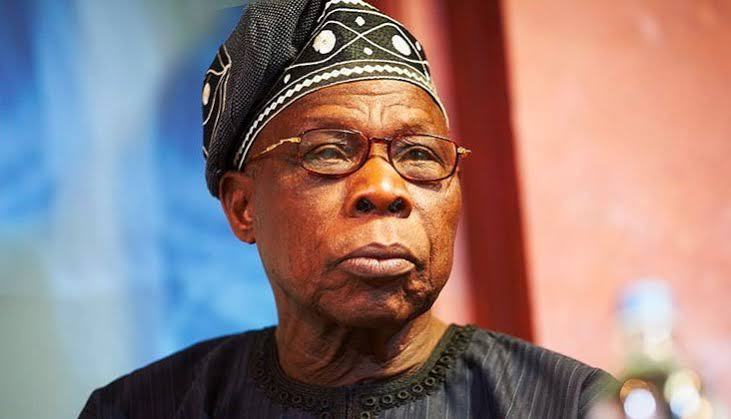
    Former President Olusegun Obasanjo, has charged stakeholders in the Liquefied Petroleum Gas (LPG) sub-sector, popularly called cooking gas to ensure that they put Nigeria’s interest first.

    Obasanjo made the plea at 2nd West Africa LPG Expo and Nigerian Liquefied Petroleum Association (NLPGA) Summit 2022 held in Lagos at the weekend.

    The ex-president’s plea came on the heels of rising cost of cooking gas currently at about N12,000 per 12.kg cylinder in parts of the country.

    He argued that the domestic market has so much potential as the fastest growing LPG market globally.

    ‘‘However there are challenges which I will call on all stakeholders to come together and resolve. These include but not limited to; more volumes from other domestic producers to the ever rising demand/supply, infrastructural development to aid supply to the last mile and the issue of regulations such as VAT, among others that make affordability by the common man a challenge,’’ the former leader said.

    He encouraged other oil and gas majors to remain committed and look at how to develop the local liquified petroleum gas sector as a way of showing appreciation to a country in which they have benefited enormously.

    Obasanjo recalled that the leadership of NLPGA while on a courtesy visit alluded to the role that his administration played in promoting LPG use in the domestic market to what it has become today.

    He said that the policies his administration initiated as at 2005 leading to the 2007 intervention, assisted in not only maintaining gas supply sustainability of alternative energy but significant than the industry has today, but also helped in managing the risk of deforestation, stoppage of health and safety risks associated with the use of kerosene and firewood.

    ‘‘Let me start by commending the organisers of this conference and for the kind words they had shared in the past recognising the impact that has been made so far by an initiative I took when I was the President, to direct that some of our liquefied petroleum gas be retained locally for domestic use.”

    Obasanjo said the government under his leadership saw the Nigerian Gas Master Plan as a major interventionist concept to move the gas sector from its essentially dormant status in 2006 to a market-based system with willing sellers and willing buyers, realising the full potential of the sector for the benefit of all Nigerians.

    The former president pointed, out that it was clear that the major players were at that time more interested in the global market and this led to the Domestic Supply Intervention Policy.

    ‘‘Achieving a rapid growth in supply to drive the market was unlikely to happen on its own with the then structure of the sector, which was dominated by oil-centric International Oil Company’s (IOCs) with little appetite for domestic gas market development.

    According to him, the domestic supply intervention policy was necessitated to jump start sustainable supply to the domestic market, the main objectives being to, enhance living standards, reduce deforestation and rural-urban migration with its associated national security issues, reduce household energy poverty and serve to promote industrial growth.

    He disclosed further that, the thrust of the policy was to create a minimum level of supply by intervention. However, beyond this threshold, he said, it was expected that the basis for a fully competitive market would have been established and market forces will thereafter drive the growth of supply and demand in the market.

    In essence, he maintained that, the domestic supply intervention policy was a transitional policy intervention aimed in the short term at driving supply availability to a level that could sustainably support a fully competitive gas market.

    ‘‘The domestic supply intervention policy required all associated and nonassociated gas reserves holders to dedicate gas supply to the domestic market in the first instance thereafter export to the international market.

    On NLNG interventions, he said ‘‘I have heard from the NLPGA that since 2007 inception of the Domestic LPG supply program till date, the Nigeria LNG Ltd. has stood tall above its peers in the discharge of supporting the local sector.

    (Sun)
  • Cooking gas price set to crash to an all time low


    The price of Liquefied Natural Gas (LPG), popularly called cooking gas which hit the roof top about five months ago selling at N8,500 per 12.5kg is set to crash to an all time low as the Board of Directors of the Nigerian Liquefied Natural Gas Limited (NLNG), has approved the supply of 100 per cent of the company’s LPG production(Propane and Butane) into the Nigerian domestic market.


    The development may not be unconnected with strong calls and appeals from stakeholders in the gas sector that NLNG increase its supply of LPG into the domestic market which they claim accounts for about 65 per cent.


    They argued that the shortfall of 35 per cent is sourced from imports which comes at a premium due to the imposition of Value Added Tax of 7.5 per cent among other added cost, leading to a sharp rise in cooking gas price.


    Consumers of cooking gas had in the last five months contended with the escalating price of the product, forcing many to resort to the use of dirty fuels which included; charcoal, firewood, Kerosene among others. The milestone according to NLNG is coming just three months after the Company supplied its first Propane cargo into the domestic market and has developed a scheme to sustainably supply Propane for usage in cooking gas blending as well as in agro-allied, autogas, power and petrochemical sectors of the Nigerian economy to further deepen gas utilisation in Nigeria.


    NLNG explained that these initiatives are designed to increase LPG availability in Nigeria, diversifying its uses and support the Federal Government’s Decade of Gas initiative. NLNG is currently the highest single supplier of LPG into the domestic market, with an estimated 400,000 metric tonnes supplied in 2021.


    100% Natural Herbs to Finally End Premature Ejaculation, Weak Erection and Small Manhood. Click Here Now .

    Speaking on the development, the Managing Director and Chief Executive Officer of NLNG, Dr. Philip Mshelbila, said the announcement marked the Company’s strong commitment to the continued growth of the domestic LPG market and its passion to increase utilisation of one of the most versatile energy sources in the world.


    He said the Company was inclined towards helping to build a strong economy based on the gas resources that Nigeria is abundantly blessed with, and that natural gas could help drive the economy by providing cooking gas for homes, supporting industrialisation, powering mobile cell sites and complex transportation systems, impacting food supply through its usage for fertilizer production and increasing power supply to both homes and industries while reducing the country’s carbon footprint.


    According to Mshelbila, “Gas, as the cleanest of the fossil fuels, has become an essential energy source to be reckoned with during this energy transition period. Other countries are revolutionising their energy industry to cut down on carbon emissions drastically. Nigeria should not be left out in this drive, considering its abundant gas resources. Gas is essential for life and living at the moment, because it can support everything we will need to develop our economy and create better living standards for Nigerians. We need to change the narrative, and NLNG is being pragmatic about it.


    “We are ardently following up on the commitment we made in March 2021 at the NLNG-sponsored pre-summit conference of the Nigeria International Petroleum Summit (NIPS) 2021 organised by the Federal Ministry of Petroleum Resources to support the Decade of Gas declaration by the Federal Government. We are driven by our vision to remain a globally competitive LNG company helping to build a better Nigeria and are making a reality of our collective dreams that one day we can switch all cooking fuels to gas, and power our vehicles with gas as encapsulated in the government’s National Gas Expansion Program and the Autogas Policy,” he said.


    Source: www.sunnewsonline.com

  • FG implements cooking gas imports tax, price jumps by 100%

    FG implements cooking gas imports tax, price jumps by 100%

    The Federal Government has implemented a 7.5 per cent tax on imported Liquefied Petroleum Gas, popularly called cooking gas, as the cost of the commodity leap by over 100 per cent within a period of eight months.

    It was gathered on Sunday that the government implemented the VAT on LPG imports about three weeks ago and some dealers were also mandated to pay the tax for commodities imported several months ago.

    Operators told our correspondent that Nigeria imports about 70 per cent of the commodity, while the rest was mainly supplied by the Nigeria Liquefied Natural Gas company.

    It was also gathered that the cost of a 12.5kg of cooking gas that sold for about N3,500 in December 2020 had jumped to as high as N6,800 in parts of Abuja.

    A resident along the Lagos-Ibadan road said she bought the commodity on Sunday at N7,200 in Lagos, as dealers projected that the cost might hit N10,000 in December this year.

    Operators stated the development had made small businesses and homes in rural and semi-urban areas to revert to firewood and charcoal, as the purchase of cooking gas had plunged in recent months.

    The National Chairman, Liquefied Petroleum Gas Retailers Association of Nigeria, Michael Umudu, said there were three factors that caused the surge in price.

    He said, “There are three major factors to the hike in prices. Firstly, about 70 per cent of the gas we consume in Nigeria is imported and importers have to contend with the high cost of foreign exchange.


    “Secondly, there is a rise in the price of petroleum products in the international market and because of that, the cost of LPG has equally gone up. So importers now pay more on imports.


    “And thirdly, the government added VAT on imported LPG about three weeks ago. It (VAT) was 7.5 per cent of the cost of the commodity and this exacerbated the price hike of cooking gas in the past three weeks.”


    Umudu stated that before the introduction of VAT, foreign exchange and cost of petroleum products in the international market had been the factors causing the rise in price.

    “Around November/December last year, 12.5kg was sold at about N3,500, but in July it went up to around N5,500 and when VAT was introduced about three weeks ago, it now escalated to about N6,500 and above,” he stated.

    Umudu added, “The price hike seems to be happening on a daily basis and nobody can tell when it will stop. There has been a lot of appeal to the government to find a way of persuading NLNG to increase its domestic supply so that the product can be affordable.

    “NLNG supplies about 35 per cent of the gas we consume locally and that percentage is not adequate. And the gas sold by NLNG is even sold at international price and is priced in dollar not naira.”

    On the cost of the commodity in metric tonnes, Umudu, replied, “20MT is now in the average of about N8m. And before VAT was introduced, the price of 20MT was around N6.8m to N7m, which was the highest price then.”

    He noted that consequent to that, there has been an upsurge in the use of firewood and other alternative energy sources nowadays.

    (punchng.com)