Tag: Nigerian economy

  • Atiku Accuses Tinubu Administration of Worsening Poverty, Insecurity

    Atiku Accuses Tinubu Administration of Worsening Poverty, Insecurity

    Precious Nwonu, Enugu

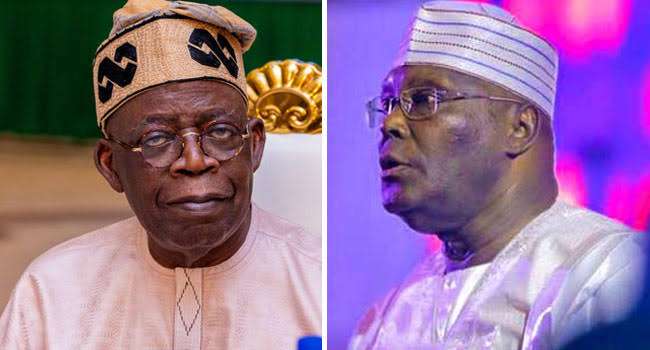
    Former Vice President and African Democratic Congress presidential candidate, Atiku Abubakar, has accused the administration of President Bola Tinubu of worsening poverty and the cost of living in Nigeria.

    Atiku made the allegations in a state-of-the-nation address delivered at the ADC secretariat in Abuja on Thursday as Nigeria marked its 66th Independence Anniversary.

    He criticised the Federal Government’s economic policies, particularly the removal of the petrol subsidy, arguing that the reforms had increased the financial burden on households.

    According to him, rising prices of food, transportation and other essential goods have left many Nigerians struggling to meet their basic needs.

    Atiku also faulted Tinubu’s claim that the country was entering an era of prosperity, arguing that economic growth and lower inflation would have limited meaning if Nigerians could not afford food, healthcare, transportation and education.

    He said, “At 66, Nigeria has come a long way. Independence has offered us liberty and self-determination. We are also making considerable progress in nation building.”

    The former vice president also criticised the government’s handling of insecurity, saying attacks by armed groups had displaced communities, affected farming activities and created fear among families.

    He further questioned the government’s management of public funds, debt and development projects, calling for greater transparency in contracts, loans and social intervention programmes.

    On the economy, Atiku proposed what he described as a capped and budgeted production subsidy for petrol refined in Nigeria, including fuel produced by modular refineries.

    He said the proposed scheme should be independently audited and designed to ensure that any benefit reached consumers through lower pump prices.

    Atiku also raised concerns about the government’s borrowing plans, citing Nigeria’s public debt and the proposed $1.5bn World Bank loan. He called for greater disclosure on how existing borrowed funds had been spent and the projects they had financed.

    The ADC candidate also criticised the government’s handling of student loans, budgets, contractors’ payments and cash-transfer programmes, demanding greater accountability.

    On security and civil liberties, Atiku called for the release of individuals he described as being unlawfully detained and urged the government to uphold due process.

    He also appealed to Nigerians to participate actively in the 2027 general election, urging voters to protect their ballots and reject intimidation.

    Atiku said the election would provide Nigerians with an opportunity to determine the country’s direction, while promising that, if elected, he would prioritise affordability, security, healthcare, education and accountability in public spending.

    He said Nigerians should scrutinise the programmes and promises of all candidates, including himself, and demand measurable commitments from those seeking public office.

    The former vice president concluded by urging Nigerians not to lose hope despite the economic and security challenges facing the country.

  • The windfall: Reinventing Nigerian Economy


    NIGERIA is an emerging market, middle income and mixed economy, and is ranked the 27th largest economy in the world. It has the largest natural gas economy in Africa and is also the largest oil and gas producer in the continent.


    The country had a good head start with a well-defined First National Development Plan (1962 -1968) and a strong focus on Import Substitution Industrialisation, ISI, policy which promoted and boosted manufacturing. The rate of development rose to over 10 percent of national income or net national product and with substantial development of manufacturing sectors with high rate of growth.

    But the economy contracted the “Dutch disease” which stunted and truncated the trajectory. “Dutch disease” has been defined as “the wind fall of income that leads to damages or destructive consequences in the economy”.


    The wind fall for Nigeria was from oil. The discovery and increase in oil exports led to the loss of interest and decline in other export commodities. As a result the economy became mono-product without a diversified base.


    The importance of economic diversification in the prosperity of nations cannot be over-emphasized. It engenders stability, sustainability and prosperity through favourable trade balances. The prosperity of advanced economies hinges on diversification, exports, manufacturing, innovations and well established financial markets.


    Germany, the fifth largest economy in the world exports vehicles, machinery, chemical goods, electronic products, computers and electrical equipment.


    Others include pharmaceuticals, transport equipment, basic metals, food products, rubber and plastics and many others. The share of industry in gross value added is 22 percent, the highest among G7 countries. According to IMF, Germany contributed 28 percent of the Euro areas economy in 2017.


    USA, the largest economy in the world exports soybean, corn, beef, pork, poultry, gems and precious stone, computers, vehicle parts and integrated circuits. Others include planes, helicopter, aircraft parts, spacecraft, crude and refined petroleum and a vast array of others.


    South Africa, the second largest economy in Africa exports corn, fruits, nuts, sugar, wool, gold, diamond, metal and minerals, gems and precious metals.


    ALSO READ: 96 firms bid for rehabilitation of NNPC downstream infrastructures

    Others include iron, steel, vehicles, machinery including computers, ores, slag, ash, transportation equipment and others. South Africa is a manufacturing hub and technologically advanced with advanced infrastructure and well established financial market. It has the largest stock exchange in Africa which is strategic.


    Nigeria, the largest economy in Africa, exports crude petroleum, refined petroleum, petroleum gas, cocoa beans, vegetable products, tobacco, beverages, processed food, spirits, cashew nut, processed leather and others. It is the fourth leading exporter of cocoa in the world.


    Regardless, oil has continued to be the main stay, representing 90 percent of exports and 86 percent of the total export revenue. The development readily exposes the economy to global shocks and crisis. For stability, sustainability and prosperity, the economy needs to be re-invented through effective diversification and “the big push”. This may be an uphill task going by the extent of damage exerted by the “Dutch disease”, but it is achievable. All hands needs to be on deck.


    Central Bank of Nigeria has been on the forefront in the drive to re-invent the economy through diversification and self-sufficiency. The apex bank has been aggressive in the evolution of policies aimed at releasing growth forces virtually in all section of the economy. It has established several and enormous intervention funds aimed at fast-tracking the development of the manufacturing sector.


    The objectives of the funds are to provide access to credit to manufacturers, diversify the revenue base, increase foreign exchange earnings, provide inputs for the industrial sector on a sustainable basis, increase output and generate employment.


    The importance of manufacturing cannot be overemphasized. It expands trade and commerce and brings in the much needed foreign exchange. Next to agriculture, manufacturing also have the ability to create significant amount of jobs and generate incomes.


    Manufacturing feeds aggregate demand and is linked to the standard of the living of the people. Problems of manufacturing in Nigeria include power, irregular taxes, inadequate funding and structure.


    CBN intervention funds have opened windows of opportunities for manufacturer to access long term loans for acquisition of plants and machinery and working capital. Also to address the infrastructure challenge the apex bank is promoting a world-class infrastructure vehicle known as Infraco, to provide necessary infrastructure required to move agricultural product to processors, raw materials to factories and finished goods to market.


    Source: www.vanguardngr.com