Tag: Iran

  • UNGA: Iran Delegation Walks Out After Trump Threatens To Annihilate Country

    UNGA: Iran Delegation Walks Out After Trump Threatens To Annihilate Country

    Precious Nwonu, Enugu

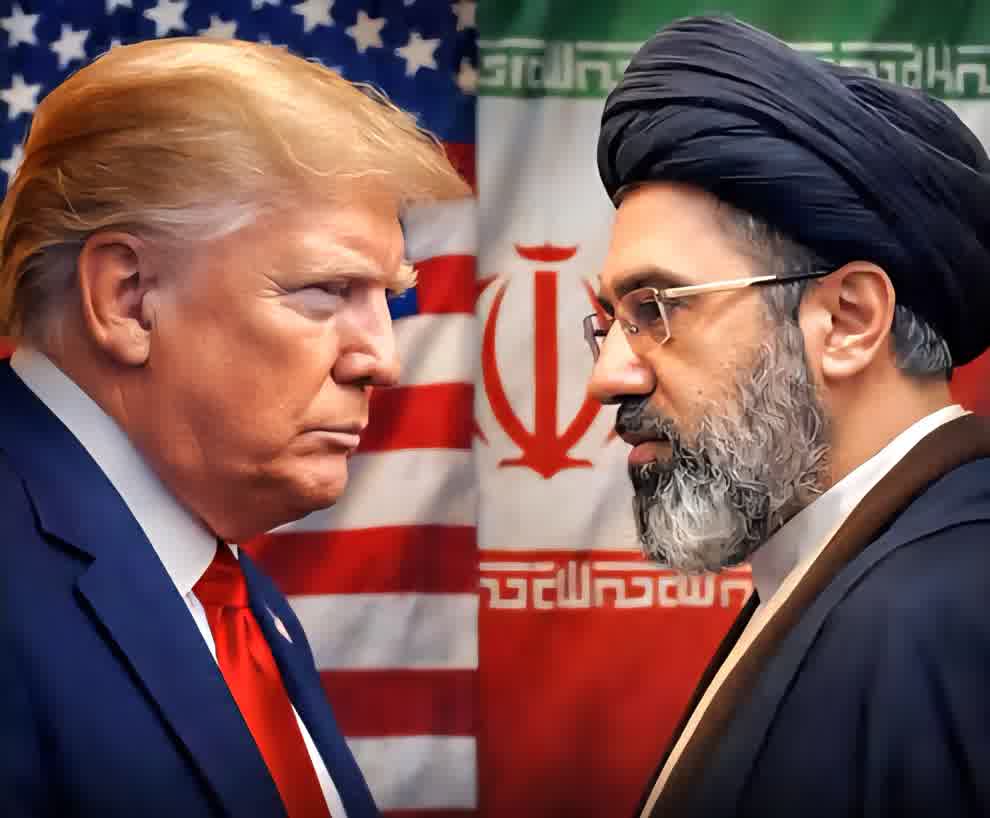
    Iranian delegates walked out of the United Nations General Assembly during President Donald Trump’s address on Tuesday after the US leader warned that he could “annihilate” the Islamic Republic if Tehran failed to reach an agreement with Washington.

    Trump made the remarks during a wide-ranging speech at the 81st session of the UN General Assembly in New York, where he defended the US military campaign against Iran and maintained that Washington would not allow Tehran to develop nuclear weapons.

    About 10 minutes into Trump’s speech, most members of the Iranian delegation left the General Assembly chamber as the US President turned his attention to the conflict with Iran. One lower-level Iranian diplomat reportedly remained in the hall for the rest of the address.

    Iranian President Masoud Pezeshkian and Foreign Minister Abbas Araghchi were in New York for the UN gathering but were not present in the chamber during Trump’s speech.

    Trump told world leaders that he faced a choice between reaching an agreement that would allow Iran to rebuild or destroying the Islamic Republic.

    “I have a big decision to make,” Trump said, before outlining the two options he claimed were available to his administration.

    He said he believed an agreement could eventually be reached with Tehran, suggesting that negotiations could resume after the US midterm elections.

    Trump also urged countries to increase economic pressure on Iran and linked the conflict to the Strait of Hormuz, a major global energy route.

    The US President portrayed his military campaign as necessary to prevent Iran from obtaining nuclear weapons and argued that American military action had changed the balance of power in the Middle East.

    Hours after his address, however, Trump told reporters that US and Iranian officials had held a meeting in New York that lasted about three hours. He described the talks as positive but did not disclose detailed information about the discussions.

    The reported meeting came despite the sharply confrontational tone of Trump’s remarks at the UN and represented the first confirmed direct contact between US and Iranian officials in months, according to reports.

    Trump also turned his attention to Cuba during the speech, describing its communist government as a failing state and predicting that it would eventually fall.

    “It’s an absolutely failed state — it’s failing like never before, and it will fall,” he said.

    Members of the Cuban delegation subsequently left the General Assembly chamber.

    Trump’s comments on Iran and Cuba contrasted with calls from other world leaders for greater emphasis on diplomacy and international cooperation.

    Brazilian President Luiz Inácio Lula da Silva, who addressed the assembly before Trump, said military force could not provide lasting solutions to the conflicts confronting the international community.

    “We all know there will be no winners on the battlefield. Diplomacy is the only option,” Lula said.

    UN Secretary-General António Guterres also urged member states to strengthen international cooperation, warning that military power alone could not guarantee peace.

    Trump devoted much of his approximately 40-minute address to defending his administration’s foreign policy, including its handling of conflicts involving Iran, Gaza, Ukraine and Venezuela.

    He also claimed that the United States had played a central role in efforts to end the conflict in Gaza, while negotiations over the next phase of the war continued.

    The Gaza conflict featured prominently in other speeches at the assembly. Turkish President Recep Tayyip Erdogan sharply criticised Israel’s conduct in Gaza, while Qatar’s Emir, Sheikh Tamim bin Hamad Al Thani, described the situation in the Palestinian territory as “a genocide in every sense of the word.”

    Israeli delegates left the General Assembly chamber during Erdogan’s speech.

    Trump’s appearance at the UN came as the conflict with Iran continued to raise concerns over regional security, global energy supplies and shipping through the Strait of Hormuz.

    The US President also announced a new security arrangement involving the United States, Denmark and Greenland, under which Washington is expected to expand its military presence on the island while Greenland remains under Danish sovereignty.

    The agreement followed Trump’s repeated expressions of interest in acquiring Greenland and his administration’s push for greater US strategic presence in the Arctic.

    The 81st UN General Assembly is bringing together leaders and representatives from member states to discuss conflicts, international security, economic issues, development and other global challenges.

  • Iran Strikes Back After US Attacks Three Oil Tankers in Hormuz

    Iran Strikes Back After US Attacks Three Oil Tankers in Hormuz

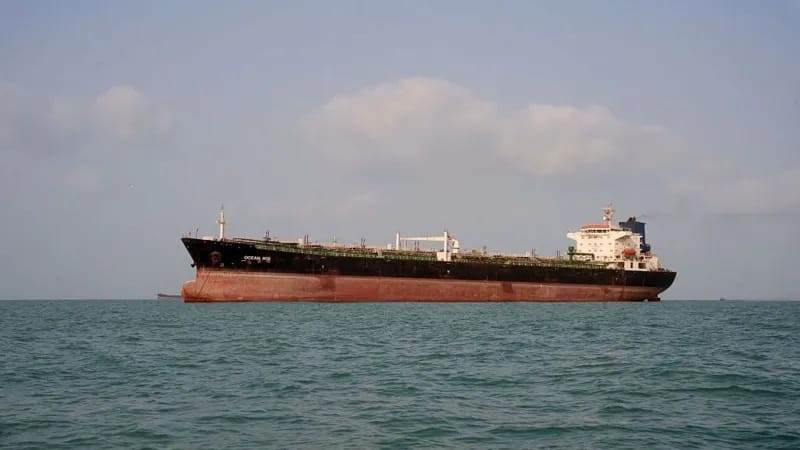
    Iran said Sunday that its forces attacked a US naval drone trying to enter the Strait of Hormuz, hours after targeting ships in retaliation for American strikes on three oil tankers.

    The latest round of clashes, which began with US raids last week, comes amid a deadlock in their six-month war.Iran has maintained its stranglehold on the strategic Strait of Hormuz while Washington continues a counter-blockade of Iranian ports.

    Washington is also seeking to choke Iran’s economy, rolling out sanctions on entities with financial links to the Islamic republic in a bid to force it into submission.

    The Islamic Revolutionary Guard Corps, the ideological arm of Iran’s military, said Sunday it “attacked an American military unmanned surface vessel” attempting to enter the strait, according to a statement carried by state television.

    Hours earlier, the IRGC said its naval forces “targeted three oil tankers on the unauthorised route of the Strait of Hormuz and three vessels affiliated with the child-killing America in other areas”.

    It warned ships not to attempt to transit by unapproved routes.

    This photo shows a general view of a damaged boatyard that was hit in recent days by strikes carried out by the US military at the Five-Step local fishing harbour in the port city of Bandar Abbas in southern Iran on September 5, 2026. (Photo by Atta KENARE / AFP) /

    On Saturday, US Central Command (CENTCOM), which oversees American military operations in the region, said it struck tankers linked to the Iranian Guards, accusing the most powerful arm of the Iranian military of unsuccessfully firing at American warships.

    “Following Iran’s failed attacks, CENTCOM permanently disabled the IRGC crude oil carriers M/T Downy off the coast of Kharg Island and M/T Stark 1 near Jask,” it said.

    “American forces also completely destroyed the unladen crude oil carrier M/T Kylo… in the Gulf of Oman, striking the vessel in multiple critical locations to render it inoperable after the crew was directed to abandon ship.”

    Video posted by CENTCOM showed large fireballs and billowing flames after projectiles slammed into the ships.

    The three vessels were “part of a multibillion-dollar shadow network that funds the IRGC and its regional proxies”, it said.

     ‘Higher economic cost’

    The Guards meanwhile claimed the two American warships they targeted had been “forced to retreat” after “suffering damage”, but CENTCOM said those ships successfully evaded Iranian attacks.

    CENTCOM commander Admiral Brad Cooper said after the operation: “If you shoot at two of our ships, we will impose an even higher economic cost — taking out three of yours.”

    The Iranian foreign ministry hit out at Washington over the strikes on oil tankers, calling them “illegal and aggressive actions”.

    A correspondent for Iranian state TV in Jask in the southern province of Hormozgan said one of the tankers was empty and the second was carrying oil. The crews were transported to shore on lifeboats, they said.

    Another state TV correspondent on Kharg Island said the attack there caused no casualties.

    Iran’s Khatam-al Anbiya central military command warned that if the US continued its attacks, then Tehran’s retaliation against US warships would be “more severe than before, and there is a possibility of their expansion”.

    The administration of US President Donald Trump has tried to downplay the significance of the six-month conflict, which has proven increasingly unpopular at home as midterm elections near.

    US Vice President JD Vance went so far as to say that he “wouldn’t call it a war”.

    Trump reiterated that view on Friday, calling the war “small potatoes” for Washington.

    Iran’s Security Chief Mohsen Rezaei warned this week that the Islamic republic had adopted a “new strategy” against Washington that “will shatter your foundations”.

    The US has been trying to step up pressure on Tehran in a bid to wrestle control of the Hormuz strait, through which one-fifth of world oil supplies previously flowed.

    A fragile ceasefire between the two sides collapsed in July after attacks on commercial ships in the strategic waterway.

    Trump has in recent weeks repeatedly threatened to claim sovereignty over the strait, even posting a map showing it as “new US territory”.

    Vance has insisted the US will not reopen talks with Iran until it ends attacks on commercial shipping in Hormuz. AFP

  • US Strikes Three Iranian Oil Tankers After Warships Targeted

    US Strikes Three Iranian Oil Tankers After Warships Targeted

    The US military says it has hit three Iran-linked oil tankers after ballistic missiles were launched towards two of its warships in the region.

    US Central Command (Centcom) said on Saturday it had “permanently disabled” a tanker near Kharg Island and another near the Strait of Hormuz, and “completely destroyed” a third in the Gulf of Oman.

    Centcom said it “successfully evaded” multiple attacks from the Islamic Revolutionary Guard Corps (IRGC) targeting a US aircraft carrier and guided-missile destroyer. No American troops were harmed, it said in a statement.

    Iranian state media earlier reported that one of its tankers had been struck off the coast of Kharg Island.

    Tehran did not immediately acknowledge attacks on US ships.

    Admiral Brad Cooper, Centcom’s commander, said in a statement on Saturday: “Let the message to the IRGC be clear: If you shoot at two of our ships, we will impose an even higher economic cost – taking out three of yours.”

    “We will not hesitate to defend American forces, and if necessary, destroy Iran’s limited and exposed oil fleet.”

    Centcom, which oversees US military operations in the Middle East, claimed that the three Iranian oil tankers were “part of a multibillion-dollar shadow network that funds the IRGC and its regional proxies”.

    The strikes come nearly a week after renewed attacks between the US and Iran, which followed a period of relative calm between the warring sides.

    Earlier this week, US Vice-President JD Vance said the US military was investigating Iranian claims that American strikes killed at least four people including two children at a wedding in southern Iran.

    Humanitarian group the Iranian Red Crescent Society said shrapnel from a missile hit the ceremony at a home in Sirik on Tuesday, prompting Tehran to declare it a “war crime”.

    A 60-day ceasefire between the US and Iran formally expired last month, with little sign of a further diplomatic settlement on the horizon.

    Days after the ceasefire expired, US President Donald Trump said the US would launch tougher economic measures against Iran, as well as any country that helps or does business with it.

    The US and Israel first launched wide-ranging strikes on Iran on 28 February, with Iran responding by attacking Israel, US bases and allied states in the Gulf, and effectively closing the Strait of Hormuz to marine traffic.

    The conflict over the strait has raised energy prices globally. And, ahead of the US midterm elections in November, Trump is facing pressure over how much the war is costing American consumers. BBC