
Tag: Insecurity in Nigeria

  • Nigeria Mourns

    Nigeria Mourns

    By Abdul Mahmud

    Two incidents drew attention to our country’s deepening security crisis this month. The first happened in Zamfara State. A pregnant woman was abducted by terrorists. She gave birth while in captivity. The leader of the terrorist group took her newborn twins. Then he threw them to his dogs. The dogs ate the babies alive. One after the other. The second occurred in Kogi. Lanlege Samuel Adewale was kidnapped in Kabba. He tried to protect his neck from a machete. His left hand was chopped off instead.

    These are not moonlight tales spun to amuse children or transmit ancestral wisdom. They are not the parables of old, meant to echo the values of bygone eras or light the moral path for the future. Or put another way, they are not the moral scaffoldings of ancestral wisdom. They are not the echoes of a noble past meant to instruct the future. No. These are the brutal chronicles of a country in descent. These are simply the grotesque accounts of a country that bear neither lesson nor legend, only the raw stench of evil and the deafening silence of a state in retreat. Such horrors happen every day. Some are reported. Most are not. The victims vanish into the dark forests of our country. Families pay ransom, bury the dead, or live with permanent scars. The ones live to recount their stories.

    This is not just about crime. It is not just insecurity. It is a state failure. A classical state failure. Across large swathes of our country, the government no longer governs. Bandits and terrorists have taken over. They run parallel governments. They control territories. They rule by fear. They collect taxes. They impose laws. They deliver jungle justice. There is a governance crisis. A catastrophe that is palpable and visible. The basics of statehood are absent. Where our country isn’t struggling to exist within itself, it is ceding many parts of itself. It no longer imposes its authority in many parts. In some places, it is an absent authority. From Zamfara to Katsina. From Borno to Zamfara, Plateau in-between, bandits and terrorists have seized land, people, and local power. From Kwara to Niger, they are building and resuscitating terror cells. Abuja is too close for comfort. Be afraid; be very afraid. Of the truth, these are not ragtag criminals. They are terrorists. Organised. Armed. Funded. And strategic, to the extent that their purpose is to turn our country into an Islamic caliphate.

    They understand our country’s weaknesses. And they exploit them.

    Meanwhile, our country is slow to tackling the menace. Disorganised. Reactive. Often silent. Security meetings have become the favourite occupation of the president and his men. All talks about threats to national security. No action. The threats grow. The danger gets closer home. The military is everywhere. But nowhere. Soldiers are deployed in 34 of 36 states. Still, citizens are kidnapped daily. Villages are attacked. Markets are raided. The police are overwhelmed. Intelligence agencies don’t coordinate. Information is hoarded, not shared. Budgets are announced, but weapons don’t arrive. Fighting troops complain of old rifles, low morale, and unpaid allowances.

    The security architecture is broken.

    But, perhaps, the most tragic failure is the State Security Service (SSS). This is the Service that should be leading the fight against terrorism. The one with the power to detect plots, infiltrate networks, and prevent attacks. But what does it do? It tracks critics. Professor Pat Utomi is its latest victim. The grouse against him is that the opposition’s shadow government he proposes in a democracy is a threat to democracy itself. Ludicrous. Utomi is not the threat. The real threats are the terrorists who operate in the forests of our country, occasionally foraying into towns to cause mayhem and chaos. But the SSS chases citizens rather than hunt down the terrorists. Our country is on fire, and our spooks are chasing rats. This is not intelligence work. This is a distraction. And it is dangerous. Does it not show how far our country and its institutions have drifted from their purposes?

    The duty of any country is to protect lives and property. Everything else comes after. If a government cannot provide security, it loses legitimacy. Here, today, legitimacy bleeds. Citizens no longer trust their country. They no longer rely on it for safety. They turn to local hunters, vigilantes, and militias. In the North-West and North-Central, armed groups like Yan Sakai and local vigilantes fill the gap. In the South-East, the Eastern Security Network claims to defend the Igbos. In the South-West, Amotekun was born out of frustration. These groups often do what the police won’t. But they are not trained. They are not regulated. Sometimes they protect. Other times they kill. They will eventually become the problem. Sooner. Not later.

    The more people turn away from our country, the weaker our country becomes. This is how countries collapse. Not all at once. But in pieces.

    Village by village. Town by town. City by city. State by state.

    The warning signs are clear.

    More than 3 million citizens are displaced. Whole communities have fled their ancestral lands. Children are out of school. Farmers have abandoned farms. Food prices have soared. Bandits burn crops and demand ransom before planting. Insecurity now fuels hunger. Hunger fuels desperation. Desperation fuels violence. The economy suffers. Investors flee. Jobs vanish. Even Abuja, once safe, is under siege. Kidnappings happen in the suburbs. Gunmen raid homes. No place is truly safe. Our country is under siege. But this government acts like it’s business as usual. Its spokespersons hold press briefings. They issue press statements. Occasionally, the president issues marching orders to the Service Chiefs. The Service Chiefs make promises. The other arm of government, the legislature, often straddles the Fanonian fence of indifference, watching crises unfold like a passive spectator. Now, and then, it stirs like the wind in the trees, bringing nothing to life, to paraphrase that late great American writer and humourist, E.B White. It is always half-awake, half-concerned. Its knee-jerk? A committee. Then another. An endless parade of legislative committees clothed in the garb of urgency. The latest act in this tired play is the proposed Senate’s ad-hoc committee, chaired by my old friend, Opeyemi Bamidele, to organise a three-day national security summit. Another grand convocation of platitudes. Another theatre of absurd deliberations. But as always, no plan, no resolve, no action, just photo ops. Just echoes in the hall, and silence on the ground. Then, they move on. The killings continue.

    The government must change course. And it must act fast.

    Security must be redefined. Not just by the number of troops. But by presence, intelligence, speed, and effectiveness. Security agencies must share information. They must work together. Not against each other. The State Security Service must turn its gaze in the direction of terrorists, not on the tongues of citizens. Its mandate is to safeguard the nation, not to muzzle dissent. President Tinubu once declared, “Let the poor breathe.” I say now, with equal urgency: let the citizens speak. Let them question. Let them protest. Let them shout into the winds of power without fear. For the lifeblood of democracy is not silence, but speech. The real enemies of the state do not hide behind hashtags. They bear arms and spread terror. The threat is not in tweets, but in the ticking of bombs. The top brass of our military must shed its old, corrosive habit of turning defence budgets into personal fortunes. The battlefield, not the bank, is where its loyalty must lie. Their true duty is not in procurement scandals, but in the protection of citizens. It must secure our borders with honour, and neutralise the terror that stalks our country. It must dismantle every enclave where terrorists find shelter, where fear nests and multiplies. But more than that, it must wage a parallel war for the hearts and minds of our citizens. For no victory is complete if communities feel invaded, not embraced. The soldier must be seen not as a conqueror, but as a shield. Not as a stranger, but as a guardian-angel. When our police force isn’t engulfed in bribery and corruption, it shows up shaking down citizens at roadblocks and on street corners, not injustice. Its presence breeds fear, not safety. This must change. We need a new vision of policing; one rooted in reform, not repression. A Police Force that serves, not shakes down. Our country cries out for local policing. Officers drawn from our communities. Trained not only in tactics, but in the language and customs of our people. Equipped not just with weapons, but with intelligence, empathy, and the trust of those they serve. Real security begins when the badge is a symbol of safety, not the insignia of exploitation.

    Security, though essential, is not sufficient on its own. No country shoot its way to peace. Citizens must confront the uncomfortable truths. They must ask the tough questions: what drives their compatriots into the arms of bandits and terrorists? What poisons their souls so deeply that terrorism, banditry and kidnapping become their vocations? The answers are etched in the margins of society: anger, poverty, unemployment, despair. These are not just statistics; they are the seeds of rebellion, sown in the fields of the countryside abandoned by justice and forgotten by opportunity. Until our country addresses the silence in empty stomachs and the ache in idle hands, the minds of those left behind, forgotten, will remain the devil’s workshop. No wall will be high enough, no gun will be strong enough to secure the peace our country seeks.

    But, there are specific things our country must do to stem the blood tide. The North, which is at the heart of the current conflagration, has millions of out-of-school children. The highest in the world. These children become easy targets. Our country and its rulers must invest in education. In jobs. In agriculture. In dignity. When angry children have no stake in a country, they are the first to join up in the parade of torches to burn their country. Governors must stop building endless flyovers where there are no persistent gridlocks. And start building security. They must stop funding convoys that stretch from Timbuktu to Samarkand. Serengeti, in-between. And start funding police stations. They must stop stealing. And start governing. Tinubu’s government must lead. But states must act.

    There is no excuse for this terror stalking our country. None. Our country is bleeding. Citizens are already losing faith. Losing hope. Every day, more citizens flee. To Europe. To Canada. To anywhere. Those who stay live in fear. Our country and its rulers must act now. Or it will be too late. Our country needs to be saved. But saving it requires courage. Truth. Discipline. It requires facing reality. Not spinning lies. Time is running out.

    Our country is burning. While history has many examples in Somalia, Libya and Syria, our rulers should stop chasing rats.

    They should put out the fire as citizens mourn their dead. And Nigeria mourns. In this shadow of mourning, grief descends like a heavy fog, thick, suffocating, inescapable. Hearts, fragile and weary, reach out for solace. In the sacred rhythm of the Beatitudes, we hear the solemn promise: “Blessed are those who mourn, for they shall be comforted.” But in our country of unending funerals, who brings comfort to mourners? Who wipes the tears of mothers burying sons, of fathers clutching silence where laughter once lived? Who stands in the breach for citizens battered by loss and forgotten by power?

    Nigeria mourns, but where is the hand that heals? Where is the balm for this collective sorrow?
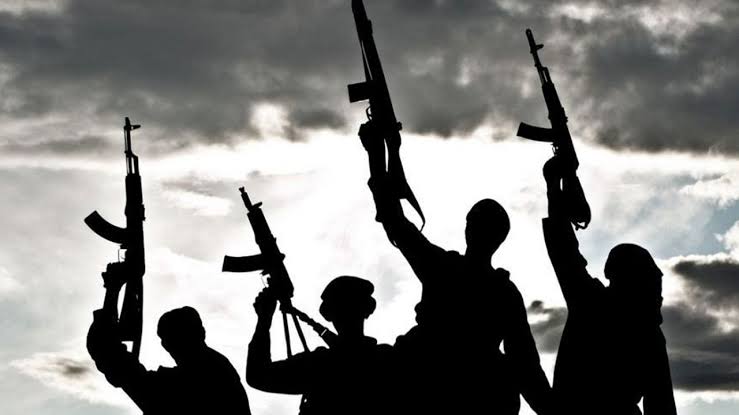
  • Mahmuda, Lakurawa and the Urgency of Securitisation

    Mahmuda, Lakurawa and the Urgency of Securitisation

    By Abdul Mahmud

    Terrorism is changing in the northern region of our country. The faces are new. Some are old. The methods are familiar. The threat is growing. Two new groups have emerged. One is Mahmuda. The other is Lakurawa. Add the familiar curmudgeons: ISWAP, Boko Haram and Ansaru and you will have a clearer glimpse of the deadly compositions and boundaries of the ill-tempered cauldrons they have established in the north – from Kwara State to the fringes of Zamfara State. Their names are now etched into the long, tragic history of terror in our country.

    One Sunday night last month, suspected members of Mahmuda struck. They attacked Ilesha Baruba and Kemaanji. These are peaceful towns in Kwara State. The attacks stretched across Baruten and Kaiama local governments. Lives were lost. Families were displaced. Silence descended after violence. Mahmuda is a new name. But the pattern is old. Sudden strikes. Coordinated assaults on vulnerable citizens in remote villages. The terrorist group is expanding. It has now entered Niger State. This is dangerous.

    Lakurawa is another new group which operates largely in the northwest. Its ideology is extreme. Its actions are brutal. The terrorists who people the group flog citizens for listening to music. Music. An act of joy. An act of identity.The federal government has declared Lakurawa a terrorist group. This is a step in the right direction. But it came late. Lakurawa has been active for years. It crossed into our country from Niger. Its members settled in border communities. They married local women. They recruited local youths. They became part of the social fabric. Then, they turned it into a web of violence. Lakurawa is not alone. It has ties to jihadist factions in Mali and Niger. The Sahel is burning. The fire is spreading south. Our country’s borders are porous. And terror and terrorists move freely. Our country is now the fertile ground for terrorism. A cradle for a new kind of war. A war without honour. Without fronts. Without rules. It is the war Professor Richard English, one of the world’s foremost scholars on terrorism, calls a distinct form of warfare. One that feeds on fear. Thrives in broken states. Spreads in the cracks of our silence. It is not fought on battlefields, but in markets, mosques, and schools. It creeps into daily life. It redraws the map of safety. This is the war our citizens now face. The war our country allowed to take root.

    The emergence of these new groups poses deep threats to national security. To public order and safety. To our collective peace. These are not isolated criminals. They are ideologically driven. They have military training. They have weapons. They have intent. Their goal is domination. Not just of space, but of minds. They do not only kill. They control. They dictate how people live. What they hear. What they wear. What they believe. This is not just crime. This is terrorism. And terrorism is war. It is a war without fronts. A war without uniforms. A war against the state. Yet, our country is slow. It is uncoordinated. Its responses are reactive, not preventive. It cannot continue like this.

    This is where securitisation becomes relevant.

    Ole Waever and Barry Buzan, two scholars in international relations, introduced this concept. It is simple, yet powerful.

    Securitisation means turning a political issue into a security issue. It means naming it as an existential threat. It means treating it urgently. Like a war. Like a pandemic. I must place a caveat here: not every issue should be securitised. But some must. Terrorism is one of them. Waever argues correctly that securitisation begins with a speech act. A leader says: “This is dangerous.” That speech changes everything. It moves the issue from routine politics to emergency politics. Once securitised, the issue gets priority. Resources flow. Action follows. Our country must securitise Mahmuda and Lakurawa. These are not bandits. These are terrorists. These are ogres. Call them that. Treat them as such- the enemies of the state. But, it goes beyond treating terrorists as enemies, our leaders must act. Not just talk. They must frame the threats in clear, urgent terms. They must explain it to the citizens. They must build support for tough measures. And they must implement those measures.

    Securitisation helps build consensus around emergent threats. It unites security agencies. It gives the military a clear mandate. It galvanises public awareness. But securitisation also comes with responsibility. It must not be abused. It must not target political opponents. It must not trample on rights. It must be precise. It must be justified.

    Mahmuda and Lakurawa justify it.

    There is also the need for intelligence reforms. These terrorist groups did not appear overnight. They grew under the radar. They expanded in plain sight. They took root in the vast forgotten and ungoverned spaces of our country. They fed on religious extremism, raw, rigid, and restless. A pervasive restlessness so often twisted into a cry for blood. The North, long burdened by fragile fault lines, became the staging ground of terrorists. It offered not just land, but history. A history where belief has too often flirted with brutality. Where fervour, when unmoored from reason, spills easily into violence. In this space, ideology became a weapon. And faith, once sacred, was repurposed into fire. If intelligence had worked, Mahmuda would not have expanded. If intelligence had worked, Lakurawa would not have merged into our border towns, establishing its own geography of bloody orgies.

    Our country needs human intelligence. Not just drones. Our country needs locals to trust it. Not fear it. Our country needs early warning systems. Community policing. Local vigilance.

    Securitisation must begin at the community level. Imams. Teachers. Farmers. Traders. They know what happens before Abuja does. They must be part of the solution. Our country must also fix its borders. The Nigeria-Niger border is not a line. It is a zone. A corridor of trade, migration and, now, terror. Lakurawa uses it. So do others. Our country needs joint patrols. Cross-border cooperations. Shared intelligence. A regional counter-terrorism strategy. West Africa must work together. Terror is regional. Our country’s responses must be the same.

    And yet, while we act, let it be remembered: force alone does not end terrorism. Ideas must be fought with better ideas.

    Why do young men join Mahmuda? Why do they flock to Lakurawa? Why is Ansaru establishing terrorists’ cells in Kogi State? It is because they seek power. Because they seek purpose. Because they feel abandoned.

    Our country must not abandon its citizens. Development is prevention. Schools. Jobs. Healthcare. Roads. These are weapons against terror. When citizens have hope, they resist terror. When they feel safe, they report threats. When they trust the state, they defend it.

    Securitisation must go hand in hand with human security. Not just military security. The North is bleeding. But it is not yet lost. Our country can still act. The north can still be saved. Our country must first call things by their names. Mahmuda is a terrorist group. Lakurawa is a terrorist group. Their ideologies are violent. Their actions are evil.

    Our country and its rulers must respond decisively. Today. Not tomorrow. This is not just a northern problem. It is a national one. What starts in Kwara spreads to Abuja. What burns in Niger may soon reach Lagos. The sum of the part is connected to the whole. Not greater.

    National security is not a slogan. It is a duty. Public safety is not a luxury. It is a right. Waever and Buzan teach us to listen to danger. To recognise when politics becomes war. To know when to shift gears. Our country must shift gears. It must treat Mahmuda and Lakurawa as the threats they are. Existential threats. Securitised threats.

    Our country cannot normalise terror. Our citizens cannot live with it. Citizens must end it.

    And to end it, we must first name it.

    That is the beginning.

  • Insecurity: Gunmen assassinate ex-militant leader, Ogede, in Bayelsa

    Insecurity: Gunmen assassinate ex-militant leader, Ogede, in Bayelsa

    Gunmen in military fatigue have shot dead an ex-militant leader, Indukapo Ogede, in Yenagoa, Bayelsa State.

    Ogede, who until his demise was Coordinator of Operations, Darlon Oil and Gas Servicing, was reportedly killed Sunday night at a hotel at the Okutukutu suburb of the state capital.

    Vanguard learned that the armed men ambushed their target at the hotel where they posed as guests after lodging in.

    The deceased was said to have been shot as he made to enter into the hotel premises. He was confirmed dead at the Gloryland Hospital where he was rushed.

    The body has since been deposited at the morgue of the Federal Medical Centre, Yenagoa.

    Spokesman of the state police command, SP Asinim Butswat, confirmed the development and called for calm saying the matter is being investigated.

    Butswat said: “He was killed on Sunday night, the State CID is investigating.”

    Meanwhile, the management of Darlon Oil and Gas Limited has regrettably announced the death of its Head of Operations, Ogede.

    He was killed, execution style, by three armed men suspected to be hired assassins in a hotel, off Tamic Road Okutukutu, Yenagoa, Bayelsa State.

    Indukakpo, who hails from Gada’s Compound in Igbomotoru 1 Community in Southern Ijaw LGA, was shot twice by his assailants about 7.45p.m, on Sunday, leaving him to die in a pool of blood.

    How he died

    Darlon Oil and Gas Limited, in a statement by its chairman, Chief Levi Wilson, said: “Our investigation revealed that the killers who dressed in uniforms that resembled that of the security operatives, entered the hotel in the afternoon of that ill-fated Sunday and paid for three rooms.

    “It was further learnt that after they lodged, they went to the bar of the hotel, where they drank beer while waiting for their victim who had gone out for an assignment.

    “According to eyewitness testimony, the behaviour of the assailants raised suspicion, and as a result, friends of the deceased decided to put calls through to warn the deceased, but he allegedly didn’t take the calls because he was driving at the time.

    “Unfortunately, when he arrived the premises of the hotel about 7:45p.m., the gunmen ran towards him, shot him twice, one on the chest and the other on his lower abdomen, leaving him for dead.

    “The victim was eventually confirmed dead at the Gloryland Hospital at Opolo, Yenagoa, several minutes later, from where his body was moved to the morgue of the Federal Medical Center.

    “We wish to use this medium to appeal to the various law enforcement agencies to investigate the killing and bring the perpetrators of the dastardly act to book in a bid to ensure that such incident do not repeat itself in the nearest future.

    “For us, this is one death too many, particularly because the deceased left behind his parents, wife and children. We wish this never happened, but we are all pencils in the hands of our Maker.

    “We are, therefore, left with no choice than to accept God’s decision. We commiserate with the family of the deceased and the entire Darlon Oil and Gas Limited family.

    “We share in the pains of his family and pray the almighty God to strengthen them at this somber time and always. We also pray for the repose of his soul.”