Tag: Inec

  • 2027: Atiku Demands Publication of 103m Voters’ Register

    2027: Atiku Demands Publication of 103m Voters’ Register

    Precious Nwonu, Enugu

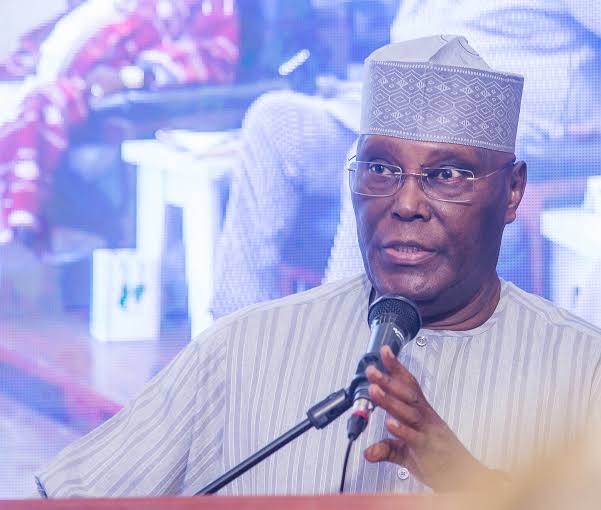
    Former Vice-President Atiku Abubakar has urged the Independent National Electoral Commission (INEC) to publish the preliminary voters’ register ahead of the 2027 general election, warning that failure to make the list accessible could erode public confidence in the electoral process.

    Atiku made the demand in a statement issued on Thursday by Phrank Shaibu, Director of Strategic Communication of the African Democratic Congress Presidential Campaign Council.

    He said voters should be allowed to inspect the register, challenge questionable entries and correct omissions before the election.

    INEC had announced that the preliminary register, containing more than 103 million registered voters, would be available for public scrutiny from October 9 to 15. The exercise was intended to enable voters to report false entries and missing names.

    However, Atiku alleged that the register was not accessible on the commission’s online portal during the period.

    “INEC has announced more than 103 million registered voters. Nigerians went to its portal to inspect the names and found an empty page. That is an outrage. A figure cannot answer an objection,” he said.

    The former vice-president argued that the alleged failure to publish the list violated Section 19(1) of the Electoral Act 2026, which he cited as requiring the register to be displayed at registration areas and online.

    He called on INEC to release the register by local government, area council and ward, while providing voters with a full opportunity to identify and correct errors.

    Atiku also questioned what he described as conflicting statements from the commission’s chairman concerning the timing of the public display.

    He said the chairman reportedly stated on October 5 that the exercise had already been completed, while INEC subsequently announced October 9 to 15 as the period for public scrutiny.

    “Which statement is true? Where was the register published? For seven full days, or for no days at all?” he asked.

    Atiku further requested that INEC disclose the dates, links and access records relating to the reported online publication of the register.

    Beyond the voters’ list, he raised concerns about the authentication of ballot papers, citing Section 63(2) of the Electoral Act 2026. The provision, as referenced in his statement, allows a returning officer to count a ballot paper without the commission’s official mark if satisfied that it came from a book supplied to the polling unit.

    He questioned how such a determination would be verified and challenged, urging INEC to establish safeguards against counterfeit ballot papers.

    “INEC must set out enforceable safeguards against counterfeit ballots, and the National Assembly must close any loophole that leaves the authenticity of a vote to an officer’s unsupported assurance,” he said.

    The statement also alleged that INEC had not responded to inquiries about companies awarded contracts to print sensitive election materials.

    Atiku maintained that the ADC and its presidential candidate were entitled to information about the procedures and safeguards that would determine the credibility of the 2027 presidential election.

    He accused the administration of President Bola Tinubu of expecting Nigerians to trust an electoral process without adequate access to the voters’ register.

    The former vice-president warned that preventing voters from examining the list could make it difficult to determine whether names had been improperly added or removed.

    He called on international partners, election observers and democratic institutions to urge INEC to make the register available before election day.

    “Transparency before the vote is as essential as scrutiny of the results afterwards,” Atiku said, insisting that voters must be able to confirm their registration details and challenge irregularities.

    He urged the commission to publish the register, clarify the dates of the public display and provide answers to concerns about ballot-paper authentication.

  • SERAP Sues INEC Over Alleged N126.46bn Electoral Fund Irregularities

    SERAP Sues INEC Over Alleged N126.46bn Electoral Fund Irregularities

    Precious Nwonu, Enugu

    The Socio-Economic Rights and Accountability Project has filed a lawsuit against the Independent National Electoral Commission at the Federal High Court in Abuja, seeking details of the expenditure of more than N126.46bn allocated for electoral operations.

    The organisation is asking the court to compel INEC to disclose how the funds were released, spent and disbursed, including the identities of contractors, suppliers and beneficiaries, as well as the beneficial owners of the companies involved.

    The suit, marked FHC/ABJ/CS/2507/2026, followed allegations contained in the 2023 audited report of the Auditor-General of the Federation, published on August 7, 2026.

    According to SERAP, the report identified several transactions involving alleged breaches of procurement rules and insufficient evidence that goods and services paid for had been delivered.

    The case was filed by SERAP’s lawyers, Kolawole Oluwadare, Kehinde Oyewumi and Andrew Nwankwo.

    The organisation said the allegations raised serious questions about the management of public funds by an institution constitutionally responsible for conducting elections.

    “Electoral resources are public resources. INEC must be able to account for every naira, demonstrate that it was lawfully spent and show that it served the purposes for which it was appropriated,” SERAP stated.

    One of the major transactions highlighted in the suit involved N112.16bn allegedly paid for ballot boxes, electoral devices and other election materials without competitive bidding or a certificate of no objection from the Bureau of Public Procurement.

    SERAP quoted the Auditor-General as saying there was no evidence that the items had been procured and that the contracts were awarded to companies whose competence, experience, capacity, addresses and factory locations were unknown.

    The audit report reportedly raised concerns that the funds might have been diverted and recommended their recovery.

    The organisation also cited an alleged payment of N1.06bn for Toyota Prado TXL 2021 model vehicles, claiming the procurement was conducted without advertisement, competitive bidding, bid evaluation or the required certificate from the procurement bureau.

    According to SERAP, the Auditor-General questioned whether the transaction involved inflated contract costs or a possible loss of public funds.

    Another transaction involved N3.14bn allegedly paid to four contractors for ballot guides, sensitive materials and result sheets before the contracts were awarded.

    SERAP said the audit report recommended recovering the money and remitting it to the Treasury over concerns that the funds might have been diverted.

    The lawsuit further identified N9.25bn allegedly paid under 22 contracts for similar goods and services. The contracts were reportedly awarded on the same day and allegedly divided to circumvent procurement procedures.

    The organisation said the Auditor-General questioned whether payments had been made for items that were never supplied.

    SERAP also cited an alleged N129.38m payment to 19 accounting firms for financial audit services, stating that the report found no evidence of the utilisation, requests or expenditure associated with the consultants.

    Other transactions highlighted in the suit included N504.49m allegedly paid for accreditation devices and N235.10m for sleeping mats and digital archiving services.

    Regarding the accreditation devices, SERAP said the Auditor-General questioned whether the expenditure represented value for money because the APG had expired before the security licence key was delivered, while the software was valid for only four months.

    The payment for sleeping mats and digital archiving services also reportedly raised concerns about the eligibility and capacity of the contractors involved.

    SERAP is asking the court to direct INEC to provide documentary and physical evidence showing that the electoral materials covered by the audit findings were procured and delivered.

    It also wants the commission to disclose the current location and status of the materials and explain whether the payments corresponded with actual deliveries.

    The organisation further seeks an order preventing the disposal, transfer, destruction, write-off or other handling of electoral equipment and public assets covered by the allegations in a manner that could undermine accountability.

    It is also requesting the publication of the names of contractors, suppliers and consultants who received the payments, alongside details of public officials who authorised or facilitated the transactions or benefited from them.

    SERAP argued that Nigerians were entitled to information about the use of public funds, particularly those allocated to an institution responsible for managing the country’s electoral process.

    The organisation cited Sections 13 and 15(5) of the 1999 Constitution, which address the responsibilities of public institutions and the obligation of the state to abolish corrupt practices and abuse of power.

    It also referenced Nigeria’s obligations under the United Nations Convention against Corruption, the International Covenant on Civil and Political Rights and the African Charter on Human and Peoples’ Rights.

    SERAP maintained that transparency in electoral spending was particularly important as Nigeria prepares for the 2027 general elections.

    “With the 2027 general elections approaching, transparency and accountability in the management of these funds are essential to safeguarding public confidence in the electoral process and ensuring that resources intended to support credible elections are properly utilised,” it stated.

    The allegations contained in the audit report have not, in the information provided, been established by a court, and the suit seeks to compel INEC to account for the transactions.

    No date has been fixed for the hearing.

  • Tinubu Nominates Six INEC Officials, Seeks Senate Confirmation Ahead Of 2027 Polls

    Tinubu Nominates Six INEC Officials, Seeks Senate Confirmation Ahead Of 2027 Polls

    Precious Nwonu, Enugu

    President Bola Tinubu has nominated six officials for positions at the Independent National Electoral Commission (INEC), including four national commissioners and two Resident Electoral Commissioners (RECs), ahead of the 2027 general elections.

    The nominations were announced on Friday by Bayo Onanuga, the President’s Special Adviser on Information and Strategy.

    Tinubu has forwarded the nominees’ names to the Senate for screening and confirmation, urging lawmakers to expedite the process ahead of the elections. He also reappointed Dr Bala Bila as the national commissioner representing the North-East.

    Among the nominees, Professor Mustapha Aliu is expected to replace Professor Abdullahi Zuru as the national commissioner representing the North-West, while Bashir Muhammed Umar has been nominated to succeed Professor Muhammad Adamu as the North-Central representative.

    The President also nominated Mrs Oluwatoyin Babalola, the current Resident Electoral Commissioner in Osun State, as the national commissioner representing the South-West. She is expected to replace Professor Cornelius Ajayi, whose tenure ends on October 24, 2026.

    For the two REC positions, Tinubu nominated retired permanent secretary Dr Samuel Akinjide Akinleye to represent Ekiti State and Zahradden Basiru Sanusi from Jigawa State to replace Professor Saidu Ahmed Babura.

    The appointments come as INEC steps up preparations for the 2027 general elections. Under the commission’s revised timetable, presidential and National Assembly elections are scheduled for January 16, 2027, while governorship and State Houses of Assembly elections will hold on February 6, 2027.

    INEC is also planning to deploy more than 1.4 million ad hoc personnel for the elections, mainly from the National Youth Service Corps (NYSC). The figure is higher than the approximately 1.2 million personnel deployed during the 2023 general elections.

    The commission told the National Assembly in February that it would require ₦873.78 billion to conduct the 2027 elections, in addition to ₦171 billion for its routine operations in 2026. The proposed election budget is significantly higher than the ₦313.4 billion released for the 2023 polls.

    As part of its preparations, INEC is developing a real-time election readiness tracker to monitor activities across the 36 states and the Federal Capital Territory.

    The system is expected to provide updates on logistics, recruitment and training of ad hoc staff, technology deployment and other election-related operations, helping the commission identify gaps before election day.

  • INEC Inaugurates Logistics Committee Ahead Of 2027 Election

    INEC Inaugurates Logistics Committee Ahead Of 2027 Election

    Precious Nwonu, Enugu

    The Independent National Electoral Commission (INEC) is set to inaugurate its logistics committee for the 2027 general elections on Thursday in Abuja.

    The inauguration will be followed by an inaugural meeting between the commission’s leadership and members of the committee at INEC’s headquarters.

    The committee is expected to coordinate logistics and distribution arrangements to ensure the smooth conduct of the forthcoming elections.

    Its membership includes representatives of transport and maritime organisations, aviation authorities, security agencies and paramilitary services.

    Among the organisations listed are the Nigeria Road Transport Union, Maritime Workers Union, Nigeria Airport Authority and Road Transport Owners Association. The police, Nigerian Air Force and Nigeria Security and Civil Defence Corps are also represented.

    INEC is expected to brief members on their responsibilities and outline the measures required to ensure the timely and efficient movement of election materials.

    The initiative forms part of the commission’s preparations to strengthen operational coordination and prevent logistical challenges during the 2027 general elections.

  • INEC Gives Pantami, Adebutu, Others October 24 Deadline To Challenge Omission

    INEC Gives Pantami, Adebutu, Others October 24 Deadline To Challenge Omission

    Precious Nwonu, Enugu

    The Independent National Electoral Commission has given political parties until October 24, 2026, to report alleged errors involving the omission of their candidates from the final list for the 2027 governorship elections.

    The commission said the deadline was based on Section 32(2) of the Electoral Act, 2026, which allows political parties 14 days from the publication of the candidates’ list to notify it of any alleged wrongful exclusion.

    INEC disclosed this in a statement issued on Tuesday by its National Commissioner and Chairman of the Information and Voter Education Committee, Mohammed Haruna.

    The clarification follows protests by political parties over the omission of several candidates from the final list for the governorship and State Houses of Assembly elections.

    Those affected include the Peoples Democratic Party’s governorship candidates in Ogun and Gombe states, Oladipupo Adebutu and Isa Ali Pantami, respectively.

    The Nigeria Democratic Congress governorship candidate in Kano State, Aminu Gwarzo, was also missing from the list. In Jigawa State, the African Democratic Congress protested the exclusion of its endorsed deputy governorship candidate, Aminu Ringim, and several other candidates.

    Some affected parties and candidates have demanded explanations and threatened legal action to secure their inclusion.

    INEC attributed its decision to the Supreme Court judgment delivered on September 24, 2026, in the case of *INEC v. Zenith Labour Party*, which upheld the constitutionality of provisions in the Electoral Act governing party membership registers and candidate nominations.

    According to the commission, the Supreme Court upheld Sections 77(5), 77(6) and 77(7) of the Electoral Act, 2026. The provisions require political parties to submit their membership registers within the stipulated period and use them for primaries, congresses and conventions.

    The electoral body said the court also upheld its timetable requiring parties to submit their membership registers between April 21 and May 10, 2026.

    INEC added that the judgment established that parties which failed to comply with the membership-register requirements were ineligible to sponsor candidates for the elections.

    The commission said it applied the ruling when preparing the final governorship candidates’ list, excluding parties that failed to meet the requirements.

    It maintained that the action was consistent with Section 287(1) of the 1999 Constitution, as amended, which requires relevant authorities to enforce court decisions.

    However, INEC noted that the final lists of presidential and National Assembly candidates had been published on September 12, 2026, before the Supreme Court delivered its judgment.

    The commission urged parties that believe their candidates were wrongly excluded from the governorship list to notify it before the October 24 deadline.

    INEC reaffirmed its commitment to transparency, the rule of law and the credibility of the electoral process ahead of the February 6, 2027, governorship elections.

  • Atiku, ADC Demand INEC Clarification On Ballot Printing Contracts, Staff Transfers

    Atiku, ADC Demand INEC Clarification On Ballot Printing Contracts, Staff Transfers

    Precious Nwonu, Enugu

    Former Vice-President Atiku Abubakar and the African Democratic Congress have called on the Independent National Electoral Commission to explain its arrangements for printing sensitive election materials and recent personnel changes ahead of the 2027 general elections.

    Atiku urged the commission to disclose the companies contracted to produce ballot papers and other sensitive materials, while the ADC expressed concern over alleged ethnic bias in the redeployment of staff serving in key departments.

    INEC has scheduled the presidential and National Assembly elections for January 16, 2027, while governorship and state House of Assembly elections are slated for February 6, 2027.

    In a statement issued on Sunday by the Director of Strategic Communication of the ADC Presidential Campaign Council, Phrank Shaibu, Atiku asked INEC to confirm or deny reports that Hitech or an affiliated company had secured a contract to print sensitive materials for the elections.

    The former vice-president said information available to him suggested that more than half of the commission’s sensitive election materials, including presidential ballot papers, might have been assigned to a company reportedly based in France.

    He expressed concern that the identity and credentials of the alleged contractor had not been made public.

    Atiku also questioned reports that the Nigerian Security Printing and Minting Plc would print election materials for only 15 to 17 states, leaving private companies to handle the remaining assignments.

    He urged INEC to publish the names of all contractors, the materials and states allocated to each company, the procurement procedures followed and the security measures governing production, storage and delivery.

    “These reports demand urgent and unequivocal answers. INEC must confirm or deny them and publish the names of every company engaged, the materials and states assigned to each, the procurement method, the security clearances obtained and the safeguards governing production, storage and delivery,” he said.

    Atiku argued that transparency in the production and handling of sensitive election materials was necessary to protect the credibility of the electoral process and prevent public suspicion.

    He also questioned the potential involvement of Hitech or an associated company, citing publicly reported business connections between the Chagoury family, which owns Hitech, and the family of President Bola Tinubu.

    According to Atiku, awarding such a contract to a company with those reported connections could raise concerns about the independence of the electoral commission.

    He maintained that INEC should prioritise qualified domestic security-printing capacity and ensure that every ballot paper, result sheet and other sensitive document could be tracked throughout the production and distribution process.

    The former vice-president extended his call for transparency to the printing of higher-denomination banknotes, urging the Central Bank of Nigeria to disclose its current arrangements and clarify the respective roles of NSPMC and any foreign contractors.

    **Atiku Questions INEC Personnel Changes**

    Atiku also called on INEC to explain recent postings and redeployments involving officials responsible for election administration and technology.

    The statement cited reports that Isa Magaji Gum had been transferred from Electoral Operations to the Voter Registry Department, while Oluyemi Titilayo Adeyemi-Showunmi had been appointed to head Electoral Operations. Dr Lawrence Bayode was identified as the head of Information and Communication Technology.

    Atiku asked the commission to disclose the criteria used in making the appointments and demonstrate that the decisions followed established procedures and were free from political interference.

    “These departments are at the heart of election administration. INEC must explain these decisions, publish the criteria applied and show that every appointment and redeployment followed due process, was based on merit and was free from political interference,” he said.

    However, Atiku cautioned against assuming that any official was compromised because of ethnicity, background or personal associations. He said the commission should address concerns through verifiable information rather than general assurances.

    **ADC Alleges Ethnic Bias In Staff Redeployment**

    Separately, the ADC raised concerns over what it described as a pattern of transfers involving officers from northern states serving in sensitive INEC departments.

    In a statement issued on Sunday by its National Publicity Secretary, Bolaji Abdullahi, the party alleged that some officers working in Electoral Operations and Information and Communication Technology had been moved to other departments and replaced by officials from Lagos and other South-West states.

    The party said it had received complaints and information about the changes, warning that the pattern required an explanation from the commission.

    “We have specific names of officers moved from Electoral Operations and ICT in a number of northern states and replaced with officers from Lagos and other South-West states. INEC may dismiss this as routine. But we have noticed a pattern, especially along ethnic lines, and we are concerned,” the statement read.

    The ADC did not provide the names of the affected officers or documentary evidence to substantiate the allegations in the statement.

    The party said it was not accusing INEC of having a predetermined motive but argued that personnel changes in departments central to election administration should be explained to avoid undermining public confidence.

    It warned that any perception of ethnic or regional preference in appointments to strategic positions could fuel suspicions about the neutrality of the electoral process and allegations of favouritism towards Tinubu and the ruling All Progressives Congress.

    The party urged INEC Chairman, Professor Joash Amupitan, to publish details of the recent postings, the criteria used to select officers for the positions and the reasons for the changes.

    According to the ADC, disclosure of the information would reassure Nigerians that electoral officials would carry out their responsibilities impartially, regardless of their ethnic, linguistic or regional backgrounds.

    The party warned that failure to address the allegations with evidence-based explanations could damage confidence in the 2027 elections.

    The concerns come as political parties prepare for the next general elections, with INEC facing expectations to demonstrate transparency in its procurement decisions, personnel management and handling of sensitive electoral materials.

  • 2027 Elections: INEC Begins PVC Distribution, Displays Voter Register

    2027 Elections: INEC Begins PVC Distribution, Displays Voter Register

    Precious Nwonu, Enugu

    The Independent National Electoral Commission has commenced the display of the preliminary register of voters and distribution of Permanent Voter Cards ahead of the 2027 general elections.

    The exercise, which runs from October 9 to 15, 2026, will enable registered voters to verify their details, submit claims and objections, and collect PVCs issued during the first phase of the Continuous Voter Registration exercise.

    In Plateau State, the Resident Electoral Commissioner, Prof. Sam Egwu, said the exercise would take place across all 207 Registration Areas between 9am and 3pm daily, including weekends.

    In a statement issued in Jos on Thursday, Egwu said the exercise was being conducted in line with Section 19(1) of the Electoral Act 2026, which requires INEC to display the voter register at least 90 days before a general election.

    He urged registered voters to check their names, photographs, dates of birth, polling units and other registration details to identify errors and submit necessary claims or objections within the stipulated period.

    The Plateau REC also confirmed that PVCs from the first phase of the registration exercise, conducted between August 18 and December 10, 2025, would be available for collection.

    In Sokoto State, the Resident Electoral Commissioner, Umar Garba, announced the same seven-day exercise while briefing journalists at the Nigeria Union of Journalists Press Centre.

    Garba said the commission was committed to ensuring that eligible voters had the opportunity to verify their registration information and obtain their cards.

    However, he clarified that PVCs relating to lost or damaged cards, transfers, updates and registrations completed during the second and third phases of the CVR were not yet available. He said INEC would announce when those cards could be collected.

    According to him, PVC distribution would continue at INEC offices across Sokoto’s 23 local government areas after the Registration Area exercise ends on October 15.

    Garba explained that the extension to local government offices would provide another opportunity for eligible voters who could not collect their cards at the Registration Area centres.

    On security, the REC said INEC had worked closely with security agencies throughout the recent voter registration exercise, adding that their advice helped ensure the process was completed without casualties.

    He also disclosed that the commission was consulting security agencies to determine the number of internally displaced persons in Sokoto State and establish arrangements for their participation in the 2027 elections.

    Garba said INEC was working to ensure that eligible displaced persons in officially recognised camps could exercise their voting rights.

    He added that the commission would announce the total number of registered voters in Sokoto State in due course.

  • 2027: INEC Sets October 9 For Nationwide PVC Collection

    2027: INEC Sets October 9 For Nationwide PVC Collection

    Precious Nwonu, Enugu

    The Independent National Electoral Commission has announced that nationwide collection of Permanent Voter Cards will begin on Friday, October 9, 2026, ahead of the 2027 general elections.

    The INEC Chairman, Prof Joash Amupitan, disclosed this on Monday at a strategic workshop for media executives organised by the commission in partnership with Development Alternatives Incorporated and the Nigerian Guild of Editors in Abuja.

    Amupitan said the National Register of Voters had grown to more than 103 million following the commission’s three-phase Continuous Voter Registration exercise.

    According to him, more than 10.6 million Nigerians submitted applications during the registration exercise.

    He added that INEC had completed the public display of the Preliminary Register of Voters, allowing citizens to raise claims and objections, as well as the final biometric clean-up of the register using its Automated Biometric Identification System.

    The INEC chairman said the commencement of PVC collection was a major step in preparations for the 2027 elections, stressing the commission’s commitment to conducting a transparent and technology-driven electoral process.

    Amupitan said INEC would continue to improve the Bimodal Voter Accreditation System and the INEC Result Viewing Portal to strengthen the credibility of the voting and result-transmission processes.

    He identified public confidence as a crucial component of electoral integrity.

    “The ultimate arbiter of electoral integrity is public trust,” he said.

    The INEC chairman also called for closer cooperation between the commission, media organisations, civil society groups and other stakeholders to improve the flow of reliable electoral information.

    He said the commission was willing to engage editors on operational concerns and provide timely information on developments to reduce the space for misinformation.

    Amupitan urged media organisations to establish digital fact-checking desks and said INEC would provide editors with channels to verify information concerning field incidents, logistics and security developments.

    He also proposed a sustained feedback mechanism between INEC and the Nigerian Guild of Editors to assess preparations and address emerging challenges throughout the 2027 electoral cycle.

    INEC Tasks Media On PVC Information

    The Director of Voter Education and Publicity, Victoria Eta-Messi, urged the media to provide citizens with accurate information as PVC collection gets underway.

    Eta-Messi identified misinformation and disinformation as factors contributing to declining public participation in the electoral process.

    She called on media organisations to support voter education by ensuring that information reaching the public was accurate, timely and properly verified.

    ### INEC Proposes 24-Hour Verification System

    The Chief Press Secretary to the INEC Chairman, Adedayo Oketola, said the workshop was designed to strengthen communication between the commission and the media ahead of the elections.

    He said one of the objectives was to rebuild institutional trust through open dialogue between INEC and media gatekeepers.

    Oketola said another objective was to tackle information disorder by developing a system that would allow newsrooms to quickly verify electoral information with the commission.

    He said INEC was seeking “seamless 24-hour fact-verification loops between newsrooms and INEC so that speed would not come at the expense of accuracy.”

    He added that the initiative would also promote shared responsibility among the media, civil society and electoral institutions through ethical reporting, conflict-sensitive journalism and civic education.

    ‘Verify Before You Amplify’

    The Executive Director of the Centre for Media and Society, Dr Akin Akingbulu, said the country was approaching a critical period in its democratic development as preparations for the 2027 elections intensify.

    Akingbulu noted that electoral information was already influencing public discussions across traditional and digital media platforms.

    He urged editors to take seriously their responsibility as gatekeepers of electoral information, particularly amid the growing use of artificial intelligence and the spread of manipulated content.

    He stressed the need for journalists to authenticate information before publication and urged newsrooms to be cautious about deepfakes and unofficial election results.

    “Verification is a two-way street,” Akingbulu said, adding, “Verify before you amplify.”

    NGE Calls For Balanced Election Coverage

    The President of the Nigerian Guild of Editors, Eze Anaba, described the workshop as timely as the country moves closer to the 2027 general elections.

    Anaba said credible elections depended not only on citizens casting their ballots but also on their confidence that their votes would be properly counted and that electoral institutions would operate fairly.

    He urged editors and journalists to uphold accuracy, fairness, balance and the public interest in their coverage of the elections.

    The NGE president also called for stronger access to credible and timely information from INEC to enable the media to effectively inform voters throughout the electoral process.

  • INEC Warns Nigerians Against Fake Voter Registration Website

    INEC Warns Nigerians Against Fake Voter Registration Website

    Precious Nwonu, Enugu

    The Independent National Electoral Commission has warned Nigerians against a fraudulent website falsely claiming that the commission has reopened nationwide voter registration ahead of the 2027 general elections.

    INEC said the fake platform was advertising a purported registration window from September 28 to October 27, 2026, and had no affiliation with the electoral body.

    The commission, in a public notice, urged Nigerians not to click on the website or submit personal information, photographs or documents through it, warning that such details could be harvested and misused by fraudsters.

    According to INEC, the website falsely presents itself as a platform for a “Final Phase of Nationwide Online Voter Card Registration” and claims to offer services including updating voter information, transferring voters to different polling units and replacing lost or damaged Permanent Voter Cards.

    The electoral body stressed that the nationwide Continuous Voter Registration exercise ended on July 26, 2026, and that there is currently no new nationwide online registration exercise.

    INEC had earlier reaffirmed that the July 26 deadline would not be extended, urging eligible Nigerians to complete their registration or update their voter information before the close of the exercise.

    The commission’s official voter registration portal also currently states that the Continuous Voter Registration exercise has ended, while allowing registered voters to check their voter status and PVC collection information.

    The warning comes as political activities intensify ahead of the 2027 general elections. INEC’s revised timetable provides for the publication of the official register of voters on December 15, 2026, while the presidential and National Assembly elections are scheduled for January 16, 2027.

    The commission advised Nigerians to be cautious of websites and social media posts that claim to offer voter registration or PVC-related services outside its officially announced processes.

    INEC urged members of the public to verify election-related information through its official website, verified social media accounts and other recognised communication channels before providing personal information.

    The commission also provided its Citizens Contact Centre for enquiries and complaints, urging Nigerians to report suspicious electoral information through its established channels.

    INEC said vigilance was particularly important as the country approaches the 2027 elections, warning that fraudulent platforms could not only mislead eligible voters but also expose sensitive personal information to criminal elements.

  • INEC Records Over 9.3 Million New Youth Voters Ahead Of 2027 Election

    INEC Records Over 9.3 Million New Youth Voters Ahead Of 2027 Election

    Precious Nwonu, Enugu

    The Independent National Electoral Commission has disclosed that 9,324,349 young Nigerians registered during the 2026 Continuous Voter Registration exercise ahead of the 2027 general elections.

    INEC Chairman, Prof. Joash Amupitan, disclosed the figure on Wednesday at the investiture of newly appointed INEC Youth Ambassadors in Abuja.

    Amupitan, who was represented by National Commissioner, Prof. Rhoda Gumus, said the number demonstrated the growing involvement of young Nigerians in the country’s electoral process.

    In a statement issued on Thursday by INEC Director of Voter Education and Publicity, Victoria Eta-Messi, the chairman said youth participation remained important to strengthening democracy and building public confidence in elections.

    He explained that the appointment of the Youth Ambassadors was part of efforts to strengthen INEC’s engagement with young Nigerians and encourage greater participation in electoral activities.

    “The appointment of these distinguished young Nigerians as INEC Youth Ambassadors is therefore a deliberate step towards strengthening the connection between the Commission and the youth population,” he said.

    Amupitan added that young people were more likely to engage with electoral information when it was communicated through credible and relatable individuals within their communities and social networks.

    He urged the ambassadors to use their platforms to promote voter education, peaceful participation and responsible electoral conduct, while also helping to counter misinformation.

    The chairman further encouraged them to mobilise young Nigerians to take an active role in shaping the country’s democratic process.

    Also speaking, the National Commissioner and Chairman of INEC’s Outreach and Partnership Committee, Prof. Kunle Ajayi, urged the ambassadors to speak out against electoral violence and manipulation.

    Ajayi cautioned young Nigerians against allowing themselves to be used for activities that could threaten their lives or disrupt the electoral process.

    The Minister of Youth Development, Ayodele Olawande, represented by the Deputy Director of Network and Social Mobilisation, Lami Bature, also charged the ambassadors with promoting voter awareness, peaceful participation and responsible citizenship.

    Similarly, the Director-General of the National Orientation Agency, Lanre Issa-Oniru, represented by the Director of Civic Values and Democracy Education, Dr Olukemi Afolayan, urged the ambassadors to promote civic responsibility, electoral integrity and peaceful participation ahead of the 2027 elections.

    Meanwhile, INEC has presented a Certificate of Return to the winner of the Gombe/Kwami/Funakaye Federal Constituency by-election held on September 19, 2026.

    The certificate was presented to the member-elect, Kallamu MaiJama’a, by the National Commissioner supervising Gombe State, Rear Admiral Jamila Malafa (retd.), at the commission’s headquarters in Abuja on Thursday.

    MaiJama’a commended INEC for the conduct of the election, describing the exercise as free, fair and credible.