Tag: Independence day

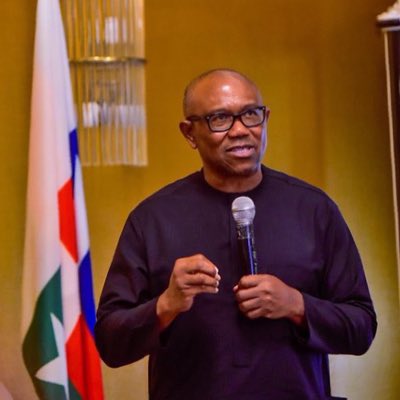
  • 2027: Peter Obi Promises To Spend Presidential Holidays Across Nigeria

    2027: Peter Obi Promises To Spend Presidential Holidays Across Nigeria

    Precious Nwonu, Enugu

    The presidential candidate of the Nigeria Democratic Congress, Peter Obi, has pledged to spend his holidays within Nigeria if elected president in the 2027 general election.

    Obi made the commitment in his Independence Day address in Abuja on Thursday, saying he would use his four-year tenure to travel across the country, engage with citizens and gain a better understanding of their challenges.

    The former Anambra State governor said his proposed approach to governance would involve leading by example and maintaining close contact with Nigerians.

    “As I have always done, I will lead by example. In four years as President of this great nation, I will not spend my holidays outside Nigeria,” Obi said.

    He listed Zamfara, Borno, Kwara, Ebonyi and Edo among states he intended to visit during his holidays, adding that he wanted to experience the country and interact directly with its people.

    “I want to continue to see Nigeria. I want to know Nigeria. I want to spend time with Nigerians, listen to them, understand their challenges and celebrate their resilience,” he said.

    Obi also promised to make governance measurable and accountable, with emphasis on improving the welfare and productivity of citizens.

    He said Nigerians would begin to see tangible results from his administration within its first year if elected.

    On security, the NDC candidate pledged to intensify efforts to tackle terrorism, banditry and other threats, saying farmers should be able to return to their farms while children attend school and businesses operate without fear.

    “No Nigerian should be forced to live in an IDP camp because his or her government has failed to provide security,” Obi said.

    The former governor also criticised the APC-led Federal Government, arguing that Nigeria continued to face serious challenges despite the promises made by the ruling party in 2023.

    He cited poverty, insecurity and the number of out-of-school children among the challenges confronting the country.

    According to Obi, Nigeria’s problem is not primarily a shortage of resources but the failure of successive administrations to translate the country’s resources into improved human development, productivity, security and shared prosperity.

    He also referred to his recent visit to Sokoto State with his running mate, Rabiu Kwankwaso, where they held discussions on insecurity, unemployment, poverty, drug abuse and out-of-school children.

    Obi said their visit to an internally displaced persons camp in Ramin Kura, Sokoto metropolis, exposed the difficult conditions faced by displaced women and children.

    He described the situation as an indication of the challenges confronting communities across different parts of the country.

    The former Anambra governor had previously criticised Nigerian presidents for spending their holidays abroad, arguing that the President should use such periods to visit parts of the country facing security and developmental challenges.

    He said an elected president should remain connected to citizens and use domestic visits to better understand the BN conditions in different parts of Nigeria.

    Obi maintained that while a Nigerian president would need to travel abroad for official engagements, presidential holidays should be spent within the country.

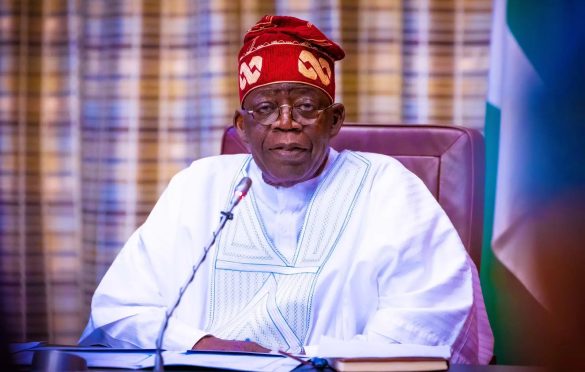
  • Independence Day: Tinubu Declares Nigeria Has Entered Age Of Prosperity

    Independence Day: Tinubu Declares Nigeria Has Entered Age Of Prosperity

    Precious Nwonu, Enugu

    President Bola Tinubu has declared that Nigeria has moved beyond the period of economic reforms and entered what he described as an “age of prosperity,” following measures implemented by his administration over the past three years.

    Tinubu made the declaration in his Independence Day address to Nigerians on Thursday, marking the 66th anniversary of the country’s independence.

    The President acknowledged the economic difficulties faced by Nigerians, saying the country had endured years of insecurity, economic crises, political upheaval and other challenges since gaining independence.

    He said his administration inherited an economy burdened by what he described as deep structural distortions and difficult choices that could no longer be postponed.

    Using a cancer treatment analogy, Tinubu said previous governments had focused on managing the symptoms of the country’s economic problems rather than confronting their underlying causes.

    He defended the reforms introduced since his administration came into office, saying the measures had been difficult but were necessary to correct the direction of the economy.

    According to the President, Nigeria’s economy has grown by more than four per cent in 2026, with both the oil and non-oil sectors contributing to the growth.

    He also said oil theft had declined, inflation had fallen from its peak, foreign reserves had been rebuilt and the foreign exchange market had stabilised.

    Tinubu further stated that Nigeria recorded more than $6bn in non-oil export revenue in 2025, describing the figure as evidence of growing activity among Nigerian businesses.

    The President said the focus of his administration would now shift from economic stabilisation to achieving widespread prosperity.

    He identified reducing the cost of living as a major priority and said the government would pursue measures aimed at lowering the cost of producing and transporting goods.

    Tinubu said the administration would expand mechanised irrigation and dry-season farming, improve access to seeds and fertiliser, increase agricultural mechanisation and invest in storage and transportation.

    He also said the government was continuing to develop roads, railways and ports to improve connections between farms, factories and markets.

    On employment, the President said job creation, enterprise and industrial growth would remain central to his administration’s policies.

    He said the government planned to use Nigeria’s gas resources to power industries, support the revival of factories, expand digital connectivity and invest in skills needed by employers.

    Tinubu also called for increased production of Nigerian goods for both domestic consumption and export, while encouraging young Nigerians to build businesses and create employment opportunities.

    The President acknowledged that many Nigerians continue to struggle with food, education, healthcare and transportation costs.

    He said the hardship predated his administration and was the result of decades of low productivity, inadequate infrastructure and limited economic opportunities.

    Tinubu said the government was strengthening social interventions to support vulnerable households, while improving the National Social Register to ensure assistance reaches people who need it.

    He also highlighted the Nigerian Education Loan Fund as a means of helping students from low-income families access higher education.

    The President cited the Consumer Credit Corporation as another intervention designed to provide working Nigerians with access to credit for assets such as vehicles, solar systems and digital devices.

    Tinubu said his administration would continue working with state and local governments to strengthen primary healthcare, basic education and other essential public services.

    He added that salaries and pensions had been paid on time and in full since 2023, while reforms had also been introduced in the national pension system.

    According to him, the government’s social programmes were intended to support Nigerians while broader economic growth creates sustainable opportunities.

    Tinubu said defeating poverty would require sustained economic growth, discipline and the creation of millions of productive jobs.

    He maintained that the reforms had corrected the country’s economic direction and laid the foundation for long-term prosperity.

    “The age of reform has done its work. Now begins the age of prosperity,” Tinubu said.

    The President urged Nigerians to remain hopeful and united, saying the country had passed through difficult years and must now focus on building a future of greater opportunity.

    He concluded by calling on Nigerians to move forward together and avoid returning to policies that, in his view, had contributed to the country’s previous economic difficulties.

    “Let us go forward together, with faith in ourselves, faith in our country, and faith that the sacrifices we have made will yield their reward,” he said.

    Tinubu wished Nigerians a happy Independence Day and prayed for the continued progress of the Federal Republic of Nigeria.

  • Nigeria @ 61: The time for reflection


    ON Friday, October 1, Nigeria will be 61 years. Whether in the life of an individual or a nation, diamond jubilee is a milestone. Adding one more year is even more consequential and ideally, the drums should be rolled out. But that will be ill-advised. Why? Because there is nothing to celebrate right now.


    Agreed, there are some who will argue that the fact that Nigeria still remains united even after a brutal 30-month fratricidal war is enough reason to push the boat out. But when a country is held together by force of arms and not the consent of the federating units, the sense of unity becomes delusional.


    Others use the incredible accomplishments of Nigerians – men and women – in the arts, sciences, sports, technology and commerce – as a totem pole to hoist the country’s greatness. But while it is true that Nigerians, individually, are excelling globally, they are pulling off those extraordinary feats in spite of, not because of the opportunities provided by the country.


    Truth is, Nigeria, 61 years after independence, has become a graveyard of creativity and innovation. Rather than promote excellence, the country rewards indolence and stifles ingenuity. Nigeria is a killjoy, which explains why most professionals – doctors, nurses, engineers, teachers, journalists, etc. – are fleeing abroad in droves.


    But it has not always been like this. Time was when the country was a beacon of hope for the rest of not only Africa but the Black race. Today, countries that we were at the same level with or even better off at independence have all left us behind. At 61, countries that are not as endowed in terms of human and material resources are now far ahead.


    Something went tragically wrong. The prudish weaponisation of the country’s fault lines by self-serving leaders is to blame. The problem didn’t start with President Muhammadu Buhari, but his lack of capacity to manage the country’s diversities has made it worse.


    So, even if the government is inclined to celebrating, majority of the citizens are not in the mood. Faced with existential crisis, an average Nigerian would rather think of how to survive than celebrate a country that has offered no more than tears, blood and sorrow in the last six years.


    Nigeria is not working. The country is more fractured today than it has ever been in the last half century with all the primordial fault lines that define our interactions as a people of diverse ethnicities and religious inclinations on full parade. We humour ourselves when we claim that Nigeria is still the giant of Africa. It used to be. Not anymore. At 61, there is nothing great about today’s Nigeria.


    A country where the leadership of the national integration agency, the National Youth Service Corps, NYSC, is advising youths serving their fatherland to always let their people keep aside money for the payment of ransom to kidnappers in case they are abducted while travelling to places of their primary assignment is a failed state.


    A country that is the poverty capital of the world is not great. In October 2019, the World Poverty Clock stated that Nigeria with an estimated population of about 205 million people had overtaken India with a population of 1.366 billion people as the country with the most people living in extreme poverty – that is on less than $1.90 or less per day.


    In 2020, data provided by the same group showed that rather than lifting people, more Nigerians had been plunged into extreme poverty with the numbers rising to over 105 million, representing 51 per cent of the population.


    Nigeria’s case is pathetic because poverty is actually on the decline globally as statistics indicate that since 1990, one-quarter of the world has risen above extreme poverty with estimates for global poverty hovering around 8.6 per cent. In fact, India’s extreme poverty population of 84 million people as at 2019 is reducing. The reverse is the case here. And it can only get worse because as economists say, poverty is a cyclical trap. For people to rise above it, they need education, proper health care, access to clean water and job opportunities.


    Nigeria is deficient in all these. Presently, the country has the highest number of out-of-school children in the world and one of the lowest life expectancy rates due to inadequate healthcare. Nigeria at 61 plumbs the depths of misery and destitution because none of the major indicators of Human Development Index, HDI, – life expectancy, expected years of schooling, Gross National Income per capita for standard of living – is currently in the green zone.


    When Nigerian leaders insist, as Vice President Yemi Osinbajo did on Sunday, that though the country currently faces security, economic, religious and ethnic challenges, the collective vision of a united, peaceful and prosperous Nigeria remains undefeated 61 years after independence, they play the ostrich.


    There is no such collective vision as espoused by Osinbajo right now. There used to be but it has long been stymied.


    Building a united, prosperous and peaceful country takes more than preposterous clichés. While the Vice President’s exhortation that “our current trials cannot draw the curtains on our story … because this country is greater than the sum of its parts and the sum of its mistakes,” is good music to the ears, it is empty rhetoric. His grandiloquence may have impressed his audience – the political and religious elite – but it made no difference on the streets, where it matters most.


    The streets are boiling. Students can no longer go to school in some parts of the country. Many are still held in captivity in sundry evil forests across the North-West. Travelling on Nigerian roads has become suicidal. Dr. Chike Akunyili, widower of Prof. Dora Akunyili, former Minister of Information, was gruesomely murdered in Anambra on Tuesday. He went to Onitsha to present a paper and receive an award at the memorial lecture put together by some civil society organisations in honour of his late wife. He never made it back alive.


    The gory stories are many. And nobody pays for these atrocious crimes. Some people rationalise this anarchy by saying that many more people are killed on the streets of New York, USA and Johannesburg, South Africa than in Nigeria. Assuming, without conceding that is true, the difference is that chances are such heinous crimes will not go unpunished in those countries no matter how long it takes. In Nigeria, there is no justice for the dead.


    At 61, Nigeria remains a country torn apart by religious and ethnic strife, bloodcurdling insurgencies and banditry and benumbing economic challenges – a country in darkness. Sixty-one years after independence, Nigeria is on the brink. Some people are of the view that saying so is tantamount to de-marketing the country. Maybe!


    The flipside though is that not admitting that Nigeria faces existential crisis is to bury our heads in the sand believing that no one is seeing us. That is a dippy game to play in the circumstance.


    Those who howl against agents of secession without acknowledging reasons for such agitations are not sincere. Why would a man of Prof. Banji Akintoye’s standing suddenly become a Yoruba self-determination enthusiast? Why has disintegration become an option to many 51 years after such quest by Ndigbo was collectively quelled?


    There is no arguing the fact that incalculable harm has been inflicted on the national psyche. Nigerians should use the opportunity of the 61st anniversary of independence to introspect. Where did the rain start beating this once promising country? This should be a time for stocktaking.


    What are the prospects of pulling the country back from the brink? Can Nigeria rediscover itself? These are the questions that should concentrate all minds.


    The national response to the Buhari presidency and the demons it has unleashed on the country may be the last chance to get it right. But it won’t be by mere wishful thinking. As 2023 beckons, there must be a conscious effort to walk away from Buhari’s tunnel vision and nepotism.


    Conscious effort must be made by all to build a nation around a vision that promotes common good. Fairness, equity and justice must be the pivot around which any agenda to save Nigeria revolves because sustenance of the Nigerian Federation demands a union of equals.


    Source: www.vanguardngr.com