Tag: House of Representatives

  • Reps Threaten Demolition Of Illegal Buildings Along Power Transmission Routes

    Reps Threaten Demolition Of Illegal Buildings Along Power Transmission Routes

    Precious Nwonu, Enugu

    The House of Representatives has warned that churches, hotels, residential buildings and other structures erected illegally along government-designated power transmission corridors will be demolished to protect critical electricity projects.

    The Chairman of the House Committee on Public Assets, Kuye Ademorin, gave the warning during an inspection of the 132kV New Haven-Ninth Mile-Nsukka Double Circuit Transmission Line in Enugu State and the Egbu 330/132/33kV substation in Owerri, Imo State.

    According to a statement issued by the General Manager of Corporate Communication and External Relations at the Niger Delta Power Holding Company (NDPHC), Nazo Agim, the lawmakers discovered several buildings constructed on land reserved for the transmission projects.

    Ademorin said the encroachment and vandalism of public infrastructure were threatening billions of naira invested by the Federal Government in expanding electricity supply.

    He expressed concern that individuals and institutions continued to build on designated government rights of way despite the importance of the projects to the country’s power sector.

    The lawmaker also questioned how buildings could receive approval from state authorities when they were located along corridors reserved for national infrastructure.

    He said the committee would work with relevant agencies to address the situation and ensure that public assets were protected.

    “It is not going to be business as usual. We are going to take drastic, appropriate steps to ensure that those structures are removed,” Ademorin warned.

    Other lawmakers who participated in the inspection included Mark Obetta, Lanre Okunlola, Sani Rigo and Canice Moore Nwachukwu.

    The committee chairman called for stronger collaboration between federal and state governments to resolve issues delaying the projects.

    He also urged the government to ensure that contractors received timely payments and that property owners whose land had been acquired for public infrastructure were adequately compensated.

    According to him, prompt compensation would reduce disputes and court cases capable of delaying project delivery.

    Ademorin commended the progress recorded at the Egbu substation, which the NDPHC said was approximately 85 per cent complete, with delivery expected around March 2027.

    The facility is expected to contribute about 250 megawatts to electricity supply in Imo State and improve power distribution to communities in the Orlu area.

    The substation project was initially awarded in 2006 but has received renewed attention under the leadership of NDPHC Managing Director and Chief Executive Officer, Jennifer Adighije.

    Ademorin said completing the facility would support industrial development, create employment opportunities and improve electricity supply across the South-East.

    He appealed to the governors of Enugu and Imo states to work with the NDPHC to remove obstacles affecting the projects, particularly illegal developments along transmission corridors.

    The lawmaker also advised members of the public to verify land ownership and government acquisition records before purchasing property, warning that investments in plots located within approved rights of way could be lost if the structures were removed.

    He maintained that protecting the transmission routes and completing the projects would contribute to industrialisation, job creation, improved security and development in the region.
  • 2027 Elections: Reps Summon INEC Chairman As ADC Alleges Plot To Shift Polls

    2027 Elections: Reps Summon INEC Chairman As ADC Alleges Plot To Shift Polls

    Precious Nwonu, Enugu

    The House of Representatives has directed the Chairman of the Independent National Electoral Commission (INEC), Prof. Joash Amupitan, to brief its Committee on Electoral Matters on preparations for the 2027 general elections, amid concerns over insecurity, voter registration and the possibility of disenfranchisement.

    The development comes as the African Democratic Congress (ADC) Presidential Campaign Council alleges a plot to postpone the presidential election scheduled for January 16, 2027, warning President Bola Tinubu against using the Ebola outbreak as a reason to change the electoral timetable.

    INEC has scheduled the presidential and National Assembly elections for January 16, 2027, while governorship and state House of Assembly elections are slated for February 6.

    At Wednesday’s plenary, lawmakers asked Amupitan to appear before the committee within seven legislative days to provide a detailed update on the commission’s readiness for the polls.

    The resolution followed the adoption of a motion sponsored by the House Minority Whip, Mansur Soro, and Deputy Minority Leader, Abdulsamad Dasuki.

    The committee is expected to examine the progress of continuous voter registration, the production and distribution of Permanent Voter Cards, election logistics, the deployment of the Bimodal Voter Accreditation System and the INEC Result Viewing Portal, as well as the training of electoral officials.

    Lawmakers also want INEC to explain its security arrangements, funding requirements and the challenges that could affect the implementation of the election timetable. The committee will also review lessons from recent governorship elections in Ekiti and Osun states.

    Presenting the motion, Soro said the credibility and public acceptance of the 2027 elections would depend on adequate preparations in voter registration, public education, logistics, technology, security coordination and funding.

    He also expressed concern over reported difficulties at voter registration centres, including inadequate equipment and personnel, network failures and long waiting times.

    According to the lawmaker, these challenges could disproportionately affect first-time voters, rural residents, students, workers and persons with disabilities if urgent measures were not taken.

    Dasuki said persistent insecurity posed another threat to electoral participation, questioning how eligible voters in affected communities would access polling units and exercise their rights.

    He disclosed that lawmakers had sponsored about 255 motions on insecurity, arguing that the situation required INEC to explain how it would conduct elections in areas facing security challenges.

    The motion initially proposed that the INEC chairman address the entire House. However, Deputy Speaker Benjamin Kalu argued that the responsibility should be handled by the Committee on Electoral Matters.

    Kalu said the committee was constitutionally responsible for overseeing the commission and was capable of conducting the necessary scrutiny.

    Speaker Tajudeen Abbas subsequently clarified that lawmakers supported the engagement but wanted it conducted at committee level. He directed the committee to publicise the date of the meeting to allow interested lawmakers to participate.

    Meanwhile, the ADC Presidential Campaign Council has alleged that there is a plan to postpone the January 16 presidential election, claiming that Amupitan could be summoned to the Presidential Villa and pressured to change the date. The council did not provide evidence to substantiate the allegation.

    In a statement issued on Wednesday by its Director of Strategic Communication, Phrank Shaibu, the council urged the INEC chairman to resist any pressure to alter the timetable.

    The opposition group maintained that the election date should not be changed through private arrangements and challenged Tinubu to seek another term through the ballot box.

    The council said Nigerians should be allowed to assess the administration’s performance at the polls, citing economic hardship, rising prices and declining purchasing power.

    Although it acknowledged the seriousness of the Ebola threat, the ADC campaign council argued that public health concerns should be addressed through appropriate safety measures rather than used as a political justification for postponing the election.

    It urged INEC to protect voters and election workers while maintaining the published timetable. It also called on domestic and international election observers to scrutinise any proposal to change the dates.

    The Federal Government, through the Coordinating Minister of Health and Social Welfare, Prof. Ali Pate, has said there is no plan to suspend election campaigns because of the Ebola incident.

    The All Progressives Congress began its nationwide campaign in Kaduna on October 24, while the ADC is scheduled to commence its campaign in Sokoto on October 31.

    The House committee’s engagement with INEC is expected to provide lawmakers with a clearer picture of the commission’s preparations and the challenges that could affect the conduct of the 2027 elections.

  • Tinubu Seeks Reps’ Approval For $20.5bn, €1.045bn External Loans

    Tinubu Seeks Reps’ Approval For $20.5bn, €1.045bn External Loans

    Precious Nwonu, Enugu

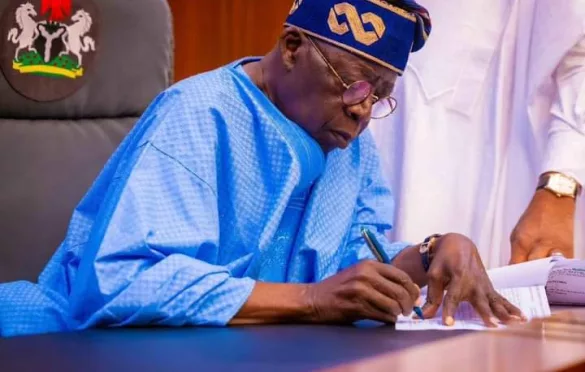
    President Bola Tinubu has asked the House of Representatives to approve external loans worth $20.52bn and €1.045bn to fund infrastructure and development projects under the Federal Government’s 2026–2027 Supplementary External Borrowing Rolling Plan.

    The request was presented to lawmakers on Wednesday through a letter read by the Speaker of the House, Tajudeen Abbas, during plenary.

    In the letter, Tinubu urged the House to fast-track consideration of the proposal, saying the funds would support programmes in agriculture, healthcare, education, water supply, security, employment and other critical sectors.

    The President listed the proposed facilities as $20,517,755,901 and €1,045,083,643, with a detailed breakdown attached to the request for legislative review.

    He explained that the proposed borrowing was necessary to support his administration’s reform agenda, stimulate economic growth and address the country’s infrastructure funding gap.

    According to Tinubu, the projects were selected after technical and economic assessments, with consideration given to their potential contributions to national development.

    He said the initiatives were expected to create jobs, improve skills acquisition, encourage entrepreneurship, reduce poverty and strengthen food security.

    Tinubu added that most of the projects would be implemented across Nigeria’s 36 states and the Federal Capital Territory.

    He argued that the country’s infrastructure needs, particularly in power, transportation and healthcare, required substantial investment beyond what the government could adequately provide from available resources.

    The President maintained that responsible external borrowing would help bridge the funding gap, while stressing the importance of timely disbursement and effective execution of the proposed projects.

    Following the presentation, the House referred the request to a joint committee on Aids, Loans and Debt Management and Appropriations, chaired by Abubakar Nalaraba, for further consideration.

    The committees are expected to examine the proposed facilities, including their terms, intended purposes and potential effects on public finances, before submitting their findings to the House.

    The loan request comes amid ongoing discussions about Nigeria’s need to fund major development projects while managing its public debt obligations.

    The proposed facilities will require legislative approval before the Federal Government can proceed with the borrowing covered by the request.

  • Tinubu Seeks New Laws For NDLEA, NSIB, National School Of Government

    Tinubu Seeks New Laws For NDLEA, NSIB, National School Of Government

    Precious Nwonu, Enugu

    President Bola Tinubu has forwarded three executive bills to the House of Representatives, seeking to reform the legal framework governing the National Drug Law Enforcement Agency (NDLEA), expand the mandate of the Nigerian Safety Investigation Bureau (NSIB) and establish a National School of Government to replace the Administrative Staff College of Nigeria (ASCON).

    The bills, dated October 12, 2026, were conveyed in separate letters read by the Speaker of the House, Tajudeen Abbas, during Thursday’s plenary.

    In the letters, received by the Speaker’s office on October 13, Tinubu invoked Section 58(2) of the 1999 Constitution, as amended, and urged lawmakers to give the proposals “expeditious consideration.”

    The NDLEA Bill, 2026, seeks to repeal the existing NDLEA Act and the Indian Hemp Act, replacing them with a consolidated legal framework for combating drug-related offences.

    According to the President, the proposed law would strengthen enforcement against the cultivation, processing, sale, trafficking and use of hard drugs. It would also empower the agency to investigate individuals suspected of involvement in drug-related activities.

    The second proposal, the NSIB Bill, 2026, seeks to amend the bureau’s Establishment Act of 2022 to expand its responsibilities beyond aviation accidents and incidents.

    Under the proposed amendment, the NSIB would become an independent, multimodal safety investigation authority covering rail, maritime and other transport-related occurrences.

    Tinubu said the bill would also transfer supervisory oversight of the bureau to the Presidency and strengthen its institutional, operational and administrative capacity.

    The third bill seeks to repeal the ASCON Act of 2004 and establish the National School of Government, Nigeria, as a national institution focused on leadership development, policy delivery and executive capacity building.

    The proposed institution is expected to strengthen the skills of public officials and improve the implementation of government policies.

    ASCON currently provides management training, research and consultancy services to public- and private-sector organisations.

    The proposed legislation would establish a new statutory framework for leadership and executive training across government.

    The three bills will now proceed through the legislative process at the National Assembly, where lawmakers will examine their provisions before deciding whether to approve them.

    The proposals will not take effect until they complete the required legislative and constitutional processes.

  • NAF Crash: Senate, Reps Launch Probe Into Military Aircraft Maintenance

    NAF Crash: Senate, Reps Launch Probe Into Military Aircraft Maintenance

    Precious Nwonu, Enugu

    The Senate and House of Representatives have resolved to investigate the maintenance and airworthiness of Nigerian Air Force aircraft following a crash in Igbokoda, Ondo State, which reportedly claimed 25 lives.

    The Senate adopted the resolution on the resumption of plenary after a motion sponsored by the Chairman of its Committee on Air Force, Senator Osita Ngwu, who raised concerns over recurring military aircraft accidents and aviation safety.

    Ngwu recalled that an Air Force ATR-42 aircraft, with registration number NGR 931, crashed near the Naval Base in Igbokoda, headquarters of Ilaje Local Government Area, on October 5, 2026, while on a routine flight from Benin City to Lagos.

    Lawmakers expressed concern over the loss of military personnel in aircraft accidents, questioning the maintenance of military planes, the condition of ageing fleets and compliance with operational safety requirements.

    The Senate stressed that the airworthiness of military aircraft was essential to national security, intelligence operations and defence readiness.

    It warned that failure to conduct a thorough and transparent investigation into the latest crash could undermine efforts to prevent similar incidents.

    As part of its resolutions, the Senate urged the Federal Government to increase funding for regular aircraft maintenance and the replacement of ageing planes.

    It also mandated its committees on Air Force and Aviation to visit the crash site, engage with Air Force authorities and conduct a comprehensive assessment of the serviceability and airworthiness of aircraft in the presidential and military fleets.

    The upper chamber further called on the Nigerian Air Force and the Nigerian Safety Investigation Bureau to investigate both the immediate and underlying causes of the crash and make their findings public.

    The House of Representatives also resolved to investigate the incident following a motion sponsored by the Chairman of its Committee on Air Force, Kabiru Rurum.

    The House equally called for an audit of aircraft in the Air Force fleet and improved funding to ensure proper maintenance.

    The investigations are expected to examine aircraft safety and maintenance practices, with the aim of identifying possible lapses and preventing future accidents.

  • [OPINION] Echoes From the Chambers: A Midterm Assessment of the People’s Parliamentarian 

    [OPINION] Echoes From the Chambers: A Midterm Assessment of the People’s Parliamentarian 

    By Ezefi Mike Udoh 

    In the grand theatre of representative democracy, where the sacred trust of the people is entrusted to the stewardship of chosen legislators, few have held that mandate with the uncommon fidelity, unwavering commitment, and visionary fervor as Rt. Hon. Nnolim Nnaji — an illustrious son of Nkanuland, a colossus bestriding the legislative landscape with measured dignity and impactful cadence.

    As we pause midway through the tenure, to cast a contemplative gaze upon the tapestry of his service—a scorecard woven with threads of purpose, passion, and performance—it becomes incumbent upon us to engage in a solemn reflection, a musing over midterms, that gives honor to whom it is due.

    Rt. Hon. Nnaji, ever the cerebral legislator and tireless advocate, has elevated the voice of Nkanu East and West beyond the narrow corridors of Enugu State into the expansive chambers of national discourse. With each motion moved, each bill sponsored or co-sponsored, he has demonstrated not merely legislative competence, but a rare alchemy of intellect and empathy. His interventions have not been ephemeral declarations from the pulpit of politics, but rather, enduring imprints upon the lives of the governed.

    Behold the classrooms he has built and equipped—temples of learning where the future of Nkanu is being nurtured under rooftops of dignity. See the solar-powered boreholes that dot the rural landscape, quenching the thirst of communities long forsaken by infrastructure. Witness the cascade of agricultural inputs and transport incentives that have revived the hopes of farmers, and the economic empowerment schemes that have breathed life into the entrepreneurial aspirations of women and youth.

    Rt. Hon. Nnaji is not a mere occupant of a parliamentary seat—he is a custodian of a vision, a steward of hope, a midwife of progress.

    This scorecard, though midterm, gleams with the luster of excellence. It bespeaks a man who did not wait to be cajoled into action, but who understood that the true essence of representation lies in accessibility, accountability, and the relentless pursuit of the people’s welfare.

    In summation, Rt. Hon. Nnolim Nnaji stands today not only as a lawmaker but as a trailblazer, a bridge between aspiration and achievement. His odyssey in the House of Representatives is a testament that with the right spirit, public office can indeed be a platform for purposeful service.

    As history watches and posterity pens its verdict, Nkanu East and West can beat their chests with pride, knowing they sent not just a man, but a mission, to Abuja—and that mission has not faltered.

    Let the musings now give way to movements. Let applause follow articulation. For in the person of Rt. Hon. Nnolim Nnaji, the people have found not only a voice but a vessel. And he, in turn, has found in their trust, the fuel to soar higher still.

    Ezefi Mike Udoh writes from Ihunekwagu, Akpugo.