
Tag: Godwin Emefiele

  • Theft as a National Enterprise

    Theft as a National Enterprise

    By Abdul Mahmud

    A 20-year-old housewife, Fatima Abdullahi, was docked before a Sharia Court. Her offence? Stealing foodstuff and N250,000 from her employer. The Sharia Court sits in Kano. The Sharia law will take its course. She is already shamed. The punishment for her crime is visible in the Qur’an. But, her trial will not conform to the international standards of fairness. Her guilt, unprotected by power because she is powerless as a nobody. Her desperation for freedom will be public.  She will be punished. As punishment for theft, the Court will order that her hands be cut off, consistent with the injunction of political Sharia in the north. She will weep on being sentenced.

    Elsewhere, in the cool corridors of air-conditioned offices, many thieves are stealing too. But they steal big. Call up the names on the register of big time [alleged] thieves. Ahmed Idris, former Accountant-General of the Federation, who allegedly stole N109 billion. His successor, Anamekwe Nwabuoku, is also on trial. He is accused of stealing N1.96 billion. Godwin Emefiele, former Governor of the Central Bank, is facing a catalogue of corruption charges. Contracts were awarded without process. Billions vanished. The national vault became his playground.

    Yet, for all the noise, how many of them wear handcuffs?

    Ahmed Idris is no mere man of numbers. He is a title-holder of the Daura Emirate. But not just any title-holder. Wait for it. His honorific bears a haunting irony. He is the Ajiyan Hausa, the Emirate’s symbolic custodian of its savings. The deposit. The purse. A title meant to evoke trust, restraint, stewardship, and to strengthen bond. Yet, here lies the bitter contradiction of our times: the keeper of the Emirate’s deposit is the [alleged] national vault plunderer. The hand, now entrusted to protect the granary of the Emirate, even if symbolic, is the very hand that [allegedly] emptied our country’s treasury. His title now reads like a cruel jest, a ceremonial mockery of the very values it was meant to honour. In saner societies, symbolism is sacred. In our country, it is a satire.

    There lies the paradox. The rich steal to reign; to show off and to rub their stolen wealth on the faces of honest citizens. The poor steal to eat. Though my late friend and playwright, Professor Tunde Fatunde, captured it in a different way in his biting satire, “Oga Na Tief Man” – suggesting in a way that it is only our bosses that steal. It is now clear that everyone – the rich and the poor – steals. Everybody steals. The gatekeeper steals. The messenger steals. The fuel attendant cheats you at the pump. The tailor adds money. Elders, the protectors of local mores, are land grabbers. Go to Benin City. A monarch who is apparently the king of boys now walks the Bedford Heights to the US jailhouse for wire fraud. The pastor lies. The imam collects bribes. Everyone wants something that is not theirs. This is how Fela described it in his song, Authority Stealing: “somebody don take something wey belong to another person”.

    Theft is now the national enterprise.

    It is the oil that greases every wheel. The high and mighty steal with pens and policies. Ordinary citizens steal with tricks and shortcuts. They call it “hussle”. The civil servant inflates contracts. The market woman hoards tomatoes. The customs officer under-declares imports. The voter sells his vote. The lawmaker buys it. And round our country goes in a merry-go-round of mutual theft. The oga steals the budget. The servant steals the change. The policeman collects bribes. The politician diverts funds. The civil servant “chops small.” No one is innocent. No one is shocked. Everyone expects to steal, or be stolen from. The tragedy is that citizens now call it normal.

    What began as elite corruption has trickled down. Or maybe it was always there. The difference is the scale. The rich steal in billions. The poor steal in hundreds. But both steal all the same. And both feel justified. “If I no move am, another person go move am.” Moving becomes another euphemism for theft. That is the logic. That is the rot. The consequences are clear. First, it kills trust. Who can you trust? Not the police. Not the pastor. Not the elder. Not the local chief. Not the courtiers. Not the teacher. Not the politician. Not even your neighbour. Everyone is out for themselves. Second, it kills hope. Why work hard when you can “hussle”? Why become honest when dishonesty is rewarded? Why play by the rules when the rulebook is torn? Third, it kills progress. The money meant for roads disappears. The funds for hospitals are embezzled. Schools rot. Power fails. Infrastructure decays. Our country borrows to pay salaries. Our country borrows to steal. The national debt grows. But the citizens remain poor.

    The moral collapse is total. There was once a time when shame restrained men. A time when elders frowned at corruption. When integrity mattered. When public office was an honour. Today, the thief is a role model. The looter is a chief. The bigger the loot, the louder the title. In our country, today, titles are no longer honours earned by virtue, but ornaments acquired through vice. My Etsako provenance offers one of the loudest of such titles: Oku Omolo – The sea never dries. It is meant to evoke abundance, resilience, and an endless wellspring of generosity. But in the hands of the corrupt, it has become the euphemism for bottomless theft. A celebration of plunder disguised as prosperity.

    Here, the deeper the theft, the grander the welcome. The thief returns home not in shame, but in splendour. Drums beat. Praise singers chant. Clerics pray. The community gathers, not to ask questions; but to ask for favours. No one remembers how the well was filled. Only that it overflows.

    Thus, a nation drowns in stolen waters while hailing the men who fetched them. How did our country get here? Slowly. Steadily. First, citizens excused the first thief. Then they praised him. Then they emulated him. Now, citizens encourage their children to steal. To cheat. To manipulate. They call it survival. But it is the death of the soul, of the country. Achebe said it best. A paraphrase of the late Irish patron-poet, W.B. Yeats’s “things fall apart” in his poem, The Second Coming: “The things that held us together have given way.” The moral straps of our country have snapped. Our values have collapsed. Citizens no longer know right from wrong. The house has fallen. As Karl Maier puts it: “This house has fallen”.

    But not all is lost. Citizens can still rebuild the country. But first, they must tell themselves the truth. Stealing is stealing. Whether by the gatekeeper or the governor. Whether by the clerk or the commissioner. Whether by the mechanic or the minister. Whether by Fatima or Emefiele.

    Our country and its citizens must stop decorating thieves. They must stop giving them awards. They must stop singing for them. They must stop inviting them to churches and mosques. They must stop calling them “destiny helpers.” They are criminals. Not heroes. The judiciary must act in accordance with its role. No if. The courts must bite. Not just the weak. Not just the powerless. But the high and mighty too. Justice must be blind. The law must not see pockets or positions. Only truth. The police must reform. Too many officers are gatekeepers of corruption. Roadblocks have become toll gates on our country’s highways. Bail is never free. The law is up for sale. That must end.

    Religious institutions must cleanse their altars. Too many thieves denn in the pulpits. Too many pastors preach prosperity without integrity. Too many imams pray for thieves. Religion must return to its core: truth, justice, righteousness. The civil society must rise and be active again. Too many NGOs are now fronts for corruption. Too many activists have become consultants to crooks. The media must shine the light. Not dine with darkness. Too many journalists now feast on brown envelopes. The pen must return to its calling; to expose, not  excuse. And citizens must resist. They must say no. No to vote buying. No to stolen mandates. No to stolen futures. They must reject rice-for-votes, stomach-infrastructure  politics. They must vote conscience, not stomach.

    Yes, all of this is hard;  but, it is necessary. Our country and its citizens must start small. One honest act at a time. One brave whistleblower at a time. One principled and active citizen at a time. That is how countries are rebuilt. Our country must raise a new generation. A generation that sees public office as stewardship. Not an Automated Teller Machine. A generation that understands that wealth without work is theft. That leadership without sacrifice is fraud. That power without purpose is poison. Our country must change the story of itself. From “Oga na tief man” to “Oga na servant.” From “everybody dey thief” to “some of us still dey stand clean.” From “na so Naija be” to “na so we go change Naija for good”. Our country is not cursed. Our country is corrupt. Our country is not poor. Our country is poorly managed. Ours is not the absence of wealth. It is the abundance of thieves.

    I fathom no illusion here. If Fatima Abdullahi must face justice, then so must the Ahmed Idrises and Emefieles. If the petty thief must be jailed, then the economic saboteur must be punished. The arc of the moral universe must bend toward justice for the big and small thieves and for our country. This house has fallen. But it can be rebuilt. Brick by brick. Truth by truth. One honest citizen at a time. That is the only hope. That is the only path forward to redemption.

    “Oga na tief man”.

    But so are the ordinary citizens who turn blind eyes to the thievery around them.
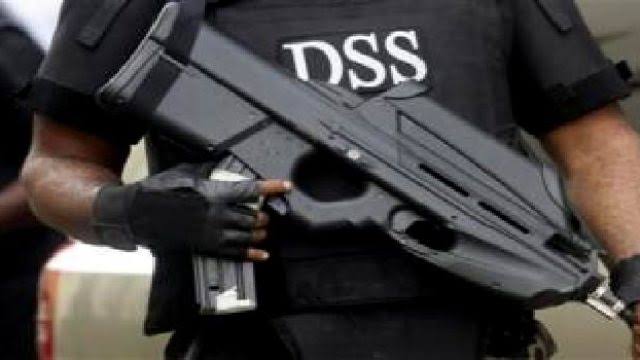
  • DSS begins probe of officers clash with prisons official over embattled Emefiele

    DSS begins probe of officers clash with prisons official over embattled Emefiele

    The Department of State Services (DSS) says it has begun investigation on the clash that happened within the premises of the Federal High Court, Ikoyi, Lagos on Tuesday.

    Recall that DSS operatives and prison officials clashed  at the court during the arraignment of the former governor of Central Bank of Nigeria, Godwin Emefiele, yesterday, Tuesday, July 25, 2023.

    Spokesman of the secret police, Peter Afunanya, described the clash as “unfortunate”, disclosing that the incident was being probed.

    “The public will recall that Mr Godwin Emefiele, suspended CBN Governor, was arraigned at the Federal High Court, Ikoyi, Lagos, on 25th July, 2023. The Service has noted the incident that took place between its staff and those of the Nigerian Correctional Service (NCoS) and wish to state as follows:

    “The incident was unfortunate and does not in any way reflect the professional disposition of the DSS; The Service did not and would never encourage the incident under reference. The Service has tremendous respect for the Judiciary as an Arm and Institution of Government and will not go out of its way to undermine it. The DSS recognises the Judiciary as a critical component in nation building, national development and security management. Also, the Service has robust working relationship with sister Security and Law Enforcement agencies including the NCoS;

    “While noting that the personnel from both Agencies exhibited undue overzealousness, the Service has further initiated detailed investigations into the matter. This is with a view to identifying the role played by specific persons as well as undertaking disciplinary actions if necessary and drawing some lessons going forward.”

    Afunanya said the secret police did not break any law with the way Emefiele’s case is being handled, alleging that some persons were trying to discredit the leadership of the agency.

    “For emphasis, the DSS has not broken any laws in handling the Emefiele Case despite efforts by some elements to skew the narratives to the contrary. The Service had since alerted the public of sinister plots to discredit its leadership. In pursuit of its assignments, it will strive to remain professional, maintain ethical standards and high sense of discipline. The Service will ensure that it will not be used for clout and fame chasing or delusional heroism.

    “It will, however, remain focused on its national security mandate and, therefore, enjoin well-meaning Nigerians to support it in achieving the desired security goals for the nation. It is imperative to note that we have no other country but Nigeria. We should join hands, with love and tolerance, to build it.”

    Daily Trust

  • CBN: Criteria for participating in its 100 for 100 policy on Production and Productivity (PPP).

    In its bid to reverse the nation’s over-reliance in imports by creating a platform that supports right companies and projects with potential to immediately transform and jumpstart the productive base of the economy, the Central Bank of Nigeria (CBN) has unveiled the criteria for participating in its 100 for 100 policy on Production and Productivity (PPP).

    According to the apex bank, the intervention under the 100 for 100 PPP instrument shall provide Naira funding under existing CBN Intervention Processes and complete FX funding for new machinery. This instrument is for only new projects and will not cover any refinancing of existing facilities and will be subject to independent evaluation by international audit firms.

    It adds that all intervention under this project will be made public and published in national dailies.

    These are projects that must catalyse sustainable employment-led economic growth through increased domestic production and productivity in the near term.

    The CBN has therefore invited candidate companies with satisfactory performance to apply through their banks with effect from today, November 01, 2021, to the CBN Department of Development Finance, Officce of the Governor, Central Bank of Nigeria, Central Business District, Abuja with complete documentation.

    Source: www.sunnewsonline.com

  • Reps issue bench warrant on Emefiele and 53 others for violation of FRC


    A report by a committee of the House of Representatives has recommended the arrest of the Central Bank of Nigeria (CBN) Governor Godwin Emiefele, Nigeria National Petroleum Corporation (NNPC) Group Managing Director Mele Kyari and 52 other heads of government agencies for gross violation of the provisions of the Financial Regulatory Council on rendition of audited account.


    The report also recommended that past and present Chief Executive Officers of several government agencies and their Directors of Finance and Account should be handed to the Economic and Financial Crimes Commission (EFCC) for prosecution.


    The 161-page report submitted to the House by its Committee on Public Accounts also indicted all subsidiaries of the NNPC, including the Kaduna Refining and Petrochemical Company, Pipeline and Products Marketing Company Limited, West Africa Gas Limited, Nigerian Gas Company, Warri Refining and Petrochemical Company, and National Petroleum Investment & Management Services (NAPIMS).


    Also included on the list are Federal Road Maintenance Agency (FERMA), Abuja, Energy Commission of Nigeria (ECN), Revenue Mobilisation Allocation and Fiscal Commission, National Bureau of Statistics, and Niger Delta Power Holding Company (National Integrated Power Project).


    The report also recommend that all Accounting Officers of the 54 government agencies that refused to appear before the House Committee to defend their positions should be issued warrant of arrest to compel their appearance to respond to the matter within a week in line with Section 89 (d) of the 1999 Constitution of Nigeria (as amended).


    Read Also: Reps approve Buhari’s $8b, €490 loan requests

    The report was supposed to have been considered before the House embarked on its summer vacation, but was stepped down along with other reports as a result of the controversy arising from the consideration of the Electoral Act amendment bill.


    The report accused the management of Nigeria Maritime Administration and Safety Agency (NIMASA) of “recklessly and deliberately” refusing to render their audited accounts from 2005 to 2019 in violation of Section 85 (3) (b) of the 1999 Constitution and recommend that “all those in Office that were responsible should be disciplined and referred to the EFCC in line with Financial Regulation 3129 of 2009”.


    Also recommended to face the EFCC are all the Director-Generals and DFAs as well as the various External Auditors of the Nigeria Social Insurance Trust Fund (NSITF) from 2006 to 2019 for refusing to render the audited accounts for the last 13 years.


    The report recommended that the Chief Executive Officer of the Infrastructure Concession Regulatory Commission (ICRC), the University of Calabar, Nigeria Communication Satellite (NigComSat), the Federal University of Agriculture, Abeokuta (including the former Vice Chancellor), Federal University of Agriculture, Abeokuta, Federal Housing Authority, Federal Mortgage Bank of Nigeria among others should face the EFCC for investigation and prosecution.


    The report is the outcome of an investigation into the allegation of deliberate and refusal by Non-Treasury funded Ministries, Departments, and Agencies (MDAs) to remit audited accounts covering 2014 – 2018 to the Auditor General for the Federation ordered by the House following a motion by the Deputy Chairman of Public Accounts Committee, Abdullahi Sa’ad Abdulkadir and 44 others.


    The investigation was to identify the Chief Executive Officers of these Agencies, whether in active service or retired, found to have violated the provisions of section 85(2)(3) and (4) of 1999 Nigeria Constitution and hold them liable for their actions.


    The report said 300 MDAs were invited to appear before the committee, out of which about 54 refused to appear to defend their positions.


    On the National Health Insurance Scheme, the report said: “the NHIS has not rendered its audited accounts for past 13 years.


    ADVERTISEMENT

    “The Executive Secretary of the Scheme lamented that this was due to frequent turnover of chief executive officers of the Scheme which become so difficult to keep financial records of the Scheme and dissolution of its governing councils by succeeding governments over the years.


    “He said the audited accounts for 2014 and 2015 had been signed and given to the External Auditors for onward transmission to the office of the auditor general while 2016 to 2018 are at final stage of completion.


    “The committee frowned at the Management of the Scheme for the non- rendition of their audited accounts over the past 13 years which is a total violation of the financial regulations and the Constitution. The Committee directed NHIS to furnish its procurement process and give written reasons for the delay which is still being awaited”.


    It frowned at the delay by the Bureau for Public Procurement in granting the Nigeria Customs Service permission to hire an external auditor to audit its account.


    Source: www.thenationonlineng.net

  • Nigeria’s external reserves has shrunk by $522,525,964 in 16 days.

    According to recent figures on the Central Bank of Nigeria’s (CBN) website, on March 1, 2021 the external reserve was $34,998,144,389 but by March 16, it had shrunk to $34,475,618,425.


    Since January 25, 2021 when the reserve stood at $36,469,940,426.08 it has been on a steady decline to the current $34,475,618,425. In other words, between January 25 and March 16, the external reserves declining declined by $1,994,322,001. That is a little shy of $2billion.


    The CBN had recently stated that Nigeria’s external reserve at $35bilion was sufficient to finance the country’s seven months’ imports.


    The rapid drop in Nigeria’s external reserve coincides with a steady rise in the price of crude oil sales which check recently rose to $71 per barrel within the same period.


    Some reasons have been preferred for the sharp drop in external reserves. These include, the CBN’s intervention in the forex market to stabilize the exchange rate, and low foreign inflows.


    It is believed that the drop in the country’s external reserve can be linked to shortages in the supply of foreign exchange brought on by a decline in the flow of forex into the country.


    In addition receipts from the sale of crude oil take a while before they hit government accounts.


    In recent times, forex inflows from International Money Transfer Operators (IMTOs) has whittled down, export proceeds have reduced drastically and flow from the the I and E window have declined as well. All these have prompted reactions from the CBN to change the volume of accretion into the external reserve positively.


    Between January and March, many debt obligations matured thus prompting the CBN to make pay out for mature Euro bonds and promissory notes.


    The apex bank also engaged in FX swap with international and local dealers a development which would have compelled the CBN to pay off matured obligations as expected of a sovereign.


    Source: www.thenationonlineng.net