Tag: Fuel subsidy

  • Rising subsidy’ll stop states from paying salaries – Governors

    Rising subsidy’ll stop states from paying salaries – Governors

    The Nigeria Governors’ Forum has lamented that the subsidy on petroleum products, especially Premium Motor Spirit (petrol), has placed a huge financial burden on the states.

    The NGF, which is the umbrella body for the 36 governors of the federation across party lines, made this known in a memo forwarded to the House of Representatives.

    The memo is in response to the call for memoranda by the House’ Ad Hoc Committee on the Volume of Fuel Consumed Daily in Nigeria, which is investigating the actual amount of PMS the country consumes daily.

    The memo, which was signed by the Head, Legislative Liaison, Peace and Security, NGF, Fatima Usman Katsina, for Chairman of the Forum, was titled ‘Findings on the Volume of Fuel Consumed Daily in Nigeria,’ dated July 1, 2022, and addressed to committee’s Chairman, Abdulkadir Abdullahi.

    The governors referred the House to a November 2021 report by its National Executive Council’s ad hoc committee interfacing with the Nigeria National Petroleum Corporation on the appropriate pricing of PMS in Nigeria, which was chaired by Governor of Kaduna State, Nasir el-Rufai, and had governors of Edo, Jigawa, Ebonyi, Akwa Ibom and Ekiti, as well as the Governor of the Central Bank of Nigeria; Minister of Finance, Budget and National Planning; Accountant-General of the Federation, Group Managing Director of the NNPC and the Permanent Secretary, MBNP.

    The memo partly read, “Although the operating environment has significantly worsened since the report was released, with NNPC now consistently reporting zero remittance to the Federation Accountant as profit from joint venture, production sharing contract and miscellaneous operations, the position of the forum remains generally the same.”

    The NGF recalled how the report noted that the “federation (FAAC) net oil & gas revenues have been declining since 2019 and are projected to decline significantly in 2022 by between N3bn and up to N4.4bn unless action is taken now.” The memo read, “The following are some of the major findings relating to the volume of fuel consumed in the country:

    “Remittances to the Federation Account Allocation Committee have continued to shrink as NNPC recovers shortfall quite arbitrarily from the Federation’s crude oil sales revenue. FAAC deductions for PMS subsidy are above 2019 levels, even without adjusting for reduced purchasing power of the naira due to inflation and FX rate deterioration.

    “An analysis of the average monthly PMS consumption by states showed that a third of the country accounts for over 65 per cent consumption of PMS. The analysis showed that the following States of Lagos, Oyo, Ogun, Abuja, Delta, Kano, Kwara, Edo, Rivers, Kaduna, Kebbi and Adamawa accounted for 65 per cent of PMS consumption in the country. Most states with high PMS consumption either have borders with neighbouring countries or are in close proximity, this has been an avenue for smugglers to benefit from profitable arbitrage opportunities in PMS pricing.

    “Households directly consume only about 25 per cent of the PMS that is consumed nationally, with the remaining three-quarters being consumed by firms, MDAs, transport operators or smuggled to neighbouring countries where the PMS price is nearly three times what it is in Nigeria; and of the PMS consumed by households, the richest 40 per cent of households account for over three-quarters of the PMS purchased by households, while the poorest 40 per cent of households purchased less than 3 per cent of all PMS sold in Nigeria.

    “In the current fiscal regime, remittances to FAAC would continue to shrink as NNPC recovers this shortfall from the Federation as a result of crude oil price recovery. The report recommended a PMS pricing structure that addresses regional arbitrage and smuggling of PMS and provides additional revenue to the Federation Account. There is a significant market opportunity for additional export revenue streams for Nigeria to be had given the price parity with our neighbouring countries.

    “Privatisation of the three government refineries as is, or after their full rehabilitation if affordable and viable, and expediting the licensing procedure for modular refineries will reduce the recurring government expenditure on refinery maintenance and increase the country’s refining capacity.”

    The governors also noted that there were also economic risks highlighted in the report. “Fiscal pressures are threatening Nigeria’s recovery, as rising prices continue to push millions into poverty,” they stated.

    The memo further read, “Rising prices are pushing millions of Nigerians into poverty. Rising inflation between 2020 and 2021 is expected to have pushed an additional 5-6 million Nigerians into poverty. Food insecurity is increasing in both poor and non-poor households, with some adults skipping meals. Because inflation is high, even if it remains stable, it will continue to push many more Nigerians into poverty.

    “Fiscal pressures are growing unsustainably with the PMS subsidy significantly reducing the flow of revenues into the Federation Account. Thirty-five out of 36 states are likely to see transfers from the federation fall (in nominal terms) between 2021 and 2022, with the average decline projected to be about 11 per cent. Most states are already experiencing fiscal stress, with 30 out of 36 states recording fiscal deficits in 2020, including Lagos and every oil-producing state except Akwa Ibom.

    “With the projected decline in gross distributable federation revenues in 2022, fiscal deficits and debt burdens will grow even larger and faster. This will mean that transfers from the federation will not be enough to cover even salaries, and certainly not recurrent costs, which are growing in nominal terms.

    “With the coming into effect of the Petroleum Industry Act, gross oil & gas revenues could be (much) lower than currently projected because of the new fiscal terms and the earmarking of deductible revenues specified in the PIA, and that could reduce net oil & gas revenues even further.”

    The NGF stated that greater accountability and transparency around oil and gas revenues “are the only immediate options for easing the pressure on government finances and maximising socially responsible profit gain.”

    (Punch)

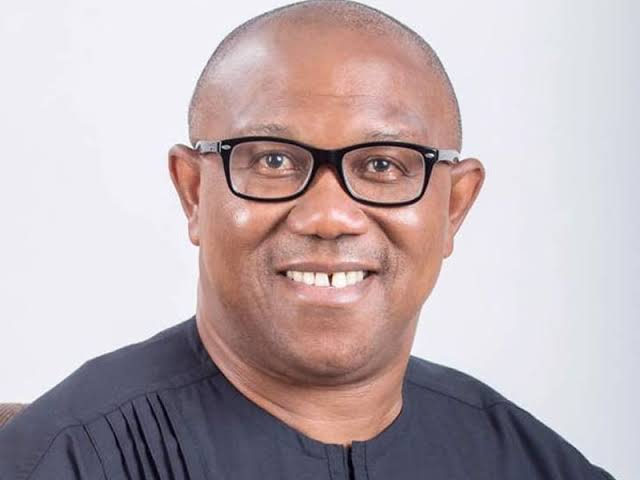
  • FUEL SUBSIDY: I’ll offer an alternative, I won’t spend $40bn as FG’s doing – Peter Obi

    FUEL SUBSIDY: I’ll offer an alternative, I won’t spend $40bn as FG’s doing – Peter Obi

    THE Presidential Candidate of the Labour Party, LP, Mr. Peter Obi has described the current fuel subsidy regime as a scam, saying he would offer an alternative, if elected.

    Speaking yesterday during a live interview on Arise TV, the presidential candidate said petrol subsidy is not beneficial to the country’s economy, promising that he would not squander $40 billion on subsidy as currently being done by the All Progressives Congress, APC-led Federal Government.

    Petrol subsidy payments gulped N1.27 trillion in the last five months, about 31 percent of the N4 trillion provision for the year. It eroded oil gains as Nigerian National Petroleum Company, NNPC, Limited failed to remit revenue to the federation account.

    “We have spent over $40 billion on subsidy. Our total education expenditure in the past 10 years is about N8 trillion (about $20 billion on $400/$1). This is 50 percent of it,” Obi said.

    “If we spent $20 billion on power, we would have been generating and distributing 20,000 megawatts of electricity today.

    “It means subsidy alone would have solved a lot of issues in our education, health and power. If we have 20,000mw, we will be growing at more than 4 percent and add over $100 billion to our GDP.

    “Within the same period, we have borrowed $90 billion, which we are servicing. With this, you could see total mismanagement of resources that could have changed the entire North… that vast land would have been huge farmland,” he said

    On whether or not he would remove subsidy, Obi said: “We have to study and look at it critically. Yes and No, because I would remove it, but I have to offer them what would be equivalent to what we are removing.

    “Yes, I am going to use the resources to do something that would benefit, but if I am not going to do that I am not going to remove it. You must be able to offer something in replacement for what you are going to do.

    “I cannot spend $40 billion on subsidy and expend 50 percent of it on education and health even security. Are you saying [petrol] subsidy is more important than the security of lives and property?

    “I have been saying subsidy is a scam, and I will continue to say it. There are so many scams all over the place, including the cost of governance.”

    (Vanguard)

  • N4trn bill: How petrol subsidy grew by 349.42% in 3 years

    Petrol subsidy payments grew by 349.42 per cent from N350 billion in 2019 to N1.573 trillion in 2021, propelled by the rising price of crude oil in the international market and the falling value of the Naira.

    The cost of subsidizing the product in 2020 was N450 billion. In 2022 alone, the total cost of subsidy in January and February was N396.72 billion, the latest data from the Nigerian National Petroleum Corporation, NNPC, has shown.

    Federal legislators approved the sum of N4 trillion to be spent on petrol subsidies in 2022.

    The Federal Government had previously disclosed through the Minister of Information, Alhaji Lai Mohammed, that it spent N10.413 trillion on fuel subsidies between 2006 and 2019.

    With Nigeria importing all its petrol from refineries abroad, the low value of the Naira has had a significant impact on the pricing of the product in-country.

    None of the three government-owned refineries is currently operational, despite huge investments in their Turn Around Maintenance (TAM) by the government.

    The current administration has failed on its promise to make the refineries operational within a short period of assuming office.

    Deregulation on hold

    A plan by the government to deregulate the sector, following enactment of the Petroleum Industry Act (2021) that prescribes a free market for the downstream sector of the petroleum industry has been abandoned, with the government seeking and obtaining budgetary approval to spend N4 trillion on petrol subsidy.

    The annual expenditures on petrol subsidy under the current administration contrast very sharply when compared with fuel subsidy under the government of former President Goodluck Jonathan, which was accused of fuel subsidy fraud.

    According to data published by the defunct Petroleum Products Pricing Regulatory Agency, PPPRA, the Federal Government paid a total of N2,105.92 trillion in 2011, an increase of N1,437.84 trillion from the 2010 payment.

    It also noted that in 2012, N1.35 trillion was paid as a subsidy, the highest within the period under review.

    “A total of N 1, 316 trillion in 2013, N1,217 trillion in 2014 and N653.51 billion in 2015 was paid as subsidy claims,” it added.

    It noted that the NNPC since 2016, had been the sole importer of the product to the country.

    Determined to curb fiscal leakages associated with the fuel subsidy regime, President Jonathan had announced deregulation of the downstream sub-sector, with a view to eliminating fuel subsidy.

    However, incumbent President Mohammadu Buhari, and other opposition party leaders, under the Save Nigeria Group, organised nationwide protests to stop Jonathan from going ahead with the decision.

    Other notable Nigerians that led the mass protest included Pastor Tunde Bakare, who was Buhari’s running mate in Congress of Progressive Change (CPC) and Governor Nasir el-Rufai of Kaduna State.

    The protests forced Jonathan to rescind the policy. When Buhari took over power in 2015, his government initially refused to pay fuel importers for products imported into the country.

    It took a fuel crisis, characterised by long queues, to force the government to pay the debts, as the marketers insisted that they would not import more products unless their earlier bills were settled.

    The Buhari administration was to later come to terms with the realities of the rot in the industry.

    President Buhari made himself Minister of Petroleum and by so doing, has directly managed the petroleum industry. However, he has failed to make any policy changes.

    ‘Global price of crude determines petrol price here’

    Speaking in a telephone interview from Ibadan, Director, Centre for Petroleum, Energy Economics and Law, University of Ibadan, Professor Adeola Adenikinju said the price of petrol is determined by the international price of crude and cost of foreign exchange.

    Adenikinju noted that the government’s decision to continue subsidy payment was more political than economic, given the revenue challenges facing governments at all levels.

    He pointed out that by retaining the petrol subsidy, the government would find it difficult to meet other commitments.

    According to him, “It is a political decision, not an economic one. Economically, we know that subsidies have been very costly to the country and this is going to have serious implications on government revenue, particularly the state governments.

    “The states are going to feel it more because they depend heavily on revenue from the Federation Account and secondly, they do not have the leverage to borrow like the Federal Government.

    “If it goes ahead, the states are going to be hard-hit financially and it is going to be extremely difficult for them to meet all their commitments in terms of payment of salaries and keeping their obligations to pensioners”.

    He noted that he would not be surprised later in the year if the states and local governments are unable to meet their commitments.

    The university teacher also pointed out that the decision went beyond just revenue but would also have implications for the oil industry.

    “It is also at the heart of the deregulation of the downstream sector. It will have implications for the implementation of the Petroleum Industry Act 2021 significantly because the decision on pricing is about market forces being at play to allow investment decisions to be made.

    “This is going to hinder investment, so we can say that until the issue is resolved there is not going to be much private investment flow to the downstream sector.”

    He blamed the middle class and the elite, who he said are the main beneficiaries of the petrol subsidy regime for mounting pressure on the government to retain the policy.

    “Once you touch the middle class, the elite, they react. The argument is about the protection of the privileges of the middle class to which the labour unions belong. This is because kerosene was deregulated, nothing happened, diesel was deregulated, nothing also happened but once you touch something that affects the middle class, it becomes difficult to implement because they have access to the media”, he added.

    (Vanguard)

  • FG suspends removal of fuel subsidy

    Minister of Finance, Budget and National Planning, Mrs Zainab Ahmed, said yesterday that the Federal Government has suspended removal of fuel subsidy.

    She said the government had made provisions for subsidy in the 2022 budget from January to June this year, adding that government will forward a request to the National Assembly to make additional provisions for fuel subsidy from July this year till a time deemed appropriate for its eventual removal.

    According to her, all payments on fuel subsidy ordinarily would cease as from July, 2022.

    The minister spoke as the Senate President, Ahmad Lawan, pleaded with the Nigerian Labour Congress, NLC, and Trade Union Congress, TUC, to shelve the planned strike schedule for Thursday nationwide against fuel subsidy removal.The NLC, however, insisted yesterday that the planned strike would go on, saying it will not believe government until the suspension of subsidy was effected.

    The union also petitioned the Nigerian Governors’ Forum, NGF, giving reasons for insisting on the scheduled protest.

    ‘Problematic timing’

    However, Mrs Ahmed, who disclosed this at a meeting with the Senate President, Ahmad Lawan, at the National Assembly complex in Abuja, observed that in view of the timing which is “problematic”, the Federal Government decided to suspend its plan to go ahead with the removal of subsidy on petroleum products in July, particularly against the backdrop of outcomes from ongoing consultations.

    She added that the Federal Government is exploring alternatives to premium motor spirit as well as pushing to step-up the country’s crude oil refining capacity.

    Ahmed, in company of the Minister of State for Petroleum Resouces, Mr. Timipre Sylva, disclosed that efforts are also underway by the executive arm of government to forward a request to the National Assembly to make additional provision for fuel subsidy from July this year till a time deemed appropriate for its eventual removal.

    Also at the meeting were Senate Leader, Yahaya Abdullahi and the Deputy Whip, Aliyu Sabi Abdullahi, CEO of the Nigerian Midstream and Downstream Regulatory Authority, Farouk Ahmed, Managing Director of the Nigerian National Petroleum Corporation, Mele Kyari, and CEO of the Nigerian Upstream Regulatory Commission, Engr. Gbenga Komolafe.Others include the Special Assistant to the President on Natural Resources, Habib Nuhu, Permanent Secretary, Federal Ministry of Finance, Aliyu Shehu Shinkafi, and Permanent Secretary, Ministry of Petroleum Resources, Nasir Sani-Gwarzo.

    Mrs Ahmed said: “Let me start by stating the fact that we did make a provision in the 2022 budget for fuel subsidy from January to June. And that suggests that from July, there would be no fuel subsidy.

    “This provision was made sequel to the passage of the Petroleum Industry Act, PIA, that has made provision that all products will be deregulated.“Subsequent to the passage of the Act, we went back and amended the Fiscal Framework that was submitted to the National Assembly to incorporate this demand, but after the budget was passed, we have had consultations with a number of stakeholders.

    “It became clear that the timing is problematic, that practically, there is still heightened inflation, and also removal of subsidy will further worsen the situation, thereby, imposing more difficulties on the citizens, and the President clearly does not want to do that.“What we have to do now is to continue with the discussions we are making, in terms of putting in place a number of measures, one of which is the deployment of an alternative to Premium Motor Spirit, PMS, and also the roll-out of enhanced refining capacity in the country, including the 650,000 barrels per day Dangote Refinery and also the rehabilitation of the four national refineries that have a combined capacity of 450,000 barrels per day.

    “The increased refining capacity in the country means we will need to import less products. But also as we are discussing right now within the Executive the possibility of amending the budget, we may need to come back to the National Assembly by way of amendment to make additional provision for fuel subsidy from July, 2022, going forward, or to whatever period that is agreed as the right time.

    “Also, while we are exploring ways and means through discussions with various stakeholders in the executive as well as the civil societies and labour unions by which we can address this removal in a manner that is graduated and will have as minimal impact on the citizens as possible.

    “So, we will come back to make further amendments on the fiscal framework as well as in the 2022 budget.”

    Lawan urges NLC, TUC to shelve planned protests, says its unnecessary

    Speaking earlier in his welcome address, President of the Senate, Ahmad Lawan, urged the Nigerian Labour Congress, NLC, and the Trade Union Congress, TUC, to abort the planned protests against the Federal Government’s proposed removal of fuel subsidy, saying the move was “totally unnecessary”.

    He faulted the timing for the planned removal of subsidy on petroleum products, stating also that in as much as the administration and management of subsidy on petroleum products were flawed, President Muhammadu Buhari’s government believed that sufficient planning must be carried out before its eventual removal.

    Lawan, therefore, called on Labour unions, such as the Nigerian Labour Congress, NLC, and the Trade Union Congress, TUC, to shelve the planned protest rallies, adding that the Federal Government had no plan of removing the petroleum subsidy now.

    He said: “The position of everyone in government today is that admittedly, subsidy administration and management are flawed because of so many reasons. Admittedly, the burden is huge and massive and there is need at one point to do away with the subsidy. Even though our economy is growing, we still have the challenge of getting things to be better for our people.

    “A lot of us in this administration believe that the issue of removal of subsidy should be handled with utmost care, especially that sufficient planning needs to be done. Significant arrangements for absorbing the shocks that will come with the removal should be done, that the timing should be such that the impact and consequences will not add to hardship. We all believe in this and the President leads us in this feeling.

    “What we are saying is that this is not the time. All of us are of the same opinion and, therefore, there is nothing like confusion or lack of understanding within government circles. We all agree that the subsidy is abused and, therefore, it is a challenge to us as an administration to deal with the abuse, to find appropriate means of stopping it. After this meeting, there will be other ones, all in search of ways and means of ensuring that the ordinary Nigerian does not suffer any hardship, that when the subsidy will be removed eventually, it would be at such a point that the hardship will be very minimal and taken care of by several programmes.

    “It is not about NLC, we are talking about every Nigerian. We are concerned beyond the Nigerian Labour Congress. I am taking this opportunity to appeal to the TUC and NLC to shelve this plan to go on strike or demonstration, it is totally unnecessary. There is not going to be removal of subsidy, so there is no need for this. Please, let’s not create unnecessary tension where there should be none. I appeal to them using this medium, to please forget about this January 27, 2022, deadline because there is no need for any deadline. We are supposed to come together and work assiduously to ensure that our country is stable, and our people enjoy the benefits of government programmes and projects, and that whatever decision would be taken will be in the best interest of our people and protecting the most vulnerable among us.”

    NLC insists on Thursday’s nationwide protest

    Reacting to the development yesterday, the Nigeria Labour Congress, NLC, insisted that the nationwide protest over the proposed fuel subsidy removal would go ahead as planned, saying it was not strike but an avenue to inform workers and masses its view on petrol subsidy and deregulation of the downstream sector of the petroleum industry.Congress said it is not swayed by the report that the Federal Government had shelved its planned subsidy removal and hike in the pump price of premium motor spirit, PMS, otherwise known as petrol.

    Speaking to Vanguard, NLC’s General Secretary, Emma Ugboaja, said: “We are not distracted by the report that the Federal Government has shelved its plans to remove subsidy on petrol and increase the pump price of petrol because seeing is believing. We are going ahead with our planned nationwide protest on Thursday.

    “The government has all mechanism and means for communication and information. The government has the resources to take advertorials in newspapers, radios, televisions, commission writers, columnists, opinion writers, and so on to propagate their position. All we have is the ability to gather massively for information.

    “This protest is not a strike. It is about gathering en masse to inform our members, Nigerian workers and masses, how we feel about subsidy on petrol, increase in the pump price of petrol, total deregulation of the downstream sector of the petroleum industry.

    “So, Thursday’s protest will go ahead as planned.”

    Not surprising, political decision with economic consequences – Muda Yusuf, CPPE CEO

    Also reacting yesterday, Dr Muda Yusuf, CEO, Centre for the Promotion of Private Enterprise, CPPE, said the policy reversal was not surprising, adding that it was based on obvious political considerations but will come with economic consequences.Yusuf, who was former Director-General of Lagos Chamber of commerce and Industry, LCCI, stated: “The capitulation on the subsidy removal did not come as a surprise. There were too many odds against the move.

    “There were obvious concerns about the potential political cost to government and the ruling part. There were worries about the social cost given the excruciating poverty in the country. There was also the waning goodwill required by government to enlist the support of the people. The whole subsidy story became a political economy matter. It was moved from the realm of economics and investment to the political realm. The outcome was predictable, especially with impending general elections next year.

    “But the economic cost of the capitulation is equally weighty. The truth is that you cannot eat your cake and have it. We should expect the cost of funding the subsidy to be much higher this year because of the surge in crude oil price. If the oil price remains high for most part of the year, the subsidy cost could go as high as N2.5 trillion or even more by the end of the year. This would surely affect funding for critical infrastructure such as roads, railways, healthcare education, and even security.

    “The petroleum products smugglers, beneficiaries of the fiscal leakages in the fuel subsidy ecosystem and their collaborators will continue to smile to the banks for the next one and half years. Some states would struggle to pay salaries, especially states that are heavily dependent on federal allocation. Some may have to lay off some of their work force. Many will struggle to meet their financial obligations as sub-nationals.”

    NLC petitions govs, gives reasons for protest

    Meanwhile, leaders of Nigeria Labour Congress, NLC, yesterday petitioned the 36 state governors, informing them of Thursday planned nationwide protest against government’s planned removal of subsidy on petrol and further increase in the pump price of petrol.

    In a six-page petition by the President and General Secretary of NLC, Ayuba Wabba and Emanuel Ugboaja, respectively, the union detailed the controversy surrounding subsidy removal dating back to 1999, culminating in the current imbroglio between government and labour after Nigerian workers, through their elected representatives, signed an agreement with the Federal Government on September 28, 2020, to freeze further increases in the pump price of petrol.

    It lamented that following the prompting of the International Monetary Fund, IMF, and the World Bank, after a few weeks of interaction with government on this critical national matter, government suddenly adjourned further discussions sine die.

    According to the union, the situation has remained the same for nearly two years now as government treats inquiries and promptings by organized labour with levity, disdain and contempt. NLC urged the governors to prevail on the federal government to jettison planned subsidy removal, among other demands.

    The petition read: “The Federal Government should demonstrate seriousness and commitment to overhauling our local refineries as a lasting panacea to mass importation of refined petroleum products, importation pricing model, and a host of lost opportunities, official corruption and self-inflicted dislocations occasioned by mass importation of refined petroleum products into Nigeria.

    “Governments at all levels in Nigeria should take immediate steps to improve governance and public accountability in order to regain the confidence of Nigerians that the cardinal constitutional mandate of guaranteeing the welfare and security of Nigerians has not been traded off. Nigerian workers understand that government pays out significant amount of money as petrol subsidy.

    “Nigerian workers also appreciate the fact that the monies spent on petrol subsidy would be totally unnecessary if government is alive to its responsibilities of proper management of critical national assets, especially our local refineries.

    “It is the mismanagement of our four public oil refineries over the years by successive governments that has opened the floodgates of mass importation of refined petroleum products and consequently, unfurled incessant increases in the prices of refined petroleum products in Nigeria.

    “The fact is very clear, there is no way a country can control the price of what it does not produce.

    “For a critical national security product like petrol and other refined petroleum derivatives, the situation is akin to handing over our national sovereignty to other climes. There is no better description of neo-colonialism and toxic neo-liberalism than this.

    “The situation has remained the same for nearly two years now as government treats inquiries and promptings by the organized labour with levity, disdain and contempt.

    “This is why Nigerian workers were completely taken aback by the sudden proposal by government to increase the pump price of petrol. Coincidentally and curiously, the declaration by the Nigerian government to increase the pump price of petrol came a few days after the same demand was made by the World Bank and the International Monetary Fund.

    “Clearly, the Nigerian government is more interested in listening to foreign vested interests than engaging with the Nigerian people.

    “Organized Labour in Nigeria as a responsible social partner, is willing and ready to work with government to find enduring solutions to the crisis in Nigeria’s downstream petroleum sector and other areas of challenge in governance.

    “It would be a great relief for organized labour if government meets us halfway in this regard.

    “The current protest holding nationwide on January 27, 2022 ,is only geared at alerting government on the sufferings that Nigerians are going through and the additional insufferable trauma that Nigerians would be subjected to if the government goes ahead with the hike in the price of refined petroleum products.

    “From our foregoing submissions, there is no reason Nigeria, like other nations of the world, should not utilize the comparative advantage of crude oil which is our domineering foreign exchange earner as a strategic national asset for improving the lots of the Nigerian workers and the ordinary citizens of our great country.

    “We plead that Your Excellency should use your position as a member of the National Economic Council, NEC, to convey our foregoing persuasions and demands to the Federal Government.

    “We also warn that Nigerian workers would have no other choice than to down tools once the government goes ahead to force another round of petrol price increment on Nigerians. Nigerians have suffered enough.”

    (Vanguard)
  • The provision for the payment of fuel subsidy is made in the 2022 budget only until June – NEC


    Decision on removal of subsidy on petroleum would be made in June when the provision for its payment in the 2022 budget expires, the National Economic Council (NEC), has said.

    Responding to questions while briefing State House Correspondents on the outcome of the meeting, Governor of Nasarawa State, Abdulahi Sule, said it was understandable that the provision for the payment of the subsidy is made in the 2022 budget only until June.

    Sule, who briefed alongside his Edo State counterpart, Godwin Obaseki, said any decision on removal of subsidy would be taken after the budget provision runs its course in June.

    He said though NEC, through a committee it has set up on the issue, has been having a conversation on the matter, it was yet to take a stand on it.

    Nassarawa governor said: “What you have to understand is that we didn’t make any presentation on this because there has not been a decision. But in reality, all of us Nigerians know that there is now the Petroleum Industry Act. And NNPC has now become a limited liability company. So, NNPC will run differently. So, if the minister of finance provides for six months, you probably can understand part of the reason for provision of six months before NNPC fully takes off and at that moment, that’s when decisions will be made.

    “But I want to make the correction that it is not governors who are making recommendations. It is actually a NEC committee, you know, which comprises of all the other people that are looking at this and no decision has been made and probably by the time a decision will be made, you know, the Petroleum Industry Act would have fully taken charge, and it will not require any recommendation from anybody.”

    Also responding to questions, Obaseki pointed out that Premium Motor Spirit (PMS), which sells for N162-165 per litre in Nigeria, sells for over 100 percent higher in neighbouring countries.

    He said the Federal Government was spending about N2 trillion on petroleum subsidy, an amount he said could have been channelled to the nation’s infrastructure, education, healthcare among others.

    According to Obaseki, the NEC, therefore, wondered whether that should be allowed to continue in a situation where he observed only two thirds of the states of the federation consume the subsidy.

    “As you all know and aware, the issue of subsidy has been one matter that NEC has deliberated on, for more than a year now. There was an ad hoc committee, which was set up by NEC headed by Governor Nasir el-Rufai of Kaduna State that included members of the executive who worked on recommendations as to what we should do about the costs of PMS locally because as you realise, as has been told us, the cost of PMS in Nigeria today is about N162 per litre. Whereas every other country surrounding Nigeria is selling the same product at more than 100 percent of the cost in Nigeria.

    “We need to have the exact figures, but we must have spent almost N2 trillion subsidising petroleum products. That is money that could have gone into building roads, money that could have gone into healthcare and education. And so for NEC, the arguments have been put out, should we continue this regime of spending money we do not have to subsidise the living standards of only mostly those who have vehicles? “And when NEC looked at some of the analysis last year, we then realised less than one third of the states of this country consume two thirds of the subsidy. So, the issue of equity also came up. All of these findings were presented to NEC and NEC has had several deliberations. And the deliberations are still ongoing. So, NEC has not come up with any decision yet. I think recommendations have also been made to the president. That is what I am aware has transpired so far.”

    Asked if complaints of governors on illegal deductions to pay subsidy was addressed, Obaseki said: “No, no, no no. What was presented to NEC today was a document for us to note the decision that was reached by the Federation Account Allocation Committee (FAAC).

    “They had met, they had brought up the constitutional issue about deductions of 13 percent derivation, which should have occurred before any expenditure. So, this was a constitutional issue, which had been dealt with. And it was realised refunds had to be made as a result of those unconstitutional deductions and it was agreed how those refunds should be paid whether it was to be paid in three years or in four years or in five years. That was what was brought to NEC for noting.”

    Asked how subsidy deductions was affecting states, the Edo governor said: “Well, I’ll put it very succinctly…as at last year, NNPC was supposed to contribute N200 billion a month to FAAC for distribution to the states. But because of the payment of subsidy, NNPC was unable to put that money into FAAC for distribution, which means less money going to the states and less money going to the Federal Government.”

    On if states can survive, Nasarawa Governor responded, “we are surviving now.”


    Source: www.sunnewsonline.com

  • Price of diesel rises further by 18.5% to N343/litre

    There are indications that price of The average retail price of Automotive Gas Oil (diesel) is on steady rise reaching N343 per litre as at Wednesday, representing 18.5 per cent rise when compared with the National Bureau of Statistics (NBS) average figure of N289.37 per litre as at December 31, 2021. An NBS report also indicated that the December price was higher than the previous month, November, 2021. However, the price of Premium Motor Spirit (petrol) stood at N162 per litre, representing 2.27 per cent when compared to the NBS figure of N165.77 per litre in December 2021.

    In its Diesel Price Watch for December 2021, the NBS said: “The average retail price of Automotive Gas Oil (Diesel) paid by consumers increased by 28.97 per cent on a Year-on-Year (YoY) basis from a lower cost of N224.37 per litre recorded in the corresponding month of last year to a higher cost of N289.37 per litre in December 2021.

    “On a month-on-month (MoM) basis, an increase of 4.15 per cent was recorded from N277.83 in the preceding month of November to an average of N289.37 in December 2021.“Looking at the variations in the state prices, the top three states with the highest average price of the product in December include Enugu (N349.29), Borno (N340.00) and Oyo (N326.25).

    “Furthermore, the top three lowest prices were recorded in the northern region: Kebbi, Yobe and Katsina State with N232.36, N226.61 and N225.00 respectively. “The Zonal representation of average price of Automotive Gas Oil (Diesel) shows that South-East has the highest price of N307.35 while North West has the lowest price N263.65 when compared with other zones.”

    On petrol, the NBS Petrol Price Watch for December 2021 stated: “The average price paid by consumers for premium motor spirit (petrol) increased by 0.04 per cent on YoY basis to N165.77 in December 2021 when compared to the value in December 2020 (N165.70).

    “The value decreased on a MoM basis to N165.77 in December 2021 from N167.60, showing a decrease of -1.09 per cent when compared to the value recorded in November 2021. “States with the highest average price of premium motor spirit (petrol) were Ebonyi (N170.43), Kogi (N168.92) and Jigawa (N168.80).

    “States with the lowest average price of premium motor spirit (petrol) were Kano (N163.57), Ogun (N163.00) and Zamfara (N167.50). “Likewise, the highest average price was recorded in the South East zone (N167.38) while the South West had the least average price (N164.87) in December.”

    Source: www.vanguardngr.com

  • Don’t over burden Nigerians through fuel subsidy removal


    THe Pentecostal Fellowship of Nigeria (PFN) has cautioned the Federal Government against further aggravating the suffering of Nigerians through the proposed subsidy removal.

    Its President, Bishop Wale Oke, noted that the implementation of such a policy could increase the hardship being experienced, especially by the masses.


    Breaking News, Nigerians can now work in Nigeria and get paid in US Dollars Click here to apply today .

    He also contended that the planned introduction of N5,000 for 40million poor Nigerians would create a cesspool of corruption.


    This caution was contained in a statement by his Media Office, and made available to journalists in Ibadan, the Oyo State, yesterday.


    Oke, who is the Presiding Bishop of the Sword of the Spirit Ministries international, with headquarters in Ibadan, lamented that prices of consumables and other items were increasingly becoming out of reach, noting that if the proposed subsidy removal is effected, it would heighten the hardship.


    “Everybody will feel it, particularly the underprivileged. The negative effects will surely outweigh the positive. The cost of transportation for human and goods across the country, will skyrocket and other things connected, which will have a spiral effect on general living standard of the populace; the suffering will be multi-dimensional. Please let all stakeholders be sensitive to this avoidable path and do the needful.”


    He admonished the government to do all it could to revive the four ailing refineries in the country, with a view to ensuring they operate at optimal level for a lasting benefit, for the country and its people.


    “By whatever means, let the Federal Government put its heart into ensuring that our refineries are back to life. In addition, in order to stem the rising cost of living, farmers and others connected to them should be encouraged. This is what can help our economy,” he stressed.


    While maintaining that the Christian body would always support policies that would enhance good governance, he charged the government to put in place tangible palliative measures that could ameliorate the hardship being experienced.


    “Without begging the issue, there should be well defined palliative measures in place that can cushion the effect of the hardship being experienced by Nigerians, especially the commoners. One is not talking about political palliatives that never last. We have seen enough of such.


    “An increase in the price of petroleum from its present N165  to N340 per litre, can trigger tension and crises in the country, which in turn can paralyse our economy if not handled with utmost care.Again, the planned introduction of N5,000 for 40 million poor Nigerians, is to create a cesspool of corruption. How do you define ‘the poor? They, mostly, don’t use telephones. They, mostly, don’t have bank accounts. How will the money get to them?”


    He advised government to be wary of policies that could jeopardise the conduct of the 2023 general elections, insisting that all hands must be geared towards steering the wheel of the country to safety.


    He also implored the government not to relent in its efforts at ensuring that security challenges in the country become a thing of the past.


    Meanwhile, President of Vision Africa, Bishop Sunday Onuoha, has blamed the socio-economic and political challenges ravaging Nigeria and the world on lack of love and tolerance.


    He stated this at the  annual harvest thanksgiving of the Methodist church Nigeria, Cathedral of Unity, Diocese of Abuja, yesterday.


    He stressed that Nigeria is one and must learn to forgive each other in order to be  able to regain its lost sweetness.


    “For this country is regain its lost glory and move forward economical, we must learn how to forgive each other. Once we have a group of people, offence must certainly occur. So, there is need for us to continually forgive ourselves.


    “We don’t need to be discouraged due to the level of crisis in the country because God is still in charge and is out to deliver the country. We need to love ourselves.”


    The clergy, therefore admonished Nigerians not to be discouraged, adding that God is still in charge ànd is set to redeem Nigeria.


    Source: www.sunnewsonline.com