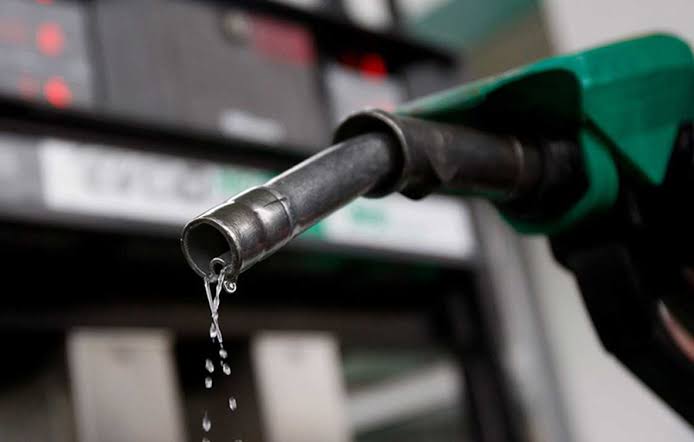
Tag: fuel price

  • Fuel Price: Public Servants Set October 2 For Three-Day Warning Strike

    Fuel Price: Public Servants Set October 2 For Three-Day Warning Strike

    Precious Nwonu, Enugu

    Public servants under the Joint National Public Service Negotiating Council have threatened to begin a three-day warning strike on October 2 if the Federal Government fails to address their concerns over petrol prices, wage awards and negotiations for a new national minimum wage.

    The council, which brings together eight public sector unions, gave the Federal Government until September 30 to respond to its demands.

    Among the demands are a reduction in the pump price of Premium Motor Spirit to ₦500 per litre, approval of a wage award for workers and the immediate constitution of a tripartite committee to negotiate a new national minimum wage ahead of 2027.

    The JNPSNC disclosed its position in a statement issued on Tuesday by its National Secretary and General Secretary of the Nigeria Civil Service Union, Gbenga Olowoyo.

    The council said it had already mobilised workers nationwide for the planned industrial action should the government fail to meet its demands before the deadline.

    The workers had written to President Bola Tinubu on September 21, calling for urgent measures to address the impact of rising fuel costs and worsening economic pressures on public servants and their families.

    The council said petrol prices, which it claimed currently range from ₦1,450 to ₦2,000 per litre and could reach ₦2,500 in some areas outside major cities, had become unsustainable for workers.

    It called on the Federal Government to introduce an intervention fund to address landing costs and support oil and gas operators as part of measures to reduce the price of petrol.

    The unions also urged the government to ensure crude oil is supplied to the Dangote Refinery and modular refinery operators on appropriate terms to encourage domestic refining and help lower the cost of petroleum products.

    According to the council, the high cost of fuel has increased financial pressure on workers, their dependants and other Nigerians, making it difficult for many households to maintain a decent standard of living.

    On the wage award, the unions asked the Federal Government to approve immediate financial relief for public servants to cushion the impact of prevailing economic conditions.

    The council said the intervention would help workers remain productive and strengthen their commitment to public service despite the economic difficulties.

    The unions also demanded the immediate formation of a tripartite committee to begin negotiations for a new national minimum wage expected to take effect in 2027.

    They said starting the process early would prevent administrative or procedural delays that could affect the implementation of the new wage after negotiations are concluded and the necessary legislation is passed.

    The JNPSNC said the Federal Government’s response by September 30 would determine whether the proposed strike would proceed.

    It warned that failure to address the demands by the deadline would leave the unions with no option but to commence the three-day warning strike from October 2.

    The council also urged President Tinubu to address the issues in his Independence Day broadcast, warning that continued inaction could further increase dissatisfaction among workers and other Nigerians affected by the economic situation.

    The JNPSNC comprises the Nigerian Civil Service Union, Medical and Health Workers Union, Association of Senior Civil Servants of Nigeria, National Association of Nigerian Nurses and Midwives, Amalgamated Union of Public Corporations, Civil Service Technical and Recreational Employees, Nigeria Union of Public Service, Reportorial, Secretarial, Data Processors and Allied Workers, National Union of Printing, Publishing and Paper Products Workers, and National Union of Agriculture and Allied Employees.

  • Price of diesel rises further by 18.5% to N343/litre

    There are indications that price of The average retail price of Automotive Gas Oil (diesel) is on steady rise reaching N343 per litre as at Wednesday, representing 18.5 per cent rise when compared with the National Bureau of Statistics (NBS) average figure of N289.37 per litre as at December 31, 2021. An NBS report also indicated that the December price was higher than the previous month, November, 2021. However, the price of Premium Motor Spirit (petrol) stood at N162 per litre, representing 2.27 per cent when compared to the NBS figure of N165.77 per litre in December 2021.

    In its Diesel Price Watch for December 2021, the NBS said: “The average retail price of Automotive Gas Oil (Diesel) paid by consumers increased by 28.97 per cent on a Year-on-Year (YoY) basis from a lower cost of N224.37 per litre recorded in the corresponding month of last year to a higher cost of N289.37 per litre in December 2021.

    “On a month-on-month (MoM) basis, an increase of 4.15 per cent was recorded from N277.83 in the preceding month of November to an average of N289.37 in December 2021.“Looking at the variations in the state prices, the top three states with the highest average price of the product in December include Enugu (N349.29), Borno (N340.00) and Oyo (N326.25).

    “Furthermore, the top three lowest prices were recorded in the northern region: Kebbi, Yobe and Katsina State with N232.36, N226.61 and N225.00 respectively. “The Zonal representation of average price of Automotive Gas Oil (Diesel) shows that South-East has the highest price of N307.35 while North West has the lowest price N263.65 when compared with other zones.”

    On petrol, the NBS Petrol Price Watch for December 2021 stated: “The average price paid by consumers for premium motor spirit (petrol) increased by 0.04 per cent on YoY basis to N165.77 in December 2021 when compared to the value in December 2020 (N165.70).

    “The value decreased on a MoM basis to N165.77 in December 2021 from N167.60, showing a decrease of -1.09 per cent when compared to the value recorded in November 2021. “States with the highest average price of premium motor spirit (petrol) were Ebonyi (N170.43), Kogi (N168.92) and Jigawa (N168.80).

    “States with the lowest average price of premium motor spirit (petrol) were Kano (N163.57), Ogun (N163.00) and Zamfara (N167.50). “Likewise, the highest average price was recorded in the South East zone (N167.38) while the South West had the least average price (N164.87) in December.”

    Source: www.vanguardngr.com

  • Buhari and Governors to discuss Fuel Price on Thursday

    Governors of the 36 states will discuss the issue of fuel price on Thursday.

    Minister of Labour and Employment, Chris Ngige, disclosed this on Sunday after a bipartite meeting of the Federal Government and the organised labour at the Banquet Hall of the Presidential Villa Abuja. Leadership of the Nigerian Labour Congress and the Trade Union Congress represented the organised labour.

    Briefing journalists on their resolutions, Ngige said labour had investigated the report of the Technical Committee on Premium Motor Spirit Pricing Framework as agreed at the last meeting and made its submissions, even as the Nigerian National Petroleum Corporation (NNPC) presented its report.

    He said: “The labour side saw that NNPC were making some points and like I said, it is work in progress. Governors are going to discuss this on Thursday. They have discussed this at the National Economic Council (NEC) and so everybody is involved because we find ourselves in dire straits. There is no money for subsidy.

    “The NNPC said what they are doing is import dependent. Deregulation is import dependent but they are doing bulk purchasing. So, they can get discounts. They are also using foreign exchange that is discounted for them. They are not buying from the parallel market. All these things will be put in basket and a price will emerge from it.”

    Prodded further by journalists, Ngige maintained that the Federal Government has finished with the organised labour on the issue of fuel price.

    On the issue of electricity tariff, the minister disclosed that the meeting adopted the report of its Ad-hoc Technical Committee on Electricity Tariffs, made some adjustments and transformed the committee into an implementation committee to implement the recommendations made, including mass metering.

    “You will start seeing members of the committee with the Minister of Power, going around now and making sure DISCOS put meters for people, because there are reports that they don’t want to be distributing meters and that they want to be doing bulk billing and estimated billings and we don’t want that.

    “There is also a resolution as regards gas companies reducing gas pricing for gas sold to power companies, GENCOS and the rest of them, so that the price of electricity per unit will go down and the consumers will benefit from it. We have given the marching orders for them to do so.

    “Some paper works have to be done and once that is done, price of electricity will go down and once it goes down, the consumers will benefit.”

    He said the committee also recommended that those forcefully migrated by distribution companies from lower paying bands C and D to upper bands A and B should petition the National Electricity Regulatory Commission (NERC)

    “They will be brought back and the DISCO will be sanctioned.”

    Ngige, however, announced that the social dialogue between the Federal Government and labour has been adjourned to April as the two standing committees are still working.

    Earlier, Secretary to the Federal Government, Boss Mustafa, congratulated the organised labour for their sacrifices at this time of economic difficulty, which has been rewarded with Nigeria’s exit recession in the third quarter of 2020.

    He said all the projections, including the reports of economic sustainability committee put in place with robust response to COVID-19 pandemic provided clear evidence that Nigeria was on its way to exit recession in the first quarter of 2021 ‘but we beat them to it in the third quarter of 2020’.

    “This could not have been achieved without the support of the organised labour and the working population of the country because you were the one that drives the economy and ensured the petroleum sector, the lifeline of the country’s economy, is not disrupted. If we have had disruptions, it would have been difficult for us to exit recession in the first quarter of 2021, let alone, the fourth quarter of 2020.

    Mustafa thanked the leadership of the organised labour for the maturity they have always shown to the discussion of very important national issues and expressed optimism that they would achieve whatever they want “if the spirit is sustained.”


    Source: www.sunnewsonline.com