Tag: foreign exchange

  • Cooking Gas Inflation: Investors urge FG to tackle Foreign Exchange instability and high prices


    The President, Nigeria LPG Association, Mr. Nuhu Yakubu, said the association had been engaging with relevant agencies, with a view to addressing the issues.


    Speaking at the just-concluded 11th International Conference and Exhibition in Lagos, he said: “As an association, we are currently engaging with respective government agencies in addressing issues around LPG supply, particularly access to foreign exchange, value-added tax, levies, etc. We believe our efforts will yield positive results in good time.


    “Also, it is not far-fetched to state, therefore, that sustaining the growing adoption of LPG through sector-friendly policies and programmes will advertently support economic growth that will yield jobs and wealth creation. It is our collective responsibility to make this happen and an event such as this is one aimed at setting the pace.


    “In line with the 7th Sustainable Development Goals, SDGs, deepening education on the role of diverse applicable uses of LPG is critical as the world aims to provide cleaner, reliable, sustainable and affordable energy sources for everyone by 2030.
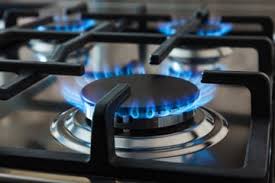
    ”Worthy of mention is the declaration of the Decade of Gas, by the Minister of State for Petroleum Resources, Chief Timipre Sylva with the support of the President and Commander in Chief, Retired Gen. Muhammadu Buhari, GCON, who ably doubles as Honorable Minister of Petroleum Resources.


    “The LPG sector is projected as an industry with this executive posturing to galvanize the entire LPG value chain to drive an upsurge adoption of LPG in spurring growth and improving the wellbeing of households across Nigeria.”


    Also, in the communiqué obtained by Vanguard at the end of the event, the experts noted that the nation had very huge gas reserves of over 200 trillion standard cubic feet, but noted that the current business environment had not been friendly.


    Specifically, the communique stated: “That the Petroleum Industry Act, PIA, should be implemented in a manner that will encourage massive domestic and foreign investments, required to stimulate sustainable growth while creating many multiplier effects, including jobs for Nigerians.


    “That such new investments are required to reduce Nigeria’s current dependence on imported LPG as well as meet rising future demand based on increased population. That the government should be consistent in the conceptualization and implementation of policies needed to ensure stability in the LPG sector.


    READ ALSO: Outrageous cost of cooking gas


    “That relevant stakeholders need to be involved and carried along in the process of taking new decisions to ensure successful implementation. That the imposition of the Value Added Tax, VAT, has negatively affected the sector in many unintended ways and should be eliminated.


    “That the high prices of LPG have shifted the demand to firewood and charcoal, thus fuelling desertification and erosion with a very negative impact on the environment. That a package of new incentives should be introduced to stimulate investment, processing and utilization of LPG in Nigeria in line with the nation’s Decade of Gas agenda.


    “That the LPG sector gasps for massive infrastructural development to stimulate and sustain expansion in the coming years. That the government and its agencies should intentionally eliminate all hindrances, especially lack foreign exchange, currently staring the sector in the face.”


    However, the Federal Government, yesterday, moved to check the rising price of cooking gas by setting up a new Domestic Base Price for gas as the, “Export Parity Price at the delivery point where there is a dominant supply of gas in Nigeria.”


    The Chief Executive Officer of the Nigerian Midstream and Downstream Petroleum Regulatory Authority, NMDPRA, Engr Farouk Ahmed, in a statement in Abuja, set out a new Domestic Base Price, DBP, framework and applicable gas wholesale price for the strategic domestic sector.


    Engr. Ahmed explained that the applicable Wholesale Gas Price for the power sector shall be the established Domestic Gas Price.


    According to him, the DBP will be determined annually based on the criteria set in the Third Schedule of the Petroleum Industry Act, which are a reference DBP to prices of gas in countries with significant reserves and production of natural gas, ensuring that Base Price considers the lowest cost of gas supply based on a Three-tier Cost of Supply Framework and DBP is related market-prices tied to International Benchmarks (for strategic investors)


    The Authority explained that, “Export Parity Price in this context is defined as a market-driven pricing framework, responsive to fiscal changes and weighed to ensure pricing flexibility while moderating swings to protect fragile domestic industries”.


    Investigation by Vanguard, weekend showed that the price of the product has continues to hover at N8,500 per 12.5 kg as consumers take to increased firewood consumption in different parts of the nation.


    Source: www.vanguardngr.com


  • Foreign Exchange utilization for food importation dropped by half this year

    The Central Bank of Nigeria (CBN) says foreign exchange (FX) utilisation for food importation dropped by half in January 2021.


    The CBN’s economic report on ‘Sectoral Utilisation of Foreign Exchange’ for January said a total of $160 million was spent from Nigeria’s FX on importing food in January.


    This represents a 48 percent decline when compared to $310 million spent in December 2020.


    The report said FX worth $2.75 billion was expended across sectors, representing a 40.3 percent decrease from the preceding month.


    “Total foreign exchange utilisation by sectors decreased by 40.3 per cent from the preceding month to $2.75billion, reflecting a drop in end-user demand for foreign exchange, owing to year-end ease in economic activities,” the report said. “Visible and invisible imports, constituting 46.9 per cent and 53.1 per cent respectively of the total foreign exchange utilisation declined by 53.4 per cent and 20.7 per cent to $0.77billion and $0.87billion respectively. A disaggregation of foreign exchange utilisation for visible transactions showed that the amount utilised for industrial, manufactured products, and food products sub-sectors amounted to $0.30billion, $0.23billion, and $0.16billion respectively, relative to $0.72billion, $0.38billion, and $0.31billion in the precedi ng month…”


    Source: www.sunnewsonline.com

  • Nigeria gains massively on the ‘Naira for Dollar’ policy

    The ‘Naira for Dollar’ policy of the Central Bank of Nigeria (CBN) has led to positive accretion to the foreign reserves exactly one month after takeoff.


    The foreign reserves, on April 1, stood at $34.85 billion, representing $404 million increase compared to $34.41 billion on March 11.


    The uptick in reserves has been attributed to CBN’s ‘Naira for Dollar’ policy which has seen dollar inflows pass through commercial banks, instead of unofficial channels.


    Also helping reserves accretion is the continued rise in benchmark Brent crude oil price, which stood at $63.29 per barrel as at April 8, representing about $23.29 above the $40 per barrel benchmark for 2021 budget.


    According to the CBN Governor, Godwin Emefiele, the ‘Naira for Dollar’ policy, gives N5 rebate for every $1 sent by Nigerians in diaspora to the country, which is paid directly to the account of the beneficiaries, following receipt of the remittance inflows.


    The CBN had promised that the new policy would provide Nigerians in the Diaspora with cheaper and more convenient ways of sending remittances to Nigeria.


    Defending the dollar policy, Emefiele said the move was also to increase the transparency of remittance inflows and reducing rent-seeking activities. He expressed optimism that the new policy measure will encourage banks and financial institutions to develop products and investments vehicles, geared towards attracting investments from Nigerians in the diaspora.


    Reiterating the provision a new circular on remittances, the CBN boss said the bank introduced the rebate of N5 for every $1 of fund remitted to Nigeria, through International Money Transfer Operators (IMTOs) licensed by the Central Bank in order to incentivise the process of remittance.


    He emphasised that the new measure would help to make the process of sending remittance through formal bank channels cheaper and more convenient for Nigerians in the diaspora.


    Also, Forex Trading Associate, AZA, a global forex dealer, Oghenefejiro Eduviere, said naira would remain stable on the parallel market, hovering around the N480 to N490 level, as the Central Bank of Nigeria’s ‘N5 for $1’ incentive scheme encourages forex flows to go through banks.


    “We see trading on the Investors and Exporters (I&E) Forex window extending depreciation towards N435 in the short term,” he said in emailed notes to investors.


    “The naira strengthened on the parallel market, trading in the 478/485 to the dollar range vs. 482/486 at the end of last week, while depreciating on the official I&E window, from N408.67 to N411 to dollar amid accumulated demand for dollars carried over from the long Easter break,” he added.


    On the foreign reserves, Fitch Ratings, a global rating agency predicted that Nigeria’s external reserves would rise to $42 billion by year-end.


    In a report titled, “Depreciatory Pressures on Key Sub-Saharan African Currencies to Lessen,” Fitch Ratings had hinged the forecast on its expectation that Brent crude would average $53 per barrel, compared to the $43.1 per barrel recorded in 2020. Moreover, the agency anticipated that the CBN would allow the official naira exchange rate to depreciate further over the course of 2021, notwithstanding improved terms of trade and foreign exchange reserves.


    “Given rising oil prices in 2021, we expect forex reserves to rise to an average of around $42 billion in 2021 (around eight months of import cover), compared to $36 billion in 2020.


    “However, this will not negate the impact of persistent depreciatory pressures on the naira, notably as a result of rising dollar demand driven by the domes tic economic recovery,” it stated.


    Source: www.thenationonlineng.net

  • Aggregate Foreign exchange inflow in the country increases to $23.60bn

    Aggregate foreign exchange inflow into the country in the fourth quarter of 2020 rose to $23.60bn from $21.46bn in the third quarter, figure from the Central Bank of Nigeria revealed on Tuesday.


    The CBN stated in its report on ‘Foreign exchange flows through the economy’ for the fourth quarter that though there was an increase in foreign exchange flows through the economy in the review quarter compared with the preceding quarter due to the reopening of most economies including Nigeria, the second wave of COVID-19 hampered a return to the levels experienced in the corresponding quarter of 2019.


    Part of the report read, “Consequently, aggregate foreign exchange inflow in the fourth quarter of 2020 was $23.6bn, compared with $21.46bn and $36.32bn in the third quarter of 2020 and corresponding quarter of 2019, respectively.


    This indicated an increase of 10.0 per cent over the previous quarter, but a decline of 35 per cent below the level in the corresponding quarter.


    It added that foreign exchange outflow through the economy rose by 13.1 per cent above the third quarter of 2020 to $8.38bn in the review period but declined by 51.5 per cent below the level in the corresponding quarter of 2019.


    Accordingly, foreign exchange flow through the economy resulted in a net inflow of $15.22bn in Q4, 2020, compared with the net inflow of $14.05bn and $19.05bn in the preceding quarter and corresponding quarter of 2019 respectively


    Source: www.punchng.com