Tag: FG

  • FG Seeks Legislative Backing for National Research, Innovation Fund, Council

    FG Seeks Legislative Backing for National Research, Innovation Fund, Council

    The Federal Government has sent a bill to the National Assembly seeking legislative backing for the establishment of the National Research and Innovation Development Fund and Council, the Minister of Innovation, Science and Technology, Dr. Kingsley Tochukwu Udeh, SAN, has disclosed.

    Udeh said the Federal Executive Council had already approved the establishment of the fund and council, with the bill now before the National Assembly to provide statutory backing for the initiative.

    He disclosed this during a recent interview on Arise News Prime Time.

    According to the minister, the proposed framework is aimed at creating sustainable funding for research and development, particularly research with commercial potential.

    He said the proposed legislation would provide for a dedicated and consolidated source of funding for research and development, with emphasis on projects capable of being commercialised.

    Udeh also disclosed that the government was working to encourage private-sector investment in research and development, noting that the private sector would have to play a major role in funding innovation.

    He said the tax law also contains provisions that allow companies and institutions to devote part of their taxable income or revenue to research and development.

    The minister cited Turkey as an example, saying 60 percent of its research and development funding comes from the private sector.

    Udeh said the government was also working with the education sector to ensure that research was increasingly driven by market needs rather than being conducted solely for academic purposes.

    “So we will be prioritizing market demands on research.”

    He said the approach would help connect universities and research institutions directly with industry and potential investors.

    The minister also disclosed that the government was engaging to establish an innovation grid, hub or database in Nigeria at an estimated cost of $18 million.

    According to him, the platform would catalogue innovations and inventions emerging from Nigerian universities and research institutions, enabling investors and technology companies to identify available intellectual property and engage researchers or institutions.

    He said the project was expected to contribute significantly to the Nigerian economy and would not require government budgetary funding.

  • FG Moves To Boost Aba Textile Industry, Agriculture In Abia

    FG Moves To Boost Aba Textile Industry, Agriculture In Abia

    The Federal Government has begun discussions with the Abia State Government on possible support for businesses in Aba’s textile and garment industry as well as the state’s agricultural sector.

    The Special Adviser to the President on Industry, Trade and Investment, John Uwajimogu, disclosed this on Wednesday during a meeting with Governor Alex Otti in Umuahia.

    Uwajimogu said the visit was aimed at strengthening collaboration between the Federal Government and the state while identifying opportunities for federal projects and investments.

    He said the government had recognised Aba’s industrial potential, particularly its concentration of textile and garment businesses, and was considering interventions to address challenges affecting the sector.

    According to him, infrastructure and access to finance remain among the major constraints facing businesses in the cluster.

    “One of the biggest things that we see coming out of Abia State is the strong industrial capacity in Aba, particularly in the textile and garments sector,” Uwajimogu said.

    He added, “We have been thinking of how, from the federal level, we can support the businesses that are working in that sector and have come up with ideas on how we can address some of the biggest binding constraints that they often face, one being infrastructure and the other one being finance.”

    Uwajimogu said the Federal Government was also interested in bringing more of its projects and programmes to Abia, adding that the engagement would help identify areash where both governments could collaborate to stimulate economic development.

    Also speaking, the Executive Secretary and Chief Executive Officer of the National Agricultural Land Development Authority, Cornelius Adebayo, said the agency was seeking the state government’s support for its agricultural development plans in Abia.

    Adebayo said NALDA’s mandate included using agriculture as a tool for poverty reduction, adding that the agency wanted Abia to participate in its Renewed Hope Mega Farm Estate programme.

    He explained that the programme was designed to bring farmers together, provide necessary infrastructure and improve access to security, agricultural inputs and markets while creating sustainable sources of income.

    Adebayo expressed optimism that Abia could host a major NALDA agricultural project, including a processing facility, and appealed to the state government to provide suitable land for the initiative.

    Responding, Governor Otti said his administration was ready to work with NALDA and other stakeholders to develop Abia’s agricultural sector.

    The governor said the state had fertile and arable land capable of supporting the production of crops including cassava, yam, cocoyam, oil palm and cashew despite its relatively small landmass.

    Otti said increased investment in local agriculture was necessary to reduce dependence on food imports, noting that food importation also placed pressure on the foreign exchange market.

    He said the state would continue to pursue initiatives aimed at increasing local production and strengthening agriculture as part of its economic development strategy.

  • FG Launches Digital Postcode System, Urges Nigerians to Find Their Codes

    FG Launches Digital Postcode System, Urges Nigerians to Find Their Codes

    Precious Nwonu, Enugu

    The Federal Government has launched a new National Digital Alphanumeric Postcode System designed to improve the identification of locations and make it easier for Nigerians and businesses to access services.

    The Minister of Communications, Innovation and Digital Economy, Bosun Tijani, announced the launch in a post on X on Thursday, urging Nigerians to locate and begin using their new digital postcodes.

    The system, operated by the Nigerian Postal Service, assigns a unique 11-character digital postcode to every addressable building across the country.

    According to the minister, the codes provide a precise, Geographic Information System-enabled reference for identifying locations.

    Tijani said the system would help businesses reach customers outside their immediate areas, enable families to provide accurate locations during emergencies and assist government agencies in delivering essential services to communities.

    “Every Nigerian deserves to be found. Every business deserves the chance to reach its customers. And every community deserves to be within reach of opportunity,” he said.

    The minister added that reliable digital postcodes would provide part of the infrastructure required to support President Bola Tinubu’s target of building a $1tn economy.

    “As we work towards (President Bola Tinubu’s) ambition for a $1 trillion economy, we must build the foundations that allow more Nigerians to participate, trade and prosper. This is one of those foundations,” Tijani said.

    He encouraged Nigerians to search for their postcodes through the official Digital Postcode website and share the information with family members, friends and businesses.

    The system identifies locations through five levels: state, local government area, district, area and building, with each addressable building assigned a unique code.

    NIPOST had earlier explained that the digital postcode system would support deliveries, emergency response, public service delivery and e-commerce by providing a standardised reference for locations.

  • UNGA 81: Udeh Woos Silicon Valley Investors for $1bn Nigeria Research Deal

    UNGA 81: Udeh Woos Silicon Valley Investors for $1bn Nigeria Research Deal

    Nigeria is seeking up to $1 billion in investments and commercial partnerships from Silicon Valley investors over the next 12 months as the Federal Government moves to turn locally developed research into marketable products and services.

    The Minister of Innovation, Science, and Technology, Dr. Kingsley Udeh, SAN, disclosed this in New York after a series of meetings with technology executives and investors on the sidelines of the 81st United Nations General Assembly (UNGA).

    Udeh said the engagements focused on the Federal Government’s Energize Commercialisation Now (ECoN) programme, which seeks to bridge the gap between research conducted in Nigerian institutions and the commercial production of innovative goods and services.

    “We engaged with big players in Silicon Valley who are interested in investing in Nigeria, particularly as it relates to our flagship programme called Energize Commercialisation,” Udeh said.

    According to the minister, the proposed partnership is expected to attract private capital and expertise into Nigeria’s science, technology and innovation ecosystem while creating opportunities for job creation and economic growth.

    He said the initiative also supports President Bola Tinubu’s ambition of building a $1 trillion economy by expanding the contribution of technology, innovation and private-sector investment.

    “Consistent with Mr. President’s agenda of taking our economy to a $1 trillion GDP, we have been able to meet key players from Silicon Valley,” he said.

    Udeh said an agreement between Nigeria and prospective partners had already been drafted, with the memorandum of understanding (MoU) forwarded to Abuja for review.

    He said the parties were expected to sign the agreement during the UN General Assembly meetings, subject to the completion of the necessary processes.

    Although the minister did not disclose the names of the companies or investors involved, he said the proposed collaboration could deliver “substantial value” to Nigeria’s science and innovation sector and the wider economy.

    He put the potential value of the investments, commercial partnerships and other economic opportunities arising from the discussions at as much as $1 billion within one year.

    “From the discussions we have had, if we pull in the various opportunities that have been discussed and are already reflected in the MoU, Nigeria can get from this intervention as much as $1 billion in the course of one year,” he said.

    Udeh also highlighted the involvement of Nigerians working in Silicon Valley as a significant aspect of the discussions, saying their expertise and connections could help open opportunities for Nigeria.

    “A very interesting and cheering aspect of the engagement I had in the course of UNGA is that key members of the Silicon Valley players are Nigerians,” he said.

    “It is impressive that we have Nigerians making things happen in Silicon Valley, and they are happy to bring these opportunities home to add value to Nigerian science, technology and innovation.”

    The proposed deal comes as the Federal Government seeks to attract diaspora expertise and private investment to strengthen the commercialisation of research and reduce the gap between innovations developed in Nigerian institutions and their adoption in the marketplace.

  • Flood: Over 8,000 Communities, 4,500 Schools at Risk in 15 States

    Flood: Over 8,000 Communities, 4,500 Schools at Risk in 15 States

    Precious Nwonu, Enugu

    The Federal Government has warned that more than 8,000 communities and 4,500 schools across 15 states could be affected by flooding between September 19 and 25.

    The warning was contained in the latest National Flood Advisory issued by the Nigeria Hydrological Services Agency on Saturday.

    NiHSA Director-General and Chief Executive Officer, Arch Umar Mohammed, said rising river levels were expected to increase the risk of flooding in vulnerable communities, particularly those located on floodplains.

    The agency listed Imo, Cross River, Delta, Ebonyi, Benue, Anambra, Akwa Ibom, Edo, Enugu, Bayelsa, Kogi, Abia, Taraba, Rivers and Lagos as the states covered by the advisory.

    According to NiHSA, the expected flooding could affect residential communities as well as schools, healthcare facilities, markets, religious centres and farmlands.

    Mohammed urged state governments to take immediate preventive measures, including relocating residents living in high-risk areas to safer locations.

    “High riverine flood risk is forecast for the next seven days across Imo, Cross River and 13 other states,” he said.

    He added that rising river stages could cause flooding, advising communities on floodplains to prepare for possible movement to higher ground.

    NiHSA specifically identified river monitoring stations around Obubra, Itigidi and Epento in Cross River State as areas requiring close attention.

    In Imo State, the affected local government areas are Aboh-Mbaise, Ahiazu-Mbaise, Ehime Mbano, Ezinihitte, Ideato North, Ihitte/Uboma and Ikeduru.

    The agency said 958 communities, 1,022 schools, 553 healthcare facilities, 161 markets and 198 religious buildings could be exposed in the state.

    Cross River has eight affected LGAs, namely Abi, Akamkpa, Akpabuyo, Biase, Calabar, Calabar South, Ikom and Obubra.

    NiHSA estimated that 2,471 communities, 703 schools, 344 healthcare facilities and 145 markets are exposed in the state. It also identified 453 religious buildings and 854 hectares of farmland as vulnerable.

    In Ebonyi, the affected areas include Abakaliki, Afikpo, Afikpo South, Ebonyi, Ezza North and Ezza South local government areas.

    The agency listed 2,574 communities, 1,064 schools, 422 healthcare facilities, 480 markets, 629 religious buildings and 1,882 hectares of farmland as exposed to possible flooding.

    For Benue State, Buruku, Gboko, Guma, Katsina-Ala, Logo and Ukum LGAs were identified as vulnerable.

    NiHSA said 303 communities, 100 schools, 48 healthcare facilities, 32 markets, 151 religious buildings and 55 hectares of farmland were at risk.

    In Anambra, the affected local government areas are Aguata, Anambra East, Anambra West, Anaocha, Awka North, Awka South and Ayamelum.

    The agency identified 1,314 communities, 1,308 schools, 1,089 healthcare facilities, 280 markets, 610 religious buildings and 1,529 hectares of farmland as exposed.

    In Akwa Ibom, Abak, Eket, Etinan, Ibeno, Ibesikpo Asutan, Ibiono Ibom, Ika and Ikono were listed among the vulnerable local government areas.

    NiHSA estimated that 249 communities, 323 schools, 211 healthcare facilities, 74 markets and 289 religious buildings could be affected.

    The agency urged residents in flood-prone communities to remain alert, follow official warnings and avoid remaining in vulnerable areas as river levels rise.

    It also advised residents living on floodplains to relocate to higher ground where necessary and encouraged state authorities to activate their emergency response measures ahead of the forecast period.

  • FG, CBN Sign Pact to Coordinate Inflation, Debt and Forex Policies

    FG, CBN Sign Pact to Coordinate Inflation, Debt and Forex Policies

    Precious Nwonu, Enugu

    The Federal Government and the Central Bank of Nigeria have entered into a new agreement aimed at improving coordination on inflation, public borrowing, debt management, liquidity and foreign exchange.

    The Memorandum of Understanding on Fiscal-Monetary Policy Coordination was signed in Abuja on Friday by the Federal Ministry of Finance and the CBN.

    The agreement establishes a formal mechanism for both institutions to exchange information and coordinate economic policies while preserving the operational independence of the apex bank.

    Speaking at the signing, CBN Governor, Olayemi Cardoso, said the framework would strengthen cooperation in government cash management, debt issuance, liquidity forecasting, macroeconomic analysis and policy consultations.

    He said fiscal and monetary policies were closely connected, noting that government spending, taxation and borrowing decisions could affect economic activity, while monetary policy influenced liquidity, interest rates and price stability.

    Cardoso said the agreement was particularly important as the CBN continued its transition towards an inflation-targeting framework.

    He explained that achieving the objectives of inflation targeting required effective monetary policy alongside fiscal policies that supported price stability.

    According to him, the Federal Ministry of Finance and the CBN had collaborated over the years on issues including inflation management, debt sustainability, budget financing, exchange rate stability and responses to economic shocks.

    He said the new agreement would formalise and strengthen that cooperation.

    The Minister of Finance and Coordinating Minister of the Economy, Taiwo Oyedele, said the framework was intended to ensure that fiscal and monetary policies worked in the same direction.

    Oyedele, however, stressed that increased coordination would not compromise the CBN’s autonomy.

    “The operational independence of the Central Bank remains sacrosanct. Coordination must never become fiscal dominance. The CBN will retain full independence in pursuing price and financial-system stability,” he said.

    The minister said the government was targeting a sustainable reduction in inflation to single digits, adding that monetary policy alone could not resolve the country’s inflationary pressures.

    “Our objective is to bring inflation sustainably into single digits and keep it there, and that cannot be monetary policy’s job alone,” Oyedele said.

    He identified food prices, import costs, energy and logistics as some of the structural factors driving inflation.

    Oyedele said the government would therefore focus on measures including strengthening grain reserves, improving agricultural yields, expanding irrigation and developing access roads to farms.

    He also ruled out a return to fuel subsidy, arguing that such a policy could put additional pressure on government finances and the naira.

    “A return to subsidy would create a fiscal collapse, pressure the naira, and ultimately undermine the price affordability it seeks to provide,” he said.

    Under the new framework, the Finance Ministry and the CBN are expected to improve the sharing of information on government cash positions, borrowing plans, credit growth and foreign exchange flows.

    The CBN Deputy Governor, Corporate Services Directorate, Dr Muhammad Abdullahi, said the agreement was particularly relevant amid global economic uncertainty and geopolitical tensions.

    He cited potential disruptions to energy and shipping routes in the Middle East, saying such developments could affect oil prices, government revenues, inflation, capital flows and financing conditions simultaneously.

    “This is why coordination matters. Coordination does not mean blurring respective mandates or compromising the independence required for effective monetary policy,” Abdullahi said.

    He said the framework would facilitate regular consultations, information sharing, joint technical analysis, scenario planning and stress testing.

    Abdullahi added that the two institutions would be better positioned to assess the impact of changes in oil prices and production on government revenue, foreign exchange inflows, external reserves, inflation, liquidity and financing conditions.

    “Uncertainty is not an argument for waiting; it is an argument for preparedness,” he said.

    Also speaking, the Permanent Secretary of the Federal Ministry of Finance, Raymond Omachi, said the agreement was designed to balance inflation control with economic growth.

    Omachi said government spending would need to be managed carefully to avoid adding to inflationary pressures, while monetary tightening should not unnecessarily restrict economic growth and employment.

    “The core objective of the framework is inflation and growth balance,” he said.

    He added that the arrangement would help align government borrowing plans with money-market liquidity management, with the aim of reducing the risk of public borrowing crowding out private-sector credit.

    The permanent secretary said the framework would also cover exchange-rate and revenue stability, foreign exchange management, resilience to external shocks and regular data exchange between the government and the CBN.

  • FG Clarifies UK Passport Fees, Says No Hidden Charges

    Dr. Olubunmi Tunji-Ojo

    The Federal Government has expressed deep concern over the inconveniences currently being experienced by Nigerians residing in the United Kingdom regarding the application and processing of their international passports.

    The Minister of Interior, Dr. Olubunmi Tunji-Ojo while addressing in a statement on Monday by his Special Adviser on Media and Publicity, Alao Babatunde said that these concerns are being addressed.

    He noted that the operational hitches were reported during the ongoing special passport intervention exercise in the UK promoting the government to initiated a specific programme to provide broader options and significantly ease the administrative burden for citizens in the diaspora who are seeking to seamlessly renew or acquire their travel documents.

    The minister categorically clarified the financial requirements for the passport processing, distancing the authorities from any arbitrary or unofficial levies.

    He maintained that the intervention exercise does not attract any additional costs beyond the legally stipulated official fees.

    “It is therefore necessary to clarify that this process does not come with extra cost different from the official fees of $150 and $230 for a five year and ten year validity passports respectively, exclusive of bank charges,” the statement read in part.

    Tunji-Ojo strongly emphasised that neither the Ministry of Interior nor the Nigeria Immigration Service (NIS) has authorised, endorsed, or introduced any hidden charges outside the officially recognised passport fees.

    This timely clarification comes amid growing public concerns and complaints from applicants regarding suspected exploitation and administrative bottlenecks during the ongoing special intervention programme.

    To swiftly resolve the operational difficulties and ensure a smooth, transparent experience for Nigerians in the diaspora, the Interior Minister revealed that high-level strategic consultations are currently underway with the Ministry of Foreign Affairs.

    Tunji-Ojo assured affected applicants that “Consultations are ongoing with the Ministry of Foreign Affairs to ensure that any inconveniences during this process do not persist any longer,”

    Reaffirming the current administration’s dedication to the welfare of its citizens, the minister noted that the government remains steadfast in its mandate of delivering efficient public services globally and ” has demonstrated high level of responsibility to Nigerians home and abroad, and remains committed to its promises of providing succour to all,” he stated.

    Furthermore, to bypass the physical hurdles associated with traditional application processes, the government advised applicants to explore digital alternatives.

    Tunji-Ojo urged Nigerians in the UK to leverage the newly implemented, seamless contactless biometric passport application system to avoid unnecessary delays and enhance efficiency.

  • Nnamdi Kanu’s Case, The Nigerian State, And The Rule Of Law: Jurisdiction, Rendition, And The Politics Of Prosecution

    Nnamdi Kanu’s Case, The Nigerian State, And The Rule Of Law: Jurisdiction, Rendition, And The Politics Of Prosecution

    By Dr. Brian Vincent Ikejiaku

    Introduction

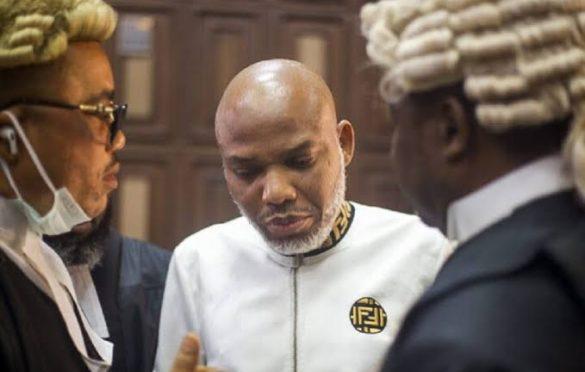
    The prosecution of Mazi Nnamdi Kanu, leader of the Indigenous People of Biafra (IPOB), remains one of the most complex intersections of law, politics, and international relations in contemporary Nigeria. His trial – originating from alleged acts of terrorism, secessionist agitation, and unlawful broadcasting – has become a crucible for testing Nigeria’s constitutional order, its commitment to the rule of law, and its approach to managing deep ethno-political divisions.

    Beyond its domestic significance, the case engages fundamental questions of jurisdiction, extraterritoriality, and international due process: whether a State may lawfully prosecute a person abducted from a foreign country without formal extradition, and whether prosecutions under repealed statutes remain valid under new laws with saving clauses.

    The issues raised mirror global tensions between State sovereignty and individual rights, resonating with precedents from the United States, United Kingdom, and India – all jurisdictions that have grappled with terrorism, unlawful rendition, and the reach of domestic law beyond borders.

    1. Background: Timeline of Acts, Arrests, and Legal Context

    Nnamdi Kanu’s legal odyssey began in October 2015, when he was first arrested and charged under the Terrorism (Prevention) (Amendment) Act 2013 and the Criminal Code Act. The counts included managing an unlawful society, importing radio transmitters, and committing acts amounting to treasonable felony.

    He was granted bail in 2017 but fled the country after a military operation at his residence in Abia State, later resurfacing abroad to continue his pro-Biafra broadcasts.

    In June 2021, Kanu was apprehended in Kenya and returned to Nigeria under circumstances widely described as extraordinary rendition – that is, an abduction and forcible return without following extradition procedures prescribed under the Extradition Act, Cap E25 LFN 2004.

    In May 2022, while his case was pending, Nigeria enacted the Terrorism (Prevention and Prohibition) Act 2022 (TPPA 2022), repealing the earlier 2011 and 2013 Acts. The new law introduced broader definitions of terrorism and explicit extraterritorial jurisdiction under Section 2(1)(c), covering acts committed abroad that threaten Nigeria’s security.

    The repeal raised a constitutional question: could Kanu’s ongoing trial, framed under the repealed 2013 law, validly continue under the new statute?

    2. The Legal Framework: Repeal, Savings Clauses, and Jurisdiction

    The TPPA 2022 addresses transitional issues in Sections 97 and 98, which expressly save ongoing prosecutions and subsisting charges under the repealed Acts. Section 98(3) provides that:

    “Any proceeding, prosecution, sentence, judgment, charge or cause of action pending or existing immediately before the commencement of this Act under any of the repealed Acts may be continued or commenced … as if this Act had not been made.”

    Thus, as of the repeal date – 12 May 2022 – Kanu’s prosecution was a “pending proceeding” within the meaning of the savings clause. The Federal High Court therefore retained jurisdiction to continue his trial, notwithstanding the repeal.

    This mechanism echoes Section 6 of Nigeria’s Interpretation Act, Cap I23 LFN 2004, which presumes that repeal of a statute does not extinguish rights, liabilities, or proceedings existing under it unless the repealing law expressly provides otherwise.

    3. Jurisdictional Challenges and Extraterritorial Reach

    Kanu’s defence team has repeatedly argued that some alleged offences – particularly the radio broadcasts advocating Biafra – occurred outside Nigeria’s territory, thereby stripping Nigerian courts of jurisdiction.

    However, both the repealed 2013 Act and the 2022 TPPA confer extraterritorial jurisdiction over terrorism offences. Section 2(1)(c) of the TPPA 2022 states that an offence may be tried in Nigeria where it is “committed partly in and partly outside Nigeria,” or where the offender is a Nigerian citizen abroad, or the act is directed at Nigerian interests.

    Under this provision, the Federal High Court may exercise jurisdiction over Kanu’s broadcasts – even those transmitted from the United Kingdom or Kenya – since the alleged intent was to incite violence within Nigeria.

    This model reflects global counter-terrorism statutes. The UK’s Terrorism Act 2006, the U.S. Patriot Act 2001, and India’s Unlawful Activities (Prevention) Act 1967 all recognise extraterritorial competence for offences threatening national security.

    4. The Extraordinary Rendition Controversy

    The more profound constitutional issue, however, arises from how Kanu was brought to Nigeria. He was not extradited under treaty procedures but allegedly abducted by Nigerian agents from Kenya – a method known as extraordinary rendition.

    Under Nigerian law, the Extradition Act requires a formal request, judicial hearing, and surrender order by the requested state. None of these steps occurred. Internationally, such conduct may breach the UN Charter (sovereignty of Kenya), the African Charter on Human and Peoples’ Rights (Article 12 on liberty and movement), and customary international law.

    The defence therefore contended that this unlawful rendition deprived the Federal High Court of jurisdiction to try him.

    5. Judicial Responses: The 2022 Court of Appeal Decision

    In October 2022, the Court of Appeal (CA/ABJ/CR/625/2022) agreed, holding that:

    “The extraordinary rendition of the appellant from Kenya to Nigeria is a gross violation of international law and the procedure under the Extradition Act … The trial court therefore lacks jurisdiction to continue his trial.”

    The court struck out the remaining counts and ordered Kanu’s release, declaring that the Federal Government could not “benefit from its own wrong.”

    That judgment marked a rare victory for procedural human rights in Nigeria’s anti-terrorism jurisprudence.

    6. The Supreme Court Reversal (December 2023)

    The Supreme Court of Nigeria (SC/CR/1361/2022) reversed that decision in December 2023, holding that although Kanu’s rendition was “unlawful and condemnable,” it did not oust the jurisdiction of the Federal High Court.

    The Court adopted the Ker–Frisbie doctrine, a principle from U.S. law (Ker v. Illinois (1886); Frisbie v. Collins (1952)) holding that the manner of a defendant’s capture does not preclude trial once he is physically before the court.

    By this reasoning, the illegality of rendition is a diplomatic or political issue, not a bar to criminal prosecution. The Supreme Court thus reinstated the trial, remitting it to the Federal High Court for continuation.

    7. The Nigerian Rule of Law Dilemma

    This ruling underscores a recurring tension in Nigeria’s legal order: the struggle to balance state security against constitutional due process.

    While the Court was doctrinally correct within common-law tradition, many critics argue it reflects an executive-centric conception of justice – one that prioritises state control over individual rights.

    The judiciary’s endorsement of Ker–Frisbie suggests that, in Nigeria, ends may justify means when national security is invoked. Yet this stance risks undermining public confidence in due process and further eroding the credibility of Nigeria’s human-rights commitments under the African Charter.

    8. Comparative Perspectives in Brief

    a) United States

    The Ker–Frisbie principle originates from U.S. jurisprudence. In Ker v. Illinois (1886) 119 U.S. 436, the Supreme Court held that a defendant abducted from Peru could still be tried in Illinois. Similarly, in Frisbie v. Collins (1952) 342 U.S. 519, the Court ruled that “due process of law is satisfied when one present in court is convicted of crime after being fairly apprised of the charges.”

    However, in later cases like United States v. Toscanino (1974) 500 F.2d 267, some U.S. appellate courts suggested that extreme governmental misconduct (e.g., torture) could deprive courts of jurisdiction. The standard remains narrow but shows a recognition of limits.

    b) United Kingdom

    In contrast, UK courts have increasingly emphasised procedural propriety. In Bennett v. Horseferry Road Magistrates’ Court, Ex p Bennett [1994] 1 AC 42, the House of Lords held that English courts could stay proceedings if the accused was brought by “a deliberate abuse of process,” such as illegal rendition.

    This approach aligns more closely with rule-of-law ideals, suggesting that unlawful conduct by the state can contaminate a prosecution.

    c) India

    India’s Supreme Court in D.K. Basu v. State of West Bengal (1997) 1 SCC 416 and Abu Salem v. Union of India (2011) emphasised that while extradition irregularities may not automatically vitiate trial, they can justify diplomatic intervention or limited judicial relief.

    India thus sits between the U.S. and U.K. positions – recognising jurisdiction but condemning state misconduct.

    d) Nigeria’s Position

    Nigeria’s Supreme Court has now aligned squarely with the U.S. model, privileging jurisdictional continuity over the integrity of extradition procedures. While doctrinally defensible, it reveals a security-state bias that risks normalising executive lawlessness in future cases.

    9. Repeal, Continuity, and the Saving Clause Debate

    A second strand of argument in Kanu’s case concerns charging under a repealed statute. Defence lawyers contend that since the Terrorism (Prevention) (Amendment) Act 2013 was repealed by the 2022 Act, prosecution under the old law is void.

    However, Sections 97–98 of the new Act create a robust saving clause preserving “ongoing cases in the courts.” This mirrors common-law interpretive presumptions (as codified in Section 6 of the Interpretation Act) that repeal does not extinguish vested proceedings unless the new statute clearly says so.

    Therefore, as long as the alleged offences occurred before May 2022 and prosecution was pending at repeal, the Federal High Court’s jurisdiction survives.

    This approach is consistent with decisions like A.G. Federation v. A.G. Abia State (2002) 6 NWLR (Pt. 764) 542, which affirmed that courts may not “breathe life into dead statutes” absent a saving clause – but where such a clause exists, it operates by legislative intent, not judicial invention.

    10. The Political Dimensions

    a) Ethno-Political Context

    Kanu’s prosecution is inseparable from Nigeria’s fragile federal structure and the enduring grievances of the South-East. IPOB’s agitation for self-determination echoes the historic Biafran secession (1967–1970), and Kanu’s popularity among Igbo youth reflects disillusionment with federal governance, economic exclusion, and militarised policing.

    Thus, the case is not merely about terrorism; it is a political crisis refracted through criminal law.

    b) Security vs. Legitimacy

    By insisting on prosecution despite procedural controversy, the Federal Government seeks to demonstrate state strength. Yet each procedural breach – unlawful rendition, indefinite detention, disregard of bail – undermines the very legitimacy the government seeks to assert.

    The politics of fear and selective justice risk transforming Kanu from an agitator into a symbol of resistance.

    c) International Implications

    Kanu holds dual Nigerian British citizenship, and the United Kingdom’s muted response to his rendition raised questions about the limits of consular protection when national security is invoked.

    Kenya’s government faced domestic backlash for alleged complicity in his transfer, highlighting how counter-terrorism cooperation in Africa can blur into violations of sovereignty and human rights.

    11. The Broader Rule of Law Question

    The essence of the matter lies in Nigeria’s constitutional self-image. The Supreme Court’s reliance on Ker–Frisbie may be doctrinally orthodox, but it also signals that executive illegality is tolerable if politically expedient.

    This risks eroding the constitutional guarantees of fair hearing (Section 36) and liberty (Section 35) of the 1999 Constitution, and Nigeria’s obligations under the African Charter on Human and Peoples’ Rights (domesticated by Cap A9 LFN 2004).

    A state cannot credibly claim to fight terrorism while disregarding the rule of law. The jurisprudence emerging from Kanu’s case will therefore shape not only Nigeria’s counter-terrorism regime but its broader constitutional morality.

    12. Table Illustration of Lessons from Comparative Jurisdictions

    Jurisdiction Approach to Unlawful Rendition Effect on Jurisdiction
    U.S. Ker “Frisbie: manner of arrest irrelevant    Trial proceeds
    U.K. Bennett doctrine: abuse of process may bar trial   Court may stay  proceedings
    India Mixed: jurisdiction continues but state censured   Limited relief, no dismissal
    Nigeria Aligns with U.S.; rendition condemned but jurisdiction retained   Trial proceeds under savings clause

    This comparative lens reveals a philosophical divide: whether law or sovereign power ultimately anchors justice. The UK model prioritises legality; the U.S. (and now Nigeria) prioritise prosecution.

    13) Political Reconciliation or Perpetual (Legal) Prosecution – ‘Similar Cases’?

    The persistence of Kanu’s detention despite multiple judicial orders for his release reflects the politicisation of justice. The government’s reliance on prolonged trial and national-security rhetoric has polarised public opinion, reinforcing narratives of marginalisation in the South-East.

    For sustainable peace, Nigeria may need to combine judicial accountability with political dialogue – a model seen in India’s handling of regional separatist movements, where amnesty and negotiation have at times been used in place of prolonged prosecution. This consideration is particularly relevant in light of the recent release of Sunday Adeniyi Adeyemo (aka Sunday Igboho) – another separatist figure (a Yoruba self-determination activist pushing for an independent ‘Yoruba Nation’ in Southwest Nigeria’) – and the President’s recent grant of amnesty to various offenders in Nigeria.

    Even though the cases of Nnamdi Kanu and Sunday are legally different in many ways and took place in different countries, they are both prominent regional agitators, representing two major ethnic groups (Igbo and Yoruba), and involved in separatist or self-determination rhetoric. Because of this, the different outcomes naturally cause comparisons.

    The contrasting cases of Nnamdi Kanu and Sunday Igboho highlight important legal and political tensions within the Nigeria’s federalism and democratic practice. Legally, Kanu’s prolonged detention and trial on charges including treasonable felony, alongside the government’s controversial handling of his extradition, raise questions about due process and the limits of federal power in confronting separatist movements. In contrast, Igboho’s release after detention in Benin Republic and the absence of ongoing prosecution in Nigeria illustrate a more restrained or inconsistent legal response to similar self-determination agitation. Politically, these divergent outcomes fuel perceptions of unequal treatment among ethnic groups, deepening debates about fairness, inclusivity, and trust in the Nigeria federation. They also expose the fragility of democratic governance when security concerns overshadow constitutional safeguard and when political considerations appear to influence the enforcement of law. Together, the two cases reveal how Nigeria’s multiethnic federal democracy continues to struggle with balancing national unity, regional grievances, and the rule of law.

    Conclusion

    Nnamdi Kanu’s case is a mirror held up to the Nigerian State: it reflects the contradictions between law and power, unity and federalism, nationalism and dissent. Legally, the 2022 Terrorism (Prevention and Prohibition) Act provides a saving clause validating ongoing prosecutions, and the Supreme Court has affirmed jurisdiction despite the illegality of rendition.

    Politically, however, the case exposes the fragility of Nigeria’s rule of law and the enduring mistrust between state and citizen. The government’s victory in court may prove Pyrrhic if it deepens alienation and delegitimises judicial institutions.

    In the end, the most important verdict will not be judicial but historical: whether Nigeria chooses to be a state governed by law, or a state that governs through law.

    Dr. Brian Vincent Ikejiaku Writes From The United Kingdom.
  • The Deadly War on Women and Children 

    The Deadly War on Women and Children 

    -By Abdul Mahmud

    Childbirth is a death sentence in our country. It shouldn’t be. But it is. Our country loses a woman every seven minutes. That’s not a statistic. That is not just a scream in the dark, it is a cry searing the blinding daylight of a country that has grown numb to both the living and the dying. A country where indifference is policy, and silence is the only answer to suffering. A final breath. A mother dying while giving life. The BBC reports that our country is the world’s worst place to beget life. One woman dies every seven minutes. That’s 75,000 maternal deaths in one year. That’s 29% of all maternal deaths worldwide. Almost one in every three. That’s not a crisis. That’s a collapse. That number should shame our country and us as citizens. It doesn’t.

    This tells a story. A tragic, brutal, relentless story. Of women bleeding to death in clinics. On beds without bedsheets. With midwives who have no gloves. Of babies born into silence. Of widowers cradling newborns. Poor fathers. Of children growing up without mothers. Of families shattered by the simple biological act of childbirth. But childbirth here isn’t straightforward. It’s war. It’s women walking kilometres to underfunded hospitals. It’s labour rooms without light. Clinics without water. It’s rusted scissors. Torn gloves. Nurses working with torchlights. And stillbirths that go uncounted. Here? Emergency care is a complete farce. Blood banks? Dry. Anaesthesia? Non-existent. Bandages to hold cannulas in place? Paper stickers. Ambulances?

    Pregnant women in labour hop on keke ride and on a prayer.

    This is our country – the land of our birth.

    A country rich in oil and gas. Rich in resources. But bankrupt in everything else, including leadership.

    The women who die are poor. They are urban and rural. They are the forgotten ones. They are invisible. Their deaths don’t make much of the daily news. Their stories don’t make policy. They die in silence. Buried without outrage.

    But, it doesn’t end with mothers.

    Our children die too. Quietly. Slowly. Around and about. Development Reporting, a specialist media outfit, said it clearly. Our children are failed by the system. Unvaccinated. Malnourished. Out of school. Sick. Abandoned. They are growing up in hunger. In pain. They live without food. Without teachers. Without nurses. Without any chance. They have been left behind. To die. One in ten of our children never reach their fifth birthday. Most deaths are preventable. Malaria. Pneumonia. Diarrhoea. Hunger. Simple diseases that kill fast because our country’s healthcare system habitually kills.

    One in three children is stunted. That means their brains and bodies won’t grow as they should. That means their futures are already stolen. Malnourished children can’t learn. They can’t compete. They can’t lead. Our country has failed them. Repeatedly. Brutally. Little wonder the late, iconic South African-born reggae legend, Lucky Dube, lamented the moral decay of Africa’s governing class. “They won’t build no schools anymore,” he sang, “all they’ll build will be prison, prison.” His words echo like prophecy across our country’s broken landscape. If he had trained his mind on our country’s governing elite, he might well have added: they don’t build hospitals anymore; all they construct are flyovers to nowhere. Perhaps, to Samarkand where fantasy lives and the sick are not their burden.

    And, yet, our country pretends that all is well and good. While 18 million children are out of school, it pretends. While millions live in slums, drink dirty water, and battle diseases, it pretends. While clinics run out of vaccines, it pretends still. While mothers weep over graves, it turns its eyes in the direction of Afghanistan. The governing elite are the worst culprits. Does the holy book not say, “Blessed are those who mourn, for they shall be comforted”? But these ones will not mourn. They do not weep for the dead. They do not grieve with the bereaved. Their hearts are sealed. Their eyes are dry. They soar, detached, above the suffering of ordinary citizens like Achebe’s Eneke the bird, who learned to fly without perching because men had learned to shoot without missing. Our rulers now fly too, sky-high, far above the dust and death they leave behind.

    The president. His wife. The vice president. They spent N23 billion on foreign travel last year. That’s not a typo. N23 billion. For comfort. For luxury. For medical treatment. Paris for medical check-ups; but, masked as working holidays. Dubai for toothaches. Germany for routine tests. London for rest. While back home, women are stitched without anaesthesia. Children die from coughs. While hospitals turn from Buhari’s mere consulting clinics to morgues. Here’s the truth: they flee the country they ruined. They simply cop out to countries that others built. Where they don’t cop out, they hide inside the world of opulence they built for themselves from the stolen commonwealth. They don’t feel citizens’ pains. They don’t know what it means to hear a child convulse and die because there’s no oxygen. They don’t know what it feels like to hold a woman’s hand while she dies from a ruptured womb. They don’t bury children. They bury money. In Swiss accounts. Offshore firms. Dollar vaults. The Panama Papers reveal the truth. While our own currency can’t buy Panadol.

    Our corrupt governing elite have eaten everything. Ours is now a country of locusts. Budgets are padded. Health budgets are looted. Drugs are stolen. Equipment is resold. Nurses and doctors, left unpaid and unappreciated, flee our country’s shores in despair, seeking dignity in foreign lands. In a moment that captured the callous indifference of our governing elite, former Minister of Labour, Chris Ngige, shamelessly declared that the exodus of doctors was of little consequence because, according to him, our country “has more than enough medical personnel… if you have surplus, you export”. It was a boast swaddled in ignorance, and beneath it lay the tragic arithmetic of a ruined country. The World Health Organisation’s data pierces through Ngige’s fiction like light through the dark: as far back as 2013, our country had only 3.8 doctors for every 10,000 citizens; a ratio far below the WHO’s recommended ratio of one doctor to 600 patients. Twelve years on, the ratio hasn’t changed. This is not surplus; it is scarcity masquerading as strength. It is the cruel irony of a ruined country bleeding expertise while its governing elite speak in the hollow cadences of denial.

    Our country has signed all manner of treaties.

    The Sustainable Development Goals. The UN conventions. The AU declarations. Our country pledges. Our country makes promises. But nothing is fulfilled. Nothing reaches the dying woman in the cities and villages. Nothing saves the baby in the overcrowded wards of urban hospitals. Data is manipulated. Numbers are cooked. Reports are buried. Truth is hidden. But graves don’t lie.

    Our mothers are dying. And no one is asking why they are dying. Even if someone is asking, no one is answering. Our governing elite are pursuing policies of indifference and neglect by design. Failure by choice. It is deliberate because they aren’t the victims of their own failure. They are protected from it. They are immune. They are medical tourists. Their wives won’t deliver in local clinics. Their babies won’t sleep on bare floors. Their lives are insured. Citizens’ lives are not. And so, our country stays broken. Because it works for them. Because there are no consequences for enthroning failure. So, they go on commissioning 30 kilometres highway and bus stops, and unveiling white elephant projects. Hosting summits. Garlanding foreign visitors. Taking photos. Saying prayers. Meanwhile, more women keep dying. Children keep vanishing into the abyss. Citizens are told to be patient. To renew hope. But hope is not a hospital. Faith is not healthcare. Prayer doesn’t fix a torn placenta. Or stop post-partum bleeding. Or treat jaundice. Only investment. Only real governance. Only the political will of a responsible governing elite who know what to do: train midwives. Equip hospitals. Provide ambulances. Fund primary healthcare. Pay doctors and nurses. Build systems. Enforce accountability. These are not puzzles wrapped in enigma; they are the fundamental functions of a competent state. Rwanda has done it, with clarity of purpose and political will. Ghana has made earnest strides. Even Sierra Leone, scarred by war and poverty, is learning to rise. But here in our republic, our rulers talk. They convene conferences. They inaugurate committees with fanfare. They rename hospitals as though renaming heals the sick. They switch uniforms as if new fabrics could staunch the bleeding. But they do not save lives. They perform the ritual of governance without its substance.

    And the cost?

    It is written in the silence of empty cradles and the wails of orphaned children. Seventy-five thousand women lost in a single year, not to the Boko Haram war; but to preventable complications. Buried without headlines. Yet, our governing elite have not declared it a war. There are no national mourning days. No flags lowered. No outrage. Just the quiet erasure of women, whose only crime was to give life in a country that does not value life. But it is war. On the poor. On the voiceless. On mothers. On children.

    Every maternal death is a failure of leadership. Every child’s grave is a scandal. Every hospital without drugs is a crime scene. Citizens must speak louder. They must make their votes count. A country that abandons its women and children abandons its soul. This is not fate. This is not nature at work. These are premeditated murders. Matricide enabled. Infanticide engineered. Deaths orchestrated and sustained by our governing elite.

    Silent though it is, our country is waging a war against women and children; and the generals of that war, the very men and women entrusted to protect the citizens, are the ones who pry open wounds, mother after mother, and children upon their first cries. Happily, history offers the lamp to courageous citizens who think of the Parisians who stormed the Bastille with unyielding revolutionary will and seek to enact their own history, not with bloodied pikes; but with their ballots, voices, and unyielding civic will.

    That chapter in history will not be written by fate, but by paragraphs that citizens shall compose by choice.

    Beware.

    May our dead find peace.

  • Why We Need To Bring Cash Back

    Why We Need To Bring Cash Back

    By Dr. Samson Abanni

    Some needs when delayed disappear. in the light of the economic challenges, it may be more advisable to return to cash as much as possible. Cash is not easily taxed. Let me put it in a better way. The financial system is one of the best systems used to collect rent because it’s easy to setup digital check points to collect fees. A single transfer of N50,000 can bounce around the country 100 times or more in 24 hours and each time, it will be taxed. And of course, we are seeing it in bank profits.

    Also, it’s easier to spend money when it’s not cash. You don’t feel the pain of the loss of hard earned money, so you spend more and the psychology is well known which is why there’s a massive push for adoption of digital payment systems-it’s easily policed and it is easier to collect rent. Account maintenance fees are rents you pay to economic elites who own these systems of rent collection and the federal government.

    Unlike platforms like piggyvest which pays you for holding your money and encourage you not to spend, banks are more or less paid for keeping your money. When we spend more via cash, we delay gratification more, and when needs are delayed in many cases, they disappear.

    You pay bank to keep the money. They use it to make more money. Then you pay POS, federal government for VAT and electronic transfer levy, and bank to withdraw the money. You also pay for sms to be told of the transaction.

    There are so many checkpoints where your electronic money is being made to pay “fees” before moving on, and because it’s digital, we don’t feel it. Every important stakeholder has his interests covered except the ordinary people.

    Let’s take a look at the journey of a certain N50,000. Immediately a man received his salary of N100,000, he sends N50,000 to his landlord to complete his rent. The landlord sends it to his child in school, who uses it to pay for two shoes. The vendor sends to his girlfriend who buys a wig from someone who borrows it to his sister via transfer and its journey continues, within 24 hours, that N50,000 can crisscross the country a thousand times, crossing different bank borders in 20 states. Each time, that money is taxed differently by different digital checkpoints.

    So, the same N50,000, before it’s done with its rounds, can generate a good part of N50,000 as profit for the financial stakeholders.

    Abanni is a Medical Doctor and Member of the Board of Editors of Pacesetter Frontier Magazine.

  • FEC grants N15.57bn for road construction refunds, other projects

    FEC grants N15.57bn for road construction refunds, other projects

    The Federal Executive Council yesterday approved N15,569,016,812 for various contracts in the Ministries of Works and Housing; Education as well as Industry, Trade and Investment.

    The Minister of Works and Housing, Babatunde Fasola, said: “The two states that had outstanding with respect to eligible roads were Plateau and Borno States and Council approved the refund of N6,601,769,470. 99 in favour of Plateau and the sum of N3,084,787,113. 34 for Borno State.”

    The Minister of Industry, Trade and Investment, Niyi Adebayo, said the council approved N1,803,556,537 contract for the construction of a package sewage system for the Oil and Gas Free Zones Authority’s head office within the Liberty Free Zone in Ikot Abasi, Akwa Ibom State with the completion period of 10 months. The Minister of Education, Adamu Adamu, said the FEC approved N4,078,903,692 for three contracts in the Osun State University, Osogbo; the Federal University, Lokoja and the National Commission for Nomadic Education.

    He said the council also approved the memorandum that sought the takeover of the David Umahi University of Medical Sciences, Ebonyi, by the federal government as well as the change of the name of the institution to David Umahi Federal University of Health Sciences through an approved bill to be transmitted to the National Assembly.

    (Daily Trust)

  • FG, domestic airlines battle legally over proposed national carrier-Nigeria Air

    FG, domestic airlines battle legally over proposed national carrier-Nigeria Air

    FG, domestic airlines legal battle kicks off

    The Federal Government has assembled a legal team to challenge the suit filed by domestic airlines seeking to stop the establishment of a proposed national carrier-Nigeria Air.

    It was learnt on Monday that the legal team of the government and a 10-man group representing the domestic airlines, would meet in court on Thursday in Lagos over issues pertaining to the proposed national airline.

    The reporter had exclusively reported on November 14, 2022, that the national carrier project might be stopped by the court as domestic airlines had taken the Federal Government and Ethiopian Airlines-its foreign technical partner and majority shareholder-to court.

    The 10-man legal team representing the domestic airlines include Nureini Jimoh, SAN; Prof. A.B. Ahmad; Prof. Y.B Hassan; Emmanuel Dike; Habiba Nuhu; Ashraf Yusuf; Abubakar Nuhu; Zainab Maiyaki; Opeyemi Ajekigbe; and U.F Abdullateef.

    The hearing for the suit between the Federal Government and domestic airlines is due to be heard on Thursday, November 24, 2022, findings by The reporter have shown.

    Officials of domestic airlines close to the suit confirmed the suit is slated for a hearing on Thursday.

    “The battle begins on Thursday. Our lawyer has confirmed to us the suit will be heard on Thursday, November 24, 2022. The Federal Government lawyers will also be coming to represent the government. Our team of lawyers will be present,” a top official of a local carrier who chose to speak on condition of anonymity told The reporter on Monday.

    “After the court hearing on Thursday, the Federal Government will be expected to file its comprehensive defence within one month. Failure to do that means it won’t have the opportunity again,

    Meanwhile, the Managing Director, Top Brazz Aviation, one of the local carriers listed on the court paper, Mr Roland Iyayi, said he believes the domestic carriers have a strong case the court will decide upon.

    He said, “We are absolutely prepared to pursue this. Based on what we presented to the court, we believe we have a very strong case. On the basis of the documents that we have presented, we believe we have a very strong case.”

    Iyayi further explained, “Domestic airlines are not averse to having a national carrier. What we are saying is that the structure and the design that is being put together by the Honourable Minister of Aviation is a bit of an issue which we believe is not going to help the Nigerian state in a long term.

    “We have also come to find out that there are undue privileges that are going to be given to this new carrier which domestic airlines are not enjoying. For instance, the government is proposing a 15-year tax moratorium. This is not a national carrier that is being presented, this is simply a flag carrier. We believe that ultimately, the Nigerian public will not benefit. There will be unfair competition.

    “These are the issues we took to court, asking the court to determine whether or not we have a case. Already, ET has listed Nigeria Air as its subsidiary on its website. We are talking about unfair competition, contrived outcomes, lack of transparency and undue privileges that will ultimately result in a distorted market. At the end of the day, we will decimate the domestic market to the detriment of the consumers. In the absence of being unable to sit around a table to negotiate, we are left with no other choice but to go to court before it becomes too late.”

    FG legal team

    It was also gathered that the Federal Government had assembled a team of lawyers from the Federal Ministry of Justice, with some of them serving in the legal department of the Federal Ministry of Aviation, to challenge the suit by the domestic airlines.

    Sources at the justice and aviation ministries confirmed that the Director of Legal Services at the FMA, Liman S.S., would lead the team on Thursday.

    “They have many lawyers at the Federal Ministry of Justice and you know they work in a team,” a source at the aviation ministry, who requested not to be named, as he was not authorised to speak on the matter, stated.

    Asked whether the ministry would engage the services of a private law firm, the source replied, “I can’t confirm that but I don’t think that will happen. This is because most times, for such issues, they don’t just engage external lawyers to do it.

    “Rather they do it by themselves, don’t forget that the Attorney-General was named as a defendant in the suit. So I doubt if they will take it to a private firm. This is not the kind of issue that they will take to a private law firm.”

    Also speaking on the issue, the official at the Federal Ministry of Justice stated that the head of legal services at the aviation ministry would lead the team.

    “The head of the legal team at the Ministry of Aviation, who is from Zaria, Mr. Liman S. S., is the one leading the team of lawyers to challenge the suit.

    “They have many lawyers in the legal department and these lawyers are to handle the case, except when there is the need for additional hands.”

    But in a text message official response to our correspondent, the spokesperson of the Federal Ministry of Aviation, Eunice Akro, described the suit by the Airline Operators of Nigeria as uncertain.

    Aviation ministry reacts

    She pointed out that the FMA had yet to be served with the court processes of the suit.

    Akro said, “The AON suit against the establishment of a national carrier is uncertain. We are aware of the rule that prevents discussion on matters that are already before a court of law.

    “The Federal Ministry of Aviation and perhaps the other defendants in the suit are yet to be served with the court processes of the suit and the court order for the ex parte application.”

    The reporter also reported last week that Federal High Court, Lagos Judicial Division, on November 15, 2022, issued an order of interim injunction restraining the Federal Government from executing the proposed establishment of the national carrier – Nigeria Air.

    But the Federal Government, through its Minister of Aviation, Hadi Sirika, declared on the same day that no law in Nigeria could stop the national carrier project.

    On their part, domestic airlines alleged that the sale of shares of the proposed airline violated the Companies and Allied Matters Act, as well as that of the Securities and Exchange Commission.

    The document containing the Federal High Court’s order of interim injunction, with reference: FHC/L/CS/219/2022, indicated that the registered trustees of the Airline Operators of Nigeria were the plaintiff in the suit.

    It named the four defendants to include Nigeria Air Limited – first defendant, Ethiopian Airlines – second defendant, Senator Hadi Sirika (aviation minister) – third defendant, and the Attorney-General of the Federation (Abubakar Malami) – fourth defendant.

    This followed The PUNCH’s earlier exclusive report on November 14, 2022, that the national carrier project might be stopped by the court due to the suit by the domestic airlines.

    The report stated that about eight local airlines and their association took the government to court on Friday, listing Nigerian Air, Ethiopian Airlines, Minister of Aviation, Hadi Sirika, and Attorney-General of the Federation, Abubakar Malami, as defendants.

    Among other prayers, the indigenous airlines want the court to stop the national carrier deal and withdraw the Air Transport Licence already issued to Nigeria Air by the Federal Government/Nigerian Civil Aviation Authority.

    They also claimed that the firm which served as Transaction Adviser for the transaction was incorporated in March last year and alleged that the company was linked to the aviation minister.

    The local airlines further alleged that ATL issued to Nigeria Air did not pass through the normal security clearance.

    Responding to the prayers of the plaintiff in the documents sighted on November 15, 2022, the court ordered that “an order of interim injunction is granted restraining the defendants either by themselves, agents, privies, principals or any other persons whosoever from executing the proposed or draft ‘national carrier establishment and agreement between the Federal Government of Nigeria (represented by the 3rd and 4th defendants) and the strategic equity partner (the 2nd defendant) or giving effect to and or suspending the sale and transfer of the shares and operations of the 1st defendant by the 2nd defendant pending the determination of the motion on notice.

    “That an order of maintenance of status quo by all parties in this suit from taking any further step(s) in relation to the subject matter of this suit pending the determination of the motion on notice is granted.

    “That an order of accelerated hearing of this suit is granted.”

    Aviation minister’s position

    But the aviation minister stated on same day that no law in the country would stop the Federal Government from setting up an airline for Nigeria.

    Sirika, who was in Lagos to commend the successful completion of the 18/L runway of the Lagos airport, also stated that he had yet to receive the court papers as regards the suit instituted against the proposed national carrier.

    He had said, “I am not aware that anyone is in court. I don’t have any court papers; otherwise, I am not interested. I cannot see any rational court that will say that I am stopping somebody from establishing a company, because Nigeria Air is a limited liability company known to the Nigerian laws in the Corporate Affairs Commission.

    “If anybody wants to come and invest in that company, there is no law in Nigeria that stops him from doing so. If there are foreigners coming to invest, nobody stops them from investing. You can own a company 100 per cent. What would you say to Shell, Unilever, and Julius Berger?

    “There are companies in Nigeria registered by Nigerian law and people are coming to invest. This is what we want. We want Foreign Direct Investment. If people or Nigerians are investing in the airline with over $200m in Nigeria and so what? We want more of them”.

    Sirika wondered why domestic airline operators would claim that they were not carried along in the setting up of the proposed Nigeria Air.

    “I heard that the airline owners said that they were not carried along. If you were there at the National Assembly, I told them where I met them like the Max Air, Azman, Air Peace, Ibom Air, everybody where I met them and told them to please come and partner in this airline and own it,” he said.

    Sirika added, “I told them that it is meant for the private sector. I told Air Peace to come and invest in this one and one of them said to me that I should make it formal. I said to him that I met you in your own place, met with you and invited you and told him that I have put it in all places as adverts.

    “I also put it in The Economist, on television, and also put it on the website. How formal can that be? I always beg them and said all stakeholders are invited to be owners of the airline as private sector people. Nobody will say he was not invited.”

    The minister insisted that the national carrier project was in order, stressing that the Federal Government would forge ahead with the establishment of the proposed airline.

    (Punch)