Tag: Federal Government

  • FG Approves Eastern-Western Grid To Tackle Power Collapses

    FG Approves Eastern-Western Grid To Tackle Power Collapses

    Precious Nwonu, Enugu

    The Federal Government has approved plans to develop new eastern and western electricity grids as part of efforts to address Nigeria’s persistent power grid collapses.

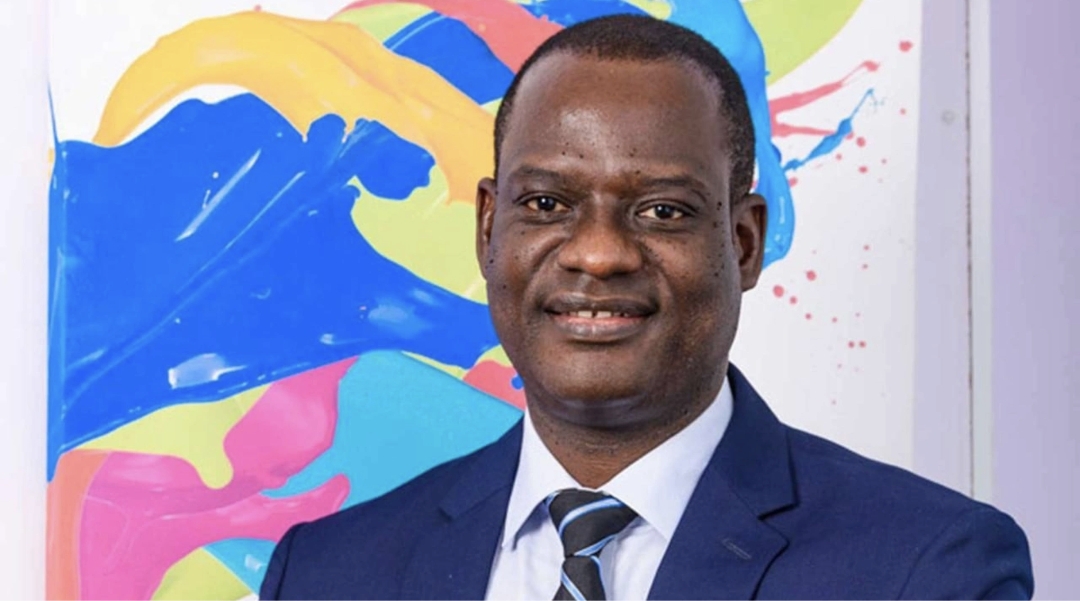
    The Minister of Power, Joseph Tegbe, disclosed this at a recent HBSAN energy conference in Lagos, saying the government was preparing to begin procurement for the projects.

    He said Nigerians could begin to experience the benefits of the planned infrastructure within two to three years.

    According to Tegbe, the government has divided the country into three energy zones to help prioritise interventions, with particular attention to major demand centres such as Lagos and the Abuja corridor.

    The minister explained that improving electricity supply in these areas would address a significant portion of the country’s power challenges, but stressed that stronger transmission infrastructure was also necessary.

    He said President Bola Tinubu had approved the grid expansion plans, while procurement procedures were being pursued.

    Tegbe also disclosed that a nationwide technical audit of electricity infrastructure was underway to identify faults and determine which facilities required urgent repairs or replacement.

    He said the exercise would help the government direct resources towards the actual causes of transmission failures rather than spending money on equipment that did not require immediate intervention.

    “We have started a technical audit across the entire country to say where do we have issues, and what issues specifically do we have,” the minister said.

    He added that the audit would be completed within a few weeks, after which the government would focus on priority areas.

    Tegbe attributed some of the persistent challenges to ageing infrastructure, noting that several transmission facilities had been in use for decades.

    He said some transmission towers and lines dated back to the period when the Electricity Corporation of Nigeria operated before the establishment of the National Electric Power Authority.

    “This government has inherited a problem of 50 years,” he said, recounting that he had seen transmission facilities bearing the ECN logo during a visit to an infrastructure site.

    The minister maintained that the age and deteriorating condition of some facilities underscored the need for a comprehensive assessment and targeted investment to strengthen the national transmission network.

  • Alausa Directs Universities To Complete Four-Year Courses Within Four Years

    Alausa Directs Universities To Complete Four-Year Courses Within Four Years

    Precious Nwonu, Enugu

    The Federal Government has directed tertiary institutions to ensure that four-year degree programmes are completed within the stipulated period, as it moves to strengthen monitoring of agreements with staff unions to prevent strikes.

    The Minister of Education, Dr Tunji Alausa, gave the directive on Tuesday in Abuja during the unveiling of the 2026 agreements between the Federal Government and unions in universities, polytechnics and colleges of education.

    Alausa said the agreements were designed to fulfil President Bola Tinubu’s promise that students should complete four-year courses within four years.

    “Today, through his leadership, these agreements give practical expression to that pledge: A promise made, a promise kept, and trust restored,” the minister said.

    He said the government was determined to address recurring disputes over the implementation of agreements with unions, which have disrupted academic calendars and delayed students’ graduation.

    As part of the measures, Alausa announced plans to expand the existing Implementation and Monitoring Committee, initially established to oversee the agreement with the Academic Staff Union of Universities, to cover academic and non-academic unions across tertiary institutions.

    The proposed expanded committee will monitor implementation, track agreed milestones, identify challenges and issue periodic reports to promote accountability.

    According to the minister, the arrangement will help resolve disagreements at an early stage before they escalate into industrial disputes capable of disrupting academic activities.

    He urged union leaders to use the committee to address complaints rather than resort to public confrontations or threats of strikes.

    “We must strengthen early consultation and resolve differences through constructive dialogue, mutual respect and good-faith engagement,” he said, adding that students and their families must remain central to the process.

    Alausa also disclosed that the agreements provide for reviews every three years, allowing the government and unions to revisit emerging issues and consider mutually agreed adjustments.

    Meanwhile, the National President of the Academic Staff Union of Polytechnics, Shammah Kpanja, described the negotiation process as the fastest in the union’s history.

    Kpanja said negotiations began in December 2025 and resulted in the signing of the agreement in April 2026.

    He disclosed that implementation had started, with members receiving outstanding arrears between July and September, but called on the government to fulfil the remaining provisions.

    The ASUP president also welcomed plans to inaugurate a joint implementation committee, expressing hope that it would speed up the process before the end of the year.

    Similarly, the President of the Colleges of Education Academic Staff Union, Lawal Bazza, said more than 70 per cent of the agreement for the subsector had been implemented.

    Bazza expressed confidence that the monitoring committee would help resolve outstanding issues and ensure the full implementation of the agreement.

    The Chairman of the Federal Government Negotiation Team, Yayale Ahmed, had also stressed the need for both parties to honour their commitments, warning against threats of indefinite strikes over unpaid entitlements.

    Ahmed said the success of the agreements would depend on the government’s commitment to implementation and the unions’ willingness to exercise patience.

    He further disclosed that discrepancies had been identified in some parts of the agreements and would be addressed in collaboration with the Ministry of Education and the National Salaries, Incomes and Wages Commission.

  • Falana Demands Accountability Over ₦15tn Coastal Highway, Warns Against Voter Intimidation

    Falana Demands Accountability Over ₦15tn Coastal Highway, Warns Against Voter Intimidation

    Precious Nwonu, Enugu

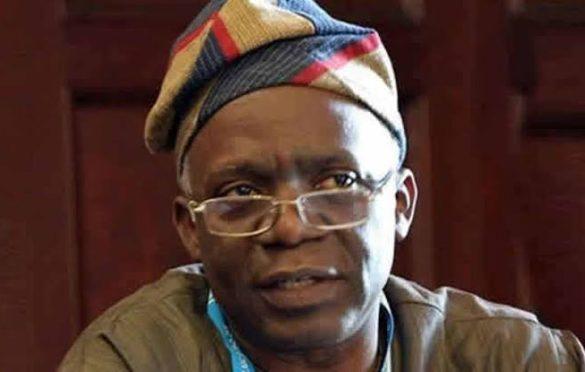
    Human rights lawyer Femi Falana has called on Nigerians to demand explanations from the Federal Government over the estimated ₦15tn cost of the Lagos-Calabar Coastal Highway, raising concerns about reported changes to the project’s route.

    Falana also urged political parties and candidates in Lagos State to work together to prevent electoral violence and voter suppression ahead of the 2027 general elections.

    He made the remarks at a public event in a video shared by News Central TV on Monday.

    Questioning the reported route changes, the lawyer argued that the project, initially planned as a coastal highway, appeared to be extending inland in some sections.

    “The road, coastal road has now become land road, I’m sure you are aware,” Falana said.

    He questioned the rationale behind the reported realignment and called on the government to explain how the funds allocated to the project would be spent.

    “What I’m saying is that, after Ogun State, they now said they are going from Edo to go by land, because they can’t fund it. Again, we must now ask questions: What are the 15 trillion naira earmarked for that road?” he asked.

    Falana said public scrutiny was necessary to ensure that government officials accounted for the use of public funds.

    The Lagos-Calabar Coastal Highway is a major infrastructure project of the President Bola Tinubu administration, designed to link Lagos with Calabar, Cross River State, along Nigeria’s southern corridor. Its estimated cost, funding and route have generated public debate.

    Beyond the highway project, Falana expressed concern about the possibility of violence and intimidation during the 2027 elections, particularly in Lagos State.

    He urged candidates across political parties to establish a common platform to protect voters and ensure eligible citizens could exercise their constitutional rights.

    “Let me now warn the candidates: Going by what happened during the last election, violence will be introduced. Many people will not be allowed to vote, unless you guys are ready to form, regardless of your political parties, to form a group that will defend the vote of everybody in Lagos,” he said.

    The lawyer warned against using ethnicity or perceived place of origin to deny people the opportunity to vote.

    “We didn’t fight for this rickety democracy, that somebody will look at your face: ‘Oh, you should not vote in this country,’” he said.

    Falana alleged that politicians unable to win elections could resort to thuggery and violence, urging candidates to defend the voting rights of all eligible residents regardless of their ethnic background.

    “And I want to beg you, if you are ready to defend the vote of everybody, and it’s very important, because those who cannot win elections, resort to violence, thuggery, where you come from, that you don’t look like a Yoruba man, therefore you must not vote. In Lagos, in Nigeria, that must not be allowed,” he added.

  • FG Approves Increase In NYSC Corps Members’ Feeding Budget

    FG Approves Increase In NYSC Corps Members’ Feeding Budget

    Precious Nwonu, Enugu

    The Federal Government has approved an increase in the feeding allocation for members of the National Youth Service Corps during their orientation course, with implementation expected to begin in 2027.

    The Director-General of the NYSC, Brigadier General Olakunle Nafiu, disclosed this while interacting with members of the 2026 Batch C Stream One at the Cross River State Orientation Camp in Obubra.

    Nafiu said the Budget Office had been notified of the upward review, adding that the new allocation was expected to take effect next year.

    He also urged corps members to manage their finances responsibly, avoid unnecessary spending and develop a habit of saving.

    The NYSC chief commended Nigerian youths for their resilience and commitment to the national service programme.

    On safety, Nafiu advised corps members to avoid travelling after 6pm, recommending that those who cannot complete their journeys before then should find a safe place to stay overnight and continue the following day.

    He warned them against sleeping in public places or gathering at filling stations, noting that such practices could expose them to security risks.

    The director-general advised corps members facing security concerns while travelling to seek assistance at military installations, police stations or Department of State Services offices and contact the NYSC hotline.

    Nafiu also pledged to intensify engagement with relevant stakeholders to improve infrastructure at the Obubra Orientation Camp.

    He encouraged corps members to acquire practical skills that could improve their employment prospects and provide opportunities for self-employment after completing their service.

    He specifically mentioned cosmetology, traditional hairstyling and other vocational skills as areas they could explore.

    Earlier, the NYSC Cross River State Coordinator, Mrs Adejoke Oyenuga, described the director-general’s visit as evidence of the scheme’s commitment to the welfare of corps members.

    Oyenuga disclosed that 1,064 corps members had registered at the camp, adding that they had adapted successfully to the structured orientation programme.

  • FG Warns MDAs Against Poor Performance, Demands Accountability

    FG Warns MDAs Against Poor Performance, Demands Accountability

    Precious Nwonu, Enugu

    The Federal Government has warned Ministries, Departments and Agencies (MDAs) to improve their performance and demonstrate accountability, saying public institutions must deliver measurable results and better services to Nigerians and businesses.

    The Director-General of the Presidential Enabling Business Environment Council (PEBEC), Princess Zahrah Mustapha Audu, gave the warning during a high-level strategic engagement and press briefing organised by the Federal Ministry of Finance in Abuja.

    According to a statement issued on Friday, the meeting, themed “MDA Data Collection & Harmonisation,” brought together government stakeholders to review institutional performance, data management and compliance with ongoing reforms.

    Audu presented findings from the Business Environment Enhancement Programme Accelerator, which assessed the implementation of reforms across federal government agencies.

    The assessment showed that 16 MDAs had fully implemented the reforms evaluated. However, recent mystery shopping exercises revealed that some agencies became less responsive after active monitoring ended.

    The findings raised concerns about the sustainability of reforms and whether some institutions could maintain the required standards without regular supervision.

    Addressing heads of MDAs, Audu said agencies would remain under scrutiny through ongoing mystery shopping exercises, a live performance tracker and the forthcoming end-of-year Business Facilitation Act Compliance Ranking.

    She explained that the monitoring mechanisms were designed to track institutional performance, identify gaps in service delivery and ensure that agencies fulfilled their reform commitments.

    The statement noted that the Federal Ministry of Finance was placing greater emphasis on the performance, responsiveness and reform compliance of government agencies in its dealings with them.

    It added that the approach reflected President Bola Tinubu’s stated zero-tolerance stance on non-performance and the government’s commitment to ensuring that public institutions produced measurable results.

    The Business Facilitation Act provides a framework for improving Nigeria’s business environment by making government processes more efficient and responsive.

    PEBEC said it would continue to use mystery shopping, real-time digital tracking, compliance assessments and data-driven monitoring to strengthen transparency and identify areas where reforms were not being properly implemented.

    The council stressed that agencies would be expected to demonstrate tangible improvements, noting that merely meeting requirements on paper was no longer sufficient.

  • FG Insists NNPC Petrol Discount Will Not Use Public Funds

    FG Insists NNPC Petrol Discount Will Not Use Public Funds

    Precious Nwonu, Enugu

    The Federal Government has maintained that the petrol discount introduced by the Nigerian National Petroleum Company Limited (NNPC) will not be financed with public funds, describing the initiative as a temporary reduction in the company’s retail profit margin rather than a return to fuel subsidy.

    The Minister of Finance and Coordinating Minister of the Economy, Taiwo Oyedele, explained the government’s position in a statement issued by the Federal Ministry of Finance in Abuja on Friday, titled, “The NNPC Retail Discount Is Not a Subsidy: No Public Money Is Involved.”

    The clarification followed an announcement by the Presidency that NNPC Retail Limited would temporarily forgo its profit margin on petrol and sell the product at cost to cushion households against fluctuations in global oil prices.

    The Presidency, in a statement signed by the Special Adviser to the President on Information and Strategy, Bayo Onanuga, said the initiative had the backing of President Bola Tinubu and was not a reinstatement of the subsidy removed in 2023.

    Oyedele said the discount and fuel subsidy were fundamentally different, explaining that the former involved a retailer reducing its earnings to offer customers lower prices, while the latter required the government to pay part of the cost using public revenue.

    “Some commentators have described the discount as a return of fuel subsidy. That is not correct,” the minister said.

    He stressed that the financial burden of the discount rested solely on NNPC Retail, adding that neither the federal budget nor the Federation Account would be used to fund the price reduction.

    According to him, NNPC Retail purchases petrol from the Dangote Refinery and other suppliers at prevailing market prices and on commercial terms before applying its retail margin. Under the new arrangement, the company reduces or temporarily removes that margin to lower pump prices.

    The minister warned that selling crude oil below market prices could amount to a subsidy if the resulting revenue shortfall were covered with public funds.

    He explained that NNPC Retail, a wholly owned subsidiary of NNPC Limited, had operated for more than two decades as a petroleum marketing and retail company, with responsibilities that include improving the availability and affordability of refined petroleum products nationwide.

    Oyedele argued that the temporary reduction in profit per litre would not necessarily translate into lower overall earnings for the company, as increased sales volumes and stronger customer loyalty could compensate for the reduced margin.

    He said the arrangement could ultimately benefit both consumers and the government through higher sales and potentially increased dividends paid to the Federation.

    The minister also dismissed concerns that the discount could encourage petrol smuggling into neighbouring countries, noting that retail margins accounted for less than five per cent of the pump price.

    He said the discount would not significantly widen the price difference between Nigeria and neighbouring countries, where petrol prices were reportedly 20 to 40 per cent higher.

    According to Oyedele, the limited reduction in retail margins would therefore not create a new incentive for cross-border smuggling comparable to the distortions associated with previous subsidy arrangements.

    He listed other government interventions intended to reduce the impact of fuel costs, including expanding compressed natural gas adoption for transportation, waiving taxes and duties on petrol, and removing illegal charges that contribute to higher transportation costs.

    Oyedele said the measures were designed to provide economic relief without returning the country to a subsidy system the government considers financially unsustainable.

  • Shettima Returns To Nigeria After Representing Tinubu At UNGA

    Shettima Returns To Nigeria After Representing Tinubu At UNGA

    Precious Nwonu, Enugu

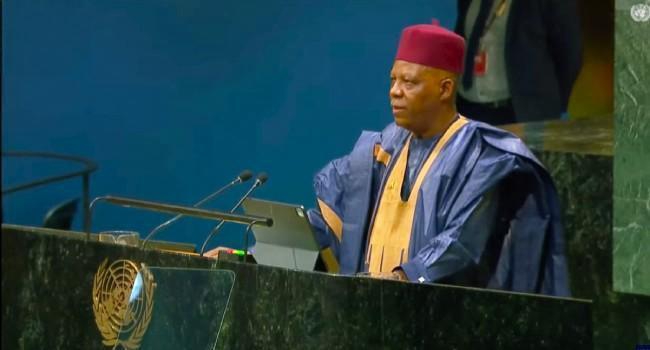
    Vice President Kashim Shettima has returned to Nigeria after leading the country’s delegation to the 81st Session of the United Nations General Assembly in New York, United States.

    Shettima arrived in Abuja on Monday after spending several days in the US, where he represented President Bola Tinubu at the annual gathering of world leaders.

    The Vice President had departed Nigeria on September 20 following Tinubu’s directive to lead the Nigerian delegation to the UNGA.

    During the visit, Shettima delivered Nigeria’s national statement at the General Debate on behalf of the President.

    According to a statement by his Senior Special Assistant on Media and Communications, Stanley Nkwocha, Nigeria used the gathering to renew its call for reforms to the United Nations Security Council.

    The Federal Government also advocated permanent African representation on the Security Council, improved access to global financing, increased climate support and stronger international cooperation.

    At the Third High-Level Roundtable of the Africa Minerals Strategy Group, the Nigerian delegation called on African countries to move beyond exporting raw minerals by investing in processing, manufacturing and other forms of value addition.

    Shettima also participated in a high-level education financing event co-hosted by Nigeria and Italy, where he reaffirmed the Federal Government’s commitment to improving education.

    The Vice President expressed support for the Global Partnership for Education’s $5bn financing campaign and described education as a key investment in productivity, human capital development and national prosperity.

    During his stay in New York, Shettima also met with members of the Nigerian diaspora and highlighted the role of their investments, expertise and international networks in supporting Nigeria’s development.

    The Vice President held additional meetings with the new leadership of the Economic Community of West African States Commission and the UN Deputy Secretary-General, Amina Mohammed.

    According to the statement, the engagements covered areas including development financing, regional integration, economic cooperation, technology, peace and security.

    Shettima’s return marks the end of his assignment as Nigeria’s representative at the 81st UN General Assembly on behalf of President Tinubu.

  • FG Seeks Fresh $1.5bn World Bank Loans As Public Debt Hits N166.79tn

    FG Seeks Fresh $1.5bn World Bank Loans As Public Debt Hits N166.79tn

    Precious Nwonu, Enugu

    The Federal Government is seeking $1.5bn in fresh financing from the World Bank as Nigeria’s total public debt rose to a record N166.79tn at the end of June 2026.

    Documents from the World Bank indicate that the proposed borrowing consists of three separate $500m facilities targeting climate resilience, social protection and early childhood development.

    The first facility is an additional $500m for the Agro-Climatic Resilience in Semi-Arid Landscapes project, known as ACReSAL.

    The World Bank is expected to consider the facility on October 29, 2026. The Federal Republic of Nigeria is listed as the borrower, while the Federal Ministry of Environment will implement the project.

    If approved, the additional financing will increase ACReSAL’s total funding from $700m to $1.2bn, with the new facility to be provided through the International Development Association, the World Bank’s concessional lending arm.

    According to the World Bank, the additional funds will be used to expand the project’s results and strengthen arrangements for sustainable landscape management.

    The proposed interventions include land restoration, watershed rehabilitation, erosion and flood control, irrigation and drainage, water harvesting and storage, reforestation and other climate adaptation measures.

    Of the $500m, $310m is earmarked for dryland management, $165m for community climate resilience and $25m for institutional strengthening and project management.

    ACReSAL currently operates in 19 northern states and the Federal Capital Territory, focusing on land degradation, water insecurity, climate vulnerability and declining agricultural productivity.

    The World Bank estimates that desertification and land degradation affect about 43 per cent of Nigeria’s land area. It also projects that climate change could reduce the country’s gross domestic product by about 2.6 per cent annually by 2030 and as much as 6.7 per cent by 2050 if not adequately addressed.

    ### $500m Social Protection Loan

    The second proposed facility is a $500m IDA credit for the Household Prosperity and Empowerment-Social Protection Project.

    The project is still under preparation, with a technical design review scheduled for October 30, 2026. The World Bank has tentatively set March 16, 2027, for consideration of the project.

    The Federal Ministry of Finance is listed as the borrower, while the Federal Ministry of Humanitarian Affairs and Poverty Reduction will implement the programme.

    The project comprises a $420m results-based financing component and an $80m investment project financing component.

    It is designed to establish regular social assistance for poor and vulnerable households while gradually increasing the contribution of federal and state governments to social protection financing.

    The proposed programme will include targeted conditional and unconditional cash transfers, an upgrade of the social registry, integration of the National Identification Number into the social protection information system and stronger implementation at federal, state and local government levels.

    The World Bank said Nigeria spent only 0.14 per cent of its GDP on social safety-net programmes in 2021, compared with a global average of 1.5 per cent and 1.2 per cent among lower-middle-income countries.

    The lender also estimated that the proportion of Nigerians living in poverty rose from 40 per cent in 2019 to 56 per cent in 2023 and could reach 62.5 per cent in 2026.

    It attributed the deterioration to factors including the COVID-19 pandemic, inflation, natural disasters and conflict, while noting that the removal of fuel subsidy and foreign exchange reforms increased living costs in the short term.

    ### Third Loan Targets Early Childhood Development

    The third proposed $500m loan is for the Nigeria Early Childhood Development Programme.

    The project is expected to undergo technical design review on October 30, 2026, with tentative approval scheduled for March 15, 2027.

    The Federal Ministry of Finance will serve as the borrower, while the Federal Ministry of Budget and Economic Planning is expected to implement the programme.

    The project will cover all 36 states and the FCT and focus on improving access to healthcare, nutrition, early learning, childcare, water and sanitation and other essential services for children aged zero to five.

    The proposed financing consists of a $400m programme-for-results component and $100m in investment project financing.

    The World Bank said the programme was necessary because 40 per cent of Nigerian children under five are stunted, fewer than half are developmentally on track and only 36 per cent of children aged 36 to 59 months attend organised early learning.

    ### Public Debt Rises By N14.39tn

    The proposed borrowing comes amid a sharp increase in Nigeria’s public debt.

    According to the Debt Management Office, the country’s total public debt rose from N152.40tn in June 2025 to N166.79tn in June 2026.

    The N14.39tn increase represents a 9.44 per cent rise within one year.

    In dollar terms, total public debt increased from $99.66bn to $120.93bn, representing a $21.27bn or 21.35 per cent increase.

    The difference between the naira and dollar growth rates was partly linked to the exchange rate used to value Nigeria’s external debt. The DMO used an exchange rate of N1,379.1842 to the dollar in June 2026, compared with N1,529.2105 in June 2025.

    On a quarterly basis, public debt increased from N159.35tn in March 2026 to N166.79tn in June, representing a rise of N7.44tn or 4.67 per cent.

    Domestic debt accounted for the larger share of the portfolio at N91.59tn, or 54.91 per cent, while external debt stood at N75.20tn, representing 45.09 per cent.

    Domestic debt increased from N80.55tn in June 2025 to N91.59tn in June 2026, while external debt rose from N71.85tn to N75.20tn over the same period.

    ### Treasury Bills Drive Domestic Borrowing

    Federal Government domestic debt increased from N76.59tn in June 2025 to N87tn in June 2026.

    Federal Government bonds remained the largest component at N64.84tn, representing 74.53 per cent of domestic debt.

    However, Treasury bills recorded a significant increase during the period.

    Outstanding Nigerian Treasury Bills rose from N12.76tn in June 2025 to N19.48tn in June 2026, representing a N6.72tn or 52.64 per cent increase.

    Their share of Federal Government domestic debt consequently increased from 16.67 per cent to 22.39 per cent.

    Between March and June 2026, Treasury bills increased by N2.92tn, or 17.60 per cent, from N16.57tn to N19.48tn.

    Meanwhile, the securitised Ways and Means balance declined from N22.72tn in March to N22.11tn in June.

    FGN Savings Bonds increased from N91.53bn to N122.45bn during the year, although they remained a small portion of the government’s domestic debt.

    ### World Bank Exposure Hits $20.73bn

    The DMO figures show that Nigeria’s outstanding debt to the World Bank Group stood at $20.73bn at the end of June 2026.

    The amount comprises $19.12bn owed to the International Development Association and $1.61bn owed to the International Bank for Reconstruction and Development.

    The combined exposure increased by $1.34bn, or 6.93 per cent, from $19.39bn in June 2025.

    World Bank exposure also increased by $907.09m between March and June 2026.

    At $20.73bn, World Bank obligations accounted for about 38 per cent of Nigeria’s $54.52bn external debt at the end of June.

    Nigeria’s total multilateral external debt stood at $24.76bn, representing 45.42 per cent of the country’s external debt.

    The African Development Bank, African Development Fund, Islamic Development Bank and International Fund for Agricultural Development were among Nigeria’s other multilateral creditors.

    Commercial creditors accounted for $23.16bn, or 42.47 per cent of external debt, with Eurobonds alone accounting for $18.55bn.

    Bilateral debt stood at $6.61bn, representing 12.12 per cent of external obligations. China remained Nigeria’s largest bilateral creditor.

    The proposed World Bank facilities would therefore further increase Nigeria’s borrowing from the multilateral institution if approved and subsequently disbursed.

    ### Atiku Demands Debt Reconciliation

    The latest debt figures have also drawn criticism from former Vice-President Atiku Abubakar, who called for a reconciliation of Nigeria’s public debt.

    In a statement issued by his Director of Strategic Communications, Phrank Shaibu, Atiku asked the Federal Government to account for newly recorded debt, changes in the naira value of foreign obligations and loans contracted since the Tinubu administration came into office.

    He also questioned the cost of servicing the country’s growing debt burden and its implications for public spending.

    Meanwhile, economist Adewale Abimbola said borrowing from multilateral institutions such as the World Bank could support development when the financing was concessional and directed towards productive projects.

    He said the key issue was how borrowed funds were utilised rather than borrowing itself.

    According to him, loans tied to viable projects and capable of supporting economic growth could have a positive impact, provided they were properly managed.
  • FG Set To Launch African Global Festival In October

    FG Set To Launch African Global Festival In October

    Precious Nwonu, Enugu

    The Federal Government is set to launch the African Global Festival Nigeria, popularly known as AGLOFEST, in October 2026 as part of efforts to promote Nigeria’s cultural diplomacy and expand economic and international partnerships.

    The Permanent Secretary, General Services Office in the Office of the Secretary to the Government of the Federation, Dr Ibrahim Kana, disclosed this in a statement issued in Abuja on Friday.

    Kana said President Bola Tinubu had approved the initiative, with the approval formally conveyed to the project’s partners.

    According to him, AGLOFEST will create an international platform for cultural exchange, investment and economic cooperation by bringing together government officials, investors, businesses, cultural organisations, creative industry practitioners, entrepreneurs and development partners.

    He said the festival would comprise three major events: the Black Diaspora Economic Forum, Black Diaspora Cultural Presentation, and the Renewed Global Hope and Peace Concert.

    Kana explained that the economic forum would provide opportunities for discussions and partnerships in trade, investment and business, while the cultural presentation would highlight Africa’s heritage and creative expressions.

    The peace concert, he added, would use music and entertainment to promote peace, unity and positive engagement among people across different parts of the world.

    The permanent secretary said AGLOFEST was being developed through a public-private partnership involving the Federal Government and other stakeholders.

    He noted that the Ministries of Art, Culture, Tourism and Creative Economy; Trade, Investment and Industry; and Foreign Affairs would be among the government institutions involved in the initiative.

    Kana said the festival would also be used to showcase Nigeria’s cultural heritage, tourism attractions, creative industries and investment opportunities to an international audience.

    He added that the initiative would strengthen Nigeria’s links with other African countries and people of African descent across the world.

    The October launch is expected to form part of the Federal Government’s broader efforts to use culture and the creative economy to deepen international relations, attract investment and expand economic cooperation.

  • FG Threatens To Shut Lagos-Calabar Coastal Highway Over Safety Violations

    FG Threatens To Shut Lagos-Calabar Coastal Highway Over Safety Violations

    Precious Nwonu, Enugu

    The Federal Government has warned that it may shut the Lagos section of the Lagos-Calabar Coastal Highway if motorists and other road users fail to comply with safety regulations within the next two weeks.

    The Federal Controller of Works in Lagos, Olufemi Dare, issued the warning on Monday, citing persistent violations including speeding, illegal parking, unauthorised U-turns, motorcycle and tricycle use, roadside trading and other activities considered hazardous to road users and the highway infrastructure.

    Dare said the directive followed concerns raised by the Minister of Works, David Umahi, over continued disregard for safety measures on the highway.

    “In another two weeks, if there’s no improvement, His Excellency has directed that we are coming back to shut down the road,” Dare said.

    The Lagos portion of the coastal highway stretches for about 103 kilometres and is divided into two sections measuring approximately 47.474km and 56km.

    According to Dare, construction work is still ongoing on some parts of the route, particularly bridges. Ten major bridges are planned for each section of the Lagos axis.

    He explained that the highway was opened to traffic before the completion of all the bridge works, making strict adherence to the prescribed speed limit necessary.

    Dare said motorists had been observed driving at speeds as high as 120km/h on sections where construction activities were still taking place.

    “We have said your speed on the coastal road must not be more than 30 kilometres per hour,” he said.

    The controller also expressed concern over fatalities recorded along the highway, urging motorists to take the restrictions seriously.

    “Lives are being lost on the coastal road. Almost every other day,” he said.

    As part of efforts to strengthen enforcement, Dare said security would be increased along the route following discussions between Umahi and the Lagos State Commissioner of Police, Fatai Tijani.

    He said trucks and other articulated vehicles found parked illegally along the highway would be towed, while motorists who make unauthorised U-turns could face enforcement action and prosecution.

    Dare disclosed that more than 100 commercial motorcycle riders, popularly known as Okada, were arrested on the highway during the previous week.

    He reiterated that motorcycles and tricycles are prohibited from using the coastal highway.

    The Federal Government is also confronting vandalism targeting safety infrastructure along the route.

    Dare said about five kilometres of ClearVu fencing had been removed, while concrete covers over drainage channels spanning approximately 18 kilometres had also been vandalised.

    He said much of the vandalism occurred at night, prompting authorities to consider installing stronger barriers and CCTV cameras at vulnerable locations.

    The government is also preparing to remove illegal settlements and address hawking and animal grazing along the highway.

    According to Dare, at least 10 illegal settlements have been identified for removal.

    He added that approval had been given for the deployment of 40 coastal guards to the first section of the highway, with community representatives expected to work with the police in monitoring the route.

    The recruitment and deployment of the guards are expected to be completed within two weeks, he said.

    Dare also warned truck operators using the Gypsy Port area as an unofficial parking location, saying a joint task force would clear the area of illegally parked vehicles.

    He said the first section of the highway had been completed, although bridge construction was still underway, adding that the wider project remained within its three-year contractual period.

    The controller urged motorists, traders and other road users to comply with the government’s directives as enforcement activities are intensified.

    “It’s not going to be business as usual,” Dare said.

    The Federal Government said continued violations could ultimately result in the closure of the Lagos section of the Lagos-Calabar Coastal Highway.

  • Unity Colleges Face Disruption as Workers Reject FG’s Resumption Order

    Unity Colleges Face Disruption as Workers Reject FG’s Resumption Order

    Precious Nwonu, Enugu

    The reopening of 112 Federal Unity Colleges across Nigeria is facing uncertainty as workers in the institutions move to enforce a “No Resumption” directive over the Federal Government’s planned concession of some schools.

    The dispute centres on the government’s proposed 35-year concession of King’s College, Lagos, to its Old Boys Association, a move that has drawn opposition from workers under the Federal Ministry of Education.

    About 17,000 education officers at the ministry’s headquarters and the affected unity colleges are expected to participate in the planned protest and industrial action, according to a source familiar with the development.

    The source said 112 of the 115 Federal Unity Colleges had complied with the workers’ directive, with only Federal Government College, Kwali; Federal Government College, Okposi; and Federal Government College, Otobi, admitting some students who had travelled long distances to resume.

    The Joint Workers Committee of Unions in the ministry had, at the weekend, directed workers in the colleges not to resume until further notice.

    In a notice dated September 11, 2026, and addressed to principals and union chairmen of the Federal Unity Colleges, the committee reaffirmed its earlier directive and instructed union leaders to ensure compliance.

    The JWC said any instruction by the Minister of Education, Dr Tunji Alausa, directing the schools to reopen would not change its position unless the matter was first resolved through the established labour-management process.

    The committee said, “any purported press release, counter directive, or subsequent communication” from the minister directing resumption would not alter its position unless the dispute was appropriately addressed through the labour-management channel.

    The Association of Senior Civil Servants of Nigeria, which represents teachers and other workers in the affected institutions, also directed its members not to report for the weekend checking-in of boarding students.

    The directive was reportedly complied with across the affected colleges.

    The union also raised concerns over the availability of textbooks, questioning the preparedness of the schools for the new academic session.

    The notice was signed by JWC Chairman, Onuche Abraham; ASCSN Chairman, Ngadi Sampson; Nigeria Civil Service Union Chairman, Ojelabi Ademola; and Chairman of the Amalgamated Union of Public Corporations, Civil Service Technical and Recreational Services Employees, Ejike George.

    However, the Federal Government has maintained that the colleges will reopen as scheduled on Monday, September 14.

    The Minister of Education, through the Director of Press and Public Relations, Folasade Boriowo, assured students, parents and guardians that necessary arrangements had been made for a safe and orderly commencement of the new academic session.

    Alausa said the safety and wellbeing of students and staff remained a priority of the Federal Government.

    The minister added that relevant security agencies had been informed of the resumption plans and had placed the Federal Unity Colleges and their surrounding areas under heightened security surveillance.

    The government said the coordinated security arrangements were aimed at protecting students, staff and members of the school communities as academic activities resume nationwide.

  • FG Begins Payment of N18bn Severance Benefits to 2,700 Ex-Nigeria Airways Workers

    FG Begins Payment of N18bn Severance Benefits to 2,700 Ex-Nigeria Airways Workers

    Precious Nwonu, Enugu

    The Federal Government has commenced the payment of N18bn in outstanding severance benefits to 2,700 former employees of the defunct Nigeria Airways, more than 20 years after the airline was liquidated.

    The Minister of Finance and Coordinating Minister of the Economy, Taiwo Oyedele, disclosed this on Friday during a press briefing at the Federal Ministry of Finance in Abuja.

    Oyedele said 2,100 former workers covered by batches one to seven had received their payments, while another 600 beneficiaries in batches eight and nine had been cleared for payment.

    He said the payments amounted to N18bn in outstanding benefits owed to the 2,700 former employees.

    “For more than two decades, following the liquidation of Nigeria Airways, many former employees have waited for their outstanding severance benefits. Some have grown old waiting. Some have sadly passed away, leaving their families to pursue what was legitimately due to them,” Oyedele said.

    According to the minister, the payment followed President Bola Tinubu’s directive to resolve the long-standing obligation.

    Oyedele acknowledged that the settlement could not make up for the lengthy delay but said the government had decided to address inherited obligations rather than allow them to remain unresolved.

    “We recognise that no payment today can fully compensate for more than two decades of waiting, but it is important that government confronts these long-standing obligations rather than allowing them to remain unresolved for another generation,” he said.

    The minister explained that the exercise was part of the Federal Government’s broader effort to clear verified inherited liabilities, including outstanding obligations to pensioners and indigenous contractors.

    He said beneficiaries of the Nigeria Airways payments underwent extensive verification, including biometric capture and validation of their personal and banking details, to guard against fraudulent claims.

    Oyedele added that further verification would be conducted in cases involving outdated records, incorrect bank details and deceased beneficiaries whose next of kin or estates still needed to complete the required procedures.

    On concerns over the impact of inflation on the value of the benefits after more than two decades, the minister said the government was paying the amounts contained in the documented and verified claims.

    He acknowledged that inflation had significantly eroded the value of the money but said the settlement did not provide for inflation adjustments.

    Oyedele explained that the payments were being made in batches to ensure that beneficiaries whose claims had been verified did not have to wait while other outstanding cases were being processed.

    He said the benefits covered former employees across different categories and were not limited to either junior or senior staff.

    For beneficiaries who had died before receiving their entitlements, the minister said payments would be made to their documented next of kin or other eligible beneficiaries after the necessary legal procedures were completed.

    Oyedele also disclosed that the Federal Government had settled outstanding debts owed to more than 12,000 indigenous contractors as part of efforts to reduce accumulated obligations.

    He said the government initially prioritised smaller contractors with verified claims of N50m or less before extending the exercise to contractors owed up to N100m.

    Larger claims running into billions of naira, he explained, could be handled separately through negotiations and instruments such as promissory notes.

    According to the minister, the approach was designed to support small businesses that depend on government payments to meet salary obligations and other immediate financial commitments.

    Oyedele warned contractors against paying commissions or offering inducements to government officials to facilitate the settlement of verified claims, describing such demands as illegal.

    He said the government was also taking steps to prevent the accumulation of fresh unpaid obligations by making budgets more realistic and ensuring that capital expenditure commitments had identifiable funding sources.

    “We will do our best to ensure that the accumulated obligations of the past do not repeat themselves,” the minister said.

    Oyedele apologised to the former Nigeria Airways workers for the prolonged delay in settling their entitlements, stressing that the payments were owed benefits and not favours from the government.