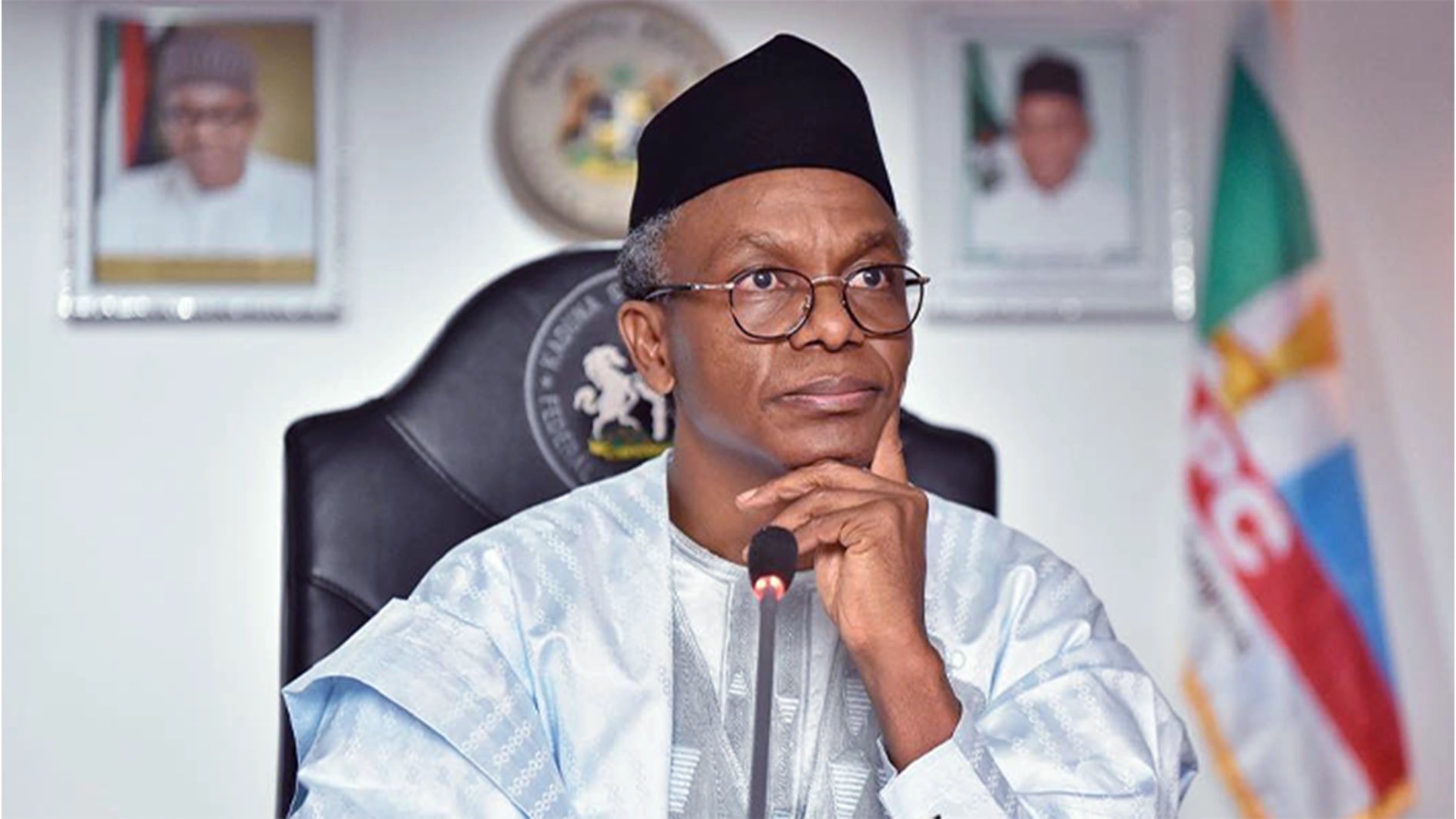
My first encounter with Nasir El-Rufai was in year 2000 at the Akodo Resort, a popular Lagos beachfront getaway along the Lekki-Epe Expressway in Ibeju-Lekki. As Director-General of the Bureau of Public Enterprises (BPE), he had come to sell to his audience the talismanic powers of the agency in unbundling the potential of the Olusegun Obasanjo administration. I saw a super-brilliant man.
A pint-sized frame trapping a mountainous intellect, Nasir spoke with verve and conviction. In a voice barely above a whisper, he bored deep into the hearts of his audience as one of the standout talents of that era. Yet, as the years rolled by, El-Rufai unraveled into a classic political polymath undone by his own hubris. Locked away in what is undoubtedly a political witch-hunt, he is a quintessential brilliant strategist whose restless tongue and lack of tact ultimately became his Achilles› heel. El-Rufai’s predicament reflects the tragedy of an impolitic genius: a hugely capable operator perpetually limited by a total absence of a political filter.
Now, a wound inflicted by a friend does not heal. This African proverb must capture the current state of mind of the stormy petrel of Kaduna State. In that mind, the ironies of power hang thickly in the damp air. Locked beyond iron bars in the custody of the Independent Corrupt Practices and Other Related Offences Commission (ICPC) in Abuja for over 200 days now, life must have dealt Nasir a humbling blow. As he penned the short epistle entitled “Mr Relationship And Its Aftermath” on his X handle last week, psychoanalysis would reveal a mind gutted by regrets, ruptured by guilt, and quietly ruminating on the unforgiving nature of political power.
In that X post of his, El-Rufai offered two theses to chew: his relationships, and their aftermath. Nasir’s relationships have always mirrored his historical combativeness. He is never a politician who believed that gentleness was an art of statecraft. His public trajectory shows an uncompromising bulldozer who laid political waste to opponents; a sharp-tongued, untouchable power broker of Abuja and Kaduna.
El-Rufai brings to mind the fable of the old, hunting-weary lion who feigned illness and invited all animals to visit his cave, and who slaughtered them one after another for a meal. Similarly, El-Rufai’s path is littered with the carcasses of political associates and bosses whose flesh he mangled for personal convenience. The trail is long: from Atiku Abubakar, to Obasanjo, Muhammadu Buhari, and beyond. The paradoxical question arising from that Nasir X reflection on his relationships is this: Can a man who weaponized political leverage; who wasted associations and friendships in the process, now complain when that same cold, unfeeling apparatus turns its fangs on him?
Consider the lineage of his battles. El-Rufai is credited with a controversial statement made at a Kaduna APC stakeholders› meeting in September 2017, where he reportedly declared that his political adversaries always meet an unfortunate end. To validate this, he pointed to his battles with Presidents Umaru Yar›Adua and Goodluck Jonathan. It was widely interpreted as a boast that, while his opponents faced downfall or death, he always survived. Today, the sphinx is at the end of his tethers.
Yet, like a paradox, from the flipside of that same lens, El-Rufai put his combativeness, fearlessness, and acerbic tongue in the service of friendship. The most prominent beneficiaries of that hubris remain former Emir of Kano, Sanusi Lamido Sanusi, and President Bola Ahmed Tinubu.
Upon the dethronement of Sanusi II in March 2020, El-Rufai demonstrated the truth of the classic Yoruba adage that it is in moments of adversity that true friendship is tested —“Ìgbà ìpónjú l’a ń mò’ré.” As governor of Kaduna State, El-Rufai shielded the embattled Emir, standing resolutely by his side like the Wall of Gibraltar. He intervened through a series of bold, calculated moves, at great risk to his office and political future. By then, insiders who knew said that Buhari’s grievance was beyond what the rest of the world could see. It was encapsulated by the ire of a grieving man seeking vengeance for the trampling of his inviolable “Oza room” by a man whose libido knew no bounds.
El-Rufai’s first adversarial and bold, daring move against an Almighty Buhari presidency was a swift, deadly punch delivered with masterly finish: immediate institutional solidarity for the deposed Emir. To fill the public vacuum created by the dethronement, on the very day of his deposition, El-Rufai appointed Sanusi Vice-Chairman of the Kaduna Investment Promotion Agency. Barely 48 hours later, he named him Chancellor of Kaduna State University. It was a massive fortification of brotherly ties at a time when the fear of Buhari’s Villa cabal had caused other friends to scatter.
El-Rufai could be superlative, even excessive, in supporting his allies. He went beyond administrative appointments into wrapping his friend in a cloak of political protection. In this, he provided him crucial logistical assistance. Immediately, he dispatched Kaduna State’s official vehicles to go convey Sanusi’s harem and waist-bead-long family aftermath of the exile. With this, Sanusi’s family had easy access to visit him in his remote exile town of Awe, Nasarawa State. It still did not end there. Upon the pronouncement of the federal court which granted the deposed Emir breather from banishment, El-Rufai personally appeared in Awe to offer Sanusi solidarity and even personally escorted him out of exile to safety in Lagos.
Today, history presents a stark irony: Sanusi walks the corridors of power with his royal robes trailing through political corridors, as silent as a sphinx, while his saviour sits in a cold, lonely jail cell.
The political fallout between President Bola Tinubu and El-Rufai presents a striking parallel to the mid-20th-century rift between Kenya’s founding president, Jomo Kenyatta, and his vice president, Jaramogi Oginga Odinga. The historical mechanics behind the Kenyan fallout offer a window into power struggles that span borders and eras. It demonstrates that statecraft relies on the same cold machinery: leveraging key allies to bridge regional or ideological divides to capture executive office, only to systematically dismantle their relevance once authority is consolidated.
In early post-independence Kenya, while championing Kenyatta as the sole leader who could unite the nation, Odinga famously refused to take the helm of government while Kenyatta remained imprisoned. Yet, as soon as Kenyatta was released and assumed the presidency, he systematically neutralized Odinga’s influence within the ruling party, eventually forcing him out.
In both instances — Tinubu/El-Rufai and Kenyatta/Odinga, what we have/had was an indispensable ally mobilizing critical regional capital to install a leader, only to be promptly discarded, alienated, and stripped of influence once the administration took roots. In strikingly similar fashion, El-Rufai fought fierce partisan battles for Tinubu. Despite this pivotal loyalty, his nomination to Tinubu’s cabinet was torpedoed by an engineered clearance failure in the Senate. This marked the former governor’s abrupt transition from trusted kingmaker to political outsider, and ultimately, political detainee.
It is difficult to trace the depth of the Tinubu/El-Rufai relationship prior to Tinubu’s presidential ambition. But when political vultures encircled Tinubu to derail his candidacy, El-Rufai stepped forward like a matador. He appears to specialize in stepping in for weak friends boxed into a corner. His strategic interventions proved instrumental in securing Tinubu’s victory in 2023.
At a time when the political class feared the menacing claws of the Buhari cabal, El-Rufai boldly led the northern governors who adamantly insisted that power must shift to the South after Buhari’s eight-year tenure. He directly confronted the presidency when Buhari’s body language suggested backing a northern successor like Ahmed Lawan. At the APC presidential primary, El-Rufai acted as Tinubu’s most impregnable shield. How were we to know that battle shields can turn into battle-wary sandals?
Throughout the 2023 campaign, El-Rufai remained in the vanguard. Beyond marketing candidate Tinubu to the northern electorate through focal groups and media engagements, he vigorously defended the controversial Muslim-Muslim ticket.
Yet another stab of betrayal felt by El-Rufai came from close quarters: National Security Adviser Nuhu Ribadu, and his political protégé, former activist-turned Kaduna State Governor, Uba Sani. Defying the Yoruba wisdom that he whom one leans upon owes one a warning before stepping away, Uba Sani assumed the role of Judas to the presidency’s Pontius Pilate. He not only abandoned his benefactor at a critical juncture, he also exposed El-Rufai’s financial records and debt profile as governor, aligning himself with those who put his mentor on the cross. To satisfy the Villa, Sani prompted the State House of Assembly to probe his benefactor over alleged misappropriation of funds — an indictment that forms a core pillar of El-Rufai›s current legal troubles.
Ribadu, for his part, ditched Nasir at the altar of political convenience. As Governor Sani cooked own hemlock for El-Rufai to swallow, Ribadu cooked his too in the El-Rufai wiretaps travails. They both became answerable to the quintessential example of the Yoruba’s projection of betrayals which is reflected in their lamentation that, placing absolute trust in an ally can prove calamitous: “Ẹni a gb’ójú okùn lé, kò ju ẹni agba.”
El-Rufai’s travails at the hands of his associates demonstrate that in African politics, «friendship» is rarely a moral covenant; it is a transactional instrument. How ironic is it that Nasir, one of Nigeria’s most calculating practitioners of political mechanics, is now wrapped in the shawls of his own fate. Not only is he tasting the bitter pill of abandonment by those he shielded, he is equally experiencing the cold, unfeeling calculus of power, learning how perishable loyalty becomes when the invoice comes due.
While in office, El-Rufai harvested a large coterie of political enemies. Activist Shehu Mahdi highlighted how he courted the ire of the northern establishment, from the unceremonious revocation of land allocations belonging to northern elites, to his controversial security stances and borderless tendency to talk down on others. These strained his relationship with elders who could rescue him today. Mahdi noted that while campaigning for Tinubu, El-Rufai declared that «there were no elders in the North» because the establishment opposed Tinubu’s candidacy. Those same elders have now remained silent as he undergoes his ordeal.
Many observe that El-Rufai became the Nostradamus of his own plight. In his 2013 memoir, The Accidental Public Servant, he articulated how friends abandon friends and subordinates desert their leaders the moment authority vanishes. His life mirrors the devastating nature of that rhythm of betrayal by those closest to political leaders shorn of power. He reminds me of what a political follower told ex-Enugu State governor, Chimaroke Nnamani, in 2007 at a time he suffered huge political abandonment and outflow into the camp of his protege/friend-turned successor, Sullivan Chime. The fellow said, as it is said in Igboland, goats follow only he who holds the palm-frond. Palm frond, in this instance, meaning political power, that had just changed hands. While physical injuries from strangers heal with time, the emotional trauma of a stab from an ally shatters the foundation of trust.
El-Rufai’s situation evokes Niccolò Machiavelli’s The Prince and Thomas Hobbes’ thesis on self-preservation in the arena of power. El-Rufai’s isolation teaches that in statecraft, gratitude is viewed as a burden, while self-preservation remains the ultimate law.
Yet Nasir ought to have known that the rules that now apply to him also apply to his adversaries. Politics is war by other means — and in war, you kill or get killed. Reversing Carl von Clausewitz’s famous dictum from his classic, On War — that «War is merely the continuation of policy (or politics) by other means» — those who justify keeping El-Rufai incarcerated until the 2027 elections rely on the pragmatic logic of self-preservation: no one leaves their own rear exposed to the eagle while watching over another›s head.
A foundational rule in military training is never to leave a wounded soldier behind. Ribadu, Uba Sani, and Sanusi Lamido Sanusi have all chosen to disregard this rule in the calculus of power. Nasir is that wounded soldier in a war of crossfires.
Ultimately, these patterns of betrayal — Kenyatta/Odinga, Tinubu/El-Rufai, El-Rufai/Sani, El-Rufai/Ribadu, El-Rufai/Sanusi — underscore a fundamental law of political expedience: once a kingmaker serves their purpose, their remaining influence becomes a liability. Just as Kenyatta viewed Odinga’s independent base as a long-term threat to his consolidation of power, Tinubu moved to isolate El-Rufai to establish a single center of authority within state apparatus. Whether in Nairobi in the 1960s or Abuja and Kaduna today, the dynamic remains unchanged: tactical alliances are easily sacrificed on the altar of total control.
In all of this, we observe the ephemerality of power and the nature of power as a volatile mist. Political friendship becomes indistinguishable from a handshake across a dagger, and loyalty proves to be a fleeting shadow. El-Rufai’s fall illustrates how fickle human praise becomes once the masquerade’s robes are removed. For bystanders observing these calculations, it is a haunting reflection on political memory in Africa: the axe forgets, but the tree remembers. Yet, in the court of kings, even the tree learns to pretend it never had roots.
How does one interpret Sanusi’s silence today? Is it individual morality yielding to political survival, pure ingratitude, or the pragmatic instinct that the Kano throne cannot afford to burn bridges with a sitting president for the sake of a disgraced former governor?
El-Rufai’s fate carries a broader warning for Nigeria’s political class. It is a cautionary parable for those wielding authority in Abuja and across the 36 state capitals: the court of power is populated by fair-weather sycophants, and the room at the top is always cold, and lonely.