Tag: Ecowas

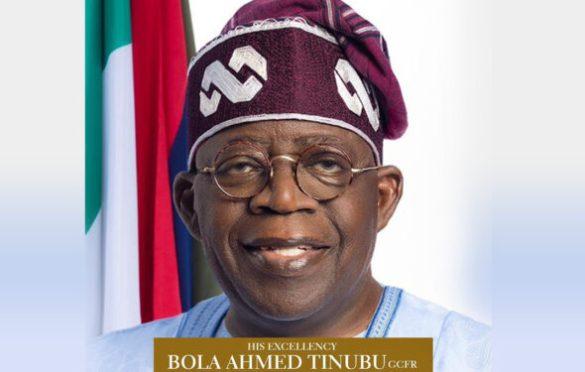
  • JUST IN: Nigeria’s Tinubu Named New Chairman of ECOWAS

    JUST IN: Nigeria’s Tinubu Named New Chairman of ECOWAS

    President of Nigeria, Bola Ahmed Tinubu has been chosen to lead the Economic Community of West African States (ECOWAS) as its next chairman.

    The choice was made on Sunday in Bissau, the capital of the Republic of Guinea-Bissau, at the group’s 63rd Ordinary Session of the Authority of Heads of State and Government of the Economic Community.

    Bayo Onanuga, the president’s communications advisor, revealed this in a tweet on his official account on Sunday. The President left the county on Saturday ahead of the event.

    The tweet reads: “Nigeria’s President Bola Ahmed Tinubu will become the new ECOWAS chairman today, succeeding President Umaro Embalo of Guinea Bissau, who became chairman 4 July 2022, at the 61st summit in Accra.

    “Tinubu’s leadership will be announced in Bissau today at the 63rd Ordinary Session of the Authority of Heads of State and Government of the Economic Community of West African States (ECOWAS).”

    President Tinubu would be introduced during the current ECOWAS leadership summit, according to Onanuga. He succeds President Umaro Embalo of Guinea-Bissau, who was recently in Nigeria.

    Tinubu will be instrumental in guiding the ECOWAS member nations towards economic growth, political stability, and collaboration in his capacity as chairman.

    As the newly appointed chairman, Tinubu will work closely with the member nations, regional organisations, and international partners to promote programmes that support social advancement, regional trade integration, and economic progress.

    Arise News

  • 9 W/African countries disregard ECOWAS Court rulings – Judge

    9 W/African countries disregard ECOWAS Court rulings – Judge

    The ECOWAS Court of Justice says only six West African countries are ready to respect its rulings 20 years after its establishment.

    President of the Court, Justice Amoako Asante, said since establishment of the court in 1991, only six countries of the 15 member states, had met the pre-requisite for obeying the court rulings.

    Giving an address at the opening of an international conference to celebrate the court at 20 and also seek law reviews and advance its knowledge, Asante said that all countries ought to have set up a national authority to implement its rulings.

    The conference has as its theme: “20 Years of ECOWAS Court of Justice: Achievements, Challenges and Prospects”.

    Speaking further, he listed Guinea, Nigeria, Mali, Burkina Faso, Togo and Ghana, as the six countries that had set up a competent authority to implement the court rulings as stipulated in the protocol.

    “The poor rate of compliance with judgments of the Court, which currently stands at about 30 per cent, is also of grave concern to the Court.

    “We regret that only six member states have appointed the competent national authorities for the enforcement of judgments of the Court in their respective domains.

    “These are the Republic of Guinea, Nigeria, Mali, Burkina Faso, Togo and Ghana. We will continue to appeal for the remaining members to do the needful,” he said.

    The other West African countries yet to set up such authority include: Benin, Cape Verde, Côte D’ivoire, The Gambia, Guinea Bissau, Liberia, Niger, Senegal and Sierra Leone.

    Asante said that the 1991 Protocol establishing the court stipulated interpretation and application of the Revised Treaty, Protocols, Conventions, Supplementary Acts, Regulations, Directives and Decisions, as part of the mandate of the court.

    He said that the Court also had the jurisdiction to review the legality of the instruments listed, while also serving as an administrative tribunal for ECOWAS public servants.


    According to him, the court also acts as an Arbitration tribunal, adding that it was aware of its key role in the integration process of the community and as the guardian of the community law and protector of human rights.


    “It is significant to note that the human rights mandate of the Court has become the dominant aspect of its judicial functions. We are proud to note that due to its bold decisions on human rights complaints, the international community has recognized the evolving ECOWAS human rights regime.


    “The unique feature of this human rights regime is that there is no requirement for the exhaustion of local remedies. Community citizens therefore, have the option of lodging complaints for human rights violations before their national courts or the ECOWAS Court of Justice.

    “We therefore wish to acknowledge with pride, the interest that has been shown in the jurisprudence of the ECOWAS Court of Justice by scholars and researchers from all over the world.

    “With all humility, the ECOWAS Court of Justice is a source of pride for our community,” he said.

    Reeling out the achievements of the Court, Asante said that in spite of challenges confronting it, the court had lodged a total of 561 initiating applications, delivered 130 Rulings and 301 Judgments.

    He said that the court had also registered 38 applications for revision of judgments and had delivered 24 revision decisions.

    “It has also given five advisory opinions. The Court has held a total of 1226 Court sessions,” he said.

    He thanked all past and serving judges of the ECOWAS Court of Justice that had contributed to this impressive judicial record.

    He, however, added that there were currently 166 cases pending before the Court.

    (Vanguard)
  • ECOWAS suspends Mali

    The Economic Community of West African States (ECOWAS), has suspended the Republic of Mali from ECOWAS institutions in line with ECOWAS provisions.


    The suspension followed the recent political developments in Mali which culminated into the detention of the Interim President of Mali, Bah Ndaw, and the Prime Minister, Moctar Ouane, by Malian soldiers.


    In a communique issued at the end of an emergency meeting of ECOWAS Heads of State and Government in Accra, Ghana, ECOWAS leaders said the extraordinary summit was convened to review the prevailing socio-political crisis in Mali, following the arrest, detention and subsequent resignations of the President and the prime minister of the transition on 26th May 2021, as well as to determine the next line of action for the transition.


    The ECOWAS Heads of State and Government, after the presentation of the report by the ECOWAS Special Envoy and Mediator to Mali, former President Goodluck Jonathan, expressed strong and deep concerns over the present crisis in Mali, which was coming halfway to the end of the agreed transition period, in the context of the security challenges related to incessant terrorist attacks and the COVID-19 pandemic with its dire socio-economic impacts.


    “The Heads of State demand the immediate release of the former president and prime minister of the transition who are kept under house arrest.


    “The Heads of State strongly condemn this recent coup d’etat, which is a violation of the decisions taken at the extraordinary summit held at the Peduase Lodge, Aburi, Ghana on 15th September 2020 and a violation of the Transition Charter.


    “After extensive discussions on the situation in Mali, the Heads of State and Government took the following decisions:


    “Reaffirm the importance and necessity of respecting the democratic process for ascending to power, in conformity with the 2001 ECOWAS Protocol on Democracy and Good Governance. They particularly condemn all actions that led to ongoing instability in Mali, and its attendant consequences in the region.


    “Decide to suspend Mali from ECOWAS institutions in line with ECOWAS provisions.


    “Call for a new civilian prime minister to be nominated immediately.


    “A new inclusive government should be formed to proceed with the transition programme.


    “Reaffirm the need to respect the transition period of 18 months decided in Accra. In this context, the date of 27th February 2022 already announced for the presidential election should be absolutely maintained. A monitoring mechanism will be put in place to this effect.


    “Reiterate the earlier decisions that the Head of the transition, the vice-president and the prime minister of the transition should not, under any circumstances, be candidates for the forthcoming Presidential election.


    “Reaffirm ECOWAS’ support to accompany the transition process in Mali,” the communique read.


    The ECOWAS Heads of State and Government further urged all international partners, particularly the the African Union, the United Nations, and the European Union, to continue to support Mali towards the successful implementation of the transition.


    The ECOWAS leaders also congratulated and encouraged Jonathan to persevere with his mediation efforts and remain seized of the situation in Mali through the Local Monitoring Committee.


    “The Heads of State call for the immediate implementation of all these decisions in conformity with the transition timetable defined. To this end, they urge the mediator to return to Mali within a week to engage stakeholders on these decisions.


    “The Heads of State express their gratitude to His Excellency Nana Addo Dankwa Akufo-Addo, President of the Republic of Ghana and the current Chair of the Authority of Heads of State and Government of the Economic Community of West African States (ECOWAS), for convening this Extraordinary Summit on the political situation in Mali and for the facilities made available to ensure the successful conduct of the extraordinary  summit,” the communique further read.


    Source: www.sunnewsonline.com

  • ECOWAS: Speaker calls for constitutional review as the best solution to attain affirmative action for women in the sub-region.

    Speaker of the ECOWAS Parliament Sidie Tunis has called for a constitutional review in member states, as the best solution to attain affirmative action for women in the sub-region.


    His call came as he pledged to do all, in his power, to bring the quest to fruition, pointing out that the enhancement of the powers of the Parliament stipulated a 30 per cent female representation.


    Tunis, who made this known while briefing newsmen shortly after opening the Parliament’s delocalised meeting in Liberia, stressed that starting direct election into the ECOWAS parliament would also require a similar review of the constitution.


    “It is practically impossible to implement an affirmative action for women without first undertaking a holistic overhaul of the national constitutions of Member States and the parliament,” he said.


    He, however, pointed out that at the regional level, implementing direct election of representatives into parliament would better ensure that 30 per cent of the lawmakers were women.


    The Speaker assured that parliament was deeply committed to fostering the implementation of direct election, as well as Affirmative Action.


    Tunis also disclosed that the transition committee for the implementation of the policy was already in place and had started sitting since December 2020.


    “I think the first thing is changing national laws, because it did not envisage direct election into the parliament.


    “I assure you that this Committee will continue to work until we are able to achieve our set objectives.”


    “If we are successful in the Direct Universal Suffrage, it will become mandatory on every election to ensure that there are provisions made for 30 per cent female representation.


    “So basically, if we achieve the Direct Universal Suffrage we are also achieving the 30 per cent quota.


    “But the most important thing is that the 30 per cent will be the base point, and that does not stop females from contesting the remaining 70 per cent.


    “So, in other words, we may even end up in a situation where we have 50 per cent women and 50 per cent men in the ECOWAS Parliament.


    “So, that is the reason why I am working very hard to ensure Direct Universal Suffrage,” he said.


    According to Tunis, 25 years after the Beijing Declaration and Platform for Action, which was supposed to be an unprecedented step forward for women’s rights, women’s representation in the world’s parliaments has only increased from 11% to 23.5%.


    He added that at this rate, achieving parity and attaining 50 per cent women representation in Parliament in the next 25 years, would be difficult.


    Tunis, however, noted that it was to this cause that the fifth legislature, under his leadership, was pushing for the implementation of the supplementary Act, an already existing law that would allow a mandatory 30 per cent of women in the ECOWAS Parliament.


    Source: www.sunnewsonline