Tag: Ebola

  • N10bn Emergency Fund Covers Multiple Disease Threats, Not Ebola Alone – NCDC DG

    N10bn Emergency Fund Covers Multiple Disease Threats, Not Ebola Alone – NCDC DG

    Precious Nwonu, Enugu

    The Director-General of the Nigeria Centre for Disease Control and Prevention (NCDC), Dr Jide Idris, has explained that the N10bn emergency intervention approved by President Bola Tinubu was intended to strengthen the country’s response to several epidemic-prone diseases, not just Ebola.

    Idris said the funding was designed to improve disease prevention, preparedness, early detection and rapid response to public health emergencies, including Lassa fever, cholera, cerebrospinal meningitis, diphtheria, measles, mpox and antimicrobial resistance.

    He also clarified that the money was released directly to the NCDC and not to the Presidential Task Force on Ebola Virus Disease, contrary to claims surrounding the allocation.

    The clarification comes amid public debate over the intervention fund. At a press conference on Sunday, October 25, 2026, Idris had told journalists that the N10bn had not yet been released to the agency. However, he did not state when the funds were subsequently disbursed.

    The NCDC director-general maintained that the allocation was insufficient to meet Nigeria’s growing health security needs, disclosing that the implementation of the National Action Plan for Health Security (2025–2029) would require approximately N522bn over five years.

    He said the plan would cost an average of N104.4bn annually, meaning the N10bn intervention represents only about two per cent of the yearly requirement.

    According to Idris, Nigeria’s population of more than 240 million requires sustained financial commitments from federal and state governments, as well as development partners, to strengthen protection against epidemic threats.

    Giving a breakdown of government funding, he said the NCDC received N4bn in 2024 and N7bn in 2025, alongside an additional N5bn intervention fund that year. The agency’s allocation under the 2026 Appropriation is N22bn.

    Idris disclosed that Tinubu approved the additional N10bn in June 2026 following an Ebola outbreak in the Democratic Republic of Congo, which attracted international concern.

    He stressed that the funding request covered all epidemic-prone diseases and was not limited to the Ebola response.

    “In June 2026, as the outbreak in the Democratic Republic of the Congo became a global emergency, Mr President graciously approved a further N10 billion in emergency intervention funding. That fund was requested for all our epidemic-prone diseases, not Ebola alone, and now strengthens work already underway, as we had mobilised resources from government and partners and kept building,” he said.

    The NCDC chief further cited estimates by the Global Preparedness Monitoring Board, which indicate that countries need between $1 and $2 per person annually to achieve an acceptable level of epidemic preparedness.

    Based on Nigeria’s estimated population of 240 million, he said the country would require between $240m and $480m annually to meet that benchmark.

    Idris attributed the funding gap partly to the tendency of public investment to favour projects with immediate and visible results, rather than preventive health measures.

    He called for the discussion surrounding the N10bn allocation to focus on the need for sustained investment in national health security, warning that the financial and human costs of poorly managed outbreaks could exceed the cost of preparing for them.

    On the Ebola situation, Idris confirmed that Nigeria recorded its first imported case of Bundibugyo Ebola virus disease, with laboratory confirmation on October 20, 2026, less than 24 hours after the alert was received in Abuja.

    He, however, said there was no active case in the country at the time of his statement, adding that identified contacts were being monitored daily.

    According to him, surveillance would continue until the last identified contact completed the mandatory 21-day monitoring period without developing symptoms or any new case being detected.

    The NCDC director-general also ruled out the need for postponing elections, restricting travel or imposing a blanket ban on mass gatherings, saying the prevailing situation did not justify such measures.

    He disclosed that the agency had developed technical guidelines for organisers of public gatherings, noting that events could proceed safely if appropriate infection prevention and control measures were observed.

    Idris urged Nigerians to avoid circulating unverified information, warning that misinformation and the politicisation of public health emergencies could weaken public confidence and undermine efforts to contain disease outbreaks.

  • Nigeria’s First Ebola Patient and Husband Evacuated to Switzerland, Health Minister Confirms

    Coordinating Minister of Health and Social Welfare, Muhammad Ali Pate, on Monday confirmed that the first imported Ebola virus disease case in the country has been flown out of the country to Switzerland.

    Pate made the confirmation on his X handle, stating that the index patient, who has clinically improved, is stable and conscious, was evacuated along with her husband, who remained asymptomatic.

    He wrote: “I confirm that, with my approval, earlier this morning, the index case for Nigeria’s first imported Ebola virus disease departed Abuja for Switzerland. The index patient was clinically much improved, stable, conscious, communicating, and her clinical laboratory test results closing towards baseline.

    He, however, stated that her improvements do not mean she is not infectious, stating that strict protocols were put in place before her evacuation.

    “This does not mean she is not still infectious, hence the strict protocols in place. The patient was evacuated along with her spouse who has remained asymptomatic.

    ‘I thank all the various clinical staff for the high quality care they provided the patient as well as the public health personnel who ensured the evacuation was carried out in line with best public health measures for such evacuations.

    “We will provide further updates later this afternoon after the patient and her spouse lands successfully in their destination.

    “All public health measures are continuing to ensure successful containment of the imported virus.

    “I urge Nigerians to remain vigilant and rely on information from credible sources”, Pate said.

    The development came after the Centre for Disease Control and Prevention (NCDC), on Sunday, said that the number of contacts linked to the index case of Ebola recorded in October 2026 had risen to 53.

    The agency said the contacts comprise health workers as well as the domestic staff and spouse of the patient diagnosed with the disease.

    The NCDC, in its Ebola Disease Situation Report, said that a newly suspected case was reported by Rivers State on October 23, but laboratory results returned negative for Ebola disease.

    “Fifty-three contacts linked to the index case have so far been identified, categorized and followed up. Contacts listed include healthcare workers, domestic staff and spouse,” the report dated October 24, 2026, partly read.

    Giving a background on the index case, it said the patient is a 42-year-old woman who returned from Uganda through Addis Ababa on October 3, 2026, via an international flight to Abuja, Nigeria.

    The agency said she became symptomatic four days later and presented to a private health facility on October 10, and another on October 11.

    “She presented to another private facility on the 11th of October 2026, where she was admitted. The NCDC was notified on the 19th of October, followed by in-depth case investigation and sample collection,” it said.

    “A confirmation by the NCDC National Reference Laboratory was made on 20th October 2026. Symptoms at presentation included fever, diarrhoea, generalised body aches and sore throat. Bleeding was not reported.”

    Meanwhile, the Director-General of the agency, Dr. Jide Idris, has reassured Nigerians that the Federal Government, through the Federal Ministry of Health and Social Welfare, the Nigeria Centre for Disease Control and Prevention, the FCT health authorities and partners, is fully committed to responding to the confirmed case of Ebola disease in the Federal Capital Territory.

    “I recognize the concern that the confirmation of Ebola may have caused among Nigerians. Ebola is a serious disease, and we are handling this situation with the urgency it deserves,” he said at a press briefing on Sunday. “We have a clear response plan, experienced personnel, and established public health systems that we are deploying to prevent further transmission.”

    Ebola
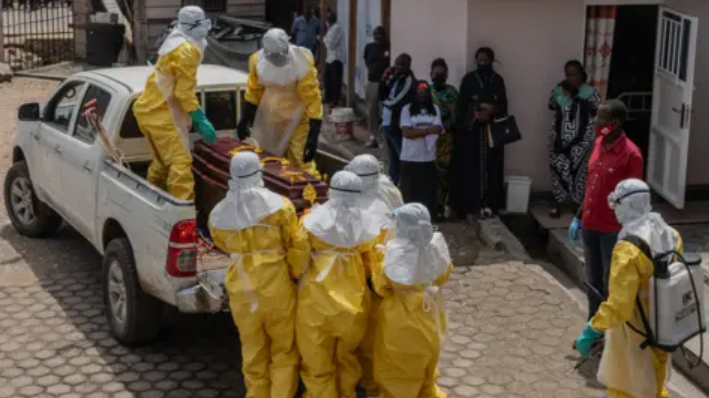
    Kenya Red Cross personnel doff their Personal Protective Equipment (PPE) during a simulation of the evacuation of remains of an Ebola victim in the Kenyan capital, Nairobi, on October 22, 2026. Photo by TONY KARUMBA / AFP

    What Nigerians Should Expect

    Idris explained that the government’s response is being implemented through a structured Incident Management System, coordinated by the Emergency Operations Centre, under the national leadership of the Coordinating Minister of Health and Social Welfare, Mohammed Pate, and the Presidential Task Force on EVD.

    “Our public health teams are working to identify everyone who may have been exposed to the confirmed case, assess their level of exposure, and ensure appropriate follow-up for 21 days from their last possible exposure.

    “This includes healthcare workers, patients, caregivers, household members, travel-related contacts and others who may have had relevant exposure.”

    While describing contact tracing as a detailed process requiring careful investigation, accurate information, and continued follow-up, the DG urged Nigerian to “cooperate fully” if contacted by a public health official.

    “I want to appeal directly to Nigerians: if you are contacted by a public health official, please cooperate fully. Provide accurate information about your movements, contacts, and any symptoms you may have experienced.

    “Being identified as a contact does not mean that you have Ebola. It means that public health teams need to assess and monitor your health so that any possible infection can be identified early. Your cooperation will help us identify potential cases quickly and prevent further transmission,” Idris added.

    Marie Bakikula, a caregiver at a UNICEF-supported nursery in Mongbwalu, poses for a photograph in Mongbwalu, north-eastern Democratic Republic of Congo, October 10, 2026(Photo by MARIE RUWET / AFP)

    ‘Our Healthcare Workers’

    He commended the healthcare workers whose vigilance and clinical judgement contributed to the identification of this case, noting that their high index of suspicion was critical in triggering the public health response.

    “I equally recognise their dedication care under challenging circumstances. You are central to our ability to bring this situation under control,” Idris said.

    “These include not only doctors, nurses and other professionals working in hospitals, but also the public health workforce responsible for surveillance, contact tracing, laboratory diagnosis, case management, infection prevention and control, community engagement and risk communication.”

    The Director General of the NCDC said the Federal Government would prioritise the safety, health and welfare of health workers throughout the response.

    “I want to use this opportunity to call on the leadership of every public and private healthcare facility in Nigeria to immediately review and strengthen their infection prevention and control measures.

    “Screening and triage must be instituted and consistently implemented. Healthcare workers must maintain a high index of suspicion, particularly when attending to patients with compatible symptoms and relevant exposure histories,” he said.

    “Standard precautions must be observed at all times. Hand hygiene, environmental cleaning, injection safety, safe management of sharps and proper waste management cannot be compromised.

    “Healthcare facilities must ensure the availability of appropriate personal protective equipment in the right quantities and ensure that staff know how to use it correctly.”

    Idris further stated that any suspected case must be promptly separated from other patients and reported to the relevant public health authorities.

    “Healthcare workers should not wait for laboratory confirmation before taking appropriate precautions,” he added.

    “Protecting healthcare workers is essential to protecting the communities they serve.”. Channels

  • FG Plans Ebola Treatment Centres as Contacts Rise to 53

    FG Plans Ebola Treatment Centres as Contacts Rise to 53

    Precious Nwonu, Enugu

    The Federal Government is working to establish and strengthen Ebola treatment centres in states with designated ports of entry as the number of identified contacts linked to Nigeria’s confirmed case rises to 53.

    The measures are aimed at improving the country’s readiness to contain a possible spread of the virus, including expanding isolation capacity, strengthening surveillance at entry points and establishing referral systems for suspected cases.

    According to an Ebola situation report obtained on Sunday, the University of Abuja Teaching Hospital has undergone a needs assessment and optimisation to prepare it for isolation and treatment, while an infection prevention and control assessment is planned for Karu General Hospital in Abuja.

    The report said authorities were also working to identify and upgrade treatment facilities in states with designated ports of entry to ensure suspected cases could be transferred quickly from detection points to appropriate centres.

    The Nigeria Centre for Disease Control and Prevention has also approved an emergency payment of N100,000 per person weekly for individuals placed under isolation or quarantine to ease the financial burden of complying with public health monitoring.

    The NCDC Director-General, Dr Jide Idris, disclosed the intervention during a press briefing on Sunday, explaining that some contacts had raised concerns about the cost of feeding, accommodation and supporting their families while under monitoring.

    “We are providing N100,000 per person per week just to maintain their comfort and feeding, because they were complaining,” Idris said.

    He explained that the payment was not part of the initial response plan but became necessary because of the emergency.

    The NCDC chief added that the government was covering accommodation and feeding expenses, stressing that similar support might be required in other states if the outbreak response expanded beyond the Federal Capital Territory.

    “This is not the responsibility of the FCT alone. What we have to do for the FCT, we have to do for any other state, just in case,” he said, urging state governments to prepare adequate financial and logistical resources for emergencies.

    The situation report confirmed that 53 contacts had been identified, listed and categorised, up from the initial 44 recorded after the case was confirmed in the FCT.

    Idris said 44 of the contacts were linked to the health facility where the patient received treatment, while the remaining nine included household members and people who attended to her during an earlier emergency room visit.

    Health officials are also investigating possible secondary contacts to establish whether any of the people already identified may have exposed others.

    Idris said contacts would be monitored daily, with anyone developing symptoms assessed promptly. He disclosed that one contact who reported feeling unwell had tested negative, although monitoring was continuing.

    The NCDC has revised its case definition to help health workers and surveillance teams identify suspected Ebola infections. The criteria include people with compatible symptoms and relevant exposure histories, unexplained bleeding, or symptoms following contact with a confirmed or probable case.

    The agency has also urged communities to report unexplained deaths and suspected cases, particularly where there may have been exposure to the virus.

     Genomic sequencing completed

    The report stated that genomic sequencing of the confirmed case had been completed by the NCDC National Reference Laboratory and the African Centre of Excellence for Genomics of Infectious Diseases.

    Further steps include sharing the sequencing report, continuing diagnostic testing and maintaining laboratory records. Additional testing reagents and supplies are also expected to be distributed across the national laboratory network.

    Authorities are strengthening infection prevention and control measures in healthcare facilities to minimise the risk of transmission to health workers, patients and other people.

    The planned measures include assessments of isolation capacity, implementation of screening and isolation strategies, and additional training for healthcare workers, particularly at the subnational level.

    Idris acknowledged that infection prevention and control capacity in some states needed improvement, adding that training remained a priority for the agency.

    The government has also increased its stockpile of personal protective equipment and other essential supplies. The report said 500 donated laboratory testing kits had been added to available stocks, while additional protective equipment and commodities would be distributed to high-risk states.

    Surveillance at airports and other ports of entry is also being strengthened, with Port Health Services working alongside aviation stakeholders to support the response.

    Other priorities include preparing high-risk states, establishing referral arrangements for suspected cases and improving communication with communities to counter misinformation about Ebola.

    The NCDC urged Nigerians to rely on official information, avoid spreading rumours and cooperate with health officials conducting contact tracing. It also warned against stigmatising people placed under monitoring.

    How the confirmed case was detected

    The confirmed case involves a woman who travelled to Nigeria after visiting Uganda, following a trip to the Democratic Republic of the Congo.

    According to information previously provided by health authorities, she developed symptoms on October 7, sought medical attention in Abuja on October 11 and tested positive for the Bundibugyo strain of Ebola virus on October 20.

    The World Health Organisation has said investigations are ongoing to establish the likely source of the infection.

    Ebola spreads through direct contact with the blood, body fluids or tissues of infected people or animals, as well as contaminated materials. Health authorities have urged Nigerians to practise regular hand hygiene and avoid contact with the bodily fluids of anyone suspected of having the disease.

    Nigeria successfully contained an Ebola outbreak in 2014 through rapid case identification, isolation, contact tracing and coordinated public health measures.

    The current response includes coordination among federal and state authorities, healthcare facilities and response partners to improve preparedness and ensure suspected cases are detected and managed promptly.

  • Ebola Outbreak Spreading Faster Than Containment Efforts in DRC, UN Warns

    Ebola Outbreak Spreading Faster Than Containment Efforts in DRC, UN Warns

    Precious Nwonu, Enugu

    The UN has warned that the global response to Ebola must urgently outpace the virus as deaths in the Democratic Republic of the Congo (DRC) approach 3,000.

    UN Emergency Relief Coordinator, Tom Fletcher, said the outbreak was expanding faster than containment efforts, in spite of a significant scale-up by humanitarian agencies and Congolese authorities.

    Ebola spreads through direct contact with the blood or bodily fluids of an infected person, or contaminated materials, making early detection and isolation critical to breaking transmission chains.

    “The response is growing and has been scaled up, but the virus is moving faster,” Fletcher said.

    “And unless we scale up urgently, more lives will be lost and the threat will grow.”

    DRC authorities had reported more than 6,100 confirmed cases and 2,950 deaths by Monday, with over 5,000 infections recorded in Ituri Province alone.

    The figures underline the exceptional speed of the Bundibugyo Ebola outbreak, declared in DRC on May 15.

    The current outbreak is spreading at a substantially faster rate than one of the deadliest Ebola emergencies previously recorded during the 2014-2016 West Africa Ebola epidemic.

    Fletcher said containing the epidemic would require sustained political commitment, unrestricted humanitarian access and significantly increased international financing.

    “We have the experience, the tools and extraordinary people risking their lives to stop this epidemic. What we need now is political will, access and resources,,” he said.

    The UN relief chief urged governments to ensure humanitarian workers could reach affected communities, particularly in areas where insecurity and weak infrastructure complicate response efforts.

    He also called on the international community to keep Ebola high on the global agenda to prevent the virus from spreading further.

    A funding shortfall of about 1.1 billion dollars remains, limiting the ability of humanitarian agencies to expand surveillance, treatment, community mobilisation and cross-border preparedness.

    Fletcher said his agency has allocated more than 57 million dollars from the UN Central Emergency Response Fund to support response and preparedness efforts in DR Congo and neighbouring countries.

    He said closing the funding gap and stopping further spread would ultimately depend on whether governments and international partners match technical capacity with political commitment.

    The UN maintains that the tools to contain Ebola are already available, however, it warns that delayed financing, restricted access and insufficient coordination could allow transmission to outpace response efforts.

    The World Health Organisation recently declared Uganda’s latest Ebola outbreak over following rapid detection, contact tracing, isolation, clinical care, infection prevention and strengthened surveillance.

    “We have beaten Ebola before, and we can do it again,” Fletcher said.

    The UN International Organization for Migration has, meanwhile, conducted nearly 23 million health screenings in DRC and neighbouring countries.

    UN Spokesperson Stéphane Dujarric said the “screenings were helping authorities monitor population movements, identify possible cases and reduce cross-border transmission risks.”

    NAN