Tag: democracy

  • June 12: Democratic Covenant and the  Resolute Statesmanship of Rep. Nnolim Nnaji

    June 12: Democratic Covenant and the  Resolute Statesmanship of Rep. Nnolim Nnaji

    By Ezefi Mike Udoh

    In the august liturgy of our national memory, there exists a day so solemn, so charged with the undying fervor of the people’s will, that it transcends the realm of calendar and history—it becomes, indeed, a living testament to the irrepressible spirit of liberty. That day is June the Twelfth: Nigeria’s Democracy Day.

    This date, sanctified not by mere proclamation but by the blood and ballots of a defrauded electorate, stands as a moral lodestar in our republican odyssey. It was on that fateful day in 1993 that the Nigerian people, across every creed and clime, rose as one to affirm their inalienable right to self-governance. And yet, the euphoria of that electoral symphony was silenced by the iron hand of tyranny. But from that audacious betrayal sprang forth a deeper, more resolute yearning—a covenant etched not on parchment, but upon the indelible conscience of a nation awakened.

    June 12 is not merely a date; it is a reckoning. A day when the silenced found speech, when courage eclipsed fear, and when the idea of Nigeria—as a democratic commonwealth governed by the rule of law—was reborn in defiance and in dignity.

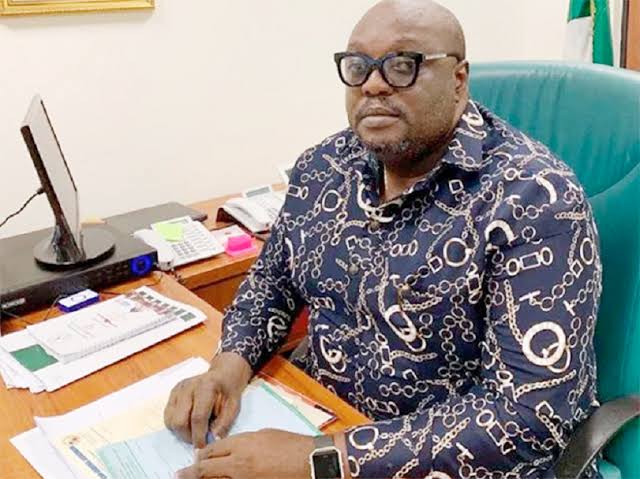
    It is within this noble continuum of democratic resilience that we behold the distinguished personage of Right Honourable Nnolim Nnaji, Member of the House of Representatives, a true paragon of statesmanly grace and legislative probity. Heir to the enduring virtues of service and sacrifice, Rt. Hon. Nnaji has, through unwavering fidelity to the democratic creed, become a venerable guardian of the people’s trust.

    Representing the renown constituency of Nkanu East and West, the Honourable Member has borne the mantle of public duty not as a privilege, but as a sacred charge. Within the hallowed chambers of Nigeria’s National Assembly, his voice resounds—not with self-serving ambition—but with the measured cadence of wisdom, compassion, and nation-first conviction. His legislative endeavours speak to the soul of June 12: the enthronement of justice, the fortification of institutions, and the elevation of the common man above the machinery of impunity.

    Indeed, Rt. Hon. Nnaji has not merely inhabited the office of a lawmaker; he has redeemed its purpose. His interventions are not perfunctory recitations of political ritual but are imbued with the gravity of one who understands that democracy, in its truest form, is the enthronement of the people’s will, sanctified by relentless service.

    Thus, as the Republic marks another anniversary of this hallowed day, let every heart pause in reverence, and every mind ponder its significance. Let the names of the valiant—known and unknown—be whispered in gratitude. And let us, in unison, lift our voices in celebration not only of the democratic promise that June 12 heralds, but also of the gallant stewards like Rt. Hon. Nnolim Nnaji, who by diligence, integrity, and quiet strength, keep the flame of that promise ever burning.

    For as long as leaders such as he walk the hallways of governance with humility and honour, Nigeria’s democratic experiment shall neither waver nor wither—but shall blossom into the full measure of its sovereign destiny.

    Happy Democracy Day!

    Ezefi Mike Udoh writes from Ihunekwagu, Akpugo.
  • Democracy Day celebration commences at Eagle Square

    Democracy Day celebration commences at Eagle Square

    The 2022 Democracy Day celebration activities have commenced at the Eagle Square, Abuja, with the marching of Commander Guards Brigade general salutes.

    The Guard Commander took his position and salute at 9 a.m.

    This would be followed by the arrival of special dignitaries, including the President, Major General Muhammadu Buhari (retd.); Vice President Yemi Osinbajo; President of the Senate, Ahmad Lawan, and Speaker of the House of Representatives, Femi Gbajabiamila.

    Others include former presidents and vice presidents; Chief Justice of Nigeria, Justice Ibrahim Tanko Muhammad; Secretary to Government of the Federation, Boss Mustapha; ministers and members of the National Assembly.

    Also expected at the venue are permanent secretaries and heads of federal ministries and parastatals.

    Some of the dignitaries already seated are service chiefs and the Inspector-General of Police, Alkali Usman; the National Security Adviser, Maj.-Gen. Babagana Monguno (retd.), and former Minister of Foreign Affairs of Nigeria, Amb. Babagana Kingibe

    (Vanguard)

  • British Govt: The rising conflict in Nigeria could destabilise Democracy


    British Government has raised the alarm that the rising conflicts could destabilise Nigeria’s democracy in the run-up to the 2023 elections.


    This is even as the Nigeria Governors’ Forum (NGF) declared that the level of insecurity across the country is not only eroding citizens safety and peoples means of livelihood but also threatening the expression of the rights of Nigerians.


    They both spoke at the launch of the Nigeria Governors’ Forum (NGF) Peace and Inclusive Security Initiative (PISI) in Abuja, yesterday.


    Chris Beecroft, development director, Foreign, Commonwealth and Development Office (FCDO), in his good will message, blamed the frequent crisis on injustice and impunity and weak justice institutions in the country. He said peace and stability could be achieved when causes of conflict are managed through strong, fair and responsive governance mechanisms at community, state or federal levels. He stressed that the conflict represents an existential threat to Nigeria’s unity and its development.


    “There is an active insurgency in the North East, farmer-herder conflicts are extending across the country, resource conflicts in the Delta, tension in the South-East and banditry in the North West. Conflict destroys lives, destroys livelihoods, destroys hope and ambition for the future. Conflict represents an existential threat to Nigeria’s unity and its development.”


    Beecroft explained that the use of police and army would only be part of the solution and called for greater emphasis on reconciliation, mediation, arbitration, and access to justice – all vital components of a vibrant, resilient, and effective social contract.


    According to him, proliferation of small arms and weapons and the weaponisation of social media are drivers of conflict and instability.


    He called for job creation for young Nigerians “so they have a stake in a prosperous and peaceful Nigeria,” adding however, that “with the right commitment, dedications and support, there are solutions.”


    Beecroft stated that the UK Foreign Commonwealth and Development Office recognised the important role the NGF plays in setting the peace and security agenda and in building state and community level structures and institutions to reduce violence and respond to conflict and insecurity across Nigeria.


    “The UK is pleased to have been able to support this initiative and is committed to continue working with the Nigeria Governors Forum (NGF) in advancing its peace and security agenda.


    “The UK is engaged in supporting Nigeria to reduce violent conflict in a number of areas. We promote a regional response in the North East and Lake Chad Basin through our contribution to the Regional Stabilisation Facility (RSF) and delivery of programmes on peace building, humanitarian assistance, protection of civilians, human development, good governance and accountability.”


    Former head of state and Chairman of National Peace Committee Gen. Abdulsalami Abubakar (retd), in his remarks, expressed worry over what he called the instrumentalisation of violence, noting that violence has become a commodity in Nigeria.


    Abubakar, who was represented by Catholic Bishop of Sokoto Diocese, Fr. Matthew Hassan Kukah, said Nigerians were in denial of the diagnosis. He said poverty was not the cause of violence in Nigeria, arguing that China has about 300 million unemployed.


    NGF’s chairman and Governor of Ekiti State, Kayode Fayemi, who spoke on behalf of his colleagues, confessed that the spate of violence and coordinated criminal activities have undermined government authority and waned public trust in recent times.


    He attributed the current security crisis to several factors “including an oversized population that the government is unable to cope with, a large number of poor people estimated at over 40 percent of the population who are living below $1 per day and indeed, desertification which has affected over 60 percent of Nigeria’s land as drought and climate change has continued to aggravate land deterioration in the country.”


    The NGF chairman also blamed the situation on proliferation of small arms and light weapons, which he said worsened and exacerbated the level of violence and fatalities.


    He said between May 2011 and February 2021, over 76,000 deaths were reported.


    “This number also includes persons who have been killed by a state actor. In addition to the proliferation of arms is an undertone of rising ethnic conflict, with different ethnic groups subsumed in conflicts and pitched against one another.”


    NGF’s Director General, Asishana Okauru, explained that the launch forged a significant step in the life of the NGF as “we strive to build a nation where safety of lives and property is guaranteed.The Peace and Inclusive Security Initiative is a consequence of our determination to contribute to the conversation on inclusive security and add the leverage of the sub-nationals to the efforts to secure the lives and  property of our country men and women.


    Source: www.sunnewsonline.com

  • This isn’t Democracy


    THE son of the acclaimed winner of the June 12 presidential election, Kola Abiola, has said Nigeria’s democracy the way it was currently being practiced was not what his late father, Chief MKO Abiola, and several Nigerians died for.


    He further said it was not the kind of democracy several Nigerians laid down their lives on the line for. The younger Abiola, said this during the Tribe Naija, 2021 Democracy Day Fireside chat, with the theme: ‘This thing Called Democracy,’ in Abuja, on Saturday.

    Abiola said, “I am not impressed with the democracy that we are in today, because it is not what my father and others died for. Is not what they put their lives on the line for.


    “And I want to make sure we get what they will be proud of in their graves. The mantle is now for me to make sure that happens and that is what I mean by completing that bridge.”


    Abiola called for a positive disruption of the system to bring about the kind of change that will make Nigeria work for all citizens irrespective of religious, ethnic, political affiliation and social status.


    He noted that the Tribe Naija platform, under which the dialogue was being hosted, was designed to bring together young Nigerians who have the passion to think outside the box to bring about a positive change in the country.


    Read Also

    The spirit of democracy and its enemies

    Nigeria: Pains and gains of democracy

    MKO Abiola won’t be happy democracy has become autocracy –Gani Adams

    Abiola said, “So, let us not make a mistake about the system. There is no system. We have inherited a system and it is time we turn that system on its head. The system just throws up what they want us to have and we have to pick from what they throw up for us to vote for.


    “We will change that on this platform. Because our numbers will count and we will have a say. You will know exactly the numbers we have at ward, local and state basis through this platform. I am committed to m aking that happen.”


    Source: www.punchng.com

  • INEC: concern over political parties lack of internal democracy


    The Independent National Electoral Commission (INEC) has expressed serious concerns over lack of internal democracy in the political parties, describing it as the biggest challenge confronting Nigeria parties.

    INEC’s Director of Election and Party Monitoring, Aminu Idris, made the disclosure on the sideline at a workshop organised by West Minster Foundation for Democracy in collaboration with the Commission in Abuja on Wednesday.

    The Director, however admitted that there has been progress in the development of political parties since 1999 till today, equipping that the dominance of one godfather is now a thing of the past.

    Commenting on the trust of the workshop and the challenge of monitoring political parties, the INEC Director said: “The Commission in collaboration with West Minster Foundation for Democracy had commissioned Professor Jibrin to develop indices that can be used to monitor the political parties and which they can use to assess themselves.

    “The assessment is to ensure that the political parties are playing the roles they are supposed to play like enhancing democracy and making it sustainable and buy in a social medium for governance.

    “The biggest challenge facing INEC monitoring political party is lack of internal democracy whereby parties don’t allow members to fully participate in the activities of political parties in the policy and election of the candidates of the party.

    “They have no input as to how the party is run. Lack of internal democracy is really one the biggest challenge facing INEC monitoring the political parties.

    “In terms of sanctioning the parties, our role is to ensure that the parties are in compliance with their own constitution. We monitor their activities and ensure that such activities are in compliance with the provision of the party constitution and when we find fault, we often write letters, requesting that they comply. “Sometimes their members equally petition the Commission and we will look at the illegal implications and write them letters. I also have to say that there is progress in our party development since 1999 till today. The dominance of one godfather is now a thing of the past, ” he said.

    Equally speaking on the sideline of the workshop, the National Chairman Inter-Party Advisory Council (IPAC), Leonard Nzenwa, said that what will be the biggest takeaway would be to strategise and ensure that no political party chairman emerge as presidential candidate of its party.

    “I think the political parties need to do a lot to broaden the scope and capacity of their functionaries to discharge their duties. For now, what we are trying to do is to elevate the status of IPAC as a body. The elevation is to ensure that every functionary of a political party has some level of capacity internally and externally to see how we can get membership.

    “There is different between the structure and membership of a political party. The political parties are not well to do, and it is only when we have strong and healthy parties that we talk about a very strong democracy.

    “The parties must ensure that the membership is broad by opening the space for all kinds of membership. The party should not by owned by an individual or hijacked by a cabal or particular group. Political parties should be regarded as a civic entity where anybody can come in and go out,” he noted.

    Enumerating the hurdles facing political parties, he said: “Some of the challenges we have in the past is that people see political parties as their property, their business and that has led to a situation where somebody who claims to be party chairman is holding the party’s ticket as presidential candidate.

    “Such is completely abhorrent and should not be encouraged. We are going to ensure that no political party in this country will field the chairman as presidential candidate.

    “One of the greatest challenge is to find a way to raise resources to undertake the enormous responsibility and that is why we  are,” he said.


    Source: www.sunnewsonline.com