Tag: Cybercrime

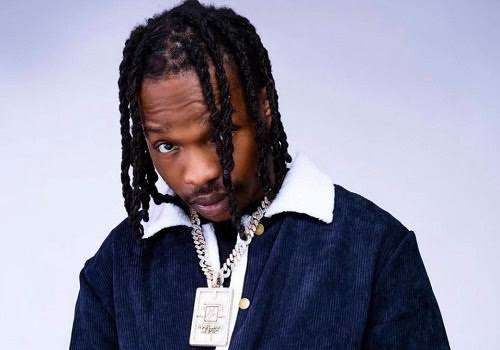
  • Cybercrime: Forensic investigations indict Naira Marley

    Cybercrime: Forensic investigations indict Naira Marley

    The Cybercrime Section of the Economic and Financial Crimes Commission, on Thursday, submitted reports of forensic investigations led by Whyte Dein to corroborate their case against singer Azeez Fashola a.k.a Naira Marley, charged with credit card fraud before the Ikoyi Federal High Court.

    Dein, the Chief Detective Officer of the Section told the court that his team’s investigations revealed that the defendant was involved in credit card fraud.

    The artiste faced 11 charges bordering on alleged credit card fraud contrary to Money Laundering (Prohibition) Act and the Cyber Crimes Act.

    It was gathered that the singer committed these offenses between November 26 and December 11, 2018, and May 10, 2018. He was arraigned on May 20, 2019, but was granted bail.

    At the resumed trial on Thursday, Dein, led in evidence by EFCC counsel, Rotimi Oyedepo, told Justice Nicholas Oweibo that they discovered conversations on the defendant’s iPhone with one Raze who asked for a credit card details.

    He said, “One of our findings from the forensic report shows the exchange of chat messages with several persons when the defendant sent credit card details, including card numbers and expiration dates. Visa card details were one of those sent by the defendant to a certain person known on his contact list as Raze. This message sent Visa Card details to Raze, after which Raze replied that the card was not valid.”

    “We were able to establish through investigation the previous messages he sent with a wrong card that was indeed not valid. We then repeated the same process a second time which was now valid.”

    Dein also explained that the singer used a multi-lingual browser to access illegal networks.

    He said: “The defendant used malicious tools to disguise the identity and location of the user of the laptop when connected to the internet along with the presence of the Top Browser which acted as a single gateway to the dark net. This gave us a reasonable ground to suspect that the defendant had been engaging in fraudulent card activities. And this was established through a reply to our request to Visa Western Union Card.”

    “The types of sites most commonly associated with the dark web are marketplaces where illicit goods such as narcotics, firearms, and stolen credit card numbers are bought and sold. The darkest corners are used to hire hitmen, engage in human trafficking, and exchange child pornography.”

    Another forensics expert, Buru Buhari had on October 3, 2019 during the proceedings, told the court that his investigations revealed stolen card details issued by European, American, and Latin American banks from the singer’s laptop.

    Dein concluded by saying the investigations pointed out the defendant’s involvement in cyber fraud. However, the defense counsel, Olalekan Ojo, SAN, objected and said only the court could conclude.

    The case was adjourned till July 13 for ruling on the points raised, and July 15 for continuation of trial.

    (Punch)

  • Nigeria and other African Country experience 85 million Cyber Attacks in 6 months


    Malware attacks in Africa, including Nigeria, have increased to 85 million in just six months.

    This is according to a report released by a global cybersecurity and digital privacy company, Kaspersky.

    It stated that four countries accounted for 85 million attacks, with South Africa being the most targeted with 32 million; followed by Kenya, 28.3 million; Nigeria, 16.7 million; while Ethiopia had eight million attacks.


    The research company noted that it was a five percent increase in the  region.

    The company’s Enterprise Sales Manager, Mr. Bethwel Opil, said all the countries but Kenya saw relative growth of all malware attacks.


    He said: “Ethiopia and Nigeria have seen an increase of 20 per cent and 23 per cent respectively and South Africa, an increase of 14 percent, while Kenya’s number of attacks decreased by 13 percent.


    “Even though the scourge of malware has always been of concern, the past 12-months have highlighted how hackers are refocusing their efforts to compromise consumer and corporate systems and gain access to critical data and information.


    ‘’Given the growth of digital transformation across Africa since last year, the continent has become an attractive target for those looking to exploit a lack of user education and cybersecurity understanding. This has contributed to the large number of personal devices still not having any form of cybersecurity software installed.


    “Malware can get onto a device in several ways, for example, clicking on an infected link or advert, opening an attachment in a spam email, or downloading a compromised app. This means proactive malware protection is essential to safeguard individual users and corporate organisations against these threats.’’


    The company recommended that people should install anti-virus software on every device that connects to the internet. Then download only applications from trusted sites.


    “Always check the app permissions and, if certain things do not make sense, do not install the programme. Never click on unverified links especially when coming from suspected spam emails, messages, or suspicious-looking websites.


    “Keeping operation systems and applications always updated with the latest patches. Be wary of using free Wi-Fi at coffee shops, restaurants, and other places as hackers can snoop for unprotected devices,” it advised


    Source: www.vanguardngr.com

  • Nigerian accused of Cybercrime in the US


    A Nigerian, Mark Okuo and his Kenyan accomplice, Florence Musau, have been accused of alleged conspiracy in internet scam, leading to over $4 million.


    The 41-year-old Okuo and 36-year-old Musau were accused of depositing $1.3million into various bank accounts from their fraudulent proceeds since 2018, DailyMail reported.


    About $195,000 was obtained through five romance scams from dating apps.


    The duo has been working together since 2018 to defraud people via dating and banking platforms and on Monday, Musau pleaded guilty to wire and bank fraud.


    According to a criminal complaint, Okuo had defrauded unsuspecting women on dating sites under the pretext of being a  US Army soldier from Africa or Middle East.


    He had always promised them marriage, as he asked the women to wire him money to enable him to leave the military and return to the US.


    In one case, Okuo had professed love to a woman from Georgia, claiming that he needed $4,700 to return to the US to marry her.


    The unsuspecting victim had transferred the amount to an account controlled by Okuo.


    One of his victims had also transferred $137,000 to bank accounts that were controlled by Okuo and Musau, after falling for his tactics.


    His Kenyan accomplice, Musau, after pleading guilty, was on Monday sentence to 30 years imprisonment  beginning on October 14.


    Source: www.punchng.com

  • Cybercrime: Hackers appear to have become predators in cyberspace as the Universe advances in digitalization

    On May 22, 2019, the Economic and Financial Crimes Commission, EFCC, arrested a young proprietor of an alleged internet fraud training school located at 14, Animashaun Street, Progressive Estate, Ojodu Berger, Lagos alongside eight students, while receiving “lectures”.

    Again, in June, 2020, the media reported the arrest by Interpol and FBI of a Nigerian Dubai-based fraudster, Raymond Igbalode, popularly known as Hushpuppi, and his colleague, Mr. Woodbery, for alleged involvement in internet fraud and money laundering of over $100 million meant for native Americans during the coronavirus pandemic.

    Also, on February 18, 2021, Vanguard reported that operatives of the Abuja Zonal Office of the EFCC uncovered an underworld ‘academy’ located in Arab Contractors Area of Mpape Hills, Abuja, for the grooming of internet fraudsters.

    According to EFCC, the 30-year-old coordinator of the internet fraud academy and his 27 ‘students’, mostly young school leavers between ages 18 and 25, were arrested.

    These are the army of hackers who silently prowl the cyberspace, seeking to steal the usernames and passwords we use to digitally deposit and withdraw money from our bank accounts.

    Hackers appear to have become predators in cyberspace as we humans have increasingly settled down to a life of digital transactions of our businesses.

    This ugly situation calls for stronger and concerted efforts to universally evolve foolproof means of warehousing personal or collective wealth to keep online commerce and payment solutions going with minimum risk of losing it to hackers and fraudsters.

    Allowing these fraud schools to exist will enable them to proliferate, as fraud “students” of today will turn into teachers of tomorrow. It is akin to allowing schools that teach armed robbery and kidnapping to exist.


    The banks and internet payment service providers must also be made to take more responsibility and liability for allowing their systems to be infiltrated. Consumers of these services should be constantly kept abreast of developments in cybercrime in order for them to play their roles in protecting their finances.

    However, we strongly believe that law enforcement alone will not solve cybercrime issues. More efforts must be made to give our school leavers opportunities to earn honest living through gainful employment. Nigeria is an infinitely blessed country in terms of human and natural resources.

    The economy must be developed to give jobs to our people. This will vastly reduce the army of the unemployed and the temptation to embrace crime as a whole.

    Many of these young people would ordinarily want to live honest, dignified lives, but due to unemployment which itself is a fallout of bad leadership and public treasury looting, they are forced to channel their energies and genius into the wrong direction.

    Cybercrime must be comprehensively tackled to keep our personal and collective wealth safe.

    (Vanguard)