Tag: corruption

  • Tinubu Urges Judges To Close Legal Gaps Used To Delay Corruption Trials

    Tinubu Urges Judges To Close Legal Gaps Used To Delay Corruption Trials

    Precious Nwonu, Enugu

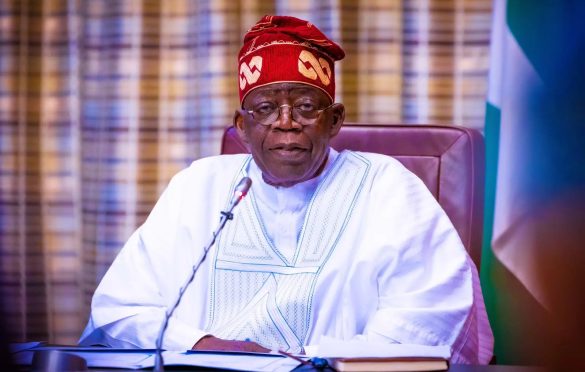
    President Bola Tinubu has called on Nigerian judges to address legal and procedural loopholes exploited by politically exposed persons and organised crime groups to delay or frustrate criminal trials.

    Tinubu made the call on Tuesday in Abuja at the eighth annual capacity-building workshop for judges and justices, organised by the Economic and Financial Crimes Commission and the National Judicial Institute. He was represented by Vice President Kashim Shettima.

    The President urged the judiciary to review prosecution strategies, reconsider outdated legal precedents and assess existing laws against emerging forms of financial crime.

    He said the fight against corruption should not be treated as the responsibility of the executive alone, noting that its effects cut across the judiciary, legislature, public institutions and the wider society.

    “We must no longer permit legal pyrotechnics and procedural pedantry to shelter criminality,” Tinubu said, describing the fight against corruption as essential to the country’s survival.

    He maintained that courts must uphold the spirit of the law and prioritise public interest over attempts by individuals to exploit technicalities to escape justice.

    Tinubu added that meaningful progress against corruption required an independent and reform-minded judiciary, pledging the executive’s support for efforts to strengthen justice delivery.

    The workshop, themed “Investigation and Prosecution of Economic and Financial Crimes in a Digital Age,” focused on the growing challenges posed by technology-driven criminal activities.

    Tinubu said the emergence of blockchain technology and artificial intelligence had made financial crimes more sophisticated, requiring law enforcement agencies and judicial officers to continually improve their skills.

    He commended the EFCC for its efforts against cryptocurrency-related fraud, citing recoveries and forfeitures linked to digital asset investigations.

    According to the President, the commission secured the forfeiture in 2025 of $22,417.91 in Bitcoin, 1,001,301.87 USDT in digital assets and $5.6m connected to the CBEX scheme.

    He also disclosed that 192 foreign nationals arrested over alleged cyber-terrorism and cryptocurrency fraud were prosecuted and deported.

    Tinubu further said the EFCC filed 14,476 cases and secured 10,872 convictions within the first 34 months of his administration, representing a conviction-to-filing ratio of 75.1 per cent.

    He added that the commission recorded 1,370 convictions from 1,889 cases filed in the first half of 2026.

    The President said the EFCC also recovered ₦1.233tn, $684.48m, £373,905.78 and €9.34m in monetary assets during the period under review.

    He urged the judiciary to strengthen its capacity to handle digital evidence and complex financial crime cases, while commending Chief Justice of Nigeria, Justice Kudirat Kekere-Ekun, for her judicial reform efforts.

    In her remarks, Kekere-Ekun said technological advances had transformed how digital evidence was obtained and documented, making effective case management increasingly important.

    She added that continuous judicial training had contributed to improvements in the conduct of judicial officers, particularly in managing cases.

    The Chairman of the Senate Committee on Anti-Corruption and Financial Crimes, Emmanuel Udende, described the workshop as timely, citing the increasing sophistication of financial crimes and the delays associated with cases involving politically exposed persons.

    Udende pledged the National Assembly’s support through legislation aimed at strengthening the fight against corruption.

    The Attorney-General of the Federation and Minister of Justice, Lateef Fagbemi, represented by the Director of Public Prosecutions, Rotimi Oyedepo, said tackling corruption required cooperation among all arms of government.

    He urged judges and lawyers to use the workshop to improve investigations and ensure more diligent prosecutions.

    The Administrator of the NJI, Justice Babatunde Adejumo, described the EFCC-NJI partnership as an important part of efforts to combat financial crimes.

    EFCC Chairman Ola Olukoyede also described the workshop as a national necessity, saying the commission had recorded significant convictions and recoveries under his leadership.

    Olukoyede assured participants that recovered funds and property would be managed transparently and responsibly.

  • JAMB, EFCC Urge Nigerians to Sustain Nation-Building Efforts at 66

    JAMB, EFCC Urge Nigerians to Sustain Nation-Building Efforts at 66

    Precious Nwonu, Enugu

    The Joint Admissions and Matriculation Board and the Economic and Financial Crimes Commission have called for sustained efforts towards national development as Nigeria marks its 66th Independence Anniversary.

    In separate messages issued to commemorate the anniversary, the two institutions reflected on the country’s progress since independence and urged Nigerians to remain committed to building a better nation.

    JAMB highlighted the changes Nigeria has experienced over the years, particularly in the area of technology, noting that its own evolution from paper-based examinations to computer-based testing mirrored the country’s broader transformation.

    “From pen and paper to keyboards and screens, Nigeria has evolved, and JAMB has evolved with her,” the board said.

    The examination body said the anniversary offered an opportunity for Nigerians to reflect on the country’s achievements while remaining focused on future possibilities.

    “As we celebrate another year of independence, we honour how far we’ve come and look ahead to all that is still possible,” JAMB added, while wishing Nigerians a happy Independence Day.

    Similarly, EFCC Chairman, Ola Olukoyede, said Nigeria had recorded considerable progress in its nation-building efforts since gaining independence.

    Olukoyede said independence had given Nigerians liberty and the opportunity to determine their own path as a nation.

    “At 66, Nigeria has come a long way. Independence has offered us liberty and self-determination. We are also making considerable progress in nation building,” he said.

    The EFCC chairman described the various development efforts in the country as important foundations for achieving the Nigeria citizens desire.

    “All these efforts are significant. They are the building blocks of the greater nation we desire,” he said.

    Olukoyede, however, stressed the need for ongoing reforms to be accompanied by a firm commitment to tackling corruption.

    “Let’s therefore couple all our reform-focussed initiatives with zero tolerance for corruption. We cannot be building and allow corrupt practices vitiate our efforts,” he said.

    He added that achieving sustained national progress would require Nigerians to reject compromises capable of undermining development efforts.

    “Progress only comes with purposeful rejection of compromises. Nigeria will surely get better!” Olukoyede said.

  • Theft as a National Enterprise

    Theft as a National Enterprise

    By Abdul Mahmud

    A 20-year-old housewife, Fatima Abdullahi, was docked before a Sharia Court. Her offence? Stealing foodstuff and N250,000 from her employer. The Sharia Court sits in Kano. The Sharia law will take its course. She is already shamed. The punishment for her crime is visible in the Qur’an. But, her trial will not conform to the international standards of fairness. Her guilt, unprotected by power because she is powerless as a nobody. Her desperation for freedom will be public.  She will be punished. As punishment for theft, the Court will order that her hands be cut off, consistent with the injunction of political Sharia in the north. She will weep on being sentenced.

    Elsewhere, in the cool corridors of air-conditioned offices, many thieves are stealing too. But they steal big. Call up the names on the register of big time [alleged] thieves. Ahmed Idris, former Accountant-General of the Federation, who allegedly stole N109 billion. His successor, Anamekwe Nwabuoku, is also on trial. He is accused of stealing N1.96 billion. Godwin Emefiele, former Governor of the Central Bank, is facing a catalogue of corruption charges. Contracts were awarded without process. Billions vanished. The national vault became his playground.

    Yet, for all the noise, how many of them wear handcuffs?

    Ahmed Idris is no mere man of numbers. He is a title-holder of the Daura Emirate. But not just any title-holder. Wait for it. His honorific bears a haunting irony. He is the Ajiyan Hausa, the Emirate’s symbolic custodian of its savings. The deposit. The purse. A title meant to evoke trust, restraint, stewardship, and to strengthen bond. Yet, here lies the bitter contradiction of our times: the keeper of the Emirate’s deposit is the [alleged] national vault plunderer. The hand, now entrusted to protect the granary of the Emirate, even if symbolic, is the very hand that [allegedly] emptied our country’s treasury. His title now reads like a cruel jest, a ceremonial mockery of the very values it was meant to honour. In saner societies, symbolism is sacred. In our country, it is a satire.

    There lies the paradox. The rich steal to reign; to show off and to rub their stolen wealth on the faces of honest citizens. The poor steal to eat. Though my late friend and playwright, Professor Tunde Fatunde, captured it in a different way in his biting satire, “Oga Na Tief Man” – suggesting in a way that it is only our bosses that steal. It is now clear that everyone – the rich and the poor – steals. Everybody steals. The gatekeeper steals. The messenger steals. The fuel attendant cheats you at the pump. The tailor adds money. Elders, the protectors of local mores, are land grabbers. Go to Benin City. A monarch who is apparently the king of boys now walks the Bedford Heights to the US jailhouse for wire fraud. The pastor lies. The imam collects bribes. Everyone wants something that is not theirs. This is how Fela described it in his song, Authority Stealing: “somebody don take something wey belong to another person”.

    Theft is now the national enterprise.

    It is the oil that greases every wheel. The high and mighty steal with pens and policies. Ordinary citizens steal with tricks and shortcuts. They call it “hussle”. The civil servant inflates contracts. The market woman hoards tomatoes. The customs officer under-declares imports. The voter sells his vote. The lawmaker buys it. And round our country goes in a merry-go-round of mutual theft. The oga steals the budget. The servant steals the change. The policeman collects bribes. The politician diverts funds. The civil servant “chops small.” No one is innocent. No one is shocked. Everyone expects to steal, or be stolen from. The tragedy is that citizens now call it normal.

    What began as elite corruption has trickled down. Or maybe it was always there. The difference is the scale. The rich steal in billions. The poor steal in hundreds. But both steal all the same. And both feel justified. “If I no move am, another person go move am.” Moving becomes another euphemism for theft. That is the logic. That is the rot. The consequences are clear. First, it kills trust. Who can you trust? Not the police. Not the pastor. Not the elder. Not the local chief. Not the courtiers. Not the teacher. Not the politician. Not even your neighbour. Everyone is out for themselves. Second, it kills hope. Why work hard when you can “hussle”? Why become honest when dishonesty is rewarded? Why play by the rules when the rulebook is torn? Third, it kills progress. The money meant for roads disappears. The funds for hospitals are embezzled. Schools rot. Power fails. Infrastructure decays. Our country borrows to pay salaries. Our country borrows to steal. The national debt grows. But the citizens remain poor.

    The moral collapse is total. There was once a time when shame restrained men. A time when elders frowned at corruption. When integrity mattered. When public office was an honour. Today, the thief is a role model. The looter is a chief. The bigger the loot, the louder the title. In our country, today, titles are no longer honours earned by virtue, but ornaments acquired through vice. My Etsako provenance offers one of the loudest of such titles: Oku Omolo – The sea never dries. It is meant to evoke abundance, resilience, and an endless wellspring of generosity. But in the hands of the corrupt, it has become the euphemism for bottomless theft. A celebration of plunder disguised as prosperity.

    Here, the deeper the theft, the grander the welcome. The thief returns home not in shame, but in splendour. Drums beat. Praise singers chant. Clerics pray. The community gathers, not to ask questions; but to ask for favours. No one remembers how the well was filled. Only that it overflows.

    Thus, a nation drowns in stolen waters while hailing the men who fetched them. How did our country get here? Slowly. Steadily. First, citizens excused the first thief. Then they praised him. Then they emulated him. Now, citizens encourage their children to steal. To cheat. To manipulate. They call it survival. But it is the death of the soul, of the country. Achebe said it best. A paraphrase of the late Irish patron-poet, W.B. Yeats’s “things fall apart” in his poem, The Second Coming: “The things that held us together have given way.” The moral straps of our country have snapped. Our values have collapsed. Citizens no longer know right from wrong. The house has fallen. As Karl Maier puts it: “This house has fallen”.

    But not all is lost. Citizens can still rebuild the country. But first, they must tell themselves the truth. Stealing is stealing. Whether by the gatekeeper or the governor. Whether by the clerk or the commissioner. Whether by the mechanic or the minister. Whether by Fatima or Emefiele.

    Our country and its citizens must stop decorating thieves. They must stop giving them awards. They must stop singing for them. They must stop inviting them to churches and mosques. They must stop calling them “destiny helpers.” They are criminals. Not heroes. The judiciary must act in accordance with its role. No if. The courts must bite. Not just the weak. Not just the powerless. But the high and mighty too. Justice must be blind. The law must not see pockets or positions. Only truth. The police must reform. Too many officers are gatekeepers of corruption. Roadblocks have become toll gates on our country’s highways. Bail is never free. The law is up for sale. That must end.

    Religious institutions must cleanse their altars. Too many thieves denn in the pulpits. Too many pastors preach prosperity without integrity. Too many imams pray for thieves. Religion must return to its core: truth, justice, righteousness. The civil society must rise and be active again. Too many NGOs are now fronts for corruption. Too many activists have become consultants to crooks. The media must shine the light. Not dine with darkness. Too many journalists now feast on brown envelopes. The pen must return to its calling; to expose, not  excuse. And citizens must resist. They must say no. No to vote buying. No to stolen mandates. No to stolen futures. They must reject rice-for-votes, stomach-infrastructure  politics. They must vote conscience, not stomach.

    Yes, all of this is hard;  but, it is necessary. Our country and its citizens must start small. One honest act at a time. One brave whistleblower at a time. One principled and active citizen at a time. That is how countries are rebuilt. Our country must raise a new generation. A generation that sees public office as stewardship. Not an Automated Teller Machine. A generation that understands that wealth without work is theft. That leadership without sacrifice is fraud. That power without purpose is poison. Our country must change the story of itself. From “Oga na tief man” to “Oga na servant.” From “everybody dey thief” to “some of us still dey stand clean.” From “na so Naija be” to “na so we go change Naija for good”. Our country is not cursed. Our country is corrupt. Our country is not poor. Our country is poorly managed. Ours is not the absence of wealth. It is the abundance of thieves.

    I fathom no illusion here. If Fatima Abdullahi must face justice, then so must the Ahmed Idrises and Emefieles. If the petty thief must be jailed, then the economic saboteur must be punished. The arc of the moral universe must bend toward justice for the big and small thieves and for our country. This house has fallen. But it can be rebuilt. Brick by brick. Truth by truth. One honest citizen at a time. That is the only hope. That is the only path forward to redemption.

    “Oga na tief man”.

    But so are the ordinary citizens who turn blind eyes to the thievery around them.

  • Special Op-Ed: The Future of Democracy in West Africa

    Special Op-Ed: The Future of Democracy in West Africa

    By Abdul Mahmud

    The democratic experiment in West Africa, once heralded as a beacon of postcolonial hope and civic renewal, is now teetering on the edge of collapse. A sub-region praised for its cautious embrace of multiparty systems, free press, and constitutional governance is increasingly defined by military coups, rampant kleptocracy, eroding civil liberties, and deepening economic despair. These are not the birth pangs of a fledgling democracy but the death throes of a failed experiment. West Africa stands at a historic crossroads, where the question is no longer whether democracy can thrive, but whether it can survive at all.

    Nearly thirty-five years have passed since the Commonwealth’s Harare Declaration lifted its banner of hope over the African continent, proclaiming a vision of democratic renewal and participatory governance. A year earlier, the Arusha Conference,  which adopted the African Charter on Popular Participation, emphasised the fact that it is the absence of democracy that is at the core  of Africa’s development crisis. Yet, today, that vision lies in ruins, abandoned in some places, and in others, so hollowed out that it survives only as a ritual of empty gestures, while states lie prostrate at the lower rungs of underdevelopment. The democratic struggles it once inspired, borne on the backs of ordinary citizens yearning for dignity and voice, have withered under the weight of betrayal. Where democracy has not vanished entirely, it has been vulgarised, reduced to a decorative fiction, stripped of its emancipatory substance. It now serves, in many quarters, not as a bulwark of freedom but as a tool of domination: a revisionist enterprise, co-opted by political elites and the bourgeois establishment, who wield its symbols to sanctify their power. What citizens are witnessing is the appropriation of democratic legitimacy to uphold values, interests, and practices that bear no resemblance to the democratic ideal. A point that the late Nigerian thinker, Claude Ake, gave profound clarity to in his book, ‘The Feasibility of Democracy in Africa’. To Ake, this emptying out of democracy and the conversion of its contents into means that legitimise deeply anti-democratic ends repudiate the very representative essence of the demos by “appropriating democratic legitimacy for political values, interests and practices that are no way democratic”. The vocabulary of this pre-eminent thinker still speaks to the truth today, now that all of democracy but its soul has been exiled by the ‘New West African democrats’ who continue to trivialise the demos. Hear Ake: “It is no wonder that democracy is in crisis today, even as we celebrate what we perceive as the triumphant march of democracy to every part of the world. What looks like thetriumph of democracy is actually the other side of its trivialization, its domestication to the point in which it can be embraced by power elites all over the world because it is too tame to threaten them”.

    A Subregion in Democratic Regress

    The optimism of the 1990s, when multiparty elections and civilian rule swept across West Africa, has given way to widespread disillusionment. Countries such as Nigeria, Ghana, Senegal, and Côte d’Ivoire once held promise as democratic exemplars. Today, even these nations are plagued by election-related violence, judicial manipulation, or the dangers of judicial selectorate as my friend, Professor Chidi Odinkalu, described it in his new book, ‘The Selectorate: When Judges Topple the People’, and the shrinking civic space. More worrying is the recurrence of military coups in Mali, Guinea, Burkina Faso, and Niger between 2020 and 2023. These coups are not isolated events but symptoms of deeper structural decay.

    In Mali, the military seized power in August 2020, citing the failures of President Ibrahim Boubacar Keita to tackle corruption and insecurity. The coup was initially welcomed by citizens fatigued by poor governance. However, the military soon reneged on its promise of a swift civilian transition. A second coup occurred in May 2021, consolidating Colonel Assimi Goita’s control. Rather than restoring order, Mali slipped into deeper instability, with elections repeatedly postponed and the military accepting the support of foreign mercenaries. Guinea followed in September 2021 with Colonel Mamady Doumbouya overthrowing President Alpha Conde, who had controversially amended the constitution to secure a third term. Doumbouya framed the coup as a corrective, promising to restore democracy. Yet, more than two years on, Guinea remains under military rule. The roadmap to civilian transition is murky, while political repression and arbitrary detentions have intensified. Burkina Faso endured two coups in 2022. The first in January ousted President Roch Marc Christian Kabore, blamed for failing to stem jihadist violence. In September, Captain Ibrahim Traore deposed the interim leader, citing the same security concerns. Under Traore, civil liberties have deteriorated further, political parties have been suspended, and there is no clear pathway to elections. The military has offered stability in name only. Niger’s 2023 coup, led by General Abdourahamane Tchiani, shocked observers who viewed the country as a bulwark of democracy. President Mohammed Bazoum had made strides in strengthening institutions. However, internal divisions, elite infighting, and perceptions of foreign interference created fertile ground for military takeover. The junta dissolved the constitution, suspended democratic institutions, and embarked on a campaign of repression. Côte d’Ivoire offers a revealing glimpse into the duplicitous face of West African politics; a coin with two indistinguishable sides, where the democratic mask conceals the autocratic impulse. On one side lies the semblance of civilian rule, dressed in the regalia of constitutionalism; on the other, the creeping shadows of kleptocracy, vanishing liberties, and economic disarray, evoking the atmosphere of a military regime without the fatigue of fatigues. Democracy here is not lived, it is poorly performed. President Alassane Ouattara’s manipulation of the Ivorien Constitution to secure a controversial third term mirrored the hubris of Guinea’s Alpha Conde, revealing a pattern of civilian rulers who clothe their ambitions in legalism while defiling the spirit of constitutional rule. In recent days, the air in Côte d’Ivoire has grown heavy with uncertainty, as news of an attempted coup spread through the virtual world. What remains is not a republic in motion; but a state, caught in the quicksand of its contradictions, teetering between the theatre of democracy and the spectre of military reckoning.

    These coups reflect a broader pattern: failed governance by civilian elites has bred popular disenchantment, creating opportunities for military adventurism. But the return of the military has not yielded better governance. Instead, it has deepened authoritarianism and prolonged instability.

    The Erosion of Human Rights

    Alongside democratic regression is a stark rollback of human rights across the subregion. Freedoms of expression, assembly, and association, indicators of democratic health, are under sustained attacks. In Nigeria, the 2020 #EndSARS protests against police brutality ended in bloodshed when security forces opened fire on peaceful demonstrators at the Lekki Toll Gate. The government denied responsibility, and no meaningful accountability followed. Journalists are regularly harassed, and repressive laws such as the Cybercrime Act are used to silence dissent. In Guinea, both Conde’s administration and the current military regime have used state violence to crush opposition. Civil society actors, journalists, and political leaders face harassment, arrest, and exile. The promised return to constitutional rule remains elusive. Mali’s junta has restricted press freedom, expelled critical journalists, and banned opposition gatherings. In Burkina Faso, military authorities have suspended political parties, limited media access, and detained civil society leaders. Across the subregion, repression has replaced reform.

    Economic Despair and Social Breakdown

    At the core of West Africa’s democratic decline lies deep economic malaise. The postcolonial promise of development and prosperity remains largely unfulfilled. Instead, inequality, unemployment, and poverty have worsened.

    Nigeria, Africa’s largest economy, remains a paradox of wealth and want. Despite vast oil reserves, over 133 million Nigerians live in multidimensional poverty. Corruption, subsidy mismanagement, and weak institutions have undermined development. Inflation and naira devaluation have eroded purchasing power, deepening hardship. Ghana, once seen as a model of economic progress, experienced its worst crisis in 2022. Public debt ballooned, inflation surged beyond 50%, and the cedi collapsed. The government was forced to seek an IMF bailout, sparking public protests and eroding trust in political leadership. In Mali, Burkina Faso, and Niger, economic despair is even more acute. Chronic underdevelopment, youth unemployment, and poor infrastructure have left large swathes of the population vulnerable. Extremist groups exploit these conditions, offering money and security in exchange for allegiance. Where governments fail, armed groups fill the vacuum.

    A demographic explosion compounds the crisis. West Africa’s population is young, with over 60% under the age of 25. These youths face bleak futures, limited opportunities, and systemic neglect. Many migrate through perilous routes or join insurgencies in search of identity and income. Democracy, in their eyes, is a failed promise. No wonder many celebrate the military interregnum in many of these states.

    The Postcolonial Crisis of the State

    The modern West African state is rooted in colonial legacy. Designed for control rather than inclusion, many states have failed to evolve into functional democracies. Centralised authority, exclusionary politics, and ethnic fragmentation continue to define governance. Despite being a federation, Nigeria’s federal government dominates resource allocation and policy direction. This fuels agitation for regional autonomy and ethnic nationalism. In Mali and Burkina Faso, state failure in peripheral regions has facilitated jihadist insurgencies. Legal and constitutional frameworks are routinely subverted to entrench incumbents. Alpha Conde and Alassane Quattara’s respective manipulation of Guinea and Cote d’Ivoire’s constitutions for third terms are cases in point. In Senegal, fears of similar manipulation by President Macky Sall sparked widespread unrest.

    The state is often treated as a personal estate by ruling elites. Public offices are used to distribute patronage and consolidate power, not to serve the people. This distortion of the social contract erodes legitimacy and fosters conflict.

    Irresponsible Elites and the Collapse of Moral Leadership

    The greatest tragedy of West African democracy is the crass irresponsibility of its elites. Rather than serving as custodians of the public good, they have become predators who pillage state resources, rig elections, and undermine institutions. This elite failure has deep roots. The early post-independence years saw idealistic nationalists replaced by authoritarian rulers. In Nigeria, successive military regimes institutionalised corruption. In Togo, the Eyadema dynasty presided over decades of kleptocracy. Even in supposedly democratic Ghana and Senegal, political elites have been implicated in grand corruption.

    Today, political parties function less as vehicles for ideology and more as platforms for personal gain. Elections are marred by vote-buying, violence, and judicial compromise. Civil service appointments are based on loyalty, not merit. Infrastructure contracts are inflated, mismanaged, or abandoned. Citizens increasingly view their leaders with cynicism. The distinction between civilian politicians and military juntas is blurring. Both are seen as looters: one in uniform, the other in traditional garb. This perception delegitimises democracy and fuels instability.

    Military Coups: A False Messiah

    The resurgence of military coups raises a fundamental question: does the future of West Africa lie in military adventurism? For many citizens, coups appear to offer an escape from corrupt civilian rule. But this is a dangerous illusion. Historically, military regimes in Africa have not delivered good governance. From Samuel Doe in Liberia to Ibrahim Babangida in Nigeria, juntas have often been more repressive, corrupt, and incompetent than the civilians they replaced. In today’s West Africa, the pattern is repeating. Mali’s junta has failed to restore security or hold elections. Burkina Faso is sliding deeper into authoritarianism. Guinea’s military rulers are consolidating power rather than transitioning. Niger’s junta has alienated international partners and curtailed civil liberties.

    Military regimes lack legitimacy, institutional competence, and long-term vision. They thrive on coercion, not consensus. Their rise reflects democratic failure, but they are not a solution.

    Reclaiming the Future: Toward Democratic Renewal

    The future of West Africa must be anchored in a rediscovery of democracy, not as a mere slogan mouthed in conference halls or election campaigns, but as a lived ethic, a tapestry of values, norms, and institutions that give dignity to governance and voice to the governed. In my estimation, true democracy must transcend procedural rituals; it must inhabit the daily experience of justice, equity, and accountability. Some scholars have rightly questioned the transplantation of Western liberal democracy onto African soil, arguing that its values often fail to resonate with indigenous political cultures. Yet, the deeper tragedy lies not in the foreignness of these borrowed ideals, but in the corrosive alternatives offered by the subregion’s governing elites. What they seek to elevate in place of liberal democracy is not a grounded African ethos of communal justice or participatory governance; but a toxic blend of patronage, authoritarianism, and impunity, masquerading as cultural authenticity. In truth, it is not foreign values that imperil democracy in West Africa, but the cynical deployment of culture to sanctify corruption and silence dissent.

    All of this demands not just sober reflections, but an urgent reimagining of the kind of reforms that can anchor democratisation in the subregion on solid ground; a terra firma both firm and fertile. These reforms must reach across multiple frontiers, whether political, economic, cultural, or institutional and lay the foundation for a democratic ethos that is not only resilient, but resonant with the lived realities and aspirations of West African peoples. Admittedly, one might argue that democratisation in the subregion has either yet to begin in any substantive sense or, more starkly, that it never truly began at all. What passed for democratic transition was often a facade, an illusion draped in electoral rituals, beneath which old authoritarian impulses and exclusionary politics continued to thrive. As a starter, electoral integrity must be restored through credible, transparent, and inclusive processes. Independent electoral commissions should be protected from political interference, vote counting must be transparent, and peaceful transitions of power must become the norm. Equally, judicial independence must be defended to act as a counterweight to executive overreach and electoral injustice. The rule of law must also be upheld. Anti-corruption agencies should be strengthened and insulated from the whims of political power. Whistleblowers deserve protection, citizens must have access to public information, and civic education should be prioritised to build democratic literacy from the grassroots. There must be a renewed push for economic justice. Inclusive development that prioritises youth employment, equitable resource distribution, and basic service delivery is essential. States must be seen to work. They must deliver education, healthcare, and infrastructure efficiently and with integrity, if faith in democratic systems is to be rebuilt. Civil society must be free to organise, criticise, and innovate. Journalists, activists, and ordinary citizens must be protected in their efforts to hold power to account. A robust, independent media is essential not only as a check on government excesses but also as a forum for public dialogue.

    Finally, the role of regional and international actors remains crucial. The African Union and ECOWAS must go beyond mere rhetoric and enforce clear, consistent standards for democratic governance. Foreign partners, too, must rethink their engagements while prioritising good governance over security partnerships that often entrench authoritarianism.

    Ballots, Not Bullets

    West Africa stands at a critical juncture. The democratic experiment is faltering under the weight of elite irresponsibility, economic despair, and postcolonial contradictions. The military’s return is not a solution, it is a symptom of failure. But the future is not predetermined. Citizens across the region have shown courage and resilience from the streets of Lagos during #EndSARS to the protests in Dakar and Conakry. The desire for dignity, justice, and accountable governance endures. Democracy must be rebuilt from the ground up. It must be anchored in values, sustained by institutions, and defended by citizens. The ballot box, not the barrel of a gun, must shape West Africa’s destiny.

    Let me return to where I began.

    The so-called democratic experiment in West Africa, once celebrated as a beacon of postcolonial hope and civic renewal, is now precariously balanced on the precipice of collapse. The subregion, once lauded for its tentative but promising embrace of multiparty politics, a free press, and constitutional rule, has become increasingly synonymous with military takeovers, unchecked kleptocracy, the erosion of civil liberties, and an ever-deepening economic gloom.

    The questions endure: will West Africa learn from the burdens of its past and reclaim the promise of democracy that has never taken root in the subregion, nor did it ever present itself as a promise in the first place? Where lies the future of democracy in West Africa?

    But, first, before I proffer some an answer, let me provide some clarity and a summary on the falsehood passed off as democracy in the subregion.

    Democracy endures as a luminous ideal and a contested practice. As an idea, it remains unsullied in the subregion: a timeless aspiration towards liberty, justice, and the collective shaping of destiny. It has not failed. Nor has it become dated in the face of modern challenges. Rather, it is the practice of democracy presented as civil rule that has faltered under the weight of elite manipulation and institutional decay. Across the subregion, the promise of democracy is habitually masked by a ruling class deeply threatened and unsettled by its demands. True democracy thrives on transparency, accountability, and popular participation; principles that unsettle those who govern through patronage, impunity, and inherited power. In their hands, civil rule is often emptied of democratic substance and refashioned into a facade: a hollow performance that mimics the rituals of democratic life while evading its responsibilities. This distortion breeds disillusionment. When citizens, long betrayed by civilian governments masquerading as democracies, look to the military as saviours, it is not out of ideological conviction but out of existential despair. The coups in Mali, Guinea, Niger, Chad, and Burkina Faso are not triumphs of military doctrine, but desperate responses to a system so degraded that even jackboots appear preferable to Gucci men’s horsebit leather loafers. In such circumstances, military rule is not embraced as a solution, but tolerated as a pragmatic reprieve, if not a dangerous reaction to the farce of governance presented in democratic clothing. To conflate civil rule with democracy is to mistake the mask for the face in a manner that makes it impossible to escape from the reality that the false mask imposes. And to blame democracy based on the failures of its counterfeit is to indict the innocent for the crimes of the guilty. What the subregion suffers is not the death of democracy, but its betrayal by those who swear oaths to defend it.

    Now, I return to the answer, even if briefly.

    The answer, which appears implicit already, lie not in the silence of the barracks, but in the awakened hearts of citizens.
  • But Who Said Our Leaders Are Corrupt?

    But Who Said Our Leaders Are Corrupt?

    By Dr. Samson Abanni 

    “Nigerians are good people, it’s our leaders that are bad”. 

    “Nigerians are hardworking and conscientious, but our leaders are heartless”. 

    “Nigeria would not be associated with corruption if not for our leaders”.

    Statements like these give the impression that corruption is a disease that afflicts only the top even though we know many of these leaders were like ordinary Nigerians before leadership came calling. We have to wake up from this self-deception and face reality. Nigerians are corrupt, simple. Except you have not lived in Nigeria, this leadership/followership dichotomy when discussing the corrupt ruination of the country is a comfortable lie, but one may think it holds water if he hasn’t held a position of leadership. When you draw from a population many times and consistently get the same results, it simply means that the characteristics found in the sample is coming from the population.

    We can choose to believe a lie and keep running in cycles. We have to wake up to the reality that the majority who may not have stolen haven’t done so because the opportunity hasn’t come – and when they haven’t done so, they give their full backing to those who do, as long as they are from their part, at least by not being as mad at their own thieves, as they are at the thieves of others. 

    I have held a position of public trust and I know those who come to “teach” you how to steal – the same people who lose the most to the plundering of the system. I know how one is required to pay bribe just to be able to work, to do good, to carry out projects to benefit people. They will tell you “I don’t care if the hospital you are building will save a million lives, if I don’t get my cut, you are not building anything “. Nigerians have a way of thinking or acting the thought that, “Everyone can starve as long as I and mine have more than enough”. That’s the root of our woes. It is not hunger that breeds our corruption, we keep making the case to justify the evil, that they keep us poor so they can bribe us during elections.  Rubbish! It’s either we are ignorant of what actually happens or we don’t take the time to find out. Some say or believe that it is the billions of naira taken by the MDA head that ruins us and not the petty-corruption by the low level clerk. Don’t forget there are thousands of such clerks chipping at the nation’s core, daily. N50,000 taken by 50,000 people monthly is not small. 

    The poor harm themselves more by their little compromises. You can finally build your house from your cut, but you can’t buy an army or own your roads or hospital.  You will send your child to Canada and lose him there because there will be no country to return to, you sold a part of it to train your son. We may all have our reasons for bending the rules, but we cannot afterwards, retain the moral justification to pass on the blame to higher ups. The Minister who accepted a hundred million naira bribe is not guiltier than the messenger who accepted a ten thousand naira bribe to leak confidential information. Each is only stealing according to his capacity. Each was needed for the loop of corruption to be complete. It’s easy to think that your small corruption is not what is holding Nigeria back, but it’s an important part. My opinion is that it’s the smaller corruption that’s more dangerous because if a community stands against an oil company robbing them of billions, it’s the youth leader who will accept one million naira to talk his people out of a protest that is most destructive to his people.

    We cannot afford to continue this lie even if we refuse to do anything about it. Nigerians are corrupt and sometimes I even feel it comes from somewhere deep down. Maybe it’s the effect of forever living in lack but there are other poor countries lacking such wide-spread corruption.  In therapy, healing cannot begin without acceptance. People who pass blame rarely know good success.

    Abanni is a Medical Doctor and Member of the Board of Editors of Pacesetter Frontier Magazine. 

  • Your administration full of nepotism, corruption, Kukah slams Buhari

    Your administration full of nepotism, corruption, Kukah slams Buhari

    Bishop of Catholic Diocese of Sokoto, Matthew Hassan-Kukah, has insisted that President Muhammadu Buhari’s administration is full of nepotism and corruption, claiming that the situation has not augured well for the country .

    This is as he accused the president of failing to fulfil his 2015 campaign promises.

    Kukah spoke on a television programme monitored in Lagos, yesterday. His position came a day after his Christmas message titled: “Let us turn a new leaf” where he accused Buhari of leaving Nigerians more vulnerable and the country more corrupt than when he assumed power in 2015.

    The cleric said “It is sad that despite your lofty promises, you are leaving us far more vulnerable than when you came, that the corruption we thought would be fought has become a leviathan and sadly, a consequence of a government marked by nepotism”.

    He lamented the high level of corruption in the country, saying no government can allow one person steal N12 billion without figuring out how the money was being moved. He argued tha if people were competent under the current administration, Nigeria would not be where it is.

    According to Kukah “We have a system of government that is designed in a way and manner and characterised by nepotism. Whether it is based on gender, race or whatever, when you put power in the hands of people on grounds of blood relationship, religious activities or whatever grounds, what you do is that you are laying down mantras of comfort. So, people will steal and they know that the next person who is supposed to oversight and check the system is the same tribe, what will happen? Nepotism in this government has many faces. If President Buhari goes tomorrow, and another tribe takes over, the language will change. So nepotism can only be consolidated as a system of government. That is the lack of honesty and transparency we are seeing in the system.

    “I don’t choose to insult or abuse anybody, but the facts are staring most in the face. I don’t think anybody in his right frame of mind can pretend in any shape or form that we are where we ought to be or we can even arrive at the destination.

    “So, I’m not saying anything that is new. I always want people to extrapolate what I’m saying. I’m not grandstanding, there is nothing actually that I’m saying that does not verify. So if APC is unhappy about what I’m saying, that is actually fantastic because they need to get their house together. Raji Fashola was delivering a convocation lecture in our university and he made a very interesting point. He said when a team loses a fight, they often say we didn’t lose, we only run out of time. I think there is a feeling now that people are thinking that they ran out of time. We must return to the scene of the fight and ask ourselves: how did we get into this situation?”

    On lack of progress by the country , the cleric charged Nigerians to start speaking up and holding political leaders accountable to their promises.

    “It is not about what the president promised. If the president made all these promises, it is our own responsibility to hold their feet to fire. I didn’t ask the APC to make the promises it made, I didn’t ask the president to make the promises he made on May 29, 2015. I didn’t ask them to make the promise that they were going to keep us safe, I didn’t ask them to make the promises that they were going to bring back our girls and promises that they would give us power and so on. What is missing in Nigeria’s politics is that we lack the politics of engagement. An engagement is about confronting them with the text of their own promises. It is the responsibility of Nigerians to question the people they voted for when they are not seeing results. Nigerians must demonstrate anger and doing it without breaking anybody’s property. We must hold our leaders accountable,” he said.

    (Sun)

  • Malami urges stakeholders to develop frameworks to tackle corruption

    The Attorney-General of the Federation and Honorable Minister of Justice, Mallam Abubakar Malami, SAN, has called on stakeholders to collaborate to develop frameworks that will assist in the fight against corruption across the country.

    Malami said this at the launch of the report of a review of the National Anti-Corruption Strategies 2017 – 2021, by the Chartered Institute of Forensics and Certified Fraud Examiners of Nigeria, held at the Economic and Financial Crimes Commission Academy in Karu, Abuja, on Thursday.


    In his keynote address delivered by Mr. Patrick Oyom, Malami commended the institute over its fight against corruption, stating that it was a major focus of the current administration and that the President, Major General Muhammadu Buhari (retd.), was committed to sanitising every sector of the economy.

    He said, “I wish to commend the institute in its fight against corruption and efforts in the promotion of the Anti-Corruption Strategy. As we all very well know, the fight against corruption is a major focus of this administration, therefore the President will leave no stone unturned in the effort to sanitise every sector of the economy.”

    “It is crucial that all stakeholders collaborate and harmonise their efforts to ensure a ventilated framework that will be effective, proficient, and enduring in the fight against corruption.”

    (Punch)

  • Corruption: I’m a saint compared to Buhari, Obasanjo, others, says Babangida

    Corruption: I’m a saint compared to Buhari, Obasanjo, others, says Babangida


    Former military dictator Ibrahim Babangida says his regime is more saintly when compared to democratic governments of President Muhammadu Buhari and his successors.

    Mr Babangida, whose regime is blamed for internalising the culture of corruption (settlement) in Nigerian polity, made this statement in an interview published by Arise TV on Friday.

    Asked why his is perceived as corrupt, Mr Babangida said he is a saint when compared to democratically elected presidents like Mr Buhari and others who have led the country since 1999 when Nigeria returned to democratic rule.

    “You cannot compare it with the fact on ground now,” Mr Babangida said. “From what I read, from analysis, I think we are saints when compared to what is happening under a democratic dispensation.”

    Mr Babangida, who led a junta that ruled Nigeria from 1985 to 1993 and annulled Nigeria’s most credible June 12, 1993 election, said he sacked a governor for misappropriation of less than N313,000 but today people steal billions are are walking freely in the country.

    “I sacked a governor for stealing less than N313,000. Today those who have stolen billions are in the court and parading themselves on the streets. So who else is in fighting corruption,” Mr Babangida said.

    In a related development, the senior pastor of Citadel Global Community Church, Tunde Bakare, had said corruption has become more deadly under the watch of Mr Buhari.

    “If because of insecurity and corruption, we voted Jonathan out and now insecurity is worse, corruption is much more deadly now, what do you think should happen?,” Mr Bakare, a former ally of Mr Buhari, asked in his sermon last Sunday.

    Though Mr Buhari claims to be leading an anti-corruption war, his regime has been rocked by several corruption scandals, ranging from certificate forgery among his aides to theft and diversion of public funds.

    In 2017, Secretary to government of the federation Babachir David Lawal, was fingered in diversion of N544million fund meant to cater for Internally Displaced Persons in terrorism ravaged North-East. Mr Lawal was suspended after much pressure from then-Senate. He subsequent trial by the EFCC has effectively been inert.

    Peoples Gazette in December 2020 exclusively exposed how top operative in Mr Buhari’s kitchen cabinet, Isa Funtua, got a N840 million windfall from the Federal Inland Revenue Service without any justifiable reason. The government has kept mum of the matter till date.

    In April 2017, $43 millon slush fund belonging to the NIA was found in a residential apartment at Okoyi, Lagos by EFCC officials. The then NIA boss, Ayo Oke, was sacked with President Buhari vowing that those involved in the IkoyiGate scandal will not go unpunished. Nothing has been heard of the matter till date.

    Former Nigerian Finance minister Kemi Adeosun was in July 2018 exposed by Premium Times to have skipped NYSC and forged a certificate to secure her appointment in Mr Buhari’s government. She later resigned from office but was not prosecuted for forgery.

    Anti-graft agency boss Abdulrasheed Bawa was exposed by Peoples Gazette to have diverted recovered assets in September 2020 when serving as a zonal head of EFCC in Port Harcourt. Less than five months after the exposé, Mr Buhari appointed him to lead the anti-corruption agency. (Peoples Gazette)

  • Nigeria records her worst global rating on corruption, scores 149 out of 183 countries surveyed


    Nigeria has recorded her worst global rating on Corruption Perception Index since 2015.

    In the 2020 index released yesterday by the Civil Society Legislative Advocacy Centre (CISLAC), the country’s chapter of TI, Nigeria scored 25 out of 100 points, dropping to 149 out of the 183 countries surveyed, taking the nation three steps down from the 146 scored in 2019.

    In the report, Transparency International said the reason behind Nigeria’s worst ranking stemmed from an absence of transparency, nepotism, lack of adequate anti-corruption legal frameworks, the prevalence of bribery and extortion in the Nigerian Police and corruption in the security sector, among others

    Reacting, the presidency faulted TI’s report, saying Buhari’s administration deserves credit for diminishing corruption in the public service and will continue to vigorously support prevention, enforcement, public education and enlightenment activities of anti-corruption agencies.

    In a statement, yesterday, the presidency said TI’s report is not an accurate portrayal of the facts on ground.

    “In the coming days, the Government’s Technical Unit on Governance Research (TUGAR) will be providing more detailed information on the sources of the TI data.

    While this is being awaited, the examination carried out on their 2019 report showed that 60 percent of their data was collected from businesses and other entities with issues bordering on transparency and the ease of doing business at the ports.

    “Although this is a government ready to learn from mistakes and make corrections, the economy of this country, in its fullness, is bigger than the sea ports we have.

    We are also not unaware of the characters behind the TI in Nigeria whose opposition to the Buhari administration is not hidden.

    “We have repeatedly challenged TI to provide indices and statistics of its own to justify its sensational and baseless rating on Nigeria and the fight against corruption. We expect them to come clean and desist from further rehashing of old tales.

    “A naira denominated review that excludes recoveries in dollars, pounds, euro shows that a sum of N1.2trillionn was recovered by EFCC between 2009 — 2019. N939billion of that total was recovered between 2015 – 2019 with less than N300billion recovered in the first six years.

    “Additionally, preventative instruments deployed by this administration such as Treasury Single Account (TSA), Integrated Personnel and Payroll Information System (IPPIS) coverage expansion and the removal of 54,000 ghost workers from federal civil service saving us N200bn annually serve as evidence that perception is not reality.

    “Organisations should be factual in their analysis and be prepared to rely on inputs outside of sensational media reports and age-old narratives which have not been updated to reflect today’s reality in Nigeria concerning its globally-respected war on corruption…”

    Meanwhile, anti-corruption crusaders in Nigeria have reacted to the 2020 Corruption Perception Index (CPI) report of the Transparency International (TI), which suggests that corruption is becoming more endemic in the country.

    Former Chairman, (TI), Nigeria chapter, Gen Ishola Williams (retd), said: “At all levels of government in Nigeria, from the president to the governors, we all know what the TI is saying is true. Check throughout the world, how many countries do you know that has made it a habit to gather every month to share money to the states and local government areas and no body asks what happened to all the money that is shared?

    “President Buhari has given up on his promise to fight fraud, embezzlement, corruption or whatever he calls it. He just admitted less than 48 hours ago that the APC finds it difficult to deliver on some of their programmes, and one of their major promises is to fight corruption. Go through the national dailies or check online any day, you see stories that will make you very sad. We don’t need the TI to tell us that corruption is still endemic in Nigeria. In fact, if TI knows the true reflection of things in Nigeria, we should be at the very bottom.”

    Executive Director, Centre for Anti Corruption and Open Leadership (CACOL), Debo Adeniran, argued that the TI’s report is based on perceptions by the CPI, which may not necessarily reflect the truth.

    “The perception may not necessarily be the true reflection of the reality. From all indications, corruption crimes are no longer committed with brazenness as before. But, if the perception says corruption is on the rise, then where is the data and the facts and figures behind the perception? At our own level, we don’t have that data, what we suspect is that because more corruption cases are exposed and taken to court; there are now more information on how corruption is committed by who, when and how, that makes it easier for data hounds to easily get information from just anybody and make it seem as if there is more prevalence of corruption. Until the perception meets reality, we believe that the fight against corruption has taken a new dimension and that corruption crimes are more difficult to commit. We don’t have any data from TI to suggest that corruption is getting worse than before,” he said.

    Former President of Nigeria Bar Association (NBA), Dr. Olisa Agbakoba, SAN, noted that the federal government has a strategy on corruption, but said it needs more coordination in three important areas, namely, investigation, prosecution and assets recovery. He said that, crucially, the anti corruption strategy must be concerned with speed of justice, otherwise, its impact will be affected.


    Buhari administration, APC title holders in corruption- PDP

    The Peoples Democratic Party (PDP), yesterday, said Nigeria’s rating in the 2020 corruption index report by Transparency International (TI) has confirmed that the All Progressives Congress (APC) led federal government is the most corrupt administration in the history of the country.

    The PDP, in a statement by its National Publicity Secretary, Kola Ologbondiyan, said: ”This descent into the abyss of corruption only goes to show that President Buhari’s anti-corruption stance is a mere swindle used to delude Nigerians, while the vaults were laid open for APC leaders and officials of the Buhari administration to plunder.

    “Indeed, the record of unbroken decline from 136th in 2016 to 144th in 2018, 146th in 2019 and now 149th in 2020, under President Buhari, the African Union (AU) Anti-Corruption Champion’, settles the now notorious fact that the Buhari administration and the APC are title holders in corruption.

    “Nigerians can now see that what the APC and the Buhari Presidency did, upon assumption of office, was to simulate a holier than thou attitude, deploy the instrument of propaganda to deliberately castigate the PDP with false corruption allegations, just to divert public attention and create a safe atmosphere for APC leaders to loot our nation to her knees.

    “The fact remains that no matter how lies and falsehood try to prevail, the truth will always come to light at the end of the day.

    “From the oil and inland revenue sectors to security, health, agriculture, food security, healthcare, transportation, road infrastructure, power, education, environment, among other critical sectors, none was spared from the kleptomaniac fingers of corrupt APC leaders and the cabal in the Presidency.”

    The opposition party added: “Nigerians can now see that our alert on the allegation of the stealing of over N15 trillion by APC leaders and political cronies in the Presidency was not just an opposition propaganda, but a patriotic stance which the APC and its administration has not been able to counter.

    “The Buhari administration has failed to go after APC leaders and cronies allegedly involved in the stealing of over N9.6 trillion as detailed in the leaked NNPC memo, the over N3trillion in fraudulent oil subsidy regime as well as trillions stolen from agencies including, the Federal Inland Revenue Services (FIRS) the National Emergency Management Agency (NEMA), the National Health Insurance Scheme, the Niger Delta Development Commission (NDDC), the Social Investment Programme as revealed by First Lady, Aisha Buhari, the COVID-19 funds among a litany of frauds.

    “The financial rot in the Economic and Financial Crimes Commission (EFCC) under the Buhari administration, including stealing of recovered funds, underscores the level of corruption under the APC.

    “It is equally appalling that the decay has reached a frightening situation where, under Mr. President’s watch, employment opportunities are sold to young boys and girls at alarming costs ranging between N1.5 and N5million.

    “Moreover, the Buhari Presidency has failed to open up on its yearly budget for Nigerians.

    “Now that the Buhari-led APC administration has been further exposed, our party charges Nigerians to join in the demand for the APC, as a party, to commence the processes of refunding the N15 trillion stolen by its leaders before exiting our political firmament in 2023.”


    President lacks competence to fight corruption –Yakassai

    Elder statesman, Tanko Yakassai, said TI’s ranking is an accurate reflection of the situation of the country and didn’t come as a surprise to him, but insisted that there isn’t likely to be any improvement because, according to him, President Buhari lacks the competence to fight corruption.

    “Most of what is happening now is what I had said in the past. Since the inception of this administration, how many people have been arrested and successfully prosecuted? I am not talking about cases that preceded the administration. The president campaigned saying that he would fight insecurity and corruption, but can we say that this government is actually fighting corruption? The ranking of Transparency International is a reflection of the situation in this country and it is unfortunate. The fact, however, remains that no matter what the Presidency says, Buhari has never had the competence or the capacity to fight corruption,” Yakassai said.

    Also reacting, the founder and former national chairman of the All Progressives Grand Alliance (APGA), Chekwas Okorie, said: “I don’t think what the president is doing is enough because, if it is, we would not have this type of testimonial from Transparency International. Whether anyone likes to give credit to the opinion of TI or not, it is a wakeup call for the government. Even before this report came out, most Nigerians have been feeling the impact of widespread corruption, especially in areas that tend to hurt our economy like Customs, Immigration and the Police. In the issue of Immigration, many who are not supposed to be in the country are now being credited with insecurity. Anytime you hear of herdsmen killing, we are told that the Fulani herdsmen causing the problems are from neighbouring African countries like Niger; that is the failure of immigration.

    “When you go to Customs, it is the cesspool of corruption in Nigeria and that has affected our economy so badly. Even in the civil service, there is hardly anything you can do, without encountering one maleficence or the other. In the police, the situation is also the same. What caused the EndSARS protests which nearly shut down the country is a result of the corruption in the police and it hasn’t even stopped. It’s almost like no agency of government can stand out as being exemplary as being corrupt free.

    “I won’t put all the blame on the president because he has done well in ensuring that the economy didn’t collapse because he came in during extreme scarcity even though the situation hasn’t improved. But I want to go straight to the institutions that are not doing well, so that those who are heading them should be shown the way out just like the service chiefs we re sacked after much outcry,”Okorie said.


    Source: www.sunnewsonline.com

  • Osinbajo demands sanction for corruption in government agencies


    Vice-President Yemi Osinbajo has expressed worry over a survey report that highlights persistent corruption, duplicity of functions, poor service orientation and other anti-business disposition in some of the Federal Government’s regulatory agencies.


    Osinbajo and the Presidential Enabling Business Environment Council therefore resolved to make the report available to the heads of the affected agencies.


    The Senior Special Assistant to the Vice President, Laolu Akande, disclosed this in a statement on Wednesday titled,  ‘Osinbajo to regulatory agencies: Everything we do to grow the economy, change lives of Nigerians depends on conducive business environment.’


    According to the statement, the survey that returned damning verdicts on the unnamed agencies was conducted by Pricewaterhouse Coopers.


    The statement read, “The Cost of Compliance Report which was presented to the council at its first virtual meeting of the year on Tuesday revealed persistent corruption, duplicity of functions, poor service orientation, and several anti-business disposition in some of the regulatory agencies.


    “Vice President Yemi Osinbajo, SAN, who presided over the meeting directed that CEOs and heads of such government regulatory agencies involved should be presented with the outcomes and interaction should take place regarding some of the worrying disclosures in the report of the survey conducted by Pricewaterhouse Coopers, PwC.”


    Akande also quoted the vice president as saying that if the environment, on account of regulatory authorities, was difficult or expensive, such that people were discouraged to do business, then the nation was shooting itself in the foot.


    Describing them as human issues, Osinbajo said something serious must be done to address the issues.


    Speaking further about holding those responsible for the major lapses to account, the Vice President said, “I am in full support of holding our CEOs to account because they, in turn, must hold their staff to account. If there is systemic corruption, bribery and extortion, and nobody is held to account, there is a problem.”


    Others present at the PEBEC meeting on Tuesday include the Ministers of Industry Trade and Investment, Otunba Niyi Adebayo, the Vice Chairman of PEBEC; Finance, Budget and National Planning, Hajiya Zainab Ahmed; Transportation, Mr Rotimi Amaechi; Information, Alhaji Lai Mohammed; Interior, Ogbeni Rauf Aregbesola; Budget and National Planning (State), Clem Abga; Special Adviser on Ease of Doing Business, Dr. Jumoke Oduwole, and Senator Aishatu Dahiru Ahmed, representing the National Assembly among other top government officials and re presentatives from PwC.


    Source: www.punchng.com

  • SAMSUNG CORRUPTION SCANDAL: The Chief and vice chairman of Samsung Electronics jailed for 2.5 years


    The de facto chief of South Korea’s Samsung business empire was jailed for two and a half years on Monday over a sprawling corruption scandal, Yonhap news agency reported, in a ruling that deprives the tech giant of its top decision-maker.

    Lee Jae-yong, known professionally in the West as Jay Y. Lee, is a South Korean business magnate and the Chairman of Samsung. He is the eldest child and only son of Hong Ra-hee and Lee Kun-hee, Chairman of Samsung until his death in 2020, and is his father’s successor.

    Lee jae-yong


    Lee Jae-yong, the vice-chairman of Samsung Electronics, the world’s biggest smartphone and memory chip maker, was found guilty of bribery and embezzlement and was immeiately taken into custody, Yonhap said.

    A South Korean court sentenced Samsung Electronics vice chairman Jay Y Lee to two and a half years in prison, the court said on Monday, which will have major ramifications for his leadership of the tech giant as well as Korea’s views toward big business.

    With this, Lee will be sidelined from major decision making at Samsung Electronics as it strives to overtake competitors, and from overseeing the process of inheritance from his father, who died in October, crucial to keeping control of Samsung.

    Lee, 52, was convicted of bribing an associate of former President Park Geun-hye and jailed for five years in 2017. He denied wrongdoing, the sentence was reduced and suspended on appeal, and he was released after serving a year.

    The Supreme Court then sent the case back to the Seoul high court, which issued Monday’s ruling.

    Under South Korean law, only a jail term of three years or fewer can be suspended. For longer sentences, the person must serve out the term barring a presidential pardon. With Lee returning to jail, the year he already served in detention is expected to count toward the sentence.

    Monday’s sentencing can be appealed to the Supreme Court, but because the Supreme Court has already ruled on it once, chances are lower that is legal interpretation will change, legal experts said.

    “In a case sent back by the Supreme Court, there is a narrower range of options for the judges’ bench… but it’s also true that the Supreme Court can’t really touch the final court’s sentencing,” said Rha Seung-chul, a lawyer not connected with the case.


    Source: compiled