Tag: CBN

  • CBN Slashes Interest Rate By 350bps To 23%

    CBN Slashes Interest Rate By 350bps To 23%

    Precious Nwonu, Enugu

    The Central Bank of Nigeria has reduced its benchmark interest rate by 350 basis points, cutting the Monetary Policy Rate from 26.5 per cent to 23 per cent.

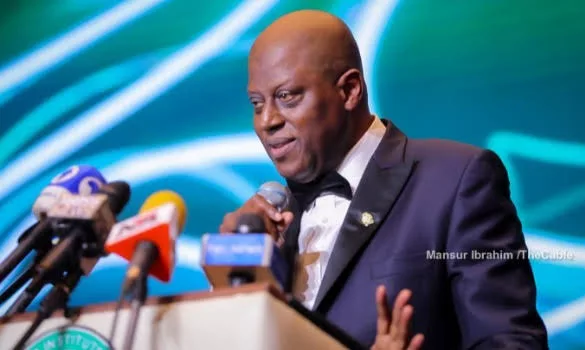
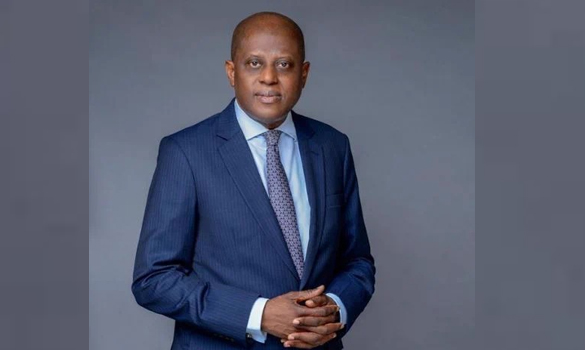
    CBN Governor Olayemi Cardoso announced the decision on Tuesday after the Monetary Policy Committee concluded its two-day meeting in Abuja.

    The reduction is the largest single cut in the current monetary policy cycle and came amid easing inflation, stronger external reserves and improved conditions in the foreign exchange market. Reuters reported that economists surveyed ahead of the meeting had expected the CBN to leave the rate unchanged at 26.5 per cent.

    The decision has raised expectations that borrowing costs could gradually decline for businesses and other private-sector operators, although the extent and speed of any reduction in lending rates will depend on how commercial banks transmit the policy change to customers.

    Cardoso, however, said the decision should not be interpreted as a broad shift towards monetary easing. He described it as a “reset and recalibration” aimed principally at improving the way monetary policy decisions are transmitted through the financial system.

    The MPC also adjusted the Standing Facilities Corridor around the MPR while retaining the Cash Reserve Requirement at 45 per cent for Deposit Money Banks, 16 per cent for Merchant Banks and 75 per cent for non-Treasury Single Account public-sector deposits.

    According to Cardoso, the adjustment was designed to strengthen the effectiveness of monetary policy and restore the MPR as the central signal for interest rates in the economy.

    The governor said the committee had observed a disconnect between the MPR and prevailing money-market rates, which had weakened the transmission of previous policy decisions.

    He said the CBN’s ongoing changes to its monetary policy framework, including the use of the Nigerian Overnight Financing Rate as a transaction-based benchmark, were intended to improve transparency and strengthen the link between policy decisions and market rates.

    ### Inflation And External Position Support Rate Cut

    The latest decision followed a period of moderation in inflation and improvements in Nigeria’s external position.

    Nigeria’s headline inflation eased to 15.39 per cent in August 2026 from 15.43 per cent in July, according to the latest figures reported following the release of the Consumer Price Index.

    The MPC also noted an improvement in the country’s balance of payments position, with the surplus rising to $3.51 billion in the second quarter of 2026 from $2.38 billion in the first quarter.

    The current account surplus also increased to $7.54 billion in the second quarter from $4.49 billion in the preceding quarter.

    The committee said three consecutive months of declining headline inflation, relative exchange-rate stability and stronger external buffers had created room for the policy framework to be recalibrated.

    It also pointed to improved investor confidence and strengthening external-sector fundamentals as factors supporting the decision.

    ### Cardoso Says Tightening Cycle Has Worked

    Cardoso said the series of monetary tightening measures introduced by the CBN had achieved their primary objectives of helping to moderate inflation and stabilise the macroeconomic environment.

    “The tightening that we have done, in our view, has done its job. It has worked,” the governor said.

    He stressed that the latest decision should not be viewed as the beginning of an unrestricted easing cycle.

    “We should not see this as an easing. This is a reset and a recalibration,” he said.

    The governor said the CBN would continue to monitor economic developments and maintain a restrictive policy approach where necessary to protect the gains made in reducing inflation.

    ### Private Sector Welcomes Decision

    Business groups and economic analysts have welcomed the reduction, although some said the size of the cut came as a surprise.

    The Lagos Chamber of Commerce and Industry, Financial Derivatives Company, the Centre for the Promotion of Private Enterprise, the Nigeria Employers’ Consultative Association and other private-sector stakeholders said the lower policy rate could improve access to credit and support productive activities.

    The stakeholders said cheaper financing could benefit manufacturers and other businesses by reducing the cost of capital, potentially supporting investment and employment.

    The CBN’s decision has also renewed discussions about how quickly banks and other financial institutions will adjust their lending rates following the reduction in the policy rate.

    ### CBN Highlights Three Years Of Reforms

    Cardoso also used the briefing to highlight reforms implemented since he assumed office in 2023, including changes to the foreign exchange market, monetary policy operations and the banking sector.

    He said the CBN inherited an economy facing significant currency instability, multiple foreign exchange rates, high liquidity and weakened investor confidence.

    According to the governor, the reforms were aimed at returning the central bank to its core mandate of maintaining price and financial stability.

    He defended the unification of the foreign exchange market, saying the previous multiple-rate system created distortions and imposed significant costs on the economy.

    Cardoso also pointed to the recapitalisation of the banking sector, saying the exercise had attracted additional capital and positioned banks to support economic expansion.

    The governor said Nigeria’s gross external reserves had risen above $55 billion, describing the level as the highest in more than 18 years.

    ### Remittances Boost External Reserves

    Cardoso attributed part of the improvement in Nigeria’s external position to stronger diaspora remittances.

    He said monthly remittance inflows had increased from about $200 million when the CBN began efforts to encourage greater formal remittance flows to nearly $1 billion by July.

    The governor said the central bank would continue engaging Nigerians living abroad and other stakeholders to sustain the increase in remittance inflows.

    He also linked Nigeria’s return to major global investment indices, including developments involving FTSE Russell and JPMorgan, to improved international investor confidence.

    ### Fiscal And Monetary Authorities Strengthen Coordination

    The CBN governor also highlighted the recent fiscal-monetary coordination agreement between the Central Bank and the Federal Ministry of Finance.

    He said the Memorandum of Understanding was designed to institutionalise cooperation between fiscal and monetary authorities rather than leave coordination to individual relationships.

    Cardoso said closer cooperation would be particularly important as Nigeria moves towards an inflation-targeting framework, noting that controlling inflation would require coordinated action beyond monetary policy alone.

    ### CBN Prepares For Election-Year Liquidity

    With Nigeria approaching another political and electoral cycle, Cardoso said the CBN was preparing for possible changes in currency demand and liquidity conditions.

    He said the bank would monitor currency in circulation, banking-sector liquidity, monetary aggregates and foreign exchange demand while deploying appropriate liquidity-management tools when necessary.

    The governor assured Nigerians that the CBN would ensure adequate availability of currency while enforcing existing limits and working with law-enforcement agencies to tackle currency abuse.

  • FG, CBN Sign Pact to Coordinate Inflation, Debt and Forex Policies

    FG, CBN Sign Pact to Coordinate Inflation, Debt and Forex Policies

    Precious Nwonu, Enugu

    The Federal Government and the Central Bank of Nigeria have entered into a new agreement aimed at improving coordination on inflation, public borrowing, debt management, liquidity and foreign exchange.

    The Memorandum of Understanding on Fiscal-Monetary Policy Coordination was signed in Abuja on Friday by the Federal Ministry of Finance and the CBN.

    The agreement establishes a formal mechanism for both institutions to exchange information and coordinate economic policies while preserving the operational independence of the apex bank.

    Speaking at the signing, CBN Governor, Olayemi Cardoso, said the framework would strengthen cooperation in government cash management, debt issuance, liquidity forecasting, macroeconomic analysis and policy consultations.

    He said fiscal and monetary policies were closely connected, noting that government spending, taxation and borrowing decisions could affect economic activity, while monetary policy influenced liquidity, interest rates and price stability.

    Cardoso said the agreement was particularly important as the CBN continued its transition towards an inflation-targeting framework.

    He explained that achieving the objectives of inflation targeting required effective monetary policy alongside fiscal policies that supported price stability.

    According to him, the Federal Ministry of Finance and the CBN had collaborated over the years on issues including inflation management, debt sustainability, budget financing, exchange rate stability and responses to economic shocks.

    He said the new agreement would formalise and strengthen that cooperation.

    The Minister of Finance and Coordinating Minister of the Economy, Taiwo Oyedele, said the framework was intended to ensure that fiscal and monetary policies worked in the same direction.

    Oyedele, however, stressed that increased coordination would not compromise the CBN’s autonomy.

    “The operational independence of the Central Bank remains sacrosanct. Coordination must never become fiscal dominance. The CBN will retain full independence in pursuing price and financial-system stability,” he said.

    The minister said the government was targeting a sustainable reduction in inflation to single digits, adding that monetary policy alone could not resolve the country’s inflationary pressures.

    “Our objective is to bring inflation sustainably into single digits and keep it there, and that cannot be monetary policy’s job alone,” Oyedele said.

    He identified food prices, import costs, energy and logistics as some of the structural factors driving inflation.

    Oyedele said the government would therefore focus on measures including strengthening grain reserves, improving agricultural yields, expanding irrigation and developing access roads to farms.

    He also ruled out a return to fuel subsidy, arguing that such a policy could put additional pressure on government finances and the naira.

    “A return to subsidy would create a fiscal collapse, pressure the naira, and ultimately undermine the price affordability it seeks to provide,” he said.

    Under the new framework, the Finance Ministry and the CBN are expected to improve the sharing of information on government cash positions, borrowing plans, credit growth and foreign exchange flows.

    The CBN Deputy Governor, Corporate Services Directorate, Dr Muhammad Abdullahi, said the agreement was particularly relevant amid global economic uncertainty and geopolitical tensions.

    He cited potential disruptions to energy and shipping routes in the Middle East, saying such developments could affect oil prices, government revenues, inflation, capital flows and financing conditions simultaneously.

    “This is why coordination matters. Coordination does not mean blurring respective mandates or compromising the independence required for effective monetary policy,” Abdullahi said.

    He said the framework would facilitate regular consultations, information sharing, joint technical analysis, scenario planning and stress testing.

    Abdullahi added that the two institutions would be better positioned to assess the impact of changes in oil prices and production on government revenue, foreign exchange inflows, external reserves, inflation, liquidity and financing conditions.

    “Uncertainty is not an argument for waiting; it is an argument for preparedness,” he said.

    Also speaking, the Permanent Secretary of the Federal Ministry of Finance, Raymond Omachi, said the agreement was designed to balance inflation control with economic growth.

    Omachi said government spending would need to be managed carefully to avoid adding to inflationary pressures, while monetary tightening should not unnecessarily restrict economic growth and employment.

    “The core objective of the framework is inflation and growth balance,” he said.

    He added that the arrangement would help align government borrowing plans with money-market liquidity management, with the aim of reducing the risk of public borrowing crowding out private-sector credit.

    The permanent secretary said the framework would also cover exchange-rate and revenue stability, foreign exchange management, resilience to external shocks and regular data exchange between the government and the CBN.

  • CBN Steps Up Bank Checks to Block Terrorism Financing

    CBN Steps Up Bank Checks to Block Terrorism Financing

    Precious Nwonu, Enugu

    The Central Bank of Nigeria (CBN) has rolled out a stronger supervisory framework aimed at deterring the use of Nigerian banks and financial institutions for terrorism financing and other financial abuses.

    In an official statement, the apex bank’s Acting Director of the Corporate Communications and Investor Relations Department, Hakama Sidi-Ali, announced that the CBN has made terrorism financing supervision one of its foremost current priorities. This aggressive focus forms part of the bank’s ongoing commitment to thoroughly protect the Nigerian financial system from abuse by illicit actors.

    Sidi-Ali explained that this newly reinforced push explicitly covers four broad operational areas: how financial institutions manage terrorism financing risk, how they monitor transactions for signs of terrorism financing, how they execute targeted financial sanctions, and how they report suspicious transactions linked to terrorism. Rather than sitting back and waiting for problems to surface on their own, the apex bank plans to implement a strict, risk-based approach, ensuring that banks and institutions seen as more exposed to these risks will attract closer supervisory attention.

    “This supervisory focus also supports Nigeria’s ongoing domestic and international cooperation on counter-terrorism financing, counter-proliferation financing, financial integrity, and the protection of the financial system. Further supervisory engagement will be undertaken as appropriate,” Sidi-Ali stated.

    According to her, the bank will continue to apply a risk-based supervisory approach, utilizing both on-site and off-site engagements.

    This strategy is designed to enforce highly effective Anti-Money Laundering, Combating the Financing of Terrorism, and Countering Proliferation Financing (AML/CFT/CPF) controls across the financial sector, in strict alignment with existing legal and regulatory obligations. She added that further supervisory engagement will be undertaken as appropriate, indicating that additional enforcement steps could follow depending on what the CBN’s checks turn up.

    In tandem with these regulations and in line with the provisions of the Terrorism Prevention and Prohibition Act (TPPA), 2022, the Nigeria Sanctions Committee (NSC) recently designated six individuals and three entities as terrorist financiers, subsequently adding them to the official Nigeria Sanctions List.

  • UPDATED: Only CBN, not Banks, will be able to accept old naira after deadline, ‘Subject To Certain Conditions’

    UPDATED: Only CBN, not Banks, will be able to accept old naira after deadline, ‘Subject To Certain Conditions’

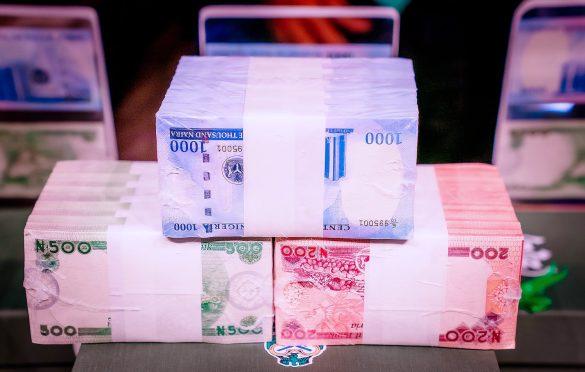
    The Central Bank of Nigeria (CBN) has clarified it’s position on the legal status of the old series of the N1,000, N500, N200 banknotes after the February 10 deadline for depositing the affected banknotes.

    The Director, Corporate Communication Department of the CBN, Mr Osita Nwanisobi, while speaking with newsmen on Tuesday in Abuja, explained that the old notes will cease to be legal tender after February 10, 2023, and would no longer be used for any form of transactions afterwards.

    Only CBN Will Accept Old Notes After Deadline

    Nwanisobi said after the deadline, Nigerians will be able to redeem the face value of the Naira only at the CBN and not at commercial banks, in line with the provision of section 20(3) of the CBN Act. He also added that the acceptance will be subject to meeting certain conditions.

    Re-emphasizing the pledge of the CBN Governor, Mr.Godwin Emefiele, at the meeting with the House of Representatives Ad-hoc committee on Tuesday, Nwanisobi said Nigerians would not lose their money, even as he urged citizens to take advantage of the extended deadline to deposit the old banknotes.

    The duration for the acceptance of the old notes after the expiration of the deadline was, however, not stated.

    While citing instances from other climes, Nwanisobi explained that banknotes that cease to be legal tender are only redeemable by the monetary authorities of such jurisdictions upon demand subject to conditions/processes as may be prescribed by that Central Bank.

    He further encourage Nigerians to adopt other payment channels for transactions, stressing that Nigeria’s payment system is robust enough and ranks amongst the first in the world.

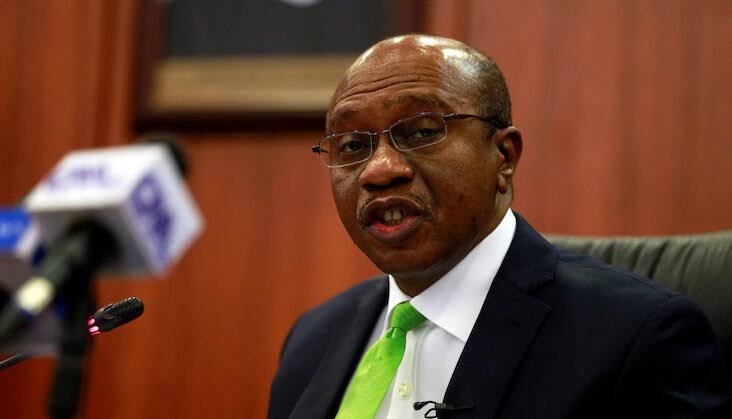
    Earlier on Tuesday, Emefiele appeared before the House of Representatives Adhoc Committee on naira swap months after the invitation by lower chamber and days after the Speaker of the House, Femi Gbajabiamila threatened to issue an arrest warrant on the apex bank chief.

    The CBN chief told the committee that the old notes would be accepted after the February 10 deadline.

    (Arise News/Pacesetter/Channels)

  • NBA Writes Emefiele, states CBN’s Statutory Obligation To Redeem Old Banknotes After January 31

    Maikyau expressed what he described as telling concerns about the fate of Nigerians with the old currency past the deadline, saying, “The law is clear on this issue.”

    The Nigerian Bar Association (NBA) says the Central Bank of Nigeria (CBN) is under statutory obligation to redeem the old N200, N500, and N1,000 banknotes after the January 31 deadline.

    The apex bank has however remained unequivocal about its decision that only the redesigned currency will be legal tender after the date.

    But the NBA President, Yakubu Maikyau, SAN, in a letter addressed to the CBN Governor, Godwin Emefiele, insisted that the law allows Nigerians to redeem their old naira notes at the CBN.

    According to a statement by the NBA’s National Publicity Secretary, Akorede Lawal, on Saturday, Maikyau expressed what he described as telling concerns about the fate of Nigerians with the old currency past the January 31, 2023 deadline, saying, “The law is clear on this issue.”

    He cited the provisions of Section 20 (3) of the CBN Act which he said provides that “notwithstanding Sub-sections (1) and (2) of this section, the Bank shall have power, if directed to do so by the President and after giving reasonable notice in that behalf, to call in any of its notes or coins on payment of the face value thereof and any note or coin with respect to which a notice has been given under this Sub-section, shall, on the expiration of the notice, cease to be legal tender, but, subject to section 22 of this Act, shall be redeemed by the Bank upon demand.”

    The NBA President noted that “any person who shall be in possession of the old notes which have ceased to be legal tender by 31 January 2023 is at liberty to approach the CBN and demand for the redemption of the notes and the CBN is under statutory obligation to ‘redeem’ the notes.”

    In view of the dearth of information in this regard, the NBA President added that “our recommendation, on this issue is that in addition to educating Nigerians on demonetisation itself, a campaign on what happens to old bank notes after 31 January should be launched so as to adequately inform the public on what to do and prevent or reverse the rising panic or agitations caused by concerns about the inability of Nigerians to swap their old notes for the new notes by 31 January.”

    See the full statement below:

    PRESS RELEASE

    CBN DEMONETISATION POLICY:

    *NBA PRESIDENT WRITES CBN GOVERNOR,

    *MEETS MINISTER OF FINANCE,

    *APPEALS FOR URGENT REVIEW OF POLICY,

    *SAYS PRESIDENT BUHARI MAY HAVE BEEN WRONGLY ADVISED, INSISTS THE LAW ALLOWS NIGERIANS TO DEMAND CBN TO REDEEM OLD NOTES AFTER THE JANUARY 31 DEADLINE

    In reaction to the demonetisation policy of the Central Bank of Nigeria (CBN) which directs that the old naira notes (N100, N200, N500 and N1000) will cease to be legal tender in Nigeria from February, 2023, the Nigerian Bar Association (NBA) has insisted that the law allows Nigerians to redeem their old naira notes at the CBN even after the January 31, 2023 deadline set by the apex bank.

    The NBA has also appealed for the urgent review of the demonetisation policy of the CBN.

    The NBA’s appeal is contained in a letter signed by the NBA President, Mr. Yakubu Chonoko Maikyau, OON, SAN and addressed to the CBN Governor, Mr. Godwin Emefiele.

    While acknowledging that the policy is laudable as it has the potential to stem corruption, votes buying and other criminal activities, the NBA President noted that “the necessary logistical, infrastructural and manpower support, required for the successful implementation of the policy are in short supply and should be greatly improved upon if they are to be leveraged for full implementation of the policy with minimal loss or economic hardship.”

    In the letter, the NBA President expressed the telling concerns that there is no information in the public domain as to what would happen to the old currency in possession of Nigerians, by or after the 31 January 2023, even as the law is clear on this issue. Quoting the provisions of Section 20 (3) of the CBN Act which provides that

    “notwithstanding Sub-sections (1) and (2) of this section, the Bank shall have power, if directed to do so by the President and after giving reasonable notice in that behalf, to call in any of its notes or coins on payment of the face value thereof and any note or coin with respect to which a notice has been given under this Sub-section, shall, on the expiration of the notice, cease to be legal tender, but, subject to section 22 of this Act, shall be redeemed by the Bank upon demand”, Mr. Maikyau noted that “any person who shall be in possession of the old notes which have ceased to be legal tender by 31 January 2023 is at liberty to approach the CBN and demand for the redemption of the notes and the CBN is under statutory obligation to “redeem” the notes.”

    In view of the dearth of information in this regard, the NBA President added that “our recommendation, on this issue is that in addition to educating Nigerians on demonetisation itself, a campaign on what happens to old bank notes after 31 January should be launched so as to adequately inform the public on what to do and prevent or reverse the rising panic or agitations caused by concerns about the inability of Nigerians to swap their old notes for the new notes by 31 January.”

    In a related development, the NBA President on Friday paid a courtesy call on the Minister of Finance, Budget and National Planning, Dr. Zainab Shamsuna Ahmed in Abuja and relayed the concerns of the Nigerian people over the demonetisation policy of the CBN, particularly in view of the scarcity of the new notes and the difficulty Nigerians are encountering in swapping the old notes .

    The NBA President informed the Minister that he directed the chairmen of the 128 branches of the NBA to survey and assess the impact of the policy on Nigerians in their respective jurisdictions and the aggregate of report thus far indicated that banking facilities are being overstretched and citizens are uncertain about the policy.

    Mr. Maikyau noted that the worse hit are the under-privileged citizens whose life asset may not be up to N10,000 and who do not have access to the new notes and may therefore be denied of their hard earned money in the old naira notes.

    The NBA President recalled that the Government ought to avoid the repeat of the harsh experiences of Nigerians in 1984 when a similar demonietisation policy reportedly claimed the life of a trader who committed suicide because he was stranded with about NGN 200,000 of the old notes.

    While addressing the Minister, Mr. Maikyau stressed that “President Buhari may have been wrongly advised on the policy because by the provisions of the CBN Act the power of the CBN to call in any of its notes or coins otherwise described as demonetisation, can only become operational upon the directive of the President after giving reasonable notice for the recall.

    From the clear wording of the section, these two conditions must coexist before the power to call any of the notes or coins by the CBN can crystallise. The questions that have trailed this policy from our consultations include; “was there a directive of the President? And where there was one, could it be said that the notice, given the prevailing circumstances was reasonable ? The questions seek to interrogate the process leading to the policy and justify the need for extension of the timelines for its implementation.”

    Speaking of the condition of reasonable time as provided for in the law, the NBA President added that while the CBN for the first time announced the policy in October 2022, citizens have only been given a mere 45 days to swap naira notes, since the new naira notes only became available from December 15, 2022. Mr. Maikyau noted that when a similar policy was introduced in an advanced economy as United Kingdom’s, the government had announced a date for demonetisation 18 months in advance.

    In her response, the Minister of Finance commended the NBA for being the first professional body to express concern over the issue, particularly as it relates to the provisions of Section 20 (3) of the CBN Act which allows Nigerians to approach the CBN to redeem their old currency notes even after the deadline. She added that the government is aware of the concerns over the policy and that the ministry would reach out to the CBN in a bid to consider revisiting the January 31 terminal date of the demonetisation policy.

    Akorede Habeeb Lawal

    National Publicity Secretary, NBA

    (Channels TV)

  • NASS at war with CBN over old naira notes deadline

    NASS at war with CBN over old naira notes deadline

    The two arms of the National Assembly, the Senate and the House of Representatives, yesterday asked the Central Bank of Nigeria, CBN, to extend the deadline for the usage of old naira notes beyond the January 31 target set by the apex bank.

    While the Senate asked that the deadline be extended to July 31, the lower chamber said it should be extended to June.

    But the governor of the CBN, Godwin Emefiele, said yesterday that the January 31 deadline remained sacrosanct.

    The Senate at plenary yesterday also urged the CBN to open an exchange window where people without bank accounts could deposit their old notes.

    The resolution of the Senate was a sequel to a motion by Senator Sadiq Umar, APC, Kwara North, who demanded the extension to July 31, said he was worried by the insistence of the apex bank that there would be no extension.

    Recall that CBN had on October last year, said the old naira notes would seize to be legal tender as of January 31, but the Senate in December passed a resolution urging the apex bank to extend the deadline to June 30.

    Moving the motion, Umar recalled that the Senate in its resolution on Dec. 28, 2022, urged the CBN to extend the use of the old notes from Jan. 31 to June 30, but noted, however, that the apex bank had insisted on terminating the use of the old naira notes by end of January.

    Umar, who lamented that there weren’t enough new naira notes in circulation, moved that the deadline be extended to July 31.

    He said: “Experiences around the world have shown that such abrupt decisions, if not controlled, usually created chaos. The Senate should extend the use of the old notes to July 31.”

    In their contributions, most senators overwhelmingly threw their weight behind the extension, citing scarcity of the new notes, both in the banks and at the various Automated Teller Machine points across the country.

    Supporting the motion, Senator Ibrahim Hadejia, APC-Jigawa North East, said the call for extension was for their constituents and not their (lawmakers’) personal benefits.

    He said: “ In my constituency, no Automated Teller Machine, ATM, is dispensing the new notes.”.

    On his part, Senator Adamu Aliero, PDP, Kebbi Central, said the policy would inflict untold hardship on people living in the rural areas, insisting that the CBN governor be invited by the Senate.

    Also contributing, Senator Adamu Bulkachuwa, PDP-Bauchi North, said the extension was necessary, otherwise, there would be chaos.

    We’ve not seen new notes

    In her contribution, Senator Biodun Olujimi, PDP, Ekiti South, who lamented that in her local government area, about 90 per cent of the people had not seen the new naira notes, called on the apex bank to “look away from the elections”.

    She said if the date was not extended, it would lead to collateral damage which would not augur well for the economy.

    On his part, Senator Ali Ndume, APC, Borno South, called on the Senate to use its oversight responsibility on the CBN to order the CBN governor to extend the date.

    He said the power of the Senate should not be played down and called on senators to stand firm on the call for an extension.

    For Senator Sam Egwu, PDP-Ebonyi North, who was the only senator that opposed the motion, “Nigerians do not have the culture of keeping their money in the bank. It is in Nigeria cash is used arbitrarily; other countries use electronic means. Nigerians are just averse to change.”

    In his remarks, the President of the Senate, Senator Ahmad Lawan, noted that most of the senatorial districts did not have banks.

    He said: “In rural Nigeria, there are no banks and people transact businesses with cash more often. There is no doubt that we must have a window for exchange. We must have policies by the CBN to have bank branches established in rural areas. We need this extension for most ordinary Nigerians.”

    Lawan then put the prayers in the motion to vote and the lawmakers voted in support of the extension of the deadline from January 31 to July 31.

    Reps angry, invite banks’ CEOs today

    On its part, the House of Representatives did not only call for an extension of the deadline but also at plenary yesterday, resolved to meet with the chief executive officers of commercial banks today.

    The meeting, according to the House, is essential to ascertain the true position on the availability of the new naira notes of N200, N500 and N1000 which the CBN said were available.

    Consequently, the lower legislative chamber set up an Adhoc committee, chaired by the leader of the House, Ado Doguwa, to meet with the stakeholders. The House also urged the CBN to extend the deadline for the use of the old notes by six months.

    The resolution was a sequel to the consideration and adoption of a motion moved by Sada Soli under matters of urgent public importance.

    Senate moves motion

    Presenting the motion, Soli noted that pursuant to Section 2, paragraphs (a) and (d) of the Central Bank of Nigeria (Establishment) Act, 2007, the objects of the Central Bank of Nigeria shall be to ensure monetary and price stability, and promote a sound financial system in Nigeria.

    He also noted that banks were places people kept their money for safety and expected to withdraw the same when needed.

    Soli:said: “In December 2022, the House of Representatives invited the CBN governor to discuss the cashless policy and introduction of the redesigned N200, N500 and N1,000 notes. The cashless policy is in tandem with global best practices.

    “The House is also aware that for such a policy to be successful, it should not be overbearing on the people and the economy.

    “The financial institutions in Nigeria lack the infrastructure to handle a sudden increase in customer base as well as adequate employees to handle any challenges that could arise in the process of implementing the cashless policy within the limited time given by the CBN.

    “Banks and POS outlets are struggling with a shortage of the redesigned new Naira notes, ahead of the CBN deadline of January 31, 2023, consequently making it difficult for them to comply with the CBN directives as regards availability of the new notes for customers. “Despite several concerns and appeals by the National Assembly, the Governors Forum, the Bank Customers Association of Nigeria, and a host of other stakeholders in the country for the CBN to extend the period for the currency swap of the new Naira notes as well as a review of the cashless policy, the CBN has remained adamant on the given deadline.

    “Due to inadequate sensitization and the rush in the implementation of the policy, the country is exposed to a situation where businesses are rejecting the old currency, even in the face of unavailability of the redesigned new Naira notes. “As a result of the rigidity in the implementation of the policy, there is a tendency of decline in the economy if cash withdrawals are delayed due to short supply of the new Naira notes;

    ‘’Cognizant that in order for the policy to be successful and acceptable, the CBN should keep their relationship closer to reality, rather than theorized assumptions.

    “In global best practices, currencies are phased out, not forced out, thus adequate time is required for such policy.

    “The policy, though a good one, is not fair on the incoming government which will require a smooth transition, which will help to promote a sound financial system in the country.

    “Coercing the people to accept the new CBN policy within such a timeframe will pose serious monetary challenges and impact negatively on microeconomic activities across the country.”

    Also speaking, Ahmed Jaha from Borno State said that January 31 deadline would exclude his constituents from the policy.

    “I just came back from my constituency. I want to commend the CBN for taking certain steps in my constituency. CBN staff are in my constituency since yesterday. They went there with some amount to swap the old notes.

    ‘’I realized it’s a very good move but I equally realized that the amount taken there is not enough to swap the available currency. I want Nigerians to come to our rescue. If on January 31, these currencies are swapped, definitely, we have a lot to lose. Please, support this motion so that our people can have a sense of belonging,” he said.

    Timing not palatable — Gbajabiamila

    In his remarks, the speaker of the House, Femi Gbajabiamila, who presided over the plenary, said though the policy was good, its timing for implementation was not palatable.

    He agreed to an amendment earlier proposed by Obinna Chidoka that the bank executives be invited for questioning.

    “CBN has been making spirited efforts to try and educate people out there. I was in the Central mosque in Lagos last week and they came into the mosque to sensitize some people. But I’m not sure it’s enough, the problem seems to be hydra-headed.

    ‘’Certain things should have been put in place before the policy was rolled out. As good as it is, the modus and timing are what we have a problem with.

    “Based on what we are hearing all over the place, in newspaper publications, there’s a need to review the policy, there’s nothing wrong with reviewing a policy. Banks are saying they don’t have the money, CBN is saying you have the money, and we will penalize you if you give our old notes.

    ‘’We need to invite bank managing directors to brief an Adhoc committee to find out the truth about these new notes, and why they are not available. Somebody is not telling us the full story, is it the banks or CBN?.

    “We will set up an Adhoc committee under the leadership of the House leader to meet with the operators tomorrow (today) and subsequently with the CBN,” Gbajabiamila said. The motion was later adopted by the House after a favourable vote by a majority of the lawmakers.

    January 31 deadline for old notes remains – Emefiele

    But reacting to NASS’ call yesterday at the Monetary Policy Committee, MPC, meeting in Abuja, the governor of the Central Bank of Nigeria, CBN, Mr. Godwin Emefiele, said the January 31 deadline to stop the circulation of old Naira notes remained sacrosanct.

    According to him, the 90 days window given by the CBN for Nigerians to deposit their old currencies was enough.

    He said: “We called on the Deposit Money Banks, DMBs, to extend their working hours, and to work on weekends. There is no reason to talk about a shift. The new currencies are available.’’

    Emefiele said the apex bank had mandated the DMBs to feed the new notes into their Automated Teller Machines, ATMs, for Nigerians to have equal access.

    “We have increased disbursement of the new notes to them. There is an adequate quantity of new notes available.

    “Our mint is producing and we are supplying the banks. We have super agents in underserved areas like riverine communities, and CBN staff members have been out on mobilization.

    “We believe that by January 31, the new naira notes would have permeated the nooks and crannies of the country,” he said. The CBN governor said that the apex bank had so far received about N1.5 trillion of the old Naira notes.

    He urged Nigerians to accelerate the process of taking their old notes to the banks before the deadline, adding that they should not fear harassment by security agents.

    “We have begged the EFCC and the ICPC to allow Nigerians to deposit their old Naira notes,” he said.

    (Vanguard)

  • Emefiele to meet with Govs over withdrawal limit

    Emefiele to meet with Govs over withdrawal limit

    Governors of the 36 states have planned to meet with the Governor of the Central Bank of Nigeria, Godwin Emefiele, on Thursday over the present withdrawal policy and the redesigned naira notes.

    The governors under the auspices of the Nigeria Governors’ Forum through its spokesperson, Abdulrazaque Bello-Barkindo, in a statement Tuesday night said the governors would exchange ideas with Emefiele on “the economic and security implications of the current withdrawal policy and naira redesign.

    On October 26, 2022, the CBN disclosed its decision to redesign the naira notes and subsequently directed Nigerians to change their naira notes from the banks on or before January 31, 2023.

    Spokesperson Bello-Barkindo said the Chairman of the NGF, who is the Sokoto State Governor, Aminu Tambuwal, had invited Emefiele to meet with the governors on Thursday at 9:00 pm, virtually.

    The spokesperson while referring to the NGF’s Director General, Mr. Asishana Okauru, noted that the virtual meeting would focus on the latest apex bank’s withdrawal policy and naira redesign.

    He said, “For the virtual meeting, the agenda is titled, “The Economic and Security implications of naira redesign and withdrawal policy.

    “The discussion promises to foster participation and dialogue between various stakeholders including governments and civil society organisations to come up with a solution to the lingering issue.”

    The reporter reported how the CBN pegged the maximum weekly limit for cash withdrawals across by individuals and corporate organisations to N500,000 and N5 million, respectively.

    Initially, the CBN reduced the weekly over-the-counter cash withdrawal limit for individuals to N100,000 and that of corporate organisations to N500,000.

    It also reduced withdrawals at Automated Teller Machines and point-of-sale terminals to N20,000 daily.

    (Punch)

  • Service Chief’s intervention saves Emefiele from arrest as he arrives from vacation, resumes work -Source

    Service Chief’s intervention saves Emefiele from arrest as he arrives from vacation, resumes work -Source

    The intervention of one of the Service Chiefs yesterday saved Governor of the Central Bank of Nigeria, (CBN) Mr. Godwin Emefiele, from arrest upon return to Nigeria from his annual vacation abroad.

    This is coming at a time the Directorate of State Services (DSS) denied ever storming the CBN headquarters to arrest Emefiele, with the apex bank spokesman saying he had resumed duty.

    Since Emefiele travelled overseas for his leave, there had been confusion and anxiety, triggered by the DSS’ attempt to get a court warrant to arrest him on allegation of terrorism financing.

    Daily Sun gathered that the Service Chief had got an approval for the jet that brought Emefiele back to the country to land at the private wing of the Murtala Muhammed International Airport, Lagos, where military men had been positioned.

    The presence of the military men had prevented any move by the DSS to attempt arresting the CBN governor.

    Sources revealed, however, that some top officials at the DSS had given the resignation of Emefiele as condition for him to be let off their hook and end the controversy, with pressures mounting for his sack.

    Meanwhile, the Senate said it is eagerly awaiting the CBN Governor to submit documents relating to the Ways and Means of the apex bank. Competent sources told Daily Sun that senators had vowed not to approve the 2023 budget until they see documents on the CBN loans with which the Federal Government financed budget shortfalls. Statistics showed that the Ways and Means’ debt rose from N17. 5 trillion in December 2021 to N23. 8 trillion in October 2022.

    To further quell the controversies over the Emefiele’s overseas’ spell, Osita Nwanisobi, CBN Director, Corporate Communications, said the governor proceeded on leave in December 2022 and resumed work on Monday (yesterday).

    The statement said: “The governor resumed with renewed vigour to perform his duty ahead of the first Monetary Policy Committee (MPC) meeting of the year scheduled for January 23 to 24, 2023.

    “Mr. Emefiele remains committed to performing the task before him, in line with his oath of office and the policy direction of President Muhammadu Buhari.

    “While thanking the public for keeping faith with the bank, we urge Nigerians to continue to support the policies of the bank aimed at ensuring a stable financial system and the Nigerian economy in general.”

    Also yesterday, the DSS denied rumours that its operatives stormed the CBN headquarters to effect Emefiele’s arrest.

    The Public Relations Officer of DSS, Dr. Peter Afunanya, in a statement said: “The attention of the DSS has been drawn to the false news making the round that its operatives invaded the Central Bank of Nigeria and arrested its governor, today 16/1/23 (yesterday). This is fake news and quite misleading.”

    Emefiele and the DSS have been in court over allegations of terrorism financing, the nation’s secret police seeking court orders to arrest him upon his return to the country from his annual leave.

    But the FCT High Court in December 2022 declined the prayer and further barred the secret service from arresting, inviting, or detaining Emefiele.

    The Presidency has kept mum since the DSS-Emefiele face-off started, with no sign about what President Muhammadu Buhari wants to do on the matter. Sources however hinted that pressure is mounting on the Presidency to remove Emefiele from office, even when there has been no proof about the alleged against him.

    (Sun)

  • New naira: CBN under pressure to extend Jan 31 deadline

    New naira: CBN under pressure to extend Jan 31 deadline

    The Central Bank of Nigeria may be under pressure to extend the deadline for old naira notes to cease being legal tender as bankers and customers push for the extension.

    The old notes are expected to be out of circulation by January 31 yet there is scarcity of the new notes as banks keep dispensing old notes to their customers.

    The reporter gathered that different stakeholders had been mounting pressure on the apex bank to extend the deadline in order to allow the new notes to circulate well and ensure the mop up of the old notes.

    It was learnt that prominent among the stakeholders were managing directors of banks and their management teams, but a source close to the chief executive of a Tier-1 lender told one of our correspondents on Friday that the bank managing directors could not make the call for the deadline extension openly as the decision on the redesign of the naira had their approval.

    The source stated, “It is tue that the bank MDs are not comfortable with the fact that the new notes are not circulating the way they had anticipated, but they can’t publicly ask for an extension of the deadline as they were part of the decision to redesign the currency and withdraw the old notes from circulation.

    “However, because of the failure of the CBN to supply enough new notes and the pressure this is putting on their banks, the managing directors are lobbying the apex bank to consider the extension of the deadline through the backdoor via the auspices of the Bankers’ Committee. It is a sensitive issue.”

    A senior CBN official on Friday confided in Saturday PUNCH that the apex bank might yield to the pressure for extension of the deadline.

    According to him, a new date may be announced before or during the CBN Monetary Policy Committee meeting coming up on Wednesday, January 25, 2023.

    He stated, “It is clear that the CBN has not supplied sufficient new currency notes to the banks. Even many of us in the CBN have not seen the new notes. The absence of the CBN governor has also clouded the issue and that is why no statement has been made regarding the extension of the deadline.

    “From the look of things, most certainly, a new deadline may be announced before the end of the month or during the MPC meeting coming up between January 24 and 25.”

    A bank manager in the Ikeja area of Lagos, who spoke on condition of anonymity because she was not authorised to talk to the media, stated, “We have been mandated to load all our machines with the redesigned naira notes, but we still don’t have much of the notes in circulation to load in all the machines across the country. What we have agreed is that at least one machine must be loaded in all locations with the new naira notes, because CBN officials have started moving around banks to confirm the level of compliance.

    “Two of the CBN officials visited one of our branches today (Thursday) and asked questions if the bank ATMs were dispensing new notes; they also joined the custodians in the ATM room in loading the machines and confirmed that the new notes were being dispensed to customers; they went ahead to ask why some machines were still dispensing old notes and the response given was that the new notes supplied were not enough.

    “They requested the evidence of cash supplied from our bullion team and ensured that the same was loaded in the ATMs as we have been mandated not to pay any single note across the counter.”

    NUBIFIE seeks extension

    Similarly, the National President, Nigeria Union of Banks, Insurance and Financial Institutions Employees, Anthony Abakpa, stressed the need for the CBN to extend the deadline.

    He said, “We would have loved for an extension on the deadline that the CBN has issued for those who are underprivileged and those who live in rural areas where there are no banks and they have to travel a distance before they can carry out banking transactions even on the PoS. We will also love it if they can extend it for every individual to be able to deposit their old notes.

    “We advise that there should be a little extension like a month so that everybody can deposit the old notes.”

    He noted that to a large extent, most of the Automated Teller Machines in Lagos had started dispensing new notes.

    However, when one of our correspondents informed him that ATMs in Abuja were dispensing old notes, Abakpa described the situation as abnormal and said NUBIFIE should be notified about such banks so that necessary action could be taken.

    Customers lament scarcity

    Findings by the reporter showed that Deposit Money Banks had not received sufficient new naira notes to satisfy their customers.

    Customers at the GTBank, Sauka branch in the Federal Capital Territory expressed dissatisfaction with the continued circulation of the old notes despite directives by the CBN to load the new notes in ATMs.

    Our correspondents observed that customers, who as early as 9am on Friday, were in a queue but could only obtain the new notes, while many customers trooped into the banking halls to deposit old notes.

    A customer, Mohammed AbdulKadiri, who spoke to the reporter said he was expecting to withdraw the new notes but got dirty old notes when he visited the ATM gallery.

    He said, “The current situation is disheartening, it has never been like this. Normally, when you want to produce new notes, on the day of launching, all the banks will have the new notes to give out. By now, I thought we would have more of the new notes in circulation, but unfortunately, I withdrew old notes today.

    “Honestly, I still don’t know why they changed the notes. I feel more for traders in the markets because what this means is that by January 31, people will still be spending the old notes.”

    When one of our correspondents sought an explanation, an official of the bank branch directed that all enquiries should be directed to the corporate communications team based in Lagos.

    Another customer, who did not want her name in print, said it was frustrating as a merchant to deposit the old notes and still withdraw the old notes.

    She said, “I am tired of this new policy. I no longer keep large amounts of the old notes, but when I make withdrawals, I still get the old notes. It is frustrating. I hope that they will make the new notes surplus next week or at least extend the deadline.”

    The reporter visited ATM galleries of Access Bank, United Bank for Africa and Wema Bank located at the Federal Secretariat, Abuja.

    One of our correspondents observed that the ATMs were still dispensing the old naira notes in N500 and N1,000 denominations.

    At the GTB banking hall, cashiers were seen paying customers with the old naira notes.

    At the Access Bank ATM gallery, a customer who did not give his name lamented the scarcity of the new notes.

    However, he questioned the security personnel, asking why the ATM was still dispensing old notes despite the directive of the CBN for the banks to flood the machines with new notes.

    Similarly, the UBA ATM machine at the Federal Secretariat dispensed the old notes.

    A customer, who gave his name simply as Godswill, said, “If the government wants to approve the new naira, let it do that once and for all so that everyone can conveniently start getting it from the ATM.”

    However, the situation was slightly different in Lagos and some parts of Ogun State on Friday as some ATMs dispensed new notes, while others dispensed old notes and a mixture of both.

    Senate proposes deadline

    The Senate had urged the CBN to extend the withdrawal date of the old notes to June 30, 2023.

    The Senate resolution was sequel to a point of order raised by Senator Mohammed Ndume during plenary.

    Raising orders 41 and 51 of Senate Standing Rule, Ndume said the call for extension of the date should be considered as a matter of urgent national importance in order to forestall imminent hardship on Nigerians.

    CBN warns customers

    However, the apex bank is standing firm on the deadline for now.

    When contacted earlier by one of our correspondents, the Director of Corporate Communications, CBN, Mr Osita Nwanisobi, said the release of the new notes to banks was ongoing, adding that the process was still at the initial phase.

    The CBN, through its verified Twitter page @Cenbank, urged bank customers to return old notes to the banks before the deadline.

    The Twitter post read, “A reminder to the general public that the old series of N200, N500 and N1000 notes cease to be legal tender by January 31, 2023.

    “You are once again advised to return them to your bank before the deadline!”

    In December, the CBN said it had withdrawn more than N1tn out of the N3.23tn from circulation since the launch of new naira notes in a bid to move cash back into the banking system.

    NACCIMA wants N5,000

    The Director-General of the Nigerian Association of Chambers of Commerce, Industry, Mines and Agriculture, Olusola Obadimu, advised the Central Bank to extend the deadline if it could not meet up with the standard required to phase out the old notes.

    He noted that a new N5,000 note would have served the same objective, adding that phasing out the old notes might affect the economy if it was not seamless.

    He said, “The CBN set the deadline, so they just have to meet it. If they cannot, I am sure that they will find a way around it, probably to seek an extension of the deadline.

    “However, I think it would have been better if they had issued a N5,000 note due to the rising inflation rather than repainting the old notes. It would have achieved the same objective because all the people who stocked up the old notes would have brought them out in exchange for a new N5,000 note.

    “They would have also needed to print less because it is a higher denomination note, so the money they would have needed to spend would have been lower. Another thing is you can’t force people to go cashless, especially when the necessary infrastructure is not readily available. People are sovereign and they have a choice on how they want to run their lives. Going cashless is an option and not going cashless is another option.

    “The process of phasing out the old notes may have an impact on the economy if it is not done seamlessly. Remember, there was a time the N100 note was changed but it had no effect because of the way it was done. I think there is no need to panic yet since we still have about 18 more days to the deadline but the CBN must up their game on this matter.”

    ‘Don’t extend deadline’

    A financial analyst and Managing Director, Cowry Asset Management, Johnson Chukwu, said banks were not overwhelmed with the new currency demand if the CBN had given them enough new currencies to disburse, adding that the apex bank had the number of banking customers.

    He stated, “I don’t think the banks are overwhelmed with the demand if the CBN has given them enough new currency notes, the limits for withdrawal is only N500,000 per week per individual and N5m per organisation per week.

    “So, the CBN has the number of bank customers; The basic thing I would have expected them to have done is to look at the history of the banking customers and see the people who are cash oriented and those who come to withdraw money. Let’s assume you have 12 million bank customers or there about, and you take it that six million will come and withdraw cash and you assume that 50 per cent are individual customers and not corporate; calculate the figures and have an estimate on how cash will be demanded.

    “If the CBN has actually released enough new currency notes to the banks, there is no reason why the banks should not be able to meet their customers’ demands. If there is no queue at any bank where people want to withdraw the new notes, it simply means that people are served with the currencies given to the commercial banks by the CBN. If the banks don’t have, they will give them the old currency. So I think clearly it’s all about what’s available.”

    Chukwu added that the volume of transactions done with cash had significantly dropped, adding that cash was no longer a significant standard of payment in the country.

    “So, in as much as there may be some discomfort and challenges at the very rural areas, I don’t think it will cause any major hiccups in business transactions, because I don’t know anyone that is buying anything for N2m that will carry cash around unlike what we used to have in the past. Most Nigerians have moved to other means of payments that are more efficient. The shortage (of new notes) will not affect economic activities,” he said.

    Unlike others, he noted that the deadline should not be extended.

    He said, “No, I don’t think that the CBN should extend the deadline because, if you look at some of the motivations for that timeline, an extension will defeat some of those primary objectives. This is a new currency design and it will reduce the volume of cash that people can withdraw, so I don’t see the possibility of an extension.”

    Speaking on how the apex bank should tackle the inadequate supply to commercial banks, he said, “I think it’s a design, not an accident; it’s clearly a design by the CBN to ensure that the volume of cash in circulation is checked.”

    Senior lawyers differ

    Meanwhile, some senior lawyers have expressed divergent views on the possible extension of the deadline for the old notes to cease from being legal tender.

    While Babatunde Ogala, SAN, noted that the CBN might have to extend the deadline, Kemi Pinheiro, SAN, urged Nigerians to embrace the cashless culture as too much cash in circulation could be used for vote-buying.

    Ogala said, “Today (Friday), it is becoming inevitable with the scarcity of the new currency that there may be a need for an extension of time for the old notes to cease to be legal tender, but in a situation where the banks’ Automated Teller Machines are still dispensing the old notes, how can you now achieve the mop up?

    “The banks are only taking in the old notes and circulating them back to the public. What this tells us is that we are not ready yet. The CBN probably needs some more time to achieve this task, because I don’t see that happening within the time frame. It is obvious that we still do not have the new notes. We understand that we want to go as cashless as possible, but there is no country where we do not have at least some cash in circulation.”

    On his part, Pinheiro said while the move by the CBN to implement the cashless policy was a welcome development, the process had been subverted by illegality and lawlessness.

    He also said the January 31 deadline should be sufficient time.

    “I think Nigerians will adopt the cashless arrangement. There has been legislation in place for more than 10 years for this cashless policy and it is not being implemented. Insisting on implementing it now – you know we’re not just told about it; we were told three months ago – 90 days should be sufficient time.

    “People took bundles of naira with wrappers of banks that have ceased to exist to the bank; they were keeping money at home. No modern society operates that way. You want to buy a car and you carry N3m in cash to the place; where is the money coming from? If we adopt the cashless policy, it will allow the flow of legal funds, and that is why people are kicking against it. People want to buy votes, but this process will make it difficult for them.

    “The CBN is not as foolish as many think, so I think that at the end of the day, it is a policy that is long overdue.

    “As for the availability (of new notes), I think the government is trying to mop up funds so that they don’t spend it recklessly. How do you go to a party and say give me your account and let me transfer money; the money is simply not there for you to spray.”

    “What is unfortunate is that we thrive in illegality. You go to a bank and they tell you we do not have new notes, meanwhile some people are hawking it. Despite legislation against such practices, lawlessness is the middle name of our society.

    A Professor of Economics at the University of Uyo, Edet Akpakpan, said, “I can’t understand why they insist that it has to close on a certain date. We need to find out why because, as things stand, there will be problems. Since I got some new notes about two weeks ago, I have not been able to see any till now.

    “I think it will be dangerous for the CBN to insist on withdrawing the old notes on a particular date. They should extend it. And if they are not extending it, what efforts are they making to make it available? The idea of changing the notes is good, but they should implement it properly so that citizens are not hurt in the process.”

    On his part, the Chief Executive Officer, Centre for the Promotion of Private Enterprise, Dr Muda Yusuf, said it was increasingly becoming clear that the deadline set by the CBN was not realistic and the National Assembly had advised the apex bank on its postponement till around June.

    “The House of Representatives spoke in a similar manner that this thing requires a lot more consultation to ensure that necessary flexibility is introduced to the implementation. That it doesn’t disrupt economic activities, especially among the rural dwellers, the informal sector and the larger economy generally.

    “So, with what we have seen, obviously, there are capacity problems on the side of the CBN to implement this. It is evident that they don’t have enough, because if the banks in Lagos up till now are still dispensing old naira notes, that means there is a production capacity problem because the Nigeria Minting and Printing Company is in Lagos, so the challenges of logistics are out of it.

    “So, if Lagos is still experiencing this, what will happen to other states around the country and all the local government areas? Many of them are in remote locations that don’t have banks and ATMs. And there is a lot of cash in those locations because many of these rural people are the ones who are really in agribusiness and trading in commodities like yam, tomatoes and potatoes.”

    (Punch)
  • Naira appreciates against US dollar after CBN rejects IMF, World Bank reform advice

    The Nigerian currency appreciated against the United States currency after the Central Bank of Nigeria (CBN) boldly rejected the call by International Monetary Fund (IMF) and World Bank to allow market forces to determine the exchange rate.

    Data from FMDQ securities at the last trading day of last week showed naira closed at $418.33 to a dollar compared to the N419.50/$ it exchanged a day before.

    The improved performance on Friday last week happened on the back of improved forex supply at the official market.

    CBN on Friday pumped $169.06 million to the official market to meet Investors’ and Exporters’ forex needs.

    Godwin Emefile, CBN governor had last week insisted on a homegrown solution to managing Nigeria’s exchange rate and continue with its intervention in the forex market despite IMF, World bank saying it was putting pressure on the naira.

    “The IMF and World Bank provide advice that we work with. But even at some of our private meetings, we realise that there are challenges, leading us to adopt homegrown solutions to address them. We cannot adopt what is being proposed; we cannot adopt a free float of our currency,” Emefiele said.

    Similarly, the value of the naira also appreciated against the British Pound Sterling on Friday by N6.70 to N536.58/£1 from N543.28/£1

    Naira also gained against the Euro, by 29 kobo closing Friday at N450.28/€1 compared with the previously quoted value of N450.57/€1.

    At the Peer-to-Peer (P2P) segment, the Naira gained 0.17 per cent or N1 against the American currency last week to trade at N585/$1 in contrast to the previous day’s N586/$1.

    (Ripples)

  • CBN slams N800m fine on 3 banks for breaching crypto currency rules.

    Access Bank, Stanbic IBTC Bank and United Bank for Africa have been slammed with an N800 million fine by the Central Bank of Nigeria over flagrant disregard to existing regulations outlawing consumers from transacting in crypto currencies.

    According to Bloomberg, the sanctions were part of the CBN’s deterrence to ensure banks’ compliance; just as the apex bank tightens the noose around cryptocurrency.

    The CBN in a circular dated 5th February 2021, notified Deposit Money Banks, Non-Financial Institutions, other financial institutions against doing business in Crypto and other digital assets.

    According to the report, Access Bank Plc, the country’s largest lender by assets, was fined N500 million for failing to shut down customers’ crypto accounts.

    United Bank for Africa Plc was fined N100 million naira for a customer’s digital-currency transactions.

    CBN penalized Stanbic IBTC Bank, the local unit of Standard Bank Group Ltd., N200 million for two accounts allegedly used for crypto transactions.

    Chief Executive Officer of Stanbic IBTC, Wole Adeniyi disclosed at an investor conference call in Lagos that while Stanbic IBTC followed the central bank’s orders, the transactions for which it was sanctioned may have passed through its system undetected.

    He explained that the CBN was able to detect the relevant transactions using “advanced capacity” that Nigerian lenders do not have access to, and they have urged the central bank to share the technology.

    “It doesn’t seem that they are going to entertain a refund, but they are now sharing intelligence with us to be able to kind of deter clients,” Adeniyi noted.

    (Sun)

  • CBN to penalise banks for depositing mutilated notes

    The Central Bank of Nigeria (CBN), at the weekend, warned Deposit Money Banks (DMBs) to immediately desist from bringing mutilated banknotes as part of their deposits.

    Composed banknotes or mutilated Naira notes comprise several parts of different banknotes of the same denomination.

    The parts of such currency notes are usually put together with the intention of receiving value.

    The stern warning, which took effect on April 1, was contained in a circular issued by the Director, Currency Operations Department of CBN, Ahmed Umar.

    According to him, having mutilated banknotes in the economy completely distorts the true value of currency in circulation, aside from being a fulcrum for fraudulent activities.

    He emphasized that henceforth, composed banknotes discovered in the deposit of DMBs shall attract a penalty of 400 per cent of the value.

    “The management of the CBN observed with concern the increase in the number of composed banknotes deposited by DMBs and request for replacement of such banknotes by members of the public.

    “The existence of composed banknotes in the economy falsifies the true value of currency in circulation, and can also be an avenue for fraudulent activities”.

    (Sun)