Tag: Campaign

  • Momodu Explains El-Rufai’s Role In Atiku’s 2027 Campaign Council

    Momodu Explains El-Rufai’s Role In Atiku’s 2027 Campaign Council

    Precious Nwonu, Enugu

    A chieftain of the African Democratic Congress, Dele Momodu, has said former Vice President Atiku Abubakar’s decision to appoint former Kaduna State Governor Nasir El-Rufai to his 2027 Presidential Campaign Council was partly aimed at recognising what he described as El-Rufai’s political sacrifices.

    Momodu, who serves as Deputy Director-General of the campaign’s Media and Communications Directorate, spoke during an interview on Channels Television’s *The Morning Brief* on Friday.

    Atiku, the ADC presidential candidate, unveiled his campaign council on Thursday, appointing Kashim Ibrahim-Imam as chairman and El-Rufai as deputy chairman. Senator Austin Akobundu was named Director-General and Campaign Manager.

    Explaining El-Rufai’s inclusion, Momodu said the appointment was a way of acknowledging the former Kaduna governor’s political experience and what he described as the difficulties he had faced.

    Momodu also pointed to El-Rufai’s return to Nigeria despite the legal proceedings involving him, arguing that the former governor could have remained outside the country but chose to return.

    El-Rufai is currently facing legal proceedings and has denied wrongdoing in relation to the allegations against him. Reports on the case have also noted that he remains involved in proceedings concerning allegations linked to his time in public office.

    Commenting on the bail conditions attached to El-Rufai’s case, Momodu described them as excessive and questioned what he considered the former governor’s treatment by the authorities.

    Momodu further credited El-Rufai with playing an important role in the political developments that preceded the 2023 presidential election, claiming that his contribution was significant to President Bola Tinubu’s emergence.

    That claim represents Momodu’s political assessment and was not independently established by the campaign council announcement.

    El-Rufai’s appointment places him among several prominent political figures assembled by Atiku as the ADC builds its campaign structure ahead of the 2027 general election.

    The council includes former All Progressives Congress National Chairman John Odigie-Oyegun, who was named chairman of the Campaign Advisory Board, while Momodu will oversee Media and Communications and former Kogi West Senator Dino Melaye will lead Contact and Mobilisation.

    The campaign structure comprises six operational directorates, with 30 directors assigned specific responsibilities. Mohammed Hayatu-Deen will coordinate the Policy Team, while former governors and other political figures are also included in the wider campaign structure.

    The unveiling of the council comes as political parties and their candidates begin preparations for the 2027 presidential election, with the ADC campaign saying its structure would focus on issues including the cost of living, unemployment, insecurity and declining purchasing power.

  • 2027: Obi Says Nigerians Should Set Campaign Agenda

    2027: Obi Says Nigerians Should Set Campaign Agenda

    Precious Nwonu, Enugu

    The presidential candidate of the Nigeria Democratic Congress, Peter Obi, has urged Nigerians to determine the issues that should shape political campaigns ahead of the 2027 general elections.

    Obi made the call on Saturday during an NDC town hall meeting in Kaduna, where he said political parties should engage citizens directly rather than impose campaign promises on them.

    The former Anambra State governor said the Kaduna meeting was designed to hear directly from Nigerians about the challenges affecting them and incorporate their concerns into the party’s political agenda.

    He criticised the practice of presenting attractive manifestos and making promises during election campaigns that may prove difficult to fulfil after politicians assume office.

    “What we want now is that we want politics to be demand-driven, not supply-driven,” Obi said.

    He said politicians should explain their plans before elections and allow voters to scrutinise what they intend to achieve if elected.

    Obi also called for an end to tribal and religious politics, advocating greater emphasis on national unity and social cohesion.

    “We don’t want these politics of tribalism, politics of religion. No. We want politics of unity, politics of love, politics of care,” he said.

    On insecurity, Obi said the security situation had made Nigerians increasingly uncertain about travelling between different parts of the country.

    He recalled that people had questioned the safety of his journey to Kaduna for the town hall.

    “When I tell people I’m coming to Kaduna this morning, everybody’s telling you, are you sure? Are you not sure? How?” he said.

    Obi said an administration led by him would make security a priority and seek to restore Nigerians’ confidence to travel freely across the country.

    He also said that, if elected, he would spend his holidays in Nigeria rather than travelling abroad, using such periods to visit communities affected by insecurity.

    “In four years, I will never take holidays outside this country,” he said, listing Zamfara, Borno, Kano, Oyo and Ondo among states he would visit.

    The NDC candidate also spoke on education and social mobility, saying government policies should create opportunities for children regardless of their family backgrounds.

    “We want policies where every child will go to school,” he said, adding that Nigeria should become “a nation where a child of nobody can be somebody without knowing anybody.”

    Obi also outlined economic priorities at the meeting, saying an NDC government would seek to move Nigeria from consumption to production by investing in areas capable of creating jobs.

    He said his proposed administration would focus on investment rather than borrowing for consumption, while also seeking to return more young Nigerians to agriculture and small-scale businesses.

    The NDC vice-presidential candidate, Rabiu Kwankwaso, also addressed the gathering, urging Nigerians to participate actively in the electoral process.

    Kwankwaso said the turnout at the Kaduna engagement demonstrated the level of interest in the party’s town hall initiative.

    He identified insecurity, job creation, education and agricultural development among the issues requiring attention, while stressing the need for policies that would improve opportunities for Nigerians.

    The Kaduna engagement is part of the NDC’s ongoing town hall series aimed at interacting directly with citizens ahead of the 2027 elections. A similar session was held in Port Harcourt earlier in September.

    The party said the meetings are intended to provide a platform for Nigerians to raise concerns, ask questions and contribute to discussions on the country’s political and socio-economic direction.

  • 2027: Wike Tipped as APC Campaign Council Coordinator for FCT, Rivers

    2027: Wike Tipped as APC Campaign Council Coordinator for FCT, Rivers

    … President moves to streamline ex-governor’s role in 2027 journey

    … Keyamo tipped as campaign spokesperson

    … To avoid clashes, Akpabio, Barau will not report to Yari

    President Bola Tinubu has moved to give the Federal Capital Territory (FCT) Minister, Nyesom Wike, a clearly defined role in his 2027 re-election campaign, with the former Rivers state governor expected to emerge as coordinator of the campaign structure in Rivers State and the FCT, although he retains his membership of the Peoples Democratic Party (PDP).

    The emerging arrangement, according to sources familiar with the developing campaign structure, is designed to harness Wike’s political network without formally placing him inside the hierarchy of the All Progressives Congress (APC), a party he has repeatedly said he does not belong to.

    It also comes against the backdrop of a growing disagreement between the minister and several APC governors over how support for Tinubu should be organised ahead of the 2027 elections.

    Wike has repeatedly insisted that he does not require membership of the APC or a position in the party’s Presidential Campaign Council (PCC) to work for Tinubu’s re-election. He has also rejected suggestions that he was seeking the director general’s position in the campaign council, saying his concern was to deliver Rivers State and the FCT for the President.

    THISDAY learnt last night that the arrangement would, in effect, give the minister a defined presidential campaign responsibility in two strategic territories where he has repeatedly claimed substantial influence.

    But even as the campaign structure is being assembled, the sources said there would not be a single chain of command running through the entire council.

    Former Zamfara State Governor, Abdulaziz Yari, will serve as Director General of the Presidential Campaign Council, but Senate President Godswill Akpabio and Deputy Senate President, Jibrin Barau, are not expected to report to him, according to sources familiar with the proposed structure.

    The arrangement, THISDAY understood, reflects the political weight of the two presiding officers of the National Assembly and the desire to accommodate the different power centres expected to participate in Tinubu’s re-election campaign for next year.

    Rather than a conventional military-style structure in which every senior campaign official reports to the director general, the emerging framework is expected to give some of the party’s most influential figures distinct spheres of responsibility.

    Although Yari is expected to coordinate the day-to-day operations of the presidential campaign council as director general, Akpabio and Barau will operate independently of him and are expected to have direct lines of responsibility within the bigger campaign structure.

    The arrangement, according to highly placed sources, is part of the effort to accommodate the various political blocs and influential figures expected to play prominent roles in Tinubu’s 2027 re-election campaign without creating unnecessary overlaps in authority.

    According to a very reliable source, that same logic underpins the proposed role for Wike, who will be in charge of the FCT and River as Tinubu plans to ensure that clashes do not happen among the key drivers or top echelon of his campaign.

    Only this month, Wike described himself as the “General Commander of the Political Infantry” and declared that he remained in charge of political structures in Rivers and the FCT.

    “You do not need to be governor before you can be in charge. I am the General Commander of the Political Infantry; therefore, I am in charge. So also in FCT. I owe the President to give these two,” he said.

    That assertion, however, brought him into direct conflict with politicians within the APC who believe elected governors should retain control of their respective party structures.

    The disagreement has become particularly pronounced in recent weeks, with Wike accusing some APC governors of working against him, specifically naming Imo State Governor Hope Uzodimma and Kwara State Governor AbdulRahman AbdulRazaq.

    Wike has also promoted the “Rainbow Coalition”, a cross-party political arrangement designed to mobilise support for Tinubu beyond the formal APC structure. His argument is that politicians should be free to support the President at the presidential level while backing candidates of their choice in state and other elections.

    However, that proposition has proved difficult for APC governors to accept. Reading the resolutions of the Progressives Governors Forum a few days ago, the Imo State Governor and Chairman of the Forum, Uzodimma, declared that the governors unanimously resolved not to have anything to do with the Rainbow Coalition.

    “The forum unanimously resolved that its members won’t participate in, support or endorse any alliance or political arrangement capable of undermining the reelection of Mr President, weakening the APC or adversely affecting any candidate of the party at all levels.

    “In other words, the forum has no intention of supporting anybody at any level, that’s not an APC candidate because our candidates are being sponsored by our party. The governors affirm that commitment is exclusively to all APC candidates.

    “Any arrangement that can create confusion, divided loyalty or competing interests will not be entertained. All levels of the party campaign architectures must align with the expectations of Mr President and objectives of the APC,” the APC governors’ bloc maintained.

    However, Wike has reiterated that his support for the reelection of President Tinubu remained sacrosanct, saying he never promised that the PDP will not field candidates in governorship, National Assembly and States House of Assembly elections. He also said that Tinubu knew about the rainbow coalition.

    But the position exposed a central fault line between Wike and the governors. While the minister’s immediate political objective appears to be Tinubu’s re-election, he does not appear willing to subordinate his wider political network to the APC’s candidates in every state.

    According to the source, it is this brewing chaos that Tinubu is seeking to nip in the bud by quickly streamlining the role that Wike, who has become his close ally, should play in the upcoming presidential polls.

    The former Rivers governor’s relationship with Tinubu dates back to the 2023 election, when he and four other aggrieved PDP governors refused to support the party’s presidential candidate, Atiku Abubakar. The group, popularly known as the G5, demanded that the PDP resolve its internal zoning and power-sharing disputes before the election. Wike subsequently supported Tinubu, despite remaining in the PDP.

    Since Tinubu assumed office, the relationship has deepened. The President appointed Wike as FCT minister, making him one of the most prominent opposition-party politicians serving in the federal cabinet.

    Wike has since defended the administration’s policies, promoted federal projects in the FCT and repeatedly campaigned for Tinubu’s re-election.

    In Rivers, he has also argued that Tinubu has demonstrated sufficient commitment to the state to deserve the support of its people. But his growing proximity to Tinubu has not translated into an uncomplicated relationship with the APC establishment.

    Similarly, the proposed campaign coordination role is expected to navigate an unusual arrangement in which the current governor of Rivers, Siminalayi Fubara and his predecessor are members of ‘different’ political parties but are both aligned with the same presidential candidate.

    Sources said the proposed structure was intended to reduce this ambiguity by defining Wike’s responsibility around Tinubu’s presidential vote rather than handing him control of the APC’s wider state organisation.

    As the minister responsible for the federal capital, Wike has developed a highly visible political and administrative profile there and has already declared that he would personally coordinate efforts to secure Tinubu’s victory in the territory.

    Although it has become a tradition that ruling parties lose the seat of power during presidential polls, Wike has promised to reverse the trend in the coming presidential election.

    Meanwhile, the Minister of Aviation and Aerospace Development, Festus Keyamo, is being tipped for a prominent spokesperson role in the campaign. A versatile campaigner whose experience in presidential campaign remains second to none in the landscape.

    He has been a thorn in the flesh of opposition figures, describing them as lacking direction, coordination and the gravitas to oust Tinubu.

    Keyamo brings considerable campaign communication experience to the emerging structure. He served as a spokesperson and Director of Public Affairs in Tinubu’s 2023 presidential campaign and previously played a senior communications role in Muhammadu Buhari’s 2019 re-election campaign.

    His experience has also extended beyond electioneering into government, having served as Minister of State for Labour and Employment under Buhari before becoming the current Minister of Aviation and Aerospace Development under Tinubu.

    Keyamo’s possible return to the frontline campaign communications team is therefore expected to provide continuity with the President’s previous campaigns, while putting one of the administration’s most experienced political communicators at the centre of the campaign’s public messaging, it was gathered. THISDAY
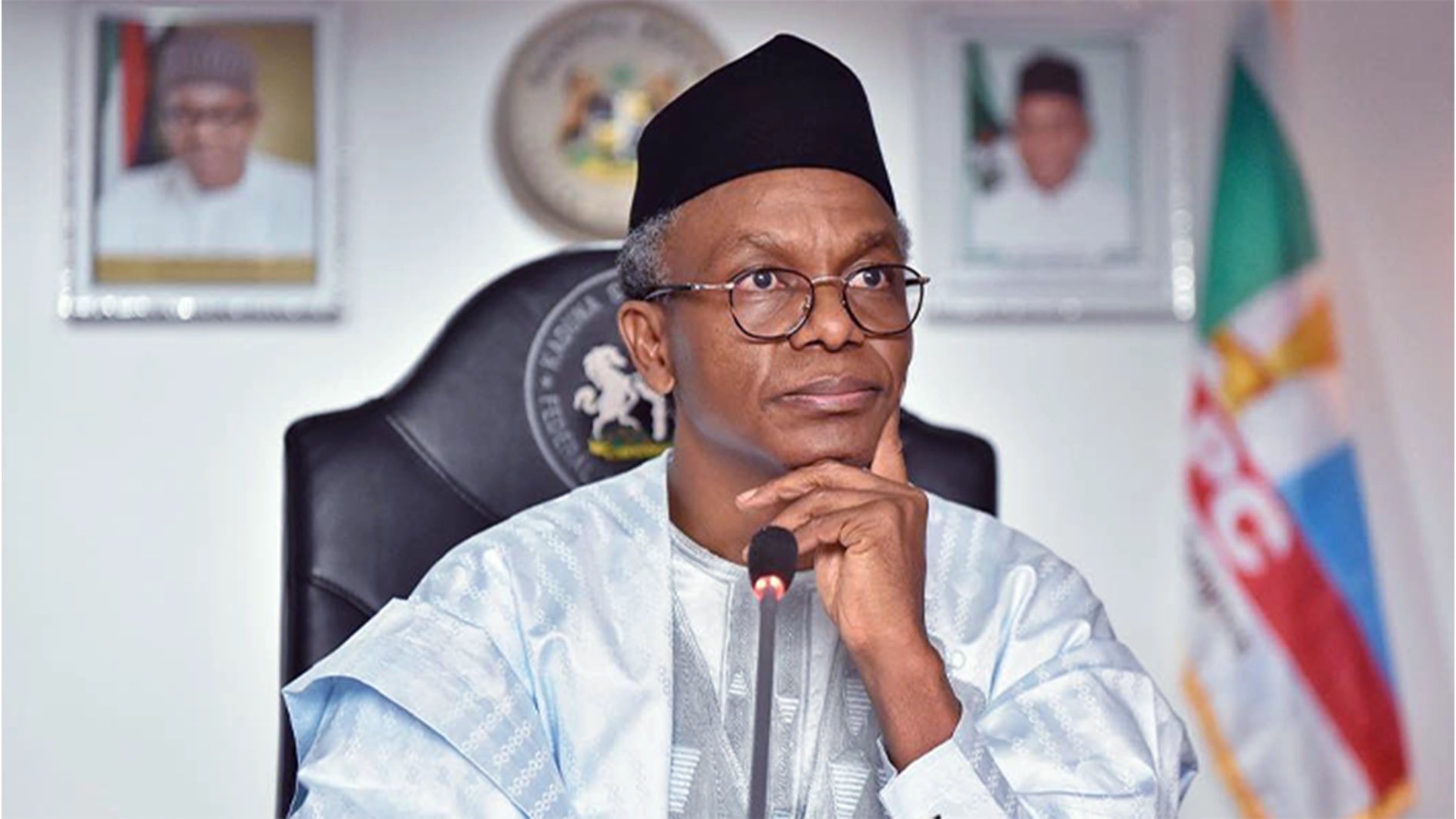
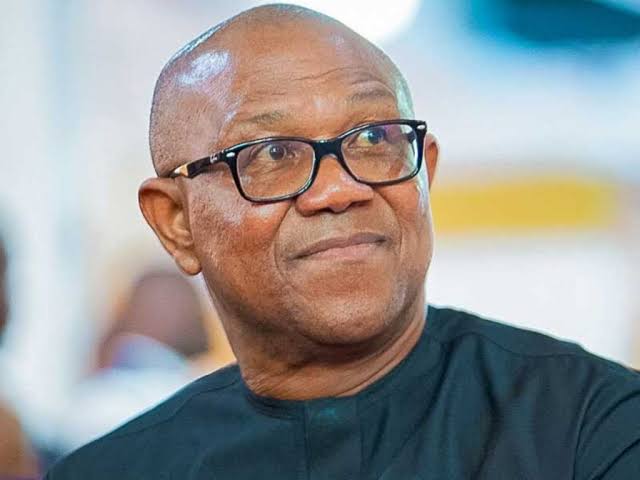
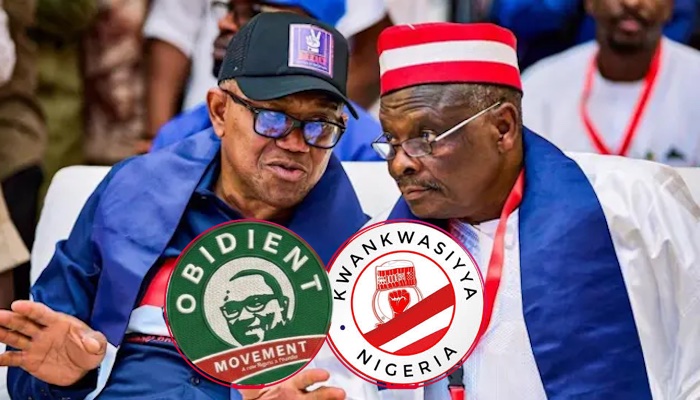
  • 2027: Obi-Kwankwaso Movement Unveils 59-Member Campaign Council

    2027: Obi-Kwankwaso Movement Unveils 59-Member Campaign Council

    Precious Nwonu, Enugu

    The Obi-Kwankwaso Movement has constituted a 59-member Presidential Campaign Council as it steps up preparations for the 2027 general elections.

    The council, unveiled on Thursday, comprises zonal and state coordinators, as well as directors overseeing mobilisation, women affairs, strategy, security, legal affairs, administration, procurement, information technology and other areas.

    The structure covers Nigeria’s six geopolitical zones and the Federal Capital Territory, with coordinators appointed for the 36 states.

    John Ughulu, the movement’s Director-General, will lead the campaign council as Director-General, while National Secretary Saadatu Sani is also part of the leadership.

    The six zonal coordinators are Suleiman Abubakar for the North-Central, Hashimu Dungurawa for the North-West, Amadu Gwambe for the North-East, Dr Adebayo Adefolaseye for the South-West, Christopher Ighodaro for the South-South and El-Shaddai Ikeh for the South-East.

    The movement also appointed Ibrahim Jabir as coordinator for the Federal Capital Territory, alongside coordinators for the 36 states.

    Other members of the campaign council include Sabo Gashua as Director of Grassroots Mobilisation, Glory Adayi as Director of Women Affairs, Kabir Yahaya as Director of Contact and Engagement, and Abdumumini Tijjani as Director of Mobilisation.

    Yusuf Mani was appointed Director of Special Duties, while Peace Daful will oversee Procurement. Prof Charles Nwekeaku was named Director of South-Eastern Town Hall, with Sunmisola Adebayo appointed Director of Information Technology.

    Kingdom Okere will head Legal Affairs, Abiodun Dabiri will oversee Strategy and Planning, while retired CSP Richard Enemona was appointed Director of Security and Intelligence. Aisha Abdulrahaman will serve as Director of Administration.

    In a message to the newly appointed members, Sani described their selection as a responsibility to serve the country and urged them to take the movement’s message to communities across Nigeria.

    She said the council would be expected to communicate the movement’s message from the state level down to local government areas, wards and communities.

    Sani added that the movement was driven by a national vision rather than the personal interests of individual politicians.

    She said the campaign council would require discipline, strategic thinking, grassroots mobilisation and effective communication to carry out its assignment.

    The movement said the council was established as part of efforts to strengthen its nationwide organisation and coordinate activities ahead of the 2027 elections.

    The development follows the movement’s earlier decision to retain its independent organisational structure rather than merge with another political organisation ahead of the election.

  • Obi Vows to Quit Campaign if Anambra Debt Claims Proven True

    Obi Vows to Quit Campaign if Anambra Debt Claims Proven True

    Precious Nwonu, Enugu

    Presidential candidate of the Nigeria Democratic Congress, Peter Obi, has challenged the Anambra State Government to provide evidence that his administration left behind unpaid debts, salaries, pensions and contractor liabilities when he left office as governor.

    Obi, who governed the state from 2006 to 2013, made the challenge in a statement posted on his social media account while responding to claims concerning the financial obligations inherited by successive administrations.

    He said his administration cleared more than N35 billion in historical gratuities and arrears before leaving office and maintained that there were no outstanding salaries, pensions or gratuities at the point of handover.

    Obi also said contractors whose projects had been completed and certified were paid before his administration left office.

    Addressing the controversy surrounding an alleged N2 billion ecological fund, the former governor said the money was released about three months before the end of his tenure to address the Oko/Umuchiana erosion crisis.

    He claimed that he deliberately left the funds untouched for the incoming administration because they were earmarked for a specific project.

    According to Obi, more than N2.13 billion remained in a First Bank account he identified as the account where the ecological funds were kept.

    He further said the money was separate from the more than N75 billion in savings which he claimed his administration left for its successor.

    “If anybody can establish anything to the contrary, I will stop campaigning,” Obi said.

    The Anambra State Government, however, disputed Obi’s account in a statement issued on Wednesday by the Commissioner for Information and Value Reorientation, Law Mefor.

    The state government said eight external loans obtained during or inherited into Obi’s administration still had an outstanding balance of $92.35 million, which it valued at N127.37 billion as of June 30, 2026.

    It said the loans were connected to projects in areas including healthcare, education, malaria control, erosion management and community development, and that the current administration was servicing the outstanding obligations.

    The government also disputed Obi’s claim that he left office without salary, pension or gratuity arrears, saying the current administration had inherited and cleared about N22 billion in gratuity arrears owed to retired state and local government employees and teachers.

    It further alleged that salary arrears involving workers of the former Anambra State Water Corporation remained unresolved, while some primary school teachers had outstanding salary, pension and gratuity arrears.

    The state government also challenged Obi’s claim concerning the N2.13 billion ecological fund.

    According to Mefor, a certified statement of the First Bank account cited by Obi showed no evidence that the alleged amount had ever been deposited into the account.

    The commissioner said the account was an internally generated revenue consolidated account rather than an ecological fund account, and challenged Obi to explain where the money was kept if it was not in the account he identified.

    The latest exchange has renewed debate over the financial position of Anambra at the end of Obi’s tenure, with both sides presenting conflicting accounts of the state’s debts, arrears and funds left for subsequent administrations.

    ### Obi opens up academic records

    In a separate development, Obi said he had no objection to legitimate scrutiny of his academic records.

    The NDC presidential candidate said he had authorised the University of Nigeria, Nsukka, and other institutions he attended to release his academic records, subject to applicable laws and institutional procedures.

    He said the records could include his certificates, admission documents and other official academic information relating to his studies.

    Obi said candidates seeking public office should be prepared to subject their qualifications and records to legitimate scrutiny, describing transparency and accountability as important to public confidence.

    “I have absolutely no objection to the release of these records,” he said.

    He also challenged other presidential candidates to make their educational qualifications and relevant academic records available for legitimate public examination.

    ### Obi camp questions reported Tinubu endorsement

    Meanwhile, the Peter Obi Media Office has raised concerns over reports that about 600 university academics endorsed President Bola Tinubu ahead of the 2027 presidential election.

    In a statement signed by its spokesperson, Idris Zekeri Jnr., the media office said the reported endorsement raised questions because university academics have previously been recruited by the Independent National Electoral Commission for electoral duties, including as returning and collation officers.

    The group argued that academics who publicly support a presidential candidate could face questions about perceived impartiality if subsequently appointed to sensitive electoral positions.

    It urged INEC to identify academics involved in political endorsements and consider excluding them from sensitive electoral assignments in 2027.

    The media office also called on INEC to publish the names of prospective returning and collation officers ahead of elections, saying this would allow political parties, civil society groups and members of the public to scrutinise potential conflicts of interest.

    The reported endorsement and the allegations raised by Obi’s media office remain claims by the political campaign, rather than an established finding that any electoral process has been compromised.

  • Presidency Reacts to Atiku’s $1.2m US Lobbying Campaign Over Tinubu Records

    Presidency Reacts to Atiku’s $1.2m US Lobbying Campaign Over Tinubu Records

    The Presidency has criticised a United States lobbying firm engaged by former Vice President Atiku Abubakar over its campaign for the release of records relating to President Bola Tinubu, describing the effort as a politically motivated attempt to create a crisis ahead of the 2027 elections.

    The Special Adviser to the President on Media and Public Communications, Sunday Dare, made the position known in a statement on Tuesday titled, “Speculation as Classified Information: Atiku’s $1.2 million Lobbying Gamble Exposed.”

    Dare accused the Washington-based Von Batten-Montague-York, L.C. of presenting political claims as intelligence reports and attempting to give the impression that its statements represented the position of the United States government.

    The Presidency’s reaction followed renewed activities by the lobbying firm concerning historical United States records relating to Tinubu.

    According to Dare, publicly available filings under the US Foreign Agents Registration Act showed that Atiku contracted the lobbying firm on a 12-month retainer reportedly worth $1.2m.

    He alleged that the firm’s activities were part of an attempt by the former vice president’s camp to use historical US legal records to gain political leverage ahead of the 2027 general elections.

    Dare said the reports being circulated from Washington did not constitute the official position of the US government.

    He said, “The incendiary press releases being carefully churned out from Washington are public relations propaganda sheets passed off as the view of the U.S. Government. They are not.”

    The presidential aide challenged those behind the allegations to produce what they described as classified intelligence and identify their sources.

    “Sane minds must categorically dismiss these reports as fabricated, politically motivated, and entirely unsupported by evidence. The report presents no intelligence document, no named Western official, and no evidence of any exchange involving Nigeria’s secrets or resources.

    “It is nothing more than political speculation packaged as classified information. We demand that they produce the so-called “highly classified intelligence report,” identify their unnamed sources, and provide tangible evidence for their wild allegations,” Dare said.

    He also questioned the role of the founder of the lobbying firm, Karl Von Batten, describing him as a commercial lobbyist and not an official of the US government.

    “Dr. Karl Von Batten’s comments represent solely the position of an individual associated with Atiku-linked political interests, not the U.S. government or President Trump,” he said.

    The controversy centres on historical records held by US federal agencies concerning Tinubu and a 1990s civil forfeiture case involving funds forfeited to US authorities.

    The records are also the subject of ongoing Freedom of Information Act litigation in the United States.

    PUNCH Online had reported that a Senior Advocate of Nigeria and member of Tinubu’s legal team in the United States, Wole Afolabi, defended the legal challenge against the release of portions of the records.

    Afolabi, who spoke on Channels Television’s Sunday Politics, said the US government had already released thousands of pages of records but was seeking to keep some portions redacted to protect law enforcement methods, sources and agents.

    He said Tinubu’s legal team was relying on protections available under US law and that challenging the release of the redacted portions did not amount to an attempt to conceal incriminating information.

    Afolabi said, “This matter has been going on for quite some time, as you rightly said, and the DEA and other government agencies have produced documents and made available to Mr Greenspan.

    “Now Mr Greenspan is asking that documents should be unredacted before they are handed over to him. The way the system works is this: it’s not what you want, it’s what the law stipulates.

    “So precisely what we are doing is going under the coverage of the law. It’s what the law gives us the right to do. It would amount to professional malpractice on our part if we don’t take advantage of what the law offers.”

    He also dismissed the suggestion that the US government was withholding the records specifically to protect Tinubu.

    He said, “In one of the recent filings that was made recently by the Department of Justice, it was stated in the footnote at page 24 that their concern is about the methodology by which information is gathered.

    “No mention was made of any protection being offered to President Bola Ahmed Tinubu.”

    Afolabi also argued that if US authorities had found sufficient evidence linking Tinubu to drug trafficking, he would have been indicted and prosecuted.

    Asked whether he was saying Tinubu had never taken drugs, had never been caught with heroin or had never been involved in drug trafficking, Afolabi replied, “What the evidence shows.”

    He was also questioned about the $460,000 forfeited to US authorities in the 1990s and the circumstances surrounding the civil forfeiture proceeding.

    Afolabi maintained that a civil forfeiture did not amount to a finding of criminal culpability.

    “If he was culpable, he simply would have been indicted. There’s no shortcut around it. He would have been indicted,” he said.

    The lawyer, however, declined to disclose Tinubu’s account of the matter, citing attorney-client privilege.

    “I’m acting as his lawyer, and as a lawyer, there is what you call attorney-client privilege, and it’s taken very seriously over here. One can lose one’s licence very easily.

    “Unfortunately, I can’t divulge any information that my client had disclosed to me confidentially. I’m sorry,” he said.

    Afolabi also declined to give a direct yes-or-no answer when asked whether Tinubu had ever been investigated by the FBI or the Drug Enforcement Administration.

    He explained that law enforcement agencies could investigate individuals without such investigations establishing criminal culpability.

    “Anyone can be a subject of investigation. That’s just how it goes. I mean, there’s a presumption of innocence,” he said.

    The lawyer argued that the mere presence of a person’s name in law enforcement records should not automatically be interpreted as evidence of criminal wrongdoing.

    Afolabi further defended Tinubu’s legal team’s reliance on privacy protections in challenging the release of some of the records.

    He compared the situation with US President Donald Trump’s efforts to prevent the release of some of his academic records, arguing that public office holders do not automatically lose their legal rights to privacy.

    The lawyer said, “Everybody takes advantage of it. Everybody. If the law offers you protection, there’s a reason why the law is there.”

    The Presidency’s statement came amid continuing debate over the release of historical US law enforcement records relating to Tinubu.

    The Freedom of Information Act case remains before a US federal court, where arguments concerning the release and redaction of the records are being considered. Punch