Category: Politics

  • Herdsmen murder Gov Ortom’s Kinsmen

    Herdsmen murder Gov Ortom’s Kinsmen


    Again five kinsmen of Governor Samuel Ortom were at the early hours of Tuesday reportedly murdered in an attack on his hometown, Ahentse community in Ndzorov Council Ward of Guma Local Government Area, LGA, by suspected Fulani herdsmen.

    Vanguard gathered from a source in the community who spoke on condition of anonymity that the attack which started at about 4am and lasted about two hours left some persons with severe injury.

    According to the source, the attackers stormed the community from Awe LGA of Nasarawa state through Damkor and Iordye communities sneaking through the security personnel that were stationed on that axis of the state.

    “They came into the community started shooting sporadically and as the people made attempt to escape some of them were gunned down and some sustained severe bullet injuries.

    “The painful aspect of this attack is that the community is less than five kilometers from Iordye where military and security personnel are stationed. The marauders just came and massacred our helpless people for no reasons whatsoever,” he said.

    Confirming the development, the Chairman of Guma LGA, Mr. Clement Abah said “I am aware of the incident. It happened early Wednesday between 4am and 5:30 am, when some Fulani herders came from neighbouring Nasarawa State, Awe LGA precisely and attacked Ahentse village killing five persons and two sustained various degrees of injuries.

    “The injured persons are receiving treatment at the General Hospital, Gbajimba. As for the dead, I was there to witness and ensured that they were buried in order to reduce the tension caused by the attack,” he said.

    Contacted, the Police Public Relations Officer, Superintendent, Cathrine Anene who confirmed the attack said investigation into the incident was ongoing.

    Meanwhile Governor Samuel Ortom has expressed sadness over the incident and called on the federal government to synergise with his administration to step up a military operations that would flush out armed herdsmen from the neighbouring states bordering Benue.

    The Governor said the move would help end the invasion of Benue communities by the killer herdsmen who had continued to use the porous nature of the state borders to invade hapless communities on the Benue side of the border.

    The Governor’s reaction was contained in a statement by his Chief Press Secretary, Nathaniel Ikyur issued Wednesday in Makurdi.

    The Governor in the statement said “it is time the federal government further stepped up the military operations in states that share common boundaries with Benue state because these communities along the borders have become targets of the armed herders. It is time to end this unnecessary shedding of innocent blood and we can do it if we cooperate with each other.”

    Governor Ortom recalled how he had been synergising with his counterparts by holding joint security and peace meetings to build confidence amongst the people so that they would live in peace with one another.

    He however lamented that “the situation where killer herdsmen take shelter with our neighbours, sneak in and kill our people without provocation will not be tolerated any longer. Let the security agencies continue to cooperate with us in Benue to end this bloodletting. Let us dislodge these invaders from wherever they may be hiding for peace to return to our communities.”

    While commending the security agencies for their steadfastness and commitment to ending the crisis the Governor called on Benue people to begin to arm themselves with “lawful weapons as presecribed by law and defend themselves against the Fulani invaders.”

    “It is no longer fashionable to continue to cry out for help. We must now be at alert and ready to confront these killers. This is another way we can assist the security agencies in combating this menace since they are obviously overstretched beyond limits,” he added.


    (Vanguard)

  • Just  In: Federal High Court sacks Umahi, Deputy, over defection to APC

    Just  In: Federal High Court sacks Umahi, Deputy, over defection to APC

    Just  In: Federal High Court sacks Umahi, Deputy, over defection to APC

    Justice Inyang Ekwo ordered the PDP to send names of those to replace the governor and deputy to INEC.

    The Abuja division of the Federal High Court on Tuesday sacked Ebonyi state governor, Dave Umahi, and his deputy, Eric Igwe, from office over their defection to the All Progressives Congress.

    The Peoples Democratic Party had approached the court seeking that Mr Umahi is sacked for dumping the PDP.

    The court ruled that Mr Umahi and his deputy cannot continue in their offices after defecting to the APC since the PDP won the 2019 governorship election in Ebonyi, and not Messrs Umahi and Igwe. The judgement, delivered by Justice Inyang Ekwo, held that the total number of 393,042 votes Umahi secured at the 9th March 2019 Ebonyi State governorship election, belonged to the PDP, hence could not be legally transferred to the APC.

    Justice Inyang Ekwo ordered the Independent National Electoral Commission to stop recognising Mr Umahi and his deputy and that the PDP send names of those to replace the governor and deputy to INEC.

    More Details later…

  • Nigeria needs to shift from petroleum-powered vehicles to gas-powered vehicles – Aregbesola


    The Minister of Interior, Rauf Aregbesola, has said Nigeria needs to shift from petroleum-powered vehicles to gas-powered ones if it is to stop spending a lot on fuel subsidy yearly.

    According to him, the nation needs to convert a chunk of the vehicles on its road from petrol-powered to gas-powered if it is to achieve this.

    He disclosed this while speaking at the 60th birthday celebration and the book launch of Dr Yunus Akintunde on Monday in Ibadan.

    He added that the money the Federal Government was spending on fuel subsidy could be used to transform education and other sectors of the nation.

    Aregbesola said, “This concern has not been shared in Nigeria as our addiction to cheap petroleum fuel appears insatiable.

    “Most of our systems are still dependent on petrol and diesel which is driving the demand for them, hence the consequences. But we can learn a bit from Egypt where its commercial vehicles, particularly taxis are powered by gas.

    “These are the old Peugeot and Renault cars that are no longer in use in Nigeria and other parts of the world, but which have been converted to use gas and are still being used because they are well maintained. It is high time we learnt from this.

    “If all our commercial vehicles run on gas, the large chunk of our demand for petrol and diesel will drop and we will save ourselves the humongous amount of money we spend on fuel subsidy. Two weeks ago, the Federal Executive Council considered N3tn as fuel subsidy.

    “Let us for a moment imagine how much N3tn would do in providing the critical and essential needs for people from schools, to hospitals, to roads. It is huge and this is what we burn every year on subsidy.”

    According to the minister, if the nation starts using gas-powered vehicles, the cost of transportation will reduce and public transport will be the largest beneficiary.


    Vanguard)

  • Human Right Activists to protest against Electoral Act 2022 Clause 84


    The most appropriate note on which to commence this dialogue on the controversial clause 84(12) of the much-debated and anticipated electoral act 2022 is by adopting the aphorism when two elephants fight, the grass suffers.

    The reasons for applying the elephants’ metaphor may not be obvious. But it is simply because the final battle in the war to reform our country’s electoral system was between the all-powerful governors’ forum currently led by Kayode Fayemi, Ekiti State Governor on one side and the National Assembly, with Ahmad Lawan, the senate president and Femi Gbajabiamila, the Speaker of the House of Representatives as leaders of National Assembly, NASS, on the other side.

    I will dwell further on the victor and vanquished aspects of the epic battle between both gladiators in the course of this discourse. But at this juncture, it is pertinent that we first of all focus on the commendable leadership sagacity exhibited by president Mohammadu Buhari in the course of birthing the newly minted electoral act 2022.

    Now, some hawkish people in the presidency might have advised President Buhari not to be perturbed by public criticism whenever he gets tongue-lashed by some elders who speak out, no matter whose Ox is gored, and who are from across the regions ranging from Pa Ayo Adebanjo leader of Afenifere, from the southwest, Prof. Ango Abdullahi, head of Northern Elders Forum, as well as Prof. Ben Nwabueze, Chairman of Igbo Leaders of Thought and longest-living senior advocate of Nigeria from the southeast.

    And the devil-may-care leadership style advocates on the corridors of presidential power would have justified their advice to President Buhari, not to be accommodating or tolerant of criticism and critics by sowing the nihilist idea into his mind that whatever he does as a leader would be considered as unsatisfactory and therefore criticized unnecessarily.


    But following Mr. President’s commendable action of signing into law, the much desired and anticipated Electoral Act 2022 on Friday, February 25, 2022, and the massive applause that he has received from a broad spectrum of Nigerians, including the clergy and the international community alike for the exemplary leadership that he has exhibited in assenting to the bill even if he has expressed reservations about some elements in the act particularly clause 84 (12); by now, it must have dawned on President Buhari who has been fooling who.


    That is because today, it is manifest that Nigerians are capable of acknowledging and commending good work by their president with adulation, as reflected by the torrents of encomiums which have been flowing in the direction of President Buhari from not only civil society organizations that were in the forefront of the struggle for electoral reforms, but even from regional ethnic and cultural groups (that in light of human carnage and misery saw no good in Buhari’s presidency) such as Ohaneze Ndi Igbo from the southeast, Afenifere from the southwest and Arewa Forum from the north as well as Pan Niger Delta Forum, PANDEF from the south-south; not forgetting Middle Belt Forum, MBF, including Inter-party Advisory Council -an umbrella body of all registered political parties, since Friday, February 25 when president Buhari signed off on the act.


    Given the massive welcoming approval accorded the electoral act 2022 by the critical mass of Nigerians,I would argue that no policy initiative of the government in Nigeria in recent history has received such a consensus and broad range of support from across ethnic, religious, and cultural divides in our country, except the UDOJl award (payment of bonus salaries to reward public servants for their support and dedication during the difficult period of the war 1967-70) by the government under then military head of state, General Yakubu Gowon in 1974.


    In my assessment of the current state of affairs in our country, based on the high level of despondency, it is only a decision to restructure the political and social-economic systems as well as the introduction of state police by president Buhari that could have made Nigerians heave the type of sigh of relief that the signing of the electoral act 2022 has elicited.


    But those critical yearnings of the masses which are policies, if executed would advance the status of the entity known as Nigeria from being a mere country to a nation via astute and patriotic leadership, would remain a mirage.


    That is simply because restructuring the political system and introduction of state police which were the heart of the ruling party, APC’s campaign in 2015, that enabled it to clinch the leadership of Nigeria at the center over seven (7) years ago are being treated like plaques. Hence even the recently concluded review of the constitution led by my good friend and brother, Ovie Omo-Agege, deputy senate president, did not even get that critical desire of Nigerians listed for consideration on the floors of NASS, how much more receive the privilege of being debated. The neglect of restructuring and state police in the review of the constitution appear to be deliberate as they are the key components of the report submitted by the Nasir El-Rufai led committee set up by the ruling party to chart the way forward. Already, Nigerian women are literarily up in arms with NASS for ditching their demand for 35% of seats to be allotted to them as a sort of affirmative action, just as traditional rulers are also aghast that their quest to be assigned a more active role in governance was not factored into the reviewed constitution.


    That is a subject for another day.


    By assenting to the electoral bill and its subsequent conversion into law, President Buhari has conferred on Nigerian politics, a breath of fresh air to replace the putrid and toxic elements intrinsic in the electoral act 2010 which has been in operation since the last reform carried out by the pair of ex-presidents Umaru Yardua of blessed memory (2007-10) and Goodluck Jonathan (2010-15).


    It may be recalled that both former Presidents had improved upon the version handed over by the military who sired the problematic 1999 constitution of the federal republic of Nigeria that had just undergone another review and amendment on 1/3/2022 by the National Assembly, NASS.


    Is it not preposterous that the electoral law which had lost its flavor as it was simply inhibiting our ability to organize elections that are free and fair, as identified as far back as 2018 when the idea of electoral reform was first mooted and pursued by NASS, had remained unimproved upon due to mere political chicanery?

    It is such an indictment on the political class that the 2010 electoral act had remained unchanged after 12 years of its application in the recruitment of our political leaders, during which flaws that needed to be reformed urgently were identified, but of which President Buhari had been reluctant to effect, until Friday, February 25, 2022, when he appended his signature.

    That is because, since the idea of reforming the electoral system via a review of the 2010 electoral act was first muted in 2018, (4th review since 1999) the journey to electoral reforms has not only been full of twists and turns, it has actually been torturous for most Nigerians who have somehow been tormented by the back and forth movement of the bill between the executive and legislative arms of government until it finally became law on February 25, 2022.

    Arising from the rigorous exercise that involved the National Assembly (NASS) passing the electoral Act amendment bill for a record five (5) times and transmitting the same to president Buhari who had been demurring from signing-off on it for the same number of times, l was compelled to tag the 2021 electoral bill an Abiku/Ogbabje bill, (stillbirth in African mythology) in one of my previous essays titled: ‘Electoral Act Amendment Bill: Interrogating The Ogbanje/ Abiku Elements’ focused on the issue of electoral reforms and its potential benefits to the body politics of our beloved country underscoring the multiple times that president Buhari vetoed it.

    And the wisecrack, no pain, gain rings true in this instance.

    That is because it is particularly heartening that after the epic struggle, Nigerians are now in a position to be the major beneficiaries as the reforms of the electoral system are bound to lend the political system the required fidelity that would motivate more members of society, particularly those who felt that owing to the opaque nature of the electoral process, their votes would not count, hence they have been shying away from exercising their franchise in previous elections.

    Based on the improvements which the 2022 reform has conferred on the electoral system, going forward, especially during the 2023 general elections, which is barely one year away, Nigerians would likely turn out massively to vote, more so because of ballot stuffing and snatching, as well as election result falsification that used to trigger violence in the polling units, are deemed to have been eliminated by electoral act 2022. The optimism is derived from the belief that the new electoral law has institutionalized transmission of results electronically from polling booths to the INEC database and makes it impossible for votes cast in a particular polling unit to be more than the registered or accredited voters in that location.

    Those were some of the tricks that politicians leveraged in the past to produce perverse election results that generated pre and post-election violence that hitherto defined politics in Nigeria and pinned political actors down in law courts for the better part of their tenure while governance suffered.

    In that regard, by and large, the Electoral Act 2022 can be said to be an elixir that is guaranteed to induce political sanity into our country’s beleaguered democracy.

    In an uncanny way, perhaps the past five years (2018 till February 25, 2022) of trying to get President Buhari to assent to the bill in the multiple times that it was passed by the National Assembly, NASS was not wasted after all.

    The assertion above is derived from the fact that had the process not been delayed and were it not that, apart from our lawmakers, the executive arm of government, and civil society organizations, under the auspices of YIAGA Africa and CUPP (civil society, political parties coalition and democracy advocacy groups), as well as ordinary Nigerians, that generally got involved in pressuring the incumbent president to build on the reforms of the electoral system implemented by his predecessors, Umaru Yar’adua of blessed memory and Goodluck Jonathan that instituted the justice Lawal Uwais committee which reviewed the electoral act 2010, that just amended; electoral 2022 would not have been this robust.

    But due to some omissions and commissions on the part of the executive arm, particularly the presidency which remains unresponsive to the stimuli of the masses that could have generated empathy for president Buhari, it was assumed by most Nigerians that Aso Rock was disconnected from the reality of the masses, a belief underscored by the initial reluctance of Mr President to assent to the bill which is contrary to the wish of the critical mass that is literarily dying for a much better electoral system.

    Having finally signed the bill into an act of law on February 25, 2022, President Buhari has proven wrong those who assumed that he was not keen on bequeathing the legacy of a reformed electoral system to the country before he exits power in 2023.

    As valid as that point of view appears, there is another school of thought that posits that, if the electoral bill was assented to by President Buhari when it was first passed by NASS in 2018, by now, (which is five years after) democracy in Nigeria could have been deepened much more than the level that it is in right now. Actually, each time president Buhari sent the bill back to NASS, an opportunity to move democracy forward was lost. Otherwise, as a nation, after the 2015 election that ushered in President Buhari, by 2019 election, we should have progressed beyond the use of Biometric Voter Accreditation System, BVAS, electronic transmission of results from polling units to INEC database, and all the other innovations contained in the new electoral act 2022, all of which were achieved under the watch of current INEC chairman, Professor Mahmood Yakubu.

    Is not rather disappointing that the improvements in the electoral system that we should have attained in 2018 for the 2019 general elections are what we just achieved in 2022, prior to the looming general elections in 2023?

    It is my opinion, that the electoral process improvements such as the introduction of the concept of diaspora voting, voting by mail, and electronic voting amongst other innovations, that could have deepened our democracy, should have already been incorporated into our electoral system in 2022 and as we set our eyes on 2023 general elections. But owing to the shenanigans that detained it for five years as it bounced between the NASS and presidency like a ping-pong, they are now in our front view mirror as the next electoral reform goals, whereas they could have been in our rearview mirror.

    But as the saying goes, all is well that ends well, which is why Nigerians appear to be content (for now ) with the modest accomplishments of the electoral Act 2022.

    The only worries now are that some of the contents of electoral act 2022 would have to be scrapped so soon after it was assented to or reviewed owing to the reason that they are not seating well with President Buhari, as contained in his cover letter to NASS conveying his approval of the bill into the act. It is a matter of grave concern to watchers of our democracy because, after 23 years of its return as the form of government in Nigeria, democracy can no longer be said to be in its infancy. Strictly speaking, democracy in Nigeria is currently in adulthood simply because a 23 years old man or woman can no longer be referred to as a kid. So why would the passage and adoption of a law by both NASS and the president be so fractious and farcical?

    For instance, President Buhari’s exception to Clause 84(12) of the electoral law that he assented to has thrown up new crises because he believes the clause negates the tenets of democracy. Although, there is supposed to have been a gentleman agreement between president Buhari and NASS leadership to scrap that portion after he might have appended his presidential signature to it, (a process agreed upon to avoid a constitutional challenge that was looming if president Buhari vetoed it and NASS failed to override him before the end of February) following president Buhari’s letter requesting that legislators make good their promise, it was not expected that there would be issues. But there is clearly resistance to keeping the promise made by NASS, particularly from the Lower Chamber which comprises 360 members and therefore more difficult to manipulate than the senate with only 109 members that is less wieldy to maneuver.

    Often, gentleman agreements are susceptible to contention as evidenced by the controversy surrounding rotation of presidential power between north and south which is also hinged on a gentleman agreement hashed out during the 1995 national conference.

    At this juncture, a bit of backgrounding to put things in perspective is necessary. And as l earlier indicated that l would return to the victor and vanquished parties in birthing the electoral act amendment 2022 with respect to clause 84 (12) which is a watered-down cause of the duel between the governors’ forum and the resurgent NASS, let us look at the real reasons that the clause causing prickly heat has remained like a fly perched on the scrotum and could not be easily crushed without severe consequences, hence President Buhari was compelled to sign the bill into law without further filibustering.

    That the controversial clause 84 (12) excludes political appointees from voting or being voted for and compels them to resign 180 days prior to Election Day, is no longer news. The contention is that the provision is contrary to the rule enshrined in the constitution of the federal republic of Nigeria that gives public servants 30 days (as opposed to 180 days) to resign their appointments if they intend to contest for electoral positions as contained in the new electoral law. Since the constitution supersedes any other law, in this instance, appointees resigning 30 days to elections as enshrined in the 1999 constitution as amended would prevail. There would not have been the need to scrub out the 180 days requirement, were it not for the fact that clause 84 (12) also forbids political appointees from voting or being voted for during party conventions. It is needless to point out that denying political appointees the right to vote or be voted for amounts to robbing them of their civic rights and responsibilities. But those who support the current controversial clause 84 (12) electoral act 2022 aver that the clause is aimed at creating a level playing field for all political office aspirants in and out of public office.

    Their point is that being able to run for an elective office while holding public office gives undue advantage to incumbents who would take advantage of their pole positions by capitalizing on public resources available to them and imperil the non-public office holders contesting against them. That concern is real.

    And legislators who are often at the receiving end are the architects of the controversial clause 84 (12) which, if you like is their own curved ball or panacea to the undue advantage enjoyed by governors and Mr president whose appointees (ministers, special advisers in the case of a president and commissioners, special advisers, etc ) help tilt the scale in their favor during party primaries. In light of the revelation above, is anyone still wondering why governors and the president always have a battery of special assistants or appointees with all manners of titles even in the twilight of their tenure? Hitherto, most Nigerians thought it was merely their way of creating jobs for the ‘ boys’ who helped them in securing victory at the polls. Alas, it is much more than that.

    Unbeknownst to most Nigerians, Clause 84 (12) is also a fallout or an adjunct to the proposal by NASS that the process of producing delegates at primaries should be solely direct primaries as opposed to the three options of direct, indirect, and consensus as contained in the electoral bill 2021 vetoed by President Buhari and sent back for re-work.

    As the popular aphorism goes, there are many ways to kill a rat without spilling its blood. That is why the bill was in deference to president Buhari’s re-worked by NASS. But not without cleverly stripping governors of the advantage or luxury of leveraging their appointees to give them a leg up during party primaries through clause 84 (12).

    So in more ways than one, the contest for the control of the ruling party, which is by extension, the soul of Nigeria between the powerful governors’ forum and National Assembly, NASS, did not end with the restoration of the three options of direct, indirect and consensus options in the new electoral law, as it has raged on, but in a more nuanced and subtle way sustained with clause 84 (12).

    Put succinctly, what the legislators could not achieve with their introduction of direct primaries as the sole process of producing candidates for general elections, which was rejected by President Buhari via a veto, they have achieved via clause 84 (12) which whittles considerably the influence of governors during party primaries via their reliance on appointees beholden to them to vote in their favor.

    In my piece on reforming the electoral act earlier referenced, l had advised President Buhari to Beware of IDEs of March and more curved balls as he enters the lame-duck period of his presidency with Governors and NASS taking his two ears hostage and bombarding him with their selfish and group point of view as they try to justify their opposing views of democracy in a bid to undo each other.

    Below is how l had put it:

    “Tellingly, governors and legislators had drawn a battle line on who would outwit each other on the question of whether direct primaries should be enshrined into the electoral act in the process of amendment. I contended further by stating that

    “With President Buhari finally withholding his assent, the leaders of the sub-national entities seem to have triumphed over the legislators.”

    I then observed that “Uncharacteristically, the governors are appearing to be humble in victory by being reticent since 21/12/2021, when president Buhari communicated his refusal to append his signature to the document that had been subjected to a series of back and forth movements between the upper and lower chambers of NASS.”

    Then I concluded by posing the question: “Does the muteness of the governors suggest that their victory may be pyrrhic? Considering the outrage of Nigerians when they kicked against the expunging of electronic transmission of election results from the polling units to the collation centers introduced by the lower chamber, but which was watered down by the upper chamber, by basically stripping INEC of its independence, before it was finally restored in the current bill rejected by president Buhari; the legislature should be leaking its wound.”

    As it turned out, as opposed to licking their wounds, the NASS went back to the drawing board to conceive how they could pull more arrows out of their quivers to combat give hence they were able to come up with clause 84(12) whose efficacy has seen governors reeling in pains. Talk about he who laughs last, laughs best.

    Putting all together, one thing that I can deduce is that NASS is not actually totally in acquiescence with the presidency as it would appear to the ordinary folks who regard our current lawmakers as mere rubber stamps of the presidency simply because the executive arm influenced the emergence of the leadership of both the Upper and Lower chambers which are supposed to be independent.

    Apart from the NASS initiative of forming a committee comprising of members of the Upper and Lower chambers, the presidency and the concerned ministries, departments, or agencies for the purpose of curating public policies at proposal levels which have reduced the high level of public rancor between the two arms of government witnessed during the 8th senate, the NASS particularly the Lower chamber, is not a walk-over as it tries to assert its independence, albeit in more subtle manners.

    That is why scrubbing off clause 84 (12) may not be a walk in the park for the presidency.

    Again, in my view, healthy opposition is good for the deepening of democracy in our beloved Nigeria.

    Even then, politicians and the game of politics never cease to amaze and intrigue the uninitiated and that applies to most Nigerians.

    How can one phantom why Governors who are more likely to end up in the Senate after their tenure be so intent on flexing political muscle with members of the senate where they would most likely end up?

    And vice versa for NASS members who also are more often than not angling to be state governors after serving as senators or members of the National Assembly.

    In my assessment, it is all about temporary advantages to be gained by each of the groups involved in the contest for political powers.

    It elicits the question: is the contestation or rivalry between governors and national legislators ego-driven and therefore ephemeral or altruistic?

    Clearly, it is the revolving door of politics in Nigeria that makes it possible for politicians to pivot between calling the shots in governors’ mansions in their home states and the hallowed chambers of NASS, that justifies the labeling of our present crop of politicians as recycled men and women that have nothing more to offer society, by youths, especially those in the vanguard of Not-Too-Young-To-Rule movements, pushing the candidacy of the likes of Kingsley Moghalu, Dele Momodu, Omoyele Sowore et al who have thrown their hats into the ring as 2023 presidential candidates.

    While the governors and legislators’ epic battle rages on, the import of the adage ‘when two (2) elephants fight, the grass suffers’ must not be lost on the polity which is why l am drawing attention to it via the analysis contained in this intervention.

    In light of the foregoing narrative, the delay in assenting to the amended electoral act until February 25 2022 is attributable to the square up between NASS and governors forum and not totally the fault of president Buhari as it has been cast.

    For now, it is anyone’s guess whether the battle of supremacy between our governors and elected representatives in the NASS which detained the badly needed electoral reforms for five (5) years would continue with the request by president Buhari that clause 84 (12) be deleted. Would a rebellion manifest in the coming days as the matter has now been officially tabled on the floors of the National Assembly, comprising of men and women who may be ready, willing, and able to subsume party dictates for their personal interests as the presidency enters lame-duck period?

    Well, we may not know until when the hurly-burly APC convention and congress for the nomination of presidential candidates by both the ruling and main opposition parties are over.

    Magnus Onyibe, an entrepreneur, public policy analyst, author, development strategist, alumnus of Fletcher School of Law and Diplomacy, Tufts University, Massachusetts, USA, and a former commissioner in Delta State government, sent this piece from Lagos.

    (Vanguard)
  • FG urges NLC to call ASUU to order

    The Federal Government has asked the Nigeria Labour Congress (NLC) to advise its affiliate, the Academic Staff Union of Universities (ASUU), to abide by the provisions of the Trade Disputes Act by calling off its ongoing strike.

    Minister of Labour and Employment, Chris Ngige, made the call when he spoke at the opening ceremony of the 2022 edition of the National Labour Advisory Council (NLAC) in Lagos, yesterday.

    The minister, in a statement by the ministry’s spokesperson, Charles Akpan, in Abuja, also urged the council to discuss as part of its agenda, a workable recipe that appropriately conciliates disputes with associations that are not properly registered as trade unions to ensure they fully abide by the provisions of the law.

    He said: “What will be the relationship with workers’ organisations that are not properly registered as trade unions? The Labour Act is there and it says the minister can discuss with them. But they don’t fully conform with legal provisions, especially in terms of style of negotiation and conciliation. NLAC should, therefore, come to the aid of the country here.

    “Even though the Trade Disputes Act permits the minister to apprehend and deal with these workers that have not been registered as unions, you can also see that when dealing with them, you encounter problems because they do not fully understand the nuisances or obey the labour laws as it should be.

    “If you are a union, you give adequate notice before proceeding on strike. If you are a union too and your strike is apprehended, you go back to your work while necessary adjustment is made to give you justice. NLAC is expected to get the workers’ side of the tripartite to live up to their responsibilities in this regard.”

    The minister noted that some associations in critical sectors of health and education such as Nigeria Medical Association (NMA) National Association of Resident Doctors (NARD) are in actual fact, not properly unionised. NMA and NARD are not a trade union. They are an association of workers.

    “The university teachers are registered under ASUU and are affiliated to the NLC but that affiliation is only in name. It is not, because they don’t obey the Labour Act as it concerns conciliation.

    “For example, ASUU declared a month-long strike and called it a warning strike. It did not notify its employer, the Ministry of Education, nor did the union notify me, the minister of labour, that there is a breakdown in negotiation. I know they had some discussions which were in limbo but I should be notified properly so that I can arrest the breakdown and bring it forward for proper conciliation.

    “Now, I apprehended the dispute in consonance with the Labour Act. They came for conciliation, only for them to go back and continue the strike. This is illegal. The law is that once a dispute is apprehended, everybody returns to status quo ante. The law also says if I arrest a dispute and the party or parties are not ready to conform, I should transfer the dispute within 14 days to either the Industrial Arbitration Panel or to the National Industrial Court of Nigeria in line with Section 17 of the Trade Disputes Act. But I’m concerned that if I do this suo motu, this will not solve the problem getting our children back to school outright

    “So, I’m using this opportunity to plead with the NLC to which ASUU is affiliated, to call them to order, make them obey the law, to let them know what the Trade Disputes Act says and as university teachers, who are even teaching industrial law, to abide by the law. They should call off that strike. That strike is not appropriately instituted. I have conciliated, and made sure the issues in disputes have been decisively dealt with.”

    (Sun)

  • Sunday Igboho released from prison on two conditions


    Yoruba rights activist, Sunday Adeyemo, popularly known as Sunday Igboho, was released from detention on at least two conditions, The PUNCH has learnt.

    Lawyers in the know of his release conditions made this known to The PUNCH on Monday.

    They made this known shortly after the umbrella body of Yoruba Self-determination Groups, Ilana Omo Oodua Worldwide, announced Igboho’s release.

    “The conditions are not too tough. He won’t hold any rally and can’t leave Cotonou,” one of the lawyers said.

    Also, Counsel for the activist, Chief Yomi Aliyyu, SAN, said two of the condition were that Igboho should not leave the medical centre or Cotonou.

    He said, “I am to inform all the followers of Chief Sunday Adeyemo a.k.a Igboho Oosa that he has been released from prison to his medical practitioners under the agreement that he should neither leave the medical centre nor Cotonou for any reason.

    “Praises should be given to two prominent Yoruba personalities — Prof Wole Soyinka and Prof Akintoye for this turnaround in our client’s matter.”

    Aliyyu had on Thursday announced that Igboho had begun fresh negotiation with the Benin Republic government over his health status.

    He explained that Igboho negotiated to be moved to another detention facility over his health status.

    Igboho, who escaped from a deadly raid on his Ibadan residence by the operatives of the Department of State Service on July 1, 2021, was arrested in Benin Republic on his way to Germany on July 19 together with his wife, Ropo. His wife was released earlier.

    During the bloody raid on Igboho’s Sooka residence, the Department of State Services arrested and detained 13 of Igboho’s associates. Two of Igboho’s supporters, identified as Adogan and Alfa, lost their lives during the raid.

    DSS also presented seven AK-47 rifles allegedly recovered during the raid on Igboho’s house on July 1, as well as three pump-action guns, 30 fully charged AK-47 magazines, 5,000 rounds of 7.62mm ammunition, five cutlasses, one jack-knife, one pen knife, two pistol holsters, a pair of binoculars, a wallet containing $5, local and international driving licences in his name, ATM cards, a German residence permit No. YO2N6K1NY bearing his name, two whistles, 50 cartridges and 18 walkie-talkies.

    Others were three charm jackets/traditional body armour, two laptops, one Toshiba and one Compaq laptop, Igboho’s passport and those of his aides.

    However, the aides were later released after a court injunction.

    An Oyo State High Court also awarded N20 billion in damages in the activist’s favour. The court also restrained the Department of State Security and Attorney General of the Federation from arresting Igboho.


    (Punch)

  • APC Crisis: ‘Palace Coup’ as Niger Gov arrives Secretariat, presides over CECPC meetings

    APC Crisis: ‘Palace Coup’ as Niger Gov arrives Secretariat, presides over CECPC meetings

    Member, representing North Central in the Caretaker Extraordinary Convention Planning Committee (CECPC) of the ruling All Progressives Congress (APC) and Niger State Governor, Abubakar Sani Bello has arrived at the national secretariat of the party and currently meeting with some members of the CECPC.

    Bello who arrived at about 12pm went straight to the National Working Committee NWC Hall.

    He also parked his official vehicle at the designated parking lot of the “National Chairman”.

    He was soon followed by the National Secretary of the CECPC, Senator John James Akpanudoedehe who came into the secretariat at about 12:07 pm.

    Sources at the meeting said at least nine of the 12 CECPC members were present and that the session was being presided over by Gov. Bello.

    There had been speculations that President Muhammadu Buhari had sanctioned the sack of Gov. Mai Mala Buni as National Chairman of the CECPC. Gov. Buni who travelled outside the country last week was being expected back to the country on Monday but as of the time of filing this report, it was not immediately clear if he was back as most of his aides were not seen at the secreteriat.

    Other reports said the CECPC had been disbanded and that Gov. Bello was appointed as a sole administrator for the party.

    The CECPC had often held its routine meetings on Mondays.

    (Vanguard)

  • I’m still in charge, Buni insists, dismisses ‘fake news’ on alleged sack by Buhari

    I’m still in charge, Buni insists, dismisses ‘fake news’ on alleged sack by Buhari

    Against reports of his sack by President Muhammadu Buhari, the National Chairman, Caretaker Extraordinary Convention Planning Committee CECPC, Gov. Mai Mala Buni has insisted that he is still in charge of the party, describing reports to the contrary as ‘fake news’.

    The governor made the declaration in a statement issued Monday morning in Abuja and signed by the National Secretary of the CECPC, Senator John James Akpanudoedehe.

    The statement reads; “Our attention has been drawn to sponsored media reports on an imaginary leadership change in the All Progressives Congress APC Caretaker/Extraordinary Convention Planning Committee CECPC.

    “The media report is fake news and should be disregarded.

    “The APC is a progressive political party guided by rules. Leadership changes are not announced by ‘sources’ through name dropping in the media.

    “We urge our teeming supporters, members and indeed the general public to remain calm and support the Governor Mai Mala Buni-led APC CECPC conduct a rancour-free and credible National Convention deserving of our great party”.

    There were reports Monday morning that President Buhari may have sanctioned the sack of Gov. Buni on Sunday night before departing the country for London.

    (Vanguard)

  • 2023: The intrigues, politics and plot against Igbo Presidency

    2023: The intrigues, politics and plot against Igbo Presidency –

    By Chidi Obineche

    The chips are down, more clouds are gathering, and soon the bubble will burst. Barely 11 months to the 2023 general elections, there is a central thread of discourse in the nation on the possibility of a president of Igbo extraction. The hypothesis is hinged on history and contemporaneous power shift in Nigeria. Proponents of the quest for a Nigerian leader from the Igbo dominated South east axis premise it on six standpoints: Tripod nature of the nation, equity, justice, unity, peace and fair play. Hard- headed as the clamour has assumed, many champions of the clamour have fallen by the wayside, while new recruits have been made from even outside the Igbo enclave depending on interests and affiliations. The two leading political parties from where the extractive redemption could be realized: All Progressives Congress, APC, and Peoples Democratic Party, PDP are heightening guesses and leaving people confused and in suspense. The power play and intrigues are suffused with obdurate greed and vile politics. The leading presidential hopefuls are big names who have had their day in the past and whose dreams of leading the nation defies the basic notions of aggregated national good and power shift. Their financial war chest, massive structures, larger than thou image, media visibility and alliances inexorably subsume the Igbo presidential quest. Former governor of Abia State and current chief whip of the senate, Dr Orji Uzor Kalu had as early as 2012 said that a president of Igbo extraction should not be party based but built on the consensus of Nigerians. He explained that it was on the basis of the strain that a non- partisan group, ‘Njiko Igbo” was formed. “ I need to be neutral at all levels in achieving a unifying platform for this laudable project. However, we are ready to support any political party that zones its presidential ticket to the South east, which is in line with our cardinal objective”. But despite this belief, the undercurrents in the run- up to the 2023 general elections have stood this logic on its head. Every political move is straight jacketed to void power shift arrangement among the geo- ethnic groups that has been the engine oil of the political process in the nearly two and half decades of this dispensation. The plot is hydra- headed, ruinous and embellished with ingredients that will truncate zoning arrangement in perpetuity. Several meetings within the Opposition PDP that started the arrangement in the first place have ended without a firm resolve and consensus to engineer it to fruition.

    The flipside of it that “ it is anti –democratic, non- universal and exclusionist have been rehearsed to nail its coffin. The anti- Igbo president clan has trumped up massive propaganda to whip up sentiments against the Igbo and abort the idea of a president from Igbo land ever ruling the country- at least not in their lifetime. Added to this is a surfeit of cooked up innuendos and blackmail that a president from Igbo land will not be any different from putting Nnamdi Kanu to rule Nigeria, suggesting an apparent balkanization. Those who were not even born before the Nigeria/ Biafra war go back in history to regurgitate and excavate horrifying incidents of irredentism in prosecuting the war. Irredentism in warfare is opposite and equal, but in their eyes it is convenient to encase it on the Igbo alone. Today, the project is left flying in the air. And this has emboldened key political actors from the north and west to rev up their presidential campaign machinery. The few Igbo presidential aspirants have been left in the lurch, and on a limb. Peter Obi and Pius Anyim, the front runners have been turned apologetic, concentrating more on offering explanations of their nationalistic outlook rather than the intrinsic qualities needed to push Nigeria ahead. The governors of the party who hold the levers are aggressively positioning and canvassing for one of their own either as president or vice president. The leading Turks within the party are enchanted with their own goals, rather than take a cross view of the polity and the values that will make the party return to power – the real reason why the party lost power in 2015. A source from one of them told Daily Sun that the zonal slot will be determined when their rival APC concludes their own processes. As the waiting games build up and heels, the anti- Igbo presidency group chalks up more gains and permeates the rubric even deeper. For the PDP, the Igbo president for Nigeria is formless, denied of steam and left lying fallow with the objective of going either way. Unless the calculation changes soon, former vice president Atiku Abubakar is in pole position to clinch the ticket. Many powerful politicians in the party including those from Igbo land are already lining up behind him, Daily Sun learnt.

    Of the about four meetings held since January this year by powerful caucuses in the ruling APC, not even a single popular Igbo politician in their midst raised a finger on the profiling of the Igbo, apparently because of self- interest or the craving for popular acceptance nationally. But try as they would, the embers of the Igbo presidency project still festers, refusing to die in the hearth. Moral suasion appears to have worked magic as the initial hard-line against the clamour has waned. Despite

    the desperate campaign of the party’s leader, Bola Tinubu to succeed Buhari, and the underground interest of the vice president, Yemi Osinbajo , it has not been an easy sail for them. None of the duo, who are from the South west is up in the plan to install the chairman of the party in their forthcoming national convention. A sure sign that their hold on the structures of the party is slippery. Indeed, so much was the commotion and politicking that the governors of the party squared up and are now currently arrayed against the president in his choice. Head or tail, given the tradition of the party, the president will have the final say on who emerges as the chairman, except in situations where he is not interested.

    Elders, groups in the hay

    Sensationally, some Elders and groups have taken the gauntlet to stand in the gap for the politicians. Prominent among them is the Igbo Elders Consultative Forum ( IECF) led by former governor of old Anambra State, Dr Chukwuemeka Ezeife. Recently, the group threatened heavy sanctions against any Igbo politician that would accept to be running mate to any person. The group also foreclosed the continued stay of the Igbo in the entity called Nigeria should the Igbo be denied the ticket of the president in the presidential race. “ We are waiting for them( political parties), as they will meet their waterloo this time if they insist on shortchanging the South east people this rare opportunity of producing a credible, patriotic, detribalized and dynamic president of Nigeria in 2023. He urged Igbo politicians interested in running for the office to pursue it with “every sense of seriousness, vigour and commitment” . He said that “legally, morally, strategically, it is the turn of the South east to produce the next president of the country as the other zones have been given the opportunity to serve the country in that capacity”. Also, the Association of Arewa Community in Igbo land is drumming support for the project. Its national president, Alhaji Mohammed Umaru while appealing for support for the project recently described the Igbo as “accommodating”. In a similar vein, SEFORP2023 pledged to collaborate with other interest groups from other regions to give the country a credible leader from the South east region in 2023. National Coordinator of the group, Rev Okechukwu Obioha anchored his reason on the need for fairness and justice to all geo- political zones in Nigeria.

    In the Igbo Character

    Until the second decade of the 20th century, Igbo were not regarded as a monolithic group. They comprised more than 200 segmented groups which operated as distinct societies and were organized on patrilineal clans or lineages made up of 30 villages or local communities bounded together by a common language, customs and beliefs (Anber, 1967:169). The monolithic kingdoms, hierarchical administrative systems and centralized political structures that existed in the Hausa emirates of northern Nigeria and the Yoruba constitutional monarchies of western Nigeria were non- existent in Igbo societies. The bulk of literature in Igbo history and social anthropology also casts the pre- colonial igbo as “stateless” “, acephalous”, “ segmentary” and “ individualistic”. This classification may have informed the gradients that are propelling the clamour for Igbo presidency which is so far non- formalized, and with dispersed authority.

    Presidency or secession

    The agitation for secession from Nigeria by some groups in the South East geo- political zone has posed grave strains on the presidency quest by the zone. As a dimmer, it has taken some shine out of the project and presents the picture of a confused people. However, both agitations can be situated within the prisms of equity, justice, peace and good conscience. The prime political, business and traditional elite appear to cast their lot on the presidency of Nigeria. Secession from Nigeria from all indications and sources is deemed as a last ditch consideration and option. Secretary, Igbo Elders Council, Federal Capital Territory,( FCT) Chapter, Charles Nwaekeaku echoed this opinion recently . He said as one who believes in justice and fairness, Nnamdi Kanu, detained leader of IPOB( Indigenous Peoples of Biafra) which is championing secession from Nigeria “ should have done whatever it takes to ensure that the next president of Nigeria should come from the South east”. He is not alone on this. The Christian Social Movement of Nigeria,( CSMN), an arm of the Christian Association of Nigeria,(CAN) is throwing its weight behind the struggle. The group wants the president to emerge from the South east without fail in 2023. Former Vice Chancellor of the Ahmadu Bello University, Zaria Prof Ango Abdullahi, and Afenifere leader Ayo Adebanjo, among others, are some of the positive voices for the Igbo presidency struggle. A good number of them see it as the real tonic that will re-unite the country, bring down secessionist tension and play the devil’s alternative in securing a progressive and peaceful nation.

    Party realignments

    Unending calls to shift power to the South have engendered a lot of permutations within the political circuit. While some key political players see it as inconsequential and nebulous and have since been glaciating for the presidency, others have applied caution and are at best waiting for the last bugle on where the pendulum will swing to. A lot of realignments’ across religious and ethnic bridges are also in the offing. In the thick of the calculations, and while the decibel of the quest endures, the mantra has switched effectively to the emergence of a president of Igbo origin. The ruling APC hierarchs are not averse to it, according to sources working on the project. The only fly in the ointment is that the body language is swaying to the Igbo in the South- South geo-ethnic zone. This disposition negates the shared principle of zoning on geo- political zone and may likely continue to fuel unrest in the core Igbo South east. Political pundits see it as a clever push to jam the heads of the Igbo in the South- south and South- east. A chieftain of the APC, Chief Chekwas Okorie  views the move as circumstantial and necessary. He said that the north and the west are more comfortable with the Igbo of the south- south than the mainstream South east. He cited the civil war between 1967- 1970 and the simmering secession struggle by IPOB to buttress his point. “The fact that the vast majority of Igbo in Rivers and Delta states allegedly colluded with then Nigerian government in truncating Biafra is historical. Several books on the Biafra war and eyewitness accounts have corroborated this view. The ongoing bloody quest to regain Biafra is another deficit for the Igbo in the South east to attract the presidency to their zone. The democratic dispensation from 1999 till date has been mired by hostilities between the Federal Government and secessionist groups. How then can other parts of the country trust and confidently support the South east which is the theatre of the agitations in their struggle to rule the nation.” Former Deputy Chairman of the opposition PDP, Chief Olabode George also slightly echoed similar sentiments. He said the zoning of the presidency to the south should be micro-zoned to the South east without making differentiation on the geo- political zone.  He dismissed calls by some politicians to cede the ticket to the South- west .The internal squabble in the APC which has slowed down the momentum of its national convention is as a result of the zoning problem. The initial gambit was to throw it open, but a sustained resistance by some influential elements within the government and party created a review which bought about a reprieve and the new soft landing for the Igbo. Zoning of national elective positions is determined by the mood of the nation beginning from the present democratic dispensation in 1999. The two leading political parties then, PDP and ANPP ( All Nigeria Peoples Party) fielded presidential candidates from the South west to assuage them as they were smarting from the hurt of the annulled  June 12, 1993 presidential election, presumably won by their own kin, the late MKO Abiola. When the tenure of Chief Olusegun Obasonjo ended in 2007, the north through Umaru Yar’adua took over, but his death in office forced his deputy, Goodluck Jonathan who is from the South- south to take over and complete his tenure.  His attempt to re- contest in 2015 was met with a stiff resistance as it was ultimately geared towards dismantling the unwritten zoning agreement in place. Those who reaped from the success of the arrangement are now unbelievably,  the czars of anti – Zoning.  An x-ray of the APC shows it has its strength in the South- west, north- west, north- east, and north- central.( Four geo- political zones). PDP is strong in the six zones of the nation but with a stronghold in the South east and South- south. However, through uncanny means and fiat, the APC is fast encroaching on, and building nests in the South- east , controlling two states of Imo and Ebonyi with senators, House of Representative members, State House of Assembly members, local government chairmen and councilors, etc. The presidential gladiators from the north ahead of the 2023 elections are heavyweight politicians who are household names and many believe have been in the thick of the politics of this dispensation. They have also accrued political baggages. The South- east, which is the only zone yet to taste political power either as president or Vice president counts on this secluded strand to actualize the dream of a president from the zone in 2023. A nationally acceptable Igbo presidential aspirant stands a good chance of claiming the position. At the moment, the situation is a Catch 22. If the two parties, against all permutations pick their presidential candidate from the South- east, a long drawn political nut would have been knocked off. Nigerians will then pick their choice based on qualifying attributes and incipient core national values. If one party picks their candidate from the north and the other from the south- east, primordial national voting pattern will emerge to upset the applecart of zoning with the northern candidate likely to brace the tape of victory. If APC produces its candidate from the Igbo south – south and the PDP anchors its presidential hopeful in the north, a stalemate may be created as the northern votes may be shared by both parties. The power of incumbency at the central government and in most states controlled by the party in the north will be at play to neutralize the essentials of ethnicity and religion in the traditional voting patterns of the people. This notion may also apply in the South- east who are likely to view the plot as a systemic plot of marginalization and would in most probability go for the northern candidate to spite their brothers from the south- south. A proper understanding of  how Nigerian politics works is crucial in realizing the political goals of a group, a region or individuals. Political interests count the most in support base and there are always windows for alliances, friendship, horse trading, and the capacity to convince others towards a particular political cause or individual. Current political gladiators from the East are not clout – studded. Most of them do not have friends and fellowship across Nigeria, are not controversy free, have baggage and are still reeling with rustic knowledge of the nuances of Nigerian politics. Some of them are still bugged down with EFCC invitations and trials. A fresh face with intimidating credentials is what the South and the South- east in particular need to galvanize Nigerians to the precincts of a president of Igbo origin.

  • Abia 2023: Abaribe notifies PDP of guber ambition

    Abia 2023: Abaribe notifies PDP of guber ambition

    Abia 2023: Abaribe notifies PDP of guber ambition

    Senate Minority Leader, Enyinnaya Abaribe, has formally notified the Peoples Democratic Party (PDP) of his intention to contest the 2023 governorship election in Abia State. 

    Speaking during a visit to the Imo State PDP leadership headed by Chief Asiforo Okere in Umuahia, Abaribe said he was the best person to win the election and retain the governorship seat for the party.

    Abaribe, who represents Abia South Senatorial District, said he had exhibited nonpartisanship in the distribution of amenities within and outside his senatorial constituency.

    He told the party hierarchy that he has a lot to offer the state and its people if given the mandate.

    Also speaking in a radio programme monitored in Aba at the weekend, after his visit to the PDP’s state leadership, Abaribe promised to be a governor all Abians would love and associate with, if elected into office.

    He said: “If elected, I will be the governor of all Abians. In fact, I am Abia, having assisted in providing the needs of constituents outside my primary area.  I am the best candidate that will make the PDP retain the governorship seat in 2023, as I am in love with the people. Every part of the state knows me and what I stand for and so, would stand by me during the election.”

    When reminded that the current governor, Dr Okezie Ikpeazu, is his kinsman from the same Obingwa Council Area, he said what mattered most was the integrity and willingness of someone desiring to lead and not where such person, came from.

    There have been agitations that in the spirit of Abia charter of equity, the governorship seat should move out of Abia South, where the incumbent governor, Ikpeazu and Abaribe hail from, to Abia North, where the rotation started in 1999 with the senate chief whip, Dr. Orji Uzor Kalu as governor.

    (Sun)

  • Enugu 2023 Guber Race: Profile of Likely Candidates-3

    Enugu 2023 Guber Race: Profile of Likely Candidates-3


    As the race to the Lion Building of Enugu State come 2023 continues, The Pacesetter Frontier  Magazine X-rays the profile of likely contenders from Enugu East Senatorial Zone, as already published in the 2021 Christmas/2022 New Year edition of the Magazine.

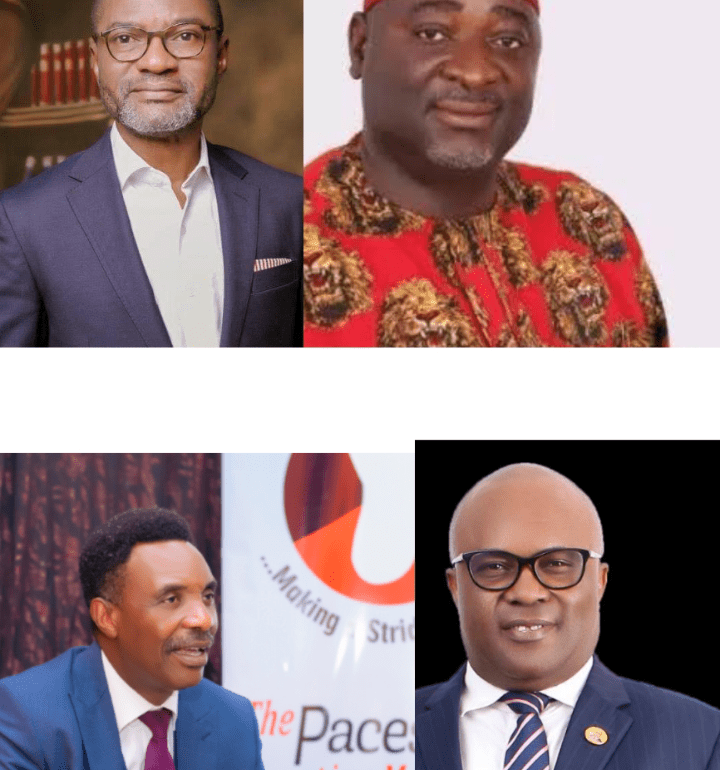
    Frank Nweke II, Okeifufe

    Frank Nweke II (Okeifufe) was born on September 18, 1965 to HRH Igwe & Lolo Frank Onyemaechi Nweke, Okeifufe 1 of Ishi Ozalla. He is from Ishi Ozalla in Nkanu West LG of Enugu State.

    Frank has more than 15 years proven leadership experience at both State and Federal government levels and well over 20 years of same in the private sector of the economy. He has remained above board in all the private and public sector roles that he has occupied, and is today, regarded as one of the few highly respected public servants in Nigeria.

    The recognition of his intellect, dedication to duty and personal integrity as the Chief of Staff to the Governor of Enugu State from 2001-2003 led to his appointment in 2003 as a Federal Minster by President Olusegun Obasanjo in the Intergovernmental Affairs, Special Duties and Youth Affairs portfolio, making him one of the youngest members of the Nigerian Federal Cabinet in which he served. He was to be later appointed as a Minister for Information and Communications in 2005. Prior to being the Chief of Staff to the Governor he was the Resident Consultant on Economic Affairs. He currently sits on the boards of some of Nigeria’s leading companies for the similar considerations.

    In February, 2009, Frank was appointed the Director-General of Nigerian Economic Summit Group (NESG), with a long list of achievements credited to him. The Nigerian Economic Summit Group was founded in 1996 as a platform for public-private sector cooperation on Nigeria’s economic development.

    Frank has to his compliments two Masters degree, Masters in Public Policy and Administration and Masters in Public Administration from Harvard University Kennedy School of Government and University of Maiduguri, Nigeria respectively. His first degree was in Zoology from University of Maiduguri where he graduated with a second-class upper division in 1989. He also attended the Aspen Institute, Colorado, USA.

    In 2020, he was elected as the President of Harvard Kennedy School Alumni Association of Nigeria (HKSAAN).

    Frank Nweke II

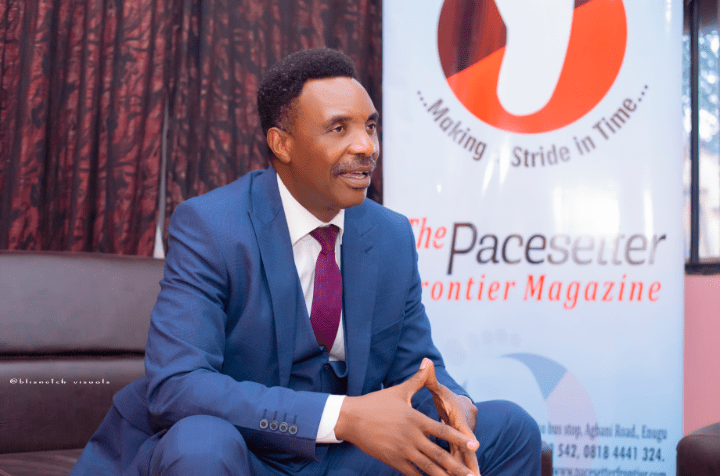
    Rt. Hon. Edward Uchenna Ubosi, Ozege

    Born on April 3, 1971 into the family of Late Chief Felix and Lolo Cecilia Ubosi of Umuchigbo in Iji-Nike part of Enugu East Local Government Area, Enugu State, Edward Uchenna Ubosi has since, become a household name in Nike, Enugu state and beyond.

    Ubosi attended the College of Immaculate Conception (C.I.C), Enugu and the Federal Polytechnic, Oko, where he obtained an OND & HND. He also has a Post Graduate Diploma in Public Administration from University of Calabar and a Masters Degree in Public Administration from ESUT.

    His joined partisan politics in 1997 when he served as Councilor for his ward and later a Supervisory Councilor for Finance from 1999-2002. At a time, he was also the Administrator for Enugu East Central Development Council and the Executive Chairman, Umuchigbo, Iji-Nike community from 2002-2007. In 2009, he was found worthy to be the PDP’s State Financial Secretary up till 2011. He was also the Chairman of Enugu State Waste Management Authority (ESWAMA) Board from 2010-2011. He ran for House of Assembly in 2011 to represent Enugu East Urban Constituency at the State House of Assembly and won.

    Ubosi, a three-time member of the Enugu State House of Assembly was elevated to the hallowed position of the Speaker of the House in the Sixth Assembly, a position he has held till date. He was unanimously elected as the National Vice Chairman, Nigerian Conference of Speakers and in March 2018, he was given the chieftaincy title of Sabbenen Gusau in faraway Zamfara state by the Emir of Gusau, Alhaji Ibrahim Bello.

    Ubosi is a devout Catholic and a faithful family man married to an Amazon, Lady Princess Akunna Ubosi, a union blessed with beautiful children.

    Edward Ubosi

    Dr. Ben Nwoye, Esq

    Dr. Ben Nwoye is from Amurri in Nkanu West Local government area of Enugu State. He is a member of the All Progressives Congress (APC) party and was the Enugu State Chairman of the Party from 2014-2021. Presently, he is the Enugu State APC Caretaker Committee Chairman.

    During his sojourn in the United States of America, he practiced as a Civil Rights Lawyer. He holds a Doctor of Jurisprudence from the prestigious Atlanta’s John Marshall Law School.

    In the 2011 general elections, spurred by a desire to serve, Nwoye ran for Senate under the defunct Action Congress of Nigeria (ACN) party to represent Enugu East Senatorial Zone. He repeated same in the 2015 general elections under the now ruling All Progressives Congress.

    He is the Executive Director of Opeans Nigeria Limited, a safety consulting company, providing safety in Oil & Gas, Maritime and the Military, with locations in Port-Harcourt, Warri and Lagos.

    Nwoye was recently appointed a Federal Commissioner representing the Southeast region in the Federal Competition & Consumer Protection Commission by President Muhammadu Buhari.

    Ben Nwoye

    Engr. Prince Lawrence Ozoemene Ezeh, FNSE

    Engr. Prince Lawrence Ozoemene Ezeh started his Engineering career at the Rivers State University of Science and Technology (now, Rivers State University) Port Harcourt, where he graduated with a Bachelor of Technology Degree in Marine Engineering in 2000. At the Enugu State University of Science and Technology, he obtained a Masters Degree in Engineering management in 2015, and he is currently studying for his PhD.

    Ezeh has successfully ventured into the Transport and Shipping Business, Construction and Civil engineering, Oil and Gas and other subsidiary businesses. A COREN Registered Engineer, he is a Member and Fellow of the Nigerian Society of Engineers (NSE) as well as a member of the International Marine Contractors Association.

    Ezeh, a member of the Peoples Democratic Party, is the Founder and Chief Executive Officer of Buzuzu Construction Company Limited, a Civil Engineering and Construction Company, while also sitting on the board of several other companies as Chairman. Engr. Lawrence is a Former Board Member, Federal Medical Centre, Nguru, Yobe state and a Philanthropist by Nature. Engr. Lawrence has taken his philanthropy to an enviable height which has brought succor to communities in his area. Among these numerous services are:

    -Extension of electricity to all the villages in his community.

    -Continuous annual grading and lathering of Nara-Mburubu-Nomeh roads

    -Award of scholarship to 69 indigents youths Through Prince and Princess Lawrence Ezeh Scholarship Foundation

    -Rehabilitation of the electrical installations in Nkanu East Connecting some parts of Nkanu East to the national grid

    -Rehabilitation of the several bridges in Nkanu East.

    -Construction of 4.5km asphalt road with street lights in his community

    He is also a recipient of an Honorary Doctorate Degree by the Federal College of Dental Technology, Enugu; United Nations Mayor of Peace Award, the prestigious title of Omeruoha 1 of Enugu state conferred on him by the apex Igbo cultural organization, Ohaneze Ndi Igbo and numerous other prestigious awards in Nigeria and Diaspora.

    In the 2019 general elections, he ran for the Nigerian Senate to represent Enugu East Senatorial Zone, first under the Peoples Democratic Party, and later under the All Progressives Congress.

    A Royal Prince by birth, he is from Mburumbu in Nkanu East Local Government Area of Enugu State.

    Engr. Prince Lawrence Ezeh
    Engr. Prince Lawrence Ezeh

    To be continued…

  • Enugu LGA election: Odalije support group donates N44m to PDP

    Enugu LGA election: Odalije support group donates N44m to PDP

    Enugu LGA election: Chinyeaka Ohaa’s support group donates N44m to PDP

    Governor Ifeanyi Ugwuanyi stands out in the galaxy of the 36 state governors in by his unwavering commitment to democratic principles in his governance of Enugu state.

    This is manifest in several of his activities especially in the consistency with which he conducts local government elections since his assumption of office in 2015.

    PDP party primaries have just been concluded, 17 Council Chairmanship candidates with 260 Councillorship candidates nominated, campaign flagged off for the local government election scheduled for 23/02/22.

    To this effect, there has been a flurry of activities by politicians, business moguls, and different interest groups geared towards campaign fund raising for political parties and candidates. While some politicians are donating different sums of money and materials to political parties and candidates of their preference, political support groups and sundry associations are not left out.

    Odalije Support Group, the umbrella association propping the gubernatorial ambition of Sir Chinyeaka Ohaa, ex-Federal Permanent Secretary and one of the frontline gubernatorial candidates in the 2023 Enugu race donated the sum of forty four Million Naira (#44,000,000) to the PDP as its own contribution to enhance the PDP’s smooth and successful prosecution of its campaigns for the election.

    The group said the donation is its own widow’s mite, but it remains, from available record, the highest contribution to state PDP by any group or individual toward funding the Party’s campaign for the local Council elections.

    Reliable PDP sources said that the breakdown of the donation is the distribution of the sum of 2 million naira to each of the 17 local government chapters of PDP, totalling 34 million naira, and 10 million naira to the State Executive Council of the PDP.

    Recall that Odalije Support Group and its candidate, Sir Chinyeaka Ohaa, have, at different times in the years past, been consistently profuse in campaign fundraising, financial and moral support to politicians and non-politicians across Enugu State.

    Sir Chinyeaka Ohaa has been adjudged to be an outstanding philanthropist who, according to political pundits, “spares no resources nor himself, and deploys the full artillery of his incredibly wide network of contacts to achieve a result. He is endowed with an incredibly large, and most generous, heart that enables him to always know how to offer a hand, never abandoning people at any time, and anticipating, at every turn, the good that needed to be done, for this or that person”

    An immensely experienced technocrat, Sir Chinyeaka Ohaa is believed to be in the first eleven of those who want to succeed governor Ugwuanyi in 2023.

    (EverydayNews)