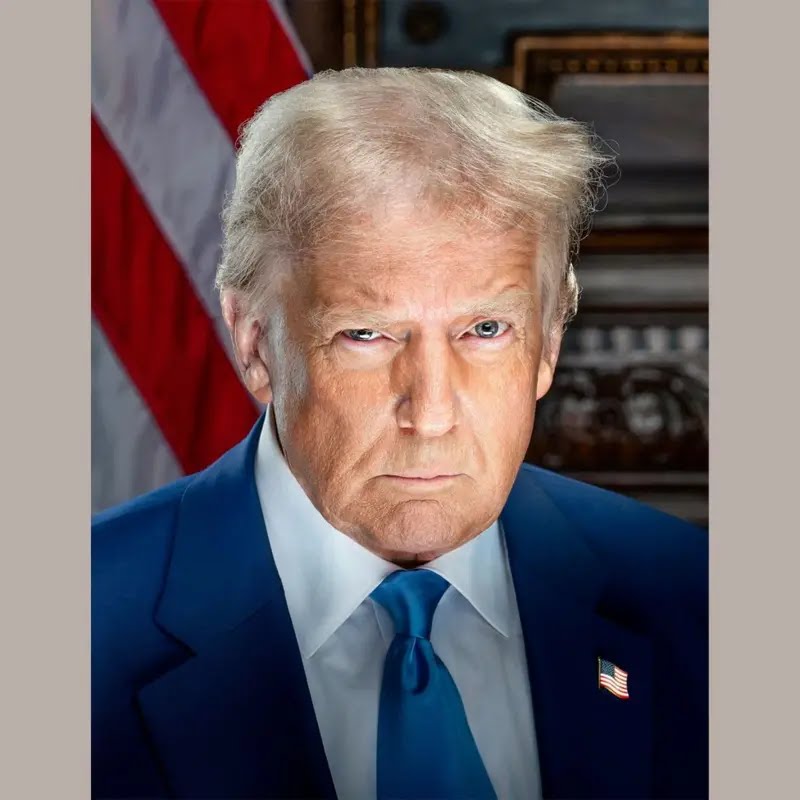
Read the full text of the president’s speech on the restrictions below:
During my first Administration, I restricted the entry of certain foreign nationals into the United States to prevent national security and public safety threats from reaching our borders. The Supreme Court upheld these restrictions. I reinstated these successful policies in Executive Order 14161 of January 20, 2025 (Protecting the United States From Foreign Terrorists and Other National Security and Public Safety Threats), and Proclamation 10949 of June 4, 2025 (Restricting the Entry of Foreign Nationals To Protect the United States From Foreign Terrorists and Other National Security and Public Safety Threats).
It is the policy of the United States to protect its citizens from foreign nationals who intend to commit terrorist attacks, threaten our national security and public safety, incite hate crimes, or otherwise exploit the immigration laws for malevolent purposes.
The United States must exercise extreme vigilance during the visa-issuance and immigration processes to identify, prior to their admission or entry into the United States, foreign nationals who intend to harm Americans or our national interests. The United States Government must ensure that admitted aliens do not intend to threaten its citizens; undermine or destabilize its culture, government, institutions, or founding principles; or advocate for, aid, or support designated foreign terrorists or other threats to our national security.
In order to protect our Nation, as directed in Executive Order 14161, the Secretary of State, in coordination with the Attorney General, the Secretary of Homeland Security, and the Director of National Intelligence, identified countries throughout the world for which screening and vetting information was so deficient as to warrant a full or partial suspension of the admission of nationals from those countries pursuant to section 212(f) of the Immigration and Nationality Act (INA), 8 U.S.C. 1182(f). Accordingly, in Proclamation 10949, I restricted the entry of foreign nationals into the United States from countries with deficient screening and vetting information to protect the national security and public safety of the United States and its people. The proclamation also directed the United States Government to immediately engage countries identified in the proclamation on measures that must be taken to comply with the screening, vetting, immigration, and security requirements of the United States.
Despite those engagements, most of the countries identified in Proclamation 10949, as well as others, continue to exhibit woeful inadequacies in screening, vetting, and provision of information. At least one country lacks mechanisms in hospitals to ensure births are reported, and widespread corruption, combined with a general lack of vetting and poor recordkeeping, result in any non-citizen being able to obtain any civil document from that country, particularly if that person is willing to pay a fee or engage an individual that specializes in assisting in such fraud. In that same country, law enforcement records are not maintained with the accuracy or consistency necessary to provide representations of individuals’ criminal histories to the United States Government. In another country, civil documents like marriage licenses and birth certificates are handwritten and stamped on regular paper, making them highly susceptible to alteration, and there is a fraudulent document market that produces all types of falsified records, making written corroboration of any visa application practically impossible. In yet another country, criminal records are widely unreliable and inaccessible. And in another, United States visas are used as a tool for illicit transborder movement of assets by corrupt government officials and organized criminal groups. Corruption in another country even extends to the national school system, which has provided falsified diplomas and grade information in the past to fraudsters who have tried to obtain student visas and eligibility for large athletic scholarships. The government of another country refuses to provide passport exemplars, undermining the United States Government’s ability to detect fraudulent documents. In another country, the population, for the most part, does not formally document life events. This makes effective verification of basic biographical data such as birthdates, marriages, and parentage exceedingly difficult, if not impossible. Such countries warrant continued or new travel restrictions.
Further, after continuing their review, and in light of the experience gained since the issuance of Proclamation 10949 and the reaction of foreign countries to the issuance of that proclamation, the Secretary of State, the Attorney General, the Secretary of Homeland Security, and the Director of National Intelligence have identified additional countries that cannot meet basic criteria for identifying their nationals and residents who pose national security and public safety threats and for sharing information with the United States. For example, only 40 percent of one country’s territory is under complete government control, and officials there have noted that their ability to securely process, house, or monitor non citizens is constrained. In another country, corruption in various forms is pervasive. Other countries have been subject to successful efforts to overthrow or undermine their governments, with the result that radical terrorist groups operate with minimal, if any, interference from law enforcement, engaging in forced labor, sex trafficking, illegal drug manufacturing and distribution, and other activities that destabilize such countries. And, because of the poor documentation practices and corrupt governments in these countries, there can be little assurance that the foreign nationals from these countries who seek to come to America on immigrant or nonimmigrant visas are not bringing these criminal enterprises with them to the United States.
According to United States law enforcement reporting, foreign nationals from countries named in this proclamation have been involved with crimes that include murder, terrorism, embezzling public funds, human smuggling, human trafficking, and other criminal activity. Many of these countries are ranked in the top third of countries for criminality, and widely unreliable foreign civil documents and lack of authoritative criminal information make it extremely difficult for United States screening and vetting authorities to assess prior criminal activity and other grounds of inadmissibility.
Finally, some of these countries have offered Citizenship by Investment (CBI) without residency, which poses challenges for screening and vetting purposes. As an example, a foreign national from a country that is subject to travel restrictions could purchase CBI from a second country that is not subject to travel restrictions, obtain a passport in the citizenship of that second country, and subsequently apply for a United States visa for travel to the United States, thus evading the travel restrictions on his or her first country. Additionally, United States law enforcement and the Department of State have found that, historically, CBI programs have been susceptible to several risks. These risks include allowing an individual to conceal his or her identity and assets to circumvent travel restrictions or financial or banking restrictions.
Foreign nationals from the countries described above have also exploited the historic generosity of the United States and violated our Nation’s immigration laws by not adhering to the terms of their nonimmigrant or immigrant visas. As cited in the Department of Homeland Security (DHS) Entry/Exit Overstay Report, foreign nationals from many countries have high nonimmigrant visa overstay rates. These visa overstays and other abuses flagrantly violate United States immigration laws, despite generous incentives offered by my Administration — for example, the ability to self-deport using the CBP Home app. To faithfully uphold United States immigration law, the flow of foreigners from countries with high overstay rates or significant fraud must stop.
In addition, the implementation of Proclamation 10949 counsels narrowing the categorical exceptions described in that proclamation to prevent exploitation by foreign nationals. For example, immigrant visas for family members of individuals in the United States will no longer be a broad categorical exception. As described above, the countries to which this proclamation applies have persistent, chronic vetting deficiencies that impede conclusive admissibility determinations and that are readily exploitable to threaten United States national security and public safety. These deficiencies include poor civil documentation and recordkeeping practices, widespread corruption and fraud, unreliable or inaccessible criminal records, and unreliable government travel documents. These pervasive risks concerning nationals from the covered countries apply with at least equal force to family-based visa applications — which comprise most of the immigrant visa applications from such countries — and potentially with even greater force. Familial ties can serve — and, in the past, have in fact served, based on concrete information provided by United States law enforcement and the Department of State — as unique vectors for fraudulent, criminal, or even terrorist activity through means such as the domestic or international financing of such activity. Broadly excepting most immigrant visa applicants from the countries whose risks and deficiencies most gravely threaten America is inconsistent with protecting our national security and with the purpose of driving greater cooperation and vetting improvements by these specific countries. This is particularly true in light of the large numbers of individuals granted United States immigration status during the prior administration without sufficient documentation and vetting mechanisms in place, whose family members might take advantage of such an exception, just as criminals have taken advantage of family-based visas in the past. Accordingly, I have determined that the risks from the classes of aliens covered by this proclamation cannot be satisfactorily mitigated absent resolution of the predominating country-specific concerns, and any extraordinary cases can be appropriately addressed through the national-interest exceptions provided for in this proclamation and Proclamation 10949.
As a result of these reviews and considerations, I have decided — as described in sections 2 and 3 of this proclamation — to continue to impose and modify the limitations set forth in sections 2 and 3 of Proclamation 10949 on the entry into the United States by certain classes of foreign nationals. Also, I have decided — as described in sections 4 and 5 of this proclamation — to impose the limitations set forth below on the entry into the United States by certain other classes of foreign nationals.
NOW, THEREFORE, I, DONALD J. TRUMP, President of the United States of America, by the authority vested in me by the Constitution and the laws of the United States of America, including sections 212(f) and 215(a) of the INA, 8 U.S.C. 1182(f) and 1185(a), and section 301 of title 3, United States Code, hereby find that, absent the measures set forth in this proclamation, the immigrant and nonimmigrant entry into the United States of persons described in sections 2, 3, 4, and 5 of this proclamation would be detrimental to the interests of the United States, and that their entry should be subject to certain restrictions, limitations, and exceptions. I therefore hereby proclaim the following:
Section 1. Policy and Purpose. (a) It is the policy of the United States to protect its citizens from terrorist attacks and other national security and public safety threats. Screening and vetting protocols and procedures associated with visa adjudications and other immigration processes play a critical role in implementing that policy. These protocols and procedures enhance our ability to detect foreign nationals who may commit, aid, or support acts of terrorism, or otherwise pose a safety threat, and they aid our efforts to prevent such foreign nationals from entering the United States.
(b) Identity-management and information-sharing standards and practices of foreign governments impact the effectiveness of the screening and vetting protocols and procedures of the United States. Foreign governments manage the identity and travel documents of their nationals and residents. They also control the circumstances under which they provide information about their nationals and residents to other governments, including information about known and suspected terrorists and criminals.
It is, therefore, the policy of the United States to take all necessary and appropriate steps to encourage foreign governments to improve their identity-management and information-sharing protocols and procedures and to regularly share their identity and threat information with the screening and vetting systems of the United States.
(c) Proclamation 10949 directed the United States Government to fully restrict and limit the entry of nationals of the following 12 countries: Afghanistan, Burma, Chad, Republic of the Congo, Equatorial Guinea, Eritrea, Haiti, Iran, Libya, Somalia, Sudan, and Yemen. The proclamation directed the United States Government to partially restrict and limit the entry of nationals of the following 7 countries: Burundi, Cuba, Laos, Sierra Leone, Togo, Turkmenistan, and Venezuela. Additionally, the proclamation directed the Secretary of State, in consultation with the Attorney General, the Secretary of Homeland Security, and the Director of National Intelligence, to immediately engage each of the countries identified in the proclamation on measures that must be taken to comply with United States screening, vetting, immigration, and security requirements.
(d) Proclamation 10949 directed the Secretary of State, in consultation with the Attorney General, the Secretary of Homeland Security, and the Director of National Intelligence, to submit a report to the President, through the Assistant to the President for Homeland Security, describing his assessment and recommending whether any suspensions and limitations imposed by the proclamation should be continued, terminated, modified, or supplemented.
(e) The Secretary of State, with the Assistant to the President for Homeland Security, presented the report described in subsection (d) of this section, recommending that entry restrictions and limitations continue to apply to foreign nationals of several countries. The report also identified additional countries for which vetting and screening information is so deficient as to warrant a full or partial suspension of admission. These recommendations follow the engagement with foreign countries that I directed in Proclamation 10949.
(f) In evaluating the recommendations from the Secretary of State and determining whether and to what extent to impose, or continue to impose, restrictions for each country, I consulted with the Secretary of State, the Secretary of War, the Attorney General, the Secretary of Homeland Security, the Director of National Intelligence, appropriate Assistants to the President, and the Director of the Central Intelligence Agency. I considered foreign policy, national security, and counterterrorism goals. I further considered various factors, including each country’s screening and vetting capabilities, information-sharing policies, and country-specific risk factors, including whether each country has a significant terrorist presence within its territory, its visa-overstay rate, and its cooperation with accepting back its removable nationals. Each of these factors, including visa-overstay rates, was just one of the factors considered in making the determinations in this proclamation, and the determinations in this proclamation are based on the totality of the circumstances with respect to each country after a review of all relevant factors.
I also considered the different risks posed by aliens admitted on immigrant visas and those admitted on nonimmigrant visas. Persons admitted on immigrant visas are, or can become, lawful permanent residents of the United States. Such persons admitted on immigrant visas may present national security or public safety concerns that may be distinct from those admitted as nonimmigrants. The United States affords lawful permanent residents more enduring rights than it does to nonimmigrants. Lawful permanent residents are more difficult to remove than nonimmigrants, even after national security or public safety concerns arise, which increases the costs and aggravates the dangers of errors associated with admitting such individuals. And although immigrants are generally subject to more extensive vetting than nonimmigrants, such vetting is far less reliable when the country from which someone seeks to emigrate maintains inadequate identity-management or information-sharing policies or otherwise poses risks to the national security or public safety of the United States.
I reviewed these factors and assessed these goals, with a particular focus on crafting country-specific restrictions. This approach was designed to encourage cooperation with the relevant countries in recognition of each country’s unique circumstances. The restrictions and limitations imposed by this proclamation are, in my judgment, necessary to prevent the entry or admission of foreign nationals about whom the United States Government lacks sufficient information to assess the risks they pose to the United States. The restrictions and limitations imposed by this proclamation are necessary: to garner cooperation from foreign governments, including as to reducing overstay rates of their nationals; enforce our immigration laws; and advance other important foreign policy, national security, and counterterrorism objectives. Under the current circumstances, without the restrictions and limitations imposed in this proclamation, the entry or admission of such foreign nationals is detrimental to the national interest.
(g) After reviewing the report described in subsection (d) of this section, and after accounting for the foreign policy, national security, and counterterrorism objectives of the United States, I have determined to continue to fully restrict and limit the entry of nationals of the following 12 countries: Afghanistan, Burma, Chad, Republic of the Congo, Equatorial Guinea, Eritrea, Haiti, Iran, Libya, Somalia, Sudan, and Yemen. These restrictions distinguish between, but apply to both, the entry of immigrants and nonimmigrants.
(h) After reviewing the report described in subsection (d) of this section, and after accounting for the foreign policy, national security, and counterterrorism objectives of the United States, I have determined to fully restrict and limit the entry of nationals of 7 additional countries: Burkina Faso, Laos, Mali, Niger, Sierra Leone, South Sudan, and Syria. These restrictions distinguish between, but apply to both, the entry of immigrants and nonimmigrants. I have also determined to fully restrict and limit the entry of individuals using travel documents issued or endorsed by the Palestinian Authority (PA).
(i) After reviewing the report described in subsection (d) of this section, and after accounting for the foreign policy, national security, and counterterrorism objectives of the United States, I have determined to continue to partially restrict and limit the entry of nationals of the following 4 countries: Burundi, Cuba, Togo, and Venezuela. I have also decided to modify the partial restriction and limitation on the entry of nationals of Turkmenistan. These restrictions distinguish between, but apply to both, the entry of immigrants and nonimmigrants.
(j) After reviewing the report described in subsection (d) of this section, and after accounting for the foreign policy, national security, and counterterrorism objectives of the United States, I have determined to partially restrict and limit the entry of nationals of the following 15 countries: Angola, Antigua and Barbuda, Benin, Cote d ‘Ivoire, Dominica, Gabon, The Gambia, Malawi, Mauritania, Nigeria, Senegal, Tanzania, Tonga, Zambia, and Zimbabwe. These restrictions distinguish between, but apply to both, the entry of immigrants and nonimmigrants.
(k) Sections 4 and 5 of this proclamation describe some of the identity-management and information-sharing inadequacies that led me to impose, or continue to impose, the restrictions described in this proclamation. These inadequacies are sufficient to justify my finding that unrestricted entry of nationals from the named countries would be detrimental to the interests of the United States. Publicly disclosing additional details on which I relied in making these determinations, however, would cause serious damage to the national security of the United States, and many such details are classified.
Sec. 2. Continued Full Suspension of Entry for Nationals of Countries of Identified Concern. The entry into the United States of nationals of the following countries continues to be suspended and limited as set forth in Proclamation 10949 and herein, subject to the categorical exceptions and case-by-case waivers described in section 6 of this proclamation:
(a) Afghanistan;
(b) Burma;
(c) Chad;
(d) Republic of the Congo;
(e) Equatorial Guinea;
(f) Eritrea;
(g) Haiti;
(h) Iran;
(i) Libya;
(j) Somalia;
(k) Sudan; and
(l) Yemen.
Sec. 3. Continued Partial Suspension of Entry for Nationals of Countries of Identified Concern. The entry into the United States of nationals of the following countries continues to be suspended and limited as set forth in Proclamation 10949 and herein, subject to the categorical exceptions and case-by-case waivers described in section 6 of this proclamation:
(a) Burundi;
(b) Cuba;
(c) Togo; and
(d) Venezuela.
Sec. 4. Full Suspension of Entry for Nationals of Countries of Identified Concern. The entry into the United States of nationals of the following countries is hereby suspended and limited, as follows, subject to the categorical exceptions and case-by-case waivers described in section 6 of this proclamation:
(a) Burkina Faso
(i) According to the Department of State, terrorist organizations continue to plan and conduct terrorist activities throughout Burkina Faso. According to the Fiscal Year 2024, Department of Homeland Security (DHS) Entry/Exit Overstay Report (“Overstay Report”), Burkina Faso had a B-1/B-2 visa overstay rate of 9.16 percent and a student (F), vocational (M), and exchange visitor (J) visa overstay rate of 22.95 percent. Additionally, Burkina Faso has historically refused to accept back its removable nationals.
(ii) The entry into the United States of nationals of Burkina Faso as immigrants and as nonimmigrants is hereby fully suspended.
(b) Laos
(i) According to the Overstay Report, Laos had a B‑1/B-2 visa overstay rate of 28.34 percent and an F, M, and J visa overstay rate of 11.41 percent. According to the Fiscal Year 2023, Department of Homeland Security (DHS) Entry/Exit Overstay Report (“2023 Overstay Report”), Laos had a B-1/B-2 visa overstay rate of 34.77 percent and an F, M, and J visa overstay rate of 6.49 percent. Additionally, Laos has historically failed to accept back its removable nationals.
(ii) The entry into the United States of nationals of Laos as immigrants and as nonimmigrants is hereby fully suspended.
(c) Mali
(i) According to the Department of State, armed conflict between the Malian government and armed groups is common throughout the country. Terrorist organizations operate freely in certain areas of Mali.
(ii) The entry into the United States of nationals of Mali as immigrants and as nonimmigrants is hereby fully suspended.
(d) Niger
(i) According to the Department of State, terrorists and their supporters are active in planning kidnappings in Niger, and they may attack anywhere in the country. According to the Overstay Report, Niger had a B-1/B-2 visa overstay rate of 13.41 percent and an F, M, and J visa overstay rate of 16.46 percent.
(ii) The entry into the United States of nationals of Niger as immigrants and as nonimmigrants is hereby fully suspended.
(e) Sierra Leone
(i) According to the Overstay Report, Sierra Leone had a B-1/B-2 visa overstay rate of 16.48 percent and an F, M, and J visa overstay rate of 35.83 percent. According to the 2023 Overstay Report, Sierra Leone had a B-1/B-2 visa overstay rate of 15.43 percent and an F, M, and J visa overstay rate of 35.83 percent. Additionally, Sierra Leone has historically failed to accept back its removable nationals.
(ii) The entry into the United States of nationals of Sierra Leone as immigrants and as nonimmigrants is hereby fully suspended.
(f) South Sudan
(i) According to the Overstay Report, South Sudan had a B-1/B-2 visa overstay rate of 6.99 percent and an F, M, and J visa overstay rate of 26.09 percent. Additionally, South Sudan has historically failed to accept back its removable nationals.
(ii) The entry into the United States of nationals of South Sudan as immigrants and as nonimmigrants is hereby fully suspended.
(g) Syria
(i) Syria is emerging from a protracted period of civil unrest and internal strife. While the country is working to address its security challenges in close coordination with the United States, Syria still lacks an adequate central authority for issuing passports or civil documents and does not have appropriate screening and vetting measures. According to the Overstay Report, Syria had a B-1/B-2 visa overstay rate of 7.09 percent and a F, M, and J visa overstay rate of 9.34 percent.
(ii) The entry into the United States of nationals of Syria as immigrants and nonimmigrants is hereby fully suspended.
(h) Palestinian Authority Documents
(i) Several United States-designated terrorist groups operate actively in the West Bank or Gaza Strip and have murdered American citizens. Also, the recent war in these areas likely resulted in compromised vetting and screening abilities. In light of these factors, and considering the weak or nonexistent control exercised over these areas by the PA, individuals attempting to travel on PA-issued or endorsed travel documents cannot currently be properly vetted and approved for entry into the United States.
(ii) The entry into the United States of foreign nationals who seek to travel on any travel documents issued or endorsed by the PA, as immigrants and nonimmigrants, is hereby fully suspended.
Sec. 5. Partial Suspension of Entry for Nationals of Countries of Identified Concern. The entry into the United States of nationals of the following countries is hereby suspended and limited, as follows, subject to the categorical exceptions and case-by-case waivers described in section 6 of this proclamation:
(a) Angola
(i) According to the Overstay Report, Angola had a B-1/B-2 visa overstay rate of 14.43 percent and an F, M, and J visa overstay rate of 21.92 percent.
(ii) The entry into the United States of nationals of Angola as immigrants, and as nonimmigrants on B-1, B‑2, B-1/B-2, F, M, and J visas, is hereby suspended.
(iii) Consular officers shall reduce the validity for any other nonimmigrant visa issued to nationals of Angola to the extent permitted by law.
(b) Antigua and Barbuda
(i) Antigua and Barbuda has historically had CBI without residency.
(ii) The entry into the United States of nationals of Antigua and Barbuda as immigrants, and as nonimmigrants on B-1, B-2, B-1/B-2, F, M, and J visas, is hereby suspended.
(iii) Consular officers shall reduce the validity for any other nonimmigrant visa issued to nationals of Antigua and Barbuda to the extent permitted by law.
(c) Benin
(i) According to the Overstay Report, Benin had a B-1/B-2 overstay rate of 12.34 percent and an F, M, and J visa overstay rate of 36.77 percent.
(ii) The entry into the United States of nationals of Benin as immigrants, and as nonimmigrants on B-1, B-2, B-1/B-2, F, M, and J visas, is hereby suspended.
(iii) Consular officers shall reduce the validity for any other nonimmigrant visa issued to nationals of Benin to the extent permitted by law.
(d) Cote d ‘Ivoire
(i) According to the Overstay Report, Cote d’Ivoire had a B-1/B-2 visa overstay rate of 8.47 percent and an F, M, and J visa overstay rate of 19.09 percent.
(ii) The entry into the United States of nationals of Cote d ‘Ivoire as immigrants, and as nonimmigrants on B-1, B-2, B-1/B-2, F, M, and J visas, is hereby suspended.
(iii) Consular officers shall reduce the validity for any other nonimmigrant visa issued to nationals of Cote d ‘Ivoire to the extent permitted by law.
(e) Dominica
(i) Dominica has historically had CBI without residency.
(ii) The entry into the United States of nationals of Dominica as immigrants, and as nonimmigrants on B‑1, B-2, B-1/B-2, F, M, and J visas, is hereby suspended.
(iii) Consular officers shall reduce the validity for any other nonimmigrant visa issued to nationals of Dominica to the extent permitted by law.
(f) Gabon
(i) According to the Overstay Report, Gabon had a B-1/B-2 visa overstay rate of 13.72 percent and an F, M, and J visa overstay rate of 17.77 percent.
(ii) The entry into the United States of nationals of Gabon as immigrants, and as nonimmigrants on B-1, B-2, B-1/B-2, F, M, and J visas, is hereby suspended.
(iii) Consular officers shall reduce the validity for any other nonimmigrant visa issued to nationals of Gabon to the extent permitted by law.
(g) The Gambia
(i) According to the Overstay Report, The Gambia had a B-1/B-2 visa overstay rate of 12.70 percent and an F, M, and J visa overstay rate of 38.79 percent. Additionally, The Gambia has historically refused to accept back its removable nationals.
(ii) The entry into the United States of nationals of The Gambia as immigrants, and as nonimmigrants on B-1, B-2, B-1/B-2, F, M, and J visas, is hereby suspended.
(iii) Consular officers shall reduce the validity for any other nonimmigrant visa issued to nationals of The Gambia to the extent permitted by law.
(h) Malawi
(i) According to the Overstay Report, Malawi had a B‑1/B-2 visa overstay rate of 22.45 percent and an F, M, and J visa overstay rate of 31.99 percent.
(ii) The entry into the United States of nationals of Malawi as immigrants, and as nonimmigrants on B-1, B-2, B-1/B-2, F, M, and J visas, is hereby suspended.
(iii) Consular officers shall reduce the validity for any other nonimmigrant visa issued to nationals of Malawi to the extent permitted by law.
(i) Mauritania
(i) According to the Overstay Report, Mauritania had a B-1/B-2 visa overstay rate of 9.49 percent. According to the Department of State, the Government of Mauritania has little presence in certain parts of the country, which creates substantial screening and vetting difficulties.
(ii) The entry into the United States of nationals of Mauritania as immigrants, and as nonimmigrants on B-1, B-2, B-1/B-2, F, M, and J visas, is hereby suspended.
(iii) Consular officers shall reduce the validity for any other nonimmigrant visa issued to nationals of Mauritania to the extent permitted by law.
(j) Nigeria
(i) Radical Islamic terrorist groups such as Boko Haram and the Islamic State operate freely in certain parts of Nigeria, which creates substantial screening and vetting difficulties. According to the Overstay Report, Nigeria had a B-1/B-2 visa overstay rate of 5.56 percent and an F, M, and J visa overstay rate of 11.90 percent.
(ii) The entry into the United States of nationals of Nigeria as immigrants, and as nonimmigrants on B-1, B‑2, B-1/B-2, F, M, and J visas, is hereby suspended.
(iii) Consular officers shall reduce the validity for any other nonimmigrant visa issued to nationals of Nigeria to the extent permitted by law.
(k) Senegal
(i) According to the Overstay Report, Senegal had a B-1/B-2 visa overstay rate of 4.30 percent and an F, M, and J visa overstay rate of 13.07 percent.
(ii) The entry into the United States of nationals of Senegal as immigrants, and as nonimmigrants on B-1, B-2, B-1/B-2, F, M, and J visas, is hereby suspended.
(iii) Consular officers shall reduce the validity for any other nonimmigrant visa issued to nationals of Senegal to the extent permitted by law.
(l) Tanzania
(i) According to the Overstay Report, Tanzania had a B-1/B-2 visa overstay rate of 8.30 percent and an F, M, and J visa overstay rate of 13.97 percent.
(ii) The entry into the United States of nationals of Tanzania as immigrants, and as nonimmigrants on B‑1, B-2, B-1/B-2, F, M, and J visas, is hereby suspended.
(iii) Consular officers shall reduce the validity for any other nonimmigrant visa issued to nationals of Tanzania to the extent permitted by law.
(m) Tonga
(i) According to the Overstay Report, Tonga had a B‑1/B-2 visa overstay rate of 6.45 percent and an F, M, and J visa overstay rate of 14.44 percent.
(ii) The entry into the United States of nationals of Tonga as immigrants, and as nonimmigrants on B-1, B-2, B-1/B-2, F, M, and J visas, is hereby suspended.
(iii) Consular officers shall reduce the validity for any other nonimmigrant visa issued to nationals of Tonga to the extent permitted by law.
(n) Turkmenistan
(i) Since the issuance of Proclamation 10949, Turkmenistan has engaged productively with the United States and demonstrated significant progress in improving its identity-management and information-sharing procedures. As a result, the restrictions imposed on Turkmenistan in this proclamation modify and supersede those set forth in section 3(f) of Proclamation 10949.
(ii) The suspension of entry into the United States of nationals of Turkmenistan as nonimmigrants on B-1, B-2, B-1/B-2, F, M, and J visas is lifted. Because some concerns remain, the entry into the United States of nationals of Turkmenistan as immigrants remains suspended.
(o) Zambia
(i) According to the Overstay Report, Zambia had a B‑1/B-2 visa overstay rate of 10.73 percent and an F, M, and J visa overstay rate of 21.02 percent.
(ii) The entry into the United States of nationals of Zambia as immigrants, and as nonimmigrants on B-1, B-2, B-1/B-2, F, M, and J visas, is hereby suspended.
(iii) Consular officers shall reduce the validity for any other nonimmigrant visa issued to nationals of Zambia to the extent permitted by law.
(p) Zimbabwe
(i) According to the Overstay Report, Zimbabwe had a B-1/B-2 visa overstay rate of 7.89 percent and an F, M, and J visa overstay rate of 15.15 percent.
(ii) The entry into the United States of nationals of Zimbabwe as immigrants, and as nonimmigrants on B‑1, B-2, B-1/B-2, F, M, and J visas, is hereby suspended.
(iii) Consular officers shall reduce the validity for any other nonimmigrant visa issued to nationals of Zimbabwe to the extent permitted by law.
Sec. 6. Scope and Implementation of Suspensions and Limitations. (a) Scope. Subject to the exceptions set forth in subsection (b) of this section and any exceptions made pursuant to subsections (c) and (d) of this section, the suspensions of and limitations on entry pursuant to sections 2, 3, 4, and 5 of this proclamation shall apply only to foreign nationals of the designated countries who:
(i) are outside the United States on the applicable effective date of this proclamation; and
(ii) do not have a valid visa on the applicable effective date of this proclamation.
(b) Exceptions. The suspension of and limitation on entry pursuant to sections 2, 3, 4, and 5 of this proclamation shall not apply to:
(i) any lawful permanent resident of the United States;
(ii) any dual national of a country designated under sections 2, 3, 4, or 5 of this proclamation when the individual is traveling on a passport issued by a country not so designated;
(iii) any foreign national traveling with a valid nonimmigrant visa in the following classifications: A‑1, A-2, C-2, C-3, G-1, G-2, G-3, G-4, NATO-1, NATO‑2, NATO-3, NATO-4, NATO-5, or NATO-6;
(iv) any athlete or member of an athletic team, including the coaches, persons performing a necessary support role, and immediate relatives, traveling for the World Cup, Olympics, or other major sporting event as determined by the Secretary of State;
(v) Special Immigrant Visas for United States Government employees under 8 U.S.C. 1101(a)(27)(D); and
(vi) immigrant visas for ethnic and religious minorities facing persecution in Iran.
(c) The exceptions in subsection (b) of this section amend and supersede the exceptions set forth in section 4(b) of Proclamation 10949 with respect to any countries listed in section 2 or 3 of Proclamation 10949 from and after the date of this proclamation.
(d) Exceptions to the suspension of and limitation on entry pursuant to sections 2, 3, 4, and 5 of this proclamation may be made on a case-by-case basis for individuals for whom the Attorney General finds, in her discretion, that the travel by the individual would advance a critical United States national interest involving the Department of Justice, including when individuals must be present to participate in criminal proceedings as witnesses. These exceptions shall be made only by the Attorney General, or her designee, in coordination with the Secretary of State and the Secretary of Homeland Security.
(e) Exceptions to the suspension of and limitation on entry pursuant to sections 2, 3, 4, and 5 of this proclamation may be made on a case-by-case basis for individuals for whom the Secretary of State finds, in his discretion, that the travel by the individual would serve a United States national interest. These exceptions shall be made by only the Secretary of State or his designee, in coordination with the Secretary of Homeland Security or her designee.
(f) Exceptions to the suspension of and limitation on entry pursuant to sections 2, 3, 4, and 5 of this proclamation may be made on a case-by-case basis for individuals for whom the Secretary of Homeland Security finds, in her discretion, that the travel by the individual would serve a United States national interest. These exceptions shall be made by only the Secretary of Homeland Security or her designee, in coordination with the Secretary of State or his designee.
Sec. 7. Adjustments to and Removal of Suspensions and Limitations. (a) Within 180 days of the date of this proclamation, and every 180 days thereafter, the Secretary of State, in consultation with the Attorney General, the Secretary of Homeland Security, and the Director of National Intelligence, shall submit a report to the President, through the Assistant to the President for Homeland Security, recommending whether any suspensions and limitations imposed by sections 2, 3, 4, and 5 of this proclamation should be continued, terminated, modified, or supplemented.
(b) The Secretary of State, in consultation with the Attorney General, the Secretary of Homeland Security, and the Director of National Intelligence, shall continue to engage each of the countries identified in sections 2 and 3 of this proclamation — and shall immediately engage each of the countries identified in sections 4 and 5 of this proclamation — on measures that must be taken to comply with screening, vetting, immigration, and security requirements of the United States.
Sec. 8. Enforcement. (a) The Secretary of State, the Attorney General, and the Secretary of Homeland Security shall consult with appropriate domestic and international partners, including countries and organizations, to ensure efficient, effective, and appropriate implementation of this proclamation.
(b) In implementing this proclamation, the Secretary of State, the Attorney General, and the Secretary of Homeland Security shall comply with all applicable laws and regulations.
(c) No immigrant or nonimmigrant visa issued before the applicable effective date of this proclamation shall be revoked pursuant to this proclamation.
(d) This proclamation shall not apply to an individual who has been granted asylum by the United States or to a refugee who has already been admitted to the United States. Nothing in this proclamation shall be construed to limit the ability of an individual to seek asylum, refugee status, withholding of removal, or protection under the Convention Against Torture, consistent with the laws of the United States.
Sec. 9. Severability. It is the policy of the United States to enforce this proclamation to the maximum extent possible to advance the national security, foreign policy, and counterterrorism interests of the United States. Accordingly:
(a) if any provision of this proclamation, or the application of any provision of this proclamation to any person or circumstance, is held to be invalid, the remainder of this proclamation and the application of its other provisions to any other persons or circumstances shall not be affected thereby; and
(b) if any provision of this proclamation, or the application of any provision of this proclamation to any person or circumstance, is held to be invalid because of the lack of certain procedural requirements, the relevant executive branch official shall implement those procedural requirements to conform with existing law and with any applicable court orders.
Sec. 10. Effective Date. This proclamation is effective at 12:01 a.m. eastern standard time on January 1, 2026.
Sec. 11. General Provisions. (a) Nothing in this proclamation shall be construed to impair or otherwise affect:
(i) the authority granted by law to an executive department or agency, or the head thereof; or
(ii) the functions of the Director of the Office of Management and Budget relating to budgetary, administrative, or legislative proposals.
(b) This proclamation shall be implemented consistent with applicable law and subject to the availability of appropriations.
(c) This proclamation is not intended to, and does not, create any right or benefit, substantive or procedural, enforceable by law or in equity by any party against the United States, its departments, agencies, or entities, its officers, employees, or agents, or any other person.
(d) The costs for publication of this proclamation shall be borne by the Department of State.
IN WITNESS WHEREOF, I have hereunto set my hand this sixteenth day of December, in the year of our Lord two thousand twenty-five, and of the Independence of the United States of America the two hundred and fiftieth.
DONALD J. TRUMP