Category: News

This is an optional category description

  • Human Right Activists to protest against Electoral Act 2022 Clause 84


    The most appropriate note on which to commence this dialogue on the controversial clause 84(12) of the much-debated and anticipated electoral act 2022 is by adopting the aphorism when two elephants fight, the grass suffers.

    The reasons for applying the elephants’ metaphor may not be obvious. But it is simply because the final battle in the war to reform our country’s electoral system was between the all-powerful governors’ forum currently led by Kayode Fayemi, Ekiti State Governor on one side and the National Assembly, with Ahmad Lawan, the senate president and Femi Gbajabiamila, the Speaker of the House of Representatives as leaders of National Assembly, NASS, on the other side.

    I will dwell further on the victor and vanquished aspects of the epic battle between both gladiators in the course of this discourse. But at this juncture, it is pertinent that we first of all focus on the commendable leadership sagacity exhibited by president Mohammadu Buhari in the course of birthing the newly minted electoral act 2022.

    Now, some hawkish people in the presidency might have advised President Buhari not to be perturbed by public criticism whenever he gets tongue-lashed by some elders who speak out, no matter whose Ox is gored, and who are from across the regions ranging from Pa Ayo Adebanjo leader of Afenifere, from the southwest, Prof. Ango Abdullahi, head of Northern Elders Forum, as well as Prof. Ben Nwabueze, Chairman of Igbo Leaders of Thought and longest-living senior advocate of Nigeria from the southeast.

    And the devil-may-care leadership style advocates on the corridors of presidential power would have justified their advice to President Buhari, not to be accommodating or tolerant of criticism and critics by sowing the nihilist idea into his mind that whatever he does as a leader would be considered as unsatisfactory and therefore criticized unnecessarily.


    But following Mr. President’s commendable action of signing into law, the much desired and anticipated Electoral Act 2022 on Friday, February 25, 2022, and the massive applause that he has received from a broad spectrum of Nigerians, including the clergy and the international community alike for the exemplary leadership that he has exhibited in assenting to the bill even if he has expressed reservations about some elements in the act particularly clause 84 (12); by now, it must have dawned on President Buhari who has been fooling who.


    That is because today, it is manifest that Nigerians are capable of acknowledging and commending good work by their president with adulation, as reflected by the torrents of encomiums which have been flowing in the direction of President Buhari from not only civil society organizations that were in the forefront of the struggle for electoral reforms, but even from regional ethnic and cultural groups (that in light of human carnage and misery saw no good in Buhari’s presidency) such as Ohaneze Ndi Igbo from the southeast, Afenifere from the southwest and Arewa Forum from the north as well as Pan Niger Delta Forum, PANDEF from the south-south; not forgetting Middle Belt Forum, MBF, including Inter-party Advisory Council -an umbrella body of all registered political parties, since Friday, February 25 when president Buhari signed off on the act.


    Given the massive welcoming approval accorded the electoral act 2022 by the critical mass of Nigerians,I would argue that no policy initiative of the government in Nigeria in recent history has received such a consensus and broad range of support from across ethnic, religious, and cultural divides in our country, except the UDOJl award (payment of bonus salaries to reward public servants for their support and dedication during the difficult period of the war 1967-70) by the government under then military head of state, General Yakubu Gowon in 1974.


    In my assessment of the current state of affairs in our country, based on the high level of despondency, it is only a decision to restructure the political and social-economic systems as well as the introduction of state police by president Buhari that could have made Nigerians heave the type of sigh of relief that the signing of the electoral act 2022 has elicited.


    But those critical yearnings of the masses which are policies, if executed would advance the status of the entity known as Nigeria from being a mere country to a nation via astute and patriotic leadership, would remain a mirage.


    That is simply because restructuring the political system and introduction of state police which were the heart of the ruling party, APC’s campaign in 2015, that enabled it to clinch the leadership of Nigeria at the center over seven (7) years ago are being treated like plaques. Hence even the recently concluded review of the constitution led by my good friend and brother, Ovie Omo-Agege, deputy senate president, did not even get that critical desire of Nigerians listed for consideration on the floors of NASS, how much more receive the privilege of being debated. The neglect of restructuring and state police in the review of the constitution appear to be deliberate as they are the key components of the report submitted by the Nasir El-Rufai led committee set up by the ruling party to chart the way forward. Already, Nigerian women are literarily up in arms with NASS for ditching their demand for 35% of seats to be allotted to them as a sort of affirmative action, just as traditional rulers are also aghast that their quest to be assigned a more active role in governance was not factored into the reviewed constitution.


    That is a subject for another day.


    By assenting to the electoral bill and its subsequent conversion into law, President Buhari has conferred on Nigerian politics, a breath of fresh air to replace the putrid and toxic elements intrinsic in the electoral act 2010 which has been in operation since the last reform carried out by the pair of ex-presidents Umaru Yardua of blessed memory (2007-10) and Goodluck Jonathan (2010-15).


    It may be recalled that both former Presidents had improved upon the version handed over by the military who sired the problematic 1999 constitution of the federal republic of Nigeria that had just undergone another review and amendment on 1/3/2022 by the National Assembly, NASS.


    Is it not preposterous that the electoral law which had lost its flavor as it was simply inhibiting our ability to organize elections that are free and fair, as identified as far back as 2018 when the idea of electoral reform was first mooted and pursued by NASS, had remained unimproved upon due to mere political chicanery?

    It is such an indictment on the political class that the 2010 electoral act had remained unchanged after 12 years of its application in the recruitment of our political leaders, during which flaws that needed to be reformed urgently were identified, but of which President Buhari had been reluctant to effect, until Friday, February 25, 2022, when he appended his signature.

    That is because, since the idea of reforming the electoral system via a review of the 2010 electoral act was first muted in 2018, (4th review since 1999) the journey to electoral reforms has not only been full of twists and turns, it has actually been torturous for most Nigerians who have somehow been tormented by the back and forth movement of the bill between the executive and legislative arms of government until it finally became law on February 25, 2022.

    Arising from the rigorous exercise that involved the National Assembly (NASS) passing the electoral Act amendment bill for a record five (5) times and transmitting the same to president Buhari who had been demurring from signing-off on it for the same number of times, l was compelled to tag the 2021 electoral bill an Abiku/Ogbabje bill, (stillbirth in African mythology) in one of my previous essays titled: ‘Electoral Act Amendment Bill: Interrogating The Ogbanje/ Abiku Elements’ focused on the issue of electoral reforms and its potential benefits to the body politics of our beloved country underscoring the multiple times that president Buhari vetoed it.

    And the wisecrack, no pain, gain rings true in this instance.

    That is because it is particularly heartening that after the epic struggle, Nigerians are now in a position to be the major beneficiaries as the reforms of the electoral system are bound to lend the political system the required fidelity that would motivate more members of society, particularly those who felt that owing to the opaque nature of the electoral process, their votes would not count, hence they have been shying away from exercising their franchise in previous elections.

    Based on the improvements which the 2022 reform has conferred on the electoral system, going forward, especially during the 2023 general elections, which is barely one year away, Nigerians would likely turn out massively to vote, more so because of ballot stuffing and snatching, as well as election result falsification that used to trigger violence in the polling units, are deemed to have been eliminated by electoral act 2022. The optimism is derived from the belief that the new electoral law has institutionalized transmission of results electronically from polling booths to the INEC database and makes it impossible for votes cast in a particular polling unit to be more than the registered or accredited voters in that location.

    Those were some of the tricks that politicians leveraged in the past to produce perverse election results that generated pre and post-election violence that hitherto defined politics in Nigeria and pinned political actors down in law courts for the better part of their tenure while governance suffered.

    In that regard, by and large, the Electoral Act 2022 can be said to be an elixir that is guaranteed to induce political sanity into our country’s beleaguered democracy.

    In an uncanny way, perhaps the past five years (2018 till February 25, 2022) of trying to get President Buhari to assent to the bill in the multiple times that it was passed by the National Assembly, NASS was not wasted after all.

    The assertion above is derived from the fact that had the process not been delayed and were it not that, apart from our lawmakers, the executive arm of government, and civil society organizations, under the auspices of YIAGA Africa and CUPP (civil society, political parties coalition and democracy advocacy groups), as well as ordinary Nigerians, that generally got involved in pressuring the incumbent president to build on the reforms of the electoral system implemented by his predecessors, Umaru Yar’adua of blessed memory and Goodluck Jonathan that instituted the justice Lawal Uwais committee which reviewed the electoral act 2010, that just amended; electoral 2022 would not have been this robust.

    But due to some omissions and commissions on the part of the executive arm, particularly the presidency which remains unresponsive to the stimuli of the masses that could have generated empathy for president Buhari, it was assumed by most Nigerians that Aso Rock was disconnected from the reality of the masses, a belief underscored by the initial reluctance of Mr President to assent to the bill which is contrary to the wish of the critical mass that is literarily dying for a much better electoral system.

    Having finally signed the bill into an act of law on February 25, 2022, President Buhari has proven wrong those who assumed that he was not keen on bequeathing the legacy of a reformed electoral system to the country before he exits power in 2023.

    As valid as that point of view appears, there is another school of thought that posits that, if the electoral bill was assented to by President Buhari when it was first passed by NASS in 2018, by now, (which is five years after) democracy in Nigeria could have been deepened much more than the level that it is in right now. Actually, each time president Buhari sent the bill back to NASS, an opportunity to move democracy forward was lost. Otherwise, as a nation, after the 2015 election that ushered in President Buhari, by 2019 election, we should have progressed beyond the use of Biometric Voter Accreditation System, BVAS, electronic transmission of results from polling units to INEC database, and all the other innovations contained in the new electoral act 2022, all of which were achieved under the watch of current INEC chairman, Professor Mahmood Yakubu.

    Is not rather disappointing that the improvements in the electoral system that we should have attained in 2018 for the 2019 general elections are what we just achieved in 2022, prior to the looming general elections in 2023?

    It is my opinion, that the electoral process improvements such as the introduction of the concept of diaspora voting, voting by mail, and electronic voting amongst other innovations, that could have deepened our democracy, should have already been incorporated into our electoral system in 2022 and as we set our eyes on 2023 general elections. But owing to the shenanigans that detained it for five years as it bounced between the NASS and presidency like a ping-pong, they are now in our front view mirror as the next electoral reform goals, whereas they could have been in our rearview mirror.

    But as the saying goes, all is well that ends well, which is why Nigerians appear to be content (for now ) with the modest accomplishments of the electoral Act 2022.

    The only worries now are that some of the contents of electoral act 2022 would have to be scrapped so soon after it was assented to or reviewed owing to the reason that they are not seating well with President Buhari, as contained in his cover letter to NASS conveying his approval of the bill into the act. It is a matter of grave concern to watchers of our democracy because, after 23 years of its return as the form of government in Nigeria, democracy can no longer be said to be in its infancy. Strictly speaking, democracy in Nigeria is currently in adulthood simply because a 23 years old man or woman can no longer be referred to as a kid. So why would the passage and adoption of a law by both NASS and the president be so fractious and farcical?

    For instance, President Buhari’s exception to Clause 84(12) of the electoral law that he assented to has thrown up new crises because he believes the clause negates the tenets of democracy. Although, there is supposed to have been a gentleman agreement between president Buhari and NASS leadership to scrap that portion after he might have appended his presidential signature to it, (a process agreed upon to avoid a constitutional challenge that was looming if president Buhari vetoed it and NASS failed to override him before the end of February) following president Buhari’s letter requesting that legislators make good their promise, it was not expected that there would be issues. But there is clearly resistance to keeping the promise made by NASS, particularly from the Lower Chamber which comprises 360 members and therefore more difficult to manipulate than the senate with only 109 members that is less wieldy to maneuver.

    Often, gentleman agreements are susceptible to contention as evidenced by the controversy surrounding rotation of presidential power between north and south which is also hinged on a gentleman agreement hashed out during the 1995 national conference.

    At this juncture, a bit of backgrounding to put things in perspective is necessary. And as l earlier indicated that l would return to the victor and vanquished parties in birthing the electoral act amendment 2022 with respect to clause 84 (12) which is a watered-down cause of the duel between the governors’ forum and the resurgent NASS, let us look at the real reasons that the clause causing prickly heat has remained like a fly perched on the scrotum and could not be easily crushed without severe consequences, hence President Buhari was compelled to sign the bill into law without further filibustering.

    That the controversial clause 84 (12) excludes political appointees from voting or being voted for and compels them to resign 180 days prior to Election Day, is no longer news. The contention is that the provision is contrary to the rule enshrined in the constitution of the federal republic of Nigeria that gives public servants 30 days (as opposed to 180 days) to resign their appointments if they intend to contest for electoral positions as contained in the new electoral law. Since the constitution supersedes any other law, in this instance, appointees resigning 30 days to elections as enshrined in the 1999 constitution as amended would prevail. There would not have been the need to scrub out the 180 days requirement, were it not for the fact that clause 84 (12) also forbids political appointees from voting or being voted for during party conventions. It is needless to point out that denying political appointees the right to vote or be voted for amounts to robbing them of their civic rights and responsibilities. But those who support the current controversial clause 84 (12) electoral act 2022 aver that the clause is aimed at creating a level playing field for all political office aspirants in and out of public office.

    Their point is that being able to run for an elective office while holding public office gives undue advantage to incumbents who would take advantage of their pole positions by capitalizing on public resources available to them and imperil the non-public office holders contesting against them. That concern is real.

    And legislators who are often at the receiving end are the architects of the controversial clause 84 (12) which, if you like is their own curved ball or panacea to the undue advantage enjoyed by governors and Mr president whose appointees (ministers, special advisers in the case of a president and commissioners, special advisers, etc ) help tilt the scale in their favor during party primaries. In light of the revelation above, is anyone still wondering why governors and the president always have a battery of special assistants or appointees with all manners of titles even in the twilight of their tenure? Hitherto, most Nigerians thought it was merely their way of creating jobs for the ‘ boys’ who helped them in securing victory at the polls. Alas, it is much more than that.

    Unbeknownst to most Nigerians, Clause 84 (12) is also a fallout or an adjunct to the proposal by NASS that the process of producing delegates at primaries should be solely direct primaries as opposed to the three options of direct, indirect, and consensus as contained in the electoral bill 2021 vetoed by President Buhari and sent back for re-work.

    As the popular aphorism goes, there are many ways to kill a rat without spilling its blood. That is why the bill was in deference to president Buhari’s re-worked by NASS. But not without cleverly stripping governors of the advantage or luxury of leveraging their appointees to give them a leg up during party primaries through clause 84 (12).

    So in more ways than one, the contest for the control of the ruling party, which is by extension, the soul of Nigeria between the powerful governors’ forum and National Assembly, NASS, did not end with the restoration of the three options of direct, indirect and consensus options in the new electoral law, as it has raged on, but in a more nuanced and subtle way sustained with clause 84 (12).

    Put succinctly, what the legislators could not achieve with their introduction of direct primaries as the sole process of producing candidates for general elections, which was rejected by President Buhari via a veto, they have achieved via clause 84 (12) which whittles considerably the influence of governors during party primaries via their reliance on appointees beholden to them to vote in their favor.

    In my piece on reforming the electoral act earlier referenced, l had advised President Buhari to Beware of IDEs of March and more curved balls as he enters the lame-duck period of his presidency with Governors and NASS taking his two ears hostage and bombarding him with their selfish and group point of view as they try to justify their opposing views of democracy in a bid to undo each other.

    Below is how l had put it:

    “Tellingly, governors and legislators had drawn a battle line on who would outwit each other on the question of whether direct primaries should be enshrined into the electoral act in the process of amendment. I contended further by stating that

    “With President Buhari finally withholding his assent, the leaders of the sub-national entities seem to have triumphed over the legislators.”

    I then observed that “Uncharacteristically, the governors are appearing to be humble in victory by being reticent since 21/12/2021, when president Buhari communicated his refusal to append his signature to the document that had been subjected to a series of back and forth movements between the upper and lower chambers of NASS.”

    Then I concluded by posing the question: “Does the muteness of the governors suggest that their victory may be pyrrhic? Considering the outrage of Nigerians when they kicked against the expunging of electronic transmission of election results from the polling units to the collation centers introduced by the lower chamber, but which was watered down by the upper chamber, by basically stripping INEC of its independence, before it was finally restored in the current bill rejected by president Buhari; the legislature should be leaking its wound.”

    As it turned out, as opposed to licking their wounds, the NASS went back to the drawing board to conceive how they could pull more arrows out of their quivers to combat give hence they were able to come up with clause 84(12) whose efficacy has seen governors reeling in pains. Talk about he who laughs last, laughs best.

    Putting all together, one thing that I can deduce is that NASS is not actually totally in acquiescence with the presidency as it would appear to the ordinary folks who regard our current lawmakers as mere rubber stamps of the presidency simply because the executive arm influenced the emergence of the leadership of both the Upper and Lower chambers which are supposed to be independent.

    Apart from the NASS initiative of forming a committee comprising of members of the Upper and Lower chambers, the presidency and the concerned ministries, departments, or agencies for the purpose of curating public policies at proposal levels which have reduced the high level of public rancor between the two arms of government witnessed during the 8th senate, the NASS particularly the Lower chamber, is not a walk-over as it tries to assert its independence, albeit in more subtle manners.

    That is why scrubbing off clause 84 (12) may not be a walk in the park for the presidency.

    Again, in my view, healthy opposition is good for the deepening of democracy in our beloved Nigeria.

    Even then, politicians and the game of politics never cease to amaze and intrigue the uninitiated and that applies to most Nigerians.

    How can one phantom why Governors who are more likely to end up in the Senate after their tenure be so intent on flexing political muscle with members of the senate where they would most likely end up?

    And vice versa for NASS members who also are more often than not angling to be state governors after serving as senators or members of the National Assembly.

    In my assessment, it is all about temporary advantages to be gained by each of the groups involved in the contest for political powers.

    It elicits the question: is the contestation or rivalry between governors and national legislators ego-driven and therefore ephemeral or altruistic?

    Clearly, it is the revolving door of politics in Nigeria that makes it possible for politicians to pivot between calling the shots in governors’ mansions in their home states and the hallowed chambers of NASS, that justifies the labeling of our present crop of politicians as recycled men and women that have nothing more to offer society, by youths, especially those in the vanguard of Not-Too-Young-To-Rule movements, pushing the candidacy of the likes of Kingsley Moghalu, Dele Momodu, Omoyele Sowore et al who have thrown their hats into the ring as 2023 presidential candidates.

    While the governors and legislators’ epic battle rages on, the import of the adage ‘when two (2) elephants fight, the grass suffers’ must not be lost on the polity which is why l am drawing attention to it via the analysis contained in this intervention.

    In light of the foregoing narrative, the delay in assenting to the amended electoral act until February 25 2022 is attributable to the square up between NASS and governors forum and not totally the fault of president Buhari as it has been cast.

    For now, it is anyone’s guess whether the battle of supremacy between our governors and elected representatives in the NASS which detained the badly needed electoral reforms for five (5) years would continue with the request by president Buhari that clause 84 (12) be deleted. Would a rebellion manifest in the coming days as the matter has now been officially tabled on the floors of the National Assembly, comprising of men and women who may be ready, willing, and able to subsume party dictates for their personal interests as the presidency enters lame-duck period?

    Well, we may not know until when the hurly-burly APC convention and congress for the nomination of presidential candidates by both the ruling and main opposition parties are over.

    Magnus Onyibe, an entrepreneur, public policy analyst, author, development strategist, alumnus of Fletcher School of Law and Diplomacy, Tufts University, Massachusetts, USA, and a former commissioner in Delta State government, sent this piece from Lagos.

    (Vanguard)

  • FG urges NLC to call ASUU to order

    The Federal Government has asked the Nigeria Labour Congress (NLC) to advise its affiliate, the Academic Staff Union of Universities (ASUU), to abide by the provisions of the Trade Disputes Act by calling off its ongoing strike.

    Minister of Labour and Employment, Chris Ngige, made the call when he spoke at the opening ceremony of the 2022 edition of the National Labour Advisory Council (NLAC) in Lagos, yesterday.

    The minister, in a statement by the ministry’s spokesperson, Charles Akpan, in Abuja, also urged the council to discuss as part of its agenda, a workable recipe that appropriately conciliates disputes with associations that are not properly registered as trade unions to ensure they fully abide by the provisions of the law.

    He said: “What will be the relationship with workers’ organisations that are not properly registered as trade unions? The Labour Act is there and it says the minister can discuss with them. But they don’t fully conform with legal provisions, especially in terms of style of negotiation and conciliation. NLAC should, therefore, come to the aid of the country here.

    “Even though the Trade Disputes Act permits the minister to apprehend and deal with these workers that have not been registered as unions, you can also see that when dealing with them, you encounter problems because they do not fully understand the nuisances or obey the labour laws as it should be.

    “If you are a union, you give adequate notice before proceeding on strike. If you are a union too and your strike is apprehended, you go back to your work while necessary adjustment is made to give you justice. NLAC is expected to get the workers’ side of the tripartite to live up to their responsibilities in this regard.”

    The minister noted that some associations in critical sectors of health and education such as Nigeria Medical Association (NMA) National Association of Resident Doctors (NARD) are in actual fact, not properly unionised. NMA and NARD are not a trade union. They are an association of workers.

    “The university teachers are registered under ASUU and are affiliated to the NLC but that affiliation is only in name. It is not, because they don’t obey the Labour Act as it concerns conciliation.

    “For example, ASUU declared a month-long strike and called it a warning strike. It did not notify its employer, the Ministry of Education, nor did the union notify me, the minister of labour, that there is a breakdown in negotiation. I know they had some discussions which were in limbo but I should be notified properly so that I can arrest the breakdown and bring it forward for proper conciliation.

    “Now, I apprehended the dispute in consonance with the Labour Act. They came for conciliation, only for them to go back and continue the strike. This is illegal. The law is that once a dispute is apprehended, everybody returns to status quo ante. The law also says if I arrest a dispute and the party or parties are not ready to conform, I should transfer the dispute within 14 days to either the Industrial Arbitration Panel or to the National Industrial Court of Nigeria in line with Section 17 of the Trade Disputes Act. But I’m concerned that if I do this suo motu, this will not solve the problem getting our children back to school outright

    “So, I’m using this opportunity to plead with the NLC to which ASUU is affiliated, to call them to order, make them obey the law, to let them know what the Trade Disputes Act says and as university teachers, who are even teaching industrial law, to abide by the law. They should call off that strike. That strike is not appropriately instituted. I have conciliated, and made sure the issues in disputes have been decisively dealt with.”

    (Sun)

  • Sunday Igboho released from prison on two conditions


    Yoruba rights activist, Sunday Adeyemo, popularly known as Sunday Igboho, was released from detention on at least two conditions, The PUNCH has learnt.

    Lawyers in the know of his release conditions made this known to The PUNCH on Monday.

    They made this known shortly after the umbrella body of Yoruba Self-determination Groups, Ilana Omo Oodua Worldwide, announced Igboho’s release.

    “The conditions are not too tough. He won’t hold any rally and can’t leave Cotonou,” one of the lawyers said.

    Also, Counsel for the activist, Chief Yomi Aliyyu, SAN, said two of the condition were that Igboho should not leave the medical centre or Cotonou.

    He said, “I am to inform all the followers of Chief Sunday Adeyemo a.k.a Igboho Oosa that he has been released from prison to his medical practitioners under the agreement that he should neither leave the medical centre nor Cotonou for any reason.

    “Praises should be given to two prominent Yoruba personalities — Prof Wole Soyinka and Prof Akintoye for this turnaround in our client’s matter.”

    Aliyyu had on Thursday announced that Igboho had begun fresh negotiation with the Benin Republic government over his health status.

    He explained that Igboho negotiated to be moved to another detention facility over his health status.

    Igboho, who escaped from a deadly raid on his Ibadan residence by the operatives of the Department of State Service on July 1, 2021, was arrested in Benin Republic on his way to Germany on July 19 together with his wife, Ropo. His wife was released earlier.

    During the bloody raid on Igboho’s Sooka residence, the Department of State Services arrested and detained 13 of Igboho’s associates. Two of Igboho’s supporters, identified as Adogan and Alfa, lost their lives during the raid.

    DSS also presented seven AK-47 rifles allegedly recovered during the raid on Igboho’s house on July 1, as well as three pump-action guns, 30 fully charged AK-47 magazines, 5,000 rounds of 7.62mm ammunition, five cutlasses, one jack-knife, one pen knife, two pistol holsters, a pair of binoculars, a wallet containing $5, local and international driving licences in his name, ATM cards, a German residence permit No. YO2N6K1NY bearing his name, two whistles, 50 cartridges and 18 walkie-talkies.

    Others were three charm jackets/traditional body armour, two laptops, one Toshiba and one Compaq laptop, Igboho’s passport and those of his aides.

    However, the aides were later released after a court injunction.

    An Oyo State High Court also awarded N20 billion in damages in the activist’s favour. The court also restrained the Department of State Security and Attorney General of the Federation from arresting Igboho.


    (Punch)

  • Delta Community sets for showdown with husband as eyes, tongue of wife’s corpse missing

    Delta Community sets for showdown with husband as eyes, tongue of wife’s corpse missing

    There was tension in Ogbe-Ani, Ubulu-Uku community, in the Aniocha South Local Government Area of Delta State following the rejection of a corpse that was brought without eyes, tongue and other organs.

    The deceased, Mrs Comfort Biakpara, who was in her early 50s, was said to have been brought to her family compound in Ubulu-Uku by her husband, who hailed from the Burutu Local Government Area of the state.

    PUNCH Metro gathered that the deceased was laid in her compound on Saturday for internment when it was discovered that some vital organs were missing.

    A family source told our correspondent that the incident created apprehension in the community, as youths and elders said the corpse was not their daughter.

    “It was terrible yesterday (Saturday). Our sister was brought without eyes, tongue and other organs.

    “As they laid our sister on a bench in the canopy and family members and other people were going to see her, unfortunately, we first discovered that cotton wool was put on her eyes.

    “When we raised the alarm and enquired further, we discovered that there were no eyes and that was when youths revolted and started scattering everywhere. Some sustained minor injuries in the process.

    “The husband’s family members who brought the corpse ran away because we were angry over the development. Later, we found out that even her tongue was also removed,” the source said.

    The source disclosed that the deceased’s husband was not present.

    It was learnt that the corpse was abandoned at the canopy till around 8pm when it was taken to a morgue with the help of some vigilantes in the community.

    The source said the family was set for a showdown with the victim’s husband.

  • Osinbajo takes charge as Buhari departs for medical check

    Osinbajo takes charge as Buhari departs for medical check

    President Muhammadu Buhari, yesterday, left Abuja for London for routine medical check-up saying Vice President Yemi Osinbajo would be in charge while he is away.

    Spokesperson for the President, Mr Femi Adesina, in a statement on March 1 had said the medical trip to London would last for a maximum of two weeks.

    The President was originally scheduled to proceed to London after attending the United Nations Environmental Programme (UNEP) at 50 in Nairobi, Kenya last week, but returned to Abuja last Friday, and rescheduled the trip for yesterday.

    When asked by journalists who would govern the country in his absence before departing the Presidential Wing of the Nnamdi Azikiwe International Airport, Abuja for London, the President said “Well, I cannot claim to be doing the work alone. The government is fully represented – the Vice-President is there, constitutionally when I’m away he’s in charge, and the Secretary to the Government and then the Chief of Staff. So, I have no problem.”

    Asked to address those expressing doubts regarding the ability of the All Progressives Congress (APC) to conduct its national convention successfully, he said the party would surprise its critics.

    “Well, they should wait and see. How did we come as a party to take power from the ruling party who had been there before us for so many years? So we have the capacity, everything will be alright. Well, they (critics) should wait and see. How did we come as a party to take power from the ruling party who had been there before us for so many years? So, we have the capacity, everything will be all right.”

    (Sun)

  • Russia-Ukraine: Google disables map navigation service in Ukraine

    Russia-Ukraine: Google disables map navigation service in Ukraine

    Russia-Ukraine: Google disables map navigation service in Ukraine

    Google has announced temporarily disabling Google Maps tools in Ukraine amid Russia’s invasion of the country.

    The software company provided live information about traffic conditions in Ukraine due to the ongoing Russia-Ukraine war.

    On Sunday, the Google Maps traffic layer and its live information feature in Ukraine were disabled for the safety of local communities in the European country after consulting with sources, including authorities.

    This action came after Ukravtodor, the agency responsible for Ukraine’s national road system, said it would remove road signs across the country to confuse invading Russian forces.

    Ukravtodor also said it had used Google Maps to alert citizens about Russian forces on the roads. On Friday, it announced that the government had created a specialised bot system using Google Maps to report x-shaped marks that officials said were placed on the roads by Russian troops.

    On Thursday, Jeffrey Lewis, a professor at the Middlebury Institute of International Studies in California, tweeted how using Google Maps helped him track a “traffic jam” that was Russia’s advance on Ukraine’s borders ahead of Russian President Vladimir Putin’s announcement.

    (Peoples Gazette)

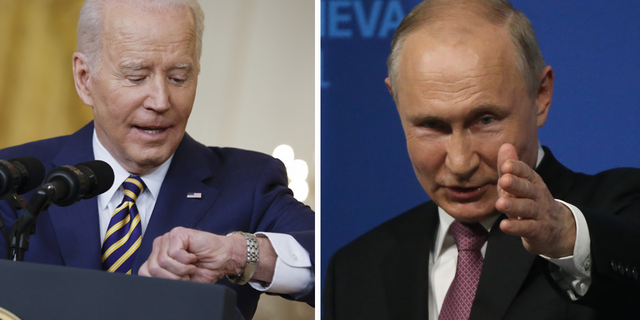
  • Biden in Delaware as Putin raises nuclear alert status

    Biden in Delaware as Putin raises nuclear alert status

    President Biden remains at his private home in Delaware as the Russian invasion of Ukraine continues to escalate.

    Russian President Vladimir Putin raised the alert status for his nuclear forces to “special regime of combat duty” as Russia and Ukraine battle for the fourth day.

    Putin ordered the Russian defense minister and the chief of the military’s General Staff to put the nuclear deterrent forces in a “special regime of combat duty.” The move signals tensions could boil over into a nuclear war.

    At the same time, Biden remains at his private residence in Delaware and media communications with the commander-in-chief have slowed to a crawl.

    Presidents Biden and PutinPresidents Biden and Putin (Chip Somodevilla/Getty Images |  Mikhail Svetlov/Getty Images)

    Putin warned last week that countries who interfere with his invasion of Ukraine will face “consequences you have never seen.”

    “He is right now threatening a nuclear escalation,” said former DIA intelligence officer Rebekah Koffler. “This a veiled threat – or maybe such a veiled threat – he just met with his chief of general staff and minister of defense. He is escalating the conflict into the nuclear domain in order to de-escalate – that is topple Kyiv’s regime quickly.”

    Pentagon press secretary John Kirby spoke to reporters Friday on the U.S. military’s plans to aid Ukraine as Russian forces continue to advance through the country.Turkey has declared that Russia’s actions in Ukraine constitute a war and will act accordingly, Foreign Minister Mevlut Cavusoglu said Sunday.

    One reporter asked Kirby if U.S. intelligence suggests Russian President Vladimir Putin would stop his advancement with Ukraine. Some European countries are anxious that the Russian president’s campaign could continue past the borders of the war-torn country.

    During an interview with Fox News Digital at the Conservative Political Action Conference (CPAC), Sen. Bill Hagerty, R-Tenn. said Putin will only respond to “people that show a spine” and stand up to the authoritarian leader, which the U.S. is unfortunately not doing at the moment under Biden’s leadership, he said.”It is not entirely clear if Mr. Putin has designs beyond the Ukraine,” Kirby said. “And it’s because that’s not perfectly clear that we continue to look for ways to bolster our NATO capabilities and to reassure our allies. I mean, one of the reasons we’re doing this is because we want to make it clear to him that we will defend every inch of NATO territory.”placeholderPresident Joe Biden walks his dog Commander in Rehoboth Beach, Delaware, Dec. 28, 2021.

    President Joe Biden walks his dog Commander in Rehoboth Beach, Delaware, Dec. 28, 2021. (Saul Loeb/AFP via Getty Images)

    “I think the thing that will be most potent to stopping the advance right now will be people that show a spine, [such as] people like [Ukrainian] President Zelenskyy is [doing]. The folks that show resolve,” Hagerty said. “We’re going to [have to] increase the cost to Putin of moving against Kyiv and against the entirety of Ukraine.”

    (Fox News)

  • FG advises Nigerians in Ukraine to head to Hungarian, Romanian borders for easy access

    FG advises Nigerians in Ukraine to head to Hungarian, Romanian borders for easy access

    FG advises Nigerians in Ukraine to head to Hungarian, Romanian borders for easy access

    The directive comes as Nigerians trying to flee the war-torn country continue to lament the persistent denial of entry into Poland.

    The federal government has directed Nigerians fleeing Ukraine to head to Hungarian, Romanian borders for easy access.

    “For now movement to the Hungarian Zahony border and Romanian Suceava, Tulcea, Satu Mare County and Maramures borders is advised, as they approved visa free access to all Nigerians coming from Ukraine and arrangement for accommodation and feeding before evacuation is arranged,” Permanent Secretary to the ministry of foreign affairs Gabriel Aduda in a press release said.

    The directive comes as Nigerians trying to flee the war-torn country continue to lament the persistent denial of entry into Poland despite assurances from foreign affairs minister, Geoffrey Onyeama.

    However, Mr Aduda in the statement disclosed that the Nigerian government was working with Ukraine to ensure easier access to all Nigerians and other foreign nationals.

    Peoples Gazette had earlier reported that Nigerians in Ukraine who made frantic efforts to leave the country following attacks from the Russian Federation met heavy resistance at the Polish border by security operatives who gave priority to Ukrainians.

    Also, BBC correspondent Stephanie Hegarty confirmed that Africans in Ukraine were being denied access to trains going to the border.

    “Hearing from another student in Lviv this morning who says Africans are not being allowed to board trains to the border are being left on platform. Too many testimonies now to discount. #AfricansinUkraine.”

    However, foreign affairs minister Geoffrey Onyema said he was coordinating missions in Ukraine, Poland, Russia, Romania and Hungary to ensure the safety of Nigerians.

    (Peoples Gazette)

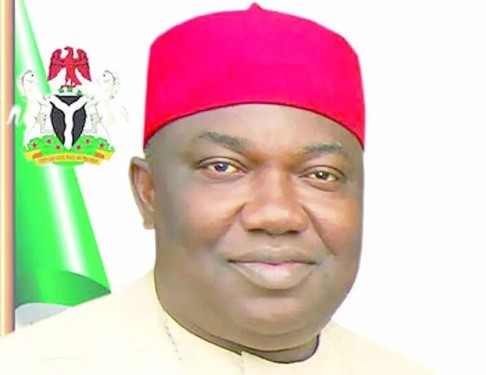
  • Ugwuanyi invites Enugu State leaders of Tricycle, Tipper, Motorcyle unions to a security meeting on Tuesday 

    Ugwuanyi invites Enugu State leaders of Tricycle, Tipper, Motorcyle unions to a security meeting on Tuesday 

    Ugwuanyi invites Enugu State leaders of Tricycle, Tipper, Motorcyle unions to a security meeting on Tuesday 

    Governor Ifeanyi Ugwuanyi of Enugu State has invited the state leaderships of Association of Tricycle Riders Transport Union (ATRTU), Tipper Union and the Nkanu East and Nkanu West Local Government Area branches of Motorcycle Transport Union to a security meeting on Tuesday, March 1, 2022.

    A statement signed by the Special Adviser to the Governor on Information, Steve Oruruo, disclosed that the meeting will hold at the Government House, Enugu, at 2:45pm.

    The statement stressed that “All invitees to this meeting are expected to be seated by 2:45pm on Tuesday, the 1st of March, 2022 at the Government House, Enugu”.

    Full text of the statement reads:

    “The leaderships of the following Associations are hereby invited to a security meeting with His Excellency, the Governor of Enugu State, Rt. Hon. Ifeanyi Ugwuanyi, on Tuesday, 1st March 2022, at Government House, Enugu.

    “Association of Tricycle Riders Transport Union (ATRTU) Enugu State.

    “Enugu State Tipper Union.

    “Motorcycle Transport Union of Enugu State: Nkanu East and Nkanu West Local Government Branches.

    “All invitees to this meeting are expected to be seated by 2:45pm on Tuesday, the 1st of March, 2022, at the Government House, Enugu.

    “Steve Oruruo

    Special Adviser to the Governor on Information”.

    #EnuguStateIsInTheHandsOfGod

    #amokelouis

  • Just In: Enugu govt bans Keke, Okada, Tipper-Truck operation in Nkanu East, Nkanu West LGAs and selected communities in Enugu South LGA

    Just In: Enugu govt bans Keke, Okada, Tipper-Truck operation in Nkanu East, Nkanu West LGAs and selected communities in Enugu South LGA

    Just In: Enugu govt bans Keke, Okada, Tipper-Truck operation in Nkanu East, Nkanu West LGAs and selected communities in Enugu South LGA

    The Enugu State Government has banned forthwith the operation of Tricycle (Keke), Motorcyle (Okada) and Tipper-Truck in all communities in Nkanu East and Nkanu West local government areas of the state.

    The state government also banned the operation of Tricycle, Motorcyle and Tipper-Truck in the following communities/neighbourhoods in Enugu South LGA; Amechi Uno, Amechi Awkunanaw, Amechi Uwani, Obeagu Main, Obeagu Uno, Centenary City/Obunagu, Obeagu, One day, Garki, Akwuke, Ugwuaji, Ndiagu Onunyo, Maryland and Ikiriki.

    A statement signed by the Secretary to the State Government, Prof. Simon Uchenna Ortuanya, disclosed that the decision was sequel to an emergency Security Council meeting held in Enugu State Government House, on Thursday, February 24, 2022 “on the heels of the recent spike in insecurity in parts of the state and Executive Order No.1: 2022 dated 24th February, 2022”.

    The statement enjoined members of the public “to comply with this Order as the Security Agencies in the State have been directed to enforce it”.

    The full text of the statement reads:

    “Following an emergency Security Council meeting held in Enugu State Government House today, Thursday, 24th February 2022 on the heels of the recent spike in insecurity in parts of the State and Executive Order No.1: 2022 dated 24th February 2022, the operation of Tricycle popularly called Keke, Motorcycle otherwise known as Okada, and Tipper Truck have been banned forthwith in the following areas in the State:

    “All communities in Nkanu East Local Government Area;

    “All communities in Nkanu West Local Government Area; and

    “The following communities/neighborhoods in Enugu South Local Government Area:

    I. Amechi Uno

    II. Amechi Awkunanaw

    III. Amechi Uwani

    IV. Obeagu Main

    V. Obeagu Uno

    VI. Centenary City/Obunagu

    VII. Obeagu

    VIII. One day

    IX. Gariki

    X. Akwuke

    XI. Ugwuaji

    XII. Ndiagu Onunyo

    XIII. Maryland

    XIV. Ikiriki

    “Members of the public are enjoined to comply with this Order as the Security Agencies in the State have been directed to enforce it.

    “Prof Simon Uchenna Ortuanya

    Secretary to the State Government.

    24/02/2022”.

    #EnuguStateIsInTheHandsOfGod

    #amokelouis

  • Reps propose immunity for Senate president, speaker, judicial officers

    Reps propose immunity for Senate president, speaker, judicial officers

    The House of Representatives Committee on Constitution Reviews has recommended an immunity clause for the Senate president, speaker, and judiciary heads.

    This is contained in the report of the constitution amendment bill presented before the House by Ahmed Wase, the chairman of the Constitution Review Committee, on Wednesday in Abuja.

    In the reports presented by Mr Wase, the committee recommended immunity for presiding officers of the legislature and judiciary.

    Benjamin Kalu, the spokesperson for the house, further alluded to this while briefing journalists, adding that since the executive enjoys immunity, the legislature should also enjoy it.

    He added that the legislature should be part of the security council to participate in decision-making.

    Segun Odebunmi (APC-Oyo) sponsored the bill titled ‘An Act to alter section 308 of the Constitution of the Federal Republic of Nigeria 1999 to extend immunity to cover presiding officers of the legislative institutions’.

    The committee had earlier stepped down the bill during the meeting between the committee and consultants. Several lawmakers in the committee also spoke against the bill during the meeting.

    Abdulhamid Mohammed (SAN), one of the consultants working with the committee, opposed the immunity clause in the bill.

    “It is really unconventional all over the world for judicial officers and presiding officers to have immunity. This is self-serving from the angle of morality,” he argued.

    He added, “You are now going to apply before the judicial officers because these are courts of competent jurisdiction.”

    (NAN)

  • Monarch calls for expansion of Enugu State capital to include entire Nkanu Land

    Monarch calls for expansion of Enugu State capital to include entire Nkanu Land

    Traditional ruler of Omuoha, Obuoffia, Awkunanaw, in Nkanu West LGA, Enugu State, HRH Eze Barr. Igwesi Obi Igwesi has called for an extension of the Enugu capital territory.

    Traditional ruler of Omuoha, Obuoffia, Awkunanaw, in Nkanu West LGA, Enugu State, HRH Eze Barr. Igwesi Obi Igwesi has called for an extension of the Enugu capital territory.
    HRH Eze Barr. Igwesi Obi Igwesi

    In a chat with Pacesetter, the first class traditional ruler called on whoever succeeds Ugwuanyi in 2023 to see the expansion as a priority project.

    Eze Igwesi said he was initiating the appeal so that the next government, expected to come from Nkanu Land will see how best to create a new Enugu State. He argued that what exists currently as the capital of Enugu does not truly reflect its position as the capital of the South East. “It cannot contain the entire Igbo given the minimal space it occupies,” he stressed.

    “It is my opinion that the entire Nkanu Land should be seen, addressed and statutorily approved as cosmopolitan city of Enugu so that the entire Igbo will have enough space to occupy. We are talking of the Igbo capital, we are talking of old Eastern capital. Under two hours you are through with the so called capital as it is today”.

    He suggested an expansion of the capital and cosmopolitan city of Enugu to involve the entire Nkanu Land and not just Enugu South, Enugu North and Enugu East local government areas.

    “So, let us expand it. You see Lagos State representing the West, how wide it is. This offers us a patriotic opportunity to expand and involve the entire Nkanu Land as the capital city of Igbo land.

    “I think it will be very interesting if the politicians who are in governance will take this appeal and implement it.

    “I was passing through Ugwuaji Road and I saw where a big road was being constructed; and then I saw a signpost, “NEW ENUGU”, a wonderful one by the Governor of Enugu State.

    “From that place there should be a clear dual carriageway down to the extreme of wherever Nkanu East stops. Expand the entire Nkanu Land to that extent. There will be a limitation to the reckless grabbing of lands in Enugu. It will limit the frictions on land. At least people will start expanding towards that side”, Igwe Igwesi said.