Category: News

This is an optional category description

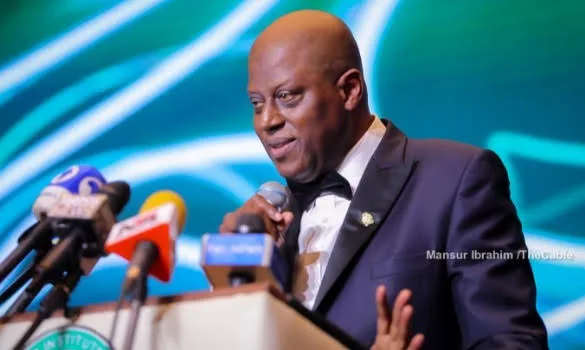
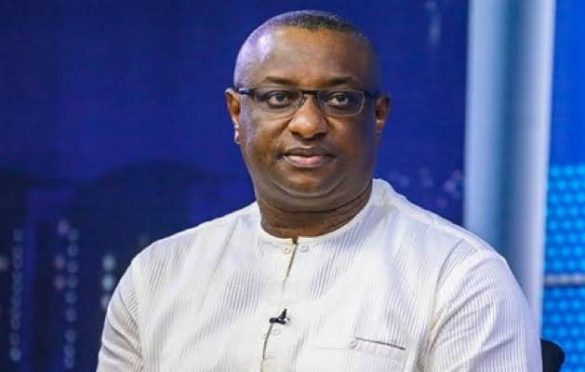
  • Keyamo Condemns Peter Obi’s Benue Blockade, Urges Media to End Partisan Reporting

    Keyamo Condemns Peter Obi’s Benue Blockade, Urges Media to End Partisan Reporting

    Aviation Minister Festus Keyamo urges media to apply consistent standards when reporting political confrontations involving ruling and opposition parties.

    Festus Keyamo, the Minister of Aviation and Aerospace Development, has called on the media to stop partisan reporting and apply consistent standards when covering political confrontations involving candidates and supporters of different political parties.

    Keyamo made the call while condemning the obstruction of the presidential candidate of the Nigeria Democratic Congress (NDC), Peter Obi, who was prevented by protesters from proceeding to Yelwata in Benue State on Tuesday.

    He said the incident should be condemned regardless of whether the protesters were motivated by internal disagreements within the NDC, as claimed by the Benue State Government, or were sponsored by the All Progressives Congress (APC) or another rival party.

    “Whether the protest was as a result of internal squabbles within the NDC (as posited by the Benue State Government) or sponsored by the APC or any other rival party, this should not be part of our democracy,” Keyamo said.

    The minister also rejected arguments that Obi’s planned visit to Yelwata, where killings occurred in 2025, could have been politically motivated, saying that such concerns could not justify preventing him from moving freely.

    “That is still not acceptable; everyone should be allowed to move about freely and play their politics without such crude interference,” he said.

    However, Keyamo said the incident had highlighted what he described as a double standard in the way sections of the media report confrontations involving politicians from different parties.

    “However, there is no better time to draw attention of Nigerians and the world to the spin that the partisan section of the media usually put to such incidents,” he said.

    According to him, confrontations involving APC candidates are sometimes portrayed as evidence of public rejection, while similar incidents involving opposition candidates are described as attacks by sponsored thugs.

    “Many a time when an angry crowd confronts or molests an APC candidate at any level, the partisan Press shamelessly dubs or spins it as ‘rejection’ by ‘Nigerians’. When it concerns the opposition, then it is ‘attack’ by ‘sponsored thugs’ or ‘hoodlums’,” Keyamo said.

    “Just check most headlines today.”

    Keyamo further criticised what he described as the failure of some media organisations to challenge statements by opposition politicians that APC candidates could face violence when campaigning in certain parts of the country.

    “In fact, many opposition leaders openly boasts that the APC candidates cannot go to some parts of this country and shout ‘APC!’ without being ‘stoned’, ‘beaten’ or molested, yet the partisan Press do not call out such leaders and even help to accentuate such statements,” he said.

    He urged the media to abandon partisan approaches and apply the same standards to all political parties and candidates.

    “What is good for the goose is also good for the gander. The Press must extricate itself from such partisanship and be fair to all,” Keyamo said.

    The minister also urged Nigerians to channel their opposition to political candidates through the electoral process rather than violence during campaigns.

    “Whoever is angry at any candidate of any political party should display the anger with the ballot paper on voting day by a simple thumbprint, not by violent acts during campaigns,” he said. Arise News

  • Reps Probe NNPCL, Oil Firms Over N432bn NMDPRA Debt

    The House of Representatives Public Accounts Committee has opened an investigation into outstanding regulatory debts owed to the Nigerian Midstream and Downstream Petroleum Regulatory Authority by the Nigerian National Petroleum Company Limited and oil companies, with liabilities under review put at ₦432.07bn.

    The investigation followed findings in the Auditor-General’s annual audit reports on unpaid petroleum-related obligations accruing to the regulatory authority.

    The Auditor-General’s 2023 Annual Audit Report put the combined indebtedness of NNPCL and oil companies at ₦392.73bn.

    Of the amount, NNPCL accounted for ₦162.46bn, while oil companies operating under the Depot and Petroleum Products Marketers Association of Nigeria, Major Marketers Association of Nigeria and Major Energy Marketers Association of Nigeria owed ₦230.27bn.

    The liabilities were linked to Balancing Allowance, National Transport Average, the one per cent Midstream and Downstream Gas Infrastructure Fund, as well as legacy obligations arising from importation, coastal and credit transactions.

    The Auditor-General’s 2024 report subsequently placed outstanding indebtedness at ₦432.07bn, excluding liabilities attributed to NNPCL.

    Further submissions by the NMDPRA to the committee showed that 146 oil companies operating under DAPPMAN, MEMAN and MOMAN owed the authority ₦327.53bn as of 2025.

    The committee said the outstanding obligations covered several years, with some dating back to 2017, raising concerns over the effectiveness of the mechanisms used by the regulatory authority to assess, collect and recover the funds.

    In a statement issued on Wednesday, the Chairman of the committee, Bamidele Salam, said the probe was aimed at establishing the facts behind the outstanding liabilities and ensuring that all government revenue due from the affected entities was accounted for and recovered.

    He warned companies and institutions summoned by the committee against failing to appear with the appropriate representatives and relevant records.

    “Any company invited by this committee must respect the people’s parliament of the Federal Republic of Nigeria by honouring the summons with appropriate representation and all relevant documents. We are not here to witch-hunt anybody; our responsibility is to establish the facts, protect public revenue and ensure that every naira due to government is properly accounted for,” Salam said.

    The committee is expected to examine the basis on which the debts were assessed, the periods covered, payments made by the affected companies, outstanding balances and actions taken by the NMDPRA to recover the funds.

    It will also seek explanations on “why liabilities accumulated over a number of years remained outstanding and whether enforcement measures were deployed against defaulting companies.”

    The probe comes amid heightened scrutiny of revenue generation, collection and remittance in Nigeria’s petroleum industry following the implementation of the Petroleum Industry Act, which overhauled the legal and regulatory framework governing the sector.

    The NMDPRA was established under the PIA to regulate Nigeria’s midstream and downstream petroleum operations. Its responsibilities include the regulation of petroleum product processing, transportation and distribution, domestic gas operations, infrastructure and other activities within the midstream and downstream segments.

    The committee said its inquiry was part of the National Assembly’s constitutional oversight responsibility and was not intended to target any particular company or institution.

    Salam said the lawmakers would require the affected entities and the regulatory authority to account for the outstanding obligations and submit the documentation necessary to determine how the debts arose, what had been recovered and what remained unpaid.

    The committee reaffirmed that it would use its oversight powers to ensure that public revenue was properly accounted for and that agencies responsible for collection took effective steps to recover outstanding liabilities. Punch

  • 49.7kg Heroin: NDLEA Arrest Drug Kingpin After Two Years on the Run 

    49.7kg Heroin: NDLEA Arrest Drug Kingpin After Two Years on the Run 

    The National Drug Law Enforcement Agency (NDLEA) has arrested and repatriated Festus Ibewuike, alias Chidibest Ibewuike, a suspected drug kingpin who had been on the run for more than two years following the seizure of 49.7 kilogrammes of heroin at the Murtala Muhammed International Airport (MMIA), Lagos.

    Ibewuike, 52, was arrested at the airport in Cotonou, Benin Republic, on September 2, 2026, following actionable intelligence and coordinated efforts between the NDLEA and INTERPOL authorities in Nigeria and Benin.

    He was subsequently handed over to NDLEA operatives deployed in Cotonou on September 4 and brought back to Nigeria to face prosecution over his alleged role in the trafficking syndicate behind what the agency described as the largest single heroin consignment ever intercepted at the Lagos airport.

    The suspect had reportedly relocated to Mozambique, where he operated a hotel business allegedly used as a cover, while making efforts to evade Nigerian law enforcement by moving between Mozambique and Nigeria through neighbouring Benin Republic.

    His arrest followed a 12-day operation by operatives of the NDLEA MMIA Strategic Command in February 2024, during which 49.70kg of heroin was intercepted at the airport’s cargo terminal.

    The spokesman of the NDLEA, Femi Babafemi, in a statement on Wednesday, said the drugs were concealed in cartons containing metal-cutting machines and marked with the code ‘ND’.

    Investigations subsequently linked the parcels to Ibewuike, who allegedly operated through members of a wider trafficking network.

    The operation led to the arrest of several members of the syndicate, including his wife, Confidence Ndidiamaka Ibewuike, who investigators said routinely received drug-laden consignments on his behalf.

    He said the agency also secured the freezing of 107 bank accounts and forfeiture of properties allegedly connected to the cartel.

    He revealed that the suspects were charged before Justice Ambrose Lewis-Allagoa of the Federal High Court, Ikoyi, Lagos, in charge number FHC/L/205C/2024.

    He said the suspects — Adinnu Felix Chinedu, Osita Emmanuel Obinna and Uzochukwu Frankline — have so far been convicted and sentenced by the court.

    He further noted others — Chidiebere Peter, Ibewuike Ndidiamaka and Igbokwuputa Onyinye — are still standing trial, while Ibewuike Festus, Osita Chidozie Cyril and another suspect identified as Arinze were charged in absentia.

    Following his repatriation, Ibewuike reportedly confirmed his identity during preliminary interviews and disclosed that he had changed his name from Chidibest Ibewuike to Festus Ibewuike.

    On September 5, he was taken to the NDLEA Central Exhibit Store in Ikoyi, Lagos, where he formally identified the heroin parcels bearing the ‘ND’ code, which the agency said had been established as being linked to him.

    Further investigation also uncovered his alleged connection to an earlier drug case involving the seizure of 40.255kg of methamphetamine.

    The earlier case was prosecuted before the Federal High Court, Lagos, under Justice Hadiza Rabiu Shagari in charge number FHC/L/203C/2013. One Chidi Ihedioha, who was prosecuted in connection with the case, was convicted by the court in 2023.

    Reacting to the latest development, the Chairman and Chief Executive Officer of the NDLEA, Brig. Gen. Buba Marwa (rtd), described Ibewuike’s arrest as a major breakthrough in the agency’s campaign against fleeing drug kingpins.

    Marwa warned drug traffickers who flee the country to escape prosecution that international borders would not shield them from justice.

    “This arrest is a major breakthrough in our resolve to track down and bring to justice every drug baron who thinks that fleeing Nigeria’s shores puts them beyond the reach of the law,” he said.

    He added: “As I have always vowed, the long arm of the NDLEA will catch up with anyone involved in this illicit trade, no matter how long it takes or how far they run.”

    According to him, Ibewuike’s more than two-year flight, including his alleged change of identity and relocation abroad, had not prevented the agency from tracking him down.

    “This should serve as a fresh warning to fleeing suspects still at large: the Agency will not relent until everyone of you is brought to book,” Marwa said.

    The NDLEA chairman commended the multinational cooperation that facilitated the arrest and transfer, particularly the Nigerian and Beninese INTERPOL National Central Bureaus, for their role in ensuring the smooth handover of the suspect.

    The agency said the development further demonstrated its determination to pursue suspected drug traffickers beyond Nigeria’s borders and ensure that fleeing suspects are eventually brought before the law. This Day

  • ENSSAA Reaffirms Ban on Poster Display, Pasting Ahead of Enugu Elections

    ENSSAA Reaffirms Ban on Poster Display, Pasting Ahead of Enugu Elections

    The Enugu State Structures for Signage and Advertisement Agency (ENSSAA) has reiterated its ban on the display and pasting of posters across the state ahead of the September 26, 2026 local government elections and the 2027 general elections.

    The agency, in a public notice issued on Wednesday and signed by its General Manager, Hon. Francis Aninwike, warned political parties, candidates, aspirants, campaign organisations, supporters, printers, advertisers, marketers and members of the public against violating the directive.

    According to ENSSAA, the ban remains in force under the provisions of the Enugu State Structures for Signage and Advertisement Agency Law No. 12 of 2016, particularly Sections 4(1)(g), 33 and 34(4)(9), which provide the legal basis for regulating outdoor advertising and the display of posters and other advertising materials in the state.

    The agency said the reminder became necessary as political activities are expected to increase ahead of the forthcoming elections, with public and private spaces potentially exposed to indiscriminate pasting of campaign materials.

    ENSSAA stressed that the ban covers all types of posters, including those used for election campaigns.

    It said posters bearing the names, photographs, logos, messages, slogans or other campaign materials of political parties, candidates, aspirants and their supporters are equally prohibited.

    “No person, political party, candidate, aspirant, campaign organisation or supporter is permitted to paste, affix or display posters on buildings, walls, fences, bridges, electricity poles, road infrastructure, public facilities or any other public or private surface or space within Enugu State,” the agency stated.

    ENSSAA said indiscriminate pasting and display of posters deface public and private property, degrade the environment and undermine the aesthetic appearance of cities, towns and communities across the state.

    The agency also issued a warning to printers and printing establishments, cautioning them against producing or facilitating posters intended for unauthorised display or pasting.

    It said where posters were traced to a particular printer, the establishment could be investigated and subjected to appropriate sanctions if its involvement in the violation was established in accordance with the law.

    ENSSAA further reminded residents and political actors that violators of the poster ban could face a fine of up to N50m under the applicable law and regulations.

    “Anyone caught pasting or displaying posters in violation of the ban will face the full wrath of the law, including the applicable financial penalties and other sanctions prescribed by law,” the agency warned.

    Rather than resorting to unauthorised poster displays, ENSSAA advised political parties, candidates, aspirants and campaign organisations to use radio, television, print and digital or social media platforms, as well as approved billboards, to reach voters and other members of the public.

    The agency urged all stakeholders to cooperate with it in maintaining the cleanliness, environmental quality and aesthetic integrity of Enugu State.

    It also emphasised that the ban would be enforced equally, regardless of political affiliation or status.

    “The Agency reiterates that the ban applies equally and without fear or favour to all persons, political parties, candidates, aspirants, organisations and individuals, irrespective of political affiliation or status,” the notice stated.

    ENSSAA concluded by reiterating that the ban remains in force and urged all concerned to comply with the directive as political activities intensify ahead of the September 26, 2026 local government elections and the 2027 general elections.

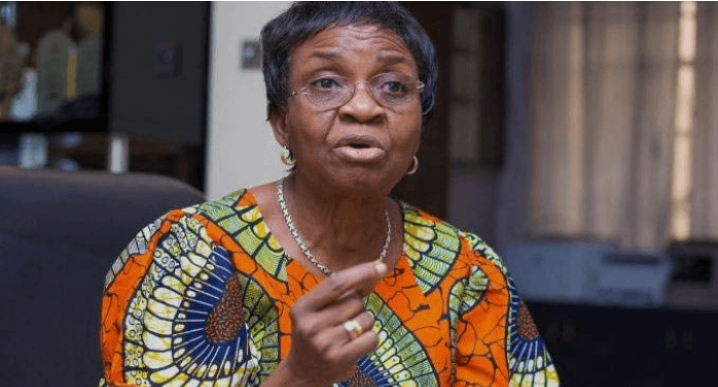
  • Alcohol Fuels Banditry, Damages Brain, Kidney, Liver – NAFDAC DG

    Alcohol Fuels Banditry, Damages Brain, Kidney, Liver – NAFDAC DG

    Precious Nwonu, Enugu

    The National Agency for Food and Drug Administration and Control (NAFDAC) has directly linked the rise of banditry and severe internal body organ damage to the unregulated, widespread sale and consumption of sachet alcohol across the country.

    The Director-General of the regulatory agency, Prof. Mojisola Adeyeye, made these revelations during a live interview on Channels Television’s Sunrise Daily program on Wednesday, September 9, 2026. The professor explained that these high-concentration, cheap alcoholic products pose an extreme public health threat, aggressively destroying vital human organs including the brain, lungs, kidneys, and liver.

    Defending NAFDAC’s strict enforcement of the nationwide ban on alcoholic beverages packaged in sachets and PET bottles under 200ml, Adeyeye described the small packages as a “monster” that has become completely uncontrollable since their original approval roughly 30 years ago. She argued that critics and individuals protesting the clampdown fail to grasp the long-term societal and medical devastation being caused.

    “Alcohol encourages banditry, destroys the kidneys and liver. Although the ban on the sale of alcohol in sachets and PET bottles of less than 200ml did not sit well with some people, Nigerians are concerned about the future of their children,” Adeyeye stated.

    She emphasized that while the complete removal of these products from roadside markets has sparked intense pushback from industry stakeholders, the agency remains unmoved because public health, national security, and protecting the next generation of Nigerian children must take priority over short-term commercial profits.

  • WAEC Results Row Escalates as Police Summon Olanrewaju Fadehan

    WAEC Results Row Escalates as Police Summon Olanrewaju Fadehan

    Precious Nwonu, Enugu

    The conflict surrounding the West African Examinations Council (WAEC) results has escalated significantly as the Nigeria Police Force National Cybercrime Centre (NPF-NCCC) has summoned a WAEC official, Olanrewaju Fadehan, to its Abuja office today, Wednesday, September 9, 2026.

    The police invitation, signed by NPF-NCCC Director AIG Akaninyene Ezima, ordered Fadehan to report for an interview at 10:00 AM regarding allegations of cyberstalking and criminal defamation. Concurrently, Justice Yetunde Adesanya of the Lagos State High Court issued a seven-day interim injunction in Suit No. LD/ADR/6656/2026, restraining Fadehan from publishing or circulating any injurious falsehoods damaging the reputation of WAEC, its examinations, certificates, or its Director-General, Dr. Amos Dangut.

    Confirming awareness of both the court order and the police summons, Fadehan stated:

    “They’ve even done that already. At least, they sent me a court paper yesterday (Monday). That one is an interim injunction that I should not post anything any longer.”

    Regarding the cybercrime center invitation, he added:

    “They’re taking me to the cybercrime centre in Abuja. Tomorrow (Wednesday), I’m supposed to appear before them.”

    The legal battle includes an N825 million lawsuit filed by WAEC and Dangut, who are demanding N500 million in general damages for libel, N300 million in aggravated and exemplary damages, and N25m in costs. They are also demanding a public retraction and apology.

    Fadehan, who serves as the Head of Examinations at WAEC’s Anambra office, sparked controversy through viral videos calling for a review of the recently released 2026 West African Senior School Certificate Examination (WASSCE) results, particularly highlighting issues with the computer-based testing format. He alleged that the council failed to distribute appropriate calculators and student ID cards despite charging candidates fees, which he claims caused poor grades in Mathematics and calculation-heavy subjects. He also claimed the council broke tradition by delaying the results past the expected August 3–5 window.

    After petitioning the WAEC Board, the Minister of Education, and the House of Representatives Committee on Basic Education, Fadehan alleges he was targeted with disciplinary actions and placed on interdiction.

    WAEC’s legal representatives, Union Attorneys, sent a cease-and-desist letter on August 24, 2026, citing specific video titles published by Fadehan, such as “Tyranny in WAEC, Nigeria: Dangut must go,” “Anomalies in WAEC – Series 1: I won’t wait,” and a subsequent clip titled “Dangut is a thief”.

    WAEC spokesperson Moyosola Adesina dismissed the assertions as vindictive fabrications, revealing that Fadehan began his smear campaign under the guise of whistleblowing only after serving a four-week suspension for his alleged involvement in the misappropriation and attempted cover-up of hundreds of litres of diesel from an underground tank at the Awka office. The council stated:

    “It is important to also note that Mr Fadehan is still a staff member of the council and his employment has not been determined. He has published that his employment has been determined while continuing to earn salaries from the council. His allegations have been investigated at various levels and found to be false. He has been spreading falsehoods and sensational materials to spite the council.”

    Fadehan, however, explicitly rejected the diesel theft claims, countering that an internal probe cleared the staff:

    “The panel resolved that nobody stole anything.”

    He insisted that the fuel shortage was due to a technical leak and clarified that his current interdiction is entirely tied to the defamation charges rather than the fuel incident. Fadehan explained:

    “So, it was based on the issue of defamation now that I was put on interdiction. It has nothing to do with fuel. The fuel issue is gone. The issue of fuel is being brought up when I raised the issue of a calculator that was not given to the candidate. He now set up a panel for me. The same Dangut set up a panel for me, and the query of that panel reads that I defamed him.”

    Denying allegations that his public actions are fueled by personal bitterness over his suspension, Fadehan concluded:

    “I’m not bitter. I’ve appealed what they did. So I’m not bitter.”


  • CBN Steps Up Bank Checks to Block Terrorism Financing

    CBN Steps Up Bank Checks to Block Terrorism Financing

    Precious Nwonu, Enugu

    The Central Bank of Nigeria (CBN) has rolled out a stronger supervisory framework aimed at deterring the use of Nigerian banks and financial institutions for terrorism financing and other financial abuses.

    In an official statement, the apex bank’s Acting Director of the Corporate Communications and Investor Relations Department, Hakama Sidi-Ali, announced that the CBN has made terrorism financing supervision one of its foremost current priorities. This aggressive focus forms part of the bank’s ongoing commitment to thoroughly protect the Nigerian financial system from abuse by illicit actors.

    Sidi-Ali explained that this newly reinforced push explicitly covers four broad operational areas: how financial institutions manage terrorism financing risk, how they monitor transactions for signs of terrorism financing, how they execute targeted financial sanctions, and how they report suspicious transactions linked to terrorism. Rather than sitting back and waiting for problems to surface on their own, the apex bank plans to implement a strict, risk-based approach, ensuring that banks and institutions seen as more exposed to these risks will attract closer supervisory attention.

    “This supervisory focus also supports Nigeria’s ongoing domestic and international cooperation on counter-terrorism financing, counter-proliferation financing, financial integrity, and the protection of the financial system. Further supervisory engagement will be undertaken as appropriate,” Sidi-Ali stated.

    According to her, the bank will continue to apply a risk-based supervisory approach, utilizing both on-site and off-site engagements.

    This strategy is designed to enforce highly effective Anti-Money Laundering, Combating the Financing of Terrorism, and Countering Proliferation Financing (AML/CFT/CPF) controls across the financial sector, in strict alignment with existing legal and regulatory obligations. She added that further supervisory engagement will be undertaken as appropriate, indicating that additional enforcement steps could follow depending on what the CBN’s checks turn up.

    In tandem with these regulations and in line with the provisions of the Terrorism Prevention and Prohibition Act (TPPA), 2022, the Nigeria Sanctions Committee (NSC) recently designated six individuals and three entities as terrorist financiers, subsequently adding them to the official Nigeria Sanctions List.

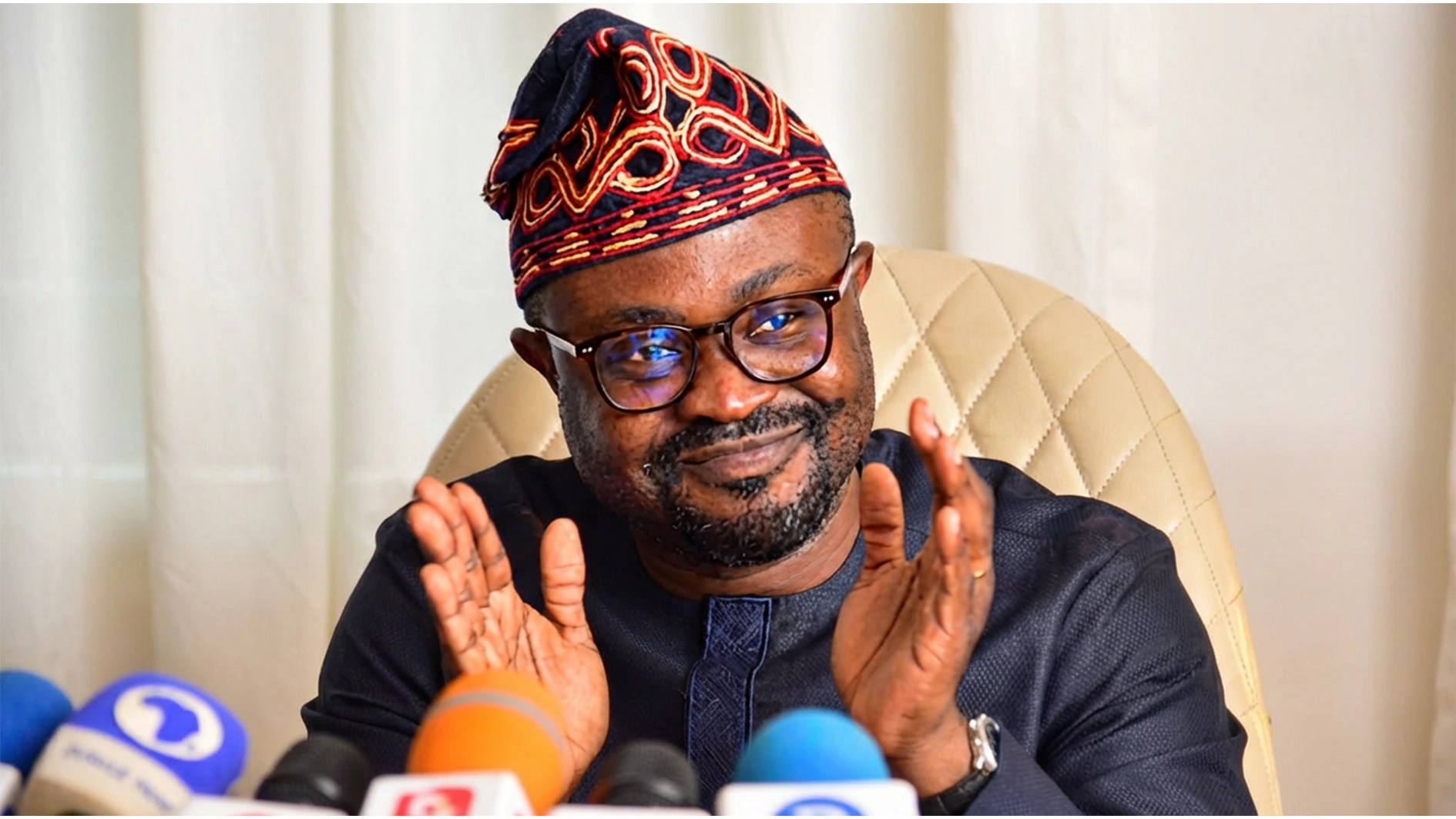
  • FG Clarifies UK Passport Fees, Says No Hidden Charges

    Dr. Olubunmi Tunji-Ojo

    The Federal Government has expressed deep concern over the inconveniences currently being experienced by Nigerians residing in the United Kingdom regarding the application and processing of their international passports.

    The Minister of Interior, Dr. Olubunmi Tunji-Ojo while addressing in a statement on Monday by his Special Adviser on Media and Publicity, Alao Babatunde said that these concerns are being addressed.

    He noted that the operational hitches were reported during the ongoing special passport intervention exercise in the UK promoting the government to initiated a specific programme to provide broader options and significantly ease the administrative burden for citizens in the diaspora who are seeking to seamlessly renew or acquire their travel documents.

    The minister categorically clarified the financial requirements for the passport processing, distancing the authorities from any arbitrary or unofficial levies.

    He maintained that the intervention exercise does not attract any additional costs beyond the legally stipulated official fees.

    “It is therefore necessary to clarify that this process does not come with extra cost different from the official fees of $150 and $230 for a five year and ten year validity passports respectively, exclusive of bank charges,” the statement read in part.

    Tunji-Ojo strongly emphasised that neither the Ministry of Interior nor the Nigeria Immigration Service (NIS) has authorised, endorsed, or introduced any hidden charges outside the officially recognised passport fees.

    This timely clarification comes amid growing public concerns and complaints from applicants regarding suspected exploitation and administrative bottlenecks during the ongoing special intervention programme.

    To swiftly resolve the operational difficulties and ensure a smooth, transparent experience for Nigerians in the diaspora, the Interior Minister revealed that high-level strategic consultations are currently underway with the Ministry of Foreign Affairs.

    Tunji-Ojo assured affected applicants that “Consultations are ongoing with the Ministry of Foreign Affairs to ensure that any inconveniences during this process do not persist any longer,”

    Reaffirming the current administration’s dedication to the welfare of its citizens, the minister noted that the government remains steadfast in its mandate of delivering efficient public services globally and ” has demonstrated high level of responsibility to Nigerians home and abroad, and remains committed to its promises of providing succour to all,” he stated.

    Furthermore, to bypass the physical hurdles associated with traditional application processes, the government advised applicants to explore digital alternatives.

    Tunji-Ojo urged Nigerians in the UK to leverage the newly implemented, seamless contactless biometric passport application system to avoid unnecessary delays and enhance efficiency.

  • Peter Eze Youth Connect: FCC Chairman Omidiran to Speak on Opportunities for Enugu Youths

    The Executive Chairman of the Federal Character Commission (FCC), Hon. Hulayat Motunrayo Omidiran, will headline the maiden edition of Peter Eze Youth Connect 2026, scheduled to hold on Thursday, September 10, at the International Conference Centre (ICC), Enugu.

    Omidiran, popularly known as Ayo Omidiran, will deliver the keynote address at the youth-focused gathering, which is expected to bring together young people from across Enugu State for discussions on access to opportunities, inclusion, representation and youth development.

    The programme, themed “Beyond Quotas: Unlocking Opportunities for Enugu Youths Through the Federal Character Commission,” is being convened by Hon. Peter Ogbonna Eze, the Federal Commissioner representing Enugu State on the FCC and Chairman of the Commission’s Committee on Works, Transport and Aviation.

    Eze, who was appointed by President Bola Ahmed Tinubu and inaugurated on January 22, 2026, said the initiative was conceived to bridge the information gap that often prevents qualified young Nigerians from identifying and accessing legitimate opportunities.

    “Our objective is to help young people understand where legitimate opportunities exist, how to identify them, how to apply, what is required, and how to position themselves for success,” Eze said.

    Peter Eze

    He said many young Nigerians possess the qualifications, talent and determination to succeed but are disadvantaged by a lack of timely and accurate information about available opportunities.

    According to him, Peter Eze Youth Connect is designed to move beyond conventional youth empowerment programmes by connecting young people directly with information, practical guidance and institutions that can help them pursue opportunities at national and international levels.

    The programme is expected to attract graduates, students, entrepreneurs, job seekers, professionals and other young people from the 17 local government areas of Enugu State.

    Areas expected to feature include jobs, scholarships, grants, fellowships, internships, government programmes, private-sector opportunities, digital opportunities, entrepreneurship, career development and leadership.

    Omidiran’s participation is expected to provide an institutional perspective on the role of the Federal Character Commission in promoting equitable representation and ensuring fair access to opportunities within the public sector and other areas of national development.

    The FCC chairman is expected to speak to participants on how young people can better understand and take advantage of opportunities available through government institutions, while addressing broader issues surrounding inclusion and representation.

    The event will also feature a session on “Connecting Youths in Enugu State to the European Union Market for Apiculture Products,” aimed at exposing young people to opportunities in honey production, beekeeping and access to the European Union market.

    Eze urged Enugu youths to take advantage of the programme, stressing that access to the right information, combined with preparation and determination, could significantly improve their chances of success.

    He also challenged young people to move beyond passively waiting for opportunities and develop the capacity to identify, pursue and position themselves for available opportunities.

    With the event scheduled for Thursday, organisers say Peter Eze Youth Connect 2026 is intended to begin a broader conversation about youth development in Enugu, with emphasis on moving from promises to access, information to action and waiting for opportunities to actively pursuing them.

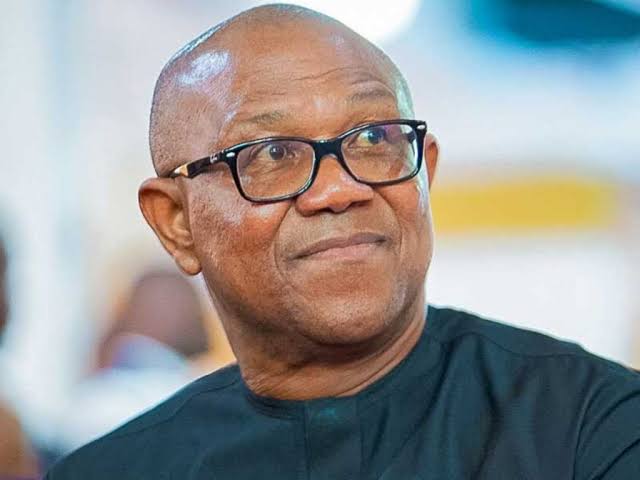
  • Protesters Block Peter Obi’s Convoy on Benue Road

    Protesters Block Peter Obi’s Convoy on Benue Road

    Presidential candidate of the Nigeria Democratic Congress, Peter Obi, was on Tuesday prevented from proceeding in Benue State after protesters barricaded Gboko Road in Makurdi, the state capital.

    The protesters, chanting “We don’t want Peter Obi,” blocked the road near the Nigerian Air Force Base and Makurdi Airport for hours, disrupting traffic as Obi’s convoy was held back.

    Speaking at the scene in a video posted by News Central Television via its X page on Tuesday, Obi said he had travelled to Benue to condole with victims of killings in the state but was stopped on the orders of a government aide.

    “I was told that youths, led by an SA (Special Assistant) to the government, have decided to block the road and make sure I don’t go there,” he said.

    He described the blockade as unacceptable and accused those behind it of exploiting hungry, insecure youths for political ends.

    “The rascality they are bringing into this country is totally unacceptable. People are being killed every day in Benue. People want to show that they are with them, and I came here all the way this morning, a long distance, only to be told what you are seeing here,” he said.

    Obi said the protesters had been mobilised without regard for the consequences.

    “These youths are being used to do this. What they are doing now will take its revenge on them. They don’t know that. And unfortunately, somebody sits in office and allows this to happen,” he said.

    Obi maintained that the blockade should not have occurred, adding that the affected youths were themselves victims of poverty and insecurity who deserved livelihood support rather than being deployed to obstruct his visit.

    He said his itinerary had not been concealed from state authorities. “Everybody is aware I’m visiting this place today. It’s not a secret to them,” he said. Punch


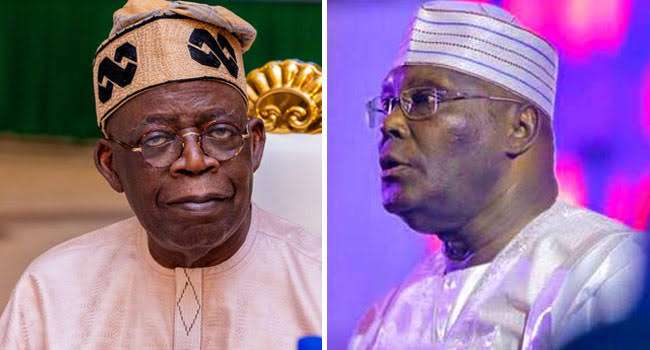
  • Atiku Knocks Tinubu Over 24.7tn Borrowing, Says Government Is Choking Businesses of Credit

    Atiku Knocks Tinubu Over 24.7tn Borrowing, Says Government Is Choking Businesses of Credit

    Atiku says government borrowing surged to N24.7tn despite higher oil prices, squeezing private-sector credit and worsening economic hardship.

    Former Vice President, Atiku Abubakar, on Monday described the federal government’s ‘unprecedented’ appetite for domestic borrowing as evidence of dangerous fiscal indiscipline that is starving Nigerian businesses of credit, killing jobs and worsening the cost-of-living crisis.

    In a statement issued by his Senior Special Assistant on Public Communication, Phrank Shaibu, Atiku said it was particularly alarming that the Bola Tinubu administration continues to borrow at such a frightening pace at a time when crude oil prices have risen substantially above the assumptions upon which the 2026 budget was built.

    “At the beginning of this fiscal year, the federal government budgeted on an oil benchmark of $64.85 per barrel. Today, crude oil prices have risen substantially above that benchmark.

    “Yet, instead of this windfall translating into lower borrowing, stronger businesses and relief for Nigerians, the federal government went into the domestic market and borrowed a staggering N24.7 trillion between January and August 2026 — 90.5 per cent more than the N12.98 trillion borrowed in the corresponding period of 2025.

    ‘’This is a government borrowing like drunken sailors in the middle of a revenue windfall. Tinubu removed fuel subsidy and told Nigerians the sacrifice would free up money. He floated the naira and government revenues consequently received a massive nominal boost. Oil prices have risen sharply. Revenues have improved. Yet the borrowing has not gone down — it has exploded,” the former vice president stressed.

    According to him, Nigerians must begin to ask what the money saved fromfuel subsidy has been spent on.

    “What makes this recklessness even more damaging is that the government is now competing directly with Nigerian businesses for money. Credit to the government grew by 43 per cent, while credit to the private sector grew by only 9.6 per cent. Government credit is expanding about 4.5 times faster than credit to businesses.

    “This is yet another troubling signal that the Tinubu economic reforms have failed to produce any meaningful impact on the private sector,’’ Atiku added.

    Atiku said that ordinarily, the outlook and performance of the private sector should serve as one of the clearest yardsticks for measuring the effectiveness of government economic policy.

    He said: ‘’If businesses are expanding, investing, hiring and gaining easier access to capital, then reform can claim some measure of success.

    “But under Tinubu’s economic policy, the exact opposite is happening. The public sector is exerting an increasingly parasitic effect on the private sector — consuming the credit, capital and financial oxygen that productive businesses desperately need. That, at a glance, is one of the clearest indictments of the failure of these so-called reforms.

    “When banks can lend to the government at attractive, risk-free rates, why would they lend cheaply to the manufacturer in Aba, the furniture maker in Kaduna, the agro-processor in Kano or the young entrepreneur in Lagos?

    “The result is obvious: businesses pay more for credit, expansion is postponed, factories struggle, jobs disappear and the cost of producing everything from food to household goods rises. This government is not merely borrowing money; it is borrowing away the future of Nigerian businesses.”

    He stated that Nigeria cannot achieve prosperity by allowing the government to swallow the credit that should finance production, stressing that an economy grows when businesses borrow to build factories, farmers borrow to expand production and entrepreneurs access affordable capital to create jobs.

    “My administration will impose fiscal discipline, cut waste, prioritiseproductive expenditure and progressively reduce the government’s suffocating dependence on the domestic credit market.

    The government must make room for the private sector to breathe, invest, produce and employ.

    “After three years of sacrifice, Nigerians deserve to see what happened to the subsidy savings, the additional revenues and the crude-oil windfall. You cannot collect more, earn more and still borrow more — while asking hungry Nigerians to sacrifice more. Something is fundamentally wrong with that equation,” he argued.

    Meanwhile, the African Democratic Congress (ADC) on Monday alleged that the Auditor-General’s finding that N33.75 billion in cash transfers to 3.29 million households cannot be verified was proof that under Tinubu, social investment had become a racket run for the benefit of officials, not the poor.

    In a statement, ADC’s National Publicity Secretary, Mallam Bolaji Abdullahi, stated: “Let us call this what it is. Not mismanagement. Not an oversight. It is an organised racket, which this government has run under the guise of a social intervention programme. They are stealing from the poor and telling them to continue to endure hardship.

    “This latest report of an unaccounted N33.75 billion intervention fund, buried inside a larger N78 billion fund, and the historical pattern of corruption that has trailed this kind of programme would suggest that this government has found a way to steal from the poor by turning the social intervention programme into a criminal enterprise,” the party stated.

    Abdullahi said instead of the federal government addressing the wanton corruption associated with such interventions in the past, it has announced an even bigger package of $1 billion without demonstrating that it has made any effort to ensure greater transparency and accountability.

    “Barely weeks before this audit blew up in their faces, they wheeled out a new $1 billion so-called ‘Renewed Hope Social Protection Programme’ with the usual State House fanfare. Given the familiar history, we are in no doubt that even in the unlikely event that this latest intervention is ever implemented, it would end up like the others before it: another racket.”

    While demanding a full probe into the scheme, the ADC noted that interventions such as this became necessary because the APC government has made it impossible for people to earn a dignified living.

    “Their twin disastrous policies of fuel subsidy removal and currency devaluation have exploded the population of Nigerians living in extreme poverty and therefore needing cash handouts from the government, which has now become a mere pretext for stealing in the name of the poor.

    “This is a government that manufactured hardship with one hand and pocketed the relief with the other. Fuel prices up. Transport costs up. Food prices up. And the one programme meant to soften the blow turns out to be a black hole. Enough is enough,” it added.

    The party, therefore, demanded the immediate publication of the full beneficiary register, the REMITA payment trail, and the names of every official who obstructed the auditor-general. Arise News


  • NAFDAC DG Demands Life Imprisonment, Death Penalty for Counterfeiters

    Director-General-of-NAFDAC-Mojisola-Adeyeye
    The Director-General of the National Agency for Food and Drug Administration and Control (NAFDAC), Prof. Mojisola Adeyeye, has called for stiffer penalties for the production and sale of counterfeit regulated products, including life imprisonment or the death penalty for offenders.

    Adeyeye made the call during a press conference in Lagos, where she also disclosed that NAFDAC had cleared debts amounting to about N3.2 billion inherited when she assumed office in 2017.

    According to her, the inherited liabilities included about N1.6 billion in unpaid taxes owed to the government, approximately N700 million owed to staff who travelled for Good Manufacturing Practice (GMP) activities, and about N400 million owed to contractors.

    “We had N3.2 billion debt that I inherited. N1.6 billion was taxes we didn’t pay to the government. My predecessors didn’t pay the government. About N700 million was to staff that travelled for GMP that they didn’t pay and about N400 million for contractors that were not paid,” she said.

    Adeyeye said she took immediate steps to reduce the agency’s expenditure, particularly on official travel, in order to free funds for settling the liabilities.

    She disclosed that NAFDAC recorded about 700 official travels in 2017, a situation she said contributed significantly to the agency’s expenses.

    “I said, no more travel until we pay our debts. We paid N3.11 billion by November 2018. The other money was fictitious. We didn’t pay that,” she said.

    The NAFDAC boss explained that her decision to prioritise debt repayment was based on her personal conviction that the agency should not remain indebted.

    “People asked me, why are you paying debts? We don’t pay debts here. I was brought up not to owe, not to be a slave to the lender,” she added. Daily Trust