Category: News

This is an optional category description

  • Fuel scarcity, Naira Redesign: Enugu PDP guber standard-bearer, Mbah, calls on CBN, FG to address situation; promises continued official price sale of PMS at Pinnacle

    Fuel scarcity, Naira Redesign: Enugu PDP guber standard-bearer, Mbah, calls on CBN, FG to address situation; promises continued official price sale of PMS at Pinnacle

    Chetanne Chinelo, Enugu

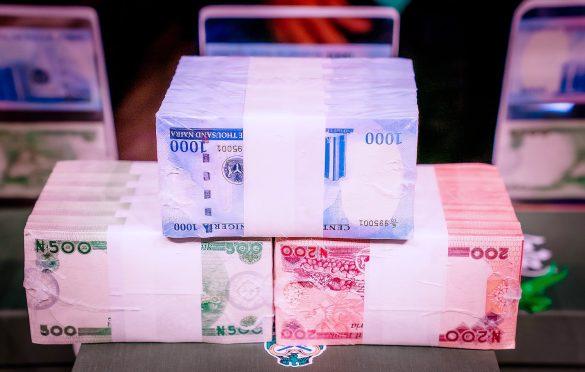
    The governorship candidate of the Peoples Democratic Party in Enugu State, Dr. Peter Ndubuisi Mbah, has called on the Federal Government and Central Bank of Nigeria to swiftly address the twin issues of PMS (Fuel) scarcity and difficulty in accessing naira notes due to the redesign of the 200, 500 and 1000 naira denominations.

    This was contained in a brief statement made available to newsmen in Enugu on Sunday, February 5, 2023.

    Empathizing with ndi Enugu in particular and Nigerians at large, the CEO of Pinnacle Oil and Gas Limited, a major player in the downstream sector of the oil and gas industry, said although the situation was thoroughly inconveniencing, there was a need for citizens to remain calm.

    He reiterated his resolve to ensure that all Pinnacle filling stations continued to sell the product at the official price.

    His statement reads: “I’m aware of the number of inconveniences bugging our people at this time, especially that of fuel scarcity as well as cash scarcity occasioned by the Naira redesign.

    “As I call on the CBN and FG to swiftly address the situation and ameliorate the plight of our people, I urge everyone to remain calm and understand that the situation is ephemeral and would ultimately be for the benefit of all of us.

    “On my own, I will ensure that Pinnacle Oil and Gas Ltd filling stations in Enugu will continue to dispense petroleum products at the official prices”.

    Recall that since the January 31 deadline of the CBN to phase off the use of old naira notes, Nigerians have been thrown into panic and difficulty, especially in depositing the old notes and getting the redesigned ones which appears to be in short supply.

    As the new February 10 deadline granted by President Buhari approaches, the CBN has insisted that no more extension of the deadline will be considered. This is also as President Buhari asked Nigerians to give him seven days for a major decision on the currency redesign after he was visited by the Progressive Governors Forum.

  • CBN insists on February 10 Naira swap deadline

    CBN insists on February 10 Naira swap deadline

    The governor of Central Bank of Nigeria , Godwin Emefiele, said the bank is not considering an extension of the deadline after the 10-day grace recently approved by President Muhammadu Buhari.

    Emefiele, who disclosed this at a briefing in Lagos, appealed to Nigerians to exercise patience noting that the gains of the policy outweigh the initial challenges.

    “I want to say unfortunately again, this time, we will not be looking at extension of deadline because we are the central bank and the deposit money banks are doing everything to address the challenges,” he said.

    He also said the redesigned naira policy was not targeted at anyone, reemphasising that the policy is aimed at economic benefits.

    He also appealed to Nigerians not to allow themselves to be used to truncate the policy.

    “We are doing our work. We are bankers. Those holding protest should not allow themselves to be used,” he said.

    He begged Nigerians to show understanding and accept to join queue at the banks

    President Muhammadu Buhari had asked Nigerians to give him seven days to take a major decision on the naira redesign policy.

    He said this after APC governors met with him at Aso Rock earlier in the day.

    (Daily Trust)

  • Presidential Poll: INEC maintenans Presidential Election date, says no adjustment to date

    Presidential Poll: INEC maintenans Presidential Election date, says no adjustment to date

    The Independent National Electoral Commission (INEC) yesterday said it was not contemplating shifting or adjustment the timelines for the forthcoming polls.The electoral body insisted that on no account would it allow anti-democratic forces and fifth columnists confuse the Nigerian people on the plans and intentions of the Commission.

    The clarification became imperative following a report by a national daily that the electoral body was contemplating postponing the presidential election by two weeks due to recent attacks suffered by the commission, especially in the south-east.However, reacting to the report, INEC National Commission on Publicity and Voter Education, Festus Okoye, told THISDAY that the Chairman of the Commission, Prof. Mahmood Yakubu has consistently and emphatically assured the nation that the dates fixed for the conduct of the 2023 general election were fixed and firm.

    He explained: “The question of shifting, postponement or adjustment of the timelines are not on the table and are not being contemplated by the Commission.“The purveyors of postponement cannot speak for the Commission. Their views are in the realm of imaginative speculation and not grounded on the realities on ground.”

    Okoye reiterated that the Commission has implemented 12 out of the 14 items on its timetable and schedule of activities.He noted that the entire Bi-modal Voters Accreditation System (BVAS) required for the conduct of the election in the 176,846 polling units and the redundancies for the 8,809 Registration Areas have been tested and certified fit for purpose.

    Okoye stressed that the Commission would use 436 out of this for mock accreditation in 12 polling units in each of the 36 States of the Federation and the Federal Capital Territory, Abuja. This is expected to take place on February 4, 2023.He added: “Thereafter they will be purged and configured for the 2023 general election. The non-sensitive materials required for the election are in our zonal stores and in the states. They are being batched in accordance with the registration areas.

    “The Commission has delivered a substantial number of the sensitive materials required for the conduct of the election to the Central Bank of Nigeria. The materials will be inspected by the Commission, the political parties, the media, and civil society groups a few days before their movement to the various Local Government Offices of the Commission.”

    Okoye pointed out that the Commission has revised and firmed up its Memorandum of Understanding with the various transport and marine unions.He reiterated that INEC would hire at least 100,000 vehicles to convey election personnel and materials to locations, stressing that the Commission would also hire boats for the same purpose.

    Okoye further recalled that the Commission has met with the leadership of the Nigerian National Petroleum Company Limited, saying they have assured the commission of the availability of products during the period and the Commission was encouraged by this. He disclosed that INEC also met with leadership of the federal courts headed by His Lordship, the Chief Justice of Nigeria, and he assured the Commission that the judiciary was ready for the elections.

    Okoye added: “There is no justifiable reason for the speculation relating to the postponement or rescheduling of the election.“We must on no account allow anti-democratic forces and fifth columnists to confuse the Nigerian people on the plans and intentions of the Commission.“The Commission is working hard for the Nigerian people and will deliver free, fair, credible, verifiable and inclusion elections.”

    Okoye said moreover, Sections 132 and 178 of the constitution have circumscribed the period for the conduct of national and state elections.He noted that it would be in the interest of the Nigerian people and in the interest of “our democracy to hold the elections on the dates and times set out by the Commission.”“We must continue to assure Nigerians that they will vote in a safe environment, that their votes will be safe and that their votes will count and be counted. We must not dignify fallacious speculations not grounded on facts and reality,” Okoye added.

    (This Day)

  • New Notes, Fuel Scarcity: Enugu APGA standard-bearer, Frank Nweke Jr, empathises with citizens

    New Notes, Fuel Scarcity: Enugu APGA standard-bearer, Frank Nweke Jr, empathises with citizens

    …says help is on the way

    Frank Nweke Jr, the governorship candidate of the All Progressives Grand Alliance (APGA) in Enugu State, on Thursday in an interactive radio program, Urban Prime Time, on Urban 94.5 FM, Enugu, empathised with fellow Ndi Enugu over the dire situation currently being experienced in the state and across the country.

    Nweke noted the difficulties of accessing the new Naira notes resulting in queues and chaos at the ATMs, bank halls and with POS operators. He highlighted that the queues also continue at the fuel stations where a litre is sold as high as N500 while many are also on queues to retrieve their Permanent Voter’s Card from INEC offices.

    “These are in addition to the suffering that was already in existence. In Enugu, we still don’t have good water or power supply, the roads are still bad, healthcare has not improved, workers are not paid as they should be and a host of other problems. I hear all these as I travel across the State on my campaign tours. People are suffering and exhausted.

    “With these new situations of people being unable to access their already meagre funds, Nigerians are not even allowed to ‘suffer in peace’. Just when you think it cannot get worse, the government does something else that throws citizens into more hardship”

    Emphasising that he is not against the redesign of the naira notes and the intended goal of monitoring the funds in circulation, he maintained that public policy must be for the benefit of the masses.

    “Any policy that undermines the well-being of the masses is unacceptable. It is important that the consequences of every policy action and the timing of implementation are properly taken into consideration. If the objective is to curb money politics, there are other ways to target the people directly involved without inflicting more hardship on our people.”

    Responding to a question on the need for a cashless economy, Nweke explained that the majority of Nigerians are unbanked and without access to the digital services required to operate in a cashless environment. He insisted that the infrastructure required is not yet available and the effect of the ongoing cash scarcity as a result of the Federal Government’s policy is most felt by the poor, not the supposed targeted elite.

    “The same applies to the policy on fuel subsidy. It does not make sense to have an average of N2 trillion allocated to fuel subsidy per year while more critical issues like work and housing, education, healthcare and other things that directly affect the people are ignored. The fuel subsidy is sustained by corruption and pilfering at the highest levels. It needs to be removed completely and the funds redirected to these areas that improve the lives of the people.”

    At the state level, Nweke stated that as a sitting governor, in consideration of the hardship being experienced, he would show leadership by ensuring open and honest communication with the people to give a true account of affairs, while pursuing solutions with the direct stakeholders. He declared that he would have had meetings with the Governor of the Central Bank of Nigeria and the Petroleum Marketers immediately to work out possible solutions to ameliorate the suffering.

    Nweke used the occasion to call on INEC to improve the PVC collection process, saying that all officials who insist on bribes for collection must be punished.

    He appealed to Ndi Enugu to be resilient and steadfastly refuse to accept cash from randy politicians as instant gratification for the untold suffering.

    “My heart goes out to the entire people of Enugu who are suffering today. I see it everyday and it is exhausting. Please, do not give up, insist on picking up your PVC regardless of the bottlenecks and do not sell your votes to politicians who want to take advantage of your suffering. I assure you of my word to restore your trust in the government when elected as the Governor of Enugu State” he stated.

  • APC Governors appeal for both old and new notes to co-exist, propose indefinite extension of old naira’s legal tender status

    APC Governors appeal for both old and new notes to co-exist, propose indefinite extension of old naira’s legal tender status

    Governors of the All Progressive Congress (APC) have appealed to President Muhammadu Buhari to postpone the deadline for the currency swap of the newly redesigned 1,000, 500 and 200 Naira notes.

    They also asked for both old and new notes co-exist to ease the suffering of Nigerians.

    The governor of Kano State Umar Ganduje told ARISE NEWS after the governor’s closed door meeting with the President on Friday that the president promised to look into their request. According to Ganduje, the old Naira should die a “natural death”.

    Also, Governor Nasir El-Rufai of Kaduna State, who spoke to some reporters in Hausa language after the meeting said while the Central Bank of Nigeria (CBN) mopped up over N2 trillion of the old notes, it printed only N300 billion new notes, which he said is not enough.

    El-Rufai, who spoke in company of his Kano State counterpart, Abdullahi Ganduje, said even if the CBN had wanted to implement the cashless policy, it should have printed a half of what it mopped up, for a start, which ought to be N1 trillion.

    He said the APC Governors told the President that the masses are suffering and traders are losing their goods due to lack of patronage citing the example of tomatoes sellers that travelled to Lagos with their goods, which all got wasted because people had no money to buy.

    On this ground, the Kaduna State Governor said the governors had no choice but to appeal to the President to reconsider his stances.

    El-Rufai, however, revealed that President Buhari did not tell them yes or no.

    He also added that the Chairman of the Progressive Governors’ Forum (PGF), Atiku Bagudu of Kebbi State, has gone back to hold private meeting with the President with the hope to convince him.

    The meeting between the Governors and the president comes on the heels of widening cracks within the fold of the governing party with allegations from the Kaduna State Governor, Nasir El Rufai that some people within the presidential villa are working against the victory of the party and the presidential candidate, Bola Tinubu.

    (Arise News)

  • New Naira Scarcity: Protests spread to Delta, Oyo

    New Naira Scarcity: Protests spread to Delta, Oyo

    Residents of Uvwie and Warri South Local Government Area of Delta State, on Friday took to the street to protest against lack of access to the naira.

    The protest forced some banks to suspend activities.

    Scores of market women barricaded the Warri-Sapele Road and NPA Expressway, ground activities in the areas.

    The protesters also laid siege to the United Bank for Africa and Union Bank located near Main Market, Warri.

    Traders who bore placards and leaves lamented the inability to sell their goods in the past few days.

    As part of the protest, they burnt tyres along the ever busy roads.

    Rejecting the cashless policy of the Central Bank of Nigeria, they demanded that commercial banks release money to enable them carry out their legitimate businesses.

    Echoes of “our fish dey spoil o”, our foods dey rotten” were heard as the women protested from the Main Market axis of Warri Sapele Road to Delta Broadcasting Station located at the Edjeba axis of NPA Expressway in Warri South Local Government Area.

    Security operatives tried to pacify the aggrieved traders but they insisted on collecting their money from banks.

    One of the traders lamented that she stayed in shop all through Thursday without making a dime.

    “Our children are hungry, we cannot sell, we cannot do transfer, we cannot withdraw our money. I stayed in shop throughout yesterday and sold nothing. People who want to buy things tried to transfer money but could not,” she said.

    Bank Vandalised As Protesters Take To Streets In Ibadan

    A Wema Bank branch in Ibadan, Oyo State, was vandalised by irate mob protesting naira scarcity, on Friday.

    The protesters barricaded major roads across the state capital and chanted anti-government songs.

    Affected routes include; Iwo road, Gate and other routes in Ibadan North East local government area.

    Some of the angry youths were heard shouting out of frustration in Yoruba language: “lori owo wa” which translates despite being our money.

    Many civil servants inside the government secretariat panicked as many were seen hanging around different spots in case of unforeseen eventuality.

    Tyres were burnt in front of the secretariat by the angry mob to register their anger.

    In a chat with journalists, Executive Assistant on Security to Governor Seyi Makinde, CP Sunday Odukoya (rtd), condemned the act, saying the situation in the country affects everybody equally and should not be the reason anybody should hide under such to destroy or vandalise government property.

    In October last year, governor of the Central Bank of Nigeria (CBN), Godwin Emefiele, announced the plan to redesign the N200, N500, and N1,000 notes, and asked Nigerians to deposit their old notes before January 31, 2023 when they would cease to be legal tender.

    Although the deadline has been shifted to February 10, many Nigerians have found it difficult to obtain the new naira notes.

    The reporter reports that Point of Sales (POS) operators have also unofficially put their charge rate of N5,000 between N500 and N1,000.

    Recall that Pacesetter reported similar protests in parts of Enugu on Wednesday, February 1, 2023.

    Daily Trust/Pacesetter

  • High Court Sentences Ex-SARS Officers to Death for Murder

    High Court Sentences Ex-SARS Officers to Death for Murder

    A High Court sitting in Port Harcourt has convicted and sentenced to death by hanging, two former members of the disbanded Special Anti-Robbery Squad for extra-judicial killing.

    Recall that five members of the SARS team, ASP Samuel Chigbu, Shedrack Ibibo, Magus Awuri, Ogoligo, and Olisa Emeka were standing trial for killing Michael Akor and Michael Igwe, while in their custody for allegedly stealing recharge cards in Oyigbo, Oyigbo Local Government Area in 2015.

    But ASP Samuel Chigbu and Ogoligo died in custody at the correctional centre in Port Harcourt, while Shedrack Ibibo, Magus Awuri, and Olisa Emeka continued with the trial.

    The trial judge, Justice M.O Opara, in her judgement found Shedrack Ibibo and Magus Awuri guilty of conspiracy to murder, while Olisa Emeka was acquitted.

    Speaking to newsmen after the judgment, the state prosecution council expressed happiness, saying justice has been served.

    She said, “The court found out that they actually were guilty of murdering the two deceased persons.

    “The court discharged and acquitted Olisa Emeka based on the findings of the court, because the prosecution did not prove his case concerning the last person.

    “From the judgement, justice has been served to the family of the deceased and that makes me happy.

    “It will serve as a deterrent hopefully to other police officers and also give some sort of closure to the families of the deceased persons.”

    The mother to one of those murdered, Kathrine Akoro also expressed happiness over the judgment, saying the policemen would now experience a taste of their own medicine.

    She said, “They killed my son, carried our property in 2011. My son said I should forgive them, let them go and bring those things they took.

    “I said if you are carrying all those property, bring my son, I will be okay. I thank God He has fought for me. I am happy.

    “They said that place is good for anybody that killed innocent souls, sending them by force to the grave. They have already tested it. The remaining one here today, they have tested it.”

    (Punch)

  • New Naira: Give me seven days for a major decision on currency redesign -Buhari to Nigerians

    President Muhammadu Buhari on Friday asked Nigerians to give him seven days to resolve the cash crunch following the Central Bank of Nigeria (CBN)’s redesigning of the naira notes.

    He said this while speaking to the Progressive Governors’ Forum (PGF) who visited him at the Presidential Villa in Abuja to seek solutions to the cash crunch which they said was threatening the good records of the administration in transforming the economy.

    President Buhari told the All Progressives Congress (APC) governors that the currency re-design will give a boost to the economy and provide long-term benefits.

    He also expressed doubts about the commitment of banks in particular to the success of the policy.

    According to a statement released after the meeting by the Senior Special Assistant to the President on media and publicity, Garba Shehu, the President stated that some banks are inefficient and only concerned about themselves and that even if a year is added, problems associated with selfishness and greed won’t go away.

    Buhari said he had seen television reports about cash shortages and hardship to local businesses and ordinary people and gave assurances that the balance of seven of the 10-day extension will be used to crack down on whatever stood in the way of successful implementation.

    The President further promised that he will revert to the CBN and the Minting Company and a decision will be taken.

    According to the statement, the governors told the President that while they agreed that his decision on the renewal of currency was good and they are fully in support, its execution had been botched and their constituents were becoming increasingly upset.

    They told the President that, as leaders of the government and party in their different states, they were becoming anxious about a slump in the economy and the series of elections that are coming. They further requested the President to use his powers to direct that the old and new notes co-circulate till the end of the year.

    The President said when he considered giving the approval to the policy, he had demanded an undertaking from the CBN that no new notes will be printed in a foreign country and they in turn gave him assurances that there was enough capacity, manpower, and equipment to print the currency for local needs.

    Against this backdrop, he declared that he needed to go back to find out what was actually happening, assuring the governors that being closer to the people, he had heard their cries and will act in a way that there will be a solution.

    (Channels TV)

  • JUST IN: CBN instructs banks to pay new naira notes over the counter

    JUST IN: CBN instructs banks to pay new naira notes over the counter

    The Central Bank of Nigeria (CBN) in a bid to address the long queues at Automated Teller Machines nationwide directed Deposit Money Banks to begin paying the newly designed notes over the counter to customers immediately not exceeding a maximum of N20,000.

    The apex bank also said it would, in conjunction with the Nigerian Police and other agencies, prosecute sellers and abusers of naira.

    CBN in a statement signed by its Director, Corporate Communications, Osita Nwanisobi, said: “The CBN has observed with grave concern, the activities of persons who sell the newly redesigned banknotes and those who flagrantly abuse the legal tender by hurling wads of Naira notes in the air and stamping on the currency at social functions.”

    “We have equally noticed the queues at Automated Teller Machines (ATMs) across the country and an upward trend in the cases of people stocking and aggregating the newly introduced banknotes they serially obtain from ATMs for reasons best known to them. Also worrisome are the reported cases of unregistered persons and non-bank officials swapping banknotes for members of the public, purportedly on behalf of the CBN.”

    (ThisDay)

  • Sokoto, Zamfara, Katsina border communities trade in CFA franc currency over new naira scarcity

    Sokoto, Zamfara, Katsina border communities trade in CFA franc currency over new naira scarcity

    Residents of border communities in states including Sokoto, Zamfara, Katsina, Adamawa and Kwara have opted for the CFA franc following the scarcity of the new naira notes across the country.

    The residents, including traders and commercial drivers, are also rejecting the old naira notes, insisting that customers who do not have the new redesigned currency must pay for goods and services with CFAs.

    The CFA franc is the legal tender in eight West African countries of Benin, Burkina Faso, Côte d’Ivoire, Guinea-Bissau, Mali, Niger, Senegal and Togo, which make up the West African Economic and Monetary Union, otherwise known as the Union Économique et Monétaire Ouest Africaine.

    Findings by The reporters indicated that businessmen and traders in the Zurmi and Shinkafi local government areas of Zamfara State, which border the Niger Republic, prefer the franc to the naira.

    Investigation revealed that traders in the two LGAs had been selling their commodities in CFA due to fear that they might not get the new naira notes.

    A cattle dealer, Musa Shehu, said he stopped receiving the Nigerian currency since the Central Bank of Nigeria announced the deadline for the swap of the N1,000, N500 and N200 notes.

    He stated, “I have since stopped receiving the old naira notes because I don’t have an account and I can’t go to the bank.”

    A trader in Shinkafi town, who shuttles between Nigeria and Niger Republic, explained that most of his customers paid with the CFA.

    “I cannot collect old naira notes and give out my commodities to any customer. But I will collect new naira notes and CFA because I am afraid of losing my money if the time for the exchange expires,’’ the trader, who spoke on condition of anonymity, said.

    A grain seller in Dada village in Zurmi Local Government, Muhammadu Isa, disclosed that he stopped selling grains in the Nigerian currency after the CBN’s policy on new naira notes was unveiled.

    He said that he sold only to those who possessed CFAs to avoid losing money as ‘’my father did in 1983 when the naira notes were hurriedly changed by the then Major General Muhammadu Buhari regime.’’

    Isa explained that his late father lost all his money when Buhari changed the national currency in 1983.

    The grain trader insisted that he would not accept the old naira notes as there was no bank or Point of Service terminal in his community where he could withdraw the new currencies.

    “You see since our people and those from the Niger Republic are coming to buy the grains with the CFA, I see no reason why I should collect old naira notes. If anybody wants to buy grains from me, he must pay in CFA or forget it. I will not collect old naira notes because I don’t know what to do with them after the expiration of the deadline,” he noted.

    In a related development, commercial drivers who ply the Niger Republic from Zurmi and Shinkafi LGAs have also stopped collecting the old notes.

    They justified their decision with the argument that the CFA was the only legal tender accepted by the people along the Nigeria-Niger borders.

    A driver, Alhaji Hamisu, stated that passengers had to pay in CFA if they wanted to travel to the Niger Republic or return to Nigeria ‘’because the old naira notes are unacceptable as legal tender.’’

    Hamisu said, “I have on several occasions refused to collect the old naira notes from my passengers because I have no time to go to the bank or PoS to get the new notes.

    “Another problem is that you can’t buy fuel with the old naira notes in Niger republic; as such, no commercial driver on cross-border journeys will agree to take the old notes from passengers.

    “I was almost stranded in Malbaza town in Niger Republic when I wanted to buy fuel with the old naira notes because we have been doing so before the change of the Nigerian currency.

    “I went to the filling station as usual and bought 30 litres of fuel and brought out the old notes but the fuel attendant told me that he would not accept the notes.

    “I pleaded with him but he was not ready to collect the money from me. I was lucky as one of the commercial drivers, who is also my friend, came to buy fuel and he had enough CFAs. I bought the CFA from him and settled the fuel attendant.”

    Sokoto border traders

    Also, our correspondent discovered that border communities in Sokoto State preferred to sell their products in CFA due in part to the non-availability of the new notes and the continuous loss of naira value.

    Speaking with The Reporters, Mallam Sidi Isa, who trades in cattle in Illela, a border community with the Niger Republic, said he preferred the franc because of the introduction of the new naira notes and the cashless policy.

    Also speaking, Mr Jamiu Ola, a motor mechanic, argued that the CFA holds more value than the naira.

    “I prefer CFA due to the fact that it is hardly devalued unlike our own naira which has been devalued,” he added.

    A businessman, Mallam Haruna Abdulazeez, stated, “I shifted my business to the Niger Republic when I realised I can’t cope with the economy of this country anymore.

    “If I buy goods from Nigeria and take same to Niger Republic, I make profits due to the value after the exchange. Even if you take sachet water there, you will make your profits due to the exchange rate.”

    A Sokoto resident, Muhammad Auwal, submitted that the CFA holds more value than the naira, hence his preference for foreign currency.

    “I normally exchange my naira for CFA as it is not reasonable for someone to keep naira at home due to loss of value,’’ he declared.

    Adamawa cattle dealers

    Speaking in an interview, the Chairman of Mubi International Cattle Market in Adamawa State, Jafaru Hamman, lamented the scarcity of newly redesigned naira notes, adding that the difficulties in getting the currency had affected commerce at the border communities.

    The problem, according to him, is that most traders in Mubi are accustomed to cash transactions and the cashless policy may take time to get mass support.

    Commenting on the decision of Adamawa communities to opt for the franc over the naira, a cattle dealer, Jafaru Hamman, explained that even before the CBN policy, some traders were using the West African CFA in business transactions.

    He, however, noted the volume of trade in foreign currency was minimal before the introduction of the new naira redesign policy.

    Jafaru said the development had made it increasingly difficult for most traders to get the new currency, thereby stifling their business operations.

    According to him, as the deadline for the naira swap draws closer and the old currency is facing rejection, traders are faced with either accepting the CFA for their transactions or halting their business activities.

    He said, “They (Traders) are collecting the naira but since it became increasingly difficult to get new notes, they resorted to collecting CFA. The traders have also refused to accept the old notes. If they come to sell their cattle, if you give them the old notes they will reject it.

    ‘’They would rather return with their cattle than accept the old notes. Nobody is seeing the new notes because they are scarce. Don’t forget that many of these traders don’t have bank accounts to accept transfers because our business is purely based on cash.’’

    Katsina traders lament

    The situation is not different at the cattle markets in Dankarma, Jibia and Maiadua, all in border communities in Katsina state.

    Findings showed that trading was being carried out in these markets in both naira and CFA before the CBN policy.

    But the naira notes scarcity had forced the majority of cattle dealers and traders to carry out all transactions in CFA.

    However, a few traders accept electronic money transfers from those considered regular customers.

    Mallam Ahmadu Ousseini who sells cattle and camels at Maiadua Kara International market, said he carried out most of his transactions in CFA because his customers said they could not get the new naira notes.

    Ouseini said. “We accept naira and CFA here at Kara market. But in the past three weeks, I only accepted CFA for my transactions. There are a few customers I still accept cash transfers from as I have a PoS. When we conduct business in the CFA, we gain as the CFA is slightly higher (in value) than the naira.

    “It is our customers who source for the CFA which they pay us. There are even those who help us change money in the market but they too cannot get the new naira notes now. This has made us transact business majorly in the CFA.”

    Hajiya Bilikisu Ahmed, who is resident in the area but goes to sell cows in Lagos and other South-West cities, explained that the currency scarcity was affecting her business badly.

    Ahmed stated, “I buy (cattle) from the dealers at Dankarma and Jibia with the naira. Occasionally, I exchanged my naira notes with the CFA in any of the cattle markets. But now, the scarcity of the new naira notes has worsened the matter.

    ‘’On Wednesday when I wanted to buy some cattle at Dankarma, I lost N3,000 on the N20,000 I exchanged for the CFA. The situation is compounded by the network challenges in many banks in Katsina. But I collected money from some of my customers down South, especially in Lagos and no matter the situation, I have to deliver to them, otherwise, they may not patronise me again.”

    The cattle dealers further complained that the CBN policy had reduced the volume of cows being brought into the market in Borno State.

    Recounting his pain, Mohammed Ali, a trans-border cattle merchant in Maiduguri, said, “I used to buy about 20 heads of cattle at Mada (a Cameroon market across the border from Gamboru in Borno State) and sell at least 15 weekly in the Maiduguri market.

    “My problems as a cattle merchant are three: the CFA in the Cameroon market, which used to exchange at N560 per CFA, is now N680 per CFA, and in a few instances it is even more. The old naira notes are scarce and the new notes are nowhere to be found.’’

    “In this situation, the majority of us have suspended the trade because we deal in hard cash, and it is not available; the sellers of the cattle across the border also deal in hard cash. They don’t accept bank transfers; they don’t even have bank accounts,” Ali explained.

    Speaking further, he added, “By my estimates, between 500 to 700 heads of cattle arrive here daily from Chad and Cameroon to meet the number on the ground that has not been sold; but today (Monday, January 30), only about 50, according to what I saw, arrived.

    “I sold only one cow today, and that is even on credit; the buyer said he could only pay by the end of February,’’ he lamented.

    The chief cattle dealer of Bama, Mohammed Gwamna, said the situation had forced him to stop his cattle business.

    “I have suspended the trade, whether trans-border or within the Nigerian border markets. The reason: if you go to the Cameroonian market with N1 million, you have to part with N100,000 to get it changed to CFA or new naira notes to enable you to buy the cattle, otherwise, the sellers will not even look at you.”

    Stressing that the naira redesign policy had eroded his business and other people’s livelihoods, Gwamna observed that the cattle population in Maiduguri markets had reduced by about 80 per cent.

    He added, “By my estimate, this difficult situation has slashed the cattle population in this market by about 80 per cent, because most of us can’t even go to Gubio, Monguno and Gaidam (cattle markets in Borno and Yobe) to buy talk less of Cameroon, Niger or Chad markets because we can’t source the new naira notes. Without the new notes, nobody will even answer your greetings,” he lamented.

    Another trader, Abba Ali, noted, “At Monguno, Ngala, Gubio (in Borno State) and Kukareta and Gaidam (in Yobe State), cattle will not be sold to you if you do not brandish new naira notes; and in Cameroon, you must show CFA; and both are not easy to find. This is the situation,” he complained.

    “Hitherto, sometimes between 20 and 30 trailers offload cattle daily in this market; but today (Monday, January 30), according to what I have seen so far, only two trailers offloaded,” he observed.

    In Ipokia, a border town in Ogun state, traders were said to have been travelling to the Benin Republic to exchange the new currency with CFAs after selling their wares.

    A youth leader in Ipokia, Deji Mawuntin, bemoaned the hardship the residents of Ihunbe, Ilara, Oja-Odan and others were going through to get the new notes.

    He accused unnamed bank workers of selling the new currencies to racketeers in the Benin Republic.

    He noted, “The bankers are selling new naira notes to Beninese and Nigerians are going there to exchange it with CFAs. People have called the DSS operatives to beam their searchlight on these bank officials.”

    In Kwara State, in Chikanda, a border town between Nigeria and the Benin Republic, a trader, Alhaji Bashir Mohammed, said he preferred taking CFA as new naira notes were not easily available.

    He said, “Since the change from old naira notes to new notes, there has been a shortage of the new notes, we are not getting the new notes, so it is easier to get the CFA than the naira notes, that is why we are accepting the CFA in exchange for our goods.”

    Another trader, Mrs Mariam Hassan, who trades in Garri, local rice, beans and yam flour, said that the traders in the border towns were accepting CFA in exchange for their goods.

    Mariam who is based in Yashikira in the Baruten local government area of Kwara State said that the traders made more profits when they accepted CFA.

    The CBN spokesman, Osita Nwanisobi, had yet to respond to questions on the displacement of the naira by CFA in parts of the country as of the time of filing this report.

    But the Managing Director, Cowry Asset Management Limited, Johnson Chukwu, described the move as the logical thing to do in face of the scarce availability of the new notes.

    Also, the Chief Executive Officer of the Centre for the Promotion of Private Enterprises, Dr Muda Yusuf, noted that this was natural due to the lack of enough new notes for people to run their businesses in border regions.

    (Punch)
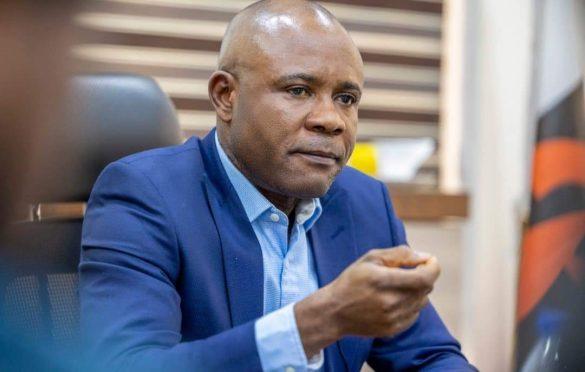
  • FEC grants N15.57bn for road construction refunds, other projects

    FEC grants N15.57bn for road construction refunds, other projects

    The Federal Executive Council yesterday approved N15,569,016,812 for various contracts in the Ministries of Works and Housing; Education as well as Industry, Trade and Investment.

    The Minister of Works and Housing, Babatunde Fasola, said: “The two states that had outstanding with respect to eligible roads were Plateau and Borno States and Council approved the refund of N6,601,769,470. 99 in favour of Plateau and the sum of N3,084,787,113. 34 for Borno State.”

    The Minister of Industry, Trade and Investment, Niyi Adebayo, said the council approved N1,803,556,537 contract for the construction of a package sewage system for the Oil and Gas Free Zones Authority’s head office within the Liberty Free Zone in Ikot Abasi, Akwa Ibom State with the completion period of 10 months. The Minister of Education, Adamu Adamu, said the FEC approved N4,078,903,692 for three contracts in the Osun State University, Osogbo; the Federal University, Lokoja and the National Commission for Nomadic Education.

    He said the council also approved the memorandum that sought the takeover of the David Umahi University of Medical Sciences, Ebonyi, by the federal government as well as the change of the name of the institution to David Umahi Federal University of Health Sciences through an approved bill to be transmitted to the National Assembly.

    (Daily Trust)

  • Court approves Kanu’s request for access to doctors, medical records

    Court approves Kanu’s request for access to doctors, medical records

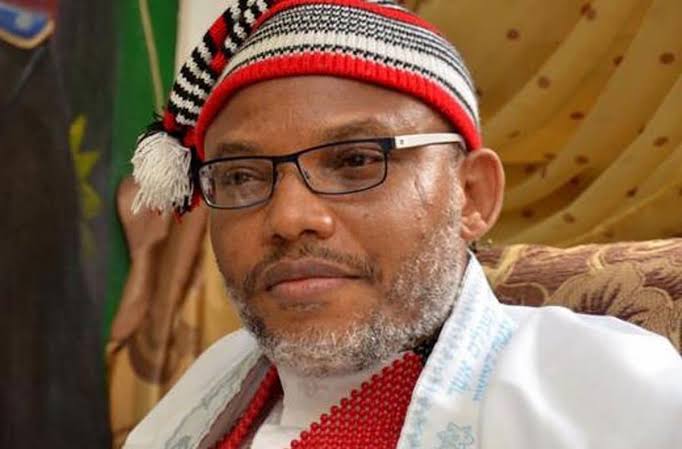
    The Abuja division of the Federal High Court has granted an application by the detained leader of the Indigenous People of Biafra (IPOB), Nnamdi Kanu, to apply for an order of mandamus compelling the Department of State Service (DSS) to allow him to have unhindered access to his medical doctors.

    In his suit marked FHC/ABJ/CS/ 2341/2022, Kanu said he would need his doctors to conduct an independent examination to ascertain his state of health.

    The ex parte application among others sought an order granting him leave to, “apply for judicial review in the form of an order of mandamus, compelling the Respondents to allow him unhindered access to his medical doctors to enable them to conduct an independent examination of his present deteriorating health condition, as earlier ordered by the Federal High Court, Abuja, Coram, Hon. Justice BFM Nyako, on the 21st day of October 2021; and as required by the express provisions of section 7 of the Anti-Torture Act, 2017.”

    In addition, he sought “an order of this Honourable Court granting leave to the Applicant to apply for judicial review in the form of an order of mandamus, compelling the Respondents to avail the Applicant with all his medical records, from the 29th day of June 2021, till date.”

    Justice Binta Nyako had after hearing from Kanu’s legal team headed by Prof. Mike Ozekhome, SAN, with Sir Ifeanyi Ejiofor, granted the application.

    While adjourning the matter till February 21, the court, directed Kanu’s legal team to serve all the relevant processes on both the DSS and its Director General, who were cited as 1st and 2nd Respondents in the matter.

    Kanu listed some of the records he would require from the DSS, including; his admission records, medical and clinical notes, nursing notes, observation charts and documentation during treatment or stay-in-hospital, laboratory test results, pharmaceutical records, radiological scans, images and reports, blood transfusion records, physiotherapy and rehabilitative treatment records, clinical findings, as well as diagnosis and treatment prescribed records.

    He noted that trial Justice Nyako had on October 21, 2021, ordered that he should be allowed access to three persons of his choice, including his medical doctors.

    Kanu argued that section 7 of the Anti-Torture Act, 2017, provided that a person arrested, detained or undergoing, custodial investigation, shall have the right to demand a physical and psychological examination by an independent and competent doctor of his own choice after interrogation, which shall be conducted outside the influence of the police or security forces.

    “The Respondents have repeatedly denied the Applicant access to medical doctors of his choice to independently examine him, contrary to the order of the court made on the 21st October 2021; and the express provisions of Section 7 of the Anti-Torture Act, 2017,” he added.

    In a verifying affidavit that was deposed to by one Chimmuanya Emenari, Kanu told the court that prior to the time he was arrested abducted in Kenya and extra-ordinarily rendered back to Nigeria, he visited a Specialist Cardiologist every week for medical examination and treatment.

    “Medical Reports containing the medical history of the Applicant as was issued by medical specialists managing the Applicant before his abduction in Kenya and extraordinary rendition to Nigeria are hereby attached and variously marked as Exhibits MNK 3, MNK 4 and MNK 5.

    “That notwithstanding the fact that the Applicant has been discharged by the appellate court and his further detention prohibited, the Applicant is still being held in solitary confinement in the custody of the Respondents, where he is exposed to daily mental and psychological torture and degradation of his human person.

    (Sun)