Category: News

This is an optional category description

  • Bolanle’s murder: How lawyers can end police brutality —Falana

    Bolanle’s murder: How lawyers can end police brutality —Falana

    Also condemning the murder, rights activist, Mr Femi Falana, SAN, urged legal practitioners to end extrajudicial killings in the country.

    Falana, in a statement, said: “The cruel killing of Mrs Bolanle Raheem provides an opportunity for the Nigerian people led by lawyers to address the root cause of the extrajudicial killing of unarmed citizens by law enforcement officers. On July 15, 1981, Dele Udo, a United States-based athlete and a potential world beater in the 400 metres was shot dead by a trigger-happy policeman at Ojuelegba in Lagos State. That was the beginning of the reckless shooting of unarmed citizens by armed policemen and armed soldiers on the roads.

    “It is pertinent to note that despite the demand of the human rights community for fundamental reform of the curriculum of the police academy the training of police cadets has remained as brutish as it was under the British colonial regime. Upon their graduation, the recruits usually unleash violence on a society that had dehumanised them in the police academy. Having been brutalised themselves, they derive pleasure in subjecting suspects to physical, mental and psychological torture. During the interrogation of a suspect, it is not uncommon for a policeman to threaten that ‘I will kill you and nothing will happen.’

    “Nigerian lawyers must ensure that Mrs Raheem does not die in vain like others who were dispatched to their untimely graves before her. Indeed, the best tribute that the NBA can pay to the deceased is to use her cold-blooded murder to mobilise the Nigerian people to end police brutality in Nigeria. To start with, police checkpoints must be removed from Nigerian roads. The roads should be patrolled by combined teams of officers from the police and road safety commission.”

    Besides, the rights activist said: “The NBA should prevail on the Federal Government and State Governments to publish the reports and implement the recommendations of the judicial panels. Otherwise, the NBA should adopt legal measures to compel the Governments to implement the recommendations.

    “Furthermore, the NBA should mount pressure on state governments to enact laws for the establishment of human rights bodies to protect the human rights of citizens. This was the principal resolution adopted by the National Economic Council after the #EndSARS protests.”

  • Court bars DSS, IGP from arresting Emefiele

    Court bars DSS, IGP from arresting Emefiele

    … CBN releases $265m to foreign airlines

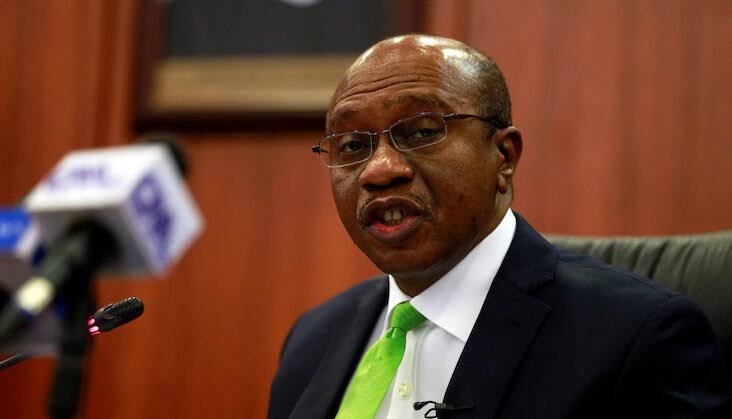
    A High Court of the Federal Capital Territory, FCT, has stopped the Department of the State Security (DSS), and Inspector -General of Police, from arresting and detaining Governor of Central Bank of Nigeria (CBN), Mr. Godwin Emefiele over alleged allegations of terrorism and sundry offences against him.

    Others, equally restrained by the Court order are: the Attorney General of the Federation (AGF), the Economic and Financial Crimes Commission (EFCC) and the Central Bank of Nigeria, who are listed as 1st, 2nd and 5th defendants.

    Justice M. A. Hassan made the order, while delivering judgment in a suit marked FCT/HC/CV/GAR/41/2022, filed by the Incorporated Trustees of Forum for Accountability and Good Leadership.

    The judge held that the DSS, acted wrongfully and illegally in instigating President Muhammadu Buhari, against Mr. Godwin Emefile, in respect of the exercise of his statutory duty relating to the issuance of monetary policies and directives in the interest of the National Security and economy

    Justice Hassan further declared that, in view of the ruling of the Chief Judge of the Federal High Court, Justice John Tsoho in State Security Service(SSS) Vs Mr. Godwin Emefiele in suit no FHC/ ABJ/CS/ 2255/2022 delivered on December 15, 2022, any continuous harassment, intimidation, threats, restriction and free movement, abuse of right of office, surreptitious moves to arrest, and humiliation of Mr. Godwin Emefiele,over trumped up allegations of terrorism financing and fraudulent practices etc, by the 2nd, 3rd and 4th respondents and their offices is vindictive, unwarranted, abresive, oppressive and same constitute a flagrant breach of his rights to personal liberty, dignity and human person and illegal and unconstitutional.

    An order of perpetual injunction restraining the 2nd, 3rd and 4th respondents, their agents, servants and all officers under their command from instigating the arrest or arresting, interogating and detaining Mr. Godwin Emefiele in respect of any matter or policy decision on the economy of the Federal Republic of Nigeria or any connected purposes.

    Before yesterday judgment, Justice Hassan had on December 19, granted an exparte application restraining the defendants from arresting and detaining the CBN governor.

    The exparte application was moved by counsel to the applicant, Emeka Ozoani SAN, wherein, Justice M.A. Hassan specifically ordered as follows; “ The 2nd, 3rd and 4th defendants/respondents are hereby restrained in the iterim whether by themselves, their officers, agents, servants, privies or acting through any person or persons howsoever,from inviting, arresting and/or detaining the Governor of the Central Bank of Nigeria, Mr. Godwin Emefiele with particular allegations of acts of terrorism financing,fraudulent activities, or any other manner howsoever, that may interfere with his rights to freedom of movement, personal liberty, human dignity or in any way interfere with the performance and discharge of his official functions and duties as Governor of the Central Bank of Nigeria, pending the hearing and determination of the motion on notice.”

    The court equally granted an order of substituted service on the 5th defendant/respondent (the CBN) by delivering the originating summons and other processes to the legal department of the bank, at its Headquarters in Abuja.

    Meanwhile, the court has ordered an accelerated hearing in the matter and consequently abridged the time of both the respondents and applicant

    In his judgment, the judge held that the continued harassment of Emefiele on the basis of the allegations by the DSS is illegal and constitutes a breach of his fundamental rights as provided for in the 1999 Constitution and African Charter on Human and Peoples’ Rights.

    The DSS had in an exparte application marked: FHC/ABJ/CS/2255/2022, sought for an order to arrest the CBN Governor over alleged acts of financing terrorism, fraudulent activities and economic crimes of national security dimension.”

    But the Chief judge of the Federal High Court, Justice John Tsoho, in a ruling delivered on December 9, rejected the application on the grounds that the DSS failed to provide sufficient evidence to warrant the issuance of an arrest warrant against Mr Emefiele.

    The judge said the depositions in the affidavit filed by the SSS in support of its application “purport that preliminary investigation has revealed various acts of terrorism financing, fraudulent activities perpetrated by the respondent and his involvement in economic crimes of national security dimension.”

    In addition, Tsoho,said: “These are no doubt grave allegations, but which the applicant has not presented any concrete evidence to support.”

    Justice Hassan said the DSS cannot continue to harass or arrest Governor Emefiele over any trumped up allegations, unless an order of a superior court is first obtained.

    Justice Hassan held that Exhibit A , submitted by the 4th respondent (DSS), which was the Affidavit also submitted to the Chief Judge of the Federal High Court, Justice JohnTsoho, did not substantiate or provide any material fact of terrorism and that the 4th respondents acts are obvious attempts to interfere with the rights of Godwin Emefiele

    (Sun)

  • NBA vows to ensure justice is served in Bolanle’s case

    NBA vows to ensure justice is served in Bolanle’s case

    The Nigerian Bar Association, NBA, on Thursday, vowed to ensure justice was served in the case of Lagos-based female lawyer, Bolanle Raheem, who was shot dead by a police officer on Christmas day.

    The police officer, who was later identified as Drambi Vandi, an Assistant Superintendent of Police, ASP, was attached to Ajiwe Police Station in Ajah, Lagos State.

    The cop and his team were said to have tried to stop Raheem and her family members as they drove back home from a church service.

    Raheem was shot when her car attempted to make a U-turn under the Ajah Bridge and was later pronounced dead at the hospital to which she was rushed, causing outrage among Nigerians.

    Reacting to the incident on Channels Television’s Sunrise Daily programme, on Thursday, the NBA’s 3rd Vice President, Mandy Asagba, chastised the police officer for violating the police code of conduct and assured the victim’s family that the NBA will pursue the case with them until justice is served.

    Asagba said: “They have rules and a code of conduct. One thing I have noticed with the system in Nigeria, particularly the police is that they kind of go outside the law at any point in time, they violate the law; they go contrary to the law most of the time. Constitutionally it was wrong, going by the police SOP, it is unacceptable, it’s so inhuman, it’s unthinkable I must say and I say to myself this could have happened to anybody.

    “So if Nigerians are going to keep quiet at this then trust me anybody can be the next victim, but I thank God Nigerians are not keeping quiet The NBA President has said it without mincing words that we are ready to go all the way out, we are ready to be the complainants with the family, we are also ready to ensure that we are not just going to the root of the matter but to uproot the system of injustice happening in the land.”

    IGP meets with Sanwo-Olu, pledges justice

    Meanwhile, the Inspector General of Police, Usman Alkali Baba, yesterday, restated that justice will be served in the murder of Mrs Raheem.

    The IGP, who stated this while receiving Governor Sanwo-Olu at the Force Headquarters in Abuja, also cleared the air on the identity of the police officer arrested in connection with the murder of the late Raheem.

    Speaking during the meeting, the governor said: “We have come here this morning to get an update and also to brief him on the security situation in Lagos, especially the death of the late Mrs Raheem.”

    While condemning Raheem’s murder, Sanwo-Olu said he is collaborating with the police leadership in ensuring that the sad event does not repeat itself.

    PSC approves suspension of killer cop

    Meanwhile, the Police Service Commission, PSC, yesterday, approved the suspension of ASP Vandi, who allegedly shot and killed Mrs Raheem.

    The PSC, in a statement by its spokesman, Ikechukwu Ani said: “The Commission also directed that the final investigation into the matter is concluded to enable the Commission take further necessary action.

    “The Commission, in a letter to the Inspector-General of Police, signed by the acting Chairman Justice Clara Bata Ogunbiyi, stated that the Commission has carefully examined the facts of the case, observations and recommendation with respect to allegations against the officer and granted approval for the suspension of the officer from duty with immediate effect.”

    (Vanguard)

  • BREAKING NEWS: Football Legend, Pele, is dead

    His fame was such that in 1967 factions of a civil war in Nigeria agreed to a brief cease-fire so he could play an exhibition match in the country.

    Pelé, the Brazilian king of football who won a record three World Cups and became one of the most commanding sports figures of the last century, died Thursday. He was 82.

    The standard-bearer of “the beautiful game” had undergone treatment for colon cancer since 2021. He had been hospitalized for the last month with multiple ailments.

    His agent Joe Fraga confirmed his death.

    Widely regarded as one of football’s greatest players, Pelé spent nearly two decades enchanting fans and dazzling opponents as the game’s most prolific scorer with Brazilian club Santos and the Brazil national team.

    His grace, athleticism and mesmerizing moves transfixed players and fans. He orchestrated a fast, fluid style that revolutionized the sport — a samba-like flair that personified his country’s elegance on the field.

    He carried Brazil to football’s heights and became a global ambassador for his sport in a journey that began on the streets of Sao Paulo state, where he would kick a sock stuffed with newspapers or rags.

    In the conversation about football’s greatest players, only the late Diego Maradona, Lionel Messi and Cristiano Ronaldo are mentioned alongside Pelé.

    Different sources, counting different sets of games, list Pelé’s goal totals anywhere between 650 (league matches) and 1,281 (all senior matches, some against low-level competition.)

    The player who would be dubbed “The King” was introduced to the world at 17 at the 1958 World Cup in Sweden, the youngest player ever at the tournament. He was carried off the field on teammates’ shoulders after scoring two goals in Brazil’s 5-2 victory over the host country in the final.

    Injury limited him to just two games when Brazil retained the world title in 1962, but Pelé was the emblem of his country’s World Cup triumph of 1970 in Mexico. He scored in the final and set up Carlos Alberto with a nonchalant pass for the last goal in a 4-1 victory over Italy.

    The image of Pelé in a bright, yellow Brazil jersey, with the No. 10 stamped on the back, remains alive with football fans everywhere. As does his trademark goal celebration — a leap with a right fist thrust high above his head.

    Pelé’s fame was such that in 1967 factions of a civil war in Nigeria agreed to a brief cease-fire so he could play an exhibition match in the country. He was knighted by Britain’s Queen Elizabeth II in 1997. When he visited Washington to help popularize the game in North America, it was the U.S. president who stuck out his hand first.

    “My name is Ronald Reagan, I’m the president of the United States of America,” the host said to his visitor. “But you don’t need to introduce yourself because everyone knows who Pelé is.”

    Pelé was Brazil’s first modern Black national hero but rarely spoke about racism in a country where the rich and powerful tend to hail from the white minority.

    Opposing fans taunted Pelé with monkey chants at home and all over the world.

    “He said that he would never play if he had to stop every time he heard those chants,” said Angelica Basthi, one of Pelé’s biographers. “He is key for Black people’s pride in Brazil, but never wanted to be a flagbearer.”

    Pelé’s life after football took many forms. He was a politician — Brazil’s Extraordinary Minister for Sport — a wealthy businessman, and an ambassador for UNESCO and the United Nations.

    He had roles in movies, soap operas and even composed songs and recorded CDs of popular Brazilian music.

    As his health deteriorated, his travels and appearances became less frequent. He was often seen in a wheelchair during his final years and did not attend a ceremony to unveil a statue of him representing Brazil’s 1970 World Cup team. Pelé spent his 80th birthday isolated with a few family members at a beach home.

    Born Edson Arantes do Nascimento, in the small city of Tres Coracoes in the interior of Minas Gerais state on Oct. 23, 1940, Pelé grew up shining shoes to buy his modest soccer gear.

    Pelé’s talent drew attention when he was 11, and a local professional player brought him to Santos’ youth squads. It didn’t take long for him to make it to the senior squad.

    Despite his youth and 5-foot-8 frame, he scored against grown men with the same ease he displayed against friends back home. He debuted with the Brazilian club at 16 in 1956, and the club quickly gained worldwide recognition.

    The name Pelé came from him mispronouncing the name of a player called Bilé.

    He went to the 1958 World Cup as a reserve but became a key player for his country’s championship team. His first goal, in which he flicked the ball over the head of a defender and raced around him to volley it home, was voted as one of the best in World Cup history.

    The 1966 World Cup in England — won by the hosts — was a bitter one for Pelé, by then already considered the world’s top player. Brazil was knocked out in the group stage and Pelé, angry at the rough treatment, swore it was his last World Cup.

    He changed his mind and was rejuvenated in the 1970 World Cup. In a game against England, he struck a header for a certain score, but the great goalkeeper Gordon Banks flipped the ball over the bar in an astonishing move. Pelé likened the save — one of the best in World Cup history — to a “salmon climbing up a waterfall.” Later, he scored the opening goal in the final against Italy, his last World Cup match.

    In all, Pelé played 114 matches with Brazil, scoring a record 95 goals, including 77 in official matches.

    His run with Santos stretched over three decades until he went into semi-retirement after the 1972 season. Wealthy European clubs tried to sign him, but the Brazilian government intervened to keep him from being sold, declaring him a national treasure.

    On the field, Pelé’s energy, vision and imagination drove a gifted Brazilian national team with a fast, fluid style of play that exemplified “O Jogo Bonito” — Portuguese for “The Beautiful Game.” His 1977 autobiography, “My Life and the Beautiful Game,” made the phrase part of soccer’s lexicon.

    In 1975, he joined the New York Cosmos of the North American Soccer League. Although 34 and past his prime, Pelé gave soccer a higher profile in North America. He led the Cosmos to the 1977 league title and scored 64 goals in three seasons.

    Pelé ended his career on Oct. 1, 1977, in an exhibition between the Cosmos and Santos before a crowd in New Jersey of some 77,000. He played half the game with each club. Among the dignitaries on hand was perhaps the only other athlete whose renown spanned the globe — Muhammad Ali.

    Pelé would endure difficult times in his personal life, especially when his son Edinho was arrested on drug-related charges. Pelé had two daughters out of wedlock and five children from his first two marriages, to Rosemeri dos Reis Cholbi and Assiria Seixas Lemos. He later married businesswoman Marcia Cibele Aoki.

    (Arise News)

  • Gunmen bomb Anambra police station, free suspects

    Gunmen bomb Anambra police station, free suspects

    Gunmen, yesterday, attacked the Divisional Police Station in Ihiala community, Ihiala Local Government Area of Anambra State, setting it on fire.

    Also, the gunmen, freed some suspects in the station and equally broke into the station’s armoury, cartimg away arms and ammunition.

    According to sources, the hoodlums stormed the area in the early hours of Wednesday and opened fire on policemen on duty, but they were resisted by the Policemen who engaged them in a serious gun battle.

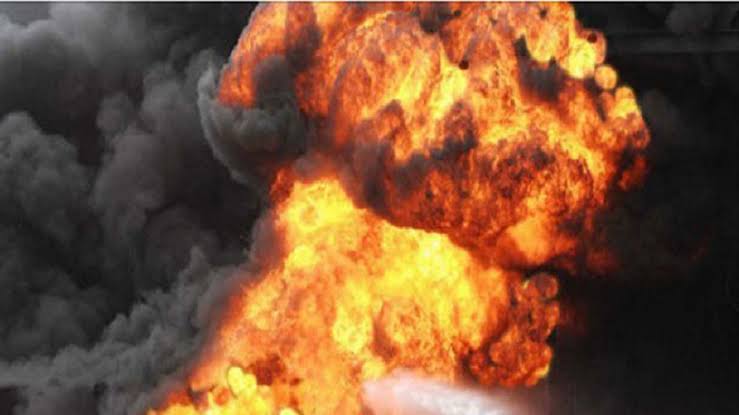
    The gunmen were said to have thrown an explosive device into the station which set the building ablaze, but no casualty was recorded.

    To help put out the inferno, a team of fire fighters were deployed to assist the police personnel in that exercise.

    Anambra State Police Public Relations Officer (PPRO) DSP Toochukwu Ikenga, confirmed the incident, but said the policemen on duty were able to repel the hoodlums.

    He revealed that one AK-47 riffle abandoned by the fleeing gunmen was recovered from the scene of the attack.

    “The gunmen escaped the scene due to the superior fire of the police operatives, and no casualty was recorded.

    “Unfortunately, the explosives the gunmen threw inside the police station building had already ignited a fire and affected the building.

    “The fire has been put out. Operation is still ongoing in the area, further details shall be communicated,” he added.

    (Sun)

  • Explosion hits Kogi Monarch’s Palace, kills 4 people as Buhari visits state

    Explosion hits Kogi Monarch’s Palace, kills 4 people as Buhari visits state

    An explosion has rocked the ancient city of Okene, the headquarters of Kogi Central Senatorial district, the home town of Governor Yahaya Bello.

    The explosion at the governor’s home town occurred a few hours before the expected historic visit of President Muhammadu Buhari to Kogi State today.

    Controversy has however trailed the explosion. While some persons attributed it to a bomb blast, others said it was a transformer blast.

    However, three persons have been reportedly killed in the explosion that happened just a few meters from the Ohinoyi’s palace at Kuroko Street in Okene.

    The governor had been in Okene since yesterday waiting for the first visit of the president to the state since he took over power on January 27, 2016.

    President Buhari was expected to first touch down in the same Okene where he was scheduled to hold a town hall meeting, and commission some projects in the Senatorial district before he moved to Lokoja, the state capital to continue the commissioning of other laudable projects.

    DETAILS LATER ….

    (Sun)

  • Omobolanle killing: IGP recommends immediate suspension of ASP

    The Inspector-General of Police(IGP), Usman Baba, has recommended the immediate suspension of Assistant Superintendent of Police(ASP) Drambi Vandi, over the killing of Barrister Omobolanle Raheem in Lagos on Christmas day.

    The recommendation for the suspension of Vandi, according to the IGP, was in line with the internal disciplinary processes of the Nigeria Police Force.

    The IGP in a statement signed by Force Public Relations Officer (FPRO), CSP Olumiyiwa Adejobi, explained that the suspension was expected to create an enabling environment for necessary legal procedures to uphold justice in the case without interference.

    He said the suspension was without prejudice to the constitutional presumption of innocence in favour of the officer.

    Adejobi’s statement reads:” IGP Usman Alkali Baba, has recommended the immediate suspension of ASP Drambi Vandi, the officer attached to Ajah Divisional Headquarters of the Lagos State Police Command, responsible for the shooting and killing of Barrister Omobolanle Raheem, while waiting for the detailed report on the incident.

    The IGP noted that the recommendation for the suspension of the officer is in line with the internal disciplinary processes of the Force”.

    Meanwhile, the IGP has reaffirmed the commitment of the Force to the Rule of Law and assured the public of his administration’s commitment to ensuring that justice would not just be done, but seen to have been manifestly done in the matter.

    He therefore, appealed to the public to be calm as all hands were on deck to ensure that justice prevailed, while measures have been put in place to prevent future occurrences.

    Meanwhile, the House of Representatives has called for a ban on police officers from consuming alcohol, and other hard substances capable of inhibiting their sense of reasoning.

    Adopting the motion, the lawmakers, while agreeing that the police Act on the general conduct of the police officers, should be reviewed.

    The lawmakers also condemned the killing of Raheem, observed a minute silence for her.

    The resolution was sequel to the adoption of a motion of Urgent Public Importance, raised by Rep. Babajide Obanikoro (APC-Lagos), at plenary yesterday in Abuja.

    Moving the motion, Obanikoro, lamented that on the fateful day, without any altercation, one of the officers shot Raheem, who was seven months pregnant with twins, on the spot.

    He recalled that similar incident happened on December 7, by officers from the same police station, who gunned down a young man, which sparked unrest.

    He expresed worry that such occurrence happened often across Nigeria, and the officers usually got away with the killing of innocent citizens they swore to protect.

    The legislators, also demanded for thorough investigation into the killing, and other incidences of extrajudicial murders committed by police officers.

    They,however, called for the immediate probe of the killing and prosecution of the culprit.

    (Sun)

  • EFCC sells 649 vehicles, auctions 160 houses, lands worth billions of naira

    EFCC sells 649 vehicles, auctions 160 houses, lands worth billions of naira

    The Economic and Financial Crimes Commission (EFCC) has begun the sales of 160 houses and lands worth billions of naira spread across highbrow areas in Lagos, Abuja and 14 other states.

    Prospective buyers including those occupying the listed buildings that have no case with EFCC and have not been convicted can bid for any of the property until January 9, 2023, when the auction closes, the anti-graft agency said.

    The auction of the properties came in the wake of the successful auction of 649 vehicles in Abuja, Port Harcourt, Ilorin and other locations.

    Daily Trust reports that most of the properties slated for auction belong to government officials who used their offices to enrich themselves and their cronies by siphoning public funds.

    Among the properties slated for auction are those cornered by the former Minister of Petroleum, Diezani Alison-Madueke and those procured by a former head of the National Intelligence Agency (NIA), Ayodele Oke.

    On December 15, 2022, EFCC Chairman, Abdulrasheed Bawa said the anti-graft agency had auctioned over 649 vehicles and was ready to auction 160 forfeited flats and apartments as well as parcels of land in 16 locations in the country.

    Speaking at the 62nd Session of the State House Media Briefing at Aso Rock Villa, Abuja, Bawa said unlike the public auction of vehicles, some occupants of some of the properties including agencies of government would be given right of first refusal in the sale.

    The reporter obtained the properties’ auction notice on Monday and the analysis revealed the locations and descriptions of the buildings on offer.

    EFCC said the exercise was a continuation of the auction scheduled to take place across the commands of the commission and was done in line with the EFCC (Establishment) Act, 2004; Public Procurement Act, 2007 and the Proceeds of Crimes (Recovery and Management) Act, 2022.

    There are 58 of the properties to be auctioned in Lagos, 39 in Abuja while 44 real estate properties are in Rivers, Kaduna and nine other states, according to Daily Trust analysis of the auction document.

    Diezani, ex-NIA dg’s houses, others up for grabs

    In Lagos, 58 buildings are on sale around the Banana Island in Ikoyi, Lekki, Yaba, among others. Analysis of the record indicates that the anti-graft agency is shopping for buyers for 18 units of three-bedroom houses in Banana Island, Ikoyi in Lagos. The property was forfeited by Diezani after EFCC seized it in 2017. The property Building 3, Block B, is a 15-storey edifice comprising 18 flats and 6 penthouses at Foreshore Estate.

    According to reports, it was acquired by the former minister between 2011 and 2012 at $37.5m from the developers, YF Construction Development and Real Estate. EFCC is also selling off six units of 4-bedroom flats within the same location.

    In the Yaba area of Lagos, EFCC is auctioning nine units of 4-bedroom terrace apartments at Thorburn Avenue. 10 units of 3-bedroom flats are also up for grabs as well as two units of 2-bedroom flats within the same location in Lagos; the properties were also traced to Diezani.

    Around Ikoyi and Lekki, 10 properties and three lands have been mapped for sale in the next two weeks by the EFCC. Topping these is the 4-bedroom luxury apartment at No. 16, Osborne Road, Flat 7B Osborne Towers, Ikoyi.

    The anti-graft agency had recovered $43,449,947, £27,800 and N23,218, 000 with a Federal High Court ordering the forfeiture of the funds to the federal government in 2017 from the apartment.

    Osborne Towers was built by a former governor of Bauchi State, Adamu Muazu but the apartment was sold to Oke, who acquired it for $1.658 million, according to EFCC. Beside these, there are three other parcels of lands it is selling around Lekki and Eti-Osa.

    In Rivers State, EFCC is selling off 16 units of 4-bedroom terrace apartments at Heritage Court Estate in Port Harcourt to a single buyer; the bid also has a 500kVA generator and a 40,000-litre petrol tank. These houses were also seized from Diezani.

    In Abuja, the anti-graft agency is auctioning 34 apartments and five parcels of land. The apartments comprise 6-bed, 5-bed, 4-bedrooms, 3-bedrooms, 2-bedrooms at Kubwa, Wuse 2, Dakwo, Lugbe and a two-storey building in Gwarinpa. The five plots of land are in Apo, Mbora District, Daki Biyu, Bwari and another near the airport at the Aviation Village. Most of these houses were seized from a former Assistant Director in the Federal Civil Service, John Yakubu Yusuf, relating to fraud at the Police Pension Fund.

    EFCC is also selling seven plots of land and apartments in Anambra, Ebonyi and Gombe states. Six of the lands are in Anambra and one in Ebonyi and a 3-bedroom real estate in Gombe. They were seized from state government officials as well as surveyors and real estate dealers.

    There are 21 properties for sale in Edo, Delta, Rivers, Kaduna, Kwara, Cross River, Oyo and Osun states.

    Right of first refusal 

    According to the EFCC notice, anyone or corporate entity that will buy any of the property must not have been or is being prosecuted by the EFCC or have been convicted. The anti-graft agency also prohibited its staff from participating while it gave the right of first refusal to people living in such property on tendering evidence of valid tenancy agreement and up to date rent payment.

    According to EFCC, the bid process, which is ongoing, will end Monday, 9th January, 2023.

    How cars worth millions were auctioned in Dec 

    It was reported that EFCC had auctioned over 600 vehicles with 435 of them auctioned in Lagos.

    It also auctioned over 190 vehicles and electronic devices at its zonal offices in Abuja, Benin, Port Harcourt, Kano, Ibadan and Uyo, all within December 2022.

    On December 19, 2022, EFCC auctioned seven cars, which are subjects of final forfeiture orders in Ilorin, Kwara State.

    It was reported that this is not the first time EFCC is auctioning forfeited assets. On December 19, 2019, it auctioned 244 vehicles forfeited to the federal government by illegal oil dealers using registered auctioneers.

    We’ll announce revenue from sales soon – Spokesman

    When contacted on the amount generated so far from the auction of the 649 vehicles, the spokesman of the commission, Wilson Uwujaren, said the exact figure was yet to be available as the auction was ongoing.

    “The auction processes are still ongoing, kindly be patient with us. We shall make every request available upon conclusion,” Uwujaren said via telephone interview. Although there were some court injunctions against the sale of some of the forfeited items, Uwujaren said the commission would respond to court summons if invited on that.

    “There is nothing to comment on this. The court is an open place for anybody. It is there for anybody to approach. The commission will willingly honour any court summons on any of these cases,” he said.

    Auction to tackle corrupt tendencies – Experts

    Experts have told the reporter that the auction of forfeited properties by the anti-graft agency was key to reducing corrupt tendencies among politicians and businessmen.

    An economist at the Abuja Chamber of Commerce and Industry (ACCI), Mr Joseph Momoh, said the auction of cars and other items by the EFCC was the right thing to do rather than allowing the items to lie fallow.

    “As such, when seizures are made, the EFCC liaises with other relevant agencies like the Bureau of Public Procurement (BPP) to ensure that it is in conformity with the laws of the land,” Momoh said.

    Speaking further, he cautioned against sharp practices in the exercise while calling on the chairman of the EFCC to ensure that transparency and due diligence were followed in the exercise.

    Speaking on the development, the Executive Director of the Civil Society Legislative Advocacy Centre (CISLAC), Auwal Musa Rafsanjani, urged the EFCC to continue to carry out this auction in accordance with laid down rules.

    According to him, the CISLAC had been advocating for the enactment of the law to ensure more transparent and accountable assets management and utilisation in Nigeria.

    “CISLAC believes that if the commission is able to do this properly without abuse of the due process, then Nigerians would have more confidence in the commission and its staff.

    “Other government agencies must also join hands to ensure public auction followed due process as contained in the Proceeds of Crimes (Recovery and Management) Act.

    “The ongoing auction may contribute to reducing instances of corruption by public officials who usually use their position to engage in corruption. Once they don’t benefit from the money or assets they have stolen and the court confiscates any assets from them, then they will not have the incentive to continue looting public funds and assets,” Rafsanjani said.

    Also, the Executive Director, Resource Centre for Human Rights and Civic Education (CHRICED), Dr. Ibrahim Zikirullahi, told Daily Trust that the auction of properties and assets, which are proceeds of corrupt activities by EFCC is a stop gap measure, which comes with its contradiction.

    “If there were proceeds of crime legislation in place, it would have been more effective for a separate body, which has the specialty to take charge of the disposal of the assets. EFCC is not an auctioneer and should be allowed to face its mandate squarely.

    “Turning the anti-graft agencies into auctioning houses could expose them to conflict of interest, which could in the long run undermine the anti-graft crusade,” he said.

    (Daily Trust)
  • CBN loan: Senate fumes over Buhari’s N22.7trn loan

    CBN loan: Senate fumes over Buhari’s N22.7trn loan

    The Senate was thrown into turmoil, yesterday, following President Muhammadu Buhari’s bid to get the National Assembly to legitimise or restructure the N22.7 trillion obtained by the Federal Government as ‘Ways and Means’ from the Central Bank of Nigeria (CBN).

    Attempts by the senate leadership to get the report of its Finance Committee, which had recommended that the president’s request be granted, was quickly rebuffed by the lawmakers at plenary.

    Senator George Thompson Sekibo was the first to raise a constitutional point of order to explain why the ‘Ways and Means’ advances were illegal and unconstitutional.

    He informed the Senate that the action of the president was in breach of the CBN Act, Senate standing rules, and attacked the privileges of the Senate and National Assembly.

    Senate President, Ahmad Lawan’s several attempts to get the lawmakers accede to the president’s request hit the rocks as the majority agreed with the depth of information and argument adduced by Sekibo.

    He said: “We came into this Chamber today and we were given the report of N22.7 trillion which has been spent in the past 10 years. Whether it is 10 years or five years, whatever it is, the issue is that when the loans are taken the Senate should be informed. We should be abreast with the information that such money is going to be taken because it is being taken on behalf of the people of Nigeria and we are entrusted with the power to make laws. According to the constitution we can appropriate. They brought this without details for us to approve.”

    Sekibo said what the president had done was asking the Senate to approve what was in clear violation of sections 80, 83, Section 1,13(1), section 38, of the CBN Act as well as Section 80 of the 1999 constitution as amended

    Said Sekibo: “The constitution states that ‘no money shall be withdrawn from the consolidated revenue fund of the Federation except to meet expenditure that is charged upon the fund or where the issue of those monies have been authorised by an appropriation act, supplementary act or an act passed in pursuance of section 81 of the constitution. No money shall be withdrawn from any account other than the consolidated revenue fund of the Federation unless the issue of those monies have been authorized by the act of the National Assembly. Section 80 (4) states that no money shall be withdrawn from the consolidated revenue fund or any other fund of the Federation except by the approval of the National Assembly, except in the manner prescribed by the National Assembly.”

    The uproar that ensued in the chambers led to the abrupt halt of consideration of the matter. The Senate letter went into closed door session and after an hour of exchanges, the leadership of the Senate agreed that the President’s request be stepped down pending the provision of detailed explanation on the request.

    Senators Betti Apiafi, Lillian Ekwunife, Mohammed Ndume, Abdullahi Yahaya, were among the lawmakers who led the opposition to the president’s request.

    Buhari had last week written to the Senate seeking approval for the restructuring of N22.7 trillion ‘Ways and Means’ advances taken by the Federal government from the CBN.

    The ‘Ways and Means’ are advances from the Central Bank of Nigeria to the federal government for emergency funding of delayed receipt of fiscal deficit.

    The president in the letter had said: “The Ways and Means advances by the Central Bank of Nigeria to the Federal Government has been a funding option to the Federal Government to cater for short term or emergency finance to fund delayed government expected cash receipt of physical deficit. The Ways and Means balances as at 19th December 2022 is 22.7 trillion. I have approved the securitisation of the Ways and Means balances along the following terms: Amount,N23 .7 trillion; tenure, 40 years; moratorium on principal repayment, three years and pricing interest rate nine per cent. 9%. Your concurrence and approval is sought to allow for the implementation of same.”

    However, the N1 trillion part of the ways and means from where the N819.5 billion was to be funded was approved.

    Meanwhile, et Senate, yesterday, passed the N819, 536,937,813 2022 supplementary bill which was requested for approval by President Muhammadu Buhari last week

    The president, barely 10 days to end of 2022, had asked the Senate to approve the N819.5 billion supplementary budget for the 2022 fiscal year to fix infrastructure destroyed by the flood disaster that ravaged the country recently.

    Also, the Senate, yesterday, urged the Central Bank of Nigeria (CBN) to extend the date of withdrawal of old currency notes from circulation from January 31 to June 30, 2023.

    The resolution of the Senate was sequel to a motion titled, ” Urgent need to extend the withdrawal of old currency from circulation” and sponsored by Ali Ndume.

    Ndume who noted that the timing of the policy was wrong, said since the beginning of the implementation of the cash withdrawal limit, the new notes are not in circulation even in cities.

    Ndume said: “Many Nigerian banks on Thursday 15th December 2022 open their vault to customers and depositors to exchange their old naira notes for the newly redesigned currency, which has a stipulated deadline of January 31, 2023.

    “Nigerians are already envisaging rush and long queues in the banking hall across the country as a result of people trying to get access to the new naira note, which was unveiled last month by President Mohammad Buhari at a brief ceremony at the state house, Abuja.

    “The old notes are expected to be in circulation alongside the new ones until January 31, 2023, when the old notes are expected to be phased out, it is expected that many Nigerian businesses would start to reject the old notes as soon as the banks start paying out the redesigned notes to customers.”

    “Access to the new notes may be compounded by the recent circular by the CBN, which limit the amount of cash individuals and corporate entities could withdraw within a certain period of time. For instance, the CBN said individuals could only withdraw N100, 000 per week while corporate could only have access to N500, 000 per week through over-the-counter (OTC) transactions;

    “Observes that access to large quantities of cash above the limit would attract processing fees of 5% and 10% for individuals and corporate entities respectively. Large withdrawals are also subjected to scrutiny by the regulator to determine the importance and usage of such cash.

    “Convinced that if the withdrawal of old notes from circulation is not extended beyond 31st January many Nigerian will be thrown into hardship and to avoid a repeat of 1984 experience withdrawal of old notes.”

    (Sun)

  • N/Assembly increases 2023 budget by N1.3trn

    N/Assembly increases 2023 budget by N1.3trn

    …to include 2023 Census

    Presenting the report, the chairman of the Senate Committee on Appropriations, Barau Jibrin, said the budget was increased to make provision for improved funding for the National Population Commission (NPC) ahead of the 2023 Census, the Independent National Electoral Commission (INEC) ahead of the 2023 general elections, the Nigerian Army, Navy, Nigeria Police Force, ministries of Agriculture, Health, Aviation, and Science and Technology.

    The National Assembly also increased the oil price benchmark proposed for the budget from $70 per barrel to $75 per barrel.

    It however retained other parameters as earlier proposed by the president such as the 1.69 million barrel oil production per day, N435.57 to a US dollar, 3.75% GDP growth rate and 17.16% inflation rate.

    The breakdown of the budget shows that N967.48 billion is for statutory transfers; N8.32 trillion for recurrent (non-debt) expenditure while the sum of N5.97 trillion is for capital and N6.55 trillion for debt service.

    From the statutory transfers, the National Judicial Council takes N165bn; Niger Delta Development Commission (NDDC), N119.93bn; Universal Basic Education, N103.28bn; Independent National Electoral Commission (INEC), N173.63bn; National Human Rights Commission, N4.5bn; North East Development Commission (NEDC), N59.03bn; Basic Health Care Fund, N51.64bn and National Agency for Science and Engineering Infrastructure (NASENI), N51.64bn.

    Also, under the statutory transfers, the National Assembly’s severance/inauguration of outgoing and incoming 9th and 10th Assembly (legislators and legislative aides) got allocated N30.17bn, National Assembly Office, N30.49bn; Senate, N33.26bn; House of Representatives, N51.99bn; National Assembly Service Commission, N10.55bn; National Institute for Legislative and Democratic Studies (NILDS), N7.41bn; and Service Wide Vote, N671.3m.

    A further breakdown shows that the Office of Retired Clerks and Permanent Secretaries takes N1.05bn, National Assembly Library Building N4.25bn; Constitution Review N850m; completion of NILDS headquarters N2.5bn; and construction of National Assembly Service Commission building N10bn.

    Out of the N5.972 trillion proposed capital expenditure, the Ministry of Works and Housing has the lion’s share of N398.275bn; Ministry of Defence, N285.045bn; Ministry of Agriculture and Rural Development, N248.358bn; and Ministry of Education, N153.735bn.

    Others are the Ministry of Health N134.909bn; Federal Ministry of Science and Technology, N132.572bn; Ministry of Finance, Budget and National Planning, N166 747bn; Office of the National Security Adviser, N70.331bn; Presidency N20.115bn; Ministry of Interior N45.622bn; Federal Ministry of Water Resources N83.256bn.

    After the passage, Senate President Ahmad Lawan urged President Muhammadu Buhari to assent to the budget before the year runs out toward sustaining the January-December budget cycle implementation.

    (Daily Trust)

  • Ohanaeze Ndigbo President dies, Ohanaeze, Afenifere, MBF, others mourn

    Imo State Governor, Hope Uzodimma has confirmed the death of the President General of Ohanaeze Ndigbo Worldwide, Prof. George Obiozor.

    The Igbo leader’s exit had been widely speculated since Monday, December 26, but was later dispelled by officials of the apex Igbo socio-cultural organisation.

    But after about 48hours of uncertainty over the issue, the Imo State Government has officially announced that Obiozor succumbed to the cold hands of death as was being rumoured.

    Uzodimma said the stated was saddened by the death of the great son of the state and Nigeria.

    The governor who described Obiozor as a renowned academic, an exceptional diplomat and statesman as well as tenacious patriot, said that he passed on recently after a brief illness.

    According to the governor, “The death of this foremost Igbo leader and former Nigeria’s ambassador to the United States and the State of Israel, is a big loss to Imo state, the South East and the entire Nigeria. I have no doubt that both Nigeria and the international community will miss his profound intellectual contributions and wise counsel on national and global issues.”

    Uzodimma added that his burial arrangements will be announced in due course by the family.

    Frontline ethnic nationality organisations including the Afenifere, the Middle Belt Forum (MBF), the Arewa Youths Consultative Forum (AYCF) and Aka Ikenga, in separate reactions noted that the demise of the former Nigerian ambassador to the United States and Israel, as well as High Commissioner to Cyprus, was a great loss to not only Ohanaeze but to Nigeria as a whole and the world in general.

    They described Obiozor as a patriot and intellectual, adding that he died at a time his intelligence and patriotism were most needed.

    The groups prayed God to grant the immediate family, Ohanaeze Ndigbo, the South East and Nigeria the fortitude to bear the irreparable loss.

    Expressing shock, national leader of Afenifere, Chief Ayo Adebanjo, said: “What a pity, it is not time for him to go because he is the kind of man that Nigeria needs at this time. Prof Obiozor is a great patriot, someone who genuinely believes in Nigeria, he was a great ambassador of Nigeria and one of the intellectuals that Nigeria is very proud of, may his soul rest in peace.”

    For President of the MBF, Dr Pogu Bitrus, Obiozor’s death is a great loss to the country, even as it is sudden.

    “All of us will have to go one day but Prof Obiozor’s passing is too soon. I would have wished for him to still be around to see the realisation of the Peter Obi phenomenon. May his soul rest in peace.”

    President of AYCF, Yerima Shettima described Obiozor as a peace maker, who believes in the unity of Nigeria.

    “We first condole his family and the entire Igbo race worldwide. Prof Obiozor was a great man, from the little time I have known him, he has demonstrated that he is a peace-loving man that believes in the unity of the country and an intellectual per excellence. His death is a great loss to Nigeria as a whole, not just to the Igbo. We pray for his soul to rest in peace and for God to give the family the fortitude to bear the loss.”

    Elder statesman, Chief Emmanuel Iwuanyanwu, in his condolence message said Nigerians and Igbo would miss the Ohanaeze President General.

    According to him, Obiozor died when the South East needed him most.

    “He served Nigeria diligently and has written his name in the sands of time,” he said.

    Similarly, Youth Wing Christian Association of Nigeria (YOWICAN) said Nigeria would definitely miss his intellectual prowess.

    A statement by the national chairman of the association, Belusohukwu Ewerem read: “There can be no understanding the sting of death, the vacuum it will create in Igboland. South East, Nigerians and indeed the world at large will no doubt miss his intellectual prowess and wisdom.”

    Ohanaeze said he was an erudite scholar, seasoned diplomat, resourceful bureaucrat, author, cultural leviathan, political submarine, pathfinder, an Igbo titan of incredible global reckoning, and silent achiever.

    The renowned scholar had served Nigeria meritoriously as the director-general, Nigerian Institute of International Affairs, Lagos; High Commissioner to Cyprus; Nigerian Ambassador to the State of Israel and the Nigerian Ambassador to the United States of America. He was elected as the President General of Ohanaeze Ndigbo Worldwide on Sunday January 10, 2021.

    On April 9, this year, shortly after he returned from a brief medical vacation abroad, an array of Igbo dignitaries gathered at the Imo State Government House, Owerri, to celebrate him.

    (Sun)

  • FG ‘ll raise salaries to mitigate the impact of high inflation – Ngige

    FG ‘ll raise salaries to mitigate the impact of high inflation – Ngige

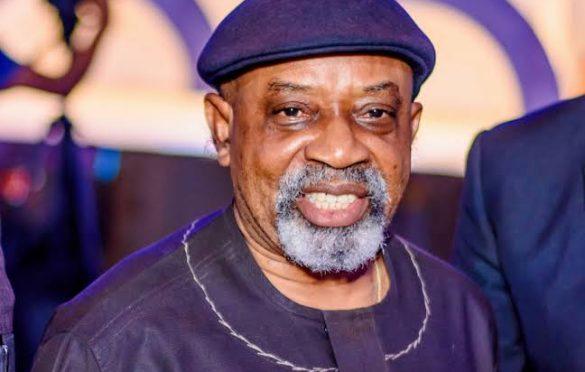
    Minister of Labour and Employment, Chris Ngige, has said the Federal Government will increase salaries of civil and public officials soon to mitigate the impact of high inflation rate in the country.

    Ngige, who spoke with State House Correspondents after meeting with President Muhammadu Buhari at the Presidential Villa, Abuja, said the Presidential Committee on Salaries is already doing a review and is expected to come up with salary adjustment in the new year.

    He described 2022 as a year of industrial dispute, saying he was at the seat of power to discuss issues concerning his ministry, including employment and productivity.

    The minister recently suggested that the government would raise worker salaries to reflect the country’s new economic realities, accessioned by inflation.

    Asked if the issue of salary increase came up during discussions with the president looking at the rising inflation, Ngige said: “Yes, that’s what I am saying that the Presidential Committee on Salaries is working hand-in-hand with the National Salaries Incomes and Wages Commission. The commission is mandated by the Act establishing it to fix salaries, wages, and emoluments. If you want their assistance and you are in the private sector, they will also assist you. They have what is called the template for remuneration, for compensation. So, if you work, you get compensated, if you don’t work, you will not be compensated.

    “They have the matrix to do the evaluation, so they are working with the Presidential Committee on Salaries chaired by the finance ministry and I’m the co-chair to look at the demands of the workers. Outside this, I said discussions on that evaluation are ongoing.”

    On whether a time line has been fixed for implementation of new salary increase, Ngige said: “As we enter the new year, the government will make some pronouncements in that direction.”

    The minister described 2022 as a year fraught with industrial disputes, starting from the February Academic Staff Union of the Universities (ASUU) strike, joined by other sister unions in the university system, workers in research institutes, threats from various unions, National Association of Resident Doctors which is also the Joint Health Sector Union all asking for wage increase.

    Asked government’s latest position on the eight months outstanding salaries of ASUU, Ngige said the matter was now in court for proper interpretation of the Trade Dispute Act as it concerns no work, no pay policy invoked by the government during the strike.

    “ASUU has not pronounced anything on their salaries anymore because it’s one of the issues that was referred to the National Industrial Court for determination, whether a worker who is on strike should be paid in violation of Section 43 of the Trade Dispute Act.

    “So, we are asking the court to look at it. The matter is out of the hand of the executive (that’s us) and in the hand of the judiciary. ASUU has also put up a defence in court, asking the court, yes we went on strike, but we did that for a reason. So, it’s now left for the court to look at it.”

    (Sun)