Category: News

This is an optional category description

  • New Naira: Give me seven days for a major decision on currency redesign -Buhari to Nigerians

    President Muhammadu Buhari on Friday asked Nigerians to give him seven days to resolve the cash crunch following the Central Bank of Nigeria (CBN)’s redesigning of the naira notes.

    He said this while speaking to the Progressive Governors’ Forum (PGF) who visited him at the Presidential Villa in Abuja to seek solutions to the cash crunch which they said was threatening the good records of the administration in transforming the economy.

    President Buhari told the All Progressives Congress (APC) governors that the currency re-design will give a boost to the economy and provide long-term benefits.

    He also expressed doubts about the commitment of banks in particular to the success of the policy.

    According to a statement released after the meeting by the Senior Special Assistant to the President on media and publicity, Garba Shehu, the President stated that some banks are inefficient and only concerned about themselves and that even if a year is added, problems associated with selfishness and greed won’t go away.

    Buhari said he had seen television reports about cash shortages and hardship to local businesses and ordinary people and gave assurances that the balance of seven of the 10-day extension will be used to crack down on whatever stood in the way of successful implementation.

    The President further promised that he will revert to the CBN and the Minting Company and a decision will be taken.

    According to the statement, the governors told the President that while they agreed that his decision on the renewal of currency was good and they are fully in support, its execution had been botched and their constituents were becoming increasingly upset.

    They told the President that, as leaders of the government and party in their different states, they were becoming anxious about a slump in the economy and the series of elections that are coming. They further requested the President to use his powers to direct that the old and new notes co-circulate till the end of the year.

    The President said when he considered giving the approval to the policy, he had demanded an undertaking from the CBN that no new notes will be printed in a foreign country and they in turn gave him assurances that there was enough capacity, manpower, and equipment to print the currency for local needs.

    Against this backdrop, he declared that he needed to go back to find out what was actually happening, assuring the governors that being closer to the people, he had heard their cries and will act in a way that there will be a solution.

    (Channels TV)

  • JUST IN: CBN instructs banks to pay new naira notes over the counter

    JUST IN: CBN instructs banks to pay new naira notes over the counter

    The Central Bank of Nigeria (CBN) in a bid to address the long queues at Automated Teller Machines nationwide directed Deposit Money Banks to begin paying the newly designed notes over the counter to customers immediately not exceeding a maximum of N20,000.

    The apex bank also said it would, in conjunction with the Nigerian Police and other agencies, prosecute sellers and abusers of naira.

    CBN in a statement signed by its Director, Corporate Communications, Osita Nwanisobi, said: “The CBN has observed with grave concern, the activities of persons who sell the newly redesigned banknotes and those who flagrantly abuse the legal tender by hurling wads of Naira notes in the air and stamping on the currency at social functions.”

    “We have equally noticed the queues at Automated Teller Machines (ATMs) across the country and an upward trend in the cases of people stocking and aggregating the newly introduced banknotes they serially obtain from ATMs for reasons best known to them. Also worrisome are the reported cases of unregistered persons and non-bank officials swapping banknotes for members of the public, purportedly on behalf of the CBN.”

    (ThisDay)

  • Sokoto, Zamfara, Katsina border communities trade in CFA franc currency over new naira scarcity

    Sokoto, Zamfara, Katsina border communities trade in CFA franc currency over new naira scarcity

    Residents of border communities in states including Sokoto, Zamfara, Katsina, Adamawa and Kwara have opted for the CFA franc following the scarcity of the new naira notes across the country.

    The residents, including traders and commercial drivers, are also rejecting the old naira notes, insisting that customers who do not have the new redesigned currency must pay for goods and services with CFAs.

    The CFA franc is the legal tender in eight West African countries of Benin, Burkina Faso, Côte d’Ivoire, Guinea-Bissau, Mali, Niger, Senegal and Togo, which make up the West African Economic and Monetary Union, otherwise known as the Union Économique et Monétaire Ouest Africaine.

    Findings by The reporters indicated that businessmen and traders in the Zurmi and Shinkafi local government areas of Zamfara State, which border the Niger Republic, prefer the franc to the naira.

    Investigation revealed that traders in the two LGAs had been selling their commodities in CFA due to fear that they might not get the new naira notes.

    A cattle dealer, Musa Shehu, said he stopped receiving the Nigerian currency since the Central Bank of Nigeria announced the deadline for the swap of the N1,000, N500 and N200 notes.

    He stated, “I have since stopped receiving the old naira notes because I don’t have an account and I can’t go to the bank.”

    A trader in Shinkafi town, who shuttles between Nigeria and Niger Republic, explained that most of his customers paid with the CFA.

    “I cannot collect old naira notes and give out my commodities to any customer. But I will collect new naira notes and CFA because I am afraid of losing my money if the time for the exchange expires,’’ the trader, who spoke on condition of anonymity, said.

    A grain seller in Dada village in Zurmi Local Government, Muhammadu Isa, disclosed that he stopped selling grains in the Nigerian currency after the CBN’s policy on new naira notes was unveiled.

    He said that he sold only to those who possessed CFAs to avoid losing money as ‘’my father did in 1983 when the naira notes were hurriedly changed by the then Major General Muhammadu Buhari regime.’’

    Isa explained that his late father lost all his money when Buhari changed the national currency in 1983.

    The grain trader insisted that he would not accept the old naira notes as there was no bank or Point of Service terminal in his community where he could withdraw the new currencies.

    “You see since our people and those from the Niger Republic are coming to buy the grains with the CFA, I see no reason why I should collect old naira notes. If anybody wants to buy grains from me, he must pay in CFA or forget it. I will not collect old naira notes because I don’t know what to do with them after the expiration of the deadline,” he noted.

    In a related development, commercial drivers who ply the Niger Republic from Zurmi and Shinkafi LGAs have also stopped collecting the old notes.

    They justified their decision with the argument that the CFA was the only legal tender accepted by the people along the Nigeria-Niger borders.

    A driver, Alhaji Hamisu, stated that passengers had to pay in CFA if they wanted to travel to the Niger Republic or return to Nigeria ‘’because the old naira notes are unacceptable as legal tender.’’

    Hamisu said, “I have on several occasions refused to collect the old naira notes from my passengers because I have no time to go to the bank or PoS to get the new notes.

    “Another problem is that you can’t buy fuel with the old naira notes in Niger republic; as such, no commercial driver on cross-border journeys will agree to take the old notes from passengers.

    “I was almost stranded in Malbaza town in Niger Republic when I wanted to buy fuel with the old naira notes because we have been doing so before the change of the Nigerian currency.

    “I went to the filling station as usual and bought 30 litres of fuel and brought out the old notes but the fuel attendant told me that he would not accept the notes.

    “I pleaded with him but he was not ready to collect the money from me. I was lucky as one of the commercial drivers, who is also my friend, came to buy fuel and he had enough CFAs. I bought the CFA from him and settled the fuel attendant.”

    Sokoto border traders

    Also, our correspondent discovered that border communities in Sokoto State preferred to sell their products in CFA due in part to the non-availability of the new notes and the continuous loss of naira value.

    Speaking with The Reporters, Mallam Sidi Isa, who trades in cattle in Illela, a border community with the Niger Republic, said he preferred the franc because of the introduction of the new naira notes and the cashless policy.

    Also speaking, Mr Jamiu Ola, a motor mechanic, argued that the CFA holds more value than the naira.

    “I prefer CFA due to the fact that it is hardly devalued unlike our own naira which has been devalued,” he added.

    A businessman, Mallam Haruna Abdulazeez, stated, “I shifted my business to the Niger Republic when I realised I can’t cope with the economy of this country anymore.

    “If I buy goods from Nigeria and take same to Niger Republic, I make profits due to the value after the exchange. Even if you take sachet water there, you will make your profits due to the exchange rate.”

    A Sokoto resident, Muhammad Auwal, submitted that the CFA holds more value than the naira, hence his preference for foreign currency.

    “I normally exchange my naira for CFA as it is not reasonable for someone to keep naira at home due to loss of value,’’ he declared.

    Adamawa cattle dealers

    Speaking in an interview, the Chairman of Mubi International Cattle Market in Adamawa State, Jafaru Hamman, lamented the scarcity of newly redesigned naira notes, adding that the difficulties in getting the currency had affected commerce at the border communities.

    The problem, according to him, is that most traders in Mubi are accustomed to cash transactions and the cashless policy may take time to get mass support.

    Commenting on the decision of Adamawa communities to opt for the franc over the naira, a cattle dealer, Jafaru Hamman, explained that even before the CBN policy, some traders were using the West African CFA in business transactions.

    He, however, noted the volume of trade in foreign currency was minimal before the introduction of the new naira redesign policy.

    Jafaru said the development had made it increasingly difficult for most traders to get the new currency, thereby stifling their business operations.

    According to him, as the deadline for the naira swap draws closer and the old currency is facing rejection, traders are faced with either accepting the CFA for their transactions or halting their business activities.

    He said, “They (Traders) are collecting the naira but since it became increasingly difficult to get new notes, they resorted to collecting CFA. The traders have also refused to accept the old notes. If they come to sell their cattle, if you give them the old notes they will reject it.

    ‘’They would rather return with their cattle than accept the old notes. Nobody is seeing the new notes because they are scarce. Don’t forget that many of these traders don’t have bank accounts to accept transfers because our business is purely based on cash.’’

    Katsina traders lament

    The situation is not different at the cattle markets in Dankarma, Jibia and Maiadua, all in border communities in Katsina state.

    Findings showed that trading was being carried out in these markets in both naira and CFA before the CBN policy.

    But the naira notes scarcity had forced the majority of cattle dealers and traders to carry out all transactions in CFA.

    However, a few traders accept electronic money transfers from those considered regular customers.

    Mallam Ahmadu Ousseini who sells cattle and camels at Maiadua Kara International market, said he carried out most of his transactions in CFA because his customers said they could not get the new naira notes.

    Ouseini said. “We accept naira and CFA here at Kara market. But in the past three weeks, I only accepted CFA for my transactions. There are a few customers I still accept cash transfers from as I have a PoS. When we conduct business in the CFA, we gain as the CFA is slightly higher (in value) than the naira.

    “It is our customers who source for the CFA which they pay us. There are even those who help us change money in the market but they too cannot get the new naira notes now. This has made us transact business majorly in the CFA.”

    Hajiya Bilikisu Ahmed, who is resident in the area but goes to sell cows in Lagos and other South-West cities, explained that the currency scarcity was affecting her business badly.

    Ahmed stated, “I buy (cattle) from the dealers at Dankarma and Jibia with the naira. Occasionally, I exchanged my naira notes with the CFA in any of the cattle markets. But now, the scarcity of the new naira notes has worsened the matter.

    ‘’On Wednesday when I wanted to buy some cattle at Dankarma, I lost N3,000 on the N20,000 I exchanged for the CFA. The situation is compounded by the network challenges in many banks in Katsina. But I collected money from some of my customers down South, especially in Lagos and no matter the situation, I have to deliver to them, otherwise, they may not patronise me again.”

    The cattle dealers further complained that the CBN policy had reduced the volume of cows being brought into the market in Borno State.

    Recounting his pain, Mohammed Ali, a trans-border cattle merchant in Maiduguri, said, “I used to buy about 20 heads of cattle at Mada (a Cameroon market across the border from Gamboru in Borno State) and sell at least 15 weekly in the Maiduguri market.

    “My problems as a cattle merchant are three: the CFA in the Cameroon market, which used to exchange at N560 per CFA, is now N680 per CFA, and in a few instances it is even more. The old naira notes are scarce and the new notes are nowhere to be found.’’

    “In this situation, the majority of us have suspended the trade because we deal in hard cash, and it is not available; the sellers of the cattle across the border also deal in hard cash. They don’t accept bank transfers; they don’t even have bank accounts,” Ali explained.

    Speaking further, he added, “By my estimates, between 500 to 700 heads of cattle arrive here daily from Chad and Cameroon to meet the number on the ground that has not been sold; but today (Monday, January 30), only about 50, according to what I saw, arrived.

    “I sold only one cow today, and that is even on credit; the buyer said he could only pay by the end of February,’’ he lamented.

    The chief cattle dealer of Bama, Mohammed Gwamna, said the situation had forced him to stop his cattle business.

    “I have suspended the trade, whether trans-border or within the Nigerian border markets. The reason: if you go to the Cameroonian market with N1 million, you have to part with N100,000 to get it changed to CFA or new naira notes to enable you to buy the cattle, otherwise, the sellers will not even look at you.”

    Stressing that the naira redesign policy had eroded his business and other people’s livelihoods, Gwamna observed that the cattle population in Maiduguri markets had reduced by about 80 per cent.

    He added, “By my estimate, this difficult situation has slashed the cattle population in this market by about 80 per cent, because most of us can’t even go to Gubio, Monguno and Gaidam (cattle markets in Borno and Yobe) to buy talk less of Cameroon, Niger or Chad markets because we can’t source the new naira notes. Without the new notes, nobody will even answer your greetings,” he lamented.

    Another trader, Abba Ali, noted, “At Monguno, Ngala, Gubio (in Borno State) and Kukareta and Gaidam (in Yobe State), cattle will not be sold to you if you do not brandish new naira notes; and in Cameroon, you must show CFA; and both are not easy to find. This is the situation,” he complained.

    “Hitherto, sometimes between 20 and 30 trailers offload cattle daily in this market; but today (Monday, January 30), according to what I have seen so far, only two trailers offloaded,” he observed.

    In Ipokia, a border town in Ogun state, traders were said to have been travelling to the Benin Republic to exchange the new currency with CFAs after selling their wares.

    A youth leader in Ipokia, Deji Mawuntin, bemoaned the hardship the residents of Ihunbe, Ilara, Oja-Odan and others were going through to get the new notes.

    He accused unnamed bank workers of selling the new currencies to racketeers in the Benin Republic.

    He noted, “The bankers are selling new naira notes to Beninese and Nigerians are going there to exchange it with CFAs. People have called the DSS operatives to beam their searchlight on these bank officials.”

    In Kwara State, in Chikanda, a border town between Nigeria and the Benin Republic, a trader, Alhaji Bashir Mohammed, said he preferred taking CFA as new naira notes were not easily available.

    He said, “Since the change from old naira notes to new notes, there has been a shortage of the new notes, we are not getting the new notes, so it is easier to get the CFA than the naira notes, that is why we are accepting the CFA in exchange for our goods.”

    Another trader, Mrs Mariam Hassan, who trades in Garri, local rice, beans and yam flour, said that the traders in the border towns were accepting CFA in exchange for their goods.

    Mariam who is based in Yashikira in the Baruten local government area of Kwara State said that the traders made more profits when they accepted CFA.

    The CBN spokesman, Osita Nwanisobi, had yet to respond to questions on the displacement of the naira by CFA in parts of the country as of the time of filing this report.

    But the Managing Director, Cowry Asset Management Limited, Johnson Chukwu, described the move as the logical thing to do in face of the scarce availability of the new notes.

    Also, the Chief Executive Officer of the Centre for the Promotion of Private Enterprises, Dr Muda Yusuf, noted that this was natural due to the lack of enough new notes for people to run their businesses in border regions.

    (Punch)
  • FEC grants N15.57bn for road construction refunds, other projects

    FEC grants N15.57bn for road construction refunds, other projects

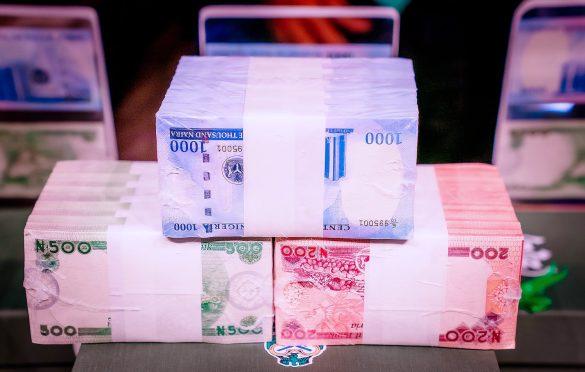
    The Federal Executive Council yesterday approved N15,569,016,812 for various contracts in the Ministries of Works and Housing; Education as well as Industry, Trade and Investment.

    The Minister of Works and Housing, Babatunde Fasola, said: “The two states that had outstanding with respect to eligible roads were Plateau and Borno States and Council approved the refund of N6,601,769,470. 99 in favour of Plateau and the sum of N3,084,787,113. 34 for Borno State.”

    The Minister of Industry, Trade and Investment, Niyi Adebayo, said the council approved N1,803,556,537 contract for the construction of a package sewage system for the Oil and Gas Free Zones Authority’s head office within the Liberty Free Zone in Ikot Abasi, Akwa Ibom State with the completion period of 10 months. The Minister of Education, Adamu Adamu, said the FEC approved N4,078,903,692 for three contracts in the Osun State University, Osogbo; the Federal University, Lokoja and the National Commission for Nomadic Education.

    He said the council also approved the memorandum that sought the takeover of the David Umahi University of Medical Sciences, Ebonyi, by the federal government as well as the change of the name of the institution to David Umahi Federal University of Health Sciences through an approved bill to be transmitted to the National Assembly.

    (Daily Trust)

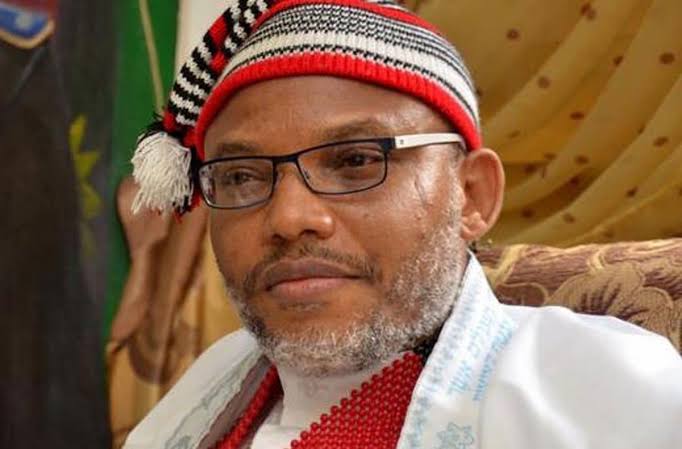
  • Court approves Kanu’s request for access to doctors, medical records

    Court approves Kanu’s request for access to doctors, medical records

    The Abuja division of the Federal High Court has granted an application by the detained leader of the Indigenous People of Biafra (IPOB), Nnamdi Kanu, to apply for an order of mandamus compelling the Department of State Service (DSS) to allow him to have unhindered access to his medical doctors.

    In his suit marked FHC/ABJ/CS/ 2341/2022, Kanu said he would need his doctors to conduct an independent examination to ascertain his state of health.

    The ex parte application among others sought an order granting him leave to, “apply for judicial review in the form of an order of mandamus, compelling the Respondents to allow him unhindered access to his medical doctors to enable them to conduct an independent examination of his present deteriorating health condition, as earlier ordered by the Federal High Court, Abuja, Coram, Hon. Justice BFM Nyako, on the 21st day of October 2021; and as required by the express provisions of section 7 of the Anti-Torture Act, 2017.”

    In addition, he sought “an order of this Honourable Court granting leave to the Applicant to apply for judicial review in the form of an order of mandamus, compelling the Respondents to avail the Applicant with all his medical records, from the 29th day of June 2021, till date.”

    Justice Binta Nyako had after hearing from Kanu’s legal team headed by Prof. Mike Ozekhome, SAN, with Sir Ifeanyi Ejiofor, granted the application.

    While adjourning the matter till February 21, the court, directed Kanu’s legal team to serve all the relevant processes on both the DSS and its Director General, who were cited as 1st and 2nd Respondents in the matter.

    Kanu listed some of the records he would require from the DSS, including; his admission records, medical and clinical notes, nursing notes, observation charts and documentation during treatment or stay-in-hospital, laboratory test results, pharmaceutical records, radiological scans, images and reports, blood transfusion records, physiotherapy and rehabilitative treatment records, clinical findings, as well as diagnosis and treatment prescribed records.

    He noted that trial Justice Nyako had on October 21, 2021, ordered that he should be allowed access to three persons of his choice, including his medical doctors.

    Kanu argued that section 7 of the Anti-Torture Act, 2017, provided that a person arrested, detained or undergoing, custodial investigation, shall have the right to demand a physical and psychological examination by an independent and competent doctor of his own choice after interrogation, which shall be conducted outside the influence of the police or security forces.

    “The Respondents have repeatedly denied the Applicant access to medical doctors of his choice to independently examine him, contrary to the order of the court made on the 21st October 2021; and the express provisions of Section 7 of the Anti-Torture Act, 2017,” he added.

    In a verifying affidavit that was deposed to by one Chimmuanya Emenari, Kanu told the court that prior to the time he was arrested abducted in Kenya and extra-ordinarily rendered back to Nigeria, he visited a Specialist Cardiologist every week for medical examination and treatment.

    “Medical Reports containing the medical history of the Applicant as was issued by medical specialists managing the Applicant before his abduction in Kenya and extraordinary rendition to Nigeria are hereby attached and variously marked as Exhibits MNK 3, MNK 4 and MNK 5.

    “That notwithstanding the fact that the Applicant has been discharged by the appellate court and his further detention prohibited, the Applicant is still being held in solitary confinement in the custody of the Respondents, where he is exposed to daily mental and psychological torture and degradation of his human person.

    (Sun)

  • IPOB warns Atiku, others not to use Nnamdi Kanu as bargaining chip for election

    IPOB warns Atiku, others not to use Nnamdi Kanu as bargaining chip for election

    The Indigenous People of Biafra (IPOB) has warned the presidential candidates seeking to succeed President Muhammadu Buhari in May 2023 to desist from using its detained leader Nnamdi Kanu to campaign ahead of next month’s election.

    IPOB gave the warning on Wednesday in a statement by its Media and Publicity Secretary, Emma Powerful, while reacting to the promise made by the presidential candidate of the People Democratic Party (PDP), Atiku Abubakar to grant the unconditional release of Kanu, if elected.

    The Director-General of the PDP Presidential Campaign Council, Professor Obiora Okonkwo, yesterday, said Atiku has the plan to restore peace in the South-East and releasing the IPOB leader is one of them.

    Okonkwo made this assertion barely 48 hours that Kanu’s international spokesperson and American counsel, Bruce Fein called on Atiku, Bola Tinubu and Peter Obi to promise to free the self-determination leader from the custody of the Department of State Services (DSS) if any of them becomes next country’s leader.

    Reacting to Okonkwo’s statement, IPOB said PDP should demand that the federal government release their leader and not use it in the campaign.

    “IPOB leadership wish to state that its leader should on no account be used as a political bargaining chip for Nigerian election,” the statement said.

    It said, “Mazi Nnamdi Kanu has been judicially declared an innocent man and that follows that he must be released from his continued illegal detention and torture by this present government of APC. We do not expect anything contrary but that the judgement of the Court of Appeal is implemented.

    “Moreover the leadership of IPOB wants to inform the PDP that in as much as we have no issue with their statement, their focus should be to demand that the Nigerian government obey the judgement of their own court.

    “Our demand has and will remain consistent irrespective of which person or party is occupying Aso Rock the Nigerian seat of power. Our Self Determination agitation is our inalienable right and that is the reason we have demanded a referendum which is a democratic process to enable Biafrans to determine their fate and decide where they wish to belong whether in Nigeria or in a free and Sovereign Biafran nation.”

    (Vanguard)

  • [VIDEO] JUST IN: Protests rock parts of Agbani Road in Enugu over high cost of fuel, scarcity

    [VIDEO] JUST IN: Protests rock parts of Agbani Road in Enugu over high cost of fuel, scarcity

    Chetanne Chinelo, Enugu

    Tricycle riders and Bus drivers have reportedly taken to the streets of Enugu to register their displeasure over the high cost of fuel and scarcity of the product.

    Although a developing story, our correspondent gathered that the protestors at Agbani Road, Wednesday, February 1, 2023, bemoaned the high cost of purchasing PMS and the scarcity of the product, compounded with the challenges of the new naira notes.

    Confirming the protest, a source, Izunna, who spoke to our correspondent over the phone said all filling stations in Agbani road quickly closed up, possibly to avoid the angry protestors attacking them.

    In his words: “I was at UBA in Amokwe bus stop when I began to hear noises. Coming out, I saw Keke (Tricycle) riders and Bus drivers blocking the roads and placing green leaves on the roads too. They were pulling people down from Keke and buses, discharging them to ensure they join in the protests too.

    “I drove to Zik Avenue from there to look for fuel and towards the rail, I witnessed the same thing. All filling stations hurriedly closed out of fear.

    “As I drove back to Agbani road, around Eso bus stop, I saw military men around the Total filling station there. I used the Emeka Ebila street bypass and while driving up the Emeka Ebila hill, I heard gunshots. I suspect the military dispersed some of the protestors with the gunshots”.

    Another source who spoke under anonymity said she flagged down a Keke around Ubaka street in Achara Layout to get to Camp in Agbani road but was told to pay N1,500 by the rider.

    “I wanted to enter drop to camp from Ubaka new bridge. The Keke man told me N1,500. I was surprised because the amount was outrageous. It was when I got to Mayor that I saw people running helter skelter due to the demonstration”.

    Our correspondent sent a message to the Enugu State Police PRO to ascertain if he was aware of the development. As at the time of writing this report, he is yet to respond.

    Many filling stations are now selling a litre of fuel between N450 and N500 while some others were closed. In a video circulating on social media and made by an unidentified man, scenes from the protests revealed heavy gridlocks caused.

  • Britain experiences biggest strike in over 10 years; schools shut, rail networks disrupted

    Britain experiences biggest strike in over 10 years; schools shut, rail networks disrupted

    More than half a million British workers are due to take strike action through Wednesday, with unions across a range of sectors in industrial disputes over pay and working conditions.

    They include 300,000 teachers in England, who the National Education Union says have experienced at least a 23% real-terms pay cut since 2010; teachers across two unions in Scotland; around 100,000 civil servants across more than 100 departments, including driving instructors, coastguards and Department of Work and Pensions staff; 70,000 university workers, including lecturers and security staff; and roughly 100,000 train drivers.

    Such widespread strike action has not taken place since a dispute over public sector pay in 2011, when more than a million workers are estimated to have taken industrial action.

    Tens of thousands of schools will be closed or partially closed, travel and other services will be disrupted, while workers will set up hundreds of picket lines and hold rallies.

    Demands vary by union but include inflation-beating pay rises, including to redress historic real-terms pay falls; pensions reform; and no cuts in redundancy terms. The NEU says teaching is in “crisis” as staff are driven from the profession and is calling for an above-inflation pay rise.

    Protests will also be over a bill that was passed in the lower house of Parliament on Tuesday which seeks to enforce minimum service levels in some sectors, with some workers able to be fired if they refuse to work when required on strike days.

    Most unions are holding several days of strikes, some, like rail, spread across months. Wednesday has been co-ordinated by the unions as a day of mass walkouts to send a message.

    It follows strikes by National Health Service ambulance drivers and nurses, who are calling not only for a pay rise but say labor shortages have made working conditions near-impossible.

    Postal workers have also been on strike, and firefighters have voted for future strike action.

    Average pay excluding bonuses rose by 2.7% in the public sector between August and October, as inflation rose above 10%. That compared with a 6.9% pay increase in the private sector, according to national statistics.

    While inflation has begun to cool slightly it remains at historic highs, and acute in areas that most impact workers on lower salaries. Grocery price inflation hit a record 16.7% in the four weeks to Jan. 22.

    The Trades Union Congress has described the bill as “wrong, unworkable, and almost certainly illegal.”

    On Wednesday’s widespread strike action, a government spokesperson told CNBC: “Ever since these strikes were threatened, the government has been preparing to do all it can to mitigate any disruption caused and we have extensive contingency plans in place.”

    “Of course, the best mitigation would be for union bosses to call off planned strikes, to keep talking and to come to an agreement.”

    (CNBC)

  • NNPC Takes Over Addax Petroleum Assets

    NNPC Takes Over Addax Petroleum Assets

    NNPC Limited remains the Concessionaire of the assets in line with extant laws and regulations.

    The Nigerian National Petroleum Company (NNPC) Limited has taken over the assets of Addax Petroleum Development (Nigeria) Limited.

    This is coming three months after the execution of the Addax Transfer, Settlement, and Exit Agreement (ATSEA) for the PSC Oil blocks, OMLs 123/124 & 126/137, operated by the company.

    NNPC Chief Corporate Communications Officer, Garba Deen Muhammad, in a statement on Tuesday, all closing obligations have been concluded and the Assets have been transferred to the Concessionaire, NNPC Limited.

    “Consequently, NNPC has taken necessary steps to take over the assets and oversee a clean, amicable, and speedy exit for Addax Petroleum Ltd., operate the asset on interim basis as a first step and subsequently appoint a competent replacement PSC contractor while NNPC Limited continues to remain the Concessionaire of the assets in line with extant laws and regulations,” the statement partly read.

    “Exit negotiations and formalities have been concluded and NNPC Ltd. in collaboration with the Office of the Attorney General of the Federation, NUPRC, NMDPRA, FIRS, EFCC, and the FCCPC have agreed on the clean and amicable exit for Addax by resolving all the PSC contractual issues, including litigations that culminated in the execution of a Transfer, Settlement, and Exit Agreement (TSEA) on the 1st of November 2022.”

    NNPC Ltd also announced the appointment of the Transition Team lead, Sagiru Jajere. NNPC Ltd said the much-needed investments will be deployed to the Assets while prudently conducting petroleum activities and creating value.

    (Channels TV)

  • Fuel scarcity may have perilous effects on elections’ logistics – INEC

    Fuel scarcity may have perilous effects on elections’ logistics – INEC

    The Independent National Electoral Commission (INEC) has expressed fears that ongoing fuel scarcity may affect its logistics for the forthcoming elections.

    Its chairman, Prof. Mahmood Yakubu stated this, yesterday, at a consultative meeting with the National Union of Road Transport Workers (NURTW).

    He said challenges with logistics have remained a perennial problem in elections administration in Nigeria, saying for this year’s polls “our arrangements may be negatively affected by the non-availability of products.”

    He said for this reason, the commission is collaborating with the NURTW and the Marine Workers’ Union of Nigeria (MWUN) to ensure hitch-free arrangements on election day.

    “The commission is aware that this is an enormous task. Election is the largest deployment a nation periodically undertakes and mobilisation of vehicles for election is a large and complex exercise. However, this comes only once in four years. What is critical here is forward planning. We have presented to the union the number and specifications of the vehicles required for the election. We have also indicated to you the locations where the vehicles are needed. Happily, your members are spread across the country. Therefore, vehicles conveying personnel and materials will not travel long distances. In fact, all movements should be within a state and preferably within local government areas. There should be no inter-state movement.

    “We are working with the security agencies to ensure the safety of your members and their vehicles during the election. Just like our election duty personnel, their safety is paramount. That is why in the most recent elections conducted by the commission, the leadership of your union at state level attended several meetings with our officials and the security agencies.”

    The INEC chairman said the commission shares the transport union’s concern about the fuel situation and its impact on transportation on election day.

    “The truth is that our arrangements may be negatively affected by the non-availability of products. For this reason, the Commission will this afternoon meet with the Nigerian National Petroleum Company Limited (NNPCL) to look into ways to ameliorate the situation,” he said.

    However, the NNPCL Group General Manager Melee Koko Kyari has assured of adequate fuelsupply on election days.

    Kyari gave the assurance during a meeting with INEC leadership in Abuja, yesterday.

    “We know that logistic is a major component of electoral duties. NNPC has always supported INEC, in making sure that fuel is made available to all vehicles that are involved in the electoral process.Needless to say that there was no formal framework for that, and there were no even exact formal requests for this. All the same, we are always conscious of the necessity to provide support to INEC whenever elections take place.”

    (Sun)

  • Nigeria ranks 150, scores 24 on corruption index

    Nigeria ranks 150, scores 24 on corruption index

    Nigeria has once again scored 24 out of 100 points while ranking 150 among 180 countries on the 2022 Corruption Perception Index released by Transparency International on Tuesday, The PUNCH reports.

    Although the country maintained its previous year’s (2021) score of 24 out of 100 points, there was a change in rank from 154 to 150, in the newly released index.

    The reporter reports that the CPI is Transparency International’s tool for measuring the level of corruption in the systems of the 180 countries across the world, based on certain prevalent indices.

    Such indices are bribery, diversion of public funds, public officials using public office for private gain without consequences, ability of governments to contain corruption and enforce effective integrity mechanisms in the public sector, red tape and excessive bureaucratic burden which may increase opportunities for corruption, meritocratic versus nepotistic appointments in the civil service.

    For Nigeria, the CPI sourced its data for the ranking from eight globally acclaimed organisations, some of which Nigeria is a partner.

    The eight organisations are the World Bank Country Policy and Institutional Assessment, World Economic Forum Executive Opinion Survey, Works Justice Project Rule of Law Index, Varieties of Democracy Project, Global Insight Country Risk Guide, PRS International Country Risk Guide, Economist Intelligence Unit Country Ratings, and the Bertelsmann Foundation Transformation Index.

    Two former governors were pardoned in April 2022, their convictions and sentencing had been affirmed by the Supreme Court and they had yet to serve half the length of their jail term.

    The prosecution of the former governors which started under the previous administration lasted over 10 years with the Economic and Financial Crimes Commission having to expend scarce public funds to see the case to the end.

    In previous years, Nigeria had experienced a consecutive drop in the CPI ranking. In 2012, the country scored 27, and in 2013 it scored 25, then went back to 27 in 2014, and down to 26 in 2015, moved up to 28 in 2016, 27 in 2017 and 2018, 26 in 2019, down to 25 in 2020, and 24 in 2021 and 2022.

    However, the Nigerian authorities have continued to criticise reorts from Transparency International that points to worsening corruption in the country.

    It claimed last year, in reaction to the 2021 assessment, that the global anti-corruption body lacked the basis upon which it could rank Nigeria.

    Meanwhile, according to Transparency International Chair, Delia Rubio, global corruption levels had been stagnant for 11 years in a row.

    Rubio said, “Corruption has made our world a more dangerous place. As governments have collectively failed to make progress against it, they fuel the current rise in violence and conflict – and endanger people everywhere. The only way out is for states to do the hard work, rooting out corruption at all levels to ensure governments work for all people, not just an elite few.”

    Also at a press conference on Tuesday, the Civil Society Legislative Advocacy Centre in conjunction with Transparency International, noted that the pardon granted two jailed former governors – Joshua Dariye of Plateau State and Jolly Nyame of Taraba State in 2022 by the Buhari-led administration, indicated a major setback in the country’s anti-corruption efforts.

    CISLAC also noted that prevalent insecurity, lack of press freedom, inability to prosecute and convict politicians who failed to fully declare their assets, especially those in offshore accounts, increase in oil theft, opaqueness of the subsidy regime, lack of transparency and accountability in the security sector, lack of transparency in constituency projects, and also inadequacy of the judicial and the legislative arms of government, were all contributing factors.

    Meanwhile, for Sub-Saharan Africa, the regional average score of 32 out of 100 marks another year of stagnation on the Corruption Perceptions Index for 44 of the 49 countries assessed in the region, all of whom scored below 50.

    Gains made by a few countries are outweighed by significant declines in others.

    This year’s CPI results underline how intertwined paths of democracy, security and development in Sub-Saharan Africa were eroded by corruption – particularly during a time of global crises. The region struggles to recover from the COVID-19 pandemic and an increased cost of living

    Seychelles continues to lead the region with a CPI score of 70, followed by Botswana and Cabo Verde, each with 60. Burundi (17), Equatorial Guinea (17), South Sudan (13) and Somalia (12) performed the lowest.

    (Punch)

  • Ekweremadu, wife appear in London court ahead of organ harvesting trial

    Ekweremadu, wife appear in London court ahead of organ harvesting trial

    Nigeria’s former deputy senate president and his wife appeared in a London court on Tuesday ahead of their trial for organ harvesting, but his accused daughter was unable to attend as she is in hospital.

    Ike Ekweremadu, 60, appeared at the Old Bailey court wearing a grey tracksuit top, speaking only to say “Yes, miss” when asked to confirm his name.

    He is accused along with his wife Beatrice, daughter Sonia and a doctor of bringing a 21-year-old man from Nigeria to have his kidney removed.

    Prosecutors said the defendants allegedly planned to have a kidney removed from the man so that it could be given to Sonia.

    She was unable to attend court as she is currently in hospital with an unspecified condition.

    Her defence team have also submitted a psychological report, claiming she is not fit to stand trial.

    The court adjourned soon after convening in order for prosecutors to read the report.The accuser is said to have raised the alarm after refusing to consent to the procedure, following preliminary tests at a north London hospital.

    Charges were brought after the man went to the police. The Ekweremadus were arrested in June last year at London’s Heathrow airport after flying into the UK.

    Another man, Obinna Obeta, a 50-year-old doctor from south London, was arrested at a later date.

    The trial has been brought forward from a planned date in May.

    Ekweremadu is a senator for the opposition Peoples Democratic Party for Enugu state in southeast Nigeria.

    The Ekweremadus and the doctor are accused of conspiracy to arrange the travel of another person with a view to exploitation, under UK legislation on modern slavery.

    The offence is alleged to have taken place between August 2021 and May 2022.

    Ike Ekweremadu had his bail plea rejected over concerns he might flee Britain.

    Obeta was also detained. Beatrice and Sonia Ekweremadu are on conditional bail.

    Beatrice, dressed all in black, sat next to her husband in the dock during the brief session on Tuesday morning.

    Supporters and protesters both gathered around the London court ahead of Tuesday’s hearing.

    “I mean, this case is unbelievable,” said protester Citizen Gbola.

    “Where else in the world would you have a deputy senate president — who is still a serving senator, he’s still getting his regular wage?”

    (Punch)