Category: News

This is an optional category description

  • Enugu gov’t to verify local government workers through biometric capturing

    Enugu gov’t to verify local government workers through biometric capturing

    The Governor of Enugu State, His Excellency, Dr. Peter Ndubuisi Mbah, has directed the verification and biometric capturing of all local government workers in the state.

    The verification committee will be inaugurated on Friday, December 1, 2023 at the Government House, Enugu.

    The verification exercise shall commence on that same Friday, December 1, 2023 and continue till the end of February 2024 with random visits by the verification committee to any of the 17 local governments in the state any working day of the week.

    Workers are expected to be on duty with their letters of appointment and schedule of duty for verification and biometric capturing. Those absent and others confirmed not to have been fulfilling the terms of their employment shall cease to be government employees.

    Also, all local governments by this announcement are hereby directed to henceforth submit their lists of attendance for the previous week on Wednesdays to the Office of the Secretary to the State Government via the email address: ssg@enugustate.gov.ng

    Signed:
    Prof. Chidiebere Onyia
    Secretary to the State Government
    Thursday, November 30, 2023

  • Abia Open to Robust Partnerships, Otti Tells Polish Ambassador

    Abia Open to Robust Partnerships, Otti Tells Polish Ambassador

    Abia State Governor, Dr. Alex Otti, OFR, says his administration is open to robust partnerships that would lead to the growth of the various sectors of the state’s economy.

    Governor Otti spoke on Wednesday when he met with the Polish Ambassador to Nigeria, Her Excellency, Mrs. Joana Tarnawska, who paid him an official visit.

    The Governor said he was glad that the Polish Government was willing to partner with Abia State and assured the Ambassador that there cannot be a better State to partner with than Abia.

    “There can’t be a better State to partner with than Abia, and I say that for a lot of reasons. In terms of agriculture, we are very big. In terms of education, our dreams are very big, and we believe that by the time we are done, we will actually be exporting education, if there is something like that, as an industry to the world,” he said.

    Governor Otti disclosed that there are close to 1,000 public schools in the State, explaining that government is looking at standardising the entire education spectrum, from primary to secondary through tertiary levels.

    He further announced that his government had set minimum standard to be adhered to by all the public and private schools in the State, stressing that his administration is very passionate about education.

    “We are very passionate about education. We are doing the same for healthcare, security; those are very critical. Those are the areas where people may be tempted to ignore but they are so important to every other thing we are discussing with respect to development,” he stated.

    The Governor equally informed that Aba is an industrial hub for the entire South East, with creative potentials and maintained that with more support from the government entrepreneurs will do more and even produce products that can compete favourably in the international market.

    He further requested Mrs Tarnawska to visit Aba to see for herself the ingenuity of Aba artisans, saying, “Our people are very creative, very innovative, very focused. They produce virtually everything; they may not be as sophisticated as those in Europe but they work”

    Earlier, the Polish Ambassador, who disclosed that the visit was her first to the South East, said that there was a lot that can be done together between Nigeria and Poland.

    “Nigeria is a country of great opportunities and potentials. We would like to tap into that potential and look for new avenues of cooperation between Poland and Nigeria ,and in particular your state.

    “Last year, the President of Poland visited Nigeria, we signed an MoU on Cooperation, Agriculture and I hope that we can on this basis develop even closer ties with Nigeria and with Abia State.

    “We would like to cooperate in Agriculture, Mining, Education and Culture, and I believe that this would be to the benefit of both our great nations.

    The Ambassador of Poland was accompanied by an Abia born former member of Polish Parliament, Hon. John Abraham Godson and Uchechi Dakoru, her personal Assistant.

    The commissioners for Education and Trade, Commerce and Industry, Prof Uche Eme-Uche and Dr. Chimezie Ukaegbu, respectively, as well as the Principal Secretary to the Governor and Chief Strategy Officer joined the Governor in the meeting.

    KAZIE UKO
    Chief Press Secretary to the Governor
    Abia State
    November 29, 2023

  • Tinubu’s 2024 Budget, Deceitful, Strangulating, Hopeless- PDP

    Tinubu’s 2024 Budget, Deceitful, Strangulating, Hopeless- PDP

    …Has No Mechanism for Economic Recovery, N750/US1 Suffocating

    The Peoples Democratic Party (PDP) describes the N27.5 trillion budget for 2024 fiscal year as proposed by President Bola Tinubu to the National Assembly as a huge disservice which, if allowed to pass, will further asphyxiate Nigerians and plunge our nation into more economic depression and hopelessness.

    The PDP also describes the claim by President Tinubu that the budget is a Budget of Renewed Hope as conjured, unfounded and deceptive as the budget is completely devoid of concrete mechanisms to revive the economy, create jobs, address the comatose manufacturing and productive sectors, human capital development deficiencies and depleting life expectancy of Nigeria citizens.

    The 2024 budget is filled with heavily padded figures, duplicated items and several false statistics including claims of global increase in inflation rate as excuse for an impending excruciating increase in taxes and interest rate to the detriment of our productive sector.

    It is clear that the 2024 budget as proposed with its heavy provisions for luxury appetite of the Presidency and All Progressives Congress (APC) leaders which is predicated and expected to be funded from multilateral and bilateral foreign loans and increased taxes on Nigerians, is designed to further mortgage our nation and strangulate the already impoverished Nigerians.

    The budget framework with respect to Recurrent Expenditure Vote of N9.9 trillion, Capital Expenditure Vote of N8.7 trillion and N8.25 trillion for debt services is unsustainable and unrealizable in view of the stated outstanding debt and proposed borrowing which is targeted mainly to finance consumption, luxury appetite and debt servicing.

    The lack of concrete and verifiable action plans to revive the manufacturing, energy, agricultural and education sectors which are the main drivers of any economy is a pointer that the Tinubu-led APC government is bereft of ideas and completely disconnected from the reality of life being faced by Nigerians.

    It is of grave concern that the President in the budget speech stated that his government has “adopted a Naira to US Dollar exchange rate of N750 per US Dollar for 2024”.

    This is a clear admission of failure, incapacity and lack of direction by the APC administration to manage and grow the economy in such a way as to strengthen the national currency, productivity and competitiveness in the global market.

    It has further confirmed that the numerous promises by the President and officials of his government asserting a monetary policy to strengthen the Naira have been a deceptive ploy which is consistent with the APC in the past eight and half years.

    By adopting a defeatist N750 per US Dollar exchange rate, President Tinubu has further plunged our economy into the abyss, weakened our productive sector, wrecked the purchasing power of Nigerians and the capacity of the youths to be creative, recognizing that it will be almost impossible for Small and Medium Enterprises as well as Startups to access capital under such a suffocating budget.

    Every responsible leadership strives to work and defend its national currency. Unfortunately, the Tinubu-led government has surrendered our nation currency and pride to the whims and caprices of the so-called “market forces”.

    The PDP insists that with a transparent, honest and innovative management of resources and economic potentials of the nation; without inordinate pursuit of luxury consumption by a few individuals in leadership position, as being witnessed under the APC, the economy will witness a rapid turn-around and the Naira strengthened to its value of below N200 per US Dollar bequeathed by the PDP to the APC in 2015.

    This 2024 budget as presented by President Tinubu therefore represents hopelessness for Nigerians. It is pathetic that the President whose main duty is to provide for the security and welfare of Nigerians as provided for in Section 14 (2) (b) of the Constitution of the Federal Republic of Nigeria, 1999 (as amended) could present a budget that is not geared towards the attainment of that Constitutional duty imposed on him.

    The PDP calls on the National Assembly pursuant to its Constitutional duty under Section 80, 81 and 82 of the 1999 Constitution to reject the 2024 budget as presented and use its legislative powers to disassemble the budget and make provisions that are critical and pivotal to the growth of the economy and the welfare of Nigerians.

    Signed:

    Hon. Debo Ologunagba
    National Publicity Secretary

  • NJC says judicial officers who erred in Kano gov’ship judgement to be punished

    NJC says judicial officers who erred in Kano gov’ship judgement to be punished

    The National Judicial Council (NJC) is set to investigate the issues surrounding the certified true copy (CTC) of the Kano State governorship election appeal at the Court of Appeal in Abuja.

    Officials of the NJC disclosed this yesterday during a visit to the headquarters of the Media Trust Ltd in Abuja.

    There has been confusion and widespread condemnation of the CTC of the judgment of the Friday, November 17 judgment of the appellate court which sacked Governor Abba Kabiru Yusuf of the New Nigeria Peoples Party (NNPP) in favour of the All Progressives Congress (APC)’s Yusuf Gawuna on the ground of not being a member of the party.

    However, the Chief Registrar of the Court of Appeal, Umar Mohammed Bangari, in a statement on Wednesday, November 17 admitted clerical errors in the document, while insisting that the court’s judgment remains valid.

    But speaking with Daily Trust, the leader of the delegation disclosed that petitions have been received, adding that the council will treat them according to the rules.

    “The petitions that have been written would not be taken immediately, they would have to go through the preliminary complaint assessment, those people would look at it, then send to the plenary, then plenary would look at it and they would set up a committee to look into and the judge and the petitioner would come with their lawyers,” he said.

    The senior official said although counsel to Governor Yusuf had opted to make the CTC part of the subjects of the appeal before the Supreme Court that would not prevent the NJC’s investigation.

    Daily Trust

  • Old, New Naira Notes To Co-Exist As Legal Tender Till Further Notice – Supreme Court

    Old, New Naira Notes To Co-Exist As Legal Tender Till Further Notice – Supreme Court

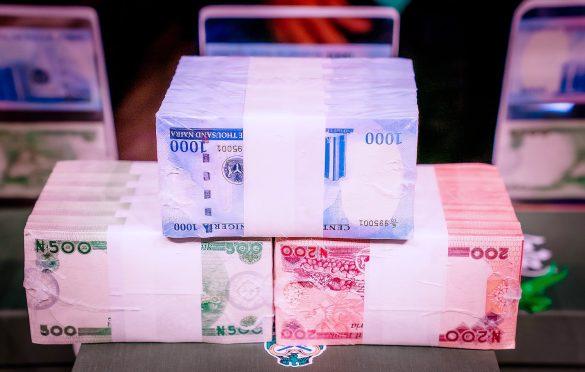
    The Supreme Court on Wednesday ordered that the old N200, N500, N1000 notes should continue to co-exist with the new notes till further notice.

    The apex court ruled that both old and new notes should continue to remain legal tender until the Federal Government put a process in place for its replacement or redesign after due consultation with relevant stakeholders.

    The seven-man panel led by Justice Inyang Okoro gave the ruling following an application by the Federal Government seeking asking the court to grant an extension of time for old naira notes to remain in circulation as a legal tender.

    The Federal Government also prayed the court to lift its March 3 order noting that the extension of time is necessary as it has not been able to print the volume of new notes that would enable a phase out of the old currency before the December 31 order.

    In the fresh application by the Attorney-General of the Federation (AGF), Lateef Fagbemi, the Federal Government further explained that should the Supreme Court decline its request to extend the period of circulation of old notes, the country stands the risk of descending into another national, economic and financial crisis as witnessed in the first quarter of the year when the naira redesign policy was being implemented under the former Central Bank of Nigeria (CBN) Governor, Godwin Emefiele.

    It asked the court to allow the old notes to be in use with the new notes until after it consults with stakeholders, pointing out that the economy may be in jeopardy once again because some Nigerians have started hoarding the old and new naira notes ahead of the December 31st timeline.

    In a unanimous decision the seven man panel allowed Fagbemi’s application.

    Mid-November, the Central Bank of Nigeria (CBN) had said the old N200, N500, and N1,000 notes would remain legal tender indefinitely.

    Channels TV

  • JUST-IN: President Tinubu Arrives NASS, Presents 2024 Budget Proposal

    JUST-IN: President Tinubu Arrives NASS, Presents 2024 Budget Proposal

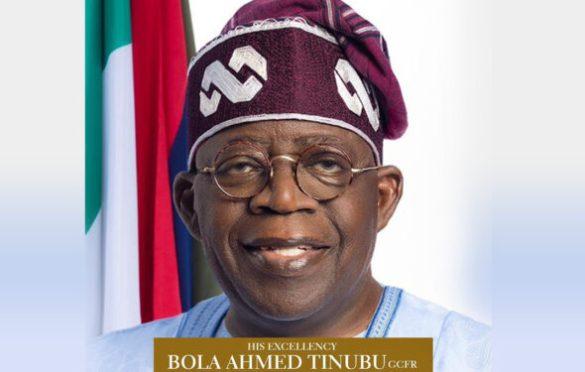
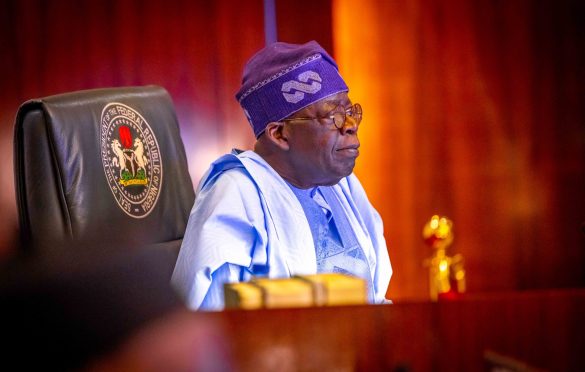
    President Bola Tinubu has arrived at the National Assembly (NASS) for the presentation of the 2024 budget estimates of N27.5trn.

    It’s the President’s first budget presentation before the joint session of the National Assembly since he assumed office on May 29, 2023.

    The President arrived at the NASS Complex around 11:10am alongside his entourage including Vice President Kashim Shettima; the Chief of Staff to the President, Femi Gbajabiamila; Secretary to the Government of the Federation, George Akume; Minister of the Federal Capital Territory, Nyesom Wike; National Chairman of the All Progressives Congress (APC), Abdullahi Ganjude; amongst others.

    The upper chamber had on Tuesday granted the President’s request to present the budget to a joint session of the Senate and the House of Representatives.

    Also, NASS’ Secretary of Research and Information, Ali Umoru, in a letter dated November 27, 2023, had announced that the President will address the parliament today.

    About three weeks ago, the President forwarded to both chambers of the National Assembly the 2024-2026 Medium-Term Expenditure Framework and Fiscal Strategy Paper where the sum of N26.1trn was proposed as the total expenditure profile for the 2024 fiscal year.

    On Monday, the budget on Monday was revised upwards by N1.5 trillion to N27.5trn after the oil price benchmark was increased and the naira exchange rate lowered.

    The Minister of Budget and Economic Planning, Abubakar Bagudu, told reporters at the State House on Monday that the Federal Executive Council (FEC) revised the MTEF and the Fiscal Policy to use an exchange rate of N750 to $1 and also a benchmark crude oil reference price of $77.96 per barrel.

    According to Bagudu, the FEC also approved an Appropriation Bill for 2024 with an aggregate expenditure of N27.5 trillion, an increase of over N1.5 trillion from the previously estimated.

    The budget of N27.5 trillion is 26% higher than the 2023 budget presented by ex-President Muhammadu Buhari in 2022.

    Meanwhile, the President also wrote NASS, seeking the approval of $8.6bn and €100m external borrowing plan for critical infrastructure in areas such as power, roads, water, railway, and health.

    Channels TV

  • Tinubu to attend COP28, to depart Abuja for Dubai Wednesday

    Tinubu to attend COP28, to depart Abuja for Dubai Wednesday

    President Bola Tinubu will, on Wednesday, depart Abuja for Dubai, United Arab Emirates, to attend the COP28 Climate Summit, also known as the 28th United Nations Climate Change Conference, or Conference of the Parties of the UNFCCC (COP28).

    At the World Leaders’ Summit, which takes place on 1 and 2 December, under the theme, “Unite, Act, and Deliver,” President Tinubu will deliver a national statement, highlighting Nigeria’s stance on various thematic issues, including renewable energy and climate financing.

    Mindful of the severe impact of climate change on Nigeria, such as desertification, flooding, erosion, drought, and national security risks arising therefrom, the president will maximise the opportunity afforded by the platform to advocate increased financial and technical support for developing nations, while reminding developed countries of their public pledge to provide $100 billion annually for support to localised initiatives to address climate change-related challenges.

    The president’s message will also focus on holding businesses and institutions accountable, reflecting Nigeria’s dedication to sustainable and responsible practices.

    The Nigerian delegation to COP28 will actively explore establishing new and deeper bilateral partnerships to implement Nigeria’s Energy Transition, Article 6 Projects, Internationally Transferred Mitigation Outcomes (ITMOs), Technology Transfer, Capacity Building, and Methane Mitigation.

    While in Dubai, President Tinubu will participate in key sideline events, which will further support the advancement of his avowed commitment to aggressively attract foreign direct investment for enhanced wealth creation and revenue expansion in the country, in addition to other events hosted by the Nigerian delegation.

    The president, who will be accompanied by senior government officials, is expected to return to Abuja at the end of the summit.

    Ajuri Ngelale

    Special Adviser to the President

    (Media & Publicity)

  • FEC approves budget support loan of $1bn from AfDB, revises 2024 budget from N26trn to N27.5trn

    FEC approves budget support loan of $1bn from AfDB, revises 2024 budget from N26trn to N27.5trn

    Nigeria’s Federal Government has increased the 2024 budget proposal from the initial N26 trillion to N27.500 trillion to meet present economic realities.

    It also revised the Medium Term Expenditure Framework, MTEF and Fiscal Strategy Papers, FSP, which initially had N700 per dollar as exchange rate to N750 per dollar, while oil benchmark was reviewed from the initial $73 per barrel approved by the National Assembly to $77 per barrel.

    The Minister of Budget and Economic Planning, Atiku Bagudu, who disclosed these while briefing State House correspondents at the end of the Federal Executive Council, FEC, meeting, presided over by President Bola Tinubu at the Council Chamber, Presidential Villa, Abuja yesterday, said  further details of the budget would be released when the president presents the budget to the National Assembly tomorrow.

    Bagudu said the MTEF and fiscal policy frameworks which had been passed by the National Assembly, were further reviewed.

    According to him, “this has the aggregate of N27.5 trillion which is an increase of over 1.5 trillion from the previously estimated sum, using the old reference prices.”

    The minister disclosed the forecast revenue for 2024 to be N18.2 trillion, explaining that it was higher than the 2023 revenue, including that provided in the two supplementary budgets, which the deficit was lower than that of 2023.

    He said:  “The Federal Executive Council considered the 2024 Appropriation Bill. The MTEF was earlier approved by the National Assembly. It has an exchange rate of N700 to a dollar and a crude oil benchmark of $73.

    “To improve revenue, the council further reviewed the MTEF, with an exchange rate of N750 to a dollar, and a crude oil benchmark of $77. This will significantly improve revenue.”

    Similarly, FEC approved the 2024 Appropriation Act and presentation of such to the National Assembly by the President.

    Also briefing, the Minister of Finance and Coordinating Minister of the Economy, Mr. Wale Edun, said that the council approved $1 billion budget support loan from African Development Bank, AfDB.

    He said: “There was a briefing by the Fiscal Policy and Tax Reform Committee.  Essentially, they’ve been working for roughly 90 days, they’ve been working very well and very effectively, such that they are in a position to have even impacted the economy by coming up with initial reforms, as well as signposting the way forward in terms of very important targets.

    “So in a nutshell, the policy on VAT removal on diesel is from them, they are looking to help boost fiscal situation of the government by increasing revenue, particularly tax revenue, through digitalization, additional efficiency and rationalization of the range of taxes we have at the moment.

    “They are looking to increase the ratio of tax-revenue-to-GDP to 18 per cent, which is the average for Africa; so many countries are above that level. It is actually about double where we are now and within a matter of a few years, their target is to reach 18 per cent.

    “Other economic measures, in the short term, are being contemplated and their report was well received by Mr. President and, indeed, the whole Federal Executive Council.

    “At the same time, I would like to give a summary of the memos that I had approved at Council today and, of course, they were all to do with financing. First of all, there was an inherited financing, an inherited loan processing, which was to do with the $100 million financing from African Development Bank and $15 million from the Canada-African Development Bank Climate Fund.

    2024 budget: Tinubu to address NASS joint session tomorrow

    Meanwhile, baring any last minute changes, President Bola Tinubu will present the 2024 budget to a joint session of the National Assembly tomorrow.

    The information was confirmed to journalists by the Secretary, Research and Information, in the National Assembly, Dr Ali Barde Umoru, who was at the Senate with respect to protocol arrangements.

    It was gathered that the number and category of persons to be given access into the National Assembly complex will be restricted on the day due to space constraints and a heightened sense of security.

    Usually, reliable sources in the upper chamber who spoke in confidence, said the President had written to both the President of the Senate, Godswill Akpabio, and speaker of the House of Representatives, Tajudeen Abbas, conveying his intention to address the joint session.

    The two leaders are expected to read the letter to senators and members of the House of Representatives at today’s plenary.

    Vanguard

  • Full Text of Speech Delivered By Sen. Dr. Adolphus Wabara, Ex Nigerian Senate President at the 3rd Frontier Discourse Annual Public Lecture and Awards

    Full Text of Speech Delivered By Sen. Dr. Adolphus Wabara, Ex Nigerian Senate President at the 3rd Frontier Discourse Annual Public Lecture and Awards

    A SPEECH DELIVERED BY HIS EXCELLENCY: DISTINGUISHED SENATOR WABARA, ADOLPHUS N., PH.D. AT THE 3RD EDITION OF FRONTIER DISCOURSE, AN ANNUAL PUBLIC LECTURE SERIES AND AWARD.

    THEME: POST SUBSIDY ECONOMY EXPLORING BOLD INITIATIVES FOR ECONOMIC RECOVERY IN NIGERIA, ON 18TH NOVEMBER, 2023.

    Your Excellences, Distinguished guests, Ladies and gentlemen,

    I stand before you today to address a matter of great importance, one that is central to the future prosperity of our nation – the transition to a post-subsidy economy and the exploration of bold initiatives for economic recovery in Nigeria.

    For nearly two decades, the Nigerian government has literally been robbing Peter and handing the proceeds to Paul through a programme that has denied millions of poor Nigerians access to basic social amenities.

    That programme, the payment of subsidy on petrol was introduced in 2000 during the administration of President OlusegunObasanjo. At the time, Nigeria was experiencing supply challenges from its refineries in Port Harcourt, Warri and Kaduna. To get around the problem, the Obasanjo administration set up a committee to review pricing and distribution of petroleum products.

    The committee in its recommendation advised President Obasanjo to set up a Petroleum Products Pricing Regulatory Committee (PPPRC). That committee later in 2003 become the Petroleum Products Pricing Regulatory Agency (PPPRA), which lasted till 2021 when it was scrapped by the Petroleum Industry Act (PIA) 2021.

    Essentially, the subsidy on petroleum represented government’s attempt at reducing the cost of petrol bought by citizens through the provision of direct financial support to oil marketing companies to offset their cost of transporting petroleum products from loading points to their retail outlets.

    In addition to this objective, the subsidy programme was supposed to stimulate economic growth whilst keeping the cost of petrol low for Nigerians.

    On the surface, the subsidy scheme was a laudable programme by government, but it would turn out not only to be a drain on government resources but more importantly, an avenue of further enriching a few wealthy Nigerians whilst making the poor poorer by denying them access to basie social amenities which government ought to have provided with the funds channeled toward the subsidy programme.

    The amount spent on subsidy between 2005 and 2023 totaling over N21 trillion is a testament of colossal waste of public funds on a programme that has added little value to the lives of millions of Nigerians.

    As we stand at the crossroads of economic transformation, it’s crucial to acknowledge that the decision to move away from subsidies is not just a policy shift; it is a fundamental reimagining of our economic landscape. Subsidies, while often well-intentioned, have imposed a significant burden on our national budget and hindered the growth of sectors that desperately need attention.

    The time has come for us to embrace a new paradigm, one that leverages our abundant resources, both human and natural, and charts a course towards sustainable economic recovery. Our journey toward a post-subsidy economy requires courage, innovation, and a commitment to forging a resilient future for our great nation.

    First and foremost, I call for total deregulation of the downstream sector. Total deregulation promotes efficiency in the downstream sector. When market forces are allowed to set prices, it encourages competition among suppliers, leading to increased efficiency in production, distribution, and retailing of petroleum products. This efficiency, in turn, helps to eliminate the inefficiencies that often accompany government control, resulting in a more streamlined and cost-effective industry.

    Furthermore, deregulation opens the door to increased private sector participation and investment. With a free market, entrepreneurs and investors are more likely to enter the downstream sector, bringing with them innovation, capital, and expertise. This influx of private investment can lead to the development of new technologies, improved infrastructure, and increased capacity, all of which contribute to the overall growth of the industry

    Secondly, as we confront the pressing issue of subsidy removal, it is imperative that we explore innovative and homegrown solutions that not only mitigate the immediate impacts but also pave the way for a more robust and self-reliant economy. In this context, the legalization and licensing of local modular refineries emerge as a panacea, providing a path to energy self- sufficiency, job creation, and economic empowerment.

    The legalization of local modular refineries presents an opportunity to harness our domestic resources efficiently. By enabling local communities to establish and operate modular refineries, we can tap into the rich oil and gas reserves that our nation possesses. This decentralization of refining capabilities allows us to reduce our dependence on imported refined petroleum products, creating a more resilient and self-sustaining energy sector.

    Furthermore, licensing local modular refineries can serve as a catalyst for economic empowerment and job creation, especially in the communities that host these facilities. The establishment of modular refineries will generate employment opportunities for skilled and unskilled workers, promoting socio-economic development at the grassroots level. This, in turn, contributes to poverty alleviation and helps build a more inclusive economy.

    Thirdly, in exploring bold initiatives for economic recovery, we must prioritize diversification. Overdependence on a single revenue source has left our economy vulnerable to external shocks. It’s time to invest in and promote sectors such as agriculture, technology, and renewable energy. By doing so, we not only create new job opportunities but also build a more robust and dynamic economic foundation.

    Fourthly, we must address infrastructure deficits head-on. A well-functioning infrastructure is the backbone of economic growth. Roads, bridges, ports, and digital connectivity are not just conveniences; they are essential drivers of commerce. Our commitment to economic recovery must be mirrored in our commitment to building and maintaining world-class infrastructure.

    Fifthly, education and skill development must be at the forefront of our recovery efforts. A skilled workforce is an empowered workforce. By investing in education, vocational training, and technology-driven learning, we can equip our citizens with the tools they need to contribute meaningfully to a diversified and growing economy.

    Moreover, technology will play a pivotal role in our economic recovery. We must embrace digital transformation, leveraging technology to streamline processes, enhance productivity, and foster innovation. The Fourth Industrial Revolution is upon us, and Nigeria must position itself at the forefront of this global shift.

    In addition, partnerships and collaborations, both domestically and internationally, are essential. We should create an environment that welcomes foreign investment, encourages joint ventures, and fosters collaborations between the public and private sectors. Together, we can harness the collective wisdom and resources needed to propel our economy forward.

    Lastly, as we navigate this transition, we must be mindful of the social impact. Economicpolicies should be inclusive, ensuring that the most vulnerable in our society are not left behind. Social safety nets, healthcare reform, and poverty alleviation programs should run parallel to our economic recovery initiatives.

    In conclusion, the shift to a post-subsidy economy is not just an economic imperative; it is a vision for a more sustainable, equitable, and prosperous Nigeria when effectively articulated and implemented. By embracing bold initiatives, investing in diversification, infrastructure, education, technology, and fostering partnerships, we can lay the groundwork for a future that we can all be proud of.

    Together, let us build a resilient and thriving post-subsidy economy, propelling Nigeria into a new era of economic prosperity.

    THANK YOU.

  • NCAA investigates, sanctions United Nigeria over flight diversion

    NCAA investigates, sanctions United Nigeria over flight diversion

    The Nigeria Civil Aviation Authority (NCAA) has commenced investigation into the circumstances surrounding the diversion of a Lagos-Abuja bound flight to Asaba on Sunday.

    To this end the authority has suspended the operations of two wet-leased aircraft in the fleet of the airline.

    It was learnt that the suspension was communicated to the airline via a letter, on Monday.

    Recall that the NUA flight 0506 heading for Nnamdi Azikiwe International Airport, Abuja, from the Murtala Muhammed Airport terminal two (MMA2), Lagos, landed in Asaba, Delta State.

    The airline later issued a statement that the diversion was due to weather while the flight crew announced the flight had landed in Abuja.

    The NCAA later intervened by investigating the circumstances surrounding the diversion.

    It was learnt that information from the Air Traffic Control (ATC) contradicted the statement of the airline that the diversion was due to weather.

    In a statement, the Director-General Civil Aviation, Capt. Musa Nuhu said the authority had commenced investigation into the circumstances surrounding the incident and “the confusion it has created in the public domain.”

    He said, “However, preliminary steps have been taken pending conclusions of ongoing investigation. The Authority wishes to reassure the traveling public that it will leave no stone unturned as it has always done in the past to ensure continued safety of the aviation industry.”

    Daily Trust

  • Nigerian Senate to Review Cybercrime Act 2015 as Online Losses Exceed $500 million

    Nigerian Senate to Review Cybercrime Act 2015 as Online Losses Exceed $500 million

    The Nigerian Senate has begun the process of reviewing and modifying the Cybercrime (Prohibition and Prevention) Act of 2015 with a view to taming cybercriminals and reducing the losses to online crimes estimated at over $500 million per year by the Nigerian Communications Commission (NCC).

    The Senate President Godswill Akpabio, during a recent public hearing on the Cybercrime (Prohibition and Prevention) Act (Amendment) Bill, 2023, in Abuja, described cybercrime as a serious threat.

    “In this day and age of rapid technological advancement and widespread internet use, cybercrime has emerged as a serious threat to our society, economy, and personal security.

    “It is necessary to reinforce existing laws prohibiting and preventing cyber-crime.

    “Individuals with ill intentions have already abused our lax cybercrime laws, harming our country’s name,” said the Senate president.

    Nigeria’s cybersecurity status has not been impressive. In a Check Point Research Threat Intelligence Report for Nigeria, which benchmarks the country’s cybersecurity status against a global median, the magnitude of cybercrime is frightening.

    Worldwide, the number of attacks experienced per business each week is 870 on average. Alarmingly, in Nigeria, this weekly figure is 2,308 across all industry sectors collectively. The more-granular per-industry analysis reveals this figure is higher still for businesses in the finance and banking sector.


    The Nigerian Communications Commission lists major cybercrimes in Nigeria to include hacking, identity theft, cyber terrorism, harassment, and internet fraud.

    Another recent report paints an alarming increase of cybercrimes against financial institutions, including fintech companies.

    The Senate wants the fangs of existing law expanded to tame online criminals, thus an urgent need for a comprehensive legal framework to deter, investigate, prosecute, and jail cybercriminals.

    Senator Akpabio who was represented at the event by leader of the Senate, Opeyemi Bamidele, explained that these crimes not only made the country suffer substantial financial losses, but eroded trust in Nigeria’s digital systems.

    “These cybercriminals are involved in a wide range of illegal activities, including hacking, identity theft, fraud, harassment, and cyber terrorism.

    “These crimes not only caused our country substantial financial losses, but they also invaded our privacy, crippled essential infrastructure, and eroded trust in our digital systems,”he noted.

    The chairman of the Senate Committee on ICT and Cyber Security, Senator Shuaib Salisu, and chairman of the Senate Committee on National Security and Intelligence, Senator Shehu Buba Umar, initiated the public hearing.

    VON

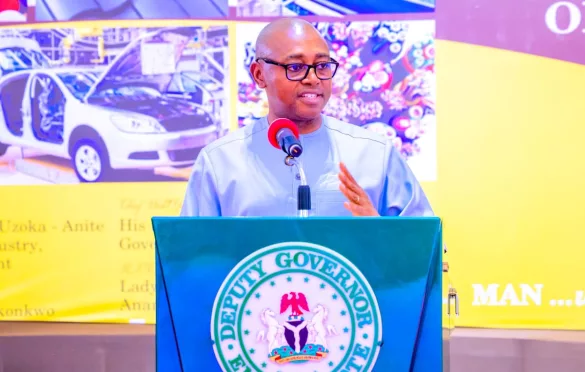
  • Full Text of Speech Delivered By Barr. Ifeanyi Ossai, Deputy Governor of Enugu State at the 3rd Frontier Discourse Annual Public Lecture and Awards

    Full Text of Speech Delivered By Barr. Ifeanyi Ossai, Deputy Governor of Enugu State at the 3rd Frontier Discourse Annual Public Lecture and Awards

    SPEECH DELIVERED BY HIS EXCELENCY, BARR IFEANYI OSSAI, DEPUTY GOVERNOR, ENUGU STATE ON THE OCCASION OF THE THIRD FRONTIER DISCOURSE ANNUAL PUBLIC LECTURE SERIES AND AWARDS TAGGED “THE POST SUBSIDY ECONOMY – EXPLORING BOLD INITIATIVES FOR ECONOMIC RECOVERY IN NIGERIA”  ORGANISED BY PACESETTER FRONTIER MAGAZINE ON SATURDAY NOV 18. 2023 AT HOTEL SUNSHINE PRESIDENTIAL ROAD INDEPENDENCE LAYOUT, ENUGU STATE.

    GREETINGS EVERYONE HERE PRESENT.

    ALL PROTOCOL DULY OBSERVERD

    I bring you greetings from the Government and Good people of our dear Enugu State.

    It is with great pleasure and a heart filled with optimism to be here at this event with the theme; the post subsidy economy-exploring bold initiatives for economic recovery in Nigeria.

    Nigeria has the potential to become a major player in the global economy by virtue of its human and natural resource endowments. However, this potential has remained relatively untapped over the years. After a shift from agriculture to crude oil and gas in the late 1960s, Nigeria’s growth has continued to be driven by consumption and high oil prices. Previous economic policies left the country ill- prepared for the recent collapse of crude oil prices and production. The structure of the economy remains highly import dependent, consumption driven and undiversified. Oil accounts for more than 95% of exports and foreign exchange earnings while the manufacturing sector accounts for less than 1% of total exports. The high growth recorded during 2011-2015, which averaged 4.8% per annum mainly driven by higher oil prices, was largely non-inclusive.

    Majority of Nigerians remain under the burden of poverty, inequality and unemployment. General economic performance was also seriously undermined by deplorable infrastructure, corruption and mismanagement of public finances. Decades of consumption and high oil price-driven growth led to an economy with a positive but jobless growth trajectory. After more than a decade of economic growth, the sharp and continuous decline in crude oil prices since mid-2014, along with a failure to diversify the sources of revenue and foreign exchange in the economy, led to a recession in the second quarter of 2016. The challenges in the oil sector, including sabotage of oil export terminals in the Niger Delta, negatively impacted government revenue and export earnings, as well as the fiscal capacity to prevent the economy from contracting. The capacity of government spending was equally constrained by lack of fiscal buffers to absorb the shock, as well as leakages of public resources due to corruption and inefficient spending in the recent past.

    The current administration recognises that the economy is likely to remain on a path of steady and steep decline if nothing is done to change the trajectory. It is in this context that since inception, Government has made several efforts aimed at tackling these challenges and changing the national economic trajectory in a fundamental way.

    However, it is recognised that more needs to be done to propel the country towards sustainable accelerated development. This is aimed at increasing national productivity and achieving sustainable diversification of production, to significantly grow the economy and achieve maximum welfare for the citizens, beginning with food and energy security. This Plan is a pointer to the type of Nigeria that the people desire in the short to medium-term, and encourages the use of science, technology and innovation to drive growth. It also provides a blueprint for the type of foundation that needs to be laid for future generations, and focuses on building the capabilities of the youth of Nigeria to be able to take the country into the future. Economic growth in Nigeria faces various supply constraints including fuel, power, foreign exchange, and business unfriendly regulations. In addition, there is a shortage of requisite skills and appropriate technology necessary to drive growth. This Plan focuses on overcoming and resolving these challenges. Leverage the power of the private sector. Economic recovery and transformative growth cannot be achieved by the government alone. It is essential to harness the dynamism of business and the entrepreneurial nature of Nigerians, from the MSMEs to the large domestic and multinational corporations to achieve the objectives of this Plan. The Plan prioritises the provision of a more business friendly economic environment, Promote national cohesion and social inclusion.

    Nigerians are the ultimate beneficiaries of more inclusive growth, therefore the initiatives set out in this Plan are aimed at ensuring social inclusion and the strengthening of national cohesion. Allow markets to function to drive optimal behaviour among market participants. The Plan prioritises the use of the market as a means of resource allocation, where appropriate. It also recognises the need to strengthen regulatory oversight to minimise market abuse. Stabilizing the macroeconomic environment Achieving agriculture and food security, Ensuring energy sufficiency (power and petroleum products) Improving transportation infrastructure, driving industrialization and focusing on Small and Medium Scale Enterprises.

    In conclusion, Improving transportation infrastructure, driving industrialization and focusing on Small and Medium Scale Enterprises and tecnology is revolutionizing the field of our economy in unprecedented ways. As educators, we must embrace these technological advances and work to ensure that they are used to support and enhance economy. By doing so, we can create a more equitable, engaging, and effective economy that meets the needs of the nation.

    Thank you all and God bless