Category: News

This is an optional category description

  • NYPF commends Enugu gov’t on Foreign Direct Investments, charges them to be more tax friendly to MSMEs

    NYPF commends Enugu gov’t on Foreign Direct Investments, charges them to be more tax friendly to MSMEs

    The Nigerian Young Professionals Forum, Enugu State, has urged the Enugu State Government to be more tax friendly to MSMEs in the State.

    According to a statement made available to Pacesetter, this was the submission of the forum at the just concluded Enugu Economic Development Summit and Heroes Award 2024 held at Bridgewaters Hotel in Enugu on Saturday, April 20, 2024.

    Charging the state government on improving on the economy of the state especially on the vision of moving the GDP of the state from $4.4Bn to $30Bn, participants at the summit acknowledged the recent infrastructural development in the state that will further propel economic development, but called for a reduction in taxation, and cancellation of multiple taxation.

    Participants requested for transparency and accessibility of government support programs and funding to MSMEs in the State especially from the SME centre.

    The forum also commended concerted government efforts to attract Foreign Direct Investments, calling for speedy closing up of the FDI deals to kickstart investments in Enugu State.

    According to the convener of the Summit, Hon. Amb. Mark Onuoha, who is the South Regional Head, Nigerian Young Professionals Forum, he was motivated to put together the Summit because of his commitment to helping young professionals succeed in business.

    “MSMES is the life wire of every nation’s economy, Digitization of the MSMEs space as predominantly occupied by younger innovative professionals, is our motivation”, Onuoha said.

    The Zenith of the event was the recognition and award presentation to notable Sons and Daughters of Enugu whom have distinguished themselves in the development of Enugu State.

  • Lagos To Unveil 2000 CNG Buses Before December

    Lagos To Unveil 2000 CNG Buses Before December

    The Lagos State Government has announced that 2,000 Compressed Natural Gas (CNG) buses will be rolled out before the end of the year.

    The State Commissioner for Transportation, Oluwaseun Osiyemi. made this known at the commencement of the 2024 ministerial briefing.

    Osiyemi said the state government has partnered with private operators on a Public-Private Partnership (PPP) arrangement to bring in CNG buses. He said a private transport operator is set to launch 231 electronic vehicles in June.

    While rolling out the achievement under the ministry of transportation in the last one year, he said the automatic number plate recognition technology captured 856,680 traffic violators from January 2023 to March 2024. And the traffic management solution devices handled by vehicle inspection service officers captured 10,421 violators between January 2023 and March 2024.

    Osiyemi further explained that with the introduction of the traffic management solution devices being handled by the Lagos State Traffic Management Authority (LASTMA) officials also captured 26,816 violators between January to March this year, adding that the state government will also be launching the LASTMA complaint call centre before the end of this month, to create easy access to the agency.

    The commissioner for transportation added that over 5,000 motorcycles have been impounded by the State Environment and Special Offences Enforcement Unit in the last two months.

    Channels TV

  • State Police: Security challenges gave rise to the decentralisation of Nigeria Police – Speaker Abbas

    State Police: Security challenges gave rise to the decentralisation of Nigeria Police – Speaker Abbas

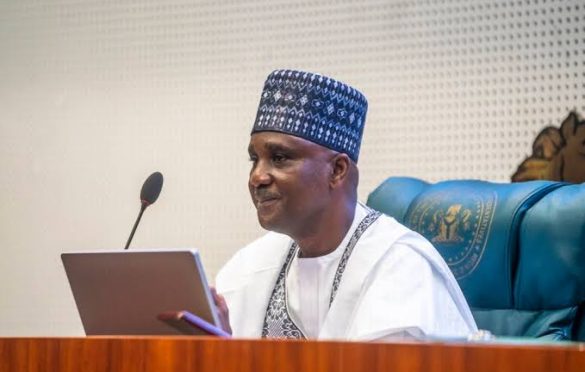
    Rep. Tajudeen Abbas, the Speaker of the House of Representatives, has stated that the emerging challenges in the country have rendered the current unitary policing system under the Nigeria Police Force ineffective, leading to calls for its decentralization by way of having state police.

    Speaker Abbas also noted that the numerous security challenges have overstretched the current security architecture in Nigeria but insists that the House remains neutral in the debates for and against the creation of state police.

    The Speaker made this known in Abuja on Monday at the National Dialogue on State Policing, which the House organised on the proposal to decentralise the current NPF and empower states to create and operate their policing system police.

    The proposal for state police is part of the ongoing review of the 1999 Constitution by the 10th National Assembly.

    OrderPaper recalls that the Deputy Speaker, Rep. Benjamin Okezie Kalu, and 14 others had sponsored the bill seeking to alter the relevant sections of the 1999 Constitution to empower the states to establish their policing outfits.

    OrderPaper also recalls that the House had on February 20, 2024, passed for second reading, the bill seeking to create police structures in each of the states of the federation.

    Speaker Abbas stated: “Our mission here is simple: to deliberate the future of policing in Nigeria, reflecting on our historical context and aligning our actions with the demands of our diverse and dynamic populace and daunting contemporary security challenges that have stretched our existing system to a breaking point.

    “The concept of state police involves decentralising law enforcement functions to the state level, thereby allowing for more localised and responsive policing tailored to the unique needs of each State.

    “However, Section 214 of the 1999 Constitution establishes the Nigerian Police Force as unitary police ‘for the Federation or any part thereof.’ However, as noted earlier, evolving security challenges and other institutional and structural challenges have severely affected the general effectiveness of the police.”

    He added: “As you are mostly aware, this deficit has resulted in the military engaging in policing functions in all States of the Federation, including the FCT. In turn, this has also overstretched the armed forces and affected their effectiveness in combatting other broader security challenges, including those that threaten the territorial integrity of Nigeria.”

    However, the Speaker admitted that many have argued that a decentralised and community-based approach to policing has become imperative to empower the states to address the complex security challenges in the context of their local environment and peculiarities.

    “Some see the current centralised structure of the police as a negation of ‘true federalism’. Several countries structured as Federations have well-established state, provincial, or regional police that exercise authority over relevant sub-national jurisdictions and collaborate on law enforcement matters with national or federal police, where both exist,” he added.

    Speaker Abbas listed the issues he thought were critical to the overall conversation on the merits and demerits of state policing, and its desirability or otherwise for Nigeria.

    He said: “First and foremost, it is imperative to acknowledge that the push for reforming our police forces is not merely desirable but necessary. We are at a stage where public trust in law enforcement is teetering.

    “Also, the burden of policing the vast geographical expanse of our country and a rapidly expanding population warrants a reform of the current structure. The need for a system that maintains law and order and upholds every Nigerian’s dignity and rights cannot be overstated. Reform is essential to heal and to build – rebuilding trust, rebuilding effectiveness, and rebuilding our shared commitment to justice.”

    Speaker Abbas also noted that, whereas most Nigerians agree on the need to reform policing, that is usually where the consensus ends, stating that “there is no agreement on how best to proceed with the reform or the best policing model for Nigeria.”

    OrderPaper

  • Kano Judge Vacates Order Suspending Ganduje as APC Nat’l Chairman

    Kano Judge Vacates Order Suspending Ganduje as APC Nat’l Chairman

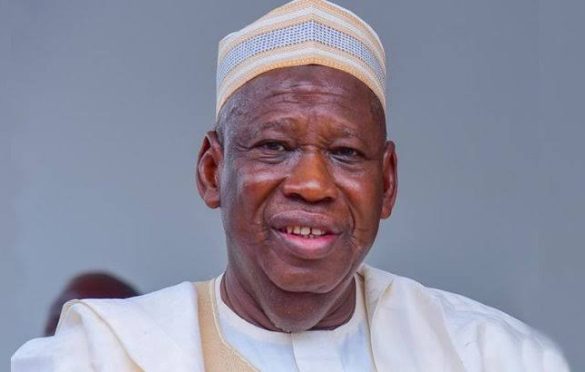
    A Kano State High Court presided over by Justice Usman Na’Abba has vacated the order suspending ex-Kano governor Umar Ganduje as the National Chairman of the All Progressives Congress (APC).

    Justice Na’Abba vacated his earlier order upon reading a Motion Ex-Parte together with an affidavit and a written address dated the 22nd day of April, 2024 sworn to by one Glory Adah, a litigation secretary in the law firm of lawyers to Ganduje.

    The judge reversed itself by granting an interim injunction staying the order earlier slammed on the APC national chairman.

    The interim injunction order was for stay of the execution of the order of interim injunction contained in the ruling of the court delivered on the 17th April, 2024 directing parties to maintain status quo ante as at the 15th day of April, 2024 in relation to the suspension of the APC national chair by the Ganduje Ward Executive Committee pending the hearing and determination of the matter.

    One Haladu Gwanjo and Laminu Barguma, who claimed to be the Chairman and Secretary of the APC Ganduje Ward in the Dawakin Tofa Local Government Area of the state had secured an order suspending Ganduje as the National Chairman of the party.

    The Judge, however, adjourned hearing of the substantive case to the 30th of April, 2024.

    Channels TV

  • Convicted Cross Dresser Bobrisky Challenges Conviction, Files Notice Of Appeal

    'I Am A Man,' Bobrisky Tells Court
    Bobrisky in court where he pleaded guilty to naira abuse on Friday, April 5, 2024

    Controversial cross-dresser and socialite, Idris Olanrewaju Okuneye, popularly known as Bobrisky, has filed a notice of appeal challenging his conviction on a four-count charge of Naira abuse.

    In his Notice of Appeal filed by his lawyer, Bimbo Kusanu, Bobrisky is asking the court to set aside the six months imprisonment sentence imposed on him and replacing same with the option of a fine of N50,000 (Fifty Thousand Naira) on each of the counts against him.

    On April 12, 2024, Justice Abimbola Awogboro of the Federal High Court, Lagos had sentenced Bobrisky to six months imprisonment without an option of fine for abusing the Nigerian currency.

    The judge while sentencing the convict, said the judgment would serve as a deterrent to others that are fond of abusing and mutilating the Naira.

    On April 5, Bobrisky had pleaded guilty to the four-count charge preferred against him by the Economic and Financial Crimes Commission (EFCC) before the court.

    In his Notice of Appeal, however, the appellant stated that the trial court imposed the maximum sentence on him despite having no previous record of criminal conviction and when there were options to impose a lesser sentence by the provisions of the ACJA.

    He submitted that the sentence imposed by the trial court is punitive contrary to the mandatory provisions of the ACJA on sentencing.

    The Appellant also stated that the judge did not consider his positive antecedent of not wasting the precious judicial resources of the trial court when he pleaded guilty to the charge.

    He further stated that the Appellant honoured the invitation of the Respondent (the EFCC) on the first invitation during the investigation leading to the charge.

    Part of the decision of the lower court complained of are “The sentence of the Lower Court that imposed maximum penalty of six-months imprisonment without option of fine on the Appellant who is a first time convict without previous record of criminal conviction.

    “The Learned trial Judge erred in Law and in facts by his imposition of the maximum sentence of 6 Months imprisonment terms against the Appellant without option of fine contrary to the provisions of Section 416(2) d of the Administration of Criminal Justice Act of 2015 (“ACJA”) that prescribed the mandatory guidelines on the trial Court on imposition of sentencing after criminal conviction of a first time offender as the Appellant.

    “The trial Court imposed the maximum sentence on the Appellant who has no previous record of criminal conviction when there are options to impose a lesser sentence by the provisions of the ACJA.

    “The Sentence imposed by the trial Court against the Appellant is punitive contrary to the mandatory provisions of the Law (ACJA) on sentencing.

    “The Appellant has suffered miscarriage of Justice by the maximum sentence imposed by the learned trial Court.

    “The reasons adduced by the learned trial Court for the imposition of maximum punishment on the Appellant which is essentially on what foreigners think of abuse of Naira, is perverse and is out of tune with the reality of what the trial Court should have considered to impose maximum punishment on the Appellant.

    “The intendment of the provisions of the Central Bank Act 2007 that the Appellant was charged with is for Nigerians not to tamper with Naira and not what nationals of foreign countries view about tampering with Naira.

    “The trial Court did not consider the positive antecedent of the Appellant who did not waste the precious Judicial resources of the trial Court when he pleaded guilty to the Charge. The Appellant honoured the invitation of the Respondent-Economic and Financial Crimes Commission (EFCC) on the first invitation during the investigation leading to the charge”.

    “The trial Court failed to exercise his discretion judiciously and judicially in sentencing the Appellant which has occasioned miscarriage of justice against the Appellant.”

    Consequently, he urged the court to set aside the 6 months maximum imprisonment sentence imposed on him and in its place impose fine of N50,000 (Fifty Thousand Naira) on each of the counts against the Appellant.

    Channels TV

  • NERC Transfers Regulatory Oversight of Enugu Electricity Market to Enugu State Govt

    NERC Transfers Regulatory Oversight of Enugu Electricity Market to Enugu State Govt

    Following the Enugu State Electricity Law signed by Governor Peter Mbah and the recent constitution of the Enugu State Electricity Regulatory Commission, ESERC, by the Mbah Administration, the Nigerian Electricity Regulatory Commission (NERC) has, in a historic move, formerly transferred the regulatory oversight of the Enugu State electricity market to the state agency effective May 1, 2024.

    This is a landmark development in the nation’s power sector, being the first time NERC would be ceding such regulatory authority to any state electricity regulatory agency.

    The transfer was made known by NERC on Monday in an April 22, 2024 Order No. NERC/2024/039 signed by the Commission’s Chairman, Sanusi Garba, and the Commissioner for Legal, Licensing, and Compliance, Dafe Akpeneye.

    The transfer is sequel to the amendments of the Paragraph 14 (b) of the Second Schedule to the 1999 Constitution by the 9th National Assembly in 2023 as well as the Electricity Electricity Act 2023, both of which effectively devolved power generation, transmission, and distribution from the Exclusive List to the Concurrent List and also empowered the states to manage and regulate their electricity markets within their jurisdictions.

    It is recalled that the Mbah Administration initiated the Enugu State Electricity Bill 2023, which the governor signed into Law in September the same year and also set the pace in March 2024 constituted the Enugu State Electricity Regulatory Commission (ESERC) led by Chijioke Okonkwo as the Chairman/CEO.

    The Electricity Act 2023 provides that within 45 days of receiving formal notification of the enactment of the law under subsection (1), the Commission (NERC) shall draw and deliver to the State Regulator a draft order setting out a plan and timeline for the transition of regulatory responsibilities from the Commission to the State Regulator, which transition shall be completed not later than 6 months from the date on which the formal notification in subsection (1) was delivered to the Commission.

    Explaining further, NERC said the ESERC now holds the exclusive power to set and adopt end-user electricity tariffs within Enugu State, tailoring these charges to local conditions and requirements.

    Also, while ESERC manages local tariff methodologies, any electricity sourced from grid-connected plants and the related tariffs for generation and transmission services must still receive approval from the Nigerian Electricity Regulatory Commission (NERC), ensuring alignment with national energy policies.

    Furthermore, the final tariffs approved by ESERC for consumers in Enugu State will be definitive for the state, with the Enugu State Government responsible for supporting and implementing tariff-related policies, ensuring that electricity pricing is both fair and attuned to the specific needs of the state’s residents.

    Consequently, NERC ordered that: “Enugu Electricity Distribution Company PLC, EEDC, is hereby directed to incorporate a subsidiary EEDC SubCo under the Companies and Allied Matters Act for the assumption of responsibilities for intrastate supply and distribution of electricity in Enugu State from EEDC.

    “EEDC shall complete the incorporation of EEDC SubCo within 60 days from the effective date of this Order and, EEDC SubCo shall apply for and obtain a licence for the intrastate supply and distribution of electricity from EERC.

    “EEDC shall identify the actual geographic boundaries of Enugu State and carve out its network in Enugu State as a standalone network with the installation of boundary meters at all border points where the network crosses from Enugu State into another state.

    “EEDC shall create an Asset Register of all its power infrastructure located within Enugu State.

    “Evaluate and apportion contractual obligations and liabilities attributable to EEDC’s operations of its subsidiary in Enugu State.

    “Identify all the applicable trading points for energy o take for the operations of EEDC SubCo in Enugu State

    “Confirm the number of employees that are required to provide service to Enugu State as a standalone public utility; and transfer the identified assets for operations in Enugu State, contractual obligations, liabilities and employees to EEDC Subco.”

  • Court Dismisses N8.5bn Alleged Fraud Against Ex-NIMASA DG

    Court Dismisses N8.5bn Alleged Fraud Against Ex-NIMASA DG

    Justice Ayokunle Faji of the Federal High Court in Lagos, on Monday, discharged and acquitted the former Director-General of the Nigerian Maritime Administration and Safety Agency (NIMASA), Patrick Akpobolokemi, from alleged N8,537,586, 798.58 billion fraud case.

    Justice Faji cleared Akpobolokemi and an employee of NIMASA, Josphine Otuaga, of the 22-count charge of conspiracy, conversion, and stealing (by fraudulent conversion) brought against them by the Economic and Financial Crimes Commission (EFCC).

    The judge, while delivering a ruling on a no-case submission filed by the defendants, held that the EFCC failed to establish a prima facie (sufficient evidence) case against the duo.

    However, the court ordered the former Commander of the Joint Task Force (JTF), Operation Pulo Shield, Major-General Emmanuel Atewe (rtd) and an employee of NIMASA, Kime Engonzu, to open their defence.

    Justice Faji held that Atewe an Engonzu have a case to answer in counts 12 to 22 of the charge.

    Akpobolokemi had, in a no-case submission filed by his lawyer, Dr Joseph Nwobike (SAN), asked the court for an acquittal without having him present a defence.

    Nwobike had also argued that the prosecution, with all its witnesses and evidence tendered while making its case, failed to link his client to the alleged crimes.

    In his ruling, Justice Faji held that none of the witnesses called by the Prosecution led any shred of evidence linking the first defendant and the fourth defendant to the offences they were charged with.

    The court held that having regard to the totality of evidence led by the prosecution failed to provide any credible evidence linking the first defendant with the commission of the alleged crimes against him in Counts 1-11 of the first amended charge and established a prima facie case against him warranting him to enter upon his defence.

    The judge also held that out of the 11 witnesses fielded by the Complainant, only one witness (PW 2) gave evidence where the name of the first defendant was featured. In contrast, other witnesses made it abundantly clear that they did not know the 1st Defendant and did not have any dealings with him.

    Justice Faji, therefore, held that if there was no sufficient evidence linking the accused with the statutory elements and ingredients, a court of trial must, as a matter of law, discharge him.

    He said the court has no business searching for evidence that is nowhere and, therefore, cannot be found.

    Leadership

  • IGP Egbetokun kicks against state-controlled police, says Nigeria not yet ripe for it

    IGP Egbetokun kicks against state-controlled police, says Nigeria not yet ripe for it

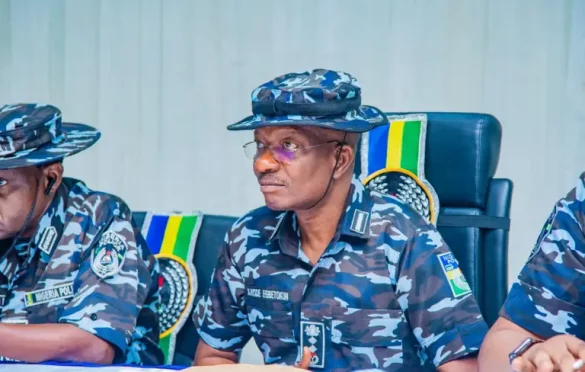
    The Inspector General of Police, Olukayode Egbetokun, has opposed the establishment of State Police, saying the country was not ripe for it.

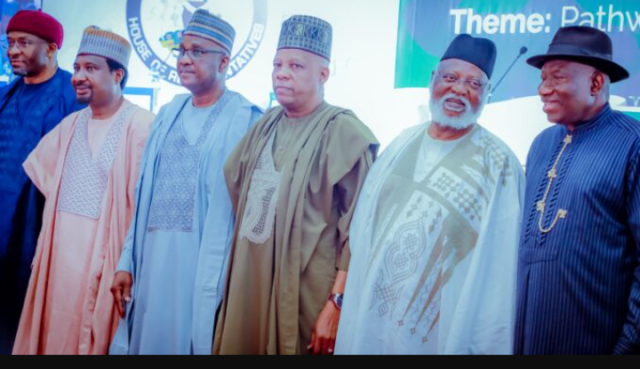
    Egbetokun stated this during a one-day dialogue on state policing, themed, ‘Pathways to Peace: Reimagining Policing in Nigeria’ on Monday.

    He stated that the establishment of state Police would exacerbate ethnic tension, leading to divided loyalty in the states.

    “On the issue of state police, it is the submission of the leadership of the Nigeria Police Force (NPF) that Nigeria is not yet mature and ready for the establishment of state-controlled police,” the IGP, represented by AIG Ben Okolo, said at the event organised by the Speaker of the House of Representatives Tajudeen Abbas.”

    Represented by Assistant Inspector General of Police, Ben Okolo, the IG said the establishment of state police will also lead to multiple command structures in the states.

    He also claimed that state governors were likely to abuse the privilege of state police by using it for political gains, leading to possible abuse of power and abuse of human rights.

    “State governors could use the police forces under their control for political or personal gain and undermine human rights and security. There would also be a conflict of jurisdiction,” he noted.

    He argued the state Governments lacked the required funding that would give birth to the type of policing that the nation requires.

    He also said there was the need for a yearly recruitment of about 30,000 police personnel into the Force annually to meet the UN requirements for modern policing, while also increasing annual budgetary allocation to the Force.

    Rather than establishing state police across the country, he recommended merging the Nigeria Security and Civil Defence Corps and the Federal Road Safety Commission to form departments in the Nigeria Police Force.

    Organised by the Office of the Speaker of the House of Representatives, the dialogue is the beginning of deliberations on the Constitution of the Federal Republic of Nigeria (alteration) bill 2023 (Establishment of State Police) sponsored by the Deputy Speaker of the House of Representatives, Benjamin Kalu and 13 others.

    The bill was designed to improve public safety and strengthen law enforcement in Nigeria by decentralising the police. The proposal in the bill provides for state police alongside the federal police and outlines a constitutional framework for states that choose to establish and maintain their service.

    Nigerians remain underserved by the current policing system. There are about 371,000 police officers to 223 million citizens, and about two-thirds of them are deployed to protect VIPs. In the First Republic, policing was devolved to the regions.

    Punch

  • FG Ready to Deploy First Set of CNG Vehicles in May to Mark Tinubu’s First Anniversary as President

    FG Ready to Deploy First Set of CNG Vehicles in May to Mark Tinubu’s First Anniversary as President

    The federal government has concluded plans to launch and deploy Compressed Natural Gas (CNG) vehicles for mass transit, starting this May, as part of activities marking President Bola Tinubu’s one year in office.

    Special Adviser to the President on Information and Strategy, Bayo Onanuga, disclosed this in a statement, yesterday.

    Onanuga said while considering buses and tricycles in addition, the government targeted about one million automobiles by 2027. He said the committee led by Michael Oluwagbemi was set to deliver cheaper, safer and more climate-friendly energy vehicles.

    Onanuga said the committee had fulfilled some foundational reforms to enable the new CNG and electric vehicles deliver the future Tinubu promised.

    He added that all was ready for delivery of the first set of critical assets for deployment and launch of the vehicles ahead of the first anniversary of the Tinubu administration on May 29.

    The presidential aide assured that from the end of May this year, Nigeria would join the league of nations with large fleets of CNG vehicles.

    The federal government provided N100 billion, as part of the N500 billion palliative budget, to purchase 5,500 CNG vehicles, being part of the many intervention programmes to cushion the effect of increase in petrol pump price on the masses. This included buses and tricycles, 100 electric buses and over 20,000 CNG conversion kits, spurring the development of CNG refilling stations and electric charging stations.

    Onanuga stated that with necessary tax and duty waivers approved by Tinubu in December 2023, the private sector partners in the Presidential CNG Initiative (PCNGI) had responded with over $50 million in actual investments in refuelling stations, conversion centres, and mother stations.

    He stated, “Also, a safety policy document on 80 standards and regulations that must be strictly adhered to by operators has been developed and approved to ensure CNG conversions are done safely and reliably.

    “The deployment of CNG buses and tricycles and the vision to get at least one million natural gas propelled vehicles on our roads by 2027 will mark a major energy transition in our country’s transportation industry.

    “The use of more expensive diesel and PMS will gradually be phased out, when many vehicles, including trucks, run on natural gas, which our nation has in abundance in at least 30 out of the 36 states of the federation.”

    Onanuga stressed that one of the main causes of air pollution was the amount of gases emitted by gasoline and diesel engines, adding that to mitigate pollution, some countries, like India, China, Iran, Pakistan, Brazil, Argentina, and Italy, have built fleets of natural gas powered vehicles, instead of going the route of relying on liquid petroleum products propelled vehicles, as natural gas vehicles reduce tail pipe emission by up to 40 percent.

    He added that Nigeria’s commitment to this course would enable the country meet her nationally determined commitments (NDCs) under Paris Climate Accord to which it is a signatory.

    According to Onanuga, “Four plants owned by JET, Mikano, Mojo, and Brilliant EV located in various parts of the country are involved in the assembly of the Semi Knocked Down (SKD) components of the CNG buses.

    “JET, which has received the SKD parts, is coupling the buses in Lagos and is working towards delivering 200 units before the first anniversary of the Tinubu administration.

    “Brilliant EV will assemble electric vehicles. It is awaiting the SKD parts, which will arrive in due course. The electric vehicles it will produce are meant for states, such as Kano and Borno, which do not have access to CNG for now.

    “They will also be available in key Nigerian cities and university campuses. It must be noted that soon to be completed gas pipeline projects initiated by the Buhari administration and being completed by NNPCL (the AKK Pipeline) will take gas into the hinterlands of North-east and North-west where there is current paucity.”

    He said over 600 buses were targeted for production in the first phase that will be accomplished this year while a new plant on the Lagos-Ibadan Expressway will assemble thousands of tricycles.

    “The SKD parts manufactured by the Chinese company LUOJIA in partnership with its local partner to support the consortium of local suppliers of CNG tricycles are set for shipment to Nigeria and expected to arrive early in May. About 2,500 of the tricycles will be ready before May 29, 2024.

    “Thousands of conversion kits for petrol powered buses and taxis that want to migrate to CNG are also ready with CNG cylinders. The federal government intends to provide them at subsidised rates, especially to commercial vehicle drivers to bring down the cost of public transportation.”

    As part of private sector collaboration, NIPCO and BOVAS are involved in offering refilling services for the CNG vehicles and also serving as conversion centres.

    NIPCO is setting up 32 stations nationwide to offer the services. The company has completed the set-up of four of the CNG stations.

    “Likewise, BOVAS is setting up eight stations in Ibadan, two each in Ekiti, Abuja and four in Ilorin. MRS is also involved. It is making efforts to announce where its refilling stations and conversion centres will be,” Onanuga added.

    He also said NNPC Limited, which had launched an on-and-off CNG initiative in the past, was joining the new initiative and was soon expected to announce the locations for CNG refilling and CNG conversion centres nationwide.

    The statement said PCNGI was working with 22 other agency-partners, including the Standards Organisation of Nigeria(SON) and Nigeria Automotive Design and Development Council, to deliver 80 Natural Gas Vehicle Conversion and Associated Appliances Standards for the country.

    Onanuga said, “The Tinubu administration is an enabler of the evolving CNG industry.  In collaboration with the private sector, the PCNGI is set to deliver 100 conversion workshops and 60 refuelling sites spread across 18 states before the end of this year.”

    He explained that the vision of the president to deliver one million gas vehicles could not be possible without the private sector, including the RTEAN, NA, NURTW and players in the downstream sector of the transportation chain and financiers.

    ThisDay
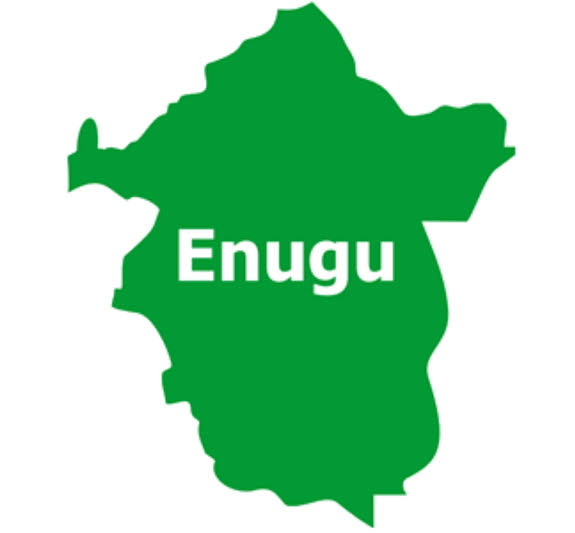
  • Enugu gov’t engaging investors, developers for electricity generation to drive economy – Gov Mbah

    Enugu gov’t engaging investors, developers for electricity generation to drive economy – Gov Mbah

    Enugu State governor, Dr. Peter Mbah, has disclosed that his administration is already engaging investors and developers in the power sector to set up electricity generation plants that will drive the state to achieve its target $30 billion economy from the $4.4 billion it met the economy in May 2023.

    The governor, who spoke on Thursday in Enugu as Chief Host at a townhall organized by the Nigerian Electricity Regulatory Commission (NERC) themed, “Customer Complaints Resolution Meeting”, said the new Enugu Electricity Law empowered the state to develop its own commercially viable electricity market which is safe, reliable and sustainable.

    Following the passage of the law, the governor explained that the state did not waste time in setting up the Enugu State Electricity Regulatory Commission with commissioners saddled with the responsibility of assuming regulatory authority over electricity services in the state.

    “We have started engaging developers and investors interested in setting up power generation plants to supply our citizens under ‘willing-buyer, willing-seller’ commercial agreement,” the governor, who spoke through the Secretary to the State Government (SSG), Prof. Chidiebere Onyai, added.

    He lamented the challenges that electricity consumers have been facing in the state which include epileptic power supply, and in extreme cases, total national grid collapse, thereby hindering production and investments, saying his administration would partner with the NERC and the Enugu Electricity Distribution Company (EEDC) to address the challenges.

    Governor Mbah, while expressing optimism that the poor national grid supply to Enugu State would soon be reversed with improved supply from other energy sources, said the administration was currently understudying underserved and unserved communities through the newly established Enugu State Electrification Agency.

    Also speaking on the backstage of the townhall, the Chairman of the state electricity regulatory commission, Mr. Chijioke Okonkwo, commended NERC for bringing customers together to address some of their challenges and needs in the power sector, saying the state government’s initiative to set up its own electricity market will help to address citizens and investors’ power needs.

    Okonkwo called on investors in the power industry to see Enugu State as a viable state with the right infrastructure for power generation, declaring that the state is open to welcome all investment opportunities across board.

  • VP Shettima to LOCCI Delegation: Naira Will Continue To Appreciate Against The Dollar

    VP Shettima to LOCCI Delegation: Naira Will Continue To Appreciate Against The Dollar

    …Tasks Nigerians On Peaceful Coexistence

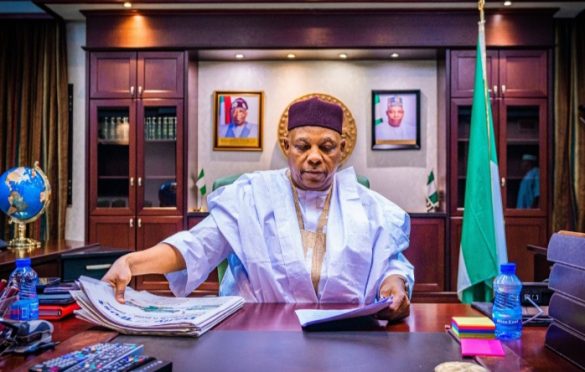
    Vice President Kashim Shettima has expressed optimism about the performance of Nigeria’s currency, the Naira, at the forex market, saying it will appreciate more as the dollar continues to crash.

    He said President Bola Ahmed Tinubu had to end fuel subsidy and ensure the unification of the multiple exchange rate because the former arrangement was producing billionaires overnight.

    The VP who stated this on Friday when a delegation of the Lagos Chamber of Commerce and Industry (LCCI) led by its President, Gabriel Idahosa, paid him a courtesy visit in his office at the President Villa, Abuja, noted that they knew the challenges ahead and still went round the country campaigning they were aware President Tinubu i capable of addressing the challenges.

    Noting that the Dollar will further crash against the Naira, the Vice President said, “Naira went haywire and some people were celebrating but inwardly we were laughing at them because we knew that we have the leadership to reverse the trend. Asiwaju knows the game, and truly the naira is gaining and the difference will drop further”.

    Senator Shettima recalled that the quality of leadership provided by President Tinubu as governor of Lagos laid the foundation for the massive development witnessed in the state, adding that “we will always thank President Tinubu for providing the blueprint for the development of Lagos that we are seeing today”.

    The VP further assured that the Tinubu administration is doing its best to address challenges in the power sector because it is aware that power is absolutely essential.

    “We are determined to ensure that we generate jobs for our youths. Honestly, the President’s obsession is to live in a place of glory, to transform this country to a higher pedestal. He wants to leave a legacy, one of qualitative leadership because the hope of the black man, the hope of Africa rests with Nigeria.

    “I want to assure you that President Bola Ahmed Tinubu is one of you. He understands your ecosystem. In this government, you have an ally and a friend,” VP Shettima further noted.

    Earlier, the LCCI President, Idahosa, presented some of the organisation’s recommendations to VP Shettima, including “more innovations to address the insecurity challenge, considering its multidimensional impact on the economy.”

    The LCCI also urged the Tinubu administration to ensure a significant upswing in the pace and scale of alternative policy measures that promote credit access, stimulate investment, and support entrepreneurship.

    “This could include targeted interventions such as concessional lending facilities, loan guarantees, and interest rate subsidies tailored to the needs of SMEs and key sectors of the economy like agriculture, manufacturing, and power technology,” he added.

    Other members of the LCCI on the delegation included Chief John Odeyemi, Chief Dr. Nike Akande, Asiwaju (Dr.) M. Olawale –Cole, Prince Funayo Okeowo, Gwueke Ajaifa, Sir Ladi Smith, Abimbola Ola, Olufemi Bakare, Ayotunde Coker, Tolulope Adeleke, Stephen Alangbo, Dr Chinyere Almona and Mrs Temitope Akintunde.
    … Tasks Nigerians On Peaceful Coexistence

    Meanwhile, Vice President Shettima has urged Nigerians to live peacefully among themselves and learn how to accommodate each other.

    Senator Shettima made the imploration on Friday when a delegation from the Association of National Accountants of Nigeria (ANAN) led by its President, Dr. James Neminebor, paid him a visit at the Presidential Villa, Abuja.

    The Vice President was responding to an appeal made by the ANAN President for land in Abuja to enable the association to relocate its University to the FCT.

    He said, “No matter how long the night is, it must give way to the light of the dawn. The crisis we have in Jos will soon be over. Jos is the most hospitable city in this country in terms of weather. If we can harness the potentials of Jos and the Plateau as a whole, I believe that we can transform this nation into a better place.

    “In one way or the other, we should learn how to accommodate each other; we should learn how to embrace one another. My SSA Media, Stanley Nkwocha, is a Jos boy. Jos is ideal; Jos is not an ethnic identity. Some of the Hausas, the Fulanis, the Kanuris and the other ethnic groups living in Jos were born and bred in Jos. They don’t have any other place to call home.

    “The beauty of the Jos experience is that we have the generality of Nigerians called Northern Igbos. He (Nkwocha) is Igbo; Owelle Rochas Anayo Okorocha is a Northern Igbo. This gentleman (Nkwocha) speaks Hausa more than I do. We also have Sir Emeka Offor and so many of them.

    “I believe that we should learn to imbibe in Nigeria that culture of tolerance, of togetherness because I will rather be a small fish in a big pawn than to be a big fish in a small pawn. We are a kaleidoscope of colours; the sooner we realise it, the better”.

    VP Shttima however asked the association to channel its request through the Deputy Chief of Staff to the President, Office of the Vice President, to enable him to follow it up with the relevant authorities.

    Earlier, ANAN President, Dr. Neminebor, told the VP that there was need to introduce a new value orientation where the issue of discipline will become a culture for Nigerians, even as the association recommended the setting up of Anti-corruption Recovery Investment and Management Commission to prevent the re-looting of recovered assets in the country.

    Stanley Nkwocha
    Senior Special Assistant to The President on Media & Communications
    (Office of The Vice President)
    20th April, 2024

  • Tinubu Approves Comprehensive School Census, Education Reforms

    Tinubu Approves Comprehensive School Census, Education Reforms

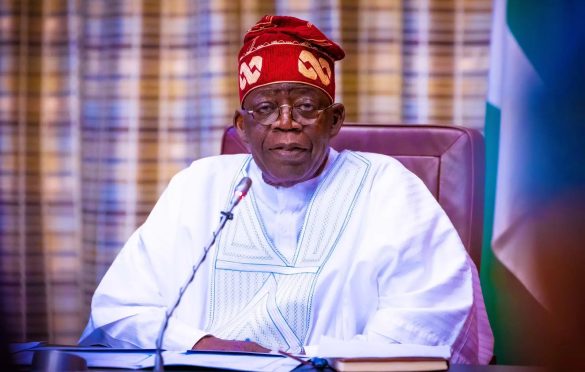
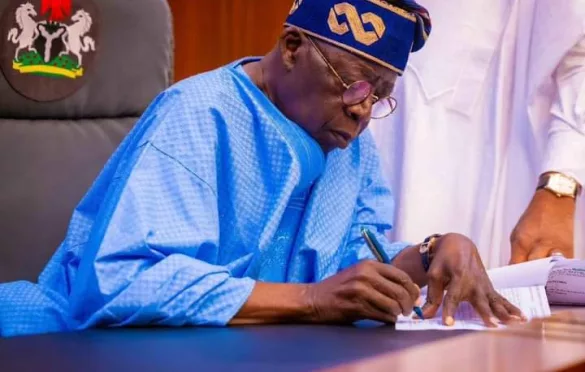
    Nigeria’s President, Bola Ahmed Tinubu, has approved a census for all schools in Nigeria from basic to tertiary level, to ascertain their conditions and live-in facilities, proximity to one another, and the state of educational infrastructure across the schools.

    The President has also approved system-wide policies that include Data Repository, Out-of-School Children Education, Teacher Training & Development, and Skills Development and Acquisition (DOTS).

    These were made known on Thursday in a statement signed by the President’s Spokesperson, Ajuri Ngelale. He said the census will also include teachers headcount, their qualifications, training support received so far in the last few years.

    According to Ngelale, the school census will address the paucity of coordinated, verifiable, and authentic data on all aspects of the education sector in Nigeria.

    He added that the Presidential directives are to guide federal and state interventions for teachers’ training and development as well as overall support.

    The presidential aide added that the headcount will provide data on gender ratio (boys and girls), their specific learning needs, and dropout rates based on daily monitoring with year-by-year reporting.

    Data Tracking

    Ngelale noted that the new data-tracking architecture will enable the government to track students’ progress, hence having a clear data-driven mechanism for interventions, especially concerning out-of-school children, girls, and those with specific learning disabilities, among others.

    Out-of-school children

    On Out-of-school children’s education and training, Ngelale made known that the Federal Ministry of Education is already implementing the government’s policy through the activities of four of its agencies.

    The Special Adviser to the President emphasised that there will be a dedicated portal/dashboard in the Federal Ministry of Education, offices of state governors, and local government chairpersons, which will host and disseminate more information to the federal government, states, and local governments to monitor the exercise in real-time.

    Teachers’ development and support

    Under this programme, Ngelale said that the Federal Ministry of Education will support and train teachers in digital skills to facilitate the use of technology in classrooms.

    He said this is expected to bring technology and digitisation to teachers and learners at all levels of education.

    Skill development and acquisition

    On Skill development and acquisition for all levels, the Presidential aide disclosed that President Tinubu approved the National Skills Framework designed to provide the appropriate skills for each level of education.

    He said this will result in the empowering of generations of Nigerians with the required aptitude for the evolving needs of the global economy of the 21st century.

    He further explained that the President approved an overhaul on this to enhance skill diversity in the education sector to effectively equip Nigerian students with the requisite skills, knowledge, and values to become functional and productive members of society.

    This framework is expected to address skill gaps, quality of education, and unemployment concerns as students will acquire certain skill sets, in addition to general knowledge.

    It is expected that once fully implemented, these programmes will succeed in resetting learning and connecting the ‘DOTS’ for significant improvement of the overall education system in Nigeria, in line with the Renewed Hope Agenda of President Bola Tinubu.

    VON