Category: News

This is an optional category description

  • Consider Enugu as your next investment destination – Mbah woos diaspora community

    Consider Enugu as your next investment destination – Mbah woos diaspora community

    …as NiDCOM Chairman lauds governor’s investment in infrastructure, security

    Enugu State Governor, Dr. Peter Mbah, has urged the Nigeria diaspora community to consider Enugu as their first choice of investment destination, stressing that his administration has created robust mechanisms to facilitate their investment process and ensure high return on investment.

    This was even as the Chairman, Nigerians in Diaspora Commission (NiDCOM), Mrs. Abike Dabiri-Erewa, commended the governor for his committed investment in the state’s infrastructure and security, noting the huge investment potentials that would benefit diaspora investors.

    Mbah made the call on Wednesday in Enugu while delivering his welcome address at a sensitization and advocacy workshop organized by NiDCOM in partnership with Enugu State Government for the promotion of diaspora investment potentials in the Southeast Nigeria.

    He recalled the administration’s unwavering commitment to the diaspora community which has already positioned the state as a business-friendly environment through policies such as easy access to land, guaranteed return on investment, transparency and secure environment.

    The governor, who was represented by the Secretary to the State Government, Prof Chidiebere Onyia, acknowledged the pivotal role Nigerians in diaspora were playing in the nation’s development through their remittances, expertise, innovation and networks.

    “With an estimated $20bn – $25bn sent home annually by Nigerians abroad as estimated by the World Bank, and active participation of this group, the Nigerian diaspora community cannot be ignored. As such, effectively harnessing the support and influence of our diaspora community is crucial for enhancing investment and trade, and securing robust representation in host countries to promote global interconnectedness,” the governor added.

    Insisting that the government was open to partner with diaspora investors to explore the untapped potentials of diaspora participation in the southeast, Mbah charged Igbo investors in diaspora to imbibe the spirit of homecoming investment, calling on Nigerians living outside the eastern part of the country to seize the opportunity afforded them to invest in the Southeast zone.

    “The Southeast is renowned for its entrepreneurial drive, industrious spirit, a rich history of migration, and a commitment to community development of Ala Igbo. The significant population of Ndigbo in the diaspora presents tremendous opportunities for fostering mutual growth and development across the five states of the Southeast. This workshop should serve as a powerful call to Ndigbo in the diaspora, urging them to look back home and invest not only financially but also socially, to drive the sustainable development of the region,” he further stressed.

    While stating that the state government recognized the Igbo in diaspora as key stakeholders in the development agenda to move the state’s GDP from $4.4bn to $30bn, Mbah maintained that investment from diasporans would not only complement the administration’s efforts to fostering inclusive economic growth, but would also improve the quality of life of the citizens.

    He added that some of the initiatives that might interest diasporans included the newly established Enugu State Electricity Market, the New Enugu Smart City, the Special Agro-Processing Zones, the recently completed ICT centre, the Enugu Transport Infrastructure Projects, among other projects which cut across agriculture, technology, education, transport, energy and mineral resources.

    Speaking earlier, Mrs. Abike-Dabiri called on diaporans to tap into the unlimited resources and opportunities which Nigeria has to offer them through investment in diverse areas of the economy.

    “There is no better place to invest than investing in one’s home. Majority of the respected diasporans are from Enugu State and they are doing great globally,” she noted.

    While advocating for a diaspora fund to be set up to identify specific areas of investment, the NiDCOM Chairman stressed that every state in Southeast has something to offer to investors with potential high return on investment.

    In her welcome remark, the Special Adviser to the Governor on Diaspora Matters, Mrs. Olangwa Ezekwu, said the governor had already created an enabling environment for businesses to thrive through the special ease of doing business model that encourages investment in the state.

    “We are open and ready for investment opportunities and have identified various sectors in education, security, agriculture, tourism, health, mining, oil and gas, ICT, to name but a few. This has yielded partnerships in the various sectors.

    “This is a call for action. I have invited you on this journey, and I appeal to you to be part of it. Do not give up your seat on the table as we all strive to move South Eastern States forward,” she concluded.

  • JUST-IN: Beatrice Ekweremadu returns to Nigeria

    JUST-IN: Beatrice Ekweremadu returns to Nigeria

    Chetanne Chinelo, Enugu

    Beatrice Ekweremadu, wife of Nigeria’s Ex Deputy Senate President, Sen. Prof. Ike Ekweremadu, has returned to Nigeria after her incarceration in the United Kingdom, PACESETTER can confirm.

    Beatrice who is presently in Abuja, according to an anonymous source who is a close political associate of the Ekweremadus  and who spoke to a PACESETTER correspondent on phone, returned safely.

    “I can confirm to you that the good news you heard about Madam’s (Beatrice Ekweremadu) return is true”, the source said.

    When asked where she was, the source who was elated, owing to his voice, said she was in Abuja.

    Background

    Mrs. Ekweremadu was sentenced to prison alongside her husband, Ike Ekweremadu and a medical doctor, Obinna Obetta under highly controversial circumstances involving an organ donor, David Nwamini for their daughter Sonia, who suffers from kidney issues.

    The Ekweremadus and Obinna Obetta, the medical doctor, were convicted of conspiracy to arrange for a young man, identified as David Nwamini, to travel to Britain, where he was to donate his kidney, needed for their ailing daughter, Sonia.

    The UK metropolitan police claimed Nwamini was a minor but documents revealed he was an adult.

    While Ekweremadu received a sentence of 9 years and 8 months from Justice Jeremy Johnson at the Old Bailey, his wife was handed a 4-year and 6-month term, while their intermediary, Dr. Obinna Obeta, was sentenced to 10 years in prison.

  • NCC Says 50% Telecom Tariff Increase Not Across Board 

    NCC Says 50% Telecom Tariff Increase Not Across Board 

    The Nigerian telecommunications industry is set for significant changes as operators implement the tariff adjustments approved by the Nigerian Communications Commission (NCC).

    The NCC approved a cap of 50 per cent increase in telecom tariffs, but clarified that this adjustment may not apply uniformly across all operators.

    Subscribers are concerned about the potential impact on mobile and internet services as costs for calls, SMS, and data are expected to rise significantly.

    Preliminary details indicate that the cost of calls may rise from N11 to N16.5 per minute, SMS charges from N4 to N6, and 1GB of data could increase to N431.25. Analysts estimate that these changes could boost the telecom sector’s annual revenue from calls alone to N6.7 trillion, based on 2023 data showing 205.3 billion minutes of outgoing calls.

    However, the NCC said the exact rates will depend on individual competitive strategies. The NCC aims to balance affordability with service quality amid rising operational costs due to inflation and foreign exchange fluctuations

    The NCC, the regulatory authority for the telecom sector, announced that it was awaiting detailed proposals from operators on how the adjustments will be applied. The revisions aim to address rising costs in the sector caused by inflation, foreign exchange fluctuations, and increasing operational expenses.

    NCC’s director of public affairs, Reuben Mouka, in a telephone interview with LEADERSHIP, clarified that the tariff increases will vary across operators.

    “Operators are capped at 50 per cent but the exact charges may differ based on their competitive strategies. Some may charge slightly higher or lower within the approved limits,” Mouka explained.

    He added that operators must adhere to the NCC’s Guidance on the Simplification of Tariffs in the Nigerian Communications Sector, published in December 2024.

    He, ttherefore, assured the public that NCC remains committed to balancing affordability with the need to sustain quality services.

    “The adjustments are necessary to ensure the continued delivery of quality services while safeguarding the industry’s viability. We will review submissions from operators to ensure compliance with regulatory guidelines.

    “The NCC has also assured the public that it will closely monitor the implementation of the adjustments to ensure transparency and prevent exploitation. Also, subscribers are encouraged to stay informed and report any issues promptly,” he stated.

    Despite assurances, subscribers have voiced concerns about higher costs, particularly given the persistent network challenges.

    “If operators must raise tariffs, they should ensure their networks are reliable,” said Comfort Dele, an online vendor.

    President of the National Association of Telecommunications Subscribers (NATCOMS), Adeolu Ogunbanjo, also criticised the 50 per cent tariff hike as excessive and a burden on consumers.

    “A moderate increase of five per cent to 10 per cent would have been more reasonable,” he argued.

    Ogunbanjo urged telecom companies to explore alternative funding options, such as Initial Public Offerings (IPOs) or issuing stocks.

    He also pointed to unresolved debts among telecom operators and banks, suggesting that settling these liabilities could strengthen the industry’s financial position without drastically increasing tariffs.

    Ogunbanjo disclosed plans to challenge the hike in court, saying, “Telecommunications are essential for education, business, and social interaction. This decision will have far-reaching consequences for millions of Nigerians.” Leadership.

  • 22 Democratic-led states sue over Trump’s birthright citizenship order

    22 Democratic-led states sue over Trump’s birthright citizenship order

    • Lawsuits challenging Trump’s order filed in Massachusetts, New Hampshire and Washington state
    • Democratic-led states argue executive order violates U.S. Constitution’s 14th Amendment
    • Plaintiffs cite U.S. Supreme Court’s 1898 birthright citizenship ruling

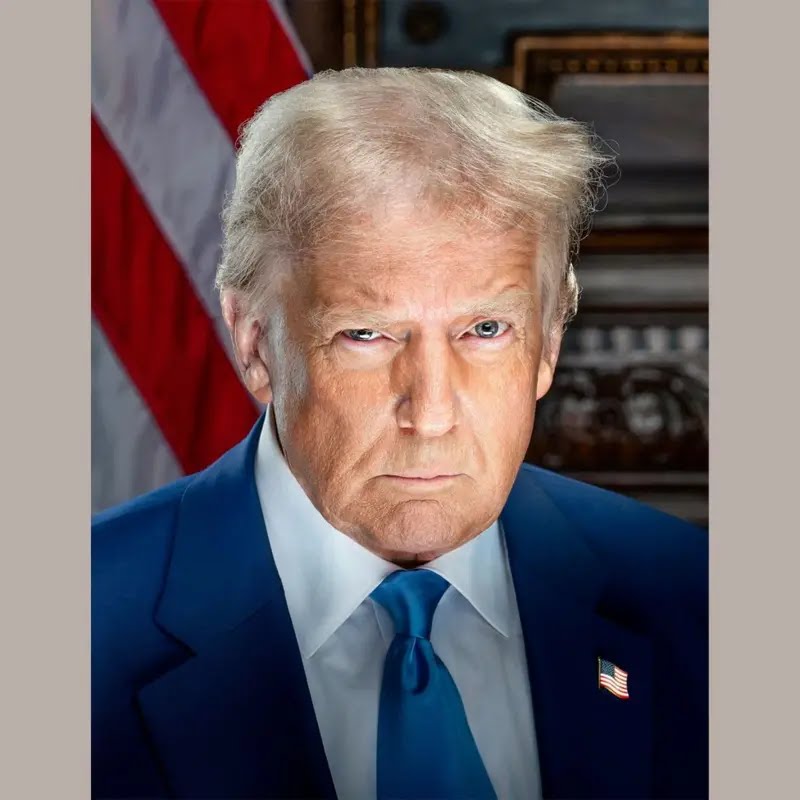
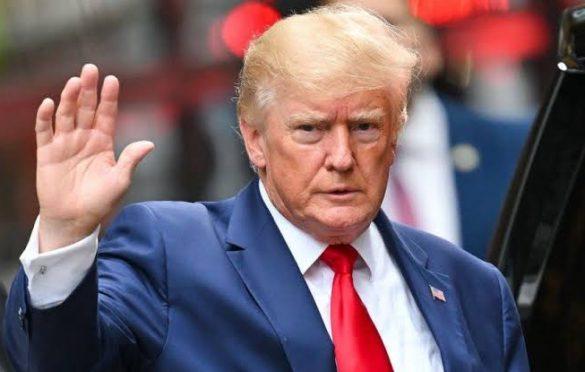
    Democratic-led states and civil rights groups filed a slew of lawsuits challenging U.S. President Donald Trump’s bid to roll back birthright citizenship on Tuesday in an early bid by his opponents to block his agenda in court.

    After his inauguration on Monday, Trump, a Republican, ordered U.S. agencies to refuse to recognize the citizenship of children born in the U.S. if neither their mother or father is a U.S. citizen or legal permanent resident.

    Twenty-two Democratic-led states along with the District of Columbia and city of San Francisco filed a pair of lawsuits

    in federal courts in Boston and Seattle asserting Trump had violated the U.S. Constitution.

    The lawsuits take aim at a central piece of Trump’s sweeping immigration crackdown. If allowed to stand, Trump’s order would for the first time deny more than 150,000 children born annually in the United States the right to citizenship, said the office of Massachusetts Attorney General Andrea Joy Campbell.

    “President Trump does not have the authority to take away constitutional rights,” she said in a statement.

    Losing out on citizenship would prevent those individuals from having access to federal programs like Medicaid health insurance and, when they become older, from working lawfully or voting, the states say.

    “Today’s immediate lawsuit sends a clear message to the Trump administration that we will stand up for our residents and their basic constitutional rights,” New Jersey Attorney General Matthew Platkin said in a statement.

    The White House did not respond to requests for comment.

    More lawsuits by Democratic-led states and advocacy groups challenging other aspects of Trump’s agenda are expected, with cases already on file challenging the Elon Musk-led Department of Government Efficiency and an order Trump signed weakening job protections for civil servants.

    1898 U.S. SUPREME COURT PRECEDENT

    Three of the four lawsuits were filed in Massachusetts and New Hampshire. Any rulings from judges in those New England states would be reviewed by the Boston-based 1st U.S. Circuit Court of Appeals, the only federal appeals court whose active judges are all Democratic appointees.

    Four states filed a separate case in Washington state, which the San Francisco-based 9th U.S. Circuit Court of Appeals has jurisdiction over. U.S. District Judge John Coughenour in Seattle has scheduled a Thursday hearing on whether he should issue a temporary restraining order blocking enforcement of Trump’s order.

    A fifth lawsuit was filed in federal court in Maryland by a group of pregnant women and immigrant rights groups including CASA.

    The various lawsuits argue that Trump’s executive order violated the right enshrined in the Citizenship Clause of the U.S. Constitution’s 14th Amendment that provides that anyone born in the United States is considered a citizen.

    The complaints cite the U.S. Supreme Court’s 1898 ruling in United States v. Wong Kim Ark, a decision holding that children born in the United States to non-citizen parents are entitled to U.S. citizenship.

    The plaintiffs challenging the order include a woman living in Massachusetts identified only as “O. Doe” who is in the country through temporary protected status and is due to give birth in March.

    Temporary protected status is available to people whose home countries have experienced natural disasters, armed conflicts or other extraordinary events and currently covers more than 1 million people from 17 nations.

    Several other lawsuits challenging aspects of Trump’s other early executive actions are pending.

    The National Treasury Employees Union, which represents federal government employees in 37 agencies and departments, late on Monday filed a lawsuit challenging an order Trump signed that makes it easier to fire thousands of federal agency employees and replace them with political loyalists.

    Reuters

  • Petrol price rises to N990 in FCT, N960 in Lagos in NNPCL outlets

    Petrol price rises to N990 in FCT, N960 in Lagos in NNPCL outlets

    Retail outlets owned by the Nigerian National Petroleum Company Limited have raised the pump price of Premium Motor Spirit, also known as petrol, from N965 to N990 per litre in the Federal Capital Territory.

    They also increased their price in Lagos from N925 to N960 per litre.

    This is even as the price of crude oil showed a marginal decline on Tuesday.

    Checks by our correspondents at some of the filling stations indicated that the prices have been adjusted.

    The amount is N20, or 2.1 per cent more than the N970 retail price announced by the Dangote refinery in partnership with MRS filling station, Ardova, and Heyden.

    The price adjustment reflects ongoing market dynamics and aligns with the deregulation policy in the petroleum sector, which allows prices to fluctuate based on supply and demand.

    This increase follows recent developments in the sector, including the commencement of loading operations at the Dangote refinery, expected to reshape the fuel supply chain in Nigeria.

    Recall that on Friday, the pump prices of petrol rose to between N1,050 and N1,150 per litre following the hike in the cost of the commodity by the Dangote Petroleum Refinery and various depot owners.

    The $20bn plant raised its PMS from N899/litre to N955/litre at its loading gantry.

    Dealers confirmed that PMS prices would continue to rise since the major component in fuel production, crude oil, has been on the upward swing lately.

    At an NNPCL outlet at Airport Junction, our correspondents observed that the station sold at N990 per litre from N965 it sold on Monday.

    Another station at Life Camp listed its products at N970 per litre but was not selling to waiting customers when our correspondent visited.

    Another station at Mabuchi was still selling at its previous price of N965 per litre.

    Meanwhile, major and independent marketers have increased petrol prices to a peak cost of N1,030 per litre.

    Checks indicated that filling stations located along Airport Road, Central Area and Nyanya in Abuja increased their retail cost between N990 and N1,030 per litre.

    The amount represents an increase of N60 or 6.18 per cent from N970 it sold its products last week Friday.

    AYM Shafa and Matrix filling stations along the airport road sold at N1,000 per litre while Shema station sold at N1,030.

    As petrol consumers adjust to the new pump price, experts predict further changes in petrol pricing as Nigeria continues to align its energy policies with global market realities.

    A source at the private depot informed that loading activity commenced fully on Monday with bulk marketers loading products from the Dangote refinery.

    The source said, “Refined petroleum sales commenced fully today with no issues at all. Marketers have increased their prices between N965 and N975 per litre at depots but at filling stations, a litre increased above N1,000 in Lagos. In Akwa Ibom, prices increased to N1,100.”

    Reacting, an oil and gas expert, Olatide Jeremiah, said the refinery, Depot and Pump price changes are a reflection of market forces and a testament to the petroleum sector being deregulated.

    He said, “The refinery, depot and pump price changes are a reflection of market forces and a testament to the petroleum sector being deregulated. Deregulation is one major solution to fuel scarcity and hike in pump prices.

    “This hike is temporary; it’s an effect of former President Biden’s ban on Russian oil companies. As of this morning, Brent crude oil prices fall to $80 per barrel as Trump assumes the Presidency.”

    Meanwhile, Brent crude oil futures dropped to $79.98 per barrel on Monday, from $81 last Friday.

    Brent crude for March delivery was down 1.5 per cent to trade at $79.66 per barrel at 11.20 am ET while WTI crude for February delivery declined 1.8 per cent to $76.46 per barrel.

    But following the inauguration yesterday, the Brent crude rose again marginally to $80.05.

    The US under Joe Biden, the immediate past president, had intensified sanctions on Russia, imposing heavy fines on its vessels.

    Our correspondents observed that most NNPC stations in Lagos and Ogun sold PMS at the rate of N925/litre until around noon when the price was jerked up.

    It was noted that the NNPC at Alapere and others in Lagos started selling the product at N960 around 3 pm Tuesday.

    A tricycle rider said there was a long queue of buyers at one of the NNPC stations in Ketu earlier on Tuesday morning when the station retained its price at N925. However, it was said that the queue disappeared with the announcement of the new price.

    “Wr thought they wanted to bring down the price initially, but it is going up again,” the tricycle rider complained as he searched for passengers.

    Aside from the NNPC, other filling stations sold PMS at different rates ranging between N960 and N1,000.

    It was observed that MRS, Heyden and Ardova filling stations have started selling Dangote refinery’s PMS at N970/litre.

    As of Tuesday, TotalEnergies sold the product at N985; Matrix, N980; SGR in Mowe, N999; Petrocam, N1,000; Danco; N970; As-Sallam; N990; Sedabuk, N950; and Gatelink, N980, all along the Lagos-Ibadan Expressway. Punch

  • After Meeting with Fubara, Wike, Others, Tinubu Pledges Peace, Justice in Ogoniland

    After Meeting with Fubara, Wike, Others, Tinubu Pledges Peace, Justice in Ogoniland

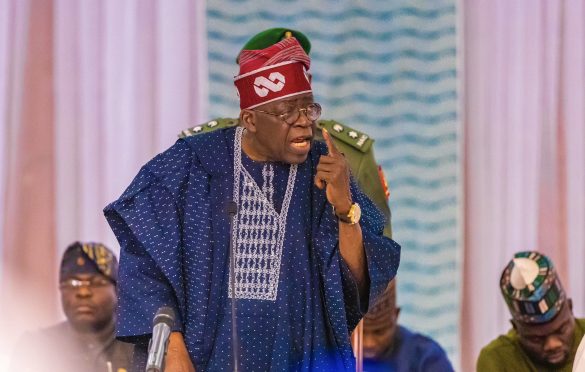
    President Bola Ahmed Tinubu assured Ogoni leaders on Tuesday in Abuja that his administration would prioritise peace, justice, and sustainable development in the area.

    At a meeting at the State House in Abuja, President Tinubu passionately called for unity and reconciliation, urging the Ogoni people to set aside historical grievances and work together to achieve peace, development, and a clean environment, a post by Bayo Onanuga, Special Adviser to the President on Information and Strategy, on X revealed.

    “We cannot in any way rewrite history, but we can correct some anomalies of the past going forward. We cannot heal the wounds if we continue to be angry,” he said.

    President Tinubu directed the National Security Adviser, Mallam Nuhu Ribadu, to coordinate the negotiations as he called for inclusive consultation and mutual understanding.

    The President commended the delegation for embracing the Federal Government-led dialogue and emphasised the need for collaboration, trust, and inclusiveness to resolve lingering issues in the region.

    “We must work together with mutual trust. Go back home, do more consultations, and embrace others. We must make this trip worthwhile by bringing peace, development, and a clean environment back to Ogoniland,” President Tinubu said.

    He asked ministers, the NNPCL, and the Rivers State Government to cooperate with the Office of the National Security Adviser (ONSA) to achieve this mandate.

    “It is a great honour for me to have this meeting, which is an opportunity to dialogue with the people of Ogoniland.

    “It has been many years since your children and myself partnered to resist military dictatorship in this country. No one dreamt I would be in this chair as President, but we thank God.

    “Many of your sons present here were my friends and co-travellers in the streets of Nigeria, Europe, and America.

    “I know what to do in memory of our beloved ones so that their sacrifices will not be in vain,” the President said.

    Governor Fubara thanked the President for his support of the Ogoni people and for welcoming an all-inclusive representation of the people to the Presidential Villa.

    He said the meeting was a follow-up to an assignment the President gave him through the National Security Adviser.

    Emphasising the importance of resuming oil operations in Ogoniland, the governor pledged the delegation’s commitment to adhering to the President’s instructions and providing the necessary support to achieve the government’s objectives.

    “What we are doing here today is to concretise the love and respect we have for the President for being behind this meeting and for him to tell us to go back and continue the consultations with a timeline so that the resumption of oil production in Ogoniland will commence,” he said.

    The National Security Adviser commended the Ogoni people for their trust in President Tinubu and for embracing dialogue as a path to meaningful progress and enduring solutions.

    “Guided by Mr. President’s vision that every voice is heard and every interest is considered, my office, the DSS, the government of Rivers State and the Minister of FCT embarked on a diligent and consultative process to assemble this delegation,” Mallam Ribadu said.

    He noted that the over 50-member delegation that met with the President reflected the rich diversity of Ogoni society, representing various constituencies, interests, and viewpoints.

    “The presence of this delegation is a testament to the Ogoni people’s readiness to engage constructively in the pursuit of peace, justice, and sustainable development,” he said.

    A representative of the Ogoni leadership, King Festus Babari Bagia Gberesaako XIII, the Gberemene of Gokana Kingdom, expressed the community leaders’ willingness to engage in the process of finding lasting solutions to the lingering challenges in Ogoniland.

  • Tinubu is stabilising economy, reducing poverty – Minister Edun

    Tinubu is stabilising economy, reducing poverty – Minister Edun

    President Bola Ahmed Tinubu is stabilising the economy through bold socio-economic reforms aimed at revitalising critical sectors, reducing poverty and restoring public confidence, Minister of Finance and Coordinating Minister of the Economy Wale Edun said yesterday.

    The administration, he affirmed, would focus on major infrastructural projects this year to stimulate growth and job creation.

    Edun, who appeared before the Senate Committee on Finance to defend the ministry’s N13.51b budget, maintained that President Tinubu’s economic policies are yielding positive results but need time to take full effect.

    The minister acknowledged the rising inflation, assuring Nigerians that the Federal Government is working to make food affordable and available.

    Also, Minister of Communications, Innovation and Digital Economy Dr. Bosun Tijani, at another forum, said the President plans to build a trillion-dollar economy with a 21 per cent increase in Gross Domestic Product (GDP) through reforms by his ministry.

    Other ministers who appeared before the Senate committee are: Atiku Bagudu (Budget and National Planning), Dele Alake (Solid Minerals) and Muhammadu Dingyadi (Labour and Employment).

    The committee, which emphasised the urgency of diversifying the economy from oil dependence, queried the inadequate allocation to the Ministry of Solid Minerals.

    Edun was optimistic about Nigeria’s economic direction, highlighting a projected GDP growth rate of 3.5 per cent and increased revenue from both the oil and non-oil sectors.

    He said: “Having stabilised the Nigerian economy to a large extent and still committed to the fight against inflation, which on behalf of Nigeria, the government will win, this will bring down food prices and make food more affordable and available.”

    Edun also explained that most of the government’s spending this year would be on major infrastructure projects to further stimulate economic growth and job creation.

    The minister said: “Within that context, the growth of the Nigerian economy is to come from investment, private sector investment.

    “The government’s spending and prioritisation of its projects will be on major infrastructure, including digital infrastructure and fibre optics to make the economy more productive so that it can grow, create jobs, and reduce poverty, which is the overall goal of President Bola Tinubu.

    “The policies of the President are working, but they do take time. Even when you go through a physical operation, there will be pain at first, and it will ameliorate over time. It will be no different for the Nigerian economy and Nigerians.”

    The finance minister also enumerated government interventions aimed at alleviating economic hardship, including support to farmers, cash transfers, student loans, Compressed Natural Gas (CNG) powered buses, and low-interest loans.

    He stressed: “These are all interventions to ameliorate the situation of the relatively high cost of living, which is coming down and is predicted to come down as we have said earlier today.

    “So, much brighter times are ahead for the Nigerian economy, the Nigerian society, and the people of Nigeria.”

    After Edun’s presentation, Committee Chairman Sani Musa said the lawmakers had scrutinised the ministry’s proposal and found the proposed spending justifiable.

    He said: “We have heard you and we have looked at your budget 2025 proposal here, and in the view of the committee, you need these things that you have presented before us.”

    Musa commended the Tinubu Administration for its efforts at reflating the economy.

    He disagreed with Senator Seriake Dickson, who said the improvements in the economy were not being seen nor felt by Nigerians.

    Senators Sunday Karimi Steve, Aliyu Ahmed Wadada, Oyewunmi Olarere, Mohammed Onawo Ogoshi, and Abdul Ningi commended the Federal Government’s strides in stabilising and improving the economy.

    However, some senators questioned the feasibility of the inflation target, citing persistent challenges such as exchange rate instability, high interest rates, and rising food prices.

    Senator Orji Uzor Kalu said while the Central Bank of Nigeria (CBN) had taken measures to combat inflation through monetary tightening, structural economic issues remain unresolved.

    He said: “Pegging inflation at 15 per cent assumes a level of fiscal discipline and policy coordination that we are yet to see materialise.

    “It’s not just about monetary policy; we need aggressive efforts in food security, energy stability, and industrial output.”

    Senator Tokunbo Abiru said the government’s reliance on an envelope budgeting system could further strain fiscal resources.

    “Inflation is not just a monetary phenomenon. If we are not addressing revenue leakages and inefficiencies in public spending, achieving this target will remain a mirage,” he said.

    Defending the 15 per cent inflation benchmark, Edun explained that it reflected the CBN’s confidence in its monetary policy framework and the government’s efforts to boost food production.

    The minister stressed: “The CBN is indicating a 15 per cent inflation rate by the end of 2025. It is achievable. We are working hard towards it, and we look forward to achieving it. And it is their (CBN) signalling of where inflation is expected to lie that has given us this interest rate. However, we all have a role to play.

    “Even if monetary policy helps to try to bring down inflation, however, on the fiscal side, it is important that we contribute to lower inflation, not just by really squeezing demand, but by increasing supply.

    “Increasing the supply of food is one of the major commitments that is already laid out. We are having a dry season harvest now and we have mobilised 250,000 farmers to be able to produce 750,000 metric tonnes of assorted grains from the dry season farming.”

    Edun also said that under President Tinubu, the country’s economy was growing as the budget deficit was falling while the debt service was improving.

    He said: “After 18 to 20 months under the able and visionary leadership of President Bola Tinubu, the economy is very much turning the corner, it is growing.

    “The budget deficit as a percentage to Gross Domestic Product is falling while debt service ratio as a percentage to revenue is improving.”

    Muhammadu Dingyadi said the government was doing its best to comprehensively tackle unemployment.

    Dingyadi, who defended his ministry’s vote in the 2025 Budget before the Senate Committee on Employment, Labour and Productivity, chaired by Diket Plang (APC-Plateau Central), said: “We have been fighting unemployment in the ministry because that is our key assignment.

    “That is the key responsibility that the Minister of Labour and Employment is saddled with. All the skill development programmes that this ministry is doing, we are doing it to fight unemployment.

    “This is our major responsibility. And like I said, we are on top of the situation to ensure that we fight unemployment to finish.”

    The minister asked for more time to furnish the committee with unemployment statistics.

    He said: “I didn’t come with them and we have to coordinate them because all our parastatals and agencies are working on this issue of fighting unemployment.

    “So, we’ll coordinate and provide our committee with these figures. I know members of this committee are very serious and very intelligent.

    “When we bring these figures, you will know whether what we are telling you is correct or not. So, please give us a little time. We will get these figures ready for you and we will make them public if you want us to do so.”

    Senator Plang appreciated Tinubu’s commitment to the welfare, well-being and happiness of workers both in the public and the private sectors. Nation

  • Trump to sign order proclaiming there are only two sexes

    Trump to sign order proclaiming there are only two sexes

    Donald Trump’s government is set to recognise only two genders, male and female.

    The move will come as part of a swathe of executive orders the incoming president will sign on his first day back in the White House.

    It is one of two branded as “common sense” orders and will end all federal funding or recognition of gender identities.

    The definition of male and female will be based on whether people are born with eggs or sperm, rather than on their chromosomes.

    Under the order, prisons and settings such as shelters for migrants and rape victims would be segregated by sex, based on this criteria.

    Officials also said the order would impact federal documents including passports.

    The order would also block requirements at government facilities and at workplaces that transgender people be referred to using the pronouns that align with their gender.

    Mr Trump’s team says those requirements violate the First Amendment’s freedom of speech and religion.

    The second “common sense” order targets diversity, equity and inclusion (DEI) initiatives, and ends their federal funding.

    As part of this, officials said there would be a monthly meeting of relevant agencies to assess any DEI programs and whether they should be shut down.

    Speaking in a rally on Sunday ahead of his inauguration, Mr Trump also said that he would stop the participation of trans athletes in women’s sports.

    The move will undo parts of one order President Joe Biden signed on his first day in office four years ago.

    Throughout his campaign, Mr Trump has been vocal in his opposition to increased support and rights for transgender and nonbinary people.

    The order does not appear to issue a nationwide mandate on which bathrooms transgender people can use or which sports competitions they can join, though many states have passed laws on those areas.

    Civil rights groups were already preparing to challenge Mr Trump’s restrictions in court before he set foot in the Oval Office.

    “We are going to persevere, we’re going to continue in our work and we’re going to continue to protect trans rights throughout the country,” said Ash Orr, a spokesperson for Advocates for Trans Equality last week, anticipating such an order.

  • NCC approves 50% max tariff increase for Telcos

    NCC approves 50% max tariff increase for Telcos

    The Nigerian Communications Commission (NCC) said it will approve tariff adjustment requests by Network Operators in response to prevailing market conditions.

    A statement signed by Reuben Muoka, the director of Public Affairs at the NCC, said the decision is pursuant to its power under Section 108 of the Nigerian Communications Act, 2003 (NCA) to regulate and approve tariff rates and charges by telecommunications operators.

    The adjustment, capped at a maximum of 50 per cent of current tariffs, though lower than the over 100 per cent requested by some network operators, was arrived at taking into account ongoing industry reforms that will positively influence sustainability, the regulator said.

    These adjustments will remain within the tariff bands stipulated in the 2013 NCC Cost Study, and requests will be reviewed on a case-by-case basis as is the Commission’s standard practice for tariff reviews. It will be implemented in strict adherence to the recently issued NCC Guidance on Tariff Simplification, 2024, the commission said.

    Tariff rates have remained static since 2013, despite the increasing cost of operation faced by telecom operators. The approved adjustment is aimed at addressing the significant gap between operational costs and current tariffs while ensuring that the delivery of services to consumers is not compromised, the commission said.

    These adjustments will support the ability of operators to continue investing in infrastructure and innovation, ultimately benefiting consumers through improved services and connectivity, including better network quality, enhanced customer service, and greater coverage, the NCC said in the Monday statement.

    Recognising the concerns of the public, this decision was made after extensive consultations with key stakeholders across the public and private sectors.

    “The NCC has prioritised striking a balance between protecting telecom consumers and ensuring the sustainability of the industry, including the thousands of indigenous vendors and suppliers who form a critical part of the telecommunications ecosystem.

    ‘The NCC recognises the financial pressures faced by Nigerian households and businesses and remains deeply empathetic to the impact of tariff adjustments. To this end, the Commission has mandated that operators implement these adjustments transparently and in a manner that is fair to consumers. Operators are also required to educate and inform the public about the new rates while demonstrating measurable improvements in service delivery,” the statement said.

    “Additionally, the NCC reaffirms its dedication to fostering a resilient, innovative, and inclusive telecommunications sector. Beyond protecting consumers, the Commission’s actions are designed to ensure the long-term sustainability of the industry, support indigenous vendors and suppliers, and promote the overall growth of Nigeria’s digital economy.”

    As a regulator, the NCC said it will continue to engage with stakeholders to create a telecommunications environment that works for everyone – one that protects consumers, supports operators, and sustains the ecosystem that drives connectivity across the nation. Premium Times

  • 774 LGs to open dedicated accounts with CBN

    774 LGs to open dedicated accounts with CBN

    The 774 local governments are to open dedicated accounts with the Central Bank of Nigeria (CBN) for the direct disbursement of allocations to them from the Federation Account, the Association of Local Governments (ALGON) said yesterday.

    The National President, Bello Lawal Yandaki, said the opening of the account is critical to the implementation of the Supreme Court ruling on direct allocations to the councils.

    He said the apex bank is waiting for the Federal Government’s directive on the opening of the accounts.

    Also, the Nigerian Financial Intelligence Unit (NFIU) is to monitor the utilisation of the funds by the chairmen in conformity with the principles of transparency, accountability and good governance, a source said.

    According to the source, the Federal Government has constituted a team of anti-corruption agents drawn from the Independent Corrupt Practices and other Related Offences Commission (ICPC) and the Economic and Financial Crimes Commission (EFCC) to prosecute council chairmen and other officials who indulge in corrupt practices.

    Yandaki, who spoke with reporters in Katsina, the capital of Katsina State, allayed fears over the delay in the disbursement of funds to the councils.

    He said there was no cause for alarm and attributed the delay to the failure of councils to submit necessary bank details to the Federation Accounts and Allocations Committee (FAAC) required for facilitating the payments.

    He said: “The CBN is presently awaiting directives from the Federal Government to open local government accounts for the respective states, which can be done between 24 and 48 hours for each.’

    “I am a member of the sub-committee that was set up to trash out contentious grey areas, and we have already met relevant stakeholders, including labour unions, local government chairmen, NULGE, and so on.

    “There’s a general agreement that the commencement of direct federal revenue allocations to LGs will be this January.

    “Hopefully, we are just rounding off meetings and making submissions to the Federal Government for implantation and there’s no set timeline.’’

    A source present at the FAAC meeting at the weekend also said: “The structures are yet to be erected. The LGAs have to be coordinated.

    “Those that have opened an account with the CBN did not submit their details to FAAC for crediting, resulting in the delay.”

    During the January FAAC meeting, N361.754 billion was allocated to the LGAs.

    However, the funds remain undistributed due to these administrative bottlenecks.

    FAAC officials have urged the councils to resolve these issues before the month’s end to ensure they receive their allocations.

    The Federal Government’s decision to channel funds directly to the local government followed the Supreme Court’s ruling affirming the autonomy of the councils.

    However, although the apex court ruling mandates direct allocation of funds to councils, thereby bypassing state governments, there have been concerns about compliance.

    An example is Anambra State where a state law provides that local government funds can only be disbursed through a joint state/local government account.

    According to the source, the Federal Government constituted the anti-corruption team to monitor the accounts of the councils in a bid to prevent illegal diversion by governors and ensure financial accountability and autonomy at the grassroots level.

    Shedding light on the stringent measures to track financial activities across the councils, he added: “If any local government chairman does anything untoward, people will know, and he may be invited by the anti-corruption agencies to answer for it.”

    The source noted that council chairmen should now take full responsibility for their financial operations.

    He said: “Local government chairmen should know that because monies are going directly to them, they have no excuse to say the governor has diverted their funds.

    “They should be careful and know they will be held responsible.”

    He warned that any chairman found transferring bulk funds back to state governors would face the consequences.

    The source added: “If a chairman disposes of the money in bulk to the state government, of course, he will have to answer for it.

    “Anti-corruption agencies are closely monitoring these transactions to ensure compliance.

    “If LGA monies are tied to the joint account in violation of the law, the anti-corruption agencies, especially the ICPC, will intervene.

    “After LGAs receive their funds, if they choose to transfer it to the state government, that’s their decision.

    “However, if this violates the law, the anti-corruption team will act accordingly.”

    The source expressed confidence that these measures would strengthen financial transparency and improve service delivery at the grassroots level.

    “This initiative is a game-changer. It not only protects local government allocations but also holds chairmen accountable for their financial decisions.

    “This is a step in the right direction for Nigeria’s democracy,” the source said. Nation

  • Tanker Explosions: Tinubu Sets up Committee to Halt Recurrence

    Tanker Explosions: Tinubu Sets up Committee to Halt Recurrence

    Disturbed by the number of persons reportedly lost to repeated incidences of tanker explosions in parts of the country, between September 2024 and now, currently standing at 265 souls, President Bola Tinubu, on Sunday, set up a high-powered committee mandated to halt a reoccurrence of such accidents.

    This decision followed the death of 88 persons in the wake of a tanker explosion that occurred at Dikko Junction, Niger State, Saturday night.

    The president, while mourning the victims, however, instructed the security relevant agencies, and road safety authorities to deploy to work with a view to averting a repeat anywhere in the country.

    At the same time, Tinubu has mandated the National Orientation Agency (NOA) to sensitise the public about risks of scooping fuel from fallen tankers.

    Meanwhile, prominent Nigerians, including former President Muhammadu Buhari, Vice-President Kashim Shettima, First Lady Oluremi Tinubu and National Chairman of the All Progressives Congress (APC), Abdullahi Ganduje, have also commiserated with the victims and their relatives.

    Minister of Information and National Orientation, Mohammed Idris, disclosed this on Sunday, when he led a federal government delegation, including the Minister of Humanitarian Affairs, Dr Netanwe Yilwatda, on a condolence visit to the Emir of Suleja, Alhaji Awwal Ibrahim.

    “The President is really saddened by what has happened, and he is worried to the extent that he has said a high-powered committee is set up to look at these incidences.

    “Because in the last couple of months, from September to this time, we have had four of these major incidences. We had the first one between Ibadan and Ife, where a tanker exploded. Five houses and cars and other vehicles were touched, and they were involved in fire.

    “Almost a day after, here in Niger State, again, in Agai, about 48 persons lost their lives. This was on the 8th of September, the preceding year, 2024, 48 people lost their lives. Not long afterwards, on the 15th of October, again in 2024, about 144 people also lost their lives in Jigawa State in a similar incident.

    “And now, only yesterday, here at Dikko Junction, within this emirate, nearly 80 people have lost their lives. Now, if you put that together, you will see that over 265 people have so far lost their lives in this kind of incident, and this is really very worrying,” Idris said.

    As a result, the federal government has set up a committee comprising the Ministry of Information and National Orientation, the Ministry of Humanitarian Affairs, other critical stakeholders like NEMA, Standard Organization of Nigeria, the Petroleum Tanker Drivers Association, (IPMAN) and all other stakeholders to determine the remote and immediate causes of, and how to avert the occurrence or the reoccurrence of fuel tanker explosions.

    Idris added that the president had directed the National Orientation Agency (NOA) to step up an enlargement campaign and education of people, to the effect that it was not proper for people to arbitrarily rush to the scene to scoop fuel whenever there is an accident involving tankers.

    “You cannot just have tankers, by whatever reason, involved in an accident, and then people rushing to the site to scoop this petroleum product, PMS. It is absolutely wrong.

    “It has led to the lives of hundreds of people, and government will not allow this to happen again. As a result of that, this high committee will now make recommendations to government with a view to finding the last true solution to this issue.”

    To this end, Idris announced that the federal government has directed the immediate transfer of victims from Suleja General Hospital to tertiary health facilities to ensure they receive prompt and enhanced medical care.

    “President Bola Ahmed Tinubu is deeply saddened by what has happened. He asked us to come here to see the situation. We have just gone round the wards and we have seen those that are very critically injured.

    “As we are visiting, one of them unfortunately passed on and we were told that this is the eighth victim of the fire explosion that has just passed on today and what we are seeing is the dire need of emergency medical attention, which the Federal Government is taking.

    “The Minister of Heath and the National Emergency Management Agency and all agencies of government will ensure that all these victims are immediately evacuated and taken to Intensive Care Unit of the immediate available tertiary institutions,” he said.

    In yet a statement by the president’s Adviser on Information and Strategy, Bayo Onanuga, Tinubu underscored the tragic and preventable nature of the incident, as many victims were those scooping Premium Motor Spirit (PMS) from the overturned tanker.

    He subsequently directed the provision of comprehensive medical care to the injured andstrongly advised all citizens to exercise caution and avoid approaching accident sites, especially those involving fuel-laden vehicles, due to their highly explosive nature.

    He also mandated the National Orientation Agency to initiate a nationwide educational campaign that would raise public awareness about the severe risks and environmental dangers of scooping fuel from fallen tankers.

    However, the minister, who thanked the Niger State Governor, Umar Bago, for providing the first response when the incident happened, and urged him to do more in the enlightenment of the citizenry, later paid a visit to some of the victims at the Suleja General Hospital as well the scene of the explosion, with his delegation.

    Earlier the Emir of Suleja, Alhaji Awwal Ibrahim, thanked the president for sending the delegation and for the humanitarian effort that was carried out by the Ministry of Humanitarian and NEMA .

    He also appealed to government to set up outward viewing centres for public enlightenment and to convey mini townhall meetings for government officials to enlighten people on the dangers of these behaviours that lead to death and destruction.

    He appealed to people to always be contented and not to put themselves in harm’s way.

    Apart from those that died at the scene of the explosion, the Emir said 50 people died in the hospital between Saturday night and Sunday.

    The death toll has however risen to 88 from the initial 50.

    Director General, Niger State Emergency Management Agency (NSEMA), Alhaji Abdullahi Baba Arah, said in a statement this morning that the corpses of the deceased were recovered from the scene of the accident.

    Arah said the number of those injured had equally risen to 55, adding that one of those injured and admitted at the hospital had also died.

    According to Arah 80 corpses had been given mass burial by the Agency in collaboration with Gurara LGA and “very brave, kind-hearted volunteers” between the hours of 5pm on Saturday to 12am this Sunday.

    He added that five of the corpses were carried away for burial in the town by relatives. One of those burnt was dressed in the uniform of one of the nation’s security outfits.

    Several houses and shops were also completely razed in the inferno leading to the loss of millions of naira.

    Bago, who was on an inspection visit to the area hurriedly visited the scene of the disaster, where he described the incident as “shocking unfortunate and worrisome.”

    Bago also gave directives he intended to stop future occurrence as well as directed Medical Doctors from Minna General Hospital to move to New Wuse and Suleja General hospitals to assist in attending to those injured.

    More and more Nigerians have continued to sympathise with victims and the state government over the unfortunate incident.

  • VP Shettima to Attend Annual WEF in Davos

    VP Shettima to Attend Annual WEF in Davos

    Vice President Kashim Shettima on Sunday departed Abuja to represent Nigeria at the 2025 annual meeting of the World Economic Forum (WEF) scheduled for Davos, Switzerland.

    The Vice President, according to a statement issued by his Media Assistant, Stanley Nkwocha, will join world leaders, top business executives and representatives of development partners at the meeting to discuss the state of the world economy with the view to improving its conditions.

    While in Davos, Shettima will hold bilateral meetings with other leaders as well as participate in workshops and forums slated for the annual gathering.

    Among events slated for the Vice President include, a workshop entitled, “Roadmap to Co-create Investment Opportunities for Africa’s Frontier Markets”, organised by the African Development Bank in collaboration with the World Economic Forum to boost the flow of capital into Africa’s frontier markets, to scale solutions that build a prosperous, inclusive and resilient continent.

    It is slated for the Congress Centre in Jakobshorn.

    Top on the agenda will be an announcement of the Humanitarian and Resilience Investing (HRI) Roadmap for Africa, in partnership with the African Development Bank (AfDB), and foster partnerships between public and private sector leaders interested in mobilizing investment in Africa’s frontier markets, among others.

    Shettima will also attend a dinner for heads of state, government and international organizations, as well as Annual Meeting 2025 Crystal Awardees, the International Business Council and Strategic Partners slated for Kurpark Village, Eiger.

    The Vice President will also co-chair a forum on “Turning Digital Trade into a Catalyst for Growth in Africa” slated for the Pischa Congress Centre.

    The session will provide a dynamic platform for forward-thinking dialogue on digital trade and the crucial role of the private sector in advancing the implementation of the AfCFTA Digital Trade Protocol adopted by the AU heads of state/government in January, 2024.

    Shettima will attend, as a panelist, a Stakeholder Dialogue entitled, “Global Risks 2025”. The Global Risks Report highlights an increasingly volatile global landscape, marked by accelerating geopolitical, technological and environmental challenges. The event is slated for the Aspen 2 Congress Centre in Davos.

    The Vice President who is being accompanied by top government functionaries including Minister of Industry, Trade and Investment, Dr Jumoke Oduwole; and Executive Secretary of Nigerian Investment Promotion Commission (NIPC), Aisha Rimi, will return to Abuja at the end of his engagements in Davos. Thisday