Category: News

This is an optional category description

  • Pope Francis’ funeral date announced by Vatican as first images of his body released

    Pope Francis‘ funeral has been scheduled for 10 a.m. local time (4 a.m. Eastern) on Saturday in front of St. Peter’s Basilica, the Vatican announced Tuesday, following a meeting of the College of Cardinals at the Catholic Church’s city-state headquarters in the heart of Rome. The coffin carrying the pope, who died Monday morning after suffering a stroke and heart failure at the age of 88, will be brought in a procession Wednesday morning, accompanied by cardinals, to the basilica from his residence at Casa Santa Marta, where he died.

    The pope’s body was placed in his coffin in the chapel of the Santa Marta residence on Monday. On Tuesday, the Vatican released the first photos and video of Francis since his death, showing him in the wooden coffin wearing a red robe with the papal mitre on his head and a rosary intertwined in his hands.

    pope-francis-coffin-santa-marta-cu.jpg
    Pope Francis’ body is seen in a coffin in the chapel of the Santa Marta residence at the Vatican, where the late pontiff resided and then died at the age of 88, on April 21, 2025. HANDOUT/VATICAN NEWS SERVICE

    The images showed cardinals and other church officials performing what the Vatican said was the formal Confirmation of the Pope’s Death and praying over his body.

    CBS News correspondent Seth Doane said the intimate service at the Santa Marta hotel gave senior clergy and Vatican insiders a private chance to pay their respects to Francis. The Vatican’s ornately attired Swiss Guards were, as ever, standing at attention by the pope’s side.

    Church officials also shared some details about the pope’s final hours, describing “a discreet death, almost sudden, without long suffering or public alarm.”

    The interim administrator of the Vatican, Cardinal Kevin Farrell, an Irish-American who will play a major role in the funeral and subsequent events in the coming weeks, will preside over the procession and the ritual transfer of the pope’s body to St. Peter’s Basilica.

    The pontiff will lie in state ahead of his funeral at the basilica from Wednesday morning, the Vatican said. The funeral Mass will be celebrated three days later by the dean of the College of Cardinals, Giovanni Battista Re. The papal funeral is broken down into three separate phases, or “stations.” They are the preparation of the body, the viewing of the body, and then the burial.

    Who will come to Pope Francis’ funeral?

    The funeral at St. Peter’s Basilica on Saturday will draw “Patriarchs, Cardinals, Archbishops, Bishops, and priests from across the globe,” the Vatican said. It will also be attended by a number of world leaders and other dignitaries.

    President Trump said Monday that he and first lady Melania would attend, as did Ukrainian President Volodymyr Zelensky and France’s Emmanuel Macron. Italian Prime Minister Giorgia Meloni was to attend, along with a number of other European heads of state, including U.K. Prime Minister Keir Starmer and Germany’s outgoing Chancellor Olaf Scholz.

    Among the first royals to confirm they will attend the funeral were King Philippe and Queen Mathilde of Belgium. The country’s official Belga News agency confirmed that they would attend, noting the royal couple’ social media post on Monday in which they honored Francis as, “a great man, close to the most vulnerable and concerned with the problems of the world.”

    King Felipe VI and Queen Letizia of Spain were also planning to be at the funeral, the French news agency AFP said Tuesday, citing the royal palace in Madrid.

    Kensington Palace said Tuesday that William, the Prince of Wales and heir to the British throne, would attend the pope’s funeral on behalf of the U.K. royals, representing his father King Charles III. Charles, along with Queen Camilla, met with Francis at the Vatican less than two weeks before the pontiff died.

    Russia’s President Vladimir Putin, who is currently the subject of an International Criminal Court arrest warrant over war crimes allegedly committed during his country’s ongoing invasion of Ukraine, will not attend the pope’s funeral, the Kremlin’s chief spokesman said Tuesday.

    “No. The president has no such plans,” spokesman Dmitry Peskov told reporters when asked about Francis’ funeral. The ICC warrant severely limits Putin’s ability to travel internationally, as any nation that’s a signatory to the U.N. court’s founding charter is legally obligated to arrest him if he enters its territory.

    The Reuters news agency said Brazil’s President Luis Inacio da Silva and European Commission President Ursula von der Leyen had also confirmed that they would attend the funeral. President Javier Milei of Argentina, where Francis was born in 1936, would also be at the funeral, according to his office.

    China’s government indicated Tuesday that no decisions had been made regarding which officials might attend the service at the Vatican.

    What happens after Pope Francis’ funeral?

    After the funeral Mass at St. Peter’s, Pope Francis’ coffin will be taken to the Basilica of St. Mary Major in Rome, where he will be entombed. The pope chose to be buried at the smaller basilica, which is about four miles away, outside the Vatican walls. He prayed at St. Mary’s often, before and after international trips during his 12-year pontificate.

    Between 15 and 20 days after the pope’s death, the Cardinal Electors will gather at the Vatican and seal themselves off from the world behind the doors of the Sistine Chapel for the papal conclave, the centuries-old process of choosing the next pope. Only cardinals under the age of 80 — currently a group of about 135 — are eligible to vote in a conclave.

    The meeting of the cardinals on Tuesday was the first in what will be a series of gatherings culminating with the conclave. John Allen, editor of the Catholic news website “Crux,” told CBS News that the cardinals who were already at the Vatican to attend Tuesday’s meeting would soon be joined by others from around the world.

    “The really important part of these meetings begin when cardinals begin giving programmatic talks about where they believe the church stands… and what the profile of the man is needed to carry it forward,” Allen told CBS News about the process leading up to the conclave.

    “Let’s be clear: These are not the Iowa Caucuses. Nobody’s going to be standing up, barnstorming on behalf of their preferred candidate,” he said, adding that one can, however, “read between the lines” of the addresses delivered by the cardinals “to figure out, ‘he’s probably talking about cardinal so-and-so, or he may be talking against cardinal, so-in-so… so this is as close to political sausage grinding as we’re going to get in the process electing the next pope.”

    For the actual conclave, the cardinals will cast ballots inside the Sistine Chapel, out of public view, for their choice to lead the church, repeating the process until a candidate emerges with a two-thirds-plus-one majority. The paper ballots are burned after each round of voting, sending up black smoke to signal no choice has been reached yet, and finally white smoke to reveal that a new pope has been selected. CBS News
  • House of Reps Presents N18m Cheque to Victims of Enugu Tanker Explosion

    House of Reps Presents N18m Cheque to Victims of Enugu Tanker Explosion

    …As Mbah extols Speaker Abbas for compassionate leadership style

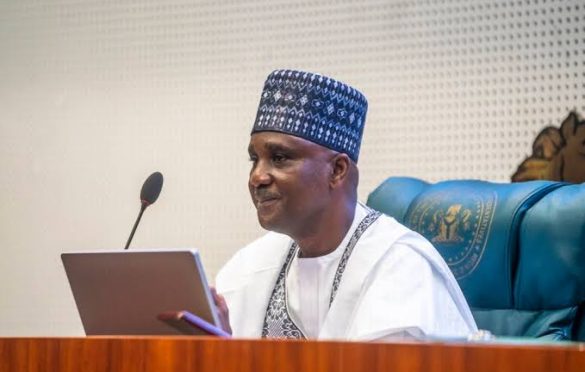
    The Speaker, House of Representatives, Hon. Tajudeen Abbas, Tuesday, presented a cheque for N18 million to the Enugu State Government as support to the victims of the January 25 petrol tanker explosion at Ugwu Onyeama on the Enugu-Onitsha Expressway, which claimed several lives.

    The Speaker described the incident as a huge loss, not only to the Government and people of Enugu State, but also the nation as a whole, noting that the support was in keeping with the tradition of the House of Representatives to ensure that governments and people of Nigeria do not stand alone in the face of such challenges.

    Abbas, who was represented by the Hon. Nnolim Nnaji-led Enugu State Caucus in the Green Chamber, which also had Hon. Matins Oke, Hon. Dennis Agbo, Hon. Mark Obetta, Hon. Anayo Onwuegbu, and Hon. Chimaobi Atu on its delegation, commended Mbah for his sterling leadership of the state and the prompt effort to comfort the families who lost their loved ones and support the injured.

    “On behalf of the Speaker of the House of Representatives, we commiserate with the Government and people of Enugu state over the tanker incident at Ugwu Onyeama. We acknowledge that you have done a lot to support both the injured and those who lost their loved ones.

    “So, this is a cheque for N18 million to assist the state to further ameliorate their losses and challenges occasioned by the incident. The Speaker sends his heartfelt condolences, once again. And you can continue to count on the support of the Speaker and the House,” Hon. Nnaji stated.

    Reacting, Governor Mbah thanked the Speaker and the Enugu State Caucus of the House of Representatives for the show of concern, assuring that the donation would go straight to the purpose for which it was made.

    “On behalf of the Government and people of Enugu State, I express profound gratitude and deep appreciation for this wonderful gesture. I recall that when the Ugwu Onyeama incident occurred, taking the lives of several of our loved ones, the Speaker called and assured that he was with us in prayers.

    “Today, he has also shown us that he is not only with us in prayers, but also materially. He has equally come to mourn with us. This cheque for N18 million will go a long way in cushioning the effect of the incident on those affected and their families.

    “Rest assured that as a government, we will ensure that this gets to them in a transparent, accountable, and just manner,” he stated.

  • ‘He was full of humanity,’ Gov Mbah Mourns Pope Francis

    …Consoles the Catholic faithful

    Governor of Enugu State, Dr. Peter Mbah, has joined the rest of the world in mourning the Catholic Pontiff and sovereign of the Vatican City, Pope Francis.

    Mbah described the late Pontiff as a man full of humanity, a reformer, and humble leader.

    In a statement he personally signed on Monday, the governor also described the Pope’s demise as a heavy loss, not only to the Catholic Church, but equally to the entire world.

    “His Holiness, Pope Francis, was full of humanity and lived as an epitome of meekness. A highly spiritual Pontiff, he chose a modest life over the glamour and privileges intrinsic in the papacy.

    “The first Jesuit Pope championed a number of liberal reforms, including the review of the Vatican constitution that accorded the lay Catholic and women a foothold on the central administration of the Mother Church

    “Importantly, His Holiness will be remembered for the promotion of global peace, one of his most outstanding legacies being the ‘Document on Human Fraternity for World Peace and Living Together,’ which he co-signed with the Grand Imam of Al-Azhar, Sheikh Ahmed el-Tayeb, on February 4, 2019.

    “Therefore, I am of the strong belief that a peaceful resolution of the raging conflicts around the world will stand as the greatest monument in honour of the Holy Father.

    “On behalf of the Government and good people of Enugu State, l join the over 1.4 billion members of the Catholic Church across the world to mourn His Holiness and pray for the peaceful repose of his kind soul.”

  • Tinubu returns to Nigeria

    Tinubu returns to Nigeria

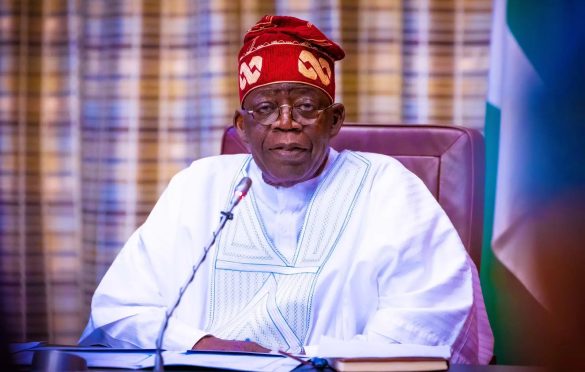
    President Bola Tinubu, on Monday night returned to Abuja after over two weeks working visit to Europe.

    President Tinubu, whose aircraft touched down at the Presidential Wing of the Nnamdi Azikiwe International Airport, Abuja, at 9:50pm, was received by senior officials of his administration.

    Recall that Tinubu departed Nigeria on Wednesday, April 2, and had spent some time in Paris, the capital of France, before heading to London.

    While in Europe, he maintained constant communication with key government officials, overseeing critical national matters, including directives to security chiefs to address emerging threats in some parts of the country.

    While in Paris, President Tinubu held a high-level meeting with the United States Department of State’s Senior Advisor for Africa, Mr. Massad Boulos.

    His discussions with the US official, it was gathered, focused on deepening bilateral collaboration aimed at enhancing regional security and promoting sustainable economic development across Africa.

    A key aspect of the talks included joint efforts to advance lasting peace in the eastern Democratic Republic of Congo (DRC), with emphasis on multilateral cooperation and the role of regional stakeholders.

    The meeting underscored Nigeria’s ongoing engagement with international partners in addressing complex security and development challenges across Africa.

    Among those who received the President on arrival were the Secretary to the Government of the Federation, SGF, Senator George Akume; Chief of Staff to the President, Rt. Hon. Femi Gbajabiamila; the National Security Adviser, NSA, Mallam Nuhu Ribadu; Minister of Budget and Economic Planning, Atiku Bagudu; and the Minister of the Federal Capital Territory, FCT, Nyesom Wike.

  • What comes now after the death of Pope Francis?

    Pope Francis has died at the age of 88, after 12 years as spiritual leader of the Roman Catholic Church.

    His death has triggered a mourning period which involves centuries-old rites.

    It has also set into motion the process for electing a new pontiff. A conclave can be expected to be held between 15 and 20 days after Francis’s death.

    This is what we can expect now.

    What happens immediately after the Pope dies?

    The official duties are carried out by the Pope’s camerlengo or chamberlain, currently Irish-American Cardinal Kevin Farrell.

    He is the one who officially confirms the death, with a doctor and death certificate. No autopsy is performed.

    The Vatican said on Easter Monday, hours after announcing his death, that Francis’s body would be laid in a coffin in a chapel at his Saint Martha residence at 20:00 local time (18:00 GMT). Farrell would preside over those rites, the Vatican said.

    It will also fall upon the camerlengo to lock and seal the Pope’s personal residence.

    Francis had not taken up apartments in the grand Apostolic Palace but smaller quarters in the form of a suite in the Vatican’s Saint Martha guesthouse.

    Farrell also has the responsibility to destroy the Pope’s ring and lead seal, which is used to authenticate official documents, so they cannot be used by anyone else.

    He and a team of three assisting cardinals will then set out the mourning schedule for Pope Francis – including the date of the funeral and burial.

    The period of mourning rites typically lasts nine days, and church rules say those events should begin between the fourth and sixth day after the Pope’s death.

    Farrell and his team will also decide when the Pope’s body will be moved into St Peter’s Basilica before burial so the public can pay their respects. On Monday afternoon, the Vatican said this transfer could happen as early as Wednesday morning but that cardinals would decide on Tuesday.

    What can we expect of the funeral?

    Pope Francis shunned much of the Church’s pomp and ceremony – so in keeping with that style he requested his body not be put on a raised platform, the traditional catafalque, in the middle of St Peter’s Basilica for public viewing.

    Instead the faithful coming to mourn will simply be able to look upon his body inside his coffin which will have the lid removed.

    His funeral, according to Church custom, should typically be held within four to six days after his death, with the funeral mass taking place in St Peter’s Square.

    Papal funerals have traditionally been elaborate affairs, but Pope Francis acted last year to simplify his arrangements.

    He will be the first Pope in more than a century not to be buried in the Vatican, in the crypt of St Peter’s Basilica – opting instead to be laid to rest in Rome’s Basilica of St Mary Major, near his favourite icon of the Madonna.

    Francis also requested to be buried in a simple wooden casket – unlike his predecessors who were buried in the traditional three nesting coffins made of cypress, lead and oak.

    How is a new Pope chosen?

    Pope Francis’s death sets into motion the political process for the Church to select a new leader.

    Cardinals from around the world will descend on the Vatican for the election, known as a conclave.

    Traditionally, the 15-day mourning period is observed before the conclave begins. However Francis’s predecessor Benedict changed the rules in 2013 to allow it to begin earlier if the cardinals wished. The vote typically takes place 15-20 days after the Pope’s death.

    The new Pope is voted on by the College of Cardinals – a group of the Church’s most senior officials, who are all men, all appointed by the Pope and who are usually all ordained bishops.

    There are currently 252 Catholic cardinals, but only 135 are eligible to cast ballots as those over the age of 80 can take part in debate but cannot vote.

    Meanwhile, between the Pope’s death and the election of his successor, the College of Cardinals governs the Church.

    They run the day-to-day business of the church but have limited power as much of the Church’s central administration stops work and typically, Vatican department heads resign from their positions until they are confirmed or replaced by the new Pope.

    How does the conclave run?

    The voting cardinals are locked into a period of pontiff selection where they are cut off from communication with the outside world – denied phones, the internet and newspapers – while in discussions and lobbying among themselves to decide the Church’s new leader.

    The conclave, or election, is held in strict secrecy inside the Sistine Chapel, famously painted by Michelangelo.

    A majority of two thirds plus one of the gathering is needed to agree on a new Pope, so multiple rounds of voting are often needed to get a result. After the first day, a secret ballot takes place twice a day and the process can often stretch to several days.

    In previous centuries, voting has gone on for weeks or months. Some cardinals have even died during conclaves.

    To the outside world, the only clue as to how it is progressing is the smoke that emerges from the chapel’s chimney, the product of the cardinals’ ballot papers being burned.

    Black smoke signals failure. White smoke means a new Pope has been chosen.

    How is the decision about the new Pope made public?

    After the white smoke goes up, the new Pope normally appears within an hour on the balcony overlooking St Peter’s Square.

    The senior cardinal participating in the conclave will announce the decision with the words “Habemus Papam” – Latin for “we have a Pope”.

    He will then introduce the new Pope by his chosen papal name, which may or may not be his original given name.

    For example, Pope Francis was born Jorge Mario Bergoglio, but he chose a different name for his papacy in honour of St Francis of Assisi.

    Who can become the Pope?

    In theory, any Roman Catholic man who has been baptised can be considered for election to become Pope.

    In practice, however, the cardinals prefer to select one of their own.

    In 2013, the Argentine-born Francis became the first pontiff to hail from South America – a region that accounts for around 28% of the world’s Catholics – and the southern hemisphere.

    Historical precedent suggests the cardinals are far more likely to pick a European – and especially an Italian. Of the 266 popes chosen to date, 217 have been from Italy.

    Several Vatican analysts have suggested it is possible Francis’s successor could come from outside Europe – not least because the late Pope appointed more than 140 cardinals from beyond the continent during his tenure.

    What does the Pope do?

    The Pope is the head of the Catholic Church. Roman Catholics believe he represents a direct line back to Jesus Christ. He is considered a living successor to St Peter, who was chief among Christ’s initial disciples, the Apostles.

    That gives him full and unhindered power over the entire Catholic Church and makes him an important source of authority for the world’s roughly 1.4 billion Catholics.

    While many Catholics often consult the Bible for guidance, they can also turn to the teachings of the Pope, which govern the Church’s beliefs and practices.

    About half of all Christians worldwide are Roman Catholics. Other denominations, including Protestants and Orthodox Christians, do not recognise the Pope’s authority.

    The Pope lives in Vatican City, the smallest independent state in the world. It is surrounded by the Italian capital, Rome.

    The Pope does not receive a salary, but all his travel costs and living expenses are paid for by the Vatican. BBC

  • Pope Francis dies at 88, Vatican says 

    Pope Francis, a voice for the poor who overcame fierce resistance to reshape the Catholic Church, has died at 88, the Vatican has announced.

    The pope’s death was announced on Monday morning by Cardinal Kevin Farrell, the Vatican camerlengo.

    “Dear brothers and sisters, with deep sorrow I must announce the death of our Holy Father Francis,” a statement from the camerlengo said.

    “At 7:35 this morning the Bishop of Rome, Francis, returned to the house of the Father. His whole life was dedicated to the service of the Lord and His Church.”

    Farrell continued, “He taught us to live the values of the Gospel with fidelity, courage and universal love, especially in favour of the poorest and most marginalized.”

    “With immense gratitude for his example as a true disciple of the Lord Jesus, we commend the soul of Pope Francis to the infinite merciful love of the Triune God,” the statement concluded.

    The announcement would have come as a shock to many, coming less than a day after the pope made a high-profile appearance in public.

    While he did not appear as engaged as usual on Sunday, he still managed to address a huge crowd of worshippers.

    Francis gave the traditional Easter blessing from the balcony of St. Peter’s Basilica in the Vatican, in what marked his highest-profile appearance yet since being discharged from hospital.

    Just before that, he held a brief meeting with US Vice President JD Vance.

    The death of Francis, who became the first Latin American pontiff in 2013 and was one of the oldest popes in the church’s history, came weeks after he was discharged from a Rome hospital having battled a life-threatening case of pneumonia in both lungs.

    His medical team said his condition had stabilized, allowing for him to continue his convalescence at his Casa Santa Marta residence back at the Vatican.

    Two weeks after leaving hospital, he delighted the faithful by making a surprise appearance at St. Peter’s Square.

    He has made a number of appearances since then, including spending 30 minutes at a prison in Rome on Thursday and a visit to St. Peter’s Basilica on Saturday evening.

    His death will open a debate about the future direction of the Catholic Church, with cardinals from across the globe expected to gather in Rome in the coming days to mourn the pontiff and then elect his successor.

    An outsider figure and the first non-European pontiff in nearly 1,300 years, Francis championed the poor, migrants and the environment, but divisions over same-sex relationships and how to tackle abuse scandals within the church persisted throughout his pontificate.

    The pope’s tireless advocacy for migrants saw him sharply criticize US President Donald Trump’s immigration deportation policies in the months before his death. Francis, whose pontificate was a counterweight to the rise of nationalist populism, often found himself under fire from powerful conservative Catholic forces in the US. CNN

  • Police Operatives Rescue 12 Kidnapped Victims, Recover N10.3m Cash, Arms, Ammunition in Sting Operations

    Police Operatives Rescue 12 Kidnapped Victims, Recover N10.3m Cash, Arms, Ammunition in Sting Operations

    …As IGP Commends Bravery, Resilience of Officers in combating crimes

    In a series of successful operations, the Nigeria Police Force has demonstrated its resolve in ensuring public safety and combating all forms of criminal activities. These operations, exemplified in several states across the country, have led to the arrest of 3 suspected terrorists, recovery of significant amounts of cash, arms and ammunition, and rescued of kidnapped victims

    In Imo State, operatives of the Force have sustained their operational momentum against criminal elements threatening public safety. On April 17, 2025, at approximately 1:02 AM, police operatives in synergy with local vigilante groups acted on credible intelligence and stormed a suspected IPOB/ESN hideout on Cameron Street, Ubahu, in Okigwe LGA. On sighting the operatives, the suspected terrorists opened fire, resulting in a gun battle during which three suspects identified as Onyekaba Ikenna Innocent ‘m’ 21yrs, Ugwu Ikenna ‘m’ 31yrs, and Ofor Kasarachi ‘m’ 37yrs were arrested. Recovered from the scene were one AK-47 rifle, two pump-action guns, eighteen live cartridges, mobile devices, laptops, and ₦10.3 million in cash suspected to be proceeds of kidnapping for ransom

    In another development in Edo State, following the news of the abduction of 10 students who were on their way to Backcock University for the annual GYC Africa conference on the 16th of April 2025, police operatives of the State Command immediately picked up the trail of these kidnappers, and upon encounter, engaged them in a fierce gun duel. One of the kidnappers was neutralized in the process, and the 10 victims were rescued unhurt. Similarly, on the 18th of April 2025 at about 21:15hrs, the command operatives also successfully rescued 2 other kidnapped victims who had been kidnapped on the 14th of April 2025, at their residence in Oluoke community of the State.

    The Inspector-General of Police, IGP Kayode Adeolu Egbetokun, Ph.D., NPM., has commended the dedication of these brave and gallant officers to upholding the law and exhibiting a high level of professionalism, while reaffirming the devotion of the Nigeria Police Force towards protecting the lives and property of every citizen and respect for human rights. The Nigeria Police Force remains steadfast in its commitment to ensuring the safety and security of all citizens and will continue to work tirelessly to combat crime in all its forms.

    ACP OLUMUYIWA ADEJOBI, mnipr, mipra, fCAI
    FORCE PUBLIC RELATIONS OFFICER,
    FORCE HEADQUARTERS,
    ABUJA.

    20TH APRIL 2025.

  • Let’s Use Easter to Pray for Compassionate Leaders – Obi

    Let’s Use Easter to Pray for Compassionate Leaders – Obi

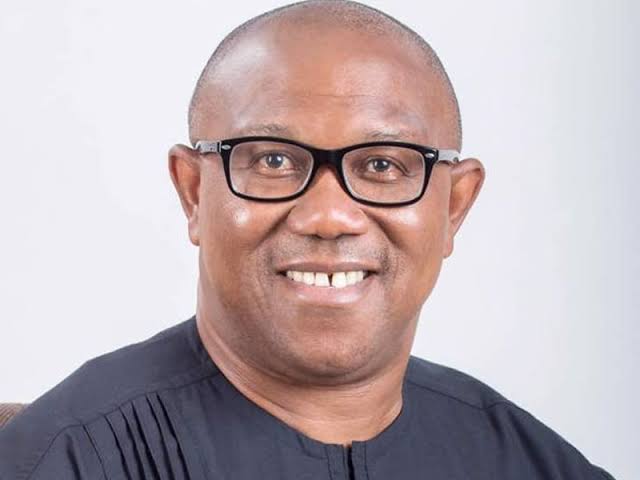
    The Presidential Candidate of the Labour Party in the 2023 election, Mr. Peter Obi, has called on Nigerian Christians to use the Easter period to pray for compassionate leaders—those who can truly share in the people’s pain.

    In his Easter message on Saturday, Obi stated that compassionate leaders are those who always consider the impact of their actions and inactions on the people.

    “At Easter, Christians celebrate the ultimate sacrifice Jesus Christ made for humanity. Therefore, there is no better time to pray for tender-hearted and caring leaders for our country than during Easter, when we remember Jesus as a remarkable and compassionate leader.”

    Obi observed that “what is currently evident in Nigeria—marked by widespread insecurity and numerous challenges—is a clear abdication of responsibility by insensitive and indifferent leaders”.

    He emphasised that Nigeria deserves better leadership—leaders who can harness the country’s abundant natural and human resources for the benefit of all.

    Finally, Obi encouraged Nigerians and members of the Obidient family across the globe not to despair in the face of adversity, affirming that “our Redeemer lives and is active—assuring us that a New Nigeria is possible.”

  • 12 rescued, 5 reported dead in Lagos building collapse

    12 rescued, 5 reported dead in Lagos building collapse

    A devastating collapse of a three-storey building at 9 & 10 Oremeta Street, Ojodu-Berger, on April 19, 2025, has claimed five lives, with 12 victims rescued alive as of 02:41 a.m. on Sunday, April 20.

    The Lagos State Emergency Management Agency (LASEMA), which confirmed the figures, reported that the deceased include three females and two adult males.

    The building, housing Equal Rights Restaurant and Bar, collapsed suddenly, trapping 17 people under debris. Rescue operations, initiated after distress alerts at 09:45 hrs on Saturday, remain ongoing.

    LASEMA’s Response Teams, including the Tiger and Cobra units from Alausa and Onipanu, are coordinating search and rescue efforts, supported by heavy equipment like excavators, payloaders, and hiabs, alongside light rescue tools such as concrete cutters and spreaders.

    The area has been cordoned off for safety, with multiple agencies, including LASAMBUS, LASTMA, Lagos State Fire and Rescue Service, NEMA, Nigeria Police Force, and the Nigerian Red Cross, in attendance.

    The cause of the collapse is still under investigation, amid Lagos’ troubling record of 19 building collapses in 2024.

    The incident follows a January 2025 collapse in Ikota that killed two and injured five, spotlighting ongoing concerns about unregulated construction.

    The Lagos State Building Control Agency (LASBCA) is on-site, and investigations are expected to probe compliance with safety standards. Community members and Ojodu LCDA representatives remain at the scene, supporting efforts to locate any remaining victims.

    Governor Babajide Sanwo-Olu has expressed condolences and reiterated the need for stricter building code enforcement. As rescue operations continue, the Lagos State Government has promised a thorough investigation to address accountability and prevent future tragedies. Sun

  • JAMB announces new date for UTME

    JAMB announces new date for UTME

    The Joint Admissions and Matriculation Board has announced a change in the commencement date of the 2025 Unified Tertiary Matriculation Examination.

    The exam is now scheduled to begin on April 24, 2025, instead of the previous April 25.

    This was disclosed in a statement signed by the JAMB’s Public Communication Advisor, Fabian Benjamin, and shared on the Board’s official X handle on Saturday.

    “The 2025 Unified Tertiary Matriculation Examination is now set to commence on Thursday, April 24, 2025, instead of the previously scheduled date of Friday, April 25, 2025.

    “This adjustment has been made to accommodate essential commitments by the board and its partner agencies,” the statement partly read.

    In preparation for the exam, JAMB also announced that prospective candidates could now print their Notification Slips containing crucial details such as the examination date, venue (centre), time, and other instructions necessary for a smooth examination experience. Punch

  • Gov. Soludo Calls For Sacrifice For a Better Nigeria in Easter Message

    Gov. Soludo Calls For Sacrifice For a Better Nigeria in Easter Message

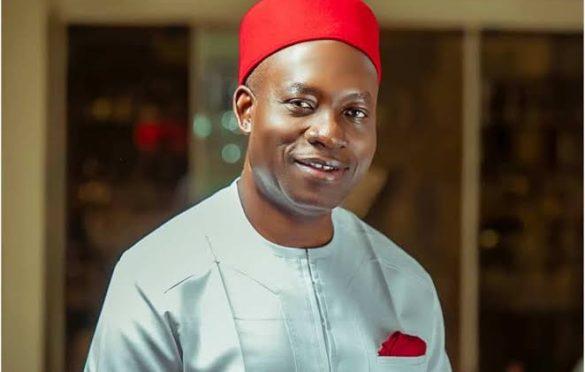
    The Governor of Anambra State, Professor Chukwuma Charles Soludo, has extended season’s greetings and warm congratulations to Christians in Anambra State and across Nigeria on the happy celebration of Easter, which marks the end of the Lent season as well as commemorates the crucifixion, death and resurrection of Jesus Christ.

    In his reflective goodwill message, signed by Christian Aburime, the governor’s Chief Press Secretary, Soludo commended Christians for their prayers and consistent devotion to the virtues of sacrifice, solemnity, humility, and spiritual revival exhibited during the Lent.

    Governor Soludo also lauded the inspiring significance of Easter’s lessons in selflessness, modesty, hope, renewal and harmony as personified by our Lord Jesus Christ, urging Christians to emulate Christ and take advantage of this season to reinforce the ideals of personal sacrifice for mutual tolerance and peaceful co-existence in our country.

    The Governor further emphasized that Easter’s lessons perfectly align with his administration’s vision for Anambra State as a peaceful, livable and progressive society where government policies promote social harmony, economic opportunity, and peace of mind for all.

    Governor Soludo, therefore joins millions across Nigeria and the world in wishing the Christendom a happy and reviving Easter celebration, with prayers that as Christ triumphed over death, there will emerge a new triumphant Nigeria where the noble dreams of our leaders and citizens will be realised for a stronger and better nation

  • Easter: Gov Mbah Harps on the Virtues of Love, Sacrifice, Peaceful Coexistence

    Easter: Gov Mbah Harps on the Virtues of Love, Sacrifice, Peaceful Coexistence

    Governor of Enugu State, Dr. Peter Mbah, has described Easter as a time for forgiveness, love, and strengthening of the bonds of unity across creeds and tribes.

    Mbah stated this in his Easter message to the people of Enugu State and the nation on Saturday.

    “As Christians in Nigeria join other Christian faithful across the world in celebrating the feast of Easter, I wish everyone a blissful celebration and pray that they experience the redemptive power of the resurrection.

    “Easter is a lesson in the lifelong benefits of sacrifice. It teaches us about the virtues of penitence and moderation.

    “Above all, Easter is a lesson in love and selflessness.

    “Easter reminds us of our common brotherhood and humanity. And its celebration is a call to forgiveness and peaceful coexistence.

    “Let us also use this solemn celebration to pray for Nigeria, and reach out in love across creeds, to strengthen our bonds and unity. That way, our dear country can overcome all its challenges,” he said.

    He wished the people of the state and all Nigerians a very happy Easter celebration.