Category: News

This is an optional category description

  • Gov Mbah Advocates Vocational Education To Tackle Rising Unemployment In Nigeria

    Gov Mbah Advocates Vocational Education To Tackle Rising Unemployment In Nigeria

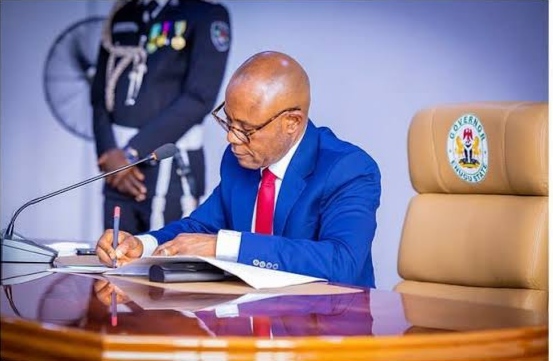
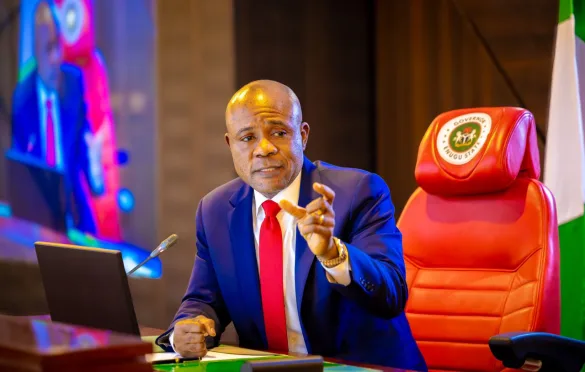
    The Enugu State Governor, Peter Mbah has said that there is an urgent need to massively invest in vocational education in order to tackle the rising wave of unemployment in Nigeria.

    Mbah made this known yesterday, during the South East and South South Interregional technical and vocational education and training (TVET) forum organized by the Science, Technical and Vocational Schools Management Board (STVSMB), Enugu State chapter with support from Deutsche Gesellschaft für Internationale Zusammenarbeit (GIZ).

    In his address, the governor, who was represented by the Secretary to the State government, Prof Chidiebere Onyia, said that the need for technical and vocational education is not only relevant but also responsive in the labour market demand which has become even more critical to addressing the challenges of youth unemployment in the country.

    “Across the regions, there is growing recognition that traditional academic pathways alone cannot address the employment needs of our growing youth population,”he said.

    Governor Mbah said that the theme of the summit, “From Classroom to Careers: Revolutionizing Technical Education for Regional Prosperity” is both critical and timely, especially given the growing rate of youth unemployment across the nation.

    “In Enugu State, we are committed to technical education and we have since embarked on the construction of technical schools across the three federal constituencies in the state,” further pointing at the ongoing construction of modern Government Technical Collegewhich with world-class facilities on completion.

    In a keynote address, Director of the Catholic Institute of Development, Justice and Peace (CIDJAP), Enugu, prof. Obiora Ike said that every year, thousands of students who graduate from universities are not assured of jobs because they do not have on-demand skills that they need to be productive in the labour market.

    He regretted that while there has been too much talk about technical education, there has been less action, nothing that we must “reimagine how we prepare our youth for the work ahead by bridging the gap between education and industry”.

    He lauded the state government for his strong commitment in matching words with action in the education sector, saying the interregional cooperation would foster shared knowledge and support technical and vocational skills’ acquisition among the nation’s growing young population.

    On her part, the Executive Chairman of STVSMB, Dr Amaka Ngene, urged participants to engage meaningfully, share their experiences and forge partnerships that will drive meaningful change and economic prosperity across the regions.

    “We hope that the forum will strengthen collaboration, drive innovation and shape policy reforms in technical and vocational education. We are united to bridging the gap between technical and vocational education and the labour market,” she added.

  • FG to launch satellites for Earth observation, security – Minister Nnaji

    FG to launch satellites for Earth observation, security – Minister Nnaji

    The Minister of Innovation, Science and Technology, Chief Uche Nnaji, on Wednesday said the Federal Executive Council has approved the launch of four satellites to aid Earth observation and the fight against insecurity in the country.

    Nnaji said this at the 22nd National Council on Innovation, Science and Technology in Abuja.

    The meeting which was held from May 12 to May 14, had as its theme “Research, Develop, Innovate and Commercialise: A Cycle for National Prosperity.”

    The minister said that the satellites consisted of three Earth Observation satellites and one Radar Aperture satellite.

    “The Renewed Hope Agenda of President Bola Tinubu is awake to the problems of Nigeria and they are being addressed.

    “Just last week, the Federal Executive Council approved that Nigeria launch four satellites, satellites that are worth millions of dollars, three Earth Observation satellites and one search satellite.

    “The search satellite is the one that will pick images both day, night, during rain, every time of the day and that is technology in play.

    “The military can use it effectively, unlike now that when we want to go and view Sambisa forest and some of these dungeons on gorilla warfare, we have to buy images and data,” he said.

    On the National Science, Technology and Innovation Policy, the minister said that there was an inter-ministerial committee on Research and Innovation that was reviewing it and strategising on the institution of the National Research and Innovation Fund.

    Nnaji said the cycle of Research, Development, Innovation and Commercialisation had built renowned economies and technological giants, adding that Nigeria should also tap into its potential.

    “As a country, we can no longer afford to ignore the widening gap between research and real-world impact.

    “We must rise up to this challenge, acknowledging that for decades, valuable research conducted in our
    universities and institutions has remained underutilised, disconnected from industries and policy.

    “Our talented young innovators, full of bold ideas and boundless creativity, have often lacked the structured support, financing, and mentorship required to move their innovations from concept to the market.

    “Let this 22nd edition of NCIST mark the beginning of a new chapter, one where every research has a roadmap to industry,” he said.

    According to him, the meeting should begin an era where every student sees innovation as a viable career, and where every invention finds its way to the market.

    He added, “Scientists and researchers must continue to push the frontiers of knowledge, private sector must strengthen collaboration with the academia through investments in Research and Development (R&D) .

    “Similarly, the government must build, enforce regulatory frameworks that protect, support and incentivise innovation at every level.”

    Nnaji said that the resolutions of the council would be presented to the FEC for adoption.

    The minister explained that the 22nd edition of the council, which was scheduled to be held in 2024, was postponed to 2025 due to some contingencies.

    He, however, promised that plans were underway for the 23rd edition for the restoration of the regular schedule.

    “We are committed to restoring the Council’s regular schedule and ensuring that the momentum built here today is not only sustained but accelerated in our collective drive toward a more innovative and prosperous Nigeria,” he said.

    The Permanent Secretary, Ministry of Innovation, Science and Technology, Mrs Esuabana Nko-Asanye, said the meeting was a call to action towards creating a dynamic ecosystem where all sectors work together towards building a prosperous Nigeria.

    She said stakeholders’ collaboration would address complex national challenges such as unemployment, insecurity, climate change and economic diversification.

    The Permanent Secretary said that from the beginning of the meeting, 109 memoranda were presented, which reflected diverse inputs from across all sectors of the economy.

    “These memoranda highlighted critical challenges, innovative proposals and actionable recommendations aimed at strengthening the role of science, technology and innovation in national development.

    “Key areas of focus included the commercialisation of indigenous research, enhancing funding mechanisms for research development and innovation capacity building in emerging technologies.

    ”The focus areas will improve inter-agency collaboration, liberating on innovation to address sector-specific challenges in health, agriculture, education, energy, politics, amongst others,” she said.

    According to her, the richness and diversity of these submissions underscore the growing recognition of science, technology and innovation as a cornerstone of Nigeria’s sustainable development.

    She said it also provided a clear road map for aligning national priorities with global trends.

    The Secretary to the Government of the Federation, Sen. George Akume, said that the theme of the meeting was timely, adding that it captured the need for a sustainable national development.

    Represented by Dr Morris Mbaeri, Permanent Secretary, General Services Office, Akume said that sustainable national development could only be achieved by building a resilient innovation ecosystem where research was purpose-driven.

    “This cycle is very essential in addressing real-world challenges and unlocking long-term prosperity.

    “I therefore urge all stakeholders, the academia, industry and government, to strengthen their collaboration and build an enduring partnership to drive the full cycle of RDIC,” he said.

    The President, African University of Science and Technology, Prof. Azikiwe Onwualu, recommended an increase in R&D spending to three per cent of the nation’s Gross Domestic Product.

    Onwualu also said the country required more RDIC clusters and hubs through the integration of academia, industry, and startups in project initiatives.

    “We should operationalise the National Research and Innovation Council Fund to coordinate RDIC efforts as envisaged in the STI policy,” he said. NAN
  • We Don’t  Earn Anything From Solid Minerals – Zamfara Gov Lawal

    We Don’t  Earn Anything From Solid Minerals – Zamfara Gov Lawal

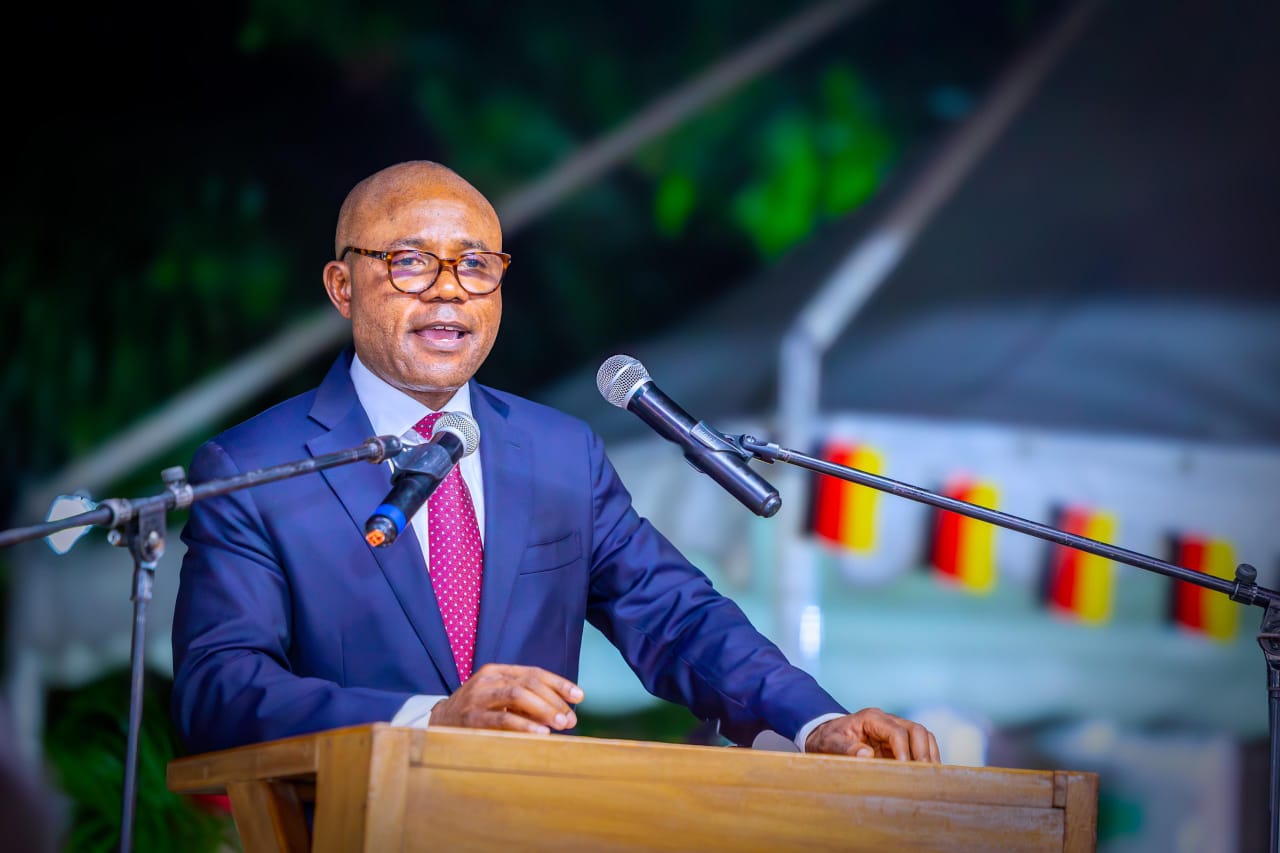
    The Governor of Zamfara State, Dauda Lawal, has expressed regret that, despite the state’s abundant deposits of solid minerals, it is currently not generating any revenue from them.

    However, he noted that the Federal Government’s lifting of the ban on solid minerals had given him the opportunity to engage with investors who could help develop the sector and boost the state’s revenue.

    “I am happy now that the Federal Government has lifted the ban on solid minerals, and if you follow the trend, just last month we had a meeting with some private sector that has investment in Zamfara State,” Governor Lawal said on Channels Television’s Politics Today on Wednesday.

    “That is exactly what we are doing now to try to bring the private sector to invest in the solid minerals aspect in collaboration with the state government as well as the Federal Government, and if that works out well, it means additional revenue for Zamfara State as well as the Federal Government.

    “But as we speak now, there is no single revenue as far as solid minerals are concerned that is coming to Zamfara State, which is unfortunate.”

    The governor is optimistic that once investments in solid minerals begin to yield results, Zamfara will no longer need to rely on allocations from the Federation Account Allocation Committee (FAAC) to cover its expenses.

    “And part of what I am doing now under my administration is to really look at this holistically and begin to put all the mechanisms in place and bring investors in Zamfara State that will be able to invest in solid minerals.

    “By the time we do that, I don’t think we will be relying on FAAC anymore, we will be more than comfortable so as to develop Zamfara State and move the state forward,” he said.

    On security, Zamfara is one of the states that have been battling insecurity in the northern part of Nigeria over the years, but Governor Lawal said he has been able to improve security in the state in the last two years.

    He said that upon assuming office, he established Community Protection Guards in all the Local Government Areas, who have been working alongside conventional security agencies to combat banditry in the state.

    The governor reiterated his refusal to negotiate with insurgents but added that anyone willing to surrender unconditionally is welcome to do so.

  • BREAKING:  JAMB admits errors in 2025 UTME, apologises

    BREAKING:  JAMB admits errors in 2025 UTME, apologises

    The Joint Admissions and Matriculation Board (JAMB) has admitted to errors that impacted the performance of candidates in the 2025 Unified Tertiary Matriculation Examination (UTME).

    The Board’s Registrar, Prof. Ishaq Oloyede, made the disclosure on Wednesday during a press briefing in Abuja.

    “What should have been a moment of joy has changed due to one or two errors,” Oloyede stated.

    The UTME, which is a key gateway into Nigeria’s tertiary institutions, assesses candidates in four subjects, including the compulsory Use of English and three others based on the student’s chosen field.

    Out of the 1.9 million candidates who sat for the exam, more than 1.5 million scored below 200 out of the total 400 marks — a result that has sparked widespread concern in the education sector.

    According to JAMB, 1,955,069 results were processed. Of this figure, only 4,756 candidates (0.24%) scored 320 and above, while 7,658 candidates (0.39%) scored between 300 and 319, bringing the total number of candidates who scored 300 and above to just 12,414 (0.63%).

    A further breakdown showed 73,441 candidates (3.76%) scored between 250 and 299, while 334,560 (17.11%) scored between 200 and 249.

    The majority — 983,187 candidates (50.29%) — scored between 160 and 199, which is often considered the minimum threshold for admission in many tertiary institutions.

    Additionally, 488,197 (24.97%) scored between 140 and 159; 57,419 (2.94%) scored between 120 and 139; 3,820 (0.20%) scored between 100 and 119; and 2,031 candidates (0.10%) scored below 100.

    In total, over 75% of the candidates scored below 200, considered the average mark for an examination graded over 400.

    Following the development, some affected candidates have threatened to take legal action against JAMB.

    JAMB Registrar, Prof. Ishaq Oloyede, told journalists at a press conference in Abuja, on Wednesday, that the error affected candidates in some states, and plans are underway for a new arrangement for such candidates.

    He said a total of 379,997 candidates in the five states of the South East geographical zone and Lagos were affected by the glitches in the 2025  UTME

  • Police Operatives Arrest Firearm Fabricator, Others in Separate Operations

    Police Operatives Arrest Firearm Fabricator, Others in Separate Operations

    Operatives of the Enugu State Police Command have arrested four male suspects in separate operations for offences of armed robbery, unlawful possession of firearms, cultism, and drug trafficking, SP Daniel Ndukwe, Enugu State Police Public Relations Officer, has confirmed.

    Two firearms and quantities of weeds suspected to be “Loud” were recovered, reflecting the proactive policing strategies of the Commissioner of Police, CP Mamman Bitrus Giwa, psc.

    According to Ndukwe, on May 9, 2025, operatives of the Crack Tactical Squad recovered a Beretta pistol from Ikechukwu Ugwele, alias “Angle 90,” aged 35, following his initial arrest and the recovery of weeds suspected to be a premium variant of marijuana popularly known as “Loud”. He confessed to several criminal activities and led operatives to the firearm’s recovery.

    Similarly, on May 8, 2025, Police Operatives of the Command’s Anti-Cultism Tactical Squad arrested Emmanuel Eze, alias “Camara,” aged 25, and recovered a locally made pistol. His arrest followed confessions by Uchenna Nwudi, alias “Asai,” aged 29, and Eze Chiadikobi, aged 32. Nwudi confessed to being a fabricator of firearms, while Chiadikobi is involved in transformer vandalism. The suspects confessed to being members of the Vikings Confraternity.

    All the suspects will be arraigned upon the conclusion of investigations.

    Recall that CP Giwa, during a press briefing on May 8, 2025, reported the arrest of 291 suspects since assuming office in March. These include the arrest of 42 suspects for armed robbery, 33 for kidnapping, 12 for murder, 6 for unlawful possession of firearms, 5 for rape and defilement, 44 for cultism, and 149 for other crimes. He also reported the rescue of 36 kidnapped victims and the recovery of 44 firearms, 173 rounds of ammunition, and 20 vehicular exhibits.

    The Commissioner has reaffirmed the Command’s resolve to sustain the fight against unrepentant criminals and urged citizens to remain cooperative and vigilant in ensuring public security and safety.

  • FCT’s 2025 appropriation bill scales second reading in Senate

    FCT’s 2025 appropriation bill scales second reading in Senate

    The Federal Capital Territory (FCT) N1.783 trillion statutory appropriation bill for 2025 on Wednesday scaled second reading in the Senate.

    The resolution of the Senate followed an executive communication from President Bola Ahmed Tinubu transmitted to the Senate, which was subsequently passed for first and second reading.

    Senate President Godswill Akpabio read the President’s letter of request seeking the Senate’s consideration and approval of the FCT 2025 Appropriation Bill.

    According to Tinubu’s letter, “The objective of the 2025 FCT Statutory Budget is for job creation, youth empowerment, social welfare services, infrastructure, as well as increasing productivity in agriculture.

    “Our objective is to lift as many of our citizens out of poverty as we can.”

    He said that of a total expenditure of N1,783,823,708,292  proposed for the year 2025, 85% is for capital expenditure, which is dedicated to the completion of ongoing projects, while 15% is for new capital projects.

    “This is to sustain the ongoing efforts of providing basic infrastructure and social amenities in the capital territory.”

  • Minister of Power says Nigeria needs $10bn annually for stable electricity

    Minister of Power says Nigeria needs $10bn annually for stable electricity

    The Minister of Power, Adebayo Adelabu, has stated that for Nigeria to achieve functional, reliable, and stable electricity, the country requires no less than 10 billion dollars annually for the next ten to twenty years.

    He made the disclosure during the commissioning of the 600kW and 3MW Solar PV Power Plant at the Nigerian Defence Academy, Kaduna, on Tuesday.

    He noted that there are foundational bottlenecks that have been experienced in the past, which must be addressed for this level of investment to be meaningful.

    “Number one is the legislative and policy foundation, which this administration has achieved by signing the Energy Bill into law.

    “This bill has ensured the liberalisation and decentralisation of the power sector, enabling all levels of government—federal, state, and local—to legally and morally play roles in the power sector for the benefit of their citizens at sub-national levels.

    “This has granted autonomy to more than eleven states, with more expected to follow. These states can now participate in the power sector, from generation to transmission, distribution, and even metering.”*

    “Secondly, we must address the infrastructure deficit, which has accumulated over the last 60 years due to a lack of maintenance and insufficient investment to revitalise our transmission grid.”

    The Minister also emphasised the need to bridge the over 50 per cent metering gap, stating that the Presidential Initiative aims to achieve this through the installation of 18 million meters over the next five years.

    He said the commissioning of the 600kW and 3MW Solar PV Power Plant at the prestigious Nigerian Defence Academy underscores the Federal Government’s resolve to tackle the electricity deficit.

    “These projects, implemented by the Federal Ministry of Power and the Rural Electrification Agency, not only underscore our commitment to improving electrification across key institutions in Nigeria, but they are also part of our broader mandate to diversify energy sources, expand access to clean and reliable electricity, and support critical sectors of national development, including education and security.

    “As an institution that combines academic rigour with military excellence, the Nigerian Defence Academy represents a strategic national asset that must be strengthened through sustainable infrastructure.

    “Powering the Academy with renewable energy aligns with our vision for a secure, self-reliant, and energy-efficient Nigeria.

    “It also reflects our commitment to President Bola Ahmed Tinubu’s Renewed Hope Agenda, which prioritises accelerated national development through universal energy access.”

    The Managing Director of the Rural Electrification Agency (REA), Abba Abubakar Aliyu, described the commissioning of the 2.5MW solar project as “a turning point in Nigeria’s journey towards energy access for learning institutions.”

    He noted that “the agency is not just commissioning a project, but rather commissioning social impact, research, and sustainable development.” Tribune

  • Nigeria’s Education Minister Announces Integration of AI in Curriculum Delivery 

    Nigeria’s Education Minister Announces Integration of AI in Curriculum Delivery 

    Federal Ministry of Education has announced the integration of Artificial Intelligence (AI), in curriculum delivery as part of ongoing reforms in the education sector, stressing that the Ministry is committed to delivering inclusive, future-ready education.

    In the same vein, the Ministry announced Nigeria’s target of integrating 10 million out-of-school children by 2027 as offshoot of education reform initiatives of the Federal Government’s which include the Hope for Quality Basic Education programme (Hope-Ed), backed by the World Bank and GPE, and the Nigeria Education Sector Renewal Initiative (NESRI) initiatives.

    Minister of Education, Dr. Tunji Alausa, made the announcement at the International Conference on Smart Education (ICSE) 2025 held at the Universal Basic Education (UBEC) Digital Resource Centre, Abuja.

    The conference was attended by delegates from several African countries including Benin, Cameroun, Conakry, Congo, Ivory Coast, Kenya, Sao Tome, Sierra Leone, Togo, among others.

    It kicked started with a strong reaffirmation of Nigeria’s commitment to leveraging digital technology for transforming basic education across the country.

    The high-level event, convened by UBEC in collaboration with the Korean International Cooperation Agency (KOICA), brought together policymakers, development partners, school administrators, teachers, and digital education experts from across Nigeria and beyond.

    Minister of Education, Dr. Alausa underscored the alignment of ICSE 2025 with President Bola Ahmed Tinubu’s Renewed Hope Agenda, emphasizing the centrality of human capital development.

    The minister called for an urgent re-engineering of the education system to convert Nigeria’s demographic strength into a digital dividend. “We must equip our children with 21st-century skills to avoid a demographic disaster,” he stated.

    In his goodwill remark, the Ambassador of the Republic of Korea to Nigeria, Mr. Kim Pankyu praised the strong collaboration between Korea and Nigeria in advancing smart education.

    He commended UBEC’s Smart Schools Programme and reaffirmed KOICA’s commitment to supporting Nigeria’s digital transformation in basic education.

    The Ambassador emphasised that Korea’s experience shows how digital education can be a driver of social inclusion and economic growth and expressed optimism about Nigeria’s potential to replicate similar success.

    Earlier, in her welcome remarks, UBEC Executive Secretary, Aisha Garba, noted that the conference was a strong reminder that innovation in education was no longer optional as it was imperative for our progress, inclusion, and global competitiveness.

    She stressed that the objectives of the conference which is to foster knowledge-sharing, addressing challenges in tech-based education, promoting scholarship, and accelerating development aligned deeply with UBEC’s mandate to ensure equitable, inclusive, and quality basic education for every Nigerian child.

    “In a world increasingly defined by technology, fulfilling this mandate demands that we rethink education delivery, reimagine learning environments, and embrace innovation to bridge learning gaps and unlock the potential of every learner.”

    She emphasized that the Commission had moved beyond simply introducing technology into schools to building a systematic, sustainable model for integrating digital innovation into teaching and learning that focused on empowering teachers and education managers with the skills and pedagogical strategies to transform classrooms into interactive, learner-centred spaces; creating culturally relevant digital resources aligned with Nigeria’s national curriculum.

    In her keynote address, Vice-Chancellor of Thomas Adewumi University, Oko, Kwara State, Prof. Francisca Oladipo commended UBEC and KOICA for hosting the event that reflects Nigeria’s readiness for the future, strongly asserting that smart education is not a luxury but a necessity to unlock Nigeria’s potential.

    “It requires all hands on deck from government to parents, teachers to tech innovators. Let this conference hold our leaders accountable and help us deliver on the Renewed Hope Agenda.”

    She identified Nigeria’s demographic reality projected to surpass 400 million by 2050 with 40 per cent under 15 as both a challenge and an opportunity.

    Despite the obstacles, Prof. Oladipo expressed optimism about the prospects for smart education in Nigeria pointing at expanding mobile access, growing EdTech innovation, and state-level initiatives in smart education in several states across the country such as Abia, Enugu, Jigawa and Niger as signals of progress.

    She also highlighted federal programmes like UBEC’s Teacher Internship Scheme and the National Digital Learning Policy as strategic enablers. Sun

  • Court to decide on Natasha’s Suspension suit on June 27

    Court to decide on Natasha’s Suspension suit on June 27

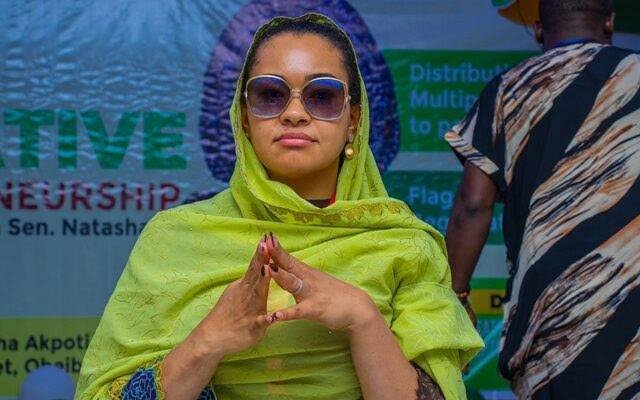
    Justice Binta Nyako of the Abuja division of the Federal High Court has fixed June 27 to deliver judgment on the suit filed by Senator Natasha Akpoti-Uduaghan against the Senate seeking to quash her six-month suspension.

    The judgment will equally resolve the issues raised in the contempt claims, as well as the preliminary objections raised by all the defendants challenging the jurisdiction of the court.

    Justice Nyako announced the date after counsel to all parties adopted their processes for and against the suit.

    “I want to believe that all processes are in. What I am going to do is to first of all look at the issues of contempt and take a decision on it. Then, I will look at the notices of preliminary objection. If they succeed, that is the end of the case and if they don’t, I will look at the originating summons filed by the plaintiff,” the judge said.

    The proceedings were witnessed by Senator Natasha, who was in attendance.

    The Kogi lawmaker instituted the action after she was summoned to appear before the disciplinary committee following a face-off with the Senate President during plenary on February 20.

    While protesting the alleged arbitrary change of her seating arrangement, the lawmaker repeatedly raised a point of order to be allowed to speak, even though the Senate President had overruled her.

    Miffed by her conduct, the Senate President referred her case to the Ethics Committee.

    However, Justice Obiora Egwuatu had on March 4, issued an interim order that stopped the Senate Committee on Ethics, Privileges and Public Petitions from proceeding with the disciplinary proceeding initiated against Senator Akpoti-Uduaghan over an allegation that she flouted legislative house rules.

    Justice Egwuatu held that the disciplinary process should be suspended pending the determination of the suit brought before him by the embattled female lawmaker.

    More so, Egwuatu gave defendants in the matter, 72 hours to show cause why it should not issue an order of interlocutory injunction to stop them from probing the plaintiff for alleged misconduct, without affording her the privileges stipulated in the 1999 Constitution, as amended, the Senate Standing Order 2023 and the Legislative Houses (Powers and Privileges) Act.

    The interim orders followed an ex parte application and an affidavit of urgency that the lawmaker brought before the court.

    However, despite the court’s orders, the Senate Committee held its meeting and suspended the plaintiff for six months.

    Justice Nyako took over the matter following the recusal of the previous judge, Egwuatu. In a ruling on March 25, he returned the case file after the Senate President accused him of bias.

    Cited as defendants in the suit marked: FHC/ABJ/CS/384/2025, are the Clerk of the National Assembly, the Senate and the Senate President, Mr. Godswill Akpabio, as well as the Chairman of the Senate Committee on Ethics, Privileges and Public Petitions, Nedamwen Imasuen.

    While the embattled lawmaker, through her team of lawyers, led by Mr. Jubril Okutepa urged the court to invalidate her suspension, which she said was done in disobedience to a valid court order, the defendants challenged the court’s jurisdiction to meddle in what they termed an internal affair of the Senate.

    More so, the defendants accused the plaintiff of breaching the court’s order on April 4, which gagged the parties from public utterances on the pending matter.

    Akpabio, through his lawyer, Mr. Kehinde Ogunwumiju, specifically drew the court’s attention to what he described as ‘a satirical apology’ the plaintiff tendered to him on her Facebook page.

    Akpabio insisted that the apology was a mockery of the court’s order.

    Meanwhile, before Nyako adjourned the matter for judgment, she said she would first consider the issue of contempt raised by the parties before deciding all the preliminary objections.

    The trial judge stressed that Natasha’s suit raised ‘recondite issues of law’ that would require judicial interpretation.

    Egwuatu issued an interim order on March 4 that stopped the Senate Committee on Ethics, Privileges and Public Petitions from proceeding with the disciplinary proceeding initiated against Akpoti-Uduaghan over an allegation that she flouted legislative house rules.

    He held that the disciplinary process should be suspended pending the determination of the suit brought before him by the embattled female lawmaker.

    More so, he gave defendants in the matter, 72 hours to show cause why it should not issue an order of interlocutory injunction to stop them from probing the plaintiff for alleged misconduct, without affording her the privileges stipulated in the 1999 Constitution, as amended, the Senate Standing Order 2023, and the Legislative Houses (Powers and Privileges) Act. Sun

  • Mbah Inaugurates Committee to End Gender-Based Violence in Enugu

    Mbah Inaugurates Committee to End Gender-Based Violence in Enugu

    The Enugu State government has inaugurated a steering committee to eliminate Gender-Based Violence, GBV, in the state, declaring zero tolerance for the social malaise.

    The inauguration took place at the Government House Enugu.

    The panel, which is chaired by the Commissioner for Children, Gender Affairs and Social Development, Mrs. Ngozi Enih, draws its membership from the Nigeria Police Force, Ministry of Agriculture and Agro Industrialisation, Ministry of Local Government, Rural Development and Chieftaincy Affairs, Ministry of Human Development and Poverty Reduction, Ministry of Trade, Investment and Industry, Ministry of Justice, Ministry of Health, Ministry of Education as well as the Civil Society.

    Inaugurating the panel known as the Steering Committee for Strengthening Institutional and Community Responses to End Gender-Based Violence/Domestication of Enugu State Gender Policy using the Oputa Panel approach, Governor Peter Mbah restated his administration’s commitment to not bringing perpetrators of GBV to book, but also putting in place proactive measures – activities, infrastructure, and systems in place to prevent them.

    Mbah, who was represented by the Secretary to the State Government, Prof. Chidiebere Onyia, said, “We take gender-based violence seriously. We have zero tolerance for it, and in Enugu State, we are ready to go the extra mile to deal with it.

    “If you notice, the government has selected people that are very committed to this goal. This is not an activity where we just want to check-off the list. We will track this. We will monitor this, and we will have quarterly engagements on the successes that this particular committee has achieved in terms of reference that we are going to send.

    “We will tighten those terms of reference indicators, so that we monitor what we are doing both in terms of cost input and the value added. It’s very important to us. Many people will be involved – civil society, the police and various ministries.”

    He however, said that the effort was to protect everyone, men and women alike, as GBV was not restricted to any gender.

    “The whole idea is to hold people responsible that are involved in matters relating to gender violence and deter people that by culture or by association get involved in that, protect women, protect our children, and in the case of violence against men, protect our men because most times we misconstrue gender violence to mean women, but it can also be men too.

    “We encourage our men to speak out and to make sure they understand that the policy that Enugu State is soon going to domesticate is for everyone, and not only for the female gender,” he stated.

    In her remark, Mrs. Enih, explained that the Oputa Panel approach was inspired by the need to cover all local peculiarities in domesticating the policy on GBV, restarting government’s confidence in the members of the panel.

    “The approach we are going to use is the Oputa Panel approach, and in the Oputa Panel approach, we are going to tour the 17 Local Government Areas to get firsthand information about what our people are going through because policy is meant for the people, and a policy should suit the people.

    “Again, every community has its peculiar problems, so that’s why the government decided that if we have to domesticate the gender policy, we have to hear from the people who own the policy and know the changes that they desire to see. That is the reason we are using this approach.

    “The committee members are to also serve as judges. As we gather this information from our people, we will come back to tailor it in a way to suit the people of Enugu State, and then our policy is ready.

    “We want the people to know that there is a gender policy for them. I can assure you that when the people are aware that there is such a policy, they will seek for the enforcement of that policy. So, this is not going to be one of those policies that will just lie on the shelf,” she said.

  • Oyo: No casualty as fire razes workshop, church

    Oyo: No casualty as fire razes workshop, church

    Property worth several millions of naira has been destroyed as fire gutted a furniture workshop and a church in Ibadan, the Oyo State capital.

    The incident occurred at Sogoye, Bode, in Ibadan, on Saturday.

    The state Chairman of Fire Services Agency and Special Adviser on Fire Services Reform to Governor Seyi Makinde, Moroof Akinwande confirmed this on Sunday, in Ibadan.

    He said, “The emergency call was reported at exactly 15:49hrs, on Saturday, May 10, 2025, through security trust fund toll-free 615 to the fire incident at the above-stated address.

    “The fire personnel led by ACFS Olubunmi promptly deployed to the scene of the incident, and on arrival, it was a prefabricated furniture workshop and a church that were affected by fire.

    “The fire was a result of the burning of the hips of sawdust by an unknown person, and spread to the workshop and church and setting them on fire. No casualty was recorded.”

    Akinwande, therefore, urged the public to desist from indiscriminate burning of refuse. Punch

  • Enugu Air, CNG Buses, Transport Terminals Take off in May

    Enugu Air, CNG Buses, Transport Terminals Take off in May

    …Govt set to develop tourist sites

    …Work starts on Nnamdi Azikiwe Stadium, Awgu Games Village in earnest

    The Enugu Air, CNG Mass Transit Programme, and the ultramodern transport terminals all built from scratch by the Governor Peter Administration are to be launched for operation before the second anniversary of the government.

    The government has also approved the development of the state’s tourism industry, while total transformation of the Nnamdi Azikiwe Stadium and Awgu Games Village will start in June to get them ready for the National Sports Festival to be hosted by the state in 2026.

    These were made known by the Commissioner for Transportation, Dr. Obi Ozor; Commissioner for Culture and Tourism, Dame Ugochi Madueke; Commissioner for Works and Infrastructure, Engr. Gerald Otiji; and Commissioner for Youth and Sports Development, Barr. Lloyd Ekweremadu after the State Executive Council meeting at the Government House, Enugu, at the weekend.

    Briefing Government House Correspondents, Ozor said, “We are starting off with the initial three aircraft and two of the aircraft are already on ground. The third one will be on ground by the end of this month. We are hoping to start the commercial operations before the second year anniversary of this administration.

    “You have also seen buses for the mass transit programme across the state. 50 of them are already parked at Okpara Square, and an additional 50 will be joining that fleet in the next few weeks. The 100 of them will be going into commercial operations before the end of this month, which is the second year anniversary.

    “Also, the bus terminals, two at Holy Ghost, one each at Gariki, Abakpa and Nsukka, will also be commissioned and go into commercial operations before the 29th of May, this year.”

    He added that the government planned to bring in the electric and CNG automotive manufacturing plant into Enugu as well as launch in the next 150 days the Enugu Smart Transport Programme, which would see to the injection of over 2,000 electric vehicles.

    Also briefing newsmen, Dame Madueke said funds would be invested in the tourism industry in phases.

    “We are going to have it in phases. For the first phase, we are having Awhum Waterfall, Nsude Pyramid where we are going to have the first canopy walkway in the South East. It measures about 600 metres, which will actually be the longest in Nigeria.

    “We also have Ngwo Pine Forest where we are having the first zipline in Nigeria. The zipline will measure about 300 metres. In the same Ngwo, we will have a big rotunda and a smaller rotunda. We have the Cross of Hope to be located at Okpatu. The Cross of Hope will be sitting 580 metres above sea level and the cross itself will measure about 50 metres, making it a total of about 630 metres above sea level. The cross will have about 15 floors with a lift.

    “At Awhum Waterfalls, we are going to have another canopy walkway and a boardwalk to preserve the ecosystem.

    “We equally have the Akwuke/Atakkwu Waterpark and Ovu Lake Golf and Resort at Akpawfu,” she stated.

    She explained that all the tourist sites would have experience centres, food courts and renewable energy, adding that tour buses would soon arrive to ensure ease of movement of tourists.

    Ahead of the 23rd edition of the National Sports Festival, Enugu 2026, Barr. Ekweremadu said the State Executive Council had equally directed the commencement of work both at the Nnamdi Azikiwe Stadium and Awgu Games Village not later than June.

    “We also briefed the council on the progress made in establishing a Lab for Animation for young people in Enugu State, which His Excellency will be commissioning soon. The lab is ready.

    “We are similarly working towards empowering over 2,100 young people across the state, who were trained around December last year. This empowerment will be coming up on the 12th of August, being the International Youth Day’” Ekweremadu concluded.