Category: Fashion

This is an optional category description

  • The Right Way to Wear Your Fragrance

    The Right Way to Wear Your Fragrance

    By Chidinma Prisca Elebe 

    Perfumes make up an essential part of our beauty routine and it’s one of the last things we add to complete our look before we step out for the day’s job or an appointment.

    Wearing a perfume should not be done with levity but with some skill and finesse to preserve the integrity of your scent.

    Why do we wear perfumes? Why is it necessary to wear perfumes or use a deodorant or body mist/body spray? This simple question can generate a lot of answers from various individuals but we basically wear perfumes for the same reason we wear clothes – confidence. Perfumes can make you feel great about yourself and nobody wants to smell all sweaty and offensive. The same way our clothes portray our personality is exactly the same way our perfumes reveal the kind of persons we are. Sometimes after a clean ensemble, looking all nice and gorgeous, when you pass a person, they tune their senses for what follows afterwards –your scent. I dare say your scent defines you in some way.

    There are certain factors to bear in mind when putting on a fragrance like; the right points to spray, the amount to be sprayed, the type of fragrance to be worn, where they should be worn to and your personality.

    The Right Points to Spray: Fragrances sit better on the warmest parts of the skin which are mostly the pulse points. These points include inside the wrists, chest/cleavage, base of the throat, inside the elbows, armpits, midriff, behind the earlobes and knees, even on the ankles surprisingly. These are areas where our veins sit closest to the skin surface.

    Ideally, when you use designer perfumes like Chanel, Dior, Tom Ford and the likes of them (other skin friendly perfumes), they can be sprayed directly on the skin. The only challenge with these kinds of fragrances is that they are quite expensive. The skin has a high affinity for oils and this attribute makes the skin an ideal binding channel for oils in perfumes. Please do not try to rub in perfumes after spritzing them to your skin; that way you break the molecules and make the scent dissipate faster. The warm nature of the skin helps diffuse the scent over time. I know by now you could be wondering if it is really safe as stated earlier to spray perfumes directly on your skin, and the answer is yes, but because perfumes that are easily available and affordable around here (Nigeria) are highly concentrated and harsh when they come in contact with the skin, creating a burning sensation or a sting for a moment, we can opt to spray from a distance or on to fabrics if that makes us feel safer.

    Besides, fabrics hold perfumes a little longer like the skin and that’s why we still perceive some scents even after laundry.

    The Right Amount: Okay! This is where we say “less is more”. There is no reason to be fully drenched in a whole bottle of perfume. Your perfume should attract people and flatter their sense of smell not the other way round. Your scent should rather be enjoyed and not offend people. It is offensive to use excessive perfume. It is also normal to check the container of the perfume you want to buy, check the concentration of the perfume, for example, body sprays have lower concentration than perfumes.

    Check whether you are buying ‘Eau de Parfum’ or ‘Eau de Toilette’. The concentration (heavy/light) of the sprays should be used as a guide on how best to wear them. For Eau de Cologne or Eau de Toilette (these are light and refreshing fragrances which are relatively cheap), use 3-4 sprays but for Eau de Parfum or Perfume or Extrait de Parfum (these are intense and heavy scents which are more expensive and last longer), use 1-2 sprays.

    Let us also bear it in mind that there are people around us with certain allergies and you don’t want to keep making people around you sneeze. When you spray excessive perfumes, you can also distract people from paying attention to your person. Specifically, wear a less saturated fragrance when going to a work place or for an interview so that your personality and skills will be the focus not your fragrance.

    The Right Way: Perfumes are better worn after a bath, best over a body lotion or a petroleum jelly to help preserve the scent and hold it from sinking into the skin pores. Perfumes can be used over body a lotion, that is immediately after applying your body lotion on the skin, perfumes can be sprayed for better attachment. A moisturized skin keeps the bouquet longer so it’s best to spray perfumes the moment you finish having a bath because your body is warm especially after a warm bath. This advice goes before saying that you shouldn’t use perfumes to cover bad odour. In a case of highly concentrated or harsh perfume, spray from about 5-8 inches away from the skin to avoid burning and any form of discomfort. This can also be applied when spraying on to jewelries or fabrics so that they do not get damaged by discoloration. Avoid applying oil based perfumes directly on your clothes because it can leave unpleasant stains behind but apply rather to the skin. Perfumes sprayed on dry skins are rather short lived. The lotion or petroleum jelly or body oil should be unscented or mildly scented so that it doesn’t interact badly with your perfume.

    Also use a less scented deodorant with your perfume so that they don’t give out a weird mix of fragrance. It is also nice to consider the fragrance of your body lotion when using perfumes because sometimes you might be using a body cream with a fragrance that can greatly prevent the full expression of your perfume. A clear example is shea-butter (okuma/ ori), when you are using unrefined shea-butter, you might have to consider a stronger perfume because of its unique smell.

    Classes of Fragrances
    There are different kinds of fragrances available but people choose the ones they prefer and connect with. Two individuals might not love the same fragrance because of the way they each feel about it. The human sense of smell is amazing and that’s why perfumes affect us on a psychological and physical level. It is said that Queen Cleopatra normally walks across a room filled with rose petals so the floral scent clings to her body in preparation to meet the King.

    A pleasant- and sweet-smelling perfume can evoke feelings of happiness in people. The use of perfume is a form of self expression; it shows who you are because some fragrances differentiate a person from another.

    Fragrances commonly found in perfumes include:

    Fresh: Perfumes with fresh fragrances contain notes of fresh/green fruits such as citrus, lemon, pineapple etc
    Floral: Perfumes in this category are blends of flowers such as rose, jasmine, violet, lily and lavender. These set of perfumes can be alluring and seductive. They envelope the person wearing them in the light sweetness

    Oriental: These perfumes are believed to originate from places far away than we can imagine. They have exotic fragrances and the most common fragrance in this category is cinnamon, vanilla and spices. These scents are common among the people that dare to be different.

    Creating a Signature Scent

    You can also create a signature scent for yourself by layering/mixing different fragrances that can complement each other – light and heavy (for example a regular body spray and a perfume).

    There is no reason that you cannot layer or mix two fragrances to achieve a unique scent because when you use one perfume over a long time you become too accustomed to the scent and will be tempted to spray more than required.

    Preservation Tips

    Perfumes should be stored away from the reach of sunlight, light, bathrooms, damp environments and away from places that are hot.

    They can be stored in the boxes they came in or in darker places for better preservation.

    My two cents: If you sweat too much, don’t forget to purchase an anti-perspirant and wear darker or neutral colours to hide the sweat.

  • HAIR (My Hair, My Identity)

    HAIR (My Hair, My Identity)

    By Chidinma Prisca Elebe

    A person’s hair is an extension of who they are. It represents personality, tribe, religion, beliefs, ideals and profession. Possessing hair or the lack of it is still a form of identity. There is a distinctive quality to our hairstyles that can be used to characterize a particular person. For example, you cannot compare the strong, kinky, coily black hair of a black man or woman with the curly/straight, soft, sometimes red/blonde/brunette shiny hair of a white man or woman (Caucasian). It can be used as a form of racial classification just like skin colour. African hair has fascinated other races because of its unique oily texture yet it becomes dry at the tips when oil is not applied. You might be surprised that African hair is not the strongest hair. Yes! Asians have the strongest hair type.

    You might be wondering why the fuss about hair but it doesn’t hurt to garner new knowledge about something so random like the hair. This can help do away with misconceptions, myths and abuse related to hair especially as Africans. The Nazarites for instance are required to wear their hair long without cutting. In the Holy book, Samson the Nazarite was consencrated by God and his hair was not to be cut short for any reason, we know the rest of that story. Hair signifies strength and fertility in many cultures while baldness might be associated with sterility.

    HAIR AS A PERSONALITY

    I remember getting a haircut at some point when I was much younger because a relaxer had badly damaged my scalp because of its tenderness; it was just heartbreaking seeing my once long beautiful hair was lying right there on the floor. This is not to say that our whole confidence and beauty should be attached to our hair or a part of our body, it should also come from the inside. This is just to show that our hair can affect our self esteem, pride and self-respect as individuals. Shaving your hair can symbolize a lot of things from being a hairstyle of choice to it symbolizing mourning/ punishment, rite of passage in some cultures. In some sports like swimming and track athletes, it’s advisable to keep the hair short. People can also be bald intentionally to improve performance. Similarly, in the military, it is required you wear short hair as a matter of discipline and practicality.

    Have you ever seen an aged man or woman with intermixed grey and black hair? Is it the same with a youngster that dyed his or her hair? I don’t think so. Your hair invariably shows how you want people to see you and think of you and essentially who you are. Have you ever seen a banker with dreadlocks? In this part of this world, people judge a person based on their looks. As a matter of fact, prejudice can arise because of a particular hairstyle. Hair can show your values and moral standing. Certain religions are required to carry certain hairstyles for various reasons.

    The manner in which you wear your hair can show your level of confidence. I know people that can never cut their hair because they feel the shape of their head is not so nice or they have difficulty growing their hair back as they think while some people do not even want stress and prefer to carry theirs short. Thus, the saying different strokes for different folks.

    HAIR AS EXPRESSION

    People in the arts have been observed to wear certain hairstyles which could be a signature. It is not surprising to see musical artists, actors and visual artists carrying uncommon hairstyles. This could be a form of expression just like ART. Footballers and tech guys are not left out from these unusual hairstyles. Our hairstyle is a way we express ourselves, our ideals and beliefs. Chimamanda Adichie and Lupita Nyongo as a case study have successfully spear headed African natural hair movement, propagating that a black woman’s hair is rich and beautiful even with its diverse texture. It is obvious black people lost their identity somewhere down the line over the years. The use of various harsh chemicals, heat application (hot combing and stretching) to the hair regularly have made us believe we can be anything but ourselves. I want to categorically say that there is nothing like bad hair. There can be a bad hairstyle or haircut but not a bad hair. I have heard people say my hair is just too strong or stubborn which they equate to being less desirable, this doesn’t still make a person’s hair bad.

    TIPS AND GUIDELINES FOR MAINTAINING GOOD HAIR AND HAIRSTYLE

    Hair like our height or complexion is part of our genetical make up. Below are a few tips to improve your hair health and choice of style.

    • Eat healthy by incorporating vegetables, fruits and drink lots of water for healthy hair growth. Even with the use of good hair care products, this goes a long way to help your hair look and feel great. Note that healthy hair is not just measured in hair length but in the texture, colour and fullness.
    • Use less heat and harsh chemicals on your hair.
    • Use essential oils on your hair.
    • Use a suitable comb or hair brush (preferably, wide tooth comb).
    • Wash your hair as often.
    • Take your own hair kit along with you to the salon (combs, brushes, clippers etc)
    • Do not copy another person’s hairstyle because you might not know the idea and belief behind their hair style and it may not be suitable for your personality or person as well.
    • Before making certain hairstyles, consider your career and profession. Is it permissible, appropriate or suitable?
    • Do not judge people solely based on their hairstyle because a person represents much more than their hair and wearing certain hairstyle does not make one incompetent or useless. Also, a person’s hairstyle does not reflect their worth.
    • Some cultures can be identified by their hairstyle; for example Himba women from Namibia or Fulani women.
  • How to maintain and take care of your clothes

    How to maintain and take care of your clothes

    By Chidinma Prisca Elebe 

    It is no news that certain people have decided to make the life of their fellow humans miserable by being vessels of foul smell. I mean, how can someone smell so bad as early as 7am in the morning on a bus? Did you not shower or have you worn those set of clothes again without washing them? Phew! I am here to help give you tips on how to take proper care of your clothes. I believe our clothes are valuable possessions and that’s why we use them daily.

    Odors cling to the skin for various reasons such as repetition of unwashed clothes drenched in sweat from the previous day(s) and sullied inner wears that desperately yearn for water, soap and sunlight. Please do not sniff your clothes to check if they can be repeated especially when you sweat so much and you know deep down that your cloth is dirty and smelling. It is easier to repeat clothes than wash them but there are repercussions to this attitude. One of them is that you will stink, make people to hold their breath when you pass, perhaps, you might not know whether people make jokes because of your stench.

    Personally, I would have advocated for a national association for laundry affairs with hygiene police but let’s calm down. All that being said, let’s take a look at how we can care for our clothes and ensure their longevity, not ruining them. It is essential to buy things we absolutely love because it gives us the essence to take care of them. Our clothes contribute to our level of confidence so its handling should not be taken lightly. Our clothes are an extension of whom we are.

    REASONS YOU SHOULD CARE FOR YOUR CLOTHES

    Unclean clothes will do you a lot of damage in ways you may not imagine. If you take care of an item for it to last long, you won’t need to buy a replacement in a short while. The “extra” cash can be channeled to other needs. It can also be a problem to your skin and cause you to spend more trying to treat skin problems. If you love your skin and would like to save some money from being spent unnecessarily, you have reasons to take care of your clothes already.

    Dirty clothes can have bacteria build ups which leads to really bad odors due to sweat produced and shedding of skin cells daily. Studies have shown that humans secrete more than a litre of sweat and release about 500 million skin cells per day. Are you shocked? I mean our skin is shed daily.

    Isovaleric acid is an acid produced by a skin bacterium known as Staphylococcus epidermidis which breaks down oils, sweat and amino acids on the skin to give off unpleasant smelly by-products. This acid is also found in beer that is poorly made so you see why your clothes will smell when they have been worn even once.

    Our bodies produce oils that help keep the skin moisturized and these oils can build up on clothes which can be reabsorbed by the skin and cause pore blockage leading to break outs such as acne (pimples or rashes due to infection transferred from dirty sheets, pillow cases and clothes.

    Unclean clothes including underwear can cause skin irritation which could result in itching. Please wash your underwear after every single use to avoid bacterial and fungal infections. Leaving our clothes and sheets for long without washing can also make the stains and odors become more difficult to remove, stick or become permanent or even lead to discoloration of clothes.

    SIMPLE STEPS TO CARING FOR YOUR CLOTHES

    It’s advised to wash new clothes before use because you do not know the level of germs it has come in contact with through handling and fittings by different people who may have had interests of purchasing that same piece of clothing before you. Imagine “buying” germs/ microorganisms and getting infected because of “new” clothes that you literally just purchased from a store. And because you may not certainly know the level of a person’s hygiene, it may be better to avoid sharing any form of clothing especially intimates except if you are willing to give them up for good.

    HOW TO WASH CLOTHES PROPERLY:

    Washing of clothes is a role that should not be neglected as habits of wearing dirty clothes can be detrimental in more ways than we can imagine. It is quite tempting to put all your clothes into a washer all at once but please resist doing so as it can cause your clothes to get ruined. Do not also overload your washing machine.

    Sort your clothes and wash them in batches according to colours and also how dirty they are. Start with light coloured ones and then move on to the dark ones but then we all know this. Besides trying to avoid colour transfer or staining of one fabric with another, sorting helps handle delicate clothing as it should.

    Detergents are meant to remove clothes and stains while disinfectants keep the germs away. Use mild rather than strong detergents and fewer chemicals. Excessive detergent while washing can leave residues and stains which can ruin your clothes and cause skin irritations. It can also be bad for your washing machine. Thorough/ multiple rinsing are hereby advised.

    Air dry your clothes if you can except in conditions where it is not suitable or the label says otherwise. Clothes should be air dried or if dried under direct sunlight, it should be removed immediately they are dry to avoid color fading. Desist from drying your clothes indoors. Most germs can be removed by sunlight. Clothes that are not properly dried spread infections and causes odour.

    To care for your washing machine and disinfect it, use hot water and bleach to clean the insides regularly.

    Use warm water or cool water rather than hot water to avoid discoloration and weakening of your fabrics. Cold water prevents shrinkage in clothes.

    It is advised that clothes should be washed inside out.

    Delicate clothing/ fabrics should be hand washed to retain its texture. Remember to empty your pockets before washing your clothes and close zippers too.

    Salts and chlorine breaks down fibers and elastic so things like swimwear should be washed off immediately after use.

    When washing shirts, close attention should be paid inside the collars to wash off makeup stains, sweat stains, lotions etc

    Sick people’s clothes should be washed in a different batch from those of other persons, in warm water to avoid exchange of pathogens.

    Make sure you air your clothes after every use to preserve its shelf life and reduce unpleasant odors in your space even if you are not ready to wash them. Remove stains as soon as possible even if it’s not laundry day but have it in mind that the longer time you leave out a stain on your cloth, the tougher the stain becomes.

    READ YOUR CLOTH LABELS

    Cloth labels are instructions by the manufacturer to the user. It is important to adhere to them in order to have maximum and optimum use of the cloth for a period of time. Care labels are not for fancy. They are there to put you through the best ways to handle your fabrics.

    Cloth labels help you know at what temperatures clothes should be washed or ironed, if a washing machine is suitable for it or not, if the clothing should be hand washed only, whether dry cleaning is suitable or not to avoid any form of damage and so on.

    IRONING OF CLOTHES

    If your clothes have designs like embroidery, stone embellishments or plastic designs; use a steam iron to straightening out your fabric instead.

    Avoid ironing stained parts of your clothes to avoid further spread and making the stain more difficult to remove.

    Different fabrics have varying temperatures that works for ironing do well to take note. Most irons have basic temperature settings from minimum to maximum temperature. For example, fabrics made of nylon or polyester should be ironed dry while silk and cotton should be made damp before ironing.

    Make sure that every stain is thoroughly washed away before ironing and make sure you have a spray bottle handy. It’s better to iron your shirts humid or use a steam iron to achieve this.

    For shirts, iron the collar, the cuff and then the body. Make sure to button completely and put in a plastic or cardboard band before packing to avoid creases

    STORAGE

    Make sure your clothes are completely dry before putting them in your wardrobe or closet. Damp clothes produce foul smells and can be a breeding ground for bacteria and fungi and you do not want any of those on your clothes. This can also attract termites into your wardrobe.

    Once in a while, air your closets by leaving your closet/ wardrobe door open to aid good circulation.

    Clothes with elastic should be given room to breathe to increase its shelf life. For under wears, empty perfume bottles can be put in between to help give it fresh smell and cool scent.

    Plastic containers kept in a cool dry place preserves clothes better than cardboard or wood boxes which have capability of damaging clothes over time but this plastic container should not be completely sealed/ covered. Your clothes need small room to breathe.

    T-shirts should be washed gently in cold water. Folding t-shirts in half once preserves its fluffiness and reduces creases. Avoid putting your t-shirts on a hanger because the gravity from hangers can make them stretch.

    Clothes such as sweaters and other heavy garments should be rolled up/ folded and put on a shelf. Clothes should be folded along the seams to reduce creasing

    A piling brush or comb or a lint roller for suits can help get rid of fibers that appear on your cloth over a period of use.

    CLOTHES AND HANGERS: Wooden hangers are way better for hanging your garments because it helps keep the shape and does not given them wrinkles. Avoid wire and plastic hangers the much you can.

    The width of your hanger should not be wider than the width of your shirt/ top shoulders so that you don’t over stretch them and cause them to sag or loose elasticity.

    Leave spaces between hung clothes especially when they are ironed to avoid wrinkles or rumpling.

    Put your washed shirts preferably on hangers and allow to air dry.

    EXTRA TIPS

    Keep a sewing kit handy to fix tiny rips, missing buttons, tears etc. the sewing kit can include needle, thread, clips/ scissors, mending glue or iron on mending fabric, extra buttons.

    Make sure your clothes are the last things you get into before stepping out to avoid make up stains or hairspray stain getting onto your clothes or you can wrap a towel around your shoulders if you wear your cloth before doing those things.

    A lot of us have excess clothes in our closets. We have both what we need and what we don’t actually need. We have clothes we may never wear, those we have worn once or twice, those we continuously wear without remembering to switch it. If you belong to this Category of persons, please declutter your closet once in awhile. The fewer cloths you have, the easier it is to manage your space and care for your belongings.

    Like the saying goes “Cleanliness is next to Godliness”.

  • Beauty Obsessions 

    Beauty Obsessions 

    By Chidinma Prisca Elebe

    Once upon a time, there lived a queen who had great obsession about her looks and she had this magical talking mirror she goes to when she feels insecure about her beauty and most of their conversations go thus: “Mirror, mirror on the wall, who is the fairest one of all” the queen inquires, and the mirror answers, “you are the fairest of all, O queen, the fairest our eyes have ever seen”. This response from the mirror continued for a while till another maiden more beautiful than the queen emerged in the land. This discovery made the queen furious and made her poison the lady so that she could still remain the most beautiful. This story is more than children’s fables. It reveals the extent some of us can go to look beautiful. Now this mirror reflects the queen’s insecurity and her obsession with her appearance. The queen was beautiful and didn’t really need constant reassurance from the mirror.

    This story underscores our constant need to outdo each other in trying to look more beautiful and attractive and a lot of us have become victims of these insecurities leading to low self esteem. People even go as far as body shaming others who they think does not fit into the new narrative of beautiful.

    This generation’s quest for attractiveness is endless. It transcends every imagination the lengths people will go to achieve “perfection”. Perhaps attractiveness has taken a different connotation in this generation. The definition of beauty keeps changing over the years: beauty was the thin, frail looking, big busted women in the 19th-20th Century and the bulky men.

    Presently, men are required to possess rock abs, sculpted and shredded physique like super heroes and women are also required to possess the hourglass figure also known as “ slim thick” comprising of big breasts, flat stomach and big bum. It’s obvious that our perceptions of beauty are quite dynamic and have led to a tremendous change in peoples nutrition and everyday lifestyle. The recent “fit fam” trend is an attestation to the health and body image awareness, people started engaging in strenuous exercises and ketogenic diets to acquire this recently appealing look. The consequence of this is the increased rate of anorexic patients including other health issues and low self esteem for people that can’t achieve their set out goal.

    Social media plays a huge role in this recent definition of beauty and the advancement in technology made it easy for people to take better pictures with their cameras, smart phones and post meticulously edited pictures and selfies on social media. One can even use these editing apps and filters to alter their complexion, facial symmetry and body shape to their preferred specifications and with just a click of an app, created beauty is out for the world to gaze upon. It is obvious that nearly everyone looks good on social media because we often present our best selves for the world to see.

    This new definition of beauty and perfection and has gripped our ladies like fever and becoming so contagious that a good number of Nigerian celebrities and celebrity wannabes have become obsessed with acquiring this figure that they are willing to go under the knife to alter their physical appearance. The social media is always awash with a huge number of people trying to achieve the looks of various celebrities, dolls. The western media plays a pivotal role in projecting these warped perceptions of beauty to the rest of world especially in Nigeria. The Kardashians, American female rappers and actresses were so influential that most young people were drawn to this hourglass image like people under some kind of spell. This development is evident in the annual data provided by the American Society for Aesthetic Plastic Surgery that shows a 64% increase in the rate of aesthetic plastic surgery over the years among women below 30 years old, with America and Brazil leading this recent trend.

    The society’s perception of beauty will always change. For instance, the American Board of Plastic Surgery observed a reduction of 14.9% in breast augmentation and 34.4% in implant removal (explanations). Breast augmentation surgery was once the mostly globally performed surgery with about 1,677,320 by 2017 but by 2019, a lot of women were removing their implants-these are cosmetic surgeries that were trending in the early 2000s. Obviously, one cannot keep up with these demands so when do we stop? Continuing with this trend of changing our bodies to conform to societal standards will never satisfy us, eroding our humanity in the process and exposing our wretchedness.

    It would be a shame that after spending huge sums of money to alter our physical appearance, we are yet to be satisfied with our self image because nothing changed on the inside. Our self image should stem from our individual differences and abilities, self acceptance involves being comfortable with yourself despite the state of your body because eventually everyone will get old and the skin will definitely lose its elasticity.

    Body positivity is more about being comfortable in your own skin and accepting that you are more than your looks. Obesity or being underweight is not healthy so just keep fit by exercising, eating the right kinds of food; do not forget to incorporate fruits and vegetables in your menu and drink a lot of water.

    Finally, I cannot wait to see the next thing this generation becomes obsessed as a yardstick to measure beauty and how these standards will be met.

  • Fashion Friday: You need an army of tools to guarantee a flawless Look and feel for your garments.

    Just like it takes a whole village to raise a child, just so you need an army of tools to guarantee a flawless Look and feel for your garments. I will introduce you to a host of them, but by the end of this post, I will share 2 secret ingredients with you that only a few designers know about that will never fail to upgrade your finish from Looking home-made to store-bought.

    TOOLS AND EQUIPMENT IN THE TAILORING WORKSHOP

    The tools and pieces of equipment in a tailoring workshop are divided into five main categories, namely:

    1. Tools for Marking and Measuring

    2. Tools for cutting

    3. Tools for pressing

    4. Tools for fitting

    5. Useful extras

    TOOLS FOR CUTTING

    SEAM RIPPER: It is used to remove unwanted seams from sewing projects. The longer sharp prong pushes into the seam, while the blade in between the two prongs cuts the thread.

    ROTARY CUTTER: It is used to cut through many layers of fabrics. Very useful for when you have bulk orders

    SCISSORS: Used for cutting fabric. it is important to have a separate one for cutting paper or thread so that it doesn’t get blunt

    CUTTING MAT: It is used with the rotary cutter so as to protect the working surface. it is self-healing and the blades of the rotary cutter won’t harm it

    LONG TABLE: A long table is invaluable in a tailoring workshop especially when working with long lengths of fabric

    TOOLS FOR MARKING AND MEASURING

    Tools for marking and measuring include:

    TAPE RULE: A flexible tape measure is useful to take measurements of the body or any three-dimensional item

    FLEXIBLE CURVE: Ideal for drawing curved lines, this can also be used to measure around awkward shapes.

    TAILORS CHALK: Often comes in a triangular shape, it is used to mark what you measured.

    PENCIL: A pencil is useful for marking patterns

    TRACING WHEEL: This is the quickest way to mark continuous lines. The dressmaker’s carbon is placed between the pattern and the fabric, and the tracing wheel is run along the lines to transfer lines of dots to the fabric.

    TOOLS FOR PRESSING

    Tools for pressing include:

    STEAM IRON: The holes on the surface of a steam iron provide steam that presses seams beautifully.

    MINI PRESSING BOARD: a mini pressing board is useful for pressing parts of garments that are narrow, i.e pants, or for smaller items like pockets, collars etc.

    TAILORS HAM: It is a rounded three-dimensional shape, the tailor’s ham is useful for pressing seams and awkward shapes.

    TOOLS FOR FITTING

    DRESS FORMS: Dress forms are useful for checking the fit of a garment before or after making it. they are sold in different sizes

    FULL-LENGTH MIRROR: It is useful for checking the general fit of garments

    USEFUL EXTRAS

    BOBBIN STORAGE

    THREAD RACK

    Now that you have learned some of these tools, its time for you to discover 2 secret tools top fashion designers use to guara ntee excellent finish every single time and how you can make it too, and start using it right away!

    Source: www.vanguardngr.com

  • How To Accessorize Your Outfit

    How To Accessorize Your Outfit

    By Chidinma Prisca Elebe 

    Accessories are extra items that contribute to a person’s outfit and also help achieve a complete look. Accessories have a way of transforming a basic look into a sophisticated style. Accessories can also tell a few things about one’s personality and identity.

    For the men, accessories are easy to pick and wear because they are quite limited and less flexible with choices. Accessories for men range from wristwatches, belts/ suspenders, sunglasses, cufflinks, shoes, bracelets, ties, etc., unlike the female folks who have a wide range of accessories which are actually a lot diverse and a bit complicated. These include scarves, shawls, hats, turban, sunglasses, handbags/ purses, cardigan, shoes, jackets, hats, jewelry (bangles, earrings, rings, watches, necklaces), belts, hair accessories (bands, pins), umbrellas to mention just a few.

    So, let’s get down to how to make your choice of accessories easy without fretting or sweating. For your accessories to help boost/perfect your look and your choice of outfit there are just a few rules to keep in mind.                                    

    For me, your choice of style and fashion should be dependent on the occasion/ event and your personality; yes! There are different accessories for several occasions or outings; for example, when attending formal meetings like a job interview, you are required to minimize bold or colorful accessories because you only need the attention of the interviewer focused on your person, and not on what you are putting on; that way you are heard (the interviewer pays more attention to what you say), and not just to be admired or despised for your choice of clothes of accessories. This also works for a presentation, too. Burial outings also demand understated accessories as you wouldn’t like to look like a fish out of the water in such situations.

    HELPFUL TIPS FOR YOUR ENSEMBLE (FOR WOMEN)

    • Remember that you can achieve several looks from one outfit by adding accessories.
    • Pay attention to colours when selecting your accessories. This will save you a lot of negative attention from the fashion police. If you are still weary on how to select/ mix and match colours, just stick to neutral colours (colours wey no get enemy) like black, ash/grey, khaki colour or white. Things like black handbag, silver earrings and necklaces, brown or black bracelet or beads can always come through for you. In a case you want to experiment with colours, remember the colour wheel and its rules (you can match opposite colours on the colour wheel or complement with neighbouring colours) and also avoid wearing more than three colours of accessories (this rule will guide you).

    ACCESSORIES/ ITEMS TO SPICE UP YOUR LOOK

    • Wristwatches: for women, watches with a smaller face and not too larger bands are more suitable even though choices might differ according to individuals. Also, metal band watches are classier and versatile as they go with a lot of outfit while leather watches are nice and stylish, yet they need to match any other leather you are wearing. You can still wear other colours of wristwatch but be sure it matches or complements your outfit.Do not wear a sports watch (those watches with rubber/plastic) for a business or formal meeting because it depicts casual or sports sense. You can wear a black metal (chain) watch or have those watches with several band colours to aid your style generally. And your watch can be tight but not tight as to leave an imprint or markings when you remove them; loose not sloppy.
    • Handbags: the length of the strap of a handbag shows where you can wear/ carry them. For instance, shoulder bags are to be worn on the shoulder, on the elbow or across the body or even as clutch. You shouldn’t worry so much on the colours to match if you keep to the first tip stated above. You can match it with practically anything on your outfit like scarf, shoes, and clothes or not. Remember that handbags are all about proportion. For example, if you are a slim lady, you should avoid too small bags but embrace medium to large bags. If you are on the petite/short side avoid big bags as they will make you look shorter and if you are busty, you can wear bags with long straps to draw attention away from your assets. Just remember handbags are our best and necessary accessory.
    • Sunglasses: the key to wearing the right sunglasses will be your face shape though there are other rules, but they aren’t cast in stone. Do you know that your sunglasses shouldn’t necessarily cover your eyebrow, they can accentuate the arch (if you have one) of your eyebrows. Generally, from small frame to oversized glasses there is something for everyone in sunglasses department, below are a few rules to stick to when choosing sunglasses (sunshades).
    1. If you have an oval face, i.e. the width of your face is shorter than the length and you possess a narrow jaw and a broad forehead then you can wear almost all kinds of sunglasses just make sure your eyebrows are visible.
    2. If you have a round face, i.e. the length and width of your face are almost the same size, and then you can wear oversized glasses and any glasses that make your face look longer.
    3. When you wear glasses, it should rest on the bridge of your nose not on your cheek and not move when you’re smiling.
    4. Your eye should appear towards the top of the sunglasses and more space beneath and you shouldn’t wear glasses that are too wide.
    5. Remember that there are several frame colours for sunglasses.It would be wise you know your personality to help your choices e.g are you trying to make a fashion statement or just to wear a simple glasses in peace?
    • Beads: beads are ornamental objects that are made from various materials such as plastic, pearl, glass, shell, stone, wood, etc. They exude creativity and show cultural diversity while they can equally be stylish when worn around the neck. These are occasionally worn for weddings/traditional weddings, christening, church services, funeral, etc. They have variety of colours/shapes/sizes and have holes at both end that helps in threading them. Beads are beautiful accessories that can be quite indispensible for some African women. You can match them with your outfit or contrast them. Beads can give you a royal look and showcase elegance and style.

     ACCESSORIES FOR MEN

    Men have limited options when it comes to accessorizing but every gentleman should accessorize because it differentiates men of style and class. We will just talk about three basic accessories for men amongst many others.

    Watches: watches aren’t just for checking time, they can add to the beauty of an outfit. Do you know that in formal occasions or black tie events, you shouldn’t wear a watch? Even if you have to wear one then you don’t need to check time because it will appear the event is either boring or you aren’t interested. Nonetheless, watches are a reflection of a man’s personality and his fashion sense. There are a few tips for men to spice up their style!

    1. Don’t wear a digital watch to formal events especially those ones with rubber bands
    2. You can wear a leather watch for extremely formal occasions, just make sure it matches with other leather accessories on your outfit, such as belts or shoes. Also, bear in mind that black leather band is more formal than brown leather watches.
    3. Watches with metal straps like gold, silver, platinum, titanium can be worn for several occasions and you can opt to match them with other metals in your outfit like belt buckle, rings, cufflinks, etc.
    4. If you are going to be participating in a sports or other physical activity, you should wear a sports watch which can be digital or analog (chronograph) because they have features (complications) like stopwatch to measure time intervals during an event/activity.
    5. You can match silver watches with black shoes and gold watches with brown/beige shoes, just ensure that the colours are close to each other.

    Belts: Belts are both practical and stylish! They hold your trousers to your waist and do much more like embellish your outfit, below are tips on how to wear them.

    1. It is necessary to wear your belts at all times especially if you must tuck in your shirts
    2. If you are a large man and you are attending a formal occasion, you can go for a suspender
    3. Match the metals in your belt with other metals in your outfit like watch, shoe buckle especially when your shirt is tucked in.
    4. Your belt should match your shoes.
    5. Your belt shouldn’t be too long. It should be just 1-2 inches longer than your trousers waist, that is to say; if you wear 38-39 inches (waist measurement), you should wear a belt of about 40-41 inch.
    6. Buy a good (durable) leather belt because you will reap the benefit for years to come.

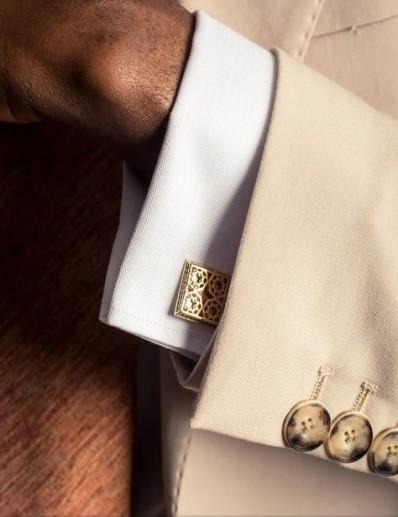
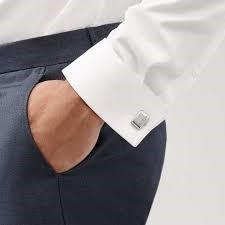
    Cufflinks: these are simple metals with intricate designs. They are timeless accessories necessary for a gentleman to help achieve a clean and luxurious look. Most Nigerian men wear cufflinks only with their senator traditional wears, but cufflinks are both decorative and practical. There are certain shirts (shirts with French cuffs) that require these beautiful metal pieces to complete an outfit and also make you look smart. Below are things to keep in mind about cufflinks:

    1. The colour of your cufflinks should be similar to the colour of your shirt e.g. a black/silver cufflinks with a dark blue/black shirt. This is not a rule though; a silver cufflinks can complement almost any shirt.
    2. You can own a silver and gold cufflinks because they are quite versatile and can match with several outfits.
    3. Feel free to mix and match colours with your cufflinks as there are a variety of colours to choose from.

    Finally, I always say that in all these things, confidence is the key because it doesn’t matter what you put on or how you do it, just don’t leave your house without confidence!