Author: Editor

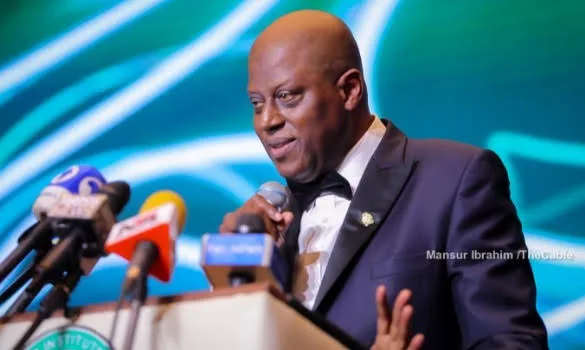
  • CBN Steps Up Bank Checks to Block Terrorism Financing

    CBN Steps Up Bank Checks to Block Terrorism Financing

    Precious Nwonu, Enugu

    The Central Bank of Nigeria (CBN) has rolled out a stronger supervisory framework aimed at deterring the use of Nigerian banks and financial institutions for terrorism financing and other financial abuses.

    In an official statement, the apex bank’s Acting Director of the Corporate Communications and Investor Relations Department, Hakama Sidi-Ali, announced that the CBN has made terrorism financing supervision one of its foremost current priorities. This aggressive focus forms part of the bank’s ongoing commitment to thoroughly protect the Nigerian financial system from abuse by illicit actors.

    Sidi-Ali explained that this newly reinforced push explicitly covers four broad operational areas: how financial institutions manage terrorism financing risk, how they monitor transactions for signs of terrorism financing, how they execute targeted financial sanctions, and how they report suspicious transactions linked to terrorism. Rather than sitting back and waiting for problems to surface on their own, the apex bank plans to implement a strict, risk-based approach, ensuring that banks and institutions seen as more exposed to these risks will attract closer supervisory attention.

    “This supervisory focus also supports Nigeria’s ongoing domestic and international cooperation on counter-terrorism financing, counter-proliferation financing, financial integrity, and the protection of the financial system. Further supervisory engagement will be undertaken as appropriate,” Sidi-Ali stated.

    According to her, the bank will continue to apply a risk-based supervisory approach, utilizing both on-site and off-site engagements.

    This strategy is designed to enforce highly effective Anti-Money Laundering, Combating the Financing of Terrorism, and Countering Proliferation Financing (AML/CFT/CPF) controls across the financial sector, in strict alignment with existing legal and regulatory obligations. She added that further supervisory engagement will be undertaken as appropriate, indicating that additional enforcement steps could follow depending on what the CBN’s checks turn up.

    In tandem with these regulations and in line with the provisions of the Terrorism Prevention and Prohibition Act (TPPA), 2022, the Nigeria Sanctions Committee (NSC) recently designated six individuals and three entities as terrorist financiers, subsequently adding them to the official Nigeria Sanctions List.
  • FG Returns 1m Out-of-School Children to Classrooms in 20 Months

    FG Returns 1m Out-of-School Children to Classrooms in 20 Months

    … UNESCO representative to Nigeria, Prof. Da Rosa pledged UNESCO’s unwavering support for Nigeria’s educational

    Precious Nwonu, Enugu

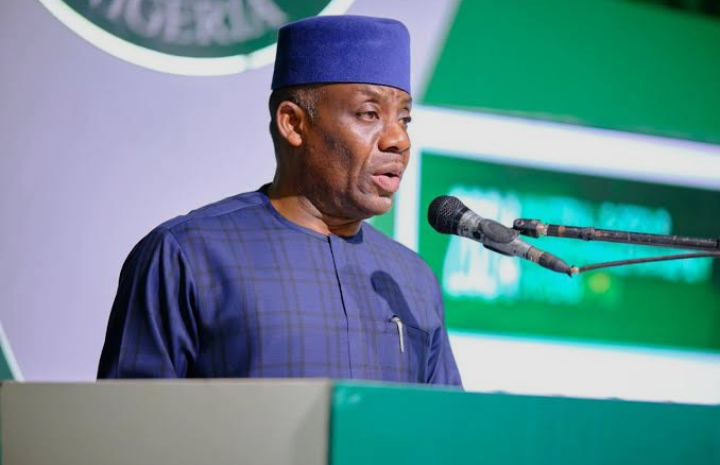
    The Federal Government has successfully returned more than one million out-of-school children to classrooms over the last 20 months as part of its ongoing strategies to tackle Nigeria’s educational crisis, the Minister of Education, Dr. Tunji Alausa, has revealed.

    The Minister also disclosed that nearly 6.7 million girls have benefited from various government interventions specifically designed to expand access to learning and keep children enrolled in schools.

    Dr. Alausa shared these details in Abuja during a courtesy visit from the newly appointed United Nations Educational, Scientific and Cultural Organisation (UNESCO) Country Representative to Nigeria, Prof. Isaiah Barreto Da Rosa.

    He noted that these metrics reflect the government’s relentless drive to overhaul the education sector by widening access, lifting learning outcomes, and removing the chronic barriers keeping millions of Nigerian children out of the formal school system.

    However, the Minister cautioned against tilting intervention frameworks heavily toward a single gender, explaining that while progress in girl-child education must be aggressively sustained, rising attention must also be paid to boys who face a high risk of dropping out or being entirely excluded from formal education.

    “We must sustain the gains we have made with the girl-child, but we also need to pay attention to the boy-child,” Dr. Alausa stated.

    He maintained that Nigeria’s human capital development goals can only be fully realised when every child, regardless of gender or socio-economic background, has access to quality schooling and opportunities to acquire relevant skills.

    He identified six core priority pillars driving the ministry’s current structural reforms: Technical and Vocational Education and Training (TVET); Science, Technology, Engineering and Mathematics (STEM); the reintegration of out-of-school children; data and digitalisation; girl-child education; and rigorous quality assurance.

    The Minister added that the government is heavily investing in practical skills development, modern technology, and comprehensive teacher training to produce graduates who can successfully compete in a rapidly transforming economy.

    He explained that enhanced, high-fidelity education data is increasingly being utilized to map out areas of high need, target state interventions, and accurately measure long-term impacts, rather than relying on estimates that could severely distort policy planning.

    On the critical front of teacher development, Dr. Alausa welcomed UNESCO’s technical support for the ministry’s Accelerated Teacher Professional Programme (ATPP), which targets the upskilling of one million in-service teachers.

    He also formally acknowledged the agency’s assistance in TVET assessment, digital transformation, education for peace, and media and information literacy.

    The Minister actively called for a deeper operational alliance with UNESCO, pushing the body to align its external interventions directly with the Federal Government’s education reform blueprint to completely avoid a duplication of efforts and guarantee measurable results.

    “We want partnerships that complement what Nigeria is already doing and help us deliver faster and better results,” the Minister emphasized.

    Dr. Alausa assured the visiting delegation that the government will continue to combine its domestic resources with strategic international partnerships to expand schooling access, raise education quality, and equip young Nigerians with the exact skills required for national development.

    Earlier in the meeting, Prof. Da Rosa pledged UNESCO’s unwavering support for Nigeria’s educational transformation agenda, describing the organization as a dedicated technical partner fully prepared to deploy its global expertise to areas where the country requires urgent help. He recalled UNESCO’s deep, long-standing engagement with Nigeria dating back to the 1960s, spanning the critical sectors of education, science, culture, communication, and information.

    Prof. Da Rosa highly commended the Ministry of Education’s progress in digitising education data, stressing that reliable, verified statistics are entirely indispensable to effective planning, policy formulation, and successful execution. He reaffirmed that UNESCO stands ready to deepen its collaboration with Nigeria in TVET, teacher development, and specialised programmes aimed at returning out-of-school children to the classroom.

    According to the Country Representative, UNESCO-supported programmes have already trained more than 28,000 teachers across various states and successfully reached over 1.7 million students.

    Prof. Da Rosa concluded by noting that the organization’s highly specialized institutes remain fully available to provide any further technical expertise necessary to back Nigeria’s education reforms.

  • FG Clarifies UK Passport Fees, Says No Hidden Charges

    Dr. Olubunmi Tunji-Ojo

    The Federal Government has expressed deep concern over the inconveniences currently being experienced by Nigerians residing in the United Kingdom regarding the application and processing of their international passports.

    The Minister of Interior, Dr. Olubunmi Tunji-Ojo while addressing in a statement on Monday by his Special Adviser on Media and Publicity, Alao Babatunde said that these concerns are being addressed.

    He noted that the operational hitches were reported during the ongoing special passport intervention exercise in the UK promoting the government to initiated a specific programme to provide broader options and significantly ease the administrative burden for citizens in the diaspora who are seeking to seamlessly renew or acquire their travel documents.

    The minister categorically clarified the financial requirements for the passport processing, distancing the authorities from any arbitrary or unofficial levies.

    He maintained that the intervention exercise does not attract any additional costs beyond the legally stipulated official fees.

    “It is therefore necessary to clarify that this process does not come with extra cost different from the official fees of $150 and $230 for a five year and ten year validity passports respectively, exclusive of bank charges,” the statement read in part.

    Tunji-Ojo strongly emphasised that neither the Ministry of Interior nor the Nigeria Immigration Service (NIS) has authorised, endorsed, or introduced any hidden charges outside the officially recognised passport fees.

    This timely clarification comes amid growing public concerns and complaints from applicants regarding suspected exploitation and administrative bottlenecks during the ongoing special intervention programme.

    To swiftly resolve the operational difficulties and ensure a smooth, transparent experience for Nigerians in the diaspora, the Interior Minister revealed that high-level strategic consultations are currently underway with the Ministry of Foreign Affairs.

    Tunji-Ojo assured affected applicants that “Consultations are ongoing with the Ministry of Foreign Affairs to ensure that any inconveniences during this process do not persist any longer,”

    Reaffirming the current administration’s dedication to the welfare of its citizens, the minister noted that the government remains steadfast in its mandate of delivering efficient public services globally and ” has demonstrated high level of responsibility to Nigerians home and abroad, and remains committed to its promises of providing succour to all,” he stated.

    Furthermore, to bypass the physical hurdles associated with traditional application processes, the government advised applicants to explore digital alternatives.

    Tunji-Ojo urged Nigerians in the UK to leverage the newly implemented, seamless contactless biometric passport application system to avoid unnecessary delays and enhance efficiency.

  • ‘Call Governors to Order’ – Obi Demands Security Action After Benue Blockade

    ‘Call Governors to Order’ – Obi Demands Security Action After Benue Blockade

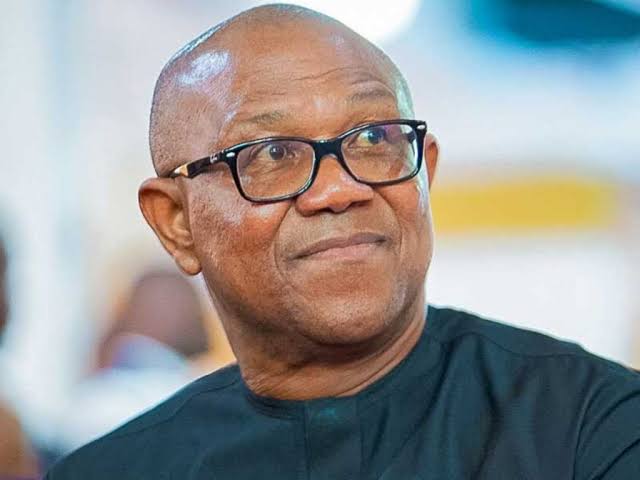
    Presidential Candidate of the Nigeria Democratic Congress (NDC), Peter Obi, has called on the Inspector-General of Police and the Director-General of the Department of State Services (DSS) to intervene following the disruption of his planned visit to Yelewata community in Benue State.

    Obi arrived in Makurdi on Tuesday morning and was heading for Yelewata in Guma Local Government Area, where he had planned to sympathise with families affected by the June 13, 2025, armed attack and make personal donations to victims.

    However, his convoy was stopped by a group of Benue youths along the Makurdi-Gboko Road, less than two kilometres from the airport.

    Chanting, “Obi go back, Obi go back”, some of the youths wielding sticks, reportedly threw stones as security personnel deployed to the area watched the confrontation.

    Following the incident, Obi and members of his team turned back and returned to the airport. He subsequently left the state without visiting Yelewata.

    Speaking before his departure, the former Anambra State governor described the incident as “ridiculous” and “very, very worrisome,” saying he had travelled to Benue to condole with families affected by the killings and offer support to victims.

    “We arrived Benue, Makurdi precisely this morning at 9am, on our way to the Yelewata community to condole and show solidarity to the families affected by last year’s killings,” Obi said.

    He said he had planned to visit the community as part of his decision to travel across the country, meet Nigerians directly and understand their challenges.

    According to him, more than 270 people were killed in the Yelewata attack, prompting him to make the visit as he began his campaign activities.

    “Only to arrive Makurdi this morning and trying to drive out, I was blocked by teeming thugs, shouting ‘Obi go back, Obi go back.’ And I was wondering, are we still in Nigeria? Or am I in another country?” he said.

    Obi said he decided against forcing his way through the blockade because doing so could have resulted in violence and endangered lives.

    “I discontinued because I didn’t want to say we must go on as we have our own teeming crowd, but not wanting to cause confusion and possibly endanger the lives of other people. I decided to remain as civil as possible,” he said.

    The NDC candidate subsequently appealed to the nation’s security authorities, particularly the Inspector-General of Police and the DSS Director-General, to intervene and ensure that political activities across the country were conducted peacefully.

    “I am using this occasion to appeal to the security agencies, the Inspector-General of Police, IGP, the Director of DSS and other agencies to please intervene and be able to call various state governors to order. This rascality cannot be allowed,” Obi said.

    He warned that political violence could escalate if security agencies failed to protect political actors and their supporters.

    “We have a country and we too have followers. We have people who can confront these people on our own if the state and the government can no longer provide us security. We cannot go on this way. It is unacceptable,” he said.

    Obi urges issue-based 2027 campaign
    Obi said the 2027 presidential contest should focus on the problems confronting Nigerians rather than violence, intimidation and political confrontation.

    He identified insecurity, kidnapping, hunger, killings and poverty as issues that presidential candidates should address as they seek the support of voters.

    “I participated yesterday in the commissioning of the office of the Presidential candidate of APM appealing that we need unity, love, justice, and let this campaign be concentrated on ideas, issues that concern Nigerians today of insecurity, kidnapping, hunger, killing and everything and how we are going to pull our people out of poverty,” he said.

    He urged other presidential candidates to travel around the country, interact directly with communities and listen to voters ahead of the 2027 elections.

    “Go around Nigeria so you can feel the people, see their faces, ask them questions and they ask you questions about what you want to do for them to be able to ameliorate the suffering Nigerians are going through today,” Obi said.

    He also appealed to young people allegedly involved in political violence not to allow themselves to be used by politicians.

    “I call on the youths that are being used. The abuse you are allowing them to use you for today will take its revenge on you,” he said.

    “We are not coming here fighting anybody because our elections will be run on ideas, on issues. And I urge people to please let’s concentrate on that. Let’s not allow a country to get into anarchy. Anarchy consumes everybody,” he said.

    ‘Government knew I was here’

    Obi said his experience as a former governor made it difficult for him to believe that the incident could have occurred without the knowledge of the state government and security agencies.

    “I have been governor myself. I know that this cannot happen without the government and security agencies in this state being fully aware that I am here,” he said.

    He recalled that he served as governor of Anambra State for eight years and said he would have intervened had a similar incident occurred under his administration.

    Obi also questioned why he should be prevented from moving around Benue during the campaign period.

    “This is a campaign period. I did not come here on election day so you cannot say I came disturbing the election,” he said.

    He further recalled that he had previously turned back from visiting Benue after the governor reportedly indicated that he did not want to meet him.

    “Remember last time I wanted to come, the governor said he did not want to see me. I turned back. But now is the election period where as a presidential candidate I am free to move around because election campaigns have started,” Obi said.

    He said his objective was simply to see conditions in the state firsthand and interact with residents.

    Reacting to the incident, the Benue State government accused Obi of courting trouble.

    Commissioner for Information, Solomon Iorpev, said this while reacting to the disruption of Obi’s convoy during a visit to the state on Tuesday.

    Iorpev said Obi ought to have formally notified the state government ahead of his visit, describing the action of the former governor as a breach of protocol.

    The commissioner said given his status as a former governor and prominent political figure, the government had a responsibility to make adequate security arrangements for him.

    “A high-profile person who has been a former governor of a state is coming into the state; he should have written a letter to the State Government.”

    “We are supposed to guarantee his safety and protection, but in an instance where no letter was written, we could not guarantee his safety.

    “This is not the first time he is doing this. He is just looking for our trouble. We are peace loving and hospitable people,” he said.

    Iorpev said he was not aware of those who blocked the convoy, but added that Obi’s visit coincided with a meeting involving youths from all the 23 Local Government Areas of Benue. Daily Trust

  • Benue Govt Denies Blocking Peter Obi From Yelewata, Accuses Him of Fabricating Claims

    Benue Govt Denies Blocking Peter Obi From Yelewata, Accuses Him of Fabricating Claims

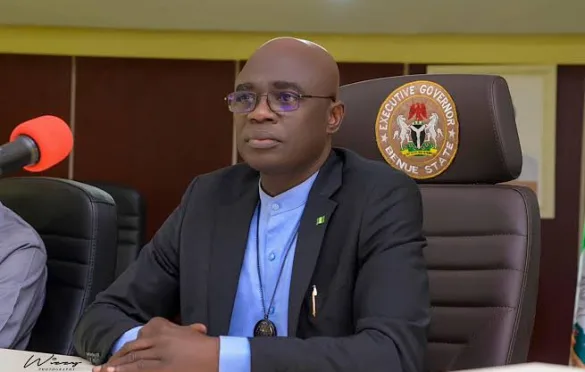
    The Benue State Government has denied allegations by Mr. Peter Obi, presidential candidate of the Nigeria Democratic Congress (NDC), that thugs allegedly working for Governor Hyacinth Alia prevented him from accessing Yelewata to sympathise with families affected by the 2025 attacks.

    In a statement on Tuesday by Sir Tersoo Kula, Chief Press Secretary to the Governor, the state government described Obi’s allegation as “unfounded” and an attempt to drag the Alia administration into what it suggested could be an internal dispute within the NDC.

    The government said it had no knowledge of the alleged incident and questioned whether Obi actually visited Makurdi, the state capital, on Tuesday.

    “We wish to emphatically deny that the government of Rev. Fr. Hyacinth Alia has an idea of what Mr. Obi is talking about,” the statement said.

    It further argued that if Obi’s presence in the state had raised any security concerns, recognised security agencies, rather than thugs, would have been responsible for addressing them.

    “Let it be known that Mr. Peter Obi is not a threat to Governor Alia in any way. Even if he actually visited the state, and we realized that he is a threat to anyone, the security agencies are there to handle the issue, not thugs,” the statement added.

    According to the government, Alia is committed to the rule of law and does not engage, patronise or deploy thugs as instruments of governance or security.

    It also questioned why a presidential candidate would visit the state without, according to the government, formally informing the relevant security authorities.

    “Ordinarily, such a visit would attract the attention and necessary security coordination involving the Commissioner of Police and other relevant security agencies,” Kula said.

    The government also suggested that any disagreements involving Obi and members of his party in Benue should be resolved within the NDC rather than attributed to the state government.

    “If Mr. Obi is confronted with disagreements or internal political challenges within his party structure in Benue State, those issues should be resolved within the party rather than being conveniently transferred to the State Government,” the statement said.

    It said the Alia administration would remain focused on governance, security and the welfare of Benue residents, while urging the public to disregard allegations linking the government to the reported incident.

    “Benue remains open to legitimate visitors, political actors and all Nigerians who come in peace,” the statement added.

  • Peter Eze Youth Connect: FCC Chairman Omidiran to Speak on Opportunities for Enugu Youths

    The Executive Chairman of the Federal Character Commission (FCC), Hon. Hulayat Motunrayo Omidiran, will headline the maiden edition of Peter Eze Youth Connect 2026, scheduled to hold on Thursday, September 10, at the International Conference Centre (ICC), Enugu.

    Omidiran, popularly known as Ayo Omidiran, will deliver the keynote address at the youth-focused gathering, which is expected to bring together young people from across Enugu State for discussions on access to opportunities, inclusion, representation and youth development.

    The programme, themed “Beyond Quotas: Unlocking Opportunities for Enugu Youths Through the Federal Character Commission,” is being convened by Hon. Peter Ogbonna Eze, the Federal Commissioner representing Enugu State on the FCC and Chairman of the Commission’s Committee on Works, Transport and Aviation.

    Eze, who was appointed by President Bola Ahmed Tinubu and inaugurated on January 22, 2026, said the initiative was conceived to bridge the information gap that often prevents qualified young Nigerians from identifying and accessing legitimate opportunities.

    “Our objective is to help young people understand where legitimate opportunities exist, how to identify them, how to apply, what is required, and how to position themselves for success,” Eze said.

    Peter Eze

    He said many young Nigerians possess the qualifications, talent and determination to succeed but are disadvantaged by a lack of timely and accurate information about available opportunities.

    According to him, Peter Eze Youth Connect is designed to move beyond conventional youth empowerment programmes by connecting young people directly with information, practical guidance and institutions that can help them pursue opportunities at national and international levels.

    The programme is expected to attract graduates, students, entrepreneurs, job seekers, professionals and other young people from the 17 local government areas of Enugu State.

    Areas expected to feature include jobs, scholarships, grants, fellowships, internships, government programmes, private-sector opportunities, digital opportunities, entrepreneurship, career development and leadership.

    Omidiran’s participation is expected to provide an institutional perspective on the role of the Federal Character Commission in promoting equitable representation and ensuring fair access to opportunities within the public sector and other areas of national development.

    The FCC chairman is expected to speak to participants on how young people can better understand and take advantage of opportunities available through government institutions, while addressing broader issues surrounding inclusion and representation.

    The event will also feature a session on “Connecting Youths in Enugu State to the European Union Market for Apiculture Products,” aimed at exposing young people to opportunities in honey production, beekeeping and access to the European Union market.

    Eze urged Enugu youths to take advantage of the programme, stressing that access to the right information, combined with preparation and determination, could significantly improve their chances of success.

    He also challenged young people to move beyond passively waiting for opportunities and develop the capacity to identify, pursue and position themselves for available opportunities.

    With the event scheduled for Thursday, organisers say Peter Eze Youth Connect 2026 is intended to begin a broader conversation about youth development in Enugu, with emphasis on moving from promises to access, information to action and waiting for opportunities to actively pursuing them.

  • Complete LIST of 2026 Ballon d’Or Nominees

    The shortlist for the 2026 Ballon d’Or nominees has been announced, marking the 70th year of the Ballon d’Or to recognise and celebrate great achievements in the world of football across the 2025/26 season.

    The nominees were announced via the award body’s X handle on Tuesday.

    Nominees for the Men’s and Women’s Striker of the Year, exceptional young talent, goalkeepers, clubs and coaches who excelled across last season were also announced, among other categories.

    See the full list below for all nominations across all categories:

    So This Happened (EP 423) reviews:Three police officers dismissed over death of 22-year-old graduate

    0:00 / 0:00

    Men’s Ballon d’Or

    Lamine Yamal — FC Barcelona/Spain

    Jude Bellingham — Real Madrid/England

    Pau Cubarsí — FC Barcelona/Spain

    Marc Cucurella — Chelsea, Real Madrid/Spain

    Ousmane Dembélé — Paris Saint-Germain/France

    Luis Díaz — Bayern Munich/Colombia

    Bruno Fernandes — Manchester United/Portugal

    Erling Haaland — Manchester City/Norway

    Gabriel Magalhaes — Arsenal/Brazil

    Harry Kane — Bayern Munich/England

    Achraf Hakimi — Paris Saint-Germain/Morocco

    Khvicha Kvaratskhelia — Paris Saint-Germain/Georgia

    Women’s Ballon d’Or

    Selma Bacha — OL Lyonnes/France

    Barbra Banda — Orlando Pride/Zambia

    Klara Bühl — Bayern Munich/Germany

    Esmee Brugts — FC Barcelona Femeni/Netherlands

    Mariona Caldentey — Arsenal/Spain

    Scarlett Camberos — Club America/Mexico

    Kerstin Casparij — Manchester City Women/Netherlands

    Temwa Chawinga — Kansas City Current/Malawi

    Cata Coll — FC Barcelona Femeni/Spain

    Melchie Dumornay — OL Lyonnes/Haiti

    Caroline Graham Hansen — FC Barcelona Femeni/Norway

    Alex Greenwood — Manchester City Women/England

    Pernille Harder — Bayern Munich/Denmark

    Patri Guijarro — FC Barcelona Femeni/Spain

    Rose Lavelle — Gotham FC/US Women’s National Soccer Team

    Yui Hasegawa — Manchester City Women/Japan

    Mapi León — FC Barcelona Femení, London City Lionesses/Spain

    Lorena — Kansas City Current/Brazil

    Melvine Malard — Manchester United, Chelsea/France

    Manaka Matsukubo — North Carolina Courage, Chelsea/Japan

    Ewa Pajor — FC Barcelona Femení/Poland

    Vivianne Miedema — Manchester City Women/Netherlands

    Claudia Pina — FC Barcelona Femení/Spain

    Alexia Putellas — FC Barcelona Femení, London City Lionesses/Spain

    Alessia Russo — Arsenal/England

    Momoko Tanikawa — Bayern Munich/Japan

    Wendie Renard — OL Lyonnes/France

    Khadija Shaw — Manchester City Women/Jamaica

    Caroline Weir — Real Madrid, OL Lyonnes/Scotland

    Tessa Wullaert — Inter Milan, Como/Belgium

    Men’s Coach of the Year

    Mikel Arteta — Arsenal

    Luis de la Fuente — Spain National Team

    Unai Emery — Aston Villa

    Vincent Kompany — Bayern Munich

    Luis Enrique — Paris Saint-Germain

    Women’s Coach of the Year

    Jonatan Giráldez — OL Lyonnes

    Andrée Jeglertz — Manchester City Women

    Nils Nielsen — Japan National Team

    Pere Romeu — FC Barcelona Femeni

    Elena Sadiku — Celtic FC Women/BK Häcken

    Men’s Club of the Year

    Arsenal

    Bayern Munich

    Bodø/Glimt

    Flamengo

    Paris Saint-Germain

    Women’s Club of the Year

    FC Barcelona

    Bayern Munich

    Club América

    Manchester City

    OL Lyonnes

    Men’s Goalkeeper of the Year

    Yassine Bounou — Al-Hilal/Morocco

    Thibaut Courtois — Real Madrid/Belgium

    Joan García — FC Barcelona/Spain

    Gregor Kobel — Borussia Dortmund/Switzerland

    Emiliano Martínez –Aston Villa, Chelsea/Argentina

    Edouard Mendy — Al-Ahli/Senegal

    David Raya –Arsenal/Spain

    Matvey Safonov — Paris Saint-Germain/Russia

    Unai Simón — Athletic Bilbao/Spain

    Vozinha (Josimar Dias) — GD Chaves, Colo-Colo/Cape Verde

    Women’s Goalkeeper of the Year

    Ann-Katrin Berger — Gotham FC/England

    Cata Coll — FC Barcelona Femeni/Spain

    Hannah Hampton — Chelsea FC/England

    Lorena — Kansas City Current/Brazil

    Ayaka Yamashita — Manchester City Women

    Men’s Young Talent of the Year

    Ayyoub Bouaddi — Lille, Manchester City/Morocco

    Kerim Alajbegović — RB Salzburg, Juventus/Bosnia and Herzegovina

    Yan Diomandé — RB Leipzig, Real Madrid/Côte d’Ivoire

    Pau Cubarsi — FC Barcelona/Spain

    Lennart Karl — Bayern Munich/Germany

    Éli Junior Kroupi — AFC Bournemouth/France

    Lamine Yamal — FC Barcelona/Spain

    Ibrahim Maza — Bayer Leverkusen/Algeria

    Johan Manzambi — SC Freiburg, Aston Villa/Switzerland

    Warren Zaïre-Emery — Paris Saint-Germain/France

    Women’s Young Talent of the Year

    Veerle Buurman — Chelsea/Netherlands

    Vicky López — FC Barcelona Femeni/Spain

    Felicia Schröder –BK Häcken, Real Madrid/Sweden

    Clara Serrajordi — FC Barcelona Femeni/Spain

    Lily Yohannes — OL Lyonnes/US Women’s National Soccer Team

    Punch

  • Protesters Block Peter Obi’s Convoy on Benue Road

    Protesters Block Peter Obi’s Convoy on Benue Road

    Presidential candidate of the Nigeria Democratic Congress, Peter Obi, was on Tuesday prevented from proceeding in Benue State after protesters barricaded Gboko Road in Makurdi, the state capital.

    The protesters, chanting “We don’t want Peter Obi,” blocked the road near the Nigerian Air Force Base and Makurdi Airport for hours, disrupting traffic as Obi’s convoy was held back.

    Speaking at the scene in a video posted by News Central Television via its X page on Tuesday, Obi said he had travelled to Benue to condole with victims of killings in the state but was stopped on the orders of a government aide.

    “I was told that youths, led by an SA (Special Assistant) to the government, have decided to block the road and make sure I don’t go there,” he said.

    He described the blockade as unacceptable and accused those behind it of exploiting hungry, insecure youths for political ends.

    “The rascality they are bringing into this country is totally unacceptable. People are being killed every day in Benue. People want to show that they are with them, and I came here all the way this morning, a long distance, only to be told what you are seeing here,” he said.

    Obi said the protesters had been mobilised without regard for the consequences.

    “These youths are being used to do this. What they are doing now will take its revenge on them. They don’t know that. And unfortunately, somebody sits in office and allows this to happen,” he said.

    Obi maintained that the blockade should not have occurred, adding that the affected youths were themselves victims of poverty and insecurity who deserved livelihood support rather than being deployed to obstruct his visit.

    He said his itinerary had not been concealed from state authorities. “Everybody is aware I’m visiting this place today. It’s not a secret to them,” he said. Punch


  • Canada Hits US With Up to 50% Tariffs as Trade Talks Collapse

    Canada Hits US With Up to 50% Tariffs as Trade Talks Collapse

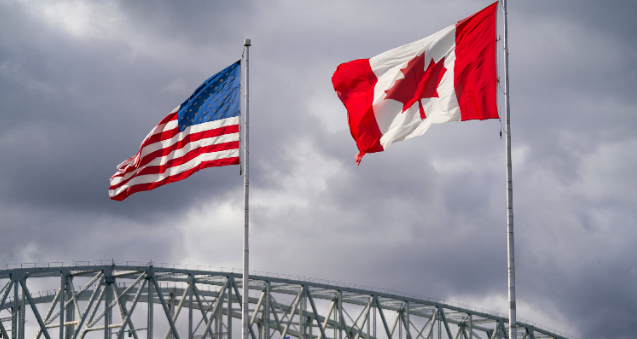
    Canada imposes tariffs of up to 50% on US goods after trade talks collapse, escalating tensions between the two allies.

    Canada has imposed new retaliatory tariffs on a broad range of US goods after trade negotiations with Washington collapsed, further straining relations between the two long-standing allies.

    The new duties, which took effect on Tuesday, range from 15% to 50% and cover about $27.6 billion worth of US products, including dairy, agricultural equipment, paper, household appliances and electronics.

    Canada has also doubled its tariffs on US steel, aluminium and iron products to 50%, while furniture and clothing face the highest tariff rate.

    Ottawa described the measures as a “dollar for dollar” response to US tariffs imposed on Canadian goods under Section 338. Canada’s Department of Finance said the measures were intended to protect Canadian workers, producers and manufacturers and help them compete with US products in the domestic market.

    The latest tariffs are in addition to existing Canadian counter-tariffs, including a 25% duty on US automotive products.

    Trade negotiations between the two countries broke down at the end of August, with officials from both sides blaming each other for the failure to reach an agreement and publicly disagreeing over the issues that prevented a deal.

    The dispute escalated further on Monday when US President Donald Trump called for a boycott of Canadian aircraft manufacturer Bombardier, declaring on Truth Social: “NO MORE SELLING BOMBARDIER IN THE UNITED STATES!”

    The intensifying trade tensions come as the US and Canada remain deeply interconnected economically. The US exported $333.6 billion worth of goods to Canada and imported $381.9 billion from its northern neighbour.

    The two countries share extensive trade across sectors including energy, vehicles, heavy machinery, aircraft, pharmaceuticals, gems and jewellery, furniture, clothing, food and beverages.

    Economists have warned that although the newly targeted goods account for a relatively small share of overall bilateral trade, the tariffs could deliver a significant blow to small and medium-sized businesses and companies operating in the most affected sectors.

    In response to the economic impact of the trade dispute, Ottawa announced a $7.5 billion support package for businesses and workers last month.

    The package builds on an existing $25 billion in support introduced in response to the US global tariff offensive that began in April 2025. Arise News


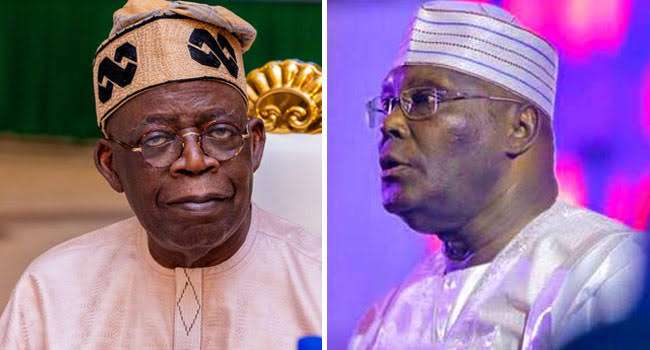
  • Atiku Knocks Tinubu Over 24.7tn Borrowing, Says Government Is Choking Businesses of Credit

    Atiku Knocks Tinubu Over 24.7tn Borrowing, Says Government Is Choking Businesses of Credit

    Atiku says government borrowing surged to N24.7tn despite higher oil prices, squeezing private-sector credit and worsening economic hardship.

    Former Vice President, Atiku Abubakar, on Monday described the federal government’s ‘unprecedented’ appetite for domestic borrowing as evidence of dangerous fiscal indiscipline that is starving Nigerian businesses of credit, killing jobs and worsening the cost-of-living crisis.

    In a statement issued by his Senior Special Assistant on Public Communication, Phrank Shaibu, Atiku said it was particularly alarming that the Bola Tinubu administration continues to borrow at such a frightening pace at a time when crude oil prices have risen substantially above the assumptions upon which the 2026 budget was built.

    “At the beginning of this fiscal year, the federal government budgeted on an oil benchmark of $64.85 per barrel. Today, crude oil prices have risen substantially above that benchmark.

    “Yet, instead of this windfall translating into lower borrowing, stronger businesses and relief for Nigerians, the federal government went into the domestic market and borrowed a staggering N24.7 trillion between January and August 2026 — 90.5 per cent more than the N12.98 trillion borrowed in the corresponding period of 2025.

    ‘’This is a government borrowing like drunken sailors in the middle of a revenue windfall. Tinubu removed fuel subsidy and told Nigerians the sacrifice would free up money. He floated the naira and government revenues consequently received a massive nominal boost. Oil prices have risen sharply. Revenues have improved. Yet the borrowing has not gone down — it has exploded,” the former vice president stressed.

    According to him, Nigerians must begin to ask what the money saved fromfuel subsidy has been spent on.

    “What makes this recklessness even more damaging is that the government is now competing directly with Nigerian businesses for money. Credit to the government grew by 43 per cent, while credit to the private sector grew by only 9.6 per cent. Government credit is expanding about 4.5 times faster than credit to businesses.

    “This is yet another troubling signal that the Tinubu economic reforms have failed to produce any meaningful impact on the private sector,’’ Atiku added.

    Atiku said that ordinarily, the outlook and performance of the private sector should serve as one of the clearest yardsticks for measuring the effectiveness of government economic policy.

    He said: ‘’If businesses are expanding, investing, hiring and gaining easier access to capital, then reform can claim some measure of success.

    “But under Tinubu’s economic policy, the exact opposite is happening. The public sector is exerting an increasingly parasitic effect on the private sector — consuming the credit, capital and financial oxygen that productive businesses desperately need. That, at a glance, is one of the clearest indictments of the failure of these so-called reforms.

    “When banks can lend to the government at attractive, risk-free rates, why would they lend cheaply to the manufacturer in Aba, the furniture maker in Kaduna, the agro-processor in Kano or the young entrepreneur in Lagos?

    “The result is obvious: businesses pay more for credit, expansion is postponed, factories struggle, jobs disappear and the cost of producing everything from food to household goods rises. This government is not merely borrowing money; it is borrowing away the future of Nigerian businesses.”

    He stated that Nigeria cannot achieve prosperity by allowing the government to swallow the credit that should finance production, stressing that an economy grows when businesses borrow to build factories, farmers borrow to expand production and entrepreneurs access affordable capital to create jobs.

    “My administration will impose fiscal discipline, cut waste, prioritiseproductive expenditure and progressively reduce the government’s suffocating dependence on the domestic credit market.

    The government must make room for the private sector to breathe, invest, produce and employ.

    “After three years of sacrifice, Nigerians deserve to see what happened to the subsidy savings, the additional revenues and the crude-oil windfall. You cannot collect more, earn more and still borrow more — while asking hungry Nigerians to sacrifice more. Something is fundamentally wrong with that equation,” he argued.

    Meanwhile, the African Democratic Congress (ADC) on Monday alleged that the Auditor-General’s finding that N33.75 billion in cash transfers to 3.29 million households cannot be verified was proof that under Tinubu, social investment had become a racket run for the benefit of officials, not the poor.

    In a statement, ADC’s National Publicity Secretary, Mallam Bolaji Abdullahi, stated: “Let us call this what it is. Not mismanagement. Not an oversight. It is an organised racket, which this government has run under the guise of a social intervention programme. They are stealing from the poor and telling them to continue to endure hardship.

    “This latest report of an unaccounted N33.75 billion intervention fund, buried inside a larger N78 billion fund, and the historical pattern of corruption that has trailed this kind of programme would suggest that this government has found a way to steal from the poor by turning the social intervention programme into a criminal enterprise,” the party stated.

    Abdullahi said instead of the federal government addressing the wanton corruption associated with such interventions in the past, it has announced an even bigger package of $1 billion without demonstrating that it has made any effort to ensure greater transparency and accountability.

    “Barely weeks before this audit blew up in their faces, they wheeled out a new $1 billion so-called ‘Renewed Hope Social Protection Programme’ with the usual State House fanfare. Given the familiar history, we are in no doubt that even in the unlikely event that this latest intervention is ever implemented, it would end up like the others before it: another racket.”

    While demanding a full probe into the scheme, the ADC noted that interventions such as this became necessary because the APC government has made it impossible for people to earn a dignified living.

    “Their twin disastrous policies of fuel subsidy removal and currency devaluation have exploded the population of Nigerians living in extreme poverty and therefore needing cash handouts from the government, which has now become a mere pretext for stealing in the name of the poor.

    “This is a government that manufactured hardship with one hand and pocketed the relief with the other. Fuel prices up. Transport costs up. Food prices up. And the one programme meant to soften the blow turns out to be a black hole. Enough is enough,” it added.

    The party, therefore, demanded the immediate publication of the full beneficiary register, the REMITA payment trail, and the names of every official who obstructed the auditor-general. Arise News


  • NAFDAC DG Demands Life Imprisonment, Death Penalty for Counterfeiters

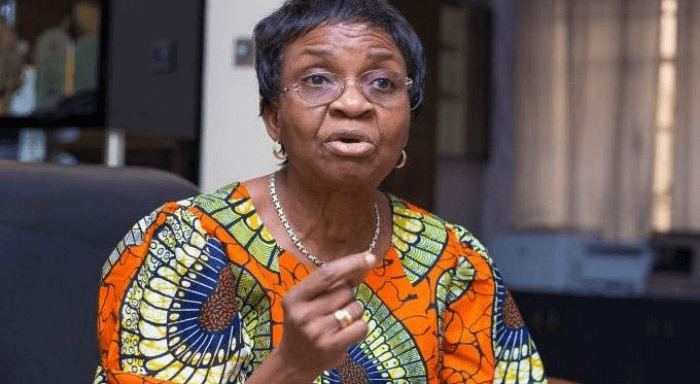
    Director-General-of-NAFDAC-Mojisola-Adeyeye
    The Director-General of the National Agency for Food and Drug Administration and Control (NAFDAC), Prof. Mojisola Adeyeye, has called for stiffer penalties for the production and sale of counterfeit regulated products, including life imprisonment or the death penalty for offenders.

    Adeyeye made the call during a press conference in Lagos, where she also disclosed that NAFDAC had cleared debts amounting to about N3.2 billion inherited when she assumed office in 2017.

    According to her, the inherited liabilities included about N1.6 billion in unpaid taxes owed to the government, approximately N700 million owed to staff who travelled for Good Manufacturing Practice (GMP) activities, and about N400 million owed to contractors.

    “We had N3.2 billion debt that I inherited. N1.6 billion was taxes we didn’t pay to the government. My predecessors didn’t pay the government. About N700 million was to staff that travelled for GMP that they didn’t pay and about N400 million for contractors that were not paid,” she said.

    Adeyeye said she took immediate steps to reduce the agency’s expenditure, particularly on official travel, in order to free funds for settling the liabilities.

    She disclosed that NAFDAC recorded about 700 official travels in 2017, a situation she said contributed significantly to the agency’s expenses.

    “I said, no more travel until we pay our debts. We paid N3.11 billion by November 2018. The other money was fictitious. We didn’t pay that,” she said.

    The NAFDAC boss explained that her decision to prioritise debt repayment was based on her personal conviction that the agency should not remain indebted.

    “People asked me, why are you paying debts? We don’t pay debts here. I was brought up not to owe, not to be a slave to the lender,” she added. Daily Trust

  • Tanzania President Samia Suluhu Hassan Losses Husband at 77

    Tanzanian President Samia Suluhu Hassan’s husband died on Monday while being treated in hospital in Zanzibar, an official said.

    Hassan became leader in 2021 after the death of authoritarian John Magufuli and swept a national election last year with 98 per cent, in a vote that was criticised by international observers following the deadly repression of protests.

    Hafidh Ameir Hassan, 77, died early on Monday in Mzena Hospital in Zanzibar, “where he was receiving treatment for a heart condition”, according to vice president Deogratius Ndejembi.

    In a short clip shared on the Tanzanian presidency’s X account, Ndejembi extended his condolences and added that funeral preparations were under way in southern Kizimkazi.

    A private man, Ameir Hassan married the president in 1978. The couple had four children, two of whom are also in the public eye.

    Their daughter, Wanu Hafidh Ameir, is a Tanzanian MP representing a constituency in Zanzibar.

    Abdul Halim Hafidh Ameir, one of their three sons, is known to play a significant role alongside his mother despite his lack of a title.

    In late August, he was received in Uganda by President Yoweri Museveni, having earlier joined the Tanzanian president on a state visit to Russia in June.

    He is accused of overseeing the deadly crackdown around elections in 2025, in which the opposition alleges the police killed more than 2,000 people. AFP