Author: Editor

  • First Niger Bridge To Reopen Next Week, Umahi Assures

    First Niger Bridge To Reopen Next Week, Umahi Assures

    Precious Nwonu, Enugu

    The Federal Government has announced plans to reopen the First Niger Bridge to motorists next week following the completion of major rehabilitation works on the bridge connecting Anambra and Delta states.

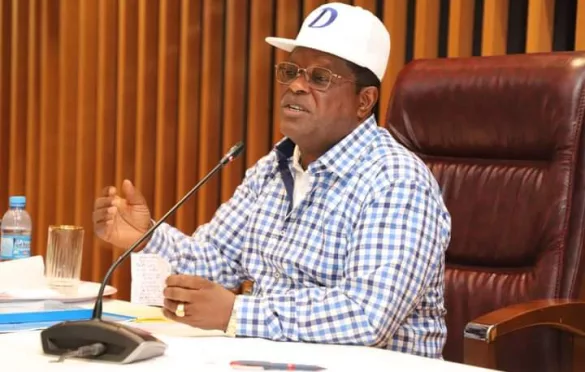
    The Minister of Works, David Umahi, gave the assurance on Wednesday after inspecting the repair works at the Onitsha Bridge Head.

    The bridge was shut earlier in September after vandals reportedly removed critical components, including bolts, nuts and sections of the steelwork forming part of the expansion joint.

    The closure was initially scheduled to last until September 21 but was extended by another week due to persistent rainfall, which disrupted repair activities.

    Umahi said the contractor, SKECC, had made considerable progress on the rehabilitation, adding that the vandalised bolts had been replaced and firmly secured.

    He also disclosed that the specialised expansion joint removed from the bridge had been manufactured and transported to Nigeria for installation.

    The minister said the progress recorded within about 10 days was encouraging but stressed that the bridge would only be reopened after the necessary structural works had been completed.

    “We are not going to be stampeded to open the bridge until the major structural work has been achieved,” Umahi said.

    He directed the contractor to carry out additional improvements, including repainting structural components, bridge caps and sections within the carriageway.

    The minister also ordered the removal of unauthorised advertisements mounted on the bridge and directed the installation of additional solar-powered streetlights.

    He further instructed the contractor to complete the installation of CCTV cameras, with the surveillance system to be connected to the Second Niger Bridge to strengthen monitoring and security around the facility.

    Umahi also ordered a comprehensive assessment of the bridge’s structural components, including elements above and below the water level.

    According to him, the assessment report must be submitted before the current rehabilitation phase is brought to an end.

    The minister also directed a review of the proposed asphalt works on the bridge approaches, saying concrete should be used on portions that would require future reconstruction.

    He explained that the measure would prevent government resources from being wasted on asphalt that might later have to be removed when reconstruction works commence.

    Umahi added that one carriageway could be opened to traffic once the concrete achieved the required strength, while rehabilitation work continued on the other carriageway.

    Meanwhile, the Delta State Commissioner for Works, Rural Roads and Public Information, Charles Aniagwu, commended the Federal Government for the pace and quality of the rehabilitation.

    Aniagwu recalled that Umahi had inspected the bridge on August 28 and directed the immediate replacement of the vandalised bolts, nuts and expansion-joint components.

    He said the contractor had complied with the directives, while damaged sections of the asphalt surface had also been removed and replaced.

    “We are pleased with the speed of work. We also appreciate our people who demonstrated a whole lot of patience to understand that you are after their safety,” Aniagwu said.

    The commissioner said the rehabilitation had significantly improved the condition of the bridge and expressed confidence in the quality and durability of the repairs.

    He also commended motorists and other road users for their cooperation during the closure, saying their patience had contributed to the smooth execution of the rehabilitation works.

  • EFCC Again Declares Former Pension Boss Maina Wanted

    EFCC Again Declares Former Pension Boss Maina Wanted

    Precious Nwonu, Enugu

    The Economic and Financial Crimes Commission has again declared the former Chairman of the Presidential Task Force on Pension Reforms, Abdulrasheed Maina, wanted over an alleged case of receiving stolen property.

    The anti-graft agency announced this in a public notice issued on Wednesday, accompanied by a photograph of the former pension reform official.

    The EFCC identified Maina, 61, as an indigene of Biu, Borno State, and urged members of the public with information about his whereabouts to contact the commission or other security agencies.

    The notice read, “The public is hereby notified that ABDULRASHEED ABDULLAHI MAINA, whose photograph appears above, is wanted by the Economic and Financial Crimes Commission (EFCC) in an alleged case of Receiving Stolen Properties.”

    The commission listed its offices in Abuja, Lagos, Ibadan, Uyo, Sokoto, Maiduguri, Benin, Makurdi, Kaduna, Ilorin, Enugu, Kano, Gombe and Port Harcourt as locations where information could be submitted.

    The EFCC also provided a telephone line and official email address for members of the public wishing to pass on information concerning Maina’s whereabouts.

    This is not the first time the former pension task force chairman has been declared wanted by the commission. In November 2015, the EFCC declared him wanted over allegations relating to procurement fraud, stealing and money laundering in connection with the alleged pension biometric scam.

    Maina came to national prominence during the administration of former President Goodluck Jonathan when he headed the Presidential Task Force on Pension Reforms.

    The task force was involved in efforts to recover pension funds and address alleged irregularities within the pension system.

    His activities in the pension reform exercise were later overshadowed by legal proceedings initiated by the EFCC over alleged money laundering involving funds linked to the pension reforms.

    In November 2022, the Federal High Court in Abuja convicted Maina and sentenced him to eight years in prison for money laundering-related offences. The court also ordered the forfeiture of assets connected to the case.

    Maina subsequently appealed the judgment.

    However, the EFCC’s latest wanted notice did not disclose whether the new case involving alleged receipt of stolen property is connected to his previous pension-related prosecution.

    The commission also did not provide details of the property allegedly received by Maina or explain the circumstances surrounding the latest case.

  • FG Says China Partnership Will Boost Reliable Power Supply, Local Manufacturing

    FG Says China Partnership Will Boost Reliable Power Supply, Local Manufacturing

    Precious Nwonu, Enugu

    The Federal Government has said stronger collaboration with China in the power sector will support efforts to improve electricity supply, expand renewable energy and promote the local production of power equipment in Nigeria.

    The Minister of Power, Joseph Tegbe, stated this in Abuja on Wednesday night during a reception to commemorate the 77th anniversary of the founding of the People’s Republic of China.

    Tegbe said Chinese investment in Nigeria would have a greater and more sustainable impact if it also contributed to the development of local technical expertise and strengthened Nigerian businesses.

    According to him, cooperation between both countries should not only focus on financing and infrastructure but also on equipping Nigerian engineers and technicians with the skills required to operate and maintain power facilities built in the country.

    “As Minister of Power, I see particular promise in deeper cooperation on achieving reliable electricity, renewable energy, and manufacture of power equipment in Nigeria with our cooperation with China,” Tegbe said.

    He said Nigeria-China relations had evolved from diplomatic ties into a broad partnership spanning infrastructure, healthcare, technical exchanges, trade and investment.

    Nigeria and China established diplomatic relations on February 10, 1971, while the relationship was elevated to a comprehensive strategic partnership by President Bola Tinubu and Chinese President Xi Jinping in September 2024.

    Tegbe, who also serves as Director General of the Nigerian-China Strategic Partnership, acknowledged China’s role in financing, engineering and investing in major Nigerian projects, including the Lekki Deep Seaport, railway modernisation projects and the Zungeru Hydropower Station.

    He also praised China’s development in manufacturing, science, high-speed rail and clean energy, describing its transformation as remarkable.

    The minister further highlighted China’s zero-tariff programme for African countries, saying it could create opportunities for Nigerian producers and help increase the country’s exports to the Chinese market.

    He said bilateral trade between Nigeria and China stood at $28bn at the end of 2025, while trade in the first half of 2026 had reached $17bn.

    Tegbe, however, said Nigeria needed to move beyond increasing trade volumes by boosting domestic production and exports to China.

    “Our shared task is to translate that access into stronger Nigerian production and Nigerian exports to China, with benefits that will endure both economies,” he said.

    The minister also reaffirmed Nigeria’s commitment to the One-China principle, stating that the Federal Government recognised the People’s Republic of China as the sole legal government representing China.

    The Chinese Ambassador to Nigeria, Yu Dunhai, said relations between both countries had entered what he described as “the fast lane” under the leadership of Presidents Xi Jinping and Tinubu.

    Dunhai said bilateral economic cooperation had continued to expand, pointing to recent agreements on economic partnership and aquatic exports as measures that could provide further institutional support for trade.

    He said trade between the two countries reached $18bn in the first half of 2026, representing a 35 per cent increase, while Chinese imports from Nigeria rose by 81 per cent.

    The ambassador said China was prepared to align its 15th Five-Year Plan with the Federal Government’s Renewed Hope Agenda, particularly in industrialisation, digital development and the green and blue economies.

    “Our future cooperation holds boundless potential. China stands ready to align its 15th Five-Year Plan with President Tinubu’s ‘Renewed Hope’ Agenda across industrialisation, digital, green, and blue economies,” he said.

    Dunhai also invited Nigeria to join the World Artificial Intelligence Cooperation Organisation, saying participation would give the country an opportunity to contribute to and benefit from developments in global artificial intelligence.

    He noted that China’s zero-tariff policy covering 53 African countries, which commenced on May 1, had contributed to a 24 per cent rise in China’s imports from Africa during May and June.

    According to him, Chinese innovations in artificial intelligence, digital payments and solar energy were also helping African countries address development challenges.

    Dunhai said Nigeria and China, which are marking 55 years of diplomatic relations, should continue to strengthen their partnership through mutual respect, shared development and practical cooperation.

    “Those who walk the same path go far. Let us empower development through innovation, openness, and sincere cooperation to continuously enrich China-Nigeria friendship and write a new chapter in China-Africa relations,” he said.

  • In Major Milestone, Mbah Flags Off Enugu Air Maiden Int’l Flight to Douala, Cameroon

    In Major Milestone, Mbah Flags Off Enugu Air Maiden Int’l Flight to Douala, Cameroon

    … Enugu Air CEO: Enugu becoming a gateway

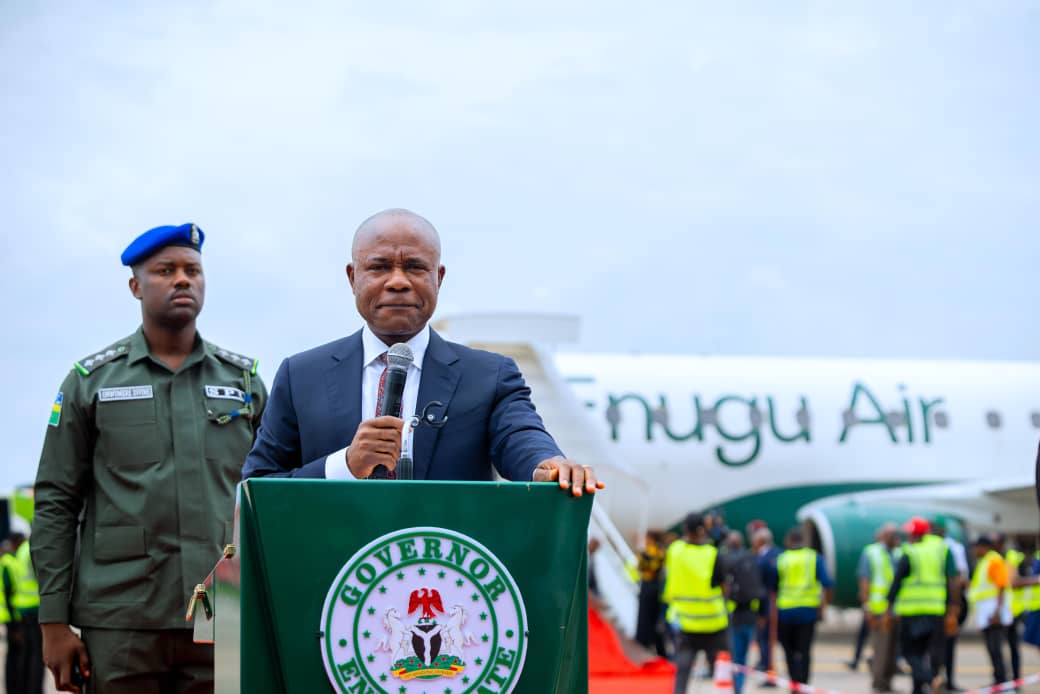
    The Governor of Enugu State, Dr. Peter Mbah, has flagged off the first-ever international service by Enugu Air, describing it as a major milestone in his administration’s vision to grow Enugu State into a major aviation hub and make it the preferred destination for investment, business, tourism, and living.

    Speaking at a brief ceremony at the Akanu Ibiam International Airport, Enugu, on Wednesday, Mbah, who heaped commendations on the leadership of the state-owned airline for the fast growth of Enugu Air, said it was not an isolated story, but a part of connecting the dots as his administration strives to grow Enugu State into a $30 billion economy.

    “Months ago, right here, we watched Enugu take to the skies. In just barely six months after a rigorous regulatory process, Enugu Air obtained her Air Operator’s License. This is not a mean feat.

    “Today, 14 months after, we can see that dream flying beyond our expectations, as Enugu Air is one of the fastest-growing airlines in Nigeria, without a doubt.

    “But we did not conceive of Enugu Air as a bragging right or because of the clamour, or to gain some political acclaim. Enugu Air is part of the masterplan to make Enugu State the premier destination for investment, living, business and tourism. For us, Enugu Air is part of connecting the dots,” he stated.

    Mbah described Enugu Air as a campaign promise kept, saying the Enugu–Douala service was the beginning of many more international flight operations to many parts of the world.

    “What you are seeing here today is performance above promises. So, we ask you to judge us by the things we have promised and have delivered to you.

    “Besides, today is Douala, but I am hoping tomorrow, we are not only going to be talking about the continent of Africa, we will be talking about Enugu to the world,” he added.

    He thanked President Bola Tinubu “for consistently demonstrating his commitment to aviation infrastructure and for the support he is also giving to the states to enable us to create businesses like Enugu Air,” commending also the Minister of Aviation and Aerodrome Development, Festus Keyama, SAN; and the agencies under him such as the Federal Airports Authority of Nigeria (FAAN) and the Nigerian Civil Aviation Authority (NCAA) supporting Enugu Air’s growth and making Nigeria a standard bearer in the African aviation industry.

    Speaking, Enugu Air CEO, Capt. Tolu Ita, said Enugu Air was not merely launching a flight, stressing, “we are launching a new chapter.”

    “This is a chapter in which Enugu is no longer simply where a journey begins or ends. Enugu is becoming a gateway.

    “Today, much bigger than an aircraft will be moving across our skies. Opportunity will be moving. Business will be moving. People will be moving. Ideas will be moving. And Enugu will be moving with them. This is what makes today so significant.

    “Enugu Air was never built with the vision to simply put aircraft in the sky. The vision was to build an airline that connects people, connects markets and connects possibilities.

    “We began by strengthening our domestic network — connecting Enugu with Lagos, Abuja, Port Harcourt, Kano, Owerri, Asaba, Benin City and Warri.

    “Today, we take our first major step beyond Nigeria. Enugu to Douala. Nigeria to Cameroon. The Southeast to Central Africa. And this is only the beginning.

    “Our ambition is to continue building a stronger regional network across Africa, while progressively opening the door to wider international markets,” she said.

    In growing Enugu Air, Ita reaffirmed the airline’s responsibility and commitment to authorities, passengers, and all stakeholders, upholding the highest operational and ethical standards.

    In her goodwill message, the Managing Director/CEO of the FAAN, Mrs. Olubunmi Onabanjo-Kuku, said Enugu Air’s inaugural international flight was “a strong statement of Nigeria’s growing capacity to connect7 people and businesses across West and Central Africa.”

    Represented by Mrs. Onyeka Udenze, the7 FAAN DG said, “Akanu Ibiam International Airport now takes a firm step as a regional hub.”

    While congratulating Enugu Air for the fast growth in 14 months, she assured that FAAN remained committed to providing the infrastructure, safety standards and support that make such services possible.

    The DG of NCAA, represented by the Director of Air Transport Regulations, FAAN, Mrs. Olayinka Babaoye-Iruobe, said connecting Enugu to Douala directly represented would create opportunities for increased trade, investment, tourism, and movement of people, while strengthening social and economic ties between Nigeria and Cameroon.

    In his welcome address, the Commissioner for Trade, Investment, and Industry, Dr. Sam Ogbu-Nwobodo, said the new service to Douala marked a monumental leap forward in the state’s trade, investment, and economic integration strategy.

    “For decades, the vibrant traders, manufacturers, and entrepreneurs of Enugu and the broader region have navigated complex transit routes to access Central African markets.

    “Today, that barrier is dismantled. This direct link directly advances our goal of transforming Enugu State into a premier regional hub for commerce and industrial development. We are now effectively bridging markets, shortening supply chains, and unlocking unprecedented opportunities for cross-border commerce across Central and West Africa,” he said.

    The Maiden flight, which departed Akanu Ibiam International Airport in the early hours of the afternoon, touched down safely at the Douala International Airport where it was well received by the Cameroonian authorities in a brief ceremony before it returned to Enugu on the history trip.

  • Nigeria, EU Move To Finalise Long-Delayed Readmission Agreement

    Nigeria, EU Move To Finalise Long-Delayed Readmission Agreement

    Precious Nwonu, Enugu

    Nigeria and the European Union have renewed discussions on migration cooperation, with both sides working towards concluding a readmission agreement that has been under negotiation since 2016.

    The issue was discussed on Monday in New York during a meeting between Nigeria’s Minister of Foreign Affairs, Ambassador Bianca Odumegwu-Ojukwu, and the EU Commissioner for Internal Affairs and Migration, Magnus Brunner.

    The meeting was held on the sidelines of the 81st United Nations General Assembly at the UN Headquarters.

    A statement issued by the minister’s Special Assistant on Communication and New Media, Magnus Eze, said Brunner emphasised the need to conclude the EU-Nigeria Readmission Agreement.

    According to the statement, the commissioner said finalising the agreement would provide a framework for broader cooperation between Nigeria and the EU on migration.

    The proposed agreement was also discussed extensively during the eighth Nigeria-EU Ministerial Dialogue held in March 2026.

    Responding, Odumegwu-Ojukwu said Nigeria wanted any migration partnership with the EU to include support for the reintegration of Nigerians returning to the country.

    She also called for assistance with infrastructure development and the expansion of legal routes for Nigerians seeking employment and other opportunities abroad.

    The minister stressed the importance of creating structured and lawful mobility opportunities for Nigerians, particularly the country’s large young population.

    She also maintained that migration cooperation should take Nigeria’s development priorities into consideration.

    The EU delegation said Nigeria’s concerns had been reflected in the proposed framework for cooperation, which is expected to be expanded into a broader Migration and Security Cooperation Contract.

    The proposed framework would cover several areas, including talent partnerships, legal migration pathways, reintegration of returnees and border management.

    It would also involve cooperation with the European Border and Coast Guard Agency, Frontex, to strengthen border management and migration-related operations.

    Nigeria and the EU are also considering an arrangement for information exchange with Europol as part of efforts to strengthen the country’s capacity to tackle transnational organised crime.

    Brunner said the EU was interested in developing legal migration channels through talent partnerships.

    He noted that such arrangements could help address labour and skills shortages in Europe while providing Nigerian professionals with legitimate opportunities abroad.

    The discussions also touched on concerns about irregular migration, with the EU commissioner indicating that progress in tackling irregular migration could help create more opportunities for legal migration.

    The two sides are expected to continue discussions, with Brunner indicating an interest in visiting Abuja in November 2026. The date of the proposed visit is yet to be finalised.

    The latest engagement forms part of efforts by Nigeria and the EU to develop a broader migration partnership covering irregular migration, return and reintegration, legal mobility, border security and opportunities for Nigerian professionals and young people.

  • South East Commission Begins 200-Hectare Integrated Farm Project In Enugu

    South East Commission Begins 200-Hectare Integrated Farm Project In Enugu

    Precious Nwonu, Enugu

    The South East Development Commission has commenced the development of a 200-hectare integrated agricultural project in Nomeh Unataeze, Nkanu East Local Government Area of Enugu State.

    The project, being implemented under the Commission’s South East Agro-Development Programme, is expected to create more than 1,000 direct jobs when fully operational.

    The initiative is being developed in partnership with the Enugu State Government and is designed to combine agricultural production with mechanisation, processing, skills development and access to markets.

    The project will feature dairy farming, poultry, fisheries, greenhouse cultivation, fodder production, agro-processing, renewable energy and practical agricultural training.

    At the flag-off ceremony on Wednesday, the Enugu State Deputy Governor, Ifeanyi Ossai, who represented Governor Peter Mbah, said the project demonstrated the potential of collaboration between government institutions to address food security, employment and economic diversification.

    Ossai said the state government was committed to creating an enabling environment for productive investments and would support the initiative to ensure that it benefits farmers, young people and the wider economy.

    The project differs from conventional farms focused on a single agricultural commodity, as its various components are designed to operate as an interconnected production system.

    Plans for the facility include a 200-head dairy herd, poultry production capacity of up to 20,000 birds per cycle, fisheries infrastructure, fodder cultivation, silage production, processing facilities and agricultural demonstration centres.

    The integrated model is expected to enable the different sections of the farm to share infrastructure and reduce waste.

    Fodder cultivated on the farm will be used to support livestock, while animal manure and poultry waste could be utilised for soil improvement and energy production.

    Surplus fodder will also be processed into silage for use within the facility and supply to participating farmers.

    The project will provide shared facilities for feed production, water supply, farm machinery and processing, with the aim of connecting agricultural production to value addition and markets.

    The Managing Director and Chief Executive Officer of SEDC, Mark Okoye, said the project was conceived to demonstrate how technology, mechanisation, skills and market access could transform agricultural production in the region.

    He said the success of the project would not be measured solely by activities within the 200-hectare facility but by its impact on surrounding communities and farmers.

    Okoye said the project would provide opportunities for young people to acquire practical agricultural skills, while farmers would benefit from access to inputs, technical assistance, mechanisation and markets.

    A training and out-grower scheme is also planned as part of the initiative.

    The training centre is expected to accommodate between 100 and 120 trainees at a time, with courses covering dairy production, fodder and silage production, poultry, fisheries and agricultural mechanisation.

    Under the initial out-grower programme, about 300 households located within a 10-kilometre radius of the facility are expected to participate.

    The number of participating households is expected to increase as production capacity expands.

    Farmers involved in the programme will have access to agricultural inputs, technical support and mechanisation services, while the project will provide opportunities for aggregation and market access.

    SEDC said fodder growers would receive planting materials, agronomic assistance, mechanisation and harvesting support, while dairy farmers would benefit from technical assistance, improved breeding services, feed and silage.

    Similar support arrangements are expected to be extended to poultry and fish farmers in surrounding communities.

    The Commission estimates that the project will support more than 1,000 direct jobs when it reaches full maturity, with additional employment expected through seasonal farming, processing and the wider network of participating farmers.

    Speaking on behalf of the Federal Government, the Minister of Regional Development, Abubakar Momoh, described the project as an example of the type of productive and regionally balanced development the government seeks to promote.

    Momoh said increasing food production required more than expanding cultivated land, stressing the importance of processing, market access, improved productivity and reducing post-harvest losses.

    He said the government’s objective was to develop an agricultural system capable of creating value and employment throughout the production chain.

    The Chairman of SEDC, Emeka Wogu, said partnerships with state governments, host communities, private investors and development organisations would remain central to the Commission’s regional development strategy.

    He said the Commission’s role was to create platforms that bring stakeholders together around projects capable of generating sustainable economic opportunities in the South East.

    The Nomeh project is expected to serve as a pilot for similar agricultural and agro-mechanisation projects across the five South East states.

    Okoye said the Commission would assess the lessons from the project before adapting and replicating the model in other locations.

    The five states covered by the SEDC are Abia, Anambra, Ebonyi, Enugu and Imo.

    The President-General of Nomeh Unataeze, Chukwudi Anyianuka, welcomed the project, saying the community was ready to cooperate with the Commission, the Enugu State Government and other stakeholders.

    He said the initiative could create new economic opportunities for young people and farmers in the community.

    SEDC said the host community would remain an important stakeholder throughout the implementation and long-term operation of the project.

    The Commission added that beyond agricultural production, the facility would provide opportunities for skills acquisition, employment, farmer integration and the development of stronger agricultural value chains across the region.

  • Ebola: NCDC Steps Up Screening Of Travellers From Affected Countries

    Ebola: NCDC Steps Up Screening Of Travellers From Affected Countries

    Precious Nwonu, Enugu

    The Nigeria Centre for Disease Control and Prevention has introduced enhanced surveillance measures for travellers arriving in Nigeria from countries affected by Ebola Virus Disease.

    The agency said passengers arriving from countries with active or relevant Ebola transmission may be required to complete a health declaration form as part of efforts to prevent the disease from being imported into the country.

    The NCDC disclosed this in an interim public health advisory issued on Tuesday following the ongoing Ebola outbreak in the Democratic Republic of Congo.

    The advisory, signed by the agency’s Director-General, Dr Jide Idris, said the measures were introduced after an assessment of the evolving situation and consultations with public health experts and the Federal Ministry of Health and Social Welfare.

    According to the agency, affected travellers may be required to provide health and travel information through the Health Declaration Form to support surveillance and follow-up.

    However, the NCDC clarified that travellers arriving from countries without active or relevant Ebola transmission are not currently required to complete the form.

    The agency also urged Nigerians and other residents to remain alert to symptoms associated with Ebola and seek medical attention promptly if such symptoms occur.

    It advised individuals with relevant travel or exposure history to disclose such information when seeking medical care.

    The NCDC said Nigeria remained on high alert and that preparedness and response activities were ongoing to protect the country against the possible importation and spread of the disease.

    It added that the measures would be reviewed regularly based on developments in the Ebola outbreak and the outcome of ongoing public health risk assessments.

    The agency reaffirmed its commitment to protecting Nigerians through surveillance, preparedness and evidence-based response to emerging public health threats.

  • Anambra Begins Tax Enforcement Against Defaulters After Regularisation Window Closes

    Anambra Begins Tax Enforcement Against Defaulters After Regularisation Window Closes

    Precious Nwonu, Enugu

    The Anambra State Internal Revenue Service has commenced enforcement measures against individuals, businesses and corporate organisations that have failed to meet their tax obligations in the state.

    The Executive Chairman of AIRS, Ikeazor Okonkwo, announced this on Tuesday at a press briefing held at the agency’s headquarters in Awka.

    Okonkwo said the enforcement followed the expiration of the Voluntary Assets and Income Declaration and Tax Regularisation Scheme on September 5.

    He explained that the scheme had allowed taxpayers with outstanding liabilities to regularise their tax affairs and benefit from available concessions.

    With the expiration of the programme, he said AIRS had moved into the enforcement phase in line with existing tax laws.

    He said those targeted include taxpayers who failed to regularise their liabilities under the scheme, individuals and businesses that received Best of Judgment assessments but failed to challenge or settle them within the stipulated period, as well as taxpayers found to have underpaid or under-remitted taxes.

    According to him, defaulters could face statutory sanctions, including the issuance of final demand notices, sealing of premises where applicable, recovery of outstanding liabilities and prosecution for established tax offences.

    Okonkwo urged affected taxpayers to use the available opportunity to resolve their outstanding obligations and comply with the state’s tax laws.

    He disclosed that about 500,000 taxpayers had so far been captured in the agency’s database, while AIRS was working towards adding another 500,000 taxpayers to reach a target of one million.

    The chairman said technology would play a major role in the enforcement exercise, noting that digital systems would be used to reduce unnecessary physical interaction between tax officials and taxpayers.

    He added that AIRS had embarked on extensive sensitisation campaigns before commencing enforcement, using radio and other media platforms, churches, markets and public address systems to educate residents about their tax obligations.

    Okonkwo also announced plans to establish an alternative dispute resolution mechanism to handle genuine complaints from taxpayers who disagree with their assessments.

    He said taxpayers with legitimate objections would be given an opportunity to present their cases for consideration, while those without valid objections would be expected to settle their outstanding liabilities.

    The AIRS chairman said the agency had already identified taxpayers who had failed to comply and was working with its legal advisers to determine the appropriate enforcement procedures.

    He outlined four broad categories of taxpayers: those who were already compliant and should maintain their status; those with genuine objections who could present their cases; those without valid objections who should make the required payments; and others with outstanding obligations who must regularise their tax affairs in accordance with the law.

    Okonkwo said the enforcement was part of efforts to improve the culture of tax compliance in Anambra.

    He explained that taxpayers were expected to declare income from various sources, including salaries, rent, investments and business activities, and pay the appropriate taxes.

    According to him, AIRS spent its first six months prioritising taxpayer education and engagement while analysing available data to identify areas of significant non-compliance.

    He said the agency would continue to pursue outstanding tax obligations within the limits of the law while encouraging compliant taxpayers to maintain their status.

    Taxpayers seeking clarification or verification were advised to visit the AIRS website or contact the agency through its official email addresses and customer service lines.

    The enforcement exercise comes amid efforts by state tax authorities across the country to increase domestic revenue and improve taxpayer registration and compliance.

    In Anambra, AIRS said its ongoing expansion of the taxpayer database and adoption of digital systems would help improve the identification of taxable individuals and businesses across the state.

  • CBN Slashes Interest Rate By 350bps To 23%

    CBN Slashes Interest Rate By 350bps To 23%

    Precious Nwonu, Enugu

    The Central Bank of Nigeria has reduced its benchmark interest rate by 350 basis points, cutting the Monetary Policy Rate from 26.5 per cent to 23 per cent.

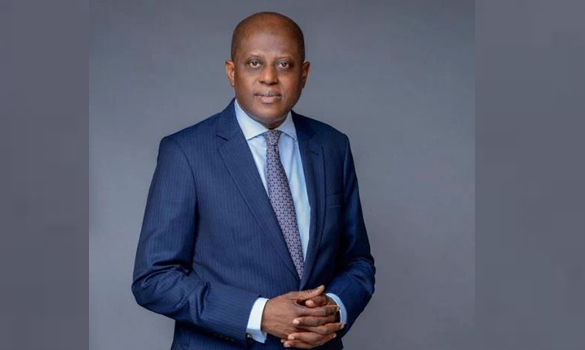
    CBN Governor Olayemi Cardoso announced the decision on Tuesday after the Monetary Policy Committee concluded its two-day meeting in Abuja.

    The reduction is the largest single cut in the current monetary policy cycle and came amid easing inflation, stronger external reserves and improved conditions in the foreign exchange market. Reuters reported that economists surveyed ahead of the meeting had expected the CBN to leave the rate unchanged at 26.5 per cent.

    The decision has raised expectations that borrowing costs could gradually decline for businesses and other private-sector operators, although the extent and speed of any reduction in lending rates will depend on how commercial banks transmit the policy change to customers.

    Cardoso, however, said the decision should not be interpreted as a broad shift towards monetary easing. He described it as a “reset and recalibration” aimed principally at improving the way monetary policy decisions are transmitted through the financial system.

    The MPC also adjusted the Standing Facilities Corridor around the MPR while retaining the Cash Reserve Requirement at 45 per cent for Deposit Money Banks, 16 per cent for Merchant Banks and 75 per cent for non-Treasury Single Account public-sector deposits.

    According to Cardoso, the adjustment was designed to strengthen the effectiveness of monetary policy and restore the MPR as the central signal for interest rates in the economy.

    The governor said the committee had observed a disconnect between the MPR and prevailing money-market rates, which had weakened the transmission of previous policy decisions.

    He said the CBN’s ongoing changes to its monetary policy framework, including the use of the Nigerian Overnight Financing Rate as a transaction-based benchmark, were intended to improve transparency and strengthen the link between policy decisions and market rates.

    ### Inflation And External Position Support Rate Cut

    The latest decision followed a period of moderation in inflation and improvements in Nigeria’s external position.

    Nigeria’s headline inflation eased to 15.39 per cent in August 2026 from 15.43 per cent in July, according to the latest figures reported following the release of the Consumer Price Index.

    The MPC also noted an improvement in the country’s balance of payments position, with the surplus rising to $3.51 billion in the second quarter of 2026 from $2.38 billion in the first quarter.

    The current account surplus also increased to $7.54 billion in the second quarter from $4.49 billion in the preceding quarter.

    The committee said three consecutive months of declining headline inflation, relative exchange-rate stability and stronger external buffers had created room for the policy framework to be recalibrated.

    It also pointed to improved investor confidence and strengthening external-sector fundamentals as factors supporting the decision.

    ### Cardoso Says Tightening Cycle Has Worked

    Cardoso said the series of monetary tightening measures introduced by the CBN had achieved their primary objectives of helping to moderate inflation and stabilise the macroeconomic environment.

    “The tightening that we have done, in our view, has done its job. It has worked,” the governor said.

    He stressed that the latest decision should not be viewed as the beginning of an unrestricted easing cycle.

    “We should not see this as an easing. This is a reset and a recalibration,” he said.

    The governor said the CBN would continue to monitor economic developments and maintain a restrictive policy approach where necessary to protect the gains made in reducing inflation.

    ### Private Sector Welcomes Decision

    Business groups and economic analysts have welcomed the reduction, although some said the size of the cut came as a surprise.

    The Lagos Chamber of Commerce and Industry, Financial Derivatives Company, the Centre for the Promotion of Private Enterprise, the Nigeria Employers’ Consultative Association and other private-sector stakeholders said the lower policy rate could improve access to credit and support productive activities.

    The stakeholders said cheaper financing could benefit manufacturers and other businesses by reducing the cost of capital, potentially supporting investment and employment.

    The CBN’s decision has also renewed discussions about how quickly banks and other financial institutions will adjust their lending rates following the reduction in the policy rate.

    ### CBN Highlights Three Years Of Reforms

    Cardoso also used the briefing to highlight reforms implemented since he assumed office in 2023, including changes to the foreign exchange market, monetary policy operations and the banking sector.

    He said the CBN inherited an economy facing significant currency instability, multiple foreign exchange rates, high liquidity and weakened investor confidence.

    According to the governor, the reforms were aimed at returning the central bank to its core mandate of maintaining price and financial stability.

    He defended the unification of the foreign exchange market, saying the previous multiple-rate system created distortions and imposed significant costs on the economy.

    Cardoso also pointed to the recapitalisation of the banking sector, saying the exercise had attracted additional capital and positioned banks to support economic expansion.

    The governor said Nigeria’s gross external reserves had risen above $55 billion, describing the level as the highest in more than 18 years.

    ### Remittances Boost External Reserves

    Cardoso attributed part of the improvement in Nigeria’s external position to stronger diaspora remittances.

    He said monthly remittance inflows had increased from about $200 million when the CBN began efforts to encourage greater formal remittance flows to nearly $1 billion by July.

    The governor said the central bank would continue engaging Nigerians living abroad and other stakeholders to sustain the increase in remittance inflows.

    He also linked Nigeria’s return to major global investment indices, including developments involving FTSE Russell and JPMorgan, to improved international investor confidence.

    ### Fiscal And Monetary Authorities Strengthen Coordination

    The CBN governor also highlighted the recent fiscal-monetary coordination agreement between the Central Bank and the Federal Ministry of Finance.

    He said the Memorandum of Understanding was designed to institutionalise cooperation between fiscal and monetary authorities rather than leave coordination to individual relationships.

    Cardoso said closer cooperation would be particularly important as Nigeria moves towards an inflation-targeting framework, noting that controlling inflation would require coordinated action beyond monetary policy alone.

    ### CBN Prepares For Election-Year Liquidity

    With Nigeria approaching another political and electoral cycle, Cardoso said the CBN was preparing for possible changes in currency demand and liquidity conditions.

    He said the bank would monitor currency in circulation, banking-sector liquidity, monetary aggregates and foreign exchange demand while deploying appropriate liquidity-management tools when necessary.

    The governor assured Nigerians that the CBN would ensure adequate availability of currency while enforcing existing limits and working with law-enforcement agencies to tackle currency abuse.
  • UNGA: Iran Delegation Walks Out After Trump Threatens To Annihilate Country

    UNGA: Iran Delegation Walks Out After Trump Threatens To Annihilate Country

    Precious Nwonu, Enugu

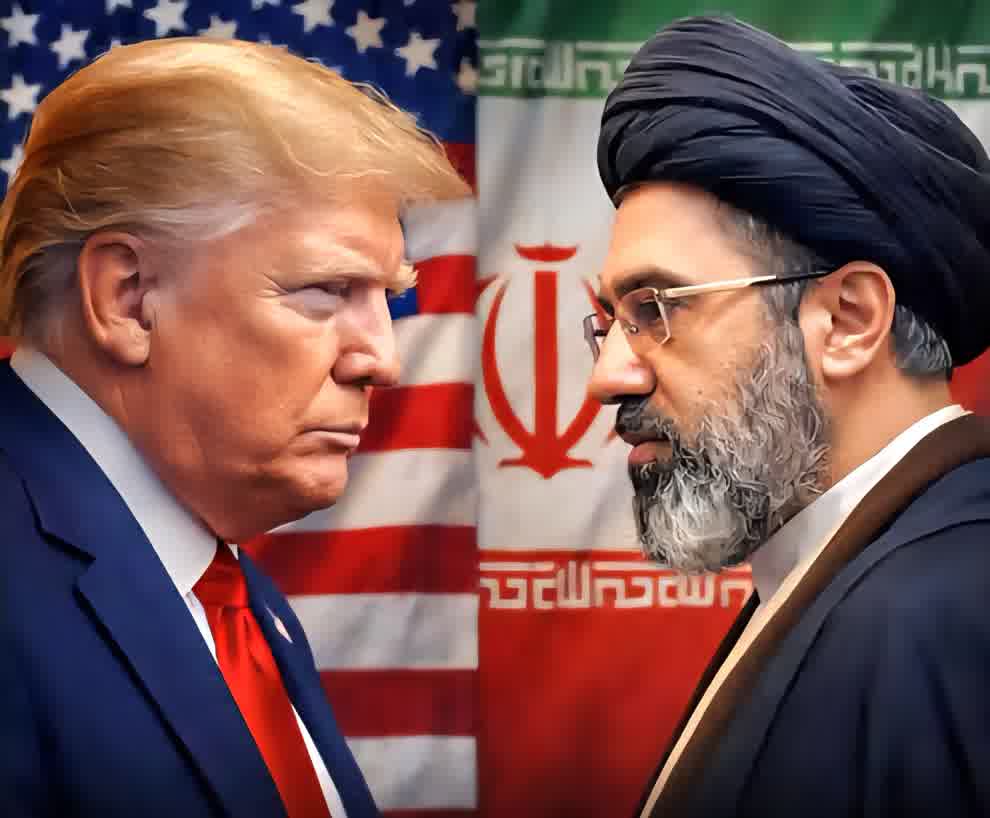
    Iranian delegates walked out of the United Nations General Assembly during President Donald Trump’s address on Tuesday after the US leader warned that he could “annihilate” the Islamic Republic if Tehran failed to reach an agreement with Washington.

    Trump made the remarks during a wide-ranging speech at the 81st session of the UN General Assembly in New York, where he defended the US military campaign against Iran and maintained that Washington would not allow Tehran to develop nuclear weapons.

    About 10 minutes into Trump’s speech, most members of the Iranian delegation left the General Assembly chamber as the US President turned his attention to the conflict with Iran. One lower-level Iranian diplomat reportedly remained in the hall for the rest of the address.

    Iranian President Masoud Pezeshkian and Foreign Minister Abbas Araghchi were in New York for the UN gathering but were not present in the chamber during Trump’s speech.

    Trump told world leaders that he faced a choice between reaching an agreement that would allow Iran to rebuild or destroying the Islamic Republic.

    “I have a big decision to make,” Trump said, before outlining the two options he claimed were available to his administration.

    He said he believed an agreement could eventually be reached with Tehran, suggesting that negotiations could resume after the US midterm elections.

    Trump also urged countries to increase economic pressure on Iran and linked the conflict to the Strait of Hormuz, a major global energy route.

    The US President portrayed his military campaign as necessary to prevent Iran from obtaining nuclear weapons and argued that American military action had changed the balance of power in the Middle East.

    Hours after his address, however, Trump told reporters that US and Iranian officials had held a meeting in New York that lasted about three hours. He described the talks as positive but did not disclose detailed information about the discussions.

    The reported meeting came despite the sharply confrontational tone of Trump’s remarks at the UN and represented the first confirmed direct contact between US and Iranian officials in months, according to reports.

    Trump also turned his attention to Cuba during the speech, describing its communist government as a failing state and predicting that it would eventually fall.

    “It’s an absolutely failed state — it’s failing like never before, and it will fall,” he said.

    Members of the Cuban delegation subsequently left the General Assembly chamber.

    Trump’s comments on Iran and Cuba contrasted with calls from other world leaders for greater emphasis on diplomacy and international cooperation.

    Brazilian President Luiz Inácio Lula da Silva, who addressed the assembly before Trump, said military force could not provide lasting solutions to the conflicts confronting the international community.

    “We all know there will be no winners on the battlefield. Diplomacy is the only option,” Lula said.

    UN Secretary-General António Guterres also urged member states to strengthen international cooperation, warning that military power alone could not guarantee peace.

    Trump devoted much of his approximately 40-minute address to defending his administration’s foreign policy, including its handling of conflicts involving Iran, Gaza, Ukraine and Venezuela.

    He also claimed that the United States had played a central role in efforts to end the conflict in Gaza, while negotiations over the next phase of the war continued.

    The Gaza conflict featured prominently in other speeches at the assembly. Turkish President Recep Tayyip Erdogan sharply criticised Israel’s conduct in Gaza, while Qatar’s Emir, Sheikh Tamim bin Hamad Al Thani, described the situation in the Palestinian territory as “a genocide in every sense of the word.”

    Israeli delegates left the General Assembly chamber during Erdogan’s speech.

    Trump’s appearance at the UN came as the conflict with Iran continued to raise concerns over regional security, global energy supplies and shipping through the Strait of Hormuz.

    The US President also announced a new security arrangement involving the United States, Denmark and Greenland, under which Washington is expected to expand its military presence on the island while Greenland remains under Danish sovereignty.

    The agreement followed Trump’s repeated expressions of interest in acquiring Greenland and his administration’s push for greater US strategic presence in the Arctic.

    The 81st UN General Assembly is bringing together leaders and representatives from member states to discuss conflicts, international security, economic issues, development and other global challenges.

  • NCDC Reports 1,086 Confirmed Lassa Fever Cases, 259 Deaths

    NCDC Reports 1,086 Confirmed Lassa Fever Cases, 259 Deaths

    Precious Nwonu, Enugu

    The Nigeria Centre for Disease Control and Prevention has reported 1,086 confirmed cases of Lassa fever and 259 deaths across 24 states in Nigeria in 2026.

    The figures were contained in the agency’s Lassa Fever Situation Report for epidemiological week 36, covering August 31 to September 6, 2026.

    According to the report, Nigeria recorded 12 new confirmed cases during the week, representing a decline from the 18 cases reported in the preceding epidemiological week.

    The new infections were recorded in Ondo, Edo and Kogi states.

    With 259 deaths among the 1,086 confirmed cases, the case fatality rate stood at 23.9 per cent.

    The NCDC noted that the current fatality rate remained higher than the 18.6 per cent recorded during the corresponding period in 2025.

    The agency said confirmed cases had been reported in 118 local government areas across the 24 affected states.

    Five states, namely Bauchi, Ondo, Taraba, Benue and Edo, accounted for 87 per cent of all confirmed cases recorded in the country during the year.

    The report also identified people aged between 21 and 30 as the age group most affected by the disease.

    No new healthcare worker was reported to have contracted Lassa fever during epidemiological week 36, according to the NCDC.

    The latest figures represent an increase from the 1,074 confirmed cases and 258 deaths recorded at the end of epidemiological week 35.

    During week 35, Nigeria recorded 18 new confirmed cases in Ondo, Edo and Bauchi states, while the case fatality rate stood at 24 per cent.

    The NCDC said 86 per cent of the confirmed cases recorded by week 35 had come from Bauchi, Ondo, Taraba, Benue and Edo states.

    The agency said it would continue surveillance and response activities across affected states, with particular attention to confirmed infections, fatalities and possible infections among healthcare workers.

    Lassa fever is an acute viral haemorrhagic illness that can be transmitted to humans through contact with food or household items contaminated by infected rodents. Human-to-human transmission can also occur, particularly in healthcare settings without adequate infection prevention and control measures.

  • NMDPRA Threatens Petrol Stations With Licence Revocation Over Under-Dispensing

    NMDPRA Threatens Petrol Stations With Licence Revocation Over Under-Dispensing

    Precious Nwonu, Enugu

    The Nigerian Midstream and Downstream Petroleum Regulatory Authority has warned petrol station operators that they risk losing their licences if they continue to short-change consumers through under-dispensing of petroleum products.

    The regulator issued the warning in a circular released on Tuesday in Abuja, following reports of petrol stations dispensing less fuel than the quantity paid for by customers.

    The NMDPRA described under-dispensing as a serious violation of consumer trust and directed all retail outlet operators to immediately inspect, calibrate and verify their dispensing pumps and totalisers.

    The authority said the exercise was necessary to ensure that motorists and other consumers receive the exact quantity of petroleum products for which they pay.

    “To safeguard the interests of consumers, all retail outlet operators are hereby directed to carry out immediate calibration and verification of all dispensers and totalizers,” the regulator said.

    The NMDPRA added that it had intensified inspections and enforcement operations at filling stations across the country to detect outlets involved in under-dispensing or operating with faulty or improperly calibrated equipment.

    According to the authority, affected outlets would be required to correct identified faults immediately, while operators found repeatedly violating the directive could face severe sanctions.

    “Persistent or serious violations will be subject to appropriate sanctions, up to and including revocation of the outlet’s license, in line with NMDPRA’s regulations,” it warned.

    The regulator also directed major industry associations to ensure that their members were informed about the new directive and complied with the requirements.

    The associations include the Major Energy Marketers Association of Nigeria, Depot and Petroleum Products Marketers Association of Nigeria, Independent Petroleum Marketers Association of Nigeria and Petroleum Products Retail Outlets Owners Association of Nigeria.

    The NMDPRA said the associations were expected to support efforts to improve compliance and ensure that retail outlets operate within regulatory requirements.

    The authority reaffirmed its commitment to protecting consumers, promoting transparency and ensuring accurate transactions in the downstream petroleum sector.

    The warning comes amid continuing concerns over fuel prices and the quantity of petrol dispensed to consumers at retail outlets across the country.