Author: Editor

  • APC State Chapters Reject Wike’s Coalition, Urge Him To Join Party

    APC State Chapters Reject Wike’s Coalition, Urge Him To Join Party

    Precious Nwonu, Enugu

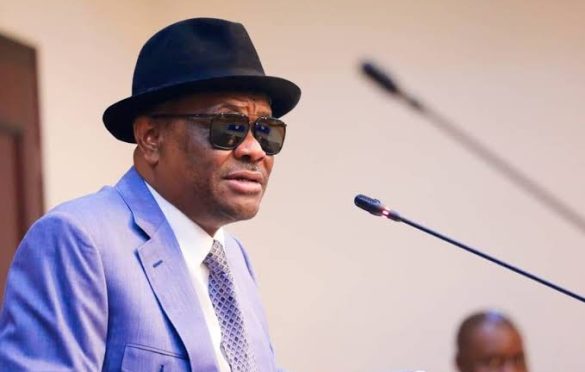
    Several state chapters of the All Progressives Congress have rejected the political coalition being promoted by the Minister of the Federal Capital Territory, Nyesom Wike, insisting that he should formally join the ruling party if he intends to support President Bola Tinubu’s bid for a second term in 2027.

    The disagreement centres on Wike’s continued membership of the Peoples Democratic Party while supporting Tinubu, an APC president, and building a political coalition that could back candidates from different parties in state and legislative elections.

    The development has widened differences within Tinubu’s political camp over how support for the President’s 2027 re-election should be organised and whether such support should extend to APC candidates contesting other elective positions.

    Wike, a former Rivers State governor and PDP presidential aspirant in 2023, was appointed Minister of the FCT by Tinubu after the 2023 election.

    The controversy intensified after Zamfara State Governor Dauda Lawal called on Wike to choose between joining the APC and continuing with the coalition.

    Speaking on Channels Television’s *Inside Sources* on the sidelines of the 81st United Nations General Assembly in New York, Lawal said Wike could not simultaneously support the APC and candidates of other parties.

    “Our message is very, very clear: Be on one side. You can’t be on two sides. If you’re in APC, please come out and support APC,” Lawal said.

    Asked whether the governors wanted Wike to join the APC, Lawal replied, “Exactly. What’s the essence?”

    He added that he would discuss Wike’s political position with Tinubu, insisting that the minister should clearly identify with one political platform.

    ### APC Chapters Push Back

    The position of the APC governors has received support from several state chapters.

    In Imo State, APC Publicity Secretary Jones Onwuasoanya said Wike should formally identify with the ruling party if he was committed to Tinubu’s re-election.

    He argued that supporting the President while remaining outside the APC created an ambiguous political position.

    Onwuasoanya also said the Imo APC did not recognise the Rainbow Coalition as an alternative political structure in the state.

    In Gombe, APC Publicity Secretary Murtala Usman similarly called on Wike to join the ruling party, warning that the coalition could create confusion among APC stakeholders.

    He noted that the recent movement of some PDP politicians into the APC had already created tensions within some state chapters.

    ### Ondo Demands Support For APC Candidates

    The Ondo State APC also rejected the idea of supporting Tinubu for president while backing candidates from other parties in governorship and legislative elections.

    State party secretary Alex Kalejaiye said the APC’s objective was to mobilise support for all its candidates.

    According to him, the party planned to support Tinubu as well as its senatorial, House of Representatives and state House of Assembly candidates.

    Kalejaiye urged Wike to collapse his coalition into the APC so that the party could present a common political platform during the elections.

    ### Jigawa Open To Wike

    The position was different in Jigawa, where the APC welcomed Wike’s support for Tinubu and said it would accept him if he chose to join the party.

    The state APC Publicity Secretary, Bashir Kundu, said the party appreciated Wike’s efforts in promoting Tinubu’s 2027 presidential bid.

    Kundu also argued that the APC itself emerged from a coalition of political parties and therefore had the capacity to accommodate politicians from different political backgrounds.

    ### Divided Position In Benue

    In Benue State, APC members expressed differing views.

    James Orgunga, an organising secretary of one of the APC factions, praised Wike’s support for Tinubu but said he would prefer the minister to formally join the party.

    However, Daniel Ihomun, publicity secretary of another faction aligned with Secretary to the Government of the Federation George Akume, argued that Wike should remain in the PDP.

    Ihomun said Wike’s activities had weakened the PDP and claimed that a political arrangement involving APC, PDP and Labour Party members existed in the state in support of Tinubu.

    ### Rivers APC Backs Governors

    In Rivers State, where Wike remains a major political figure, the factional APC led by Emeka Beke backed the Progressive Governors Forum’s position.

    The faction’s publicity secretary, Darlington Nwauju, argued that voters could become confused if encouraged to support different parties for various positions during the same election.

    Nwauju said Wike should either join the APC or refrain from interfering in the party’s internal affairs.

    ### Anambra, Kwara Reject Coalition

    Anambra State APC Chairman Emmanuel Anosike described Wike’s coalition as unacceptable to the party, arguing that the minister remained a PDP member.

    He said APC governors already had political structures for mobilising support for Tinubu ahead of 2027.

    In Kwara State, APC Chairman Sunday Fagbemi questioned how the coalition’s proposed voting arrangement would work when presidential, senatorial and House of Representatives elections are held simultaneously.

    He said APC members were expected to support the party’s candidates across the ballot.

    ### Plateau, Nasarawa Also Oppose Arrangement

    Plateau State APC Chairman Rufus Bature said the party had no knowledge of a Rainbow Coalition structure in the state.

    Bature said Wike was free to join the APC but could not simultaneously maintain political ties with the PDP while operating within the APC’s political space.

    In Nasarawa, APC Publicity Secretary Augustine Ogaba also urged Wike to join the ruling party, while acknowledging his support for Tinubu.

    Ogaba said the state chapter did not recognise coalitions that were not endorsed by the party leadership.

    ### Some Chapters Remain Neutral

    Not all APC chapters have taken a position.

    In Osun State, APC spokesman Kola Olabisi said the decision on whether Wike should join the party was a matter for the national leadership.

    Delta State APC Chairman Solomon Arenyeka similarly said the state chapter was awaiting a formal position from the national leadership.

    In Bayelsa, APC chieftain Doubara Joseph urged Wike to join the APC if he remained committed to Tinubu, while state chairman Warman Ogoriba declined to comment.

    Sokoto APC Chairman Haruna Adiya said the state chapter had no member in the Rainbow Coalition and declined to take a broader position on the matter.

    In Niger State, APC spokesman Musa Sarkin-Kaji said the state chapter had no formal relationship with Wike but acknowledged his association with the ruling party.

    Bauchi APC spokesman Shehu Dauda also said the party did not support divided loyalty.

    ### Wike Defends Coalition

    Wike has rejected the argument that his political coalition is an APC structure or that it is intended to undermine the ruling party.

    Through his Senior Special Assistant on Public Communications and Social Media, Lere Olayinka, the minister said the coalition’s support was specifically for Tinubu’s presidential re-election and did not prevent other parties from fielding candidates for governorship and legislative elections.

    Wike has also pointed to his role, alongside members of the former G5 governors, in supporting Tinubu during the 2023 presidential election without formally defecting to the APC.

    He has maintained that “politics is local” and that political actors should be allowed to determine their alliances at the state level.

    ### Umahi Rejects Coalition In Ebonyi

    Minister of Works David Umahi, a former Ebonyi State governor who moved from the PDP to the APC, said there was no Rainbow Coalition in Ebonyi.

    “If Wike has candidates here, he has not told me,” Umahi said, adding that any candidate associated with Wike was not part of his political relationship with the minister.

    Umahi also warned politicians against hate speech and actions capable of creating political tension in the state.

    Despite the opposition from several APC figures, PDP officials continue to maintain that Wike remains a member of the opposition party.

    In Abia State, PDP deputy governorship candidate Abraham Amah described the APC’s invitation to Wike as political courting and insisted that the FCT minister remained a PDP member and national leader.

    The conflicting positions have placed Wike at the centre of an emerging debate within Tinubu’s political camp over whether support for the President in 2027 should be organised through the APC alone or through a broader coalition involving politicians from different parties.
  • El-Rufai’s Betrayer and Betrayals

    El-Rufai’s Betrayer and Betrayals

    -By Festus Adedayo

    My first encounter with Nasir El-Rufai was in year 2000 at the Akodo Resort, a popular Lagos beachfront getaway along the Lekki-Epe Expressway in Ibeju-Lekki. As Director-General of the Bureau of Public Enterprises (BPE), he had come to sell to his audience the talismanic powers of the agency in unbundling the potential of the Olusegun Obasanjo administration. I saw a super-brilliant man.

    A pint-sized frame trapping a mountainous intellect, Nasir spoke with verve and conviction. In a voice barely above a whisper, he bored deep into the hearts of his audience as one of the standout talents of that era. Yet, as the years rolled by, El-Rufai unraveled into a classic political polymath undone by his own hubris. Locked away in what is undoubtedly a political witch-hunt, he is a quintessential brilliant strategist whose restless tongue and lack of tact ultimately became his Achilles› heel. El-Rufai’s predicament reflects the tragedy of an impolitic genius: a hugely capable operator perpetually limited by a total absence of a political filter.

    Now, a wound inflicted by a friend does not heal. This African proverb must capture the current state of mind of the stormy petrel of Kaduna State. In that mind, the ironies of power hang thickly in the damp air. Locked beyond iron bars in the custody of the Independent Corrupt Practices and Other Related Offences Commission (ICPC) in Abuja for over 200 days now, life must have dealt Nasir a humbling blow. As he penned the short epistle entitled “Mr Relationship And Its Aftermath” on his X handle last week, psychoanalysis would reveal a mind gutted by regrets, ruptured by guilt, and quietly ruminating on the unforgiving nature of political power.

    In that X post of his, El-Rufai offered two theses to chew: his relationships, and their aftermath. Nasir’s relationships have always mirrored his historical combativeness. He is never a politician who believed that gentleness was an art of statecraft. His public trajectory shows an uncompromising bulldozer who laid political waste to opponents; a sharp-tongued, untouchable power broker of Abuja and Kaduna.

    El-Rufai brings to mind the fable of the old, hunting-weary lion who feigned illness and invited all animals to visit his cave, and who slaughtered them one after another for a meal. Similarly, El-Rufai’s path is littered with the carcasses of political associates and bosses whose flesh he mangled for personal convenience. The trail is long: from Atiku Abubakar, to Obasanjo, Muhammadu Buhari, and beyond. The paradoxical question arising from that Nasir X reflection on his relationships is this: Can a man who weaponized political leverage; who wasted associations and friendships in the process, now complain when that same cold, unfeeling apparatus turns its fangs on him?

    Consider the lineage of his battles. El-Rufai is credited with a controversial statement made at a Kaduna APC stakeholders› meeting in September 2017, where he reportedly declared that his political adversaries always meet an unfortunate end. To validate this, he pointed to his battles with Presidents Umaru Yar›Adua and Goodluck Jonathan. It was widely interpreted as a boast that, while his opponents faced downfall or death, he always survived. Today, the sphinx is at the end of his tethers.

    Yet, like a paradox, from the flipside of that same lens, El-Rufai put his combativeness, fearlessness, and acerbic tongue in the service of friendship. The most prominent beneficiaries of that hubris remain former Emir of Kano, Sanusi Lamido Sanusi, and President Bola Ahmed Tinubu.

    Upon the dethronement of Sanusi II in March 2020, El-Rufai demonstrated the truth of the classic Yoruba adage that it is in moments of adversity that true friendship is tested —“Ìgbà ìpónjú l’a ń mò’ré.” As governor of Kaduna State, El-Rufai shielded the embattled Emir, standing resolutely by his side like the Wall of Gibraltar. He intervened through a series of bold, calculated moves, at great risk to his office and political future. By then, insiders who knew said that Buhari’s grievance was beyond what the rest of the world could see. It was encapsulated by the ire of a grieving man seeking vengeance for the trampling of his inviolable “Oza room” by a man whose libido knew no bounds.

    El-Rufai’s first adversarial and bold, daring move against an Almighty Buhari presidency was a swift, deadly punch delivered with masterly finish: immediate institutional solidarity for the deposed Emir. To fill the public vacuum created by the dethronement, on the very day of his deposition, El-Rufai appointed Sanusi Vice-Chairman of the Kaduna Investment Promotion Agency. Barely 48 hours later, he named him Chancellor of Kaduna State University. It was a massive fortification of brotherly ties at a time when the fear of Buhari’s Villa cabal had caused other friends to scatter.

    El-Rufai could be superlative, even excessive, in supporting his allies. He went beyond administrative appointments into wrapping his friend in a cloak of political protection. In this, he provided him crucial logistical assistance. Immediately, he dispatched Kaduna State’s official vehicles to go convey Sanusi’s harem and waist-bead-long family aftermath of the exile. With this, Sanusi’s family had easy access to visit him in his remote exile town of Awe, Nasarawa State. It still did not end there. Upon the pronouncement of the federal court which granted the deposed Emir breather from banishment, El-Rufai personally appeared in Awe to offer Sanusi solidarity and even personally escorted him out of exile to safety in Lagos.

    Today, history presents a stark irony: Sanusi walks the corridors of power with his royal robes trailing through political corridors, as silent as a sphinx, while his saviour sits in a cold, lonely jail cell.

    The political fallout between President Bola Tinubu and El-Rufai presents a striking parallel to the mid-20th-century rift between Kenya’s founding president, Jomo Kenyatta, and his vice president, Jaramogi Oginga Odinga. The historical mechanics behind the Kenyan fallout offer a window into power struggles that span borders and eras. It demonstrates that statecraft relies on the same cold machinery: leveraging key allies to bridge regional or ideological divides to capture executive office, only to systematically dismantle their relevance once authority is consolidated.

    In early post-independence Kenya, while championing Kenyatta as the sole leader who could unite the nation, Odinga famously refused to take the helm of government while Kenyatta remained imprisoned. Yet, as soon as Kenyatta was released and assumed the presidency, he systematically neutralized Odinga’s influence within the ruling party, eventually forcing him out.

    In both instances — Tinubu/El-Rufai and Kenyatta/Odinga, what we have/had was an indispensable ally mobilizing critical regional capital to install a leader, only to be promptly discarded, alienated, and stripped of influence once the administration took roots. In strikingly similar fashion, El-Rufai fought fierce partisan battles for Tinubu. Despite this pivotal loyalty, his nomination to Tinubu’s cabinet was torpedoed by an engineered clearance failure in the Senate. This marked the former governor’s abrupt transition from trusted kingmaker to political outsider, and ultimately, political detainee.

    It is difficult to trace the depth of the Tinubu/El-Rufai relationship prior to Tinubu’s presidential ambition. But when political vultures encircled Tinubu to derail his candidacy, El-Rufai stepped forward like a matador. He appears to specialize in stepping in for weak friends boxed into a corner. His strategic interventions proved instrumental in securing Tinubu’s victory in 2023.

    At a time when the political class feared the menacing claws of the Buhari cabal, El-Rufai boldly led the northern governors who adamantly insisted that power must shift to the South after Buhari’s eight-year tenure. He directly confronted the presidency when Buhari’s body language suggested backing a northern successor like Ahmed Lawan. At the APC presidential primary, El-Rufai acted as Tinubu’s most impregnable shield. How were we to know that battle shields can turn into battle-wary sandals?

    Throughout the 2023 campaign, El-Rufai remained in the vanguard. Beyond marketing candidate Tinubu to the northern electorate through focal groups and media engagements, he vigorously defended the controversial Muslim-Muslim ticket.

    Yet another stab of betrayal felt by El-Rufai came from close quarters: National Security Adviser Nuhu Ribadu, and his political protégé, former activist-turned Kaduna State Governor, Uba Sani. Defying the Yoruba wisdom that he whom one leans upon owes one a warning before stepping away, Uba Sani assumed the role of Judas to the presidency’s Pontius Pilate. He not only abandoned his benefactor at a critical juncture, he also exposed El-Rufai’s financial records and debt profile as governor, aligning himself with those who put his mentor on the cross. To satisfy the Villa, Sani prompted the State House of Assembly to probe his benefactor over alleged misappropriation of funds — an indictment that forms a core pillar of El-Rufai›s current legal troubles.

    Ribadu, for his part, ditched Nasir at the altar of political convenience. As Governor Sani cooked own hemlock for El-Rufai to swallow, Ribadu cooked his too in the El-Rufai wiretaps travails. They both became answerable to the quintessential example of the Yoruba’s projection of betrayals which is reflected in their lamentation that, placing absolute trust in an ally can prove calamitous: “Ẹni a gb’ójú okùn lé, kò ju ẹni agba.”

    El-Rufai’s travails at the hands of his associates demonstrate that in African politics, «friendship» is rarely a moral covenant; it is a transactional instrument. How ironic is it that Nasir, one of Nigeria’s most calculating practitioners of political mechanics, is now wrapped in the shawls of his own fate. Not only is he tasting the bitter pill of abandonment by those he shielded, he is equally experiencing the cold, unfeeling calculus of power, learning how perishable loyalty becomes when the invoice comes due.

    While in office, El-Rufai harvested a large coterie of political enemies. Activist Shehu Mahdi highlighted how he courted the ire of the northern establishment, from the unceremonious revocation of land allocations belonging to northern elites, to his controversial security stances and borderless tendency to talk down on others. These strained his relationship with elders who could rescue him today. Mahdi noted that while campaigning for Tinubu, El-Rufai declared that «there were no elders in the North» because the establishment opposed Tinubu’s candidacy. Those same elders have now remained silent as he undergoes his ordeal.

    Many observe that El-Rufai became the Nostradamus of his own plight. In his 2013 memoir, The Accidental Public Servant, he articulated how friends abandon friends and subordinates desert their leaders the moment authority vanishes. His life mirrors the devastating nature of that rhythm of betrayal by those closest to political leaders shorn of power. He reminds me of what a political follower told ex-Enugu State governor, Chimaroke Nnamani, in 2007 at a time he suffered huge political abandonment and outflow into the camp of his protege/friend-turned successor, Sullivan Chime. The fellow said, as it is said in Igboland, goats follow only he who holds the palm-frond. Palm frond, in this instance, meaning political power, that had just changed hands. While physical injuries from strangers heal with time, the emotional trauma of a stab from an ally shatters the foundation of trust.

    El-Rufai’s situation evokes Niccolò Machiavelli’s The Prince and Thomas Hobbes’ thesis on self-preservation in the arena of power. El-Rufai’s isolation teaches that in statecraft, gratitude is viewed as a burden, while self-preservation remains the ultimate law.

    Yet Nasir ought to have known that the rules that now apply to him also apply to his adversaries. Politics is war by other means — and in war, you kill or get killed. Reversing Carl von Clausewitz’s famous dictum from his classic, On War — that «War is merely the continuation of policy (or politics) by other means» — those who justify keeping El-Rufai incarcerated until the 2027 elections rely on the pragmatic logic of self-preservation: no one leaves their own rear exposed to the eagle while watching over another›s head.

    A foundational rule in military training is never to leave a wounded soldier behind. Ribadu, Uba Sani, and Sanusi Lamido Sanusi have all chosen to disregard this rule in the calculus of power. Nasir is that wounded soldier in a war of crossfires.

    Ultimately, these patterns of betrayal — Kenyatta/Odinga, Tinubu/El-Rufai, El-Rufai/Sani, El-Rufai/Ribadu, El-Rufai/Sanusi — underscore a fundamental law of political expedience: once a kingmaker serves their purpose, their remaining influence becomes a liability. Just as Kenyatta viewed Odinga’s independent base as a long-term threat to his consolidation of power, Tinubu moved to isolate El-Rufai to establish a single center of authority within state apparatus. Whether in Nairobi in the 1960s or Abuja and Kaduna today, the dynamic remains unchanged: tactical alliances are easily sacrificed on the altar of total control.

    In all of this, we observe the ephemerality of power and the nature of power as a volatile mist. Political friendship becomes indistinguishable from a handshake across a dagger, and loyalty proves to be a fleeting shadow. El-Rufai’s fall illustrates how fickle human praise becomes once the masquerade’s robes are removed. For bystanders observing these calculations, it is a haunting reflection on political memory in Africa: the axe forgets, but the tree remembers. Yet, in the court of kings, even the tree learns to pretend it never had roots.

    How does one interpret Sanusi’s silence today? Is it individual morality yielding to political survival, pure ingratitude, or the pragmatic instinct that the Kano throne cannot afford to burn bridges with a sitting president for the sake of a disgraced former governor?

    El-Rufai’s fate carries a broader warning for Nigeria’s political class. It is a cautionary parable for those wielding authority in Abuja and across the 36 state capitals: the court of power is populated by fair-weather sycophants, and the room at the top is always cold, and lonely.


  • The Supreme Court Has Changed the Rules for 2027

    The Supreme Court Has Changed the Rules for 2027

    -By Abdul Mahmud

    The news about the Supreme Court’s decision restoring sections 77(5), 77(6), 77(7) and 84(2) of the Electoral Act 2026 which broke late last Thursday has done more than resolve the dispute between the Independent National Electoral Commission and the Zenith Labour Party, while altering the legal terrain upon which political parties prepare for the 2027 general election. The provisions mentioned above are now part of the law governing the nomination of candidates; and political parties cannot treat them as optional rules simply because some of their internal processes may already have proceeded on a different understanding. The immediate consequence is clear. Section 77(5) ties participation in party primaries, congresses and conventions to the membership register submitted to INEC within the prescribed period and Section 77(6) prevents a party from using a different register for those purposes, while section 77(7) attaches a particularly serious consequence to failure to submit the register as required. Section 84(2), meanwhile, prescribes direct primaries or consensus as the methods through which political parties nominate candidates.

    The Supreme Court has now held that these provisions are not inconsistent with the Constitution.

    The consequence for political parties is that internal party arrangements cannot be divorced from compliance with the law governing election. A party may have its constitution, convention, leadership organs, and rules, but those instruments operate within the legal framework established by the Constitution and the Electoral Act. The Supreme Court has now confirmed that the National Assembly may impose these requirements on the electoral activities of political parties.

    The difficulty, however, in understanding the consequences of all of this ies in the chronology. The Court of Appeal declared the provisions invalid on 16 July 2026. INEC subsequently appealed to the Supreme Court, which has now set aside that decision and restored the provisions. During the intervening period, parties preparing for 2027 were confronted with an appellate judgment that removed the legal foundation for some of the disputed requirements. The present judgment has brought the provisions back into force, but political parties that acted during the period of uncertainty cannot simply assume that every step they took will automatically survive scrutiny, with specific regards to party primaries.

    A political party that conducted its nomination process contrary to section 84(2) now faces an obvious legal question. If the party conducted an indirect primary at a time when the Court of Appeal had declared the statutory restriction unconstitutional, can a candidate subsequently challenge that nomination on the ground that the Supreme Court has restored the provision? The answer cannot be had by saying that the Supreme Court validated section 84(2). Questions concerning the temporal effect of the judgment, the doctrine of precedent, accrued rights and the circumstances in which a completed nomination may be challenged will have to be resolved in individual cases. The same problem arises under sections 77(5) to (7). A party may have conducted a congress or primary using a register different from the one submitted to INEC, or may have failed to comply with the statutory requirement concerning submission of its register. Such conduct can no longer be saved by the Court of Appeal’s judgment. A dissatisfied aspirant may now argue that the nomination process was conducted in breach of the governing electoral law.

    This development consequently opens a new field of pre-election litigation, but it does not, by itself, reopen the statutory window within which such proceedings may be commenced. The Constitution has imposed a strict temporal discipline on pre-election disputes. By section 285(9) of the Constitution, every pre-election matter must be filed not later than 14 days from the date of the occurrence of the event, decision or action complained of. The Electoral Act operates within that constitutional framework and cannot be invoked to extend a limitation period which the Constitution itself has prescribed.

    The critical question, therefore, is not simply when the legal consequence of an irregular nomination or electoral decision becomes apparent, but when the particular event, decision or action forming the subject of the complaint occurred. Once that event has occurred, the statutory clock begins to run. A subsequent discovery of its implications, or the emergence of a further consequence flowing from the original act, will not ordinarily revive a cause of action that has already become statute-barred. The courts have approached the question by examining the reliefs sought and identifying the specific event or decision that constitutes the plaintiff’s complaint. This has an important constitutional consequence. The jurisdiction conferred over pre-election matters is inseparable from the temporal limitation imposed by section 285(9). The court cannot enlarge the period by recourse to equitable considerations, nor can a litigant circumvent the limitation by repackaging an expired pre-election grievance as a post-election complaint. The jurisprudential purpose is evident: disputes concerning the selection, nomination and sponsorship of candidates are intended to be brought and, as far as possible, resolved before the election, leaving election petitions to address matters properly arising from the conduct and outcome of the election itself.

    There is, however, a constitutionally recognised qualification. Section 285(13A) excludes from the computation of time periods during which a natural disaster, war, State or national emergency, or other force majeure prevents the filing or hearing of a pre-election matter. That exception is necessarily confined to circumstances falling within its terms; it does not constitute a general power to extend the 14-day limitation period.


    The consequence is that the emergence of this new question does not necessarily mean that an aggrieved aspirant still has a live pre-election cause of action. Where the complained-of event occurred more than 14 days before the action was commenced, the constitutional limitation may already have extinguished the remedy. The real litigation may consequently shift from the substantive validity of the underlying act to the anterior questions of when the cause of action accrued, what precisely constitutes the event, decision or action complained of, and whether the proceedings fall within the constitutional definition of a pre-election matter.

    Nigeria’s electoral jurisprudence has already demonstrated that the nomination of candidates is one of the most heavily litigated stages of an election. The Supreme Court’s decision provides another statutory basis upon which an aspirant may challenge a party’s nomination process. The practical significance may be greater than the immediate dispute involving ZLP. A candidate who loses a primary may no longer have to confine the challenge to allegations of manipulation, exclusion or breach of the party constitution. The question may become whether the entire process complied with the Electoral Act. Section 77(7) deserves particular attention because its consequence goes beyond the validity of an internal party exercise. The provision concerns the eligibility of a party to sponsor a candidate where the statutory requirement relating to its membership register has not been satisfied. That gives the membership-register question potential consequences for the party’s participation in the election itself. For political parties, the practical consequence is that compliance cannot be left to assumption or delegated entirely to party officials who handled the earlier processes. Each party now needs to establish, from its own records, whether it has complied with the requirements the Supreme Court has restored.

    The first step should be an immediate audit of the party’s 2027 preparations. The audit should establish the membership register submitted to INEC, the date of submission, the register actually used for any congress or primary, the persons entitled to participate under the applicable register, the procedure adopted for nomination, and the documentary evidence supporting every stage of the process. Parties that cannot reconcile their internal records with the statutory requirements have a problem that should not be postponed until after candidates have emerged. In addition, Section 84(2) is equally consequential. Direct primaries and consensus are now the statutory routes for nomination. Political parties that  historically relied upon delegate-based indirect primaries must reconsider their procedures. A party constitution cannot be invoked as a substitute for compliance with a statutory provision that the Supreme Court has expressly upheld.

    There is also a larger institutional consequence. The judgment has settled, at least for now, the constitutional argument that these provisions unlawfully interfere with the independence of political parties. The Court of Appeal accepted that argument, while relying on the constitutional framework governing political parties. The Supreme Court has now rejected that position by restoring the statutory requirements. Political parties should therefore stop treating the controversy as a temporary legal set-back.

    The law has now been clarified. What remains uncertain is the fate of processes undertaken during the period in which the law itself was the subject of conflicting judicial pronouncements. This question will probably not end with this judgment. It may move from the Supreme Court’s constitutional determination to a series of disputes over particular primaries, congresses, registers and nominations. The parties that will be most exposed are those that assumed that the Court of Appeal’s July judgment had permanently removed the disputed provisions from the electoral landscape. It did not. The Supreme Court has restored them, and 2027 will now be contested not only at the polling booth but also over whether the parties themselves complied with the law before their candidates ever reached the ballot. Only the Federal High Court by virtue of Sections 29(1), 32 and 88(2) and (3) of the Electoral Act, 2026 can nullify the candidacies of candidates not validly nominated. Not INEC.

  • JUST-IN: Abuja to Host 6th Frontier Discourse Annual Public Lecture, Awards November 10

    JUST-IN: Abuja to Host 6th Frontier Discourse Annual Public Lecture, Awards November 10

    The sixth edition of the Frontier Discourse Annual Public Lecture Series and Awards will hold on Tuesday, November 10, 2026, at the Nigerian National Merit Award House (Merit House), Maitama, Abuja.

    The event, organised by Pacesetter Frontier Magazine, is expected to bring together stakeholders from government, civil society, the private sector and academia for discussions on national development and governance ahead of the 2027 general elections.

    Frontier Discourse, which was launched in 2021 by Pacesetter Frontier Magazine, was conceived as a platform for bridging the gap between African leaders and citizens through dialogue, policy reviews and the exchange of ideas on development.

    The platform also recognises individuals who have made significant contributions to the growth and development of Africa.

    Pacesetter Frontier Magazine is a privately owned, dual-bureau print and digital publication established in 2020, with a readership that extends to diaspora communities.

    The magazine said Frontier Discourse has evolved into a platform for constructive engagement on national and continental issues, attracting participants from diverse sectors.

    Delegates expected at the 2026 edition include captains of industry, spiritual leaders, traditional rulers, politicians, youth organisations, civil society and non-governmental organisations, professional bodies and representatives of the formal sector.

    High school students, undergraduates and previous recipients of the platform’s honours are also expected to participate.

    Beyond the policy and governance discussions, the event will feature history sessions, comedy, poetry and exhibitions.

    According to the organisers, the platform has engaged more than 5,500 participants physically and virtually since its inception and hosted distinguished Africans from various fields.

    The red carpet is scheduled to begin at 10:30 a.m., while the main event will commence at 11:30 a.m.

    PACESETTER said further details, including the full list of award recipients, resource persons and other highlights of the event, would be unveiled in the coming days.

    Event Details

    Date: Tuesday, November 10, 2026

    Venue: Nigerian National Merit Award House (Merit House), Maitama, Abuja

    Time: 10:30 a.m. (Red Carpet); 11:30 a.m. (Main Event)

    For sponsorship, partnership or enquiries, call 09137940957.

    Partners: One Stewart Ventures Limited, Frontline Africa, Igwesi Human Development Centre, Steve Oruruo Foundation.

  • Nollywood’s Black Market Sets Guinness World Record With 51,000 Viewers

    Precious Nwonu, Enugu

    Nollywood crime thriller Black Market has set a Guinness World Record after 51,000 people watched the film at a single-location screening at Tafawa Balewa Square, Lagos.

    The record-breaking screening was held on Saturday, September 26, as thousands of movie lovers gathered at the Lagos venue for the film’s premiere.

    Guinness World Records recognised 51,000 viewers as the qualifying attendance, surpassing the previous record of 43,624 people who watched the Filipino film Felix Manalo at the Philippine Arena in the Philippines in 2015.

    The figure recognised by the record body was lower than the total crowd at the venue. Lagos State Deputy Governor Obafemi Hamzat had put the attendance at about 64,000, but the Guinness count was based on viewers who remained for the required duration of the screening.

    The achievement sparked celebrations at TBS, with cheers and fireworks following the announcement.

    Organisers had targeted at least 50,000 simultaneous viewers for the screening, which was designed to break the 43,624 benchmark. The official event programme stated that the gates opened at 2pm, while the film was scheduled to run from 7pm to 8:30pm.

    Long queues formed around the venue before the screening as movie lovers arrived for the event, which also featured music, games, food and other entertainment activities.

    The event attracted government officials and several Nollywood personalities, including Hamzat, Lagos State Commissioner for Tourism, Arts and Culture Toke Benson, Lateef Adedimeji, Kunle Remi, Linda Ejiofor-Suleiman, Gabriel Afolayan, Kunle Afolayan, Stan Nze and other members of the Nigerian film industry.

    Black Market was directed by Fatimah Binta Gimsay and co-written by Gimsay and Abdul Tijani-Ahmed.

    The film centres on five women involved in a cross-border smuggling operation whose activities are disrupted after the daughter of one of them is kidnapped. The cast includes Linda Ejiofor-Suleiman, Lateef Adedimeji, Omowunmi Dada, Scarlet Gomez, Teniola Aladese, Susan Pwajok, Ibrahim Yekini, popularly known as Itele D Icon, and Uzor Arukwe.

    The project was produced through Rixel Studios, in collaboration with Signet Ring Studios, Switch Visuals Production and FilmOne Studios. Plans for the record attempt had been announced months before the premiere, with the filmmakers targeting 50,000 people at TBS.

    The previous Guinness World Record of 43,624 people was established on October 4, 2015, when Felix Manalo was screened at the Philippine Arena. Guinness World Records lists the same attendance as the record for both the largest attendance at a film screening and the largest audience at a film premiere.

    With the latest achievement, *lBlack Market has moved the record to Nigeria, giving Nollywood another international milestone.

  • NDLEA Arrests Newlywed Over Alleged Cocaine Trafficking At Enugu Airport

    NDLEA Arrests Newlywed Over Alleged Cocaine Trafficking At Enugu Airport

    Precious Nwonu, Enugu

    Operatives of the National Drug Law Enforcement Agency have arrested a 25-year-old businessman at the Akanu Ibiam International Airport, Enugu, for allegedly attempting to traffic cocaine to Portugal.

    The suspect, identified as Lovely Chukwulobelu, was intercepted on Thursday, September 25, 2026, at the airport’s departure hall while preparing to board an Ethiopian Airlines flight to Portugal through Addis Ababa, according to the NDLEA.

    The agency said the suspect had allegedly ingested 72 wraps of cocaine and was placed under observation following his arrest.

    He subsequently excreted all 72 wraps, the NDLEA said.

    According to the agency, the suspect told investigators that he previously operated a car decoration business at the Trade Fair Complex in Ojo, Lagos, before relocating to Portugal in May 2023.

    He reportedly returned to Nigeria recently and got married on September 13, 2026.

    The NDLEA said the suspect claimed he turned to the alleged drug trafficking in an attempt to recover expenses incurred during his wedding.

    The Enugu arrest was among a series of drug interdiction operations carried out by the agency across several states.

    At the Murtala Muhammed International Airport, Lagos, NDLEA operatives recovered 2,550,000 opioid pills during the examination of three monitored consignments at the airport’s import shed.

    The agency said the consignments, which arrived from India and Bangladesh through Qatar Airways, RwandAir and Ethiopian Airlines, had a combined gross weight of 1,640.55 kilogrammes.

    The seized drugs included Tramaking 225mg, Tramaking 250mg and Royal Tapentadol 250mg.

    In Bauchi State, two men aged 35 and 45 were arrested along the Maiduguri bypass after NDLEA officers allegedly found 300 compressed blocks of cannabis weighing 262.5kg concealed in a false compartment of a truck.

    In Edo State, the agency, with support from soldiers, destroyed two cannabis farms at Eko Camp, Ilushi. The farms were estimated to have a combined yield of 1,360.23kg.

    Two women, aged 36 and 40, were also arrested during a raid on Anifowoshe Street, Mushin, Lagos, where 3.4kg of cannabis was recovered, according to the NDLEA.

    At Ebute-Ero motor park in Lagos, officers arrested a 58-year-old man and allegedly recovered 5.92kg of cannabis, 2,400 ampoules of pentazocine injection, 8,400 tablets of nitrazepam and 40,000 pills of tramadol.

    In Oyo State, two Togolese nationals, aged 35 and 33, were arrested along the Iganna-Ilero road in Iganna.

    The NDLEA said 305.6kg of cannabis was recovered from two pickup vans allegedly transporting the substance, which it said had been sourced from Ghana and brought into Nigeria through the Oyo axis.

    At the Seme border in Badagry, Lagos, five suspects were arrested after officers intercepted 420 cartons of nitrous oxide, commonly known as laughing gas.

    The agency put the weight of the consignment at 1,688.4kg and said the substance was being transported from the border into Lagos in two vehicles.

    The operations came as the NDLEA continued its nationwide War Against Drug Abuse sensitisation campaign, with officers conducting awareness programmes in schools, worship centres, workplaces and communities.

    The agency said the activities were held in several states, including Oyo, Edo, Gombe and Kano, while the Delta Ports Command also carried out a WADA advocacy visit to the Olu of Warri, Ogiame Atuwatshe III.

    NDLEA Chairman and Chief Executive Officer, Brigadier General Mohamed Buba Marwa (retd.), commended officers involved in the operations and urged personnel across the country to sustain the agency’s enforcement and drug-prevention efforts.

    The NDLEA has also recently announced the dismantling of a suspected Nigerian-Mexican drug network operating a clandestine methamphetamine laboratory in Eziama community, Obeagu, Awgu Local Government Area of Enugu State. Two suspects were arrested and subsequently arraigned before the Federal High Court in Enugu.

  • Tinubu Billed To Return To Nigeria On Tuesday After Four Weeks

    Tinubu Billed To Return To Nigeria On Tuesday After Four Weeks

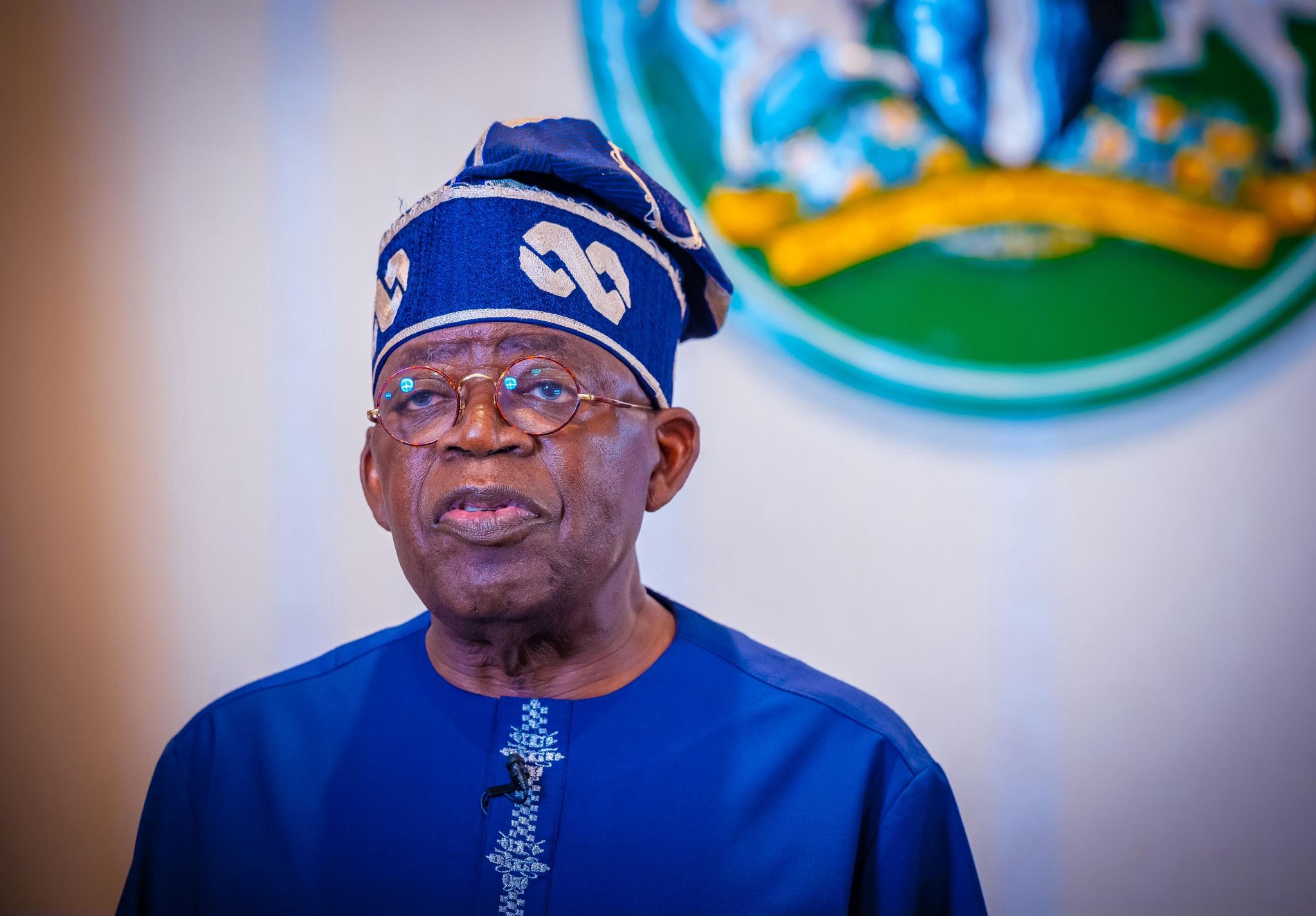
    President Bola Tinubu, who has been on a four-week working vacation to Europe, is expected to return to Nigeria on Tuesday.

    The president, who was scheduled to return to the country this weekend, is now due back on Tuesday, September 29, 2026.

    Reliable Presidency sources told THISDAY yesterday that President Tinubu would return through the nation’s commercial capital, Lagos, where he is expected to be received at the presidential wing of the Murtala Muhammed Airport in Ikeja by Governor Babajide Sanwo-Olu.

    It was further gathered that the president would celebrate Nigeria’s 66th independence anniversary on Thursday, October 1, 2026 in Lagos.

    This would be the second time the president will be celebrating the nation’s independence in Lagos, the first being in 2025 when he stayed back in Lagos after his working visit to the Centre of Excellence in the wake of the news of an attempted coup det’at by military officers.

    THISDAY further learnt that Tinubu would stay back in Lagos to attend to official state duties before returning to the nation’s capital, Abuja by next weekend.

    The Presidency had last Monday disclosed that the president, who has been on working leave since August 30, 2026, would return to Nigeria at the weekend, following the extension of his working vacation by a few days.
    Presidential spokesperson, Bayo Onanuga, who made this known via a statement, added that the president departed Nigeria on August 30 for London to begin the working vacation.

    After spending a week in London, he moved to Paris, France, where he met with French President Emmanuel Macron and businessman Mr Vincent Bollore, whose media group includes Canal+, Multichoice, and Universal Music Group.

    While away, President Tinubu delegated Vice President Kashim Shettima to represent him at some official functions. This Day

  • Enugu LG Polls: Renewed Hope Ambassadors Coordinator Hails Conduct, Predicts APC Victory in 2027

    Enugu LG Polls: Renewed Hope Ambassadors Coordinator Hails Conduct, Predicts APC Victory in 2027

    …Lauds Mbah Over Development

    …Congratulates Winners of Chairmanship, Councillorship Election

    The Enugu State Coordinator of Renewed Hope Ambassadors, Rt. Hon. USA Igwesi, has commended the peaceful conduct of the Enugu State local government elections, describing the exercise as free and fair.

    Igwesi, who spoke to newsmen after casting his vote at his polling unit on Saturday, September 26, 2026, also congratulated the winners of the chairmanship and councillorship elections across the state.

    He said the large turnout of voters and peaceful atmosphere witnessed during the exercise demonstrated the people’s interest in choosing their representatives at the grassroots.

    “The concluded election was free and fair. People came out in their numbers to vote. There were two polling booths; one was for Local Government Chairman and the other one was for Councillor.

    “I am thanking the Governor of Enugu State for providing an enabling environment for this concluded election. Dr. Peter Ndubuisi Mbah did well by providing this environment. All the political parties did their best to contest and show interest.

    “I thank God that there was no problem and violence of any sort. Everybody came out peacefully, happily and joyfully to vote so I really thank God for that.”

    The former federal lawmaker also praised Governor Mbah for what he described as the widespread development projects being executed across the state, saying the administration’s projects had given the All Progressives Congress (APC) confidence ahead of future elections.

    He specifically mentioned the International Conference Centre (ICC), Presidential Hotel, 300-bed hospital, Smart Schools across the 260 political wards, Type C health centres, road projects and other developments in Obuoffia.

    “I am highly optimistic and my heart is strong because the Governor of the State gave us bragging rights. The work he is doing in Enugu State is much; including ICC, Presidential Hotel, 300-bedded hospital, Smart Schools scattered across the 260 political wards, Type 2 Health Center across the different political wards, including roads and the work he has done in Obuoffia.

    “And the work he is doing is spread across every other Local Government and every other community in Enugu State. God is the only one that has the attribute of ubiquity; that is being everywhere at the same time, but Peter Mbah has shown that he possesses that attribute of ubiquity. God gave him that attribute and that honour. He’s everywhere. In all the construction sites that Enugu State has, work is going on there.”

    Igwesi expressed confidence that the APC would retain its electoral strength in future elections, including the 2027 general elections, attributing the party’s prospects to the performance of the Mbah administration.

    “So, what I’m saying in essence is that APC will always win elections. This one that is ENSIEC, APC will win it. APC will every other level of elections because we have something to hold on to and our people understand that they will follow the person that is working so Peter Mbah and APC will always win any day, any time.”

    He urged the electorate to continue to support leaders whose performance, according to him, had translated into visible development across their communities.

  • White House Blocks CNN From Travelling With Trump To Tennessee

    White House Blocks CNN From Travelling With Trump To Tennessee

    Precious Nwonu, Enugu

    The White House has barred CNN from travelling aboard Air Force One with United States President Donald Trump for his Saturday trip to Knoxville, Tennessee, despite the network being scheduled to serve as the television press pool reporter.

    The latest restriction comes days after Trump’s administration banned CNN, MS NOW and Politico from the White House, accusing the organisations of publishing coverage that was unfavourable to his administration.

    A federal judge, Timothy Kelly, subsequently ordered the administration to restore the three outlets’ access to the White House, ruling that they were likely to succeed in showing that their press credentials had been revoked without adequate due process.

    CNN reporters returned to the White House on Thursday following the ruling, although the network and MS NOW later reported being denied access to parts of an event marking Chinese President Xi Jinping’s visit.

    Despite the restoration of access, CNN was excluded from Trump’s trip to Tennessee, where the President is scheduled to attend a college football game.

    CNN had been due to take its turn in the rotating television press pool, a system involving ABC, CBS, NBC, Fox News and CNN. The designated network provides video coverage of presidential events and distributes the footage to other television outlets because of limited space during presidential travel.

    However, a White House schedule released late Friday did not list CNN or another member of the traditional television pool as the primary TV pooler for Saturday.

    Instead, the schedule listed Real America’s Voice News, a conservative outlet, in a secondary television role. The Washington Post reported that the White House decision effectively prevented CNN from carrying out the pool duties it had been assigned for the trip.

    The dispute has already disrupted the White House television pool. After CNN was barred from the White House last week, ABC, CBS, Fox News and NBC joined CNN in suspending pooled video coverage in protest.

    The five networks said the public had an important interest in receiving independent information about the government and argued that news organisations should not be denied access because of disagreements over their reporting.

    The television pool resumed on Friday after CNN’s White House access was restored. CBS served as the designated pool network for most of the day, while CNN handled coverage of an event at the National Archives.

    The latest exclusion, however, has raised fresh questions about the future of the rotational pool and the administration’s approach to media access during presidential travel.

    CNN confirmed its exclusion from the Tennessee trip, while the White House did not immediately respond to requests for comment.

  • Supreme Court Restores Electoral Act Provisions Ahead Of 2027 Polls

    Supreme Court Restores Electoral Act Provisions Ahead Of 2027 Polls

    Precious Nwonu, Enugu

    The Supreme Court has restored key provisions of the Electoral Act 2026 governing political party membership registers and the nomination of candidates ahead of the 2027 general elections.

    A seven-member panel of the apex court, in a unanimous decision, upheld an appeal filed by the Independent National Electoral Commission against an earlier Court of Appeal judgment that had declared Sections 77(5), 77(6), 77(7) and 84(2) of the Electoral Act unconstitutional.

    The ruling means political parties are required to comply with statutory rules on their membership registers and candidate nomination processes.

    Under Section 77 of the Act, political parties must make their membership registers available to INEC not later than 21 days before their primaries, congresses or conventions.

    The law further provides that only members whose names are contained in the register submitted to INEC can vote or be voted for at party primaries, congresses and conventions. Parties are also prohibited from using a different register for such exercises.

    A party that fails to submit its membership register within the stipulated period is not eligible to field a candidate for the election, according to the Act.

    The Supreme Court also restored Section 84(2), which provides that political parties may nominate candidates through direct primaries or consensus. INEC’s 2026 Regulations and Guidelines similarly recognise direct and consensus primaries as the two permitted methods under the Act.

    The legal dispute began after the Zenith Labour Party challenged the provisions at the Federal High Court, arguing that they interfered with the constitutional powers of political parties to manage their internal affairs and nominate candidates.

    The Federal High Court dismissed the challenge in May 2026, but the Court of Appeal later overturned that decision in July and struck down the four disputed provisions. INEC subsequently appealed to the Supreme Court.

    The Supreme Court has now set aside the Court of Appeal’s decision and reinstated the earlier Federal High Court judgment, holding that the disputed provisions were not inconsistent with the Constitution. The apex court also awarded N2 million in costs against the Zenith Labour Party.

    The ruling reinforces INEC’s statutory role in receiving and verifying party membership registers and monitoring compliance with the requirements governing party primaries and candidate nominations.

    INEC had earlier confirmed that all 22 registered political parties submitted their membership registers in May 2026, with the Commission stating that the registers would undergo verification in line with the law.

    The Supreme Court’s decision therefore provides the legal framework that will govern future party nomination exercises under the 2026 Electoral Act, including subsequent elections and the primaries, congresses and conventions preceding them.

  • Google Unveils New AI Advertising Tools For Nigerian Businesses

    Google Unveils New AI Advertising Tools For Nigerian Businesses

    Precious Nwonu, Enugu

    Google has introduced new artificial intelligence-powered advertising features aimed at helping businesses, including those in Nigeria, better understand the performance of their online campaigns and manage their advertising strategies.

    The technology company announced the developments as part of new updates to its AI Max for Search campaigns, including a new reporting feature and an expanded version of its AI Brief tool.

    Google Director for East and West Africa, Olumide Balogun, disclosed the developments in Lagos on Friday.

    The new reporting feature will provide advertisers with a unified view of the customer journey, bringing together information on the search terms that triggered an advert, the creative content displayed to the user and the webpage the user visited after clicking the advert.

    Google said the information, which had previously been available across different sections of Google Ads, will now be presented in a single view, making it easier for advertisers to assess campaign performance and understand how customers interact with their adverts.

    Balogun said the development would give Nigerian businesses greater visibility into how their advertising budgets are being used, particularly as businesses prepare for major shopping periods such as Black Friday and the festive season.

    The reporting feature was unveiled at DMEXCO 2026 in Cologne, Germany, and Google said further details on its availability would be released later in the year.

    Another update is the expansion of AI Brief, a Gemini-powered feature that allows advertisers to provide instructions to AI Max using ordinary language.

    Through the tool, advertisers can give detailed information about their businesses, target audiences and key messages and use those instructions to guide how AI Max develops and manages campaign elements.

    For instance, businesses can provide instructions about the type of searches they want to prioritise, messages they want highlighted or information they do not want included in advertisements.

    Google said advertisers can also preview sample advertisements and searches before campaigns go live, allowing them to adjust their instructions where necessary.

    The closed beta of AI Brief is being expanded to seven additional languages: Dutch, French, German, Italian, Japanese, Portuguese and Spanish.

    Google said the latest changes are part of its broader effort to adapt advertising tools to changing search behaviour as consumers increasingly use more conversational and detailed queries when looking for products and services.

    The company has also expanded AI-powered features across Google Search. AI Overviews are available in more than 200 countries and territories, while AI Mode has also expanded to more than 200 countries and territories.

    Google has been developing AI Max as a broader AI-powered system for Search advertising. The company said AI Max moved out of beta in 2026, with additional controls for targeting, creative content and campaign performance.

    The company also said AI Max campaigns using its full feature set recorded an average of seven per cent more conversions or conversion value at a similar cost per acquisition or return on advertising spend, compared with campaigns using search-term matching alone. Google described the figures as based on its internal 2026 data for non-retail advertisers.

    Google Vice-President of Global Ads, Dan Taylor, said changing consumer behaviour was also influencing the way businesses connect with potential customers through Search.

    According to Taylor, users are increasingly turning to longer and more detailed questions, voice commands and images when searching for information, products and services.

    Google has previously reported that queries made through AI Mode are nearly three times longer than traditional searches, reflecting the growing use of conversational search.

    Google said AI Max, launched in 2025, is now being used by hundreds of thousands of advertisers globally.

    The company has also continued to expand AI-powered advertising formats as Search becomes increasingly conversational, including new advertising experiences being tested in AI Mode.

    Balogun urged Nigerian businesses preparing for the Black Friday period and the end-of-year shopping season to begin planning their campaigns early.

    He said the new tools would enable businesses to better understand their advertising results and make more informed decisions about where to allocate their marketing budgets.

  • Momodu Explains El-Rufai’s Role In Atiku’s 2027 Campaign Council

    Momodu Explains El-Rufai’s Role In Atiku’s 2027 Campaign Council

    Precious Nwonu, Enugu

    A chieftain of the African Democratic Congress, Dele Momodu, has said former Vice President Atiku Abubakar’s decision to appoint former Kaduna State Governor Nasir El-Rufai to his 2027 Presidential Campaign Council was partly aimed at recognising what he described as El-Rufai’s political sacrifices.

    Momodu, who serves as Deputy Director-General of the campaign’s Media and Communications Directorate, spoke during an interview on Channels Television’s *The Morning Brief* on Friday.

    Atiku, the ADC presidential candidate, unveiled his campaign council on Thursday, appointing Kashim Ibrahim-Imam as chairman and El-Rufai as deputy chairman. Senator Austin Akobundu was named Director-General and Campaign Manager.

    Explaining El-Rufai’s inclusion, Momodu said the appointment was a way of acknowledging the former Kaduna governor’s political experience and what he described as the difficulties he had faced.

    Momodu also pointed to El-Rufai’s return to Nigeria despite the legal proceedings involving him, arguing that the former governor could have remained outside the country but chose to return.

    El-Rufai is currently facing legal proceedings and has denied wrongdoing in relation to the allegations against him. Reports on the case have also noted that he remains involved in proceedings concerning allegations linked to his time in public office.

    Commenting on the bail conditions attached to El-Rufai’s case, Momodu described them as excessive and questioned what he considered the former governor’s treatment by the authorities.

    Momodu further credited El-Rufai with playing an important role in the political developments that preceded the 2023 presidential election, claiming that his contribution was significant to President Bola Tinubu’s emergence.

    That claim represents Momodu’s political assessment and was not independently established by the campaign council announcement.

    El-Rufai’s appointment places him among several prominent political figures assembled by Atiku as the ADC builds its campaign structure ahead of the 2027 general election.

    The council includes former All Progressives Congress National Chairman John Odigie-Oyegun, who was named chairman of the Campaign Advisory Board, while Momodu will oversee Media and Communications and former Kogi West Senator Dino Melaye will lead Contact and Mobilisation.

    The campaign structure comprises six operational directorates, with 30 directors assigned specific responsibilities. Mohammed Hayatu-Deen will coordinate the Policy Team, while former governors and other political figures are also included in the wider campaign structure.

    The unveiling of the council comes as political parties and their candidates begin preparations for the 2027 presidential election, with the ADC campaign saying its structure would focus on issues including the cost of living, unemployment, insecurity and declining purchasing power.