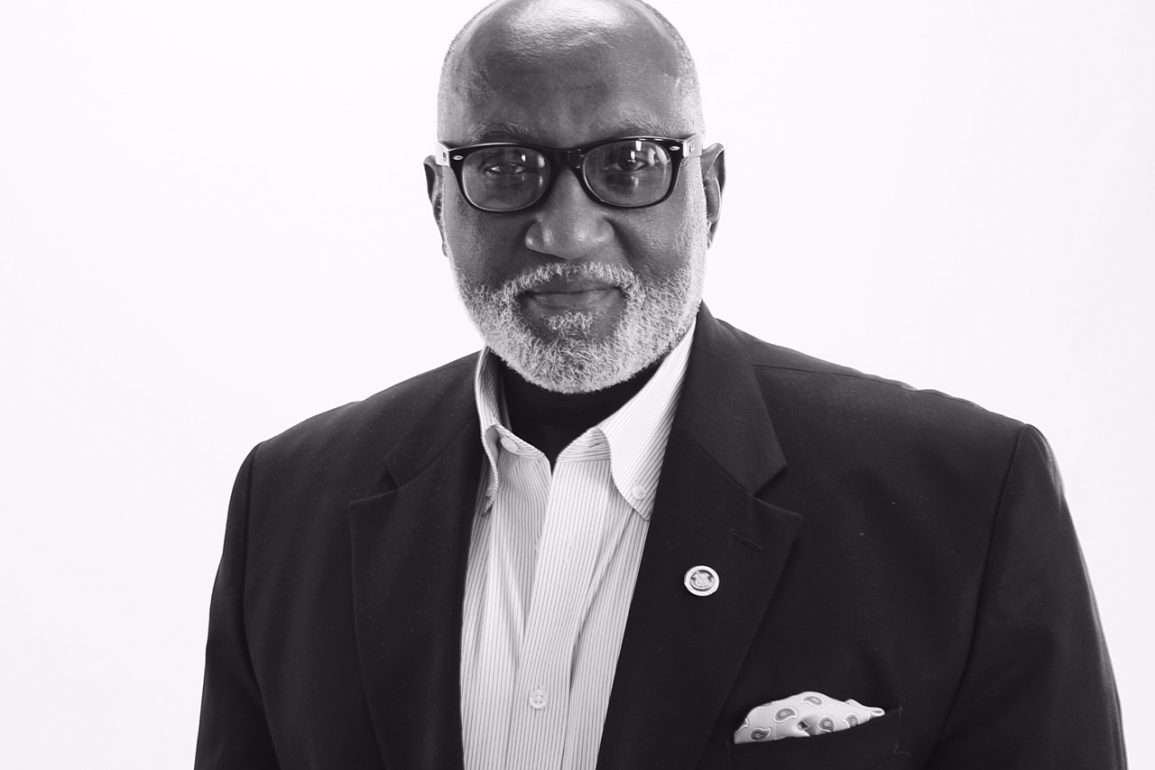
By Oseloka H. Obaze
In the summer of 2011, two unconnected op-ed pieces appeared on the same page of the New York Times. They pertained respectively to challenges confronting two different nations; the United States that was then suffering from governance paralysis. The other nation was Libya, which was about to implode from NATO bombings and domestic upheaval, while her leader, Colonel Muammar Gaddafi, was busy playing chess with a guest from Russia. The first article by Peter Baker, was titled, “Standstill Nation.” The second piece by John Burns, was captioned, “Delusion’s Last Stand.”
The two op-eds presented striking parallels with contemporary Nigeria. As such, I have borrowed the two titles as a single illustrative and conjunctive caption for this piece. The twinned caption connotes the double-barreled enormity of the challenges confronting Nigeria. Two sub-captions taken from the NYT pieces mirror in essence the characteristics of Nigeria’s unfolding governance quandary. “Paralysis (alas) is one way things are supposed to work;” and “Gaddafi plays chess with a believer in aliens. In the souk, people yearn aloud for his passing.”
Relatedly, while President Bola Tinubu governance modalities has pushed Nigeria to a tipping-point, and the mortgaging of Nigeria continue to elicit unvarnished umbrage, very few Nigerians will publicly acknowledge that they yearn and pray surreptitiously for an Abacha-like fate to befall Tinubu; yet such thinking secretly enjoys broad flourish nationwide. That’s telling. It flags how bad things are and how distressed Nigeria are.
As far removed as the US and Libyan issues were, certain salient lines contextualizes the thrust of the New York Times pieces, thus making them relative to Nigeria’s circumstances. “Is this any way to run a country? Ideal it is not. Inspiring, hardly at all.” And relative to Nigeria’s ruling APC, as delusion makes a last stand: “a government that set out in the past decade to cloak the old dictatorship with a new and more appealing facade has been hoist with its own petard.” Renewed hope is proving to be a fluke; a red herring.
Apropos Nigeria, always the outlier that it has been, the country has arrived at that critical juncture where the axiomatic question is: To be or not to be a nation? Some would also ask: Which way Nigeria? However, those in power think and believe, quite erroneously, that Nigeria will continue on the sad trajectory they foisted on it and at their whims and caprices. But they are wrong. Nigerians are so fed up, that their kinetic anger is a fodder of sorts for a peoples’ revolution.
As delusion makes a last stand in Nigeria, the population are hell bent on broad leadership change, and as they say in the local parlance, “by fire, by force.” But the first choice is engender such change constitutionally and peaceably. When that option fails, it becomes an open-ended game.
Many years ago, Fela Anikolakpo Kuti presciently released a hit song, Go Slow. He averred to how the incessantly crawling Lagos traffic made nonsense (yeye) of every best laid out plans of Lagosians and indeed, Nigerians. That reality has been vastly extrapolated. In Nigeria, there is Go Slow in national development, employment, education, healthcare delivery, poverty alleviation, budget implementation, security responses, power and water supply, rescue operations, food production and manufacturing. Tardiness in governance is a stark reality. The tardy disposition that earned President Muhammadu Buhari of the APC the sobriquet “Baba Go Slow,” has since worsened.
So Nigeria has become a standstill nation in every regard, expect for bad governance, borrowings and corruption. Power generation is at a standstill and power distribution exceedingly epileptic. With solar now providing power 24/7 at the presidential villa, those reporting on power matters to the president, simply allude to the fact that it’s been many months since there was any power outage at the Villa. This is a way of reassuring the president that he has kept his campaign promise. We recall him once saying to Nigerians: “If I don’t give you constant electricity in the next four years don’t vote for me.” At the Villa there’s light now 24/7, but not in Greater Nigeria. But to think that the Villa is a figurative or literal representation of Nigeria, is simple delusional.
Meanwhile, in 2024, the national power grid collapsed more than 12 times, and there were 5 diametric collapses on 12 February, 7 March, 10 September and 29 December 2025. The national power grid has already collapsed twice in the first quarter of 2026. Indeed, since 2015 when APC assumed leadership in Nigeria, the national grid has collapsed over 100 times notwithstanding the trillions of naira invested in the sector. Lack of power has helped to bring every facet of life in Nigeria to a standstill.
Similarly, since APC assumed Nigeria’s leadership in 2015, democracy in Nigeria has been on auto-reverse. Now, it has reached a standstill. As Fela also defined such situations in another of his hit songs, the nation is at a Stalemate. The only redeeming value is that in life as well as politics, there comes a time when delusion meets reality. For Nigerians, that time is now.
The Bola Tinubu administration has scripted Nigeria’s worst governance nightmare by shoving the nation toward a one-party state and bankruptcy; it has also scripted unprecedented broad anti-government activism. The national population’s resentment, now far outweighs those directed at General Sani Abacha. Ironically, neither soldiers nor politicians who supported Abacha were ever publicly stoned. Tinubu’s APC acolytes are increasingly being publicly stoned in their homesteads. That’s telling!
It seems only a matter of time before the rumbling tension and volcanic pressure erupts openly and fully. The hand writing has long been on the walls. Meanwhile, those who should read such writings are deliriously immersed in singing “on your mandate we stand” songs that only underpin the deep-seated nature of the leadership’s delusion.
Generally, analysts and pundits who write about governance and policy challenges in Nigeria are asked: “Why bother, since Nigerian leaders neither read nor listen anymore? Statements such as these manifest the prevailing level of denial and delusion as well as national miasma.
Writers on governance and policy often flag and dissect problems. Routinely, they proffer solutions for the sake of good governance, history and humanity; but above all, for the sake of enduring peace. They criticize in order to add value to nation building and flag required check and balances. They also challenge our leaders to act aright, because the faith of Nigerians in their leadership, stand tested by fire. Our elasticity and resilience reached its limits long ago. Most are concerned that for an already politically fraught Nigeria, while the exact snap point may be unpredictable, it’s now seemingly inevitable.
But amidst prevailing concerns, resignation and trepidation, there is a silver lining in the global democratic space that may provide a salve for Nigeria. From faraway Hungary, Nigerians have drawn an iota of hope. The election of prime minister-designate, Peter Magyar of the Tisza Party of Hungary on 12 April, 2026, may well portend for Nigeria a glimmer of hope, notwithstanding the distance.
If Hungarians can rally to vote out Prime Minister Viktor Orban and his Fidesz party constitutionally and peacefully, so too, can Nigerians rally to vote out Bola Tinubu and his misruling APC cohorts. Such outcomes will definitely restore a modicum of hope in fledgling democracies in Africa and globally. The possibility of ‘like Hungary, like Nigeria’, and ‘like Orban, like Tinubu’ are suddenly seductive, plausible and incentivizing. These are acute selling points for instant and unfettered leadership change in Nigeria.
The geopolitical similarities between Hungary and Nigeria while markedly different, are striking in some ways. They are abetted by the fluke of happenstances and coincidence. Whether by conjecture or fortuitousness, these striking similarities go beyond the first names; Hungarian opposition leader is Peter Magyar and Nigerian opposition leader, is Peter Obi. Also, 16 years of bad governance in Hungary mirrors closely, the 12 years of extreme prebendalism in Nigeria. The shared commonality also extends to hope and fate; first for the Hungarians, and now for Nigerians. The point here is that history tends to mimic itself.
What is perhaps most delusional, is that an administration that has coerced 31 of Nigeria’s 36 governors into the ranks of the ruling APC party and towards a one-party state, and has control of 86% of the states, is too jittery and scared to hold free and fair elections. Rather, its busy creating basis for a rigged electoral outcome in 2027. It is systematically destroying the major opposition parties – LP, PDP, and now, ADC.
However, the national population, especially Nigerian youths that form the bulwark of the political opposition and voting population, are not having any of that nonsense. They are still smarting from their missed civil disobedience in 2023. As such, they have publicly reacted with vehemence and the pushback mantra, “you rig, and you die.” It would be delusional to take such declaration lightly. After all, as Benjamin Franklin had put it: “Rebellion to tyrants is obedience to Almighty God.”
Nigeria is at a standstill. For most Nigerians, insecurity, the parlous economy and rising poverty are still the big elephant in the room. They are factors that have weighted Nigeria down to a standstill. It’s inconceivable that Nigerians will be inclined to trust the APC cohorts to fix problems they caused and benefited from. That will never happen.
As Nigeria’s present leaders make their delusional knee-jerk last stand, the renewed hope to survive and continue in power, Nigeria’s silent majority are bracing up for their own last stand against the malign minority that has run the nation aground. The die is cast. It’s a tug of war. And as a popular social media jargon declaims, “If you know, you know.”
———-
Obaze is MD/CEO, Selonnes Consult – a policy, governance and management consulting firm in Awka.
Leave a Reply